
The Best Teas for Muscle Recovery, Pain Relief & Relaxation
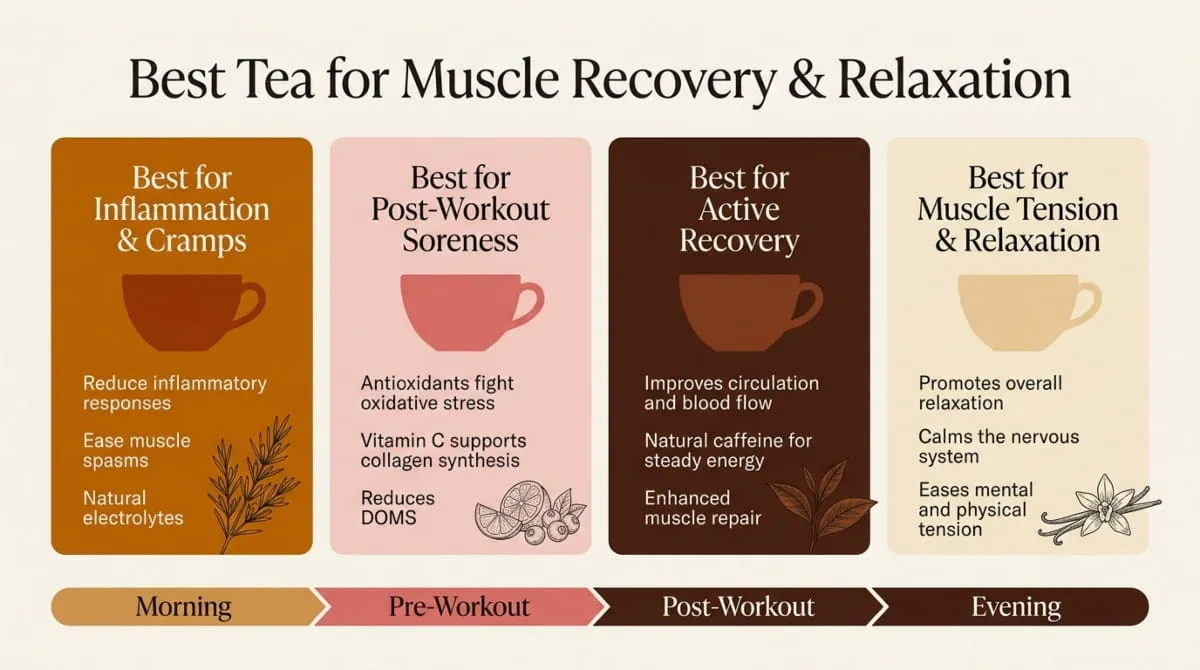
Whether you pushed hard at the gym, spent hours on your feet, or carried the kind of physical tension that comes with performing night after night, your muscles deserve real recovery. Not just rest, but support.
Tea has been used for centuries to ease physical discomfort, and modern science is beginning to confirm what traditional herbalists have long known: certain teas contain powerful compounds that reduce inflammation, relax muscle tension, and speed recovery, naturally, without the side effects of over-the-counter pain relief.
But not every tea works the same way. Green tea acts differently on your muscles than ginger tea. Chamomile targets tension through a completely different mechanism than rooibos. Knowing which tea to reach for, and when, makes all the difference.
This guide breaks down the best teas for muscle recovery, pain relief, and relaxation, backed by science and built around one simple goal: helping your body feel better, faster. Whether you’re dealing with post-workout soreness, chronic muscle aches, joint discomfort, or just need something to help your body unwind after a long day, there’s tea for that.
And if you use your voice professionally, as a singer, speaker, teacher, or performer, muscle tension around the neck, jaw, and throat is more than just uncomfortable. It directly affects your performance. The right recovery tea doesn’t just help your body. It protects your craft.
What Makes Tea Effective for Muscle Recovery and Pain?
Tea isn’t just a comforting ritual; it’s a delivery system for some of the most potent naturally occurring compounds known to reduce pain, inflammation, and muscle tension. The reason certain teas work so well for muscle recovery comes down to their specific phytochemical makeup and how those compounds interact with your body at a cellular level.
Anti-Inflammatory Compounds in Tea: EGCG, Gingerols, and Curcumin
The most therapeutic teas for muscle pain share one thing in common: they’re dense with anti-inflammatory compounds that target the same biological pathways responsible for soreness and swelling.
Green tea is loaded with EGCG (epigallocatechin gallate). This catechin has been shown in multiple studies to suppress pro-inflammatory cytokines, the signaling molecules your body releases after intense exercise that cause that familiar deep ache in your muscles. Ginger tea works through gingerols and shogaols, compounds that inhibit COX-2 enzymes, the same enzymes that ibuprofen targets, just without the gastrointestinal risk. Turmeric tea delivers curcumin, which blocks NF-kB, one of the primary molecular switches that triggers inflammation throughout the body.
These aren’t mild, feel-good effects. They’re measurable, mechanism-driven responses, which is why these teas have held their place in recovery traditions across cultures for thousands of years.
How Antioxidants Reduce Exercise-Induced Oxidative Stress
Every time you exercise intensely, your body produces free radicals as a byproduct of increased oxygen consumption. In small amounts, this is normal. In excess, it creates oxidative stress, a condition that damages muscle cells, slows repair, and extends recovery time well beyond what is necessary.
Antioxidants neutralize free radicals before they can cause that damage. Tea, particularly green tea, rooibos, and black tea, is one of the most antioxidant-dense beverages you can consume. Rooibos, for example, contains aspalathin and nothofagin, two rare antioxidants not found in most other plants, which have been shown to have a specific ability to reduce oxidative damage in muscle tissue. Black tea, while more oxidized than green, still delivers a meaningful dose of theaflavins that support cellular recovery after physical stress.
Drinking the right tea after a workout isn’t just soothing, it’s actively accelerating the repair cycle your muscles are already trying to run.
Why Natural Muscle Relaxants in Tea Work Differently Than Supplements
Prescription and over-the-counter muscle relaxants work by suppressing your central nervous system; they essentially force your muscles to stop contracting by dampening neurological activity across the board. That’s why they often come with drowsiness, dependency risks, and a foggy feeling that lingers long after the tension is gone.
Natural muscle relaxant teas work differently. Chamomile, for instance, binds to GABA receptors in the brain, the same receptors that regulate anxiety and muscular tension, but does so gently, without the systemic suppression that pharmaceuticals trigger. Magnesium-rich teas like nettle and rooibos support muscle relaxation at the electrolyte level, addressing one of the most common and overlooked causes of muscle cramps and spasms: mineral deficiency.
The result is a calmer, more targeted form of relief. Your muscles relax because the underlying cause, inflammation, oxidative damage, mineral imbalance, or nervous system overactivation, is being addressed directly, not masked.
The Best Teas for Muscle Recovery, Ranked
Not all teas recover muscles the same way. Some work by reducing inflammation at the source. Others ease tension, replenish minerals, or calm the nervous system signals that keep muscles locked and overworked. The four teas below were selected because each one brings something distinct to the recovery process, and together, they cover nearly every angle of muscle pain, soreness, and relaxation.
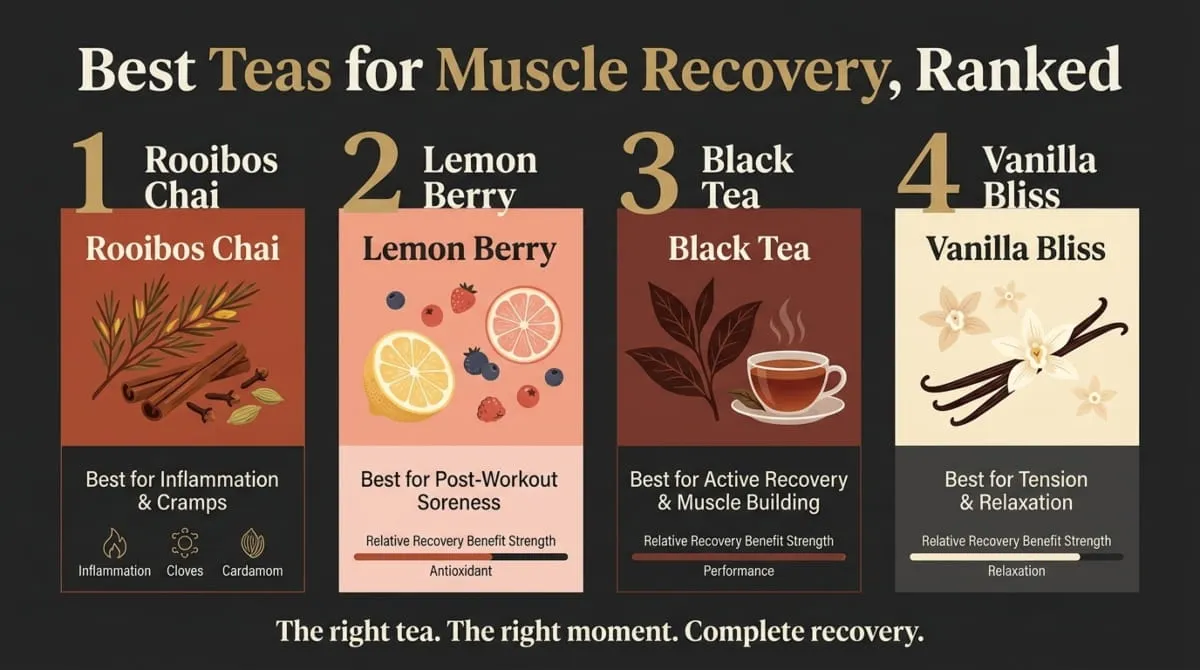
1. Organic Rooibos Chai, Best for Muscle Inflammation & Cramps
Rooibos is one of the most underrated teas for muscle recovery, and it deserves far more attention than it gets. Naturally caffeine-free and rich in aspalathin and nothofagin, rooibos actively reduces oxidative stress in muscle tissue. At the same time, its natural mineral content, including magnesium and calcium, helps prevent the electrolyte imbalances that trigger cramps and spasms.
Vocal Leaf’s Organic Rooibos Chai layers warming chai spices atop a rooibos base, adding an extra dimension of anti-inflammatory support from cinnamon and clove. It’s the kind of tea you reach for when your muscles are tight, your joints are aching, and you need something that works while you rest.
2. Organic Loose Leaf Black Tea, Best for Active Recovery & Muscle Building Support
Black tea occupies a unique place in the conversation about muscle recovery. It retains a meaningful concentration of theaflavins, antioxidants formed during oxidation, which have been shown to reduce markers of muscle damage after exercise. It also contains a moderate amount of caffeine, which, at the right dose, can enhance muscle performance and reduce perceived exertion during training.
For anyone asking whether black tea is good for muscle growth or post-workout recovery, the answer is yes, with context. It supports the recovery cycle without interfering with protein synthesis, making it a smart daily choice for active people. Vocal Leaf’s Organic Loose Leaf Black Tea is clean, full-bodied, and sourced with the same quality standard the brand applies across its entire line.
3. Lemon Berry Dream, Best for Post-Workout Soreness & Antioxidant Recovery
When muscle soreness sets in hours after a workout, that delayed ache that peaks the next morning, what your body needs most is antioxidant support to clear the oxidative backlog left behind by intense exercise. Lemon and berry botanicals are naturally high in vitamin C and polyphenols, both of which accelerate cellular repair and reduce the duration of that post-exercise soreness window.
Vocal Leaf’s Lemon Berry Dream is bright, naturally tart, and caffeine-free, which makes it equally effective as a post-workout recovery tea or an evening wind-down after a physically demanding day. For performers and vocalists carrying tension in the neck and shoulders, it doubles as a soothing, throat-friendly option that supports both muscular and vocal recovery.
4. Vanilla Bliss, Best for Muscle Tension & Nervous System Relaxation
Muscle tension that doesn’t respond to physical treatment is often nervous system tension masquerading as physical. When stress keeps your muscles contracted, the tight shoulders, the locked jaw, the persistent lower back ache that won’t release, the recovery you need isn’t just physical. It’s neurological.
Vanilla has well-documented calming properties, with compounds that interact with the nervous system to reduce anxiety-driven muscle contraction. Combined with the naturally relaxing herbal profile of Vocal Leaf’s Vanilla Bliss, this tea works on the layer beneath the soreness, quieting the nervous system signals that are keeping your muscles from fully letting go. It’s the ideal evening muscle relaxer tea, especially for anyone whose physical tension is rooted in the demands of performance, teaching, or high-output creative work.
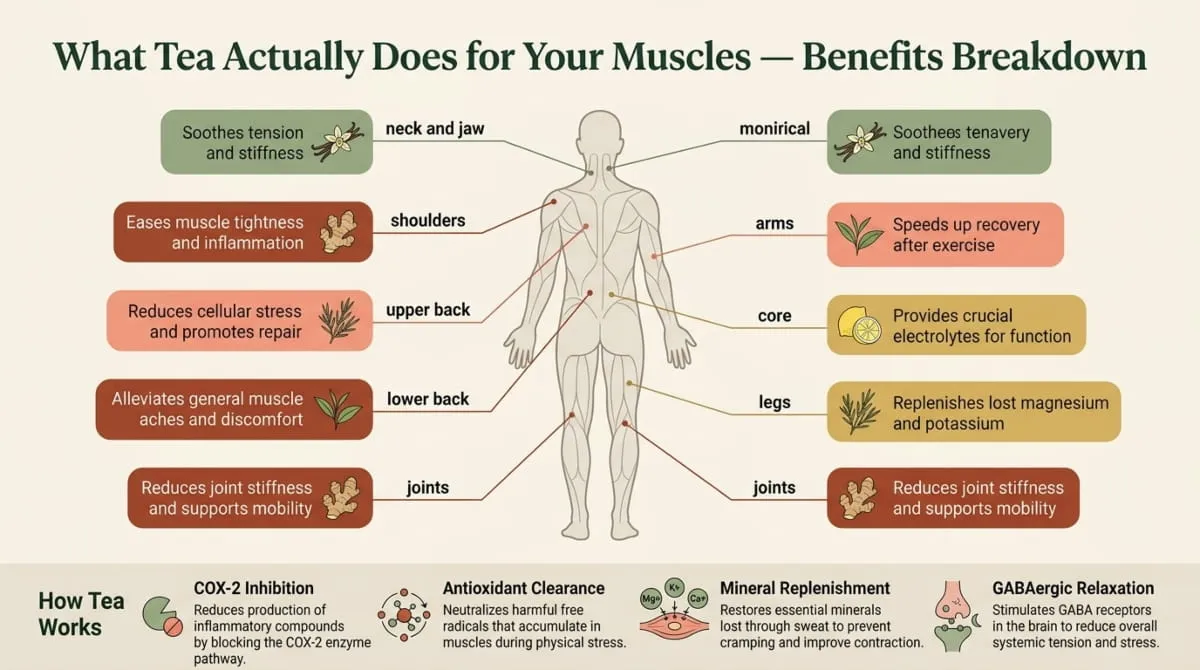
What Tea Actually Does for Your Muscles, Benefits Breakdown
Understanding why tea works for muscle pain, soreness, and relaxation is what separates strategic recovery from guesswork. Each benefit category maps to a specific physiological mechanism, and knowing which tea targets which problem lets you make choices that actually move the needle on how your body feels and recovers.
Tea for Muscle Pain and Inflammation
Muscle pain almost always has inflammation at its root. Whether it’s the acute soreness that follows a hard training session, the deeper ache of overused muscles, or the chronic discomfort that builds from repetitive physical demand, inflammation is the common denominator. Teas rich in anti-inflammatory compounds like EGCG, gingerols, and curcumin address that root cause directly rather than simply dulling the pain signal.
For muscle inflammation specifically, consistency of intake matters as much as which tea you choose. A single cup provides temporary relief. Daily consumption over weeks builds a sustained anti-inflammatory baseline that reduces the frequency and intensity of flare-ups, which is why the most effective approach treats tea for muscle pain as a daily habit rather than an emergency intervention.
Tea for Sore Muscles and Muscle Aches
Post-exercise soreness and general muscle aching share the same underlying driver: oxidative stress and cellular micro-damage that the body hasn’t fully cleared yet. Antioxidant-rich teas accelerate that clearance process by neutralizing the free radicals that extend the soreness window beyond what’s necessary.
Herbal teas for sore muscles work particularly well here because many caffeine-free options, such as rooibos, chamomile, lemon, and berry blends, can be consumed multiple times throughout the day without any stimulant accumulation. That means you can maintain a steady antioxidant presence in your system across the full 24 to 72 hour DOMS window, rather than getting one or two doses of support and leaving your muscles to manage the rest on their own.
Tea for Muscle Tension and Relaxation
Muscle tension that doesn’t respond to rest or physical treatment is often a nervous system problem, not a muscular one. When stress keeps your nervous system in an elevated state, your muscles receive a continuous low-level signal to stay partially contracted, producing that persistent tightness in the neck, shoulders, jaw, and back that no amount of stretching fully resolves.
Tea for muscle relaxation works on this layer by engaging the GABAergic and parasympathetic pathways that signal the nervous system to downregulate. Chamomile, valerian, and vanilla-forward blends are the most effective options here, not because they sedate, but because they shift the neurological environment from one that holds tension to one that releases it. For performers, vocalists, and speakers who carry chronic tension through the upper body, this nervous system angle is often the missing piece in a recovery routine that addresses everything else.
Tea for Muscle Cramps, Spasms, and Joint Pain
Cramps and spasms respond to a different intervention than general soreness. They’re primarily mineral and nerve-signal problems; the muscle either lacks the electrolytes needed to complete its relaxation phase, or it’s receiving misfired contraction signals from an overactivated nervous system.
Herbal teas for muscle spasms and cramps are most effective when they deliver magnesium and calcium alongside antispasmodic compounds. Rooibos covers the mineral angle. Chamomile covers the antispasmodic angle. Used together across a day, one post-workout, one in the evening, they address both causes simultaneously.
For joint and muscle pain that travels together, anti-inflammatory teas that target muscle tissue also work well on the connective tissue surrounding joints, since the inflammatory pathways are largely shared. Ginger and rooibos are the most consistent performers across both categories, making them the most versatile teas in any recovery-focused daily routine.
Tea Benefits for Muscle Recovery
| Concern | Best Tea Type | Primary Mechanism | Key Compounds |
|---|---|---|---|
| Muscle Pain & Inflammation | Green Tea, Ginger Tea | COX-2 inhibition; reduces systemic swelling | EGCG, Gingerols |
| Post-Workout Soreness | Lemon Berry Dream, Rooibos | Clears oxidative stress from muscle tissues | Anthocyanins, Aspalathin |
| Muscle Tension & Relaxation | Vanilla Bliss, Chamomile | GABAergic activity; nervous system calming | Apigenin, Vanillin |
| Muscle Cramps & Spasms | Rooibos, Chamomile | Mineral replenishment; antispasmodic action | Magnesium, Flavonoids |
| Joint & Muscle Pain | Ginger, Rooibos | Broad-spectrum anti-inflammatory coverage | Shogaols, Nothofagin |
| Nighttime Muscle Recovery | Vanilla Bliss | Nervous system downregulation; sleep support | Caffeine-free base |
| Active Recovery & Building | Welcome Back Black | Supports steady, alert calm; speeds recovery | Theaflavins, L-Theanine |
Green Tea and Muscle Recovery
Green tea has earned a genuine reputation in the fitness and recovery world, and for good reason. Few natural beverages pack as much scientifically validated muscle support into a single cup. But there’s also a lot of confusion around it. Does green tea help with muscle recovery or work against it? Does it support muscle growth or cause muscle loss? The answers are more nuanced than most articles let on.
Does Green Tea Help With Muscle Recovery?
Yes, and the mechanism is well understood. The primary driver is EGCG, the most abundant catechin in green tea. After intense exercise, your muscle fibers experience microscopic damage and a surge of inflammatory activity. EGCG suppresses the pro-inflammatory cytokines responsible for that response, reducing both the severity and duration of post-exercise soreness.
Multiple studies have confirmed that green tea for muscle recovery isn’t just folk wisdom. Participants who consumed green tea extract before and after exercise showed significantly lower markers of muscle damage and oxidative stress than those who didn’t. For muscle soreness specifically, green tea’s antioxidant load helps clear the buildup of free radicals that extends recovery time, meaning you bounce back faster with less of that deep, lingering ache.
So if you’ve been wondering whether green tea helps with muscle soreness after a hard session, the short answer is yes, consistently and meaningfully.
Is Green Tea Good for Muscle Pain?
Green tea addresses muscle pain through two overlapping pathways: anti-inflammatory action and antioxidant activity. The anti-inflammatory effect targets the swelling and cellular irritation that generate pain signals in the first place. The antioxidant effect clears oxidative damage, prolonging those signals beyond the initial injury window.
This makes green tea particularly useful for chronic, low-grade muscle pain, the kind that accumulates over days of repeated physical output rather than a single intense session. For performers, athletes, and anyone whose body is under consistent physical demand, drinking green tea regularly helps prevent inflammation from building to a point that becomes debilitating.
Does Green Tea Help Build Muscle, or Cause Muscle Loss?
This is where the conversation gets more layered, and where a lot of misinformation circulates. The concern usually goes like this: green tea boosts metabolism and fat oxidation, so does it also break down muscle tissue in the process?
The evidence doesn’t support that fear. Green tea does not cause muscle loss at normal consumption levels. In fact, EGCG has shown a mild anti-catabolic effect, meaning it may actually help preserve lean muscle mass during periods of caloric deficit or intense training by reducing the hormonal signals that trigger muscle breakdown.
Where green tea and muscle building intersect more directly is in recovery quality. Muscle grows during rest, not during training. If green tea accelerates recovery, reduces soreness, and gets you back to training sooner, it indirectly supports muscle growth by improving the consistency and quality of your overall training cycle. Green tea extract studied in muscle-building contexts has shown promising results, though its effects are supportive rather than anabolic. It’s not a muscle builder in the direct sense; it’s a recovery enhancer that makes muscle building more efficient.
The idea that green tea reduces muscle mass or impairs muscle growth is not supported by credible evidence at normal dietary doses.
Green Tea vs. Black Tea vs. Turmeric Tea for Muscle Recovery
Each of these teas targets muscle recovery through a different primary mechanism, and used together, they form a comprehensive natural recovery protocol.
Green tea leads in antioxidant volume and EGCG-driven anti-inflammatory action. Black tea, while more oxidized and lower in catechins, contributes theaflavins, a different class of antioxidants that specifically reduce markers of exercise-induced muscle damage. Turmeric tea includes curcumin, which acts on the NF-kB pathway and is arguably the most potent single anti-inflammatory compound available in tea form.
Rotating among these three, or strategically combining them throughout your day, provides your muscles with a broader spectrum of recovery support than any single tea can deliver on its own.
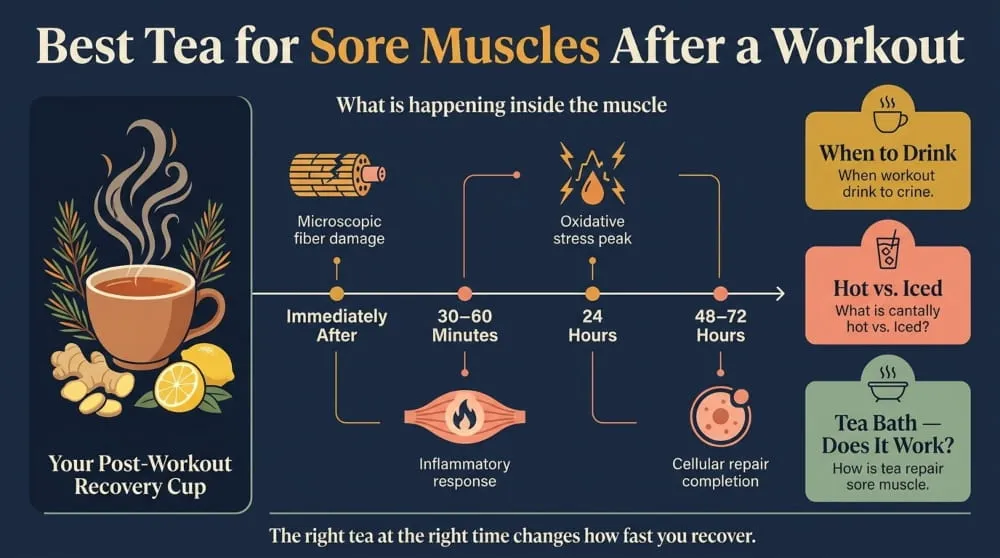
Best Tea for Sore Muscles After a Workout
Soreness after a hard session is your body doing exactly what it’s supposed to: breaking down muscle fibers so they rebuild stronger. But how quickly and comfortably that process happens depends heavily on what you give your body in the hours that follow. Tea, when used strategically, can meaningfully shorten that recovery window and reduce the intensity of the ache.
When to Drink Tea for Muscle Recovery, Timing, and Dosage
Timing matters more than most people realize. The inflammatory response that causes post-workout soreness begins within minutes of finishing exercise and peaks between 24 and 72 hours later, a window commonly known as DOMS (delayed-onset muscle soreness). To get ahead of it, you want anti-inflammatory compounds in your system before that peak hits, not after.
The most effective approach is to drink one cup of a recovery-focused tea, green, rooibos, or ginger, within 30 to 60 minutes of finishing your session, while your body is still in its immediate post-exercise state. A second cup in the evening supports the repair cycle that occurs during sleep, when the majority of actual muscle rebuilding occurs.
For ongoing soreness or chronic muscle pain, consistency matters more than any single cup. Two to three cups daily, spread throughout the day, keep anti-inflammatory compounds at a steady level in your system rather than delivering a single large dose that spikes and fades.
Hot Tea vs. Iced Tea for Post-Workout Soreness
Both work, but they serve slightly different purposes, and the choice often comes down to what your body needs in the moment.
Hot tea is better for relieving muscle tension and relaxing the nervous system. Heat itself is a mild vasodilator, meaning it gently increases blood flow to tense muscle tissue, which helps flush out metabolic waste products and deliver oxygen to damaged fibers. If your soreness is accompanied by tightness, stiffness, or that locked, contracted feeling, a hot cup of rooibos chai or vanilla bliss is going to do more for you than the same tea served cold.
Iced tea has its own advantage post-workout, particularly when your core temperature is elevated, and inflammation is actively spiking. A cold brew of green tea or lemon berry delivers the same antioxidant and anti-inflammatory compounds while simultaneously helping to bring your body temperature down. It’s also more palatable immediately after intense exercise when the last thing you want is something steaming.
The bottom line: hot tea for tension and relaxation, iced tea for immediate post-exercise inflammation. Neither is wrong; they’re just optimized for different moments in the recovery timeline.
Tea Bath for Sore Muscles: Does It Work?
The tea bath has made its rounds on wellness forums, and while it sounds more like a spa trend than a legitimate recovery tool, there’s real logic behind it. Transdermal absorption, the skin taking in compounds from what it’s submerged in, is a well-established phenomenon, and certain compounds in tea do cross the skin barrier to some degree.
Ginger tea baths, in particular, have been documented to have a warming effect on muscle tissue beneath the skin. The gingerols and shogaols responsible for ginger’s internal anti-inflammatory action can stimulate circulation and reduce localized tension when the body is submerged in a concentrated ginger infusion. Epsom salt added to a green tea bath combines magnesium absorption, which directly supports muscle relaxation at the cellular level, with green tea’s antioxidant activity.
That said, a tea bath is a complement, not a replacement. The concentration of active compounds absorbed through the skin is significantly lower than what you get from drinking tea directly. Use it as a recovery ritual on top of your regular tea intake, not instead of it, and think of the warmth of the water itself as doing at least as much work as the tea it contains.
Can Tea Help With Muscle Cramps?
Muscle cramps are among the most disruptive forms of physical discomfort: sudden, involuntary, and often arriving at the worst possible moment. For performers mid-show, athletes mid-session, or anyone waking up at 3 am with a locked calf muscle, the question isn’t just how to treat a cramp after it hits. It’s about preventing the conditions that cause it in the first place. Tea, used correctly, addresses both sides of that equation.
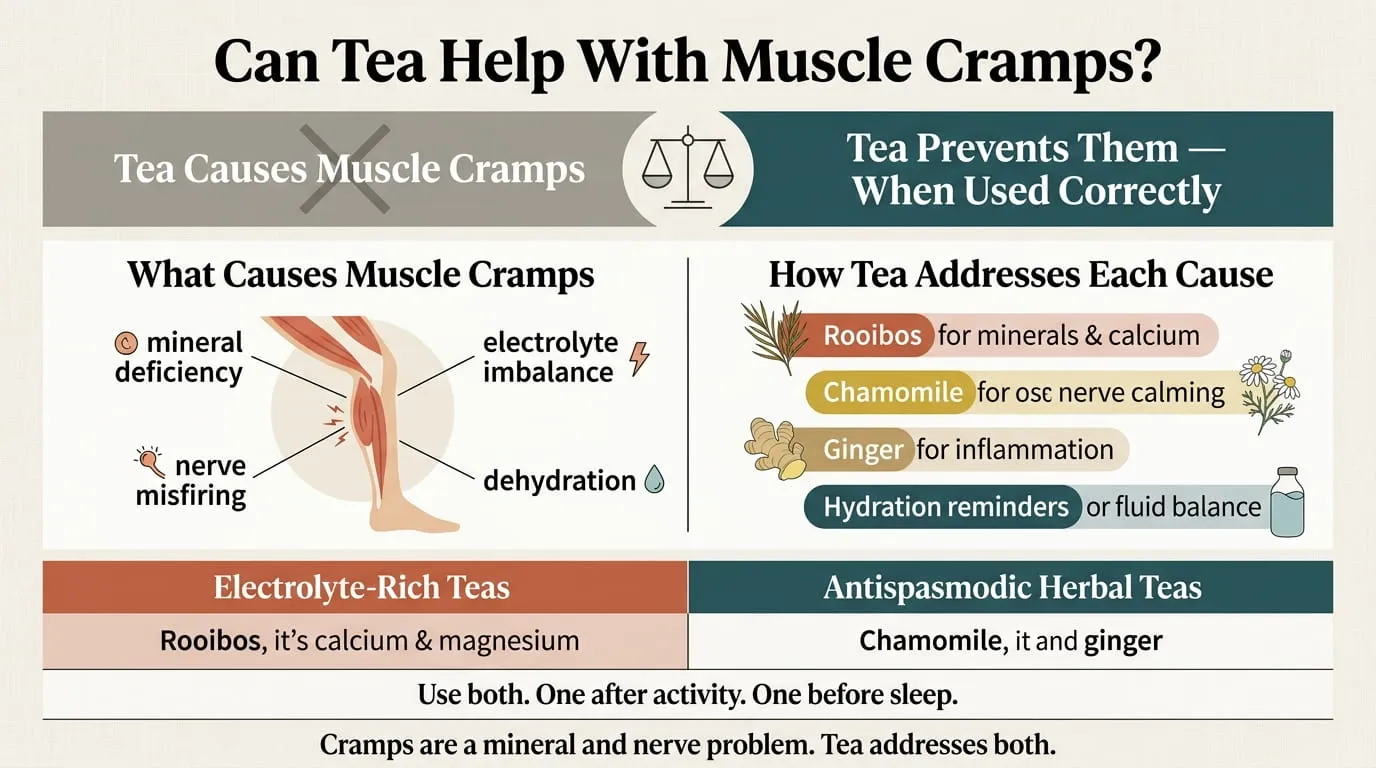
Which Teas Help With Muscle Cramps
The most effective teas for muscle cramps are those that deliver minerals and compounds that directly support healthy muscle contraction and nerve signaling. Cramping almost always comes down to an imbalance, too little magnesium, calcium, or potassium, or too much physical demand on a muscle that hasn’t been adequately supported.
Rooibos tea stands out here because it contains both calcium and magnesium in bioavailable form, the two minerals most directly involved in regulating muscle contraction and relaxation. Chamomile is another strong option, with antispasmodic properties that help ease the involuntary muscle contractions at the root of cramping. Ginger tea, through its COX-2-inhibiting compounds, reduces localized inflammation that can trigger or worsen cramp episodes, particularly in people with chronic muscle spasms.
For anyone experiencing frequent cramps, whether from exercise, dehydration, or the physical demands of performance, rotating between rooibos, chamomile, and ginger throughout the day builds a consistent mineral and anti-inflammatory foundation that makes cramps less frequent and less severe over time.
Does Tea Cause Muscle Cramps?
This concern comes up often, and it deserves a direct answer. The worry is usually tied to caffeine, specifically, the idea that caffeine increases urine output, which leads to dehydration, which triggers muscle cramps.
The reality is more measured. At moderate consumption, two to three cups per day, caffeinated teas like green and black tea do not produce meaningful dehydration in most people. The fluid in the tea itself largely offsets any mild diuretic effect. The net hydration impact is close to neutral, and well within safe territory for muscle health.
Where tea drinking and muscle cramps do have a legitimate connection is in excessive consumption or among people who are already dehydrated and rely heavily on caffeinated tea as their primary fluid source. In that specific scenario, the diuretic effect can tip the balance. The solution isn’t to avoid tea, it’s to pair caffeinated teas with adequate water intake and prioritize caffeine-free options like rooibos or chamomile in the hours after intense physical activity.
Tea does not cause muscle cramps under normal, balanced consumption. For most people, it does the opposite.
Electrolyte-Rich Teas vs. Plain Herbal Teas for Cramp Prevention
Not all teas approach cramp prevention the same way, and understanding the difference helps you choose more strategically.
Electrolyte-rich teas, such as rooibos, which is the clearest example, work by directly replenishing the minerals that regulate muscle function. They’re the better choice immediately after physical exertion, when your mineral reserves have been depleted through sweat, and your muscles are most vulnerable to cramping.
Plain herbal teas like chamomile or peppermint work more through their antispasmodic and nervous-system-calming properties than through their mineral content. They’re better suited for tension-related cramps, the kind that come from stress, overuse, or prolonged muscle contraction rather than electrolyte depletion.
The most effective cramp prevention strategy uses both. An electrolyte-rich tea like Vocal Leaf’s Organic Rooibos Chai after physical activity, and a calming herbal option in the evening to keep the nervous system regulated and muscles relaxed through the night, which is when cramps most commonly strike.
Ginger Tea for Muscle Pain | What the Research Shows
Of all the teas used for muscle pain, ginger has perhaps the strongest and most consistent body of research. It’s not a gentle, peripheral player in the recovery conversation; it’s one of the most direct natural interventions available for inflammation-driven muscle aches, and the science explaining why is remarkably clear.
How Gingerols Reduce Inflammation and Muscle Aches
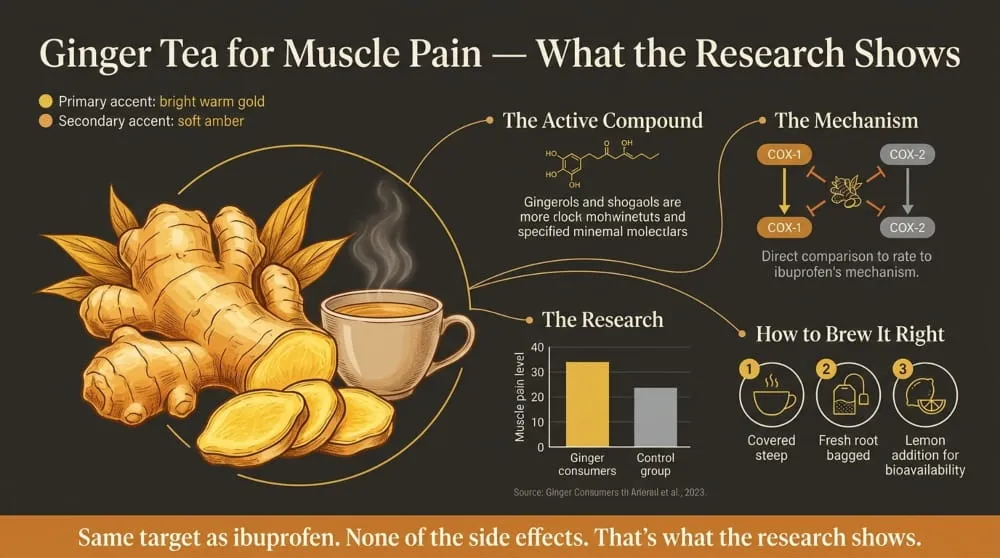
The active compounds in ginger responsible for its pain-relieving effects are gingerols, and when ginger is dried or heated, these convert into shogaols, which are even more potent. Both compounds work by inhibiting COX-1 and COX-2, the same biological targets that ibuprofen and aspirin target. The meaningful difference is that ginger does this without the gastric irritation, cardiovascular risk, or dependency concerns that come with regular NSAID use.
A notable study published in the Journal of Pain found that participants who consumed ginger daily experienced significantly reduced muscle pain after exercise-induced muscle damage, with effects comparable to those of some over-the-counter interventions. For people asking whether ginger tea is good for muscle pain, the research is as straightforward as it gets in the natural health space: yes, through a well-understood mechanism rather than speculation.
Beyond the COX pathway, gingerols also suppress prostaglandin synthesis, which amplifies pain signals in inflamed tissue. This is why ginger tea for sore muscles works not just on the inflammation itself but on the pain perception that inflammation triggers. You’re not just masking the sensation. You’re interrupting the biochemical process that produces it.
How to Make the Most Effective Ginger Tea for Soreness
The way you prepare ginger tea directly affects how much of its active compounds end up in your cup. Bagged ginger tea is convenient but typically delivers a fraction of the gingerol concentration found in fresh or high-quality loose-leaf preparations.
For maximum muscle recovery benefits, steep freshly grated or sliced ginger root (roughly a thumb-sized piece) in near-boiling water for 10 to 15 minutes, with the cup covered. Covering it matters: gingerols are partially volatile, and an uncovered steep allows a portion of the active compounds to escape with the steam before you ever drink them.
Adding a squeeze of lemon increases the bioavailability of ginger’s antioxidants, and a small amount of raw honey provides a mild anti-inflammatory effect without blunting ginger’s potency. If you’re using ginger as part of a broader muscle recovery blend, as it does in a well-formulated rooibos chai, the combination of ginger with other warming spices like cinnamon and clove creates a compounding anti-inflammatory effect that a single-ingredient ginger tea can’t fully replicate on its own.
Drink it warm, not scalding, within an hour of physical activity for the most targeted post-workout impact, or in the evening to ease the soreness that builds through the day and peaks overnight.
Best Herbal Teas for Muscle Relaxation and Tension Relief
There’s a meaningful difference between a tea that helps you feel relaxed and a tea that actually relaxes your muscles. The first is about mood. The second is about physiology. The best herbal teas for muscle relaxation do both. Still, they earn the label by interacting with your nervous system, mineral balance, and inflammatory pathways to produce a real, measurable physical release.
What Makes Tea a Natural Muscle Relaxant?
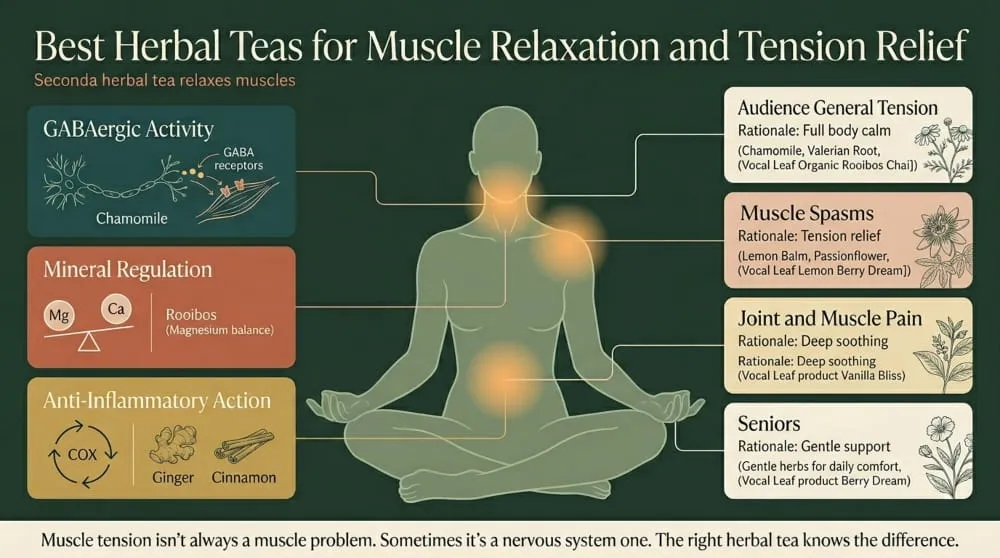
A tea qualifies as a genuine natural muscle relaxant when it influences one or more of the biological mechanisms that govern muscle tension. There are three primary pathways worth understanding.
The first is GABAergic activity. GABA is the nervous system’s primary inhibitory neurotransmitter; it tells overactive neurons to slow down, which, in turn, reduces the signals that tell your muscles to stay contracted. Chamomile contains apigenin, a compound that binds to GABA-A receptors and produces a calming, tension-releasing effect on both the mind and the musculature. This is why chamomile has held its place as a muscle-relaxing tea across centuries of traditional use, not because of placebo effects, but because of receptor-level pharmacology.
The second pathway is mineral regulation. Magnesium is essential for the muscle-relaxation phase of every contraction cycle. Without adequate magnesium, muscles struggle to fully relax after contraction, leading to persistent tightness, spasms, and cramps. Herbal teas like rooibos and nettle deliver bioavailable magnesium and calcium that directly support this release mechanism.
The third is anti-inflammatory action, which reduces the swelling and cellular irritation that physically prevent a muscle from returning to its resting length. Ginger, turmeric, and cinnamon-based blends all work through this pathway, making them particularly effective for tension that has an inflammatory component rather than a purely neurological one.
Best Herbal Teas for Muscle Spasms
Muscle spasms, those sudden, involuntary contractions that won’t release on command, respond best to teas that address both the nervous system and the mineral environment simultaneously. Chamomile is the most well-supported option for spasm relief, combining its GABAergic calming action with antispasmodic compounds that directly reduce the frequency and intensity of involuntary contractions.
Rooibos is a strong second choice, particularly for spasms driven by mineral depletion after physical activity. Its natural calcium and magnesium content work at the cellular level to restore electrolyte balance, which helps regulate and maintain voluntary muscle contractions. Vocal Leaf’s Organic Rooibos Chai combines that rooibos base with warming spices that add an extra anti-inflammatory layer, making it one of the more complete herbal muscle-relaxant teas available in a single cup.
Best Herbal Teas for Joint and Muscle Pain
Joint and muscle pain often travel together, and the teas that address both share a common thread: strong, broad-spectrum anti-inflammatory activity that doesn’t discriminate between joint tissue and muscle tissue.
Ginger tea covers both through its COX-1 and COX-2 inhibiting gingerols, which simultaneously reduce inflammation in connective tissue and muscle. Rooibos provides antioxidant protection, reducing oxidative stress that accelerates joint degradation over time. For deeper, chronic joint and muscle discomfort, a turmeric-forward blend delivers curcumin’s potent NF-kB blocking action, one of the most well-researched natural interventions for persistent musculoskeletal pain.
Vanilla Bliss from Vocal Leaf deserves mention here as well. Its calming herbal profile addresses the nervous system tension that often amplifies joint and muscle pain signals, particularly relevant for people whose discomfort worsens under stress or at the end of physically demanding days. You can find it here.
Best Herbal Teas for Seniors Needing Muscle Support
Muscle support needs shift meaningfully with age. After 60, the primary concerns are typically muscle mass preservation, joint comfort, cramp prevention, and the chronic low-grade tension that accumulates over years of physical use. The best teas for seniors address these needs gently, without caffeine load, without drug interactions, and without the gastrointestinal risk that comes with regular NSAID use for pain management.
Rooibos is the standout choice: caffeine-free, mineral-rich, and gentle enough for daily consumption without any stimulant effects that can disrupt sleep or elevate heart rate. Chamomile supports both muscle relaxation and sleep quality, where most muscle repair occurs, regardless of age. Ginger, at moderate intake, continues to offer meaningful anti-inflammatory support for joint and muscle pain without the side effect profile of pharmaceutical alternatives.
For seniors who use their voices professionally, retired teachers, community speakers, and choir members, the overlap between vocal and muscle health makes a tea like Vocal Leaf’s Lemon Berry Dream a particularly well-rounded daily option. It’s caffeine-free, rich in antioxidants, soothing to both throat and body, and gentle enough to drink multiple times a day without concern.
Is Tea Good for Muscle Growth?
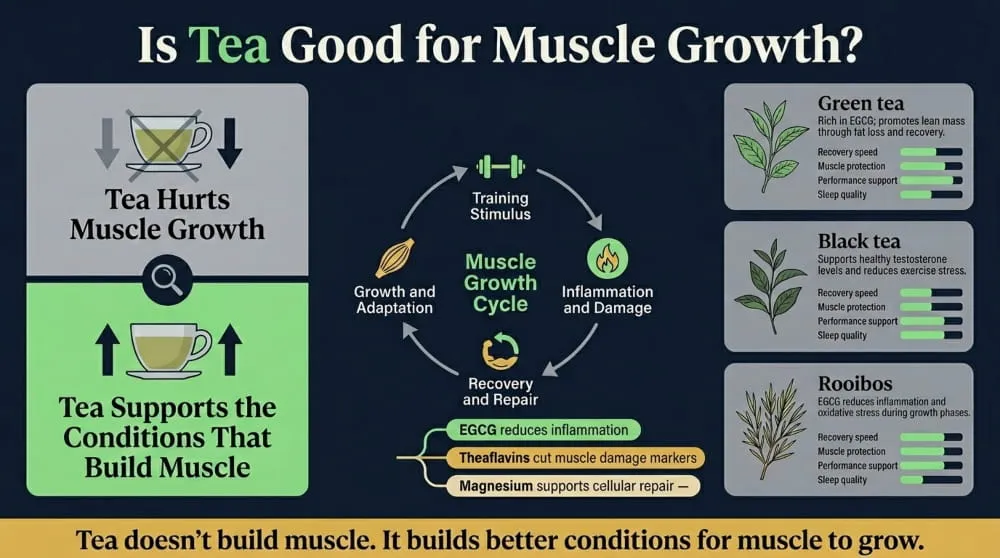
Tea won’t build muscle on its own, that’s the honest answer. But framing it as a binary good-or-bad question misses what tea actually does in the context of a training program. The more useful question is whether tea supports the conditions that enable muscle growth. And on that front, the evidence is genuinely encouraging.
Does Green Tea Affect Muscle Growth?
Green tea affects muscle growth indirectly, and mostly positively. The concern that circulates in fitness communities, that green tea’s metabolism-boosting effects somehow accelerate muscle breakdown, isn’t supported by the research at normal consumption levels.
What green tea does do is improve recovery quality, and recovery is where muscle growth actually happens. During training, you create the stimulus. During rest, and specifically during sleep, your body responds to that stimulus by repairing and thickening muscle fibers. Anything that improves the quality and speed of that repair cycle contributes to better muscle-building outcomes over time.
EGCG, green tea’s primary catechin, has shown a mild anti-catabolic effect, meaning it helps preserve lean muscle mass during periods of caloric deficit or high training volume by reducing cortisol-driven breakdown signals that break down muscle tissue under stress. Green tea doesn’t build muscle directly, but it protects the muscle you’re working to build. For anyone asking whether green tea is good for muscle building, that distinction matters.
Is Black Tea Good for Muscle Growth?
Black tea brings a different but complementary profile to the conversation about muscle growth. Theaflavin content, the antioxidants formed during the oxidation process that give black tea its depth and color, has been shown to reduce markers of exercise-induced muscle damage, which directly shortens the recovery window between training sessions.
More training frequency, with adequate recovery between sessions, is one of the most reliable drivers of muscle growth. If black tea helps you recover from Monday’s session in time to train effectively on Wednesday rather than Thursday, the compounding effect on your training volume over weeks and months is significant. That’s not a small contribution.
Black tea also contains more caffeine than most other teas, which has well-documented ergogenic effects, improving focus, reducing perceived exertion, and enhancing muscular endurance during training. Vocal Leaf’s Organic Loose Leaf Black Tea delivers that full-bodied caffeine and theaflavin profile cleanly, without additives or fillers that dilute the benefit.
Best Tea to Support Muscle Building Alongside Training
No single tea covers every angle of muscle-building support, which is why a rotational approach works better than committing to one option. Green tea in the morning or pre-workout covers antioxidant protection and mild performance enhancement. Black tea pre-training delivers a stronger caffeine and theaflavin hit that supports both performance and recovery. Rooibos post-workout replenishes minerals and reduces oxidative stress without any caffeine load that could interfere with the sleep your muscles need to grow.
For a practical daily structure: black tea before training, rooibos or lemon berry after, and something calming like Vanilla Bliss in the evening to support the nervous system recovery that underlies quality sleep, and quality sleep is non-negotiable for anyone serious about building muscle. Vocal Leaf’s Vanilla Bliss fits well in that evening slot, with a profile designed to ease tension and prepare the body for genuine rest.
Does Tea Interfere With Protein Absorption?
This is one of the most common concerns among people who take their training seriously, and it deserves a direct answer. The worry stems from tannins, compounds present in tea, particularly black and green tea, which can bind to certain minerals and proteins, reducing their absorption when consumed simultaneously.
The research shows that this effect is real but contextually limited. Drinking strong black tea immediately with a protein-heavy meal can modestly reduce iron absorption from plant-based sources. The effect on protein absorption itself, however, is minimal and not clinically significant at normal tea consumption levels.
The practical solution is straightforward: if you’re consuming a protein shake or a high-protein meal as part of your post-workout nutrition, wait 30 to 45 minutes before or after before drinking tea. That small gap is enough to sidestep any meaningful tannin interference. Milk tea, which adds dairy directly to tea, introduces its own variable, as the proteins in milk can bind to some of tea’s antioxidants, reducing their bioavailability. For muscle-building purposes, black or green tea consumed without milk and timed appropriately around meals is the cleanest approach.
Tea is not bad for muscle growth. Used intelligently, it’s one of the more accessible and evidence-backed natural tools available to support it.
How to Use Tea for Muscle Recovery A Practical Routine
Knowing which teas help with muscle recovery is only half the equation. The other half is timing, drinking the right tea at the right point in your day so its compounds are active in your system exactly when your body needs them most. Here’s a practical daily structure built around your training schedule and your body’s natural recovery rhythm.
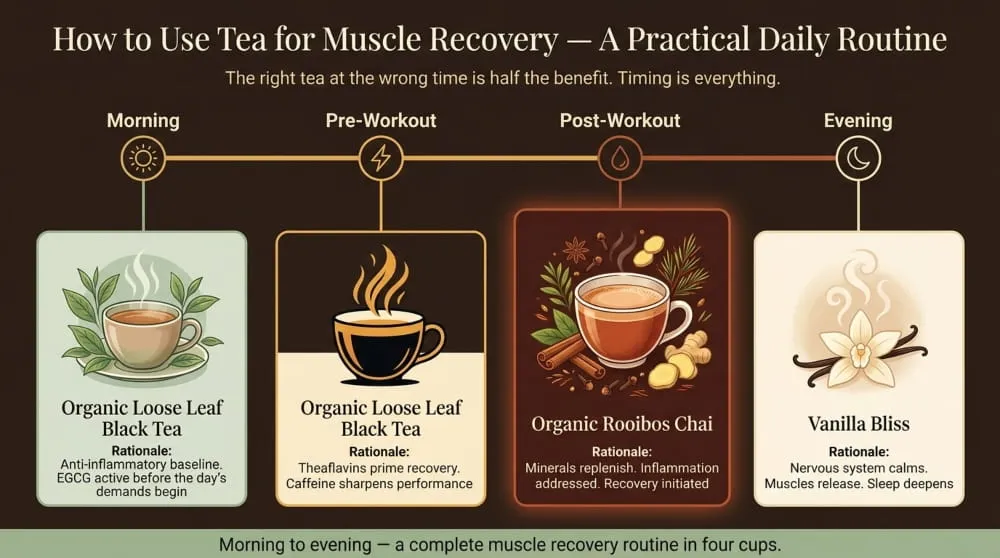
Morning Tea for Muscle Recovery
The morning cup sets the anti-inflammatory baseline for the rest of your day. If you trained the day before, your muscles are likely in the middle of their repair cycle, inflammation is still present, oxidative stress is still elevated, and your body is working through the overnight recovery process it started during sleep.
Green tea is the strongest morning choice for active recovery days. Its EGCG content gets anti-inflammatory compounds into your system early, before the demands of the day add new physical or mental stress on top of existing muscle fatigue. If yesterday was particularly intense and you’re feeling significant soreness, pairing green tea with a ginger-forward blend amplifies the COX-2 inhibiting effect and provides broader inflammatory coverage from the first hour of the day.
For those who train in the morning before eating, green tea on an empty stomach is well tolerated by most people. It has the added benefit of mild fat mobilization, which can be useful if body composition is part of your training goal alongside muscle recovery.
Pre-Workout Tea for Performance
The goal of a pre-workout tea isn’t recovery, it’s preparation. You want compounds that sharpen focus, increase muscular endurance, and reduce the perceived effort of the session so you can train with more quality and consistency.
Black tea is the clearest choice here. Its moderate caffeine content, higher than green tea but lower than coffee, delivers a clean, sustained energy lift without the spike-and-crash pattern that can disrupt training rhythm. The theaflavins in black tea also prime your antioxidant defenses ahead of the oxidative stress your workout is about to generate, essentially getting your recovery system ready before the damage occurs.
Drink Vocal Leaf’s Organic Loose Leaf Black Tea 30 to 45 minutes before training to let the caffeine reach peak effect by the time you start. Keep it unsweetened and without milk to preserve bioavailability and avoid any digestive heaviness during exercise.
Post-Workout Recovery Tea Recipe
This is the most important cup of your recovery routine. Within 60 minutes of finishing your session, your muscles are primed to receive anti-inflammatory and antioxidant support, the cellular repair process is actively initiating, and the compounds you consume now will have a direct impact on how sore you feel tomorrow.
Here’s a simple, effective post-workout recovery blend using what you already have:
Brew a strong cup of Vocal Leaf’s Organic Rooibos Chai as your base; its mineral content replenishes electrolytes lost through sweat immediately. Add a squeeze of fresh lemon juice for vitamin C, which accelerates collagen repair in connective tissue and enhances the bioavailability of rooibos’s antioxidants. If inflammation or muscle pain is significant, grate a small amount of fresh ginger directly into the cup and let it steep for an additional two minutes before drinking.
The result is a single cup that covers mineral replenishment, anti-inflammatory action, antioxidant recovery, and connective tissue support, the four pillars of effective post-workout muscle recovery, without a single synthetic ingredient.
Nighttime Tea to Relax Muscles Before Sleep
Sleep is when your muscles actually rebuild. Growth hormone secretion peaks during deep sleep, protein synthesis accelerates, and the cellular repair work initiated by tea’s compounds throughout the day is completed. Protecting sleep quality is therefore not separate from muscle recovery; it is muscle recovery.
The evening tea should do two things: relax residual muscle tension accumulated throughout the day, and support the nervous system’s transition into the deep, restorative sleep stages where the most meaningful repair happens.
Vocal Leaf’s Vanilla Bliss is built for exactly this moment. Its calming herbal profile works on the GABAergic pathways that release held muscle tension. At the same time, vanilla’s naturally soothing compounds help the nervous system return to a state of calm after the elevated state that training, performance, and daily demands leave it in. Drink it 30 to 45 minutes before bed, without screens, and let the wind-down be intentional.
For days when soreness is particularly deep or persistent, adding Vocal Leaf’s Lemon Berry Dream as an early evening cup, before the Vanilla Bliss closer to bedtime, extends your antioxidant coverage through the evening hours and gives your muscles a longer window of active recovery support before sleep begins.
Vocal Leaf’s Best Teas for Every Muscle Problem
Every muscle problem is slightly different, and the best tea for muscle recovery isn’t always the best tea for muscle tension or cramps. Here’s how Vocal Leaf’s lineup maps directly to each concern, one recommendation, one clear reason.
Best Tea for Muscle Pain & Inflammation, Organic Rooibos Chai
For persistent muscle pain driven by inflammation, Organic Rooibos Chai is the strongest match in the Vocal Leaf lineup. The rooibos base delivers rare antioxidants that target oxidative stress in muscle tissue. At the same time, the chai spice blend, cinnamon, clove, and ginger, adds compounding anti-inflammatory action through multiple pathways simultaneously. It’s not one compound doing the work. It’s several, working in the same direction at once.
Best Tea for Sore Muscles & Post-Workout Recovery, Lemon Berry Dream
Soreness that peaks 24 to 48 hours after exercise responds best to antioxidant-dense, caffeine-free support that can be consumed multiple times throughout the recovery window. Lemon Berry Dream fits that role precisely, bright with vitamin C-rich botanicals that accelerate cellular repair, gentle enough to drink morning and evening without any stimulant accumulation, and naturally soothing on the body without any heaviness. It’s the best tea for sore muscles when your priority is clearing the damage efficiently and getting back to full capacity sooner.
Best Tea for Muscle Aches (Chronic & Everyday), Organic Loose Leaf Black Tea
For the kind of muscle aching that builds gradually from repeated physical output, long rehearsals, teaching days, and training blocks, Organic Loose Leaf Black Tea offers a practical daily solution. Theaflavin content reduces exercise-induced markers of muscle damage over time, while its moderate caffeine level maintains energy and physical output without the crash that worsens fatigue-related aching. Used as a morning or pre-activity tea, it addresses chronic muscle aches from the front end rather than waiting to manage them after they peak.
Best Tea for Muscle Cramps & Spasms, Organic Rooibos Chai
Cramps and spasms come back to mineral imbalance more often than anything else, and no tea in the Vocal Leaf range addresses that more directly than Organic Rooibos Chai. Its natural calcium and magnesium content replenish the electrolytes that regulate the contraction-relaxation cycle in muscle tissue. At the same time, the warming spice profile provides antispasmodic support, reducing the frequency and intensity of involuntary contractions. For anyone dealing with regular cramping, particularly after physical activity or during the night, this is the clearest recommendation.
Best Tea for Muscle Relaxation & Tension Relief, Vanilla Bliss
Muscle tension that persists despite rest, stretching, and physical recovery is almost always carrying a nervous system component. Vanilla Bliss is Vocal Leaf’s most targeted option for this specific problem; its calming herbal profile engages the parasympathetic pathways that signal the body to release held tension. At the same time, vanilla’s naturally soothing compounds ease the neurological state that keeps muscles locked. As the best tea for relaxing muscles at the end of a demanding day, it works on the layer beneath the physical, where tension-driven muscle tightness lives.
Best Tea for Muscle Recovery (Overall Daily Routine), Full Lineup
No single tea covers every angle of muscle recovery across a full day, which is why the most effective approach rotates across the Vocal Leaf range by time and need. Black tea before activity. Rooibos Chai after. Lemon Berry Dream through the afternoon recovery window. Vanilla Bliss in the evening to close the loop with nervous system relaxation and sleep support.
Together, they form a complete daily muscle recovery routine: anti-inflammatory, antioxidant, mineral-rich, and calming, built entirely from clean, loose-leaf teas designed with the physical demands of performance in mind.
Vocal Leaf Muscle Recovery Recommendations
| Muscle Concern | Vocal Leaf Tea | Key Benefit |
|---|---|---|
| Muscle Pain & Inflammation | Organic Rooibos Chai | Multi-pathway anti-inflammatory action via warming spices and rooibos. |
| Post-Workout Soreness | Lemon Berry Dream | Antioxidant-driven cellular repair to clear oxidative stress. |
| Chronic Muscle Aches | Organic Loose Leaf Black | Theaflavins help reduce daily damage accumulation in tissues. |
| Muscle Cramps & Spasms | Organic Rooibos Chai | Natural magnesium and calcium replenishment to prevent cramping. |
| Muscle Tension | Vanilla Bliss | Nervous system calming that leads to physical tension release. |
| Nighttime Recovery | Vanilla Bliss | Deep rest support, allowing the body to prioritize overnight repair. |
| Active Performance | Organic Loose Leaf Black | Caffeine + theaflavins provide sustained energy for training or performance. |
| Broad Antioxidant Recovery | Lemon Berry Dream | Vitamin C-rich, caffeine-free, and safe for all-day hydration. |
Conclusion
Your muscles work hard. Whether that effort goes into training, performing, teaching, or simply carrying the physical demands of a full life, recovery isn’t optional. It’s the other half of the work.
Tea won’t replace sleep, nutrition, or progressive training. But used consistently and strategically, it adds a layer of real, biochemically meaningful support at every stage of the recovery process, from the inflammation that spikes immediately after exertion to the oxidative stress that lingers through the following days to the nervous system tension that prevents your muscles from ever fully letting go.
The teas that work best aren’t the ones with the most dramatic health claims. They’re the ones built around compounds that have earned their place through centuries of traditional use and, increasingly, rigorous modern research. EGCG in green tea. Gingerols in ginger. Aspalathin in rooibos. Apigenin in chamomile. These aren’t marketing ingredients; they’re specific molecules doing specific jobs inside your body every time you drink them.
For vocalists, performers, speakers, and anyone whose physical output is tied to their craft, the stakes of poor recovery are higher than sore legs the next morning. Tension in the wrong place, inflammation left unaddressed, or sleep disrupted by a body that never fully unwound, these things affect your voice, your presence, and your performance in ways that go well beyond the physical.
Vocal Leaf’s lineup was built with exactly that in mind. Organic Rooibos Chai for inflammation and cramps. Lemon Berry Dream for post-workout soreness and antioxidant recovery. Organic Loose Leaf Black Tea for active recovery and daily performance support. Vanilla Bliss to close the day with the nervous system calm, your muscles actually need to repair overnight.
Start with one. Build the habit. Let the recovery compound, the same way the training does.
Frequently Asked Questions (FAQ’s)
What tea is best for muscle pain?
Ginger tea and rooibos are the strongest options for muscle pain, each working through a different but complementary mechanism. Ginger targets the COX-2 enzyme pathway that generates pain signals in inflamed tissue, the same pathway that ibuprofen addresses, but without the side effect profile. Rooibos provides broad-spectrum antioxidant protection, reducing the oxidative stress underlying chronic muscle pain. For a single tea that covers both angles, Vocal Leaf’s Organic Rooibos Chai combines rooibos with ginger and warming spices, making it the most complete option for muscle pain relief in one cup.
What tea relaxes muscles naturally?
Chamomile is among the best-researched natural muscle-relaxant teas, working through apigenin. This compound binds to GABA receptors in the brain and reduces the neurological signals that keep muscles contracted. Vanilla-forward herbal blends work through a similar nervous system pathway, making them particularly effective for tension that has a stress or anxiety component. Vocal Leaf’s Vanilla Bliss is the strongest recommendation for anyone looking for a tea that genuinely relaxes muscles rather than simply providing a moment of calm.
Does green tea help with muscle soreness?
Yes, consistently and through a well-understood mechanism. Green tea’s primary catechin, EGCG, suppresses the pro-inflammatory cytokines responsible for post-exercise muscle soreness and neutralizes the free radicals that extend the recovery window. Research has shown that regular green tea consumption measurably reduces both the intensity and duration of delayed-onset muscle soreness (DOMS) compared with no intervention. For best results, drink green tea within an hour of finishing exercise and again the following morning.
What herbal tea is good for muscle and joint pain?
For pain that affects both muscles and joints simultaneously, you need a tea with broad anti-inflammatory coverage across both tissue types. Ginger and rooibos are the most consistent performers here: ginger through COX inhibition, which reduces inflammation in muscle and connective tissue alike; rooibos through antioxidant compounds that protect against oxidative damage that accelerates both muscle soreness and joint degradation. Vocal Leaf’s Organic Rooibos Chai addresses both concerns in a single, caffeine-free cup.
Is ginger tea good for muscle pain?
Yes, and the research is unusually detailed on this. Gingerols, the active compounds in ginger, inhibit the same enzymes targeted by over-the-counter anti-inflammatory medications, reducing both the inflammation and the pain perception it produces. A notable study found that daily ginger consumption produced significant reductions in exercise-induced muscle pain, effects comparable to those of some pharmaceutical interventions. For muscle pain specifically, ginger tea is one of the most direct and evidence-backed natural options available.
Can drinking tea cause muscle cramps?
At normal consumption levels, no. The concern usually centers on caffeine’s mild diuretic effect, with the idea that dehydration from caffeine leads to electrolyte loss and cramping. In practice, the fluid in caffeinated tea largely offsets any diuretic effect, and two to three cups per day do not cause significant dehydration in most people. Where tea and muscle cramps do have a legitimate connection is in excessive intake combined with inadequate water consumption. The straightforward solution is to pair caffeinated teas with sufficient hydration and prioritize mineral-rich, caffeine-free options like rooibos after intense physical activity.
What tea is good for muscle spasms?
Rooibos and chamomile are the two strongest teas for muscle spasms, targeting the problem from different angles. Rooibos replenishes the magnesium and calcium that regulate the muscle contraction-relaxation cycle at the cellular level, addressing the mineral deficiency that underlies most involuntary spasms. Chamomile works through antispasmodic compounds that directly reduce the frequency and intensity of those contractions. Used together throughout the day, they address both the physiological and neurological causes of muscle spasms more comprehensively than either alone.
Is tea good or bad for muscle growth?
Tea is good for muscle growth in a supporting role, not a direct one. It doesn’t stimulate muscle protein synthesis as effectively as nutrition and progressive training do. Still, it meaningfully improves the conditions under which muscle growth occurs by accelerating recovery, reducing inflammation, protecting lean muscle mass during a caloric deficit, and improving sleep quality, when the majority of actual muscle repair and growth occurs. Black tea’s theaflavins reduce exercise-induced muscle damage. Green tea’s EGCG has mild anti-catabolic properties. Neither builds muscle on its own, but both make your training investment more efficient.
What tea helps with sore muscles after exercise?
The most effective teas for post-exercise soreness are those that combine antioxidant density with anti-inflammatory action, targeting both the oxidative stress and the inflammatory response that drive DOMS simultaneously. Rooibos, green tea, and lemon and berry herbal blends are the strongest options. Vocal Leaf’s Lemon Berry Dream is particularly well-suited for the post-workout window, caffeine-free, rich in vitamin C and polyphenols, and gentle enough to drink multiple times across the full 48 to 72-hour soreness window without any stimulant accumulation.
Which tea is best for muscle recovery, green, black, or herbal?
Each works best at a different point in the recovery cycle, which is why choosing between them is less useful than understanding when to use each one. Green tea is strongest in the immediate post-exercise window and the following morning, when its EGCG content can actively suppress the inflammatory response at its peak. Black tea is most valuable before training, as its theaflavins and moderate caffeine simultaneously support both your performance and your recovery. Herbal teas, rooibos, chamomile, and calming blends carry the evening and overnight recovery window, supporting mineral replenishment, nervous system relaxation, and the deep sleep where muscle repair is completed. The honest answer is that the best tea for muscle recovery is whichever one you’re drinking at the right time of day.


