Best Tea for Relaxation | The Complete Guide to Teas That Actually Calm Your Mind and Body
There is a reason people have been reaching for a warm cup of tea at the end of a long day for thousands of years. It’s not just a habit. It’s not just warmth. Something about tea, the ritual, the aroma, the slow act of brewing and sipping, genuinely signals to your nervous system that it’s time to let go.
But here’s what most people don’t realize: not all teas relax you the same way, and not all teas are created equal. The difference between a cup that truly calms your mind and body and one that just tastes pleasant comes down to what’s actually in your blend, how it’s sourced, and how it’s prepared.
If you’ve been searching for the best tea for relaxation, whether you want to quiet a busy mind, ease tension in your body, or simply wind down before bed, you’re in the right place. This guide breaks down exactly why tea works, what to look for in a genuinely calming blend, and which teas consistently deliver the deepest, most satisfying sense of calm.
And if you’ve never experienced the difference that high-quality loose leaf tea makes compared to a standard tea bag, this guide will change the way you think about your cup entirely.
Why Tea Is One of the Most Powerful Natural Relaxation Tools
Most people know that tea feels relaxing. Fewer understand why, and that distinction matters, because once you understand the science behind it, you stop seeing tea as just a cozy drink and start seeing it as one of the most accessible, natural tools for calming your mind and body that exists.
What Actually Makes Tea Relaxing? (The Science Explained)
The relaxing effect of tea isn’t a placebo, and it isn’t just the warmth of the cup in your hands. Tea contains naturally occurring compounds that interact directly with your brain chemistry, slowing the mental noise, easing physical tension, and gently guiding your nervous system out of a heightened stress state.
The two most significant players are L-theanine, an amino acid found almost exclusively in tea, and the ritual of tea preparation itself, which research increasingly recognizes as a form of mindfulness that triggers the body’s relaxation response before you’ve even taken your first sip. Together, they make tea uniquely effective in a way that most other beverages simply cannot replicate.
The Role of L-Theanine in Calming the Nervous System
L-theanine is the chemical in tea most directly responsible for that calm, clear-headed feeling tea drinkers know well. It works by increasing alpha brain wave activity, the same brain state associated with meditation, creative flow, and deep rest, without making you drowsy or foggy.
What makes L-theanine particularly remarkable is what it doesn’t do. Unlike many relaxation aids, it doesn’t sedate you. It doesn’t dull your focus. Instead, it creates a state that researchers often describe as “alert relaxation”; your mind becomes quieter and more settled while remaining fully present. For anyone dealing with nervous tension, racing thoughts, or the kind of stress that makes it hard to sit still, this is exactly the mechanism that makes tea genuinely effective at relaxing the nervous system.
High-quality loose-leaf teas tend to preserve L-theanine content more effectively than heavily processed alternatives, making it one of the clearest arguments for choosing a well-sourced loose-leaf blend when relaxation is your goal.
Why Loose Leaf Tea Delivers a Deeper Relaxation Experience
The format of your tea matters more than most people appreciate. Standard tea bags are typically packed with the smallest, most finely ground particles left over from tea processing, which the industry calls “dust and fannings.” These fragments have a larger surface area relative to their size, which causes them to release compounds quickly and unevenly, often producing a harsher, more astringent cup that’s lost much of its natural complexity.
Loose leaf tea, by contrast, consists of whole or minimally broken leaves that unfurl slowly in hot water. This slower, more complete infusion releases the full spectrum of the leaf’s natural compounds, including L-theanine, in a more balanced, controlled way. The result is a cup that’s smoother, richer, and more effective at delivering the calm you’re actually looking for.
There’s also something to be said for the act of preparing loose leaf tea itself. Measuring the leaves, watching them bloom in the water, waiting for the steep, it’s an intentional pause built into your day. That small ritual of slowing down is, in its own way, one of the most relaxing things you can do.
What to Look for in the Best Relaxation Tea
With so many options available, knowing which tea is actually good for relaxing, versus which one simply markets itself that way, comes down to a few key qualities. Before you choose a blend, it helps to know exactly what separates a tea that genuinely calms from one that just smells pleasant on the shelf.

Key Compounds That Signal a High-Quality Calming Tea
The best relaxation teas aren’t just flavorful, they’re functionally rich. When evaluating a blend, the first thing to look for is a meaningful L-theanine content, which comes from using quality whole-leaf or minimally processed tea as a base. L-theanine is the primary compound responsible for that signature calm, focused state that makes tea so effective for relaxing the mind and nervous system.
Beyond L-theanine, look for blends that incorporate botanicals with a documented history of supporting calm, ingredients chosen for purpose, not just flavor. A well-constructed relaxation blend will have a clear intention behind every ingredient, and that intention should be transparent. If a tea’s ingredient list reads like a vague assortment of “natural flavors” with no real substance, that’s a signal the blend wasn’t built with genuine relaxation in mind.
Aroma also tells you something important. A high-quality calming tea should have a natural, layered scent, not sharp, artificial, or overpowering. The nose is often the fastest way to detect whether a blend was crafted with care or assembled cheaply.
Loose Leaf vs. Tea Bags, Which Is Better for Relaxation?
This is one of the most common questions among people serious about finding the best tea for relaxation, and the answer is straightforward: loose leaf wins consistently.
As discussed earlier, tea bags are generally filled with the lowest-grade remnants of tea processing. The compounds that make tea relaxing, particularly L-theanine, are best preserved in whole or gently broken leaves, not in fine dust packed into a paper sachet. When those smaller particles steep, they release their contents too quickly and incompletely, producing a cup that’s often bitter, flat, and far less effective.
Loose leaf tea steeps more slowly and more completely. The leaves have room to expand, release their full range of natural compounds, and produce a cup with genuine depth, both in flavor and in effect. If you’re drinking tea specifically to relax your mind and body, loose leaf isn’t a luxury. It’s simply the smarter choice.
Organic Ingredients and Why They Matter for a Relaxing Blend
If the purpose of your tea is to calm your nervous system and support your overall sense of well-being, it makes very little sense to introduce synthetic pesticides, chemical residues, or artificial additives into that cup. This is why organic sourcing matters, especially for a relaxation blend you intend to drink regularly.
Conventionally grown teas can carry residues from the pesticides used during cultivation. While regulatory limits exist, the cumulative effects of repeated exposure are worth considering, particularly when your goal is to support your body’s natural ability to rest and recover.
Organic loose-leaf teas are grown without synthetic chemicals, which means what ends up in your cup is closer to what nature intended: clean, pure, and genuinely nourishing. For a relaxation tea you plan to make part of your daily routine, organic isn’t just a label. It’s a baseline standard worth holding to.
The Best Teas for Relaxation (Vocal Leaf Picks)
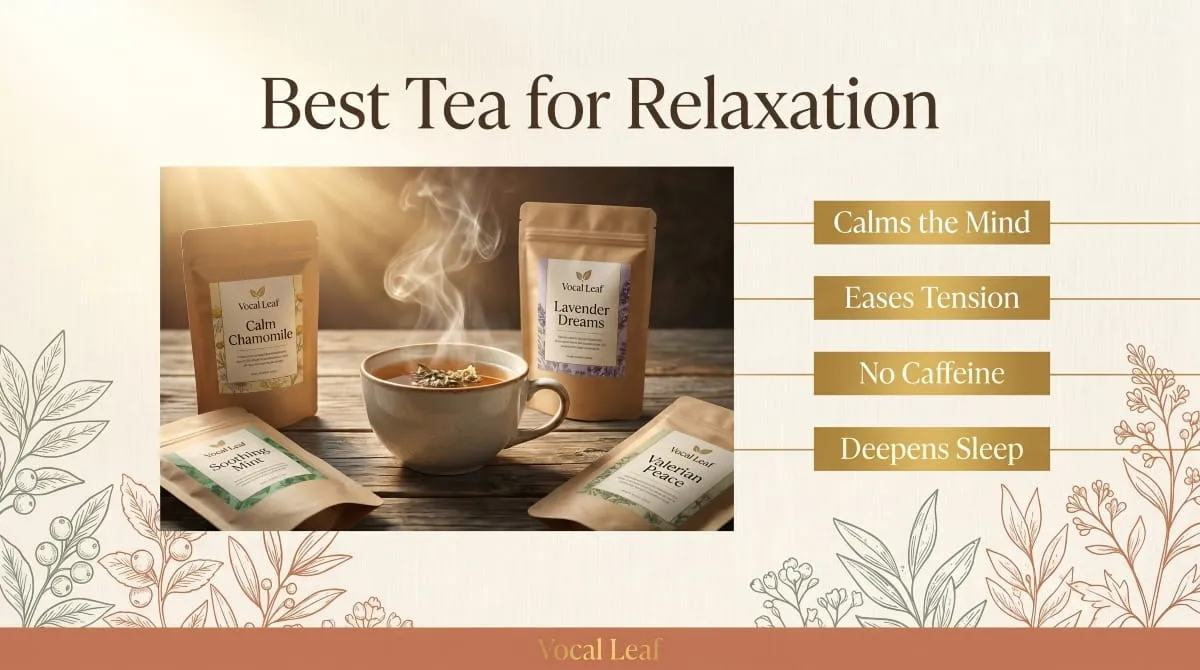
Understanding what makes a great relaxation tea is one thing. Finding one that actually delivers is another. At Vocal Leaf, every blend is crafted with a specific purpose: to support the people who depend on their voice, their clarity, and their calm every single day. These aren’t generic wellness teas. They’re intentional blends built around real function, real ingredients, and a real commitment to organic quality.

Here are the four Vocal Leaf teas that stand out most for relaxation, each one offering something distinct depending on what kind of calm you’re looking for.
Vanilla Bliss, The Best Tea for Deep Evening Relaxation
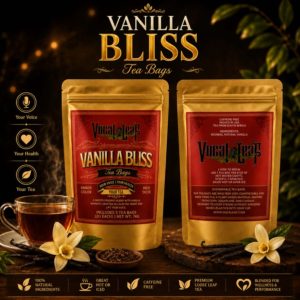
When the day is finally done, and your mind is still running at full speed, Vanilla Bliss is the cup that brings everything back down to earth. This is a deeply soothing blend designed for the kind of relaxation that actually sticks, the kind that slows your breathing, quiets the mental chatter, and eases you into a genuinely restful evening.
The warmth of natural vanilla wraps the blend in a smooth, comforting richness that feels almost indulgent without being heavy. It’s caffeine-free by design, making it the ideal choice for nighttime relaxation or any moment when you need your nervous system to let go truly. If you’ve been searching for the best tea to relax at night, this is where that search ends.
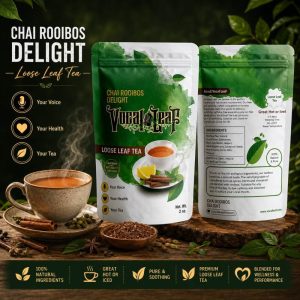
Organic Rooibos Chai Tea, A Warming, Caffeine-Free Blend for Unwinding
There’s something about the combination of warming spice and a naturally smooth, caffeine-free base that makes Organic Rooibos Chai Tea one of the most satisfying relaxation teas in the Vocal Leaf lineup. Rooibos, naturally caffeine-free and low in tannins, is one of the most inherently calming tea bases available, making it an excellent choice for anyone looking to relax their nerves without the risk of stimulation.
The chai-inspired spice profile adds depth and warmth, making this blend feel grounding and substantial. It’s the kind of tea you reach for when you want more than calm, you want comfort. Whether you’re winding down mid-afternoon or settling into a slow evening, this blend delivers a full-bodied, soothing experience that feels like a genuine exhale.
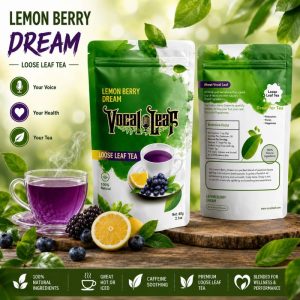
Lemon Berry Dream, Light, Bright, and Beautifully Calming
Not every relaxation tea needs to be dark, heavy, or intensely herbal. Sometimes the most calming cup is the one that’s light, fresh, and quietly uplifting, and that’s exactly what Lemon Berry Dream delivers. The bright citrus notes and gentle berry sweetness make this blend feel like a reset button: the kind of tea that clears the mental fog without weighing you down.
It’s a particularly good choice for daytime relaxation, when you need to take the edge off without losing your energy entirely. The flavor profile is approachable and genuinely enjoyable, which means you’ll actually look forward to brewing it, and that ritual of anticipation is itself part of what makes tea so effective at helping you relax. For anyone who finds heavier blends too intense, Lemon Berry Dream is the answer.
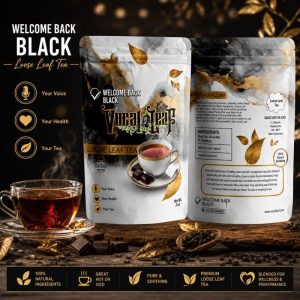
Organic Loose Leaf Black Tea, For Focused, Grounded Relaxation
Black tea and relaxation might seem like an unlikely pairing, but understanding L-theanine changes everything. Vocal Leaf’s Organic Loose Leaf Black Tea contains the natural L-theanine inherent to quality black tea, which helps create that signature state of calm alertness: relaxed but focused. Grounded, but present.
This is the ideal choice for moments when you don’t want to slow all the way down, you want to ease the tension, quiet the noise, and find a steady, centered calm that lets you keep moving. It’s the kind of relaxation that performers, speakers, and professionals reach for before a big moment, not to sedate themselves, but to settle into their best, most composed state. Rich, smooth, and deeply satisfying, it’s proof that the best tea for relaxation doesn’t always mean the most obvious one.
Best Tea for Relaxation by Time of Day
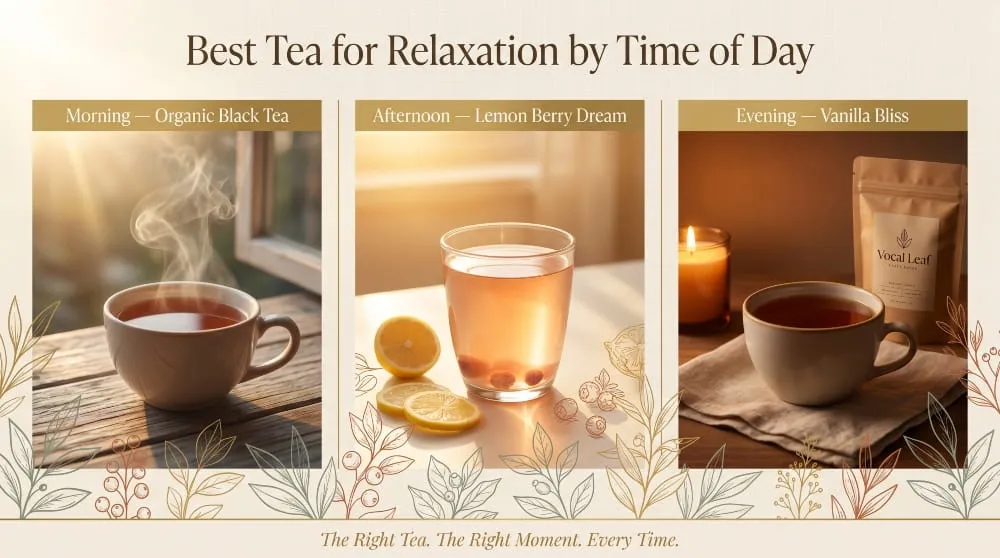
One of the most overlooked aspects of choosing the right relaxation tea is timing. The best tea for relaxation at 7 am looks very different from the best tea for relaxation at 10 pm, and matching your blend to the moment makes a significant difference in how effective it actually feels. Your body’s needs shift throughout the day, and a well-chosen tea works with those natural rhythms rather than against them.
Best Morning Tea to Start the Day Without Stress
The morning sets the tone for everything that follows. Starting your day with a tea that grounds you, rather than jolting you into a state of anxious alertness, can shift the entire quality of your day in a meaningful way.
For morning relaxation, you want a blend that offers calm without completely suppressing your natural energy. This is where Vocal Leaf’s Organic Loose Leaf Black Tea earns its place. Its natural L-theanine content smooths the edges off early-morning tension while keeping your mind clear and focused, the kind of grounded, composed start that carries you through whatever the day demands. It’s not about being drowsy before the day begins. It’s about being steady.
The morning ritual itself matters too. Taking even five minutes to brew a proper loose leaf cup, measuring, steeping, and sitting with it, is one of the simplest ways to introduce calm intention into a day before the noise begins.
Best Afternoon Tea to Reset and Recharge
The mid-afternoon is when most people feel it, that dip in focus, the creeping tension from a full morning of demands, the mental fatigue that makes everything feel slightly harder than it should. This is the moment a well-chosen tea does some of its best work.
What you need in the afternoon is a reset, something that clears the mental clutter, eases the tension that’s built up since morning, and gives you a genuine second wind without disrupting your ability to sleep later. Lemon Berry Dream is ideal here. Its light, bright character lifts the mood without overstimulating, offering a calm that feels refreshing rather than sedating. It’s the kind of cup that makes the second half of the day feel genuinely manageable again.
This is also a good time for Organic Rooibos Chai Tea: caffeine-free, warming, and grounding, helping steady the nervous system without pulling you toward sleep too early.
Best Tea for Nighttime Relaxation Before Bed
Evening is when your tea choice matters most. Caffeine at the wrong hour can quietly undermine sleep quality even when you don’t feel immediately wired, which is why the best tea for nighttime relaxation needs to be genuinely caffeine-free, not just low in caffeine, but free of it entirely.
Vanilla Bliss was built for this moment. Its smooth, deeply soothing character is designed specifically for the transition from the demands of the day to genuine rest. Brewing a cup of Vanilla Bliss about an hour before bed creates a deliberate signal to your nervous system, a warm, fragrant ritual that tells your body the day is done and it’s safe to slow down.
The best relaxing teas before bed work on two levels simultaneously: the blend’s compounds support physiological calm. In contrast, the ritual of preparing and sipping them supports the psychological shift into rest. When both are working together, the result isn’t just a pleasant cup of tea. It’s genuinely better sleep.
Best Tea for Relaxation by Need
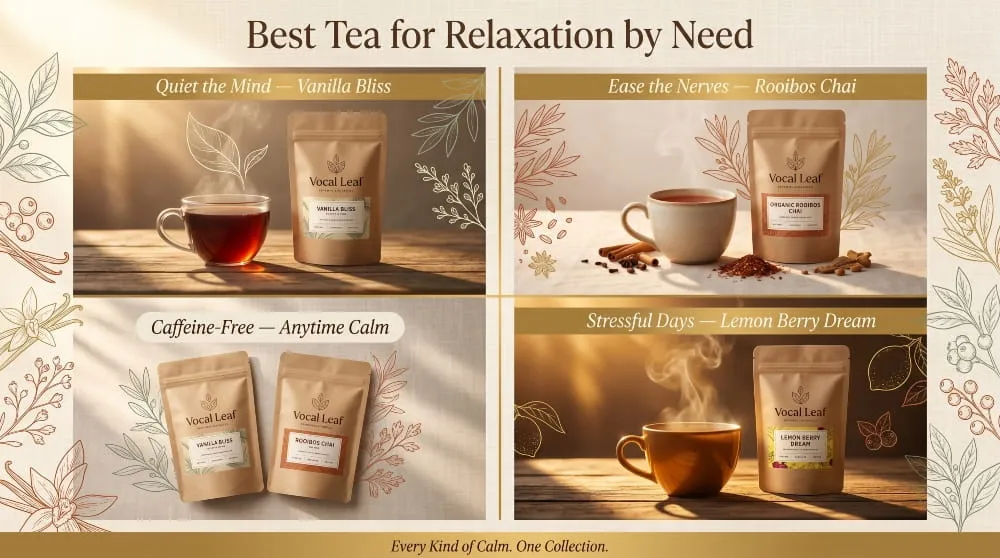
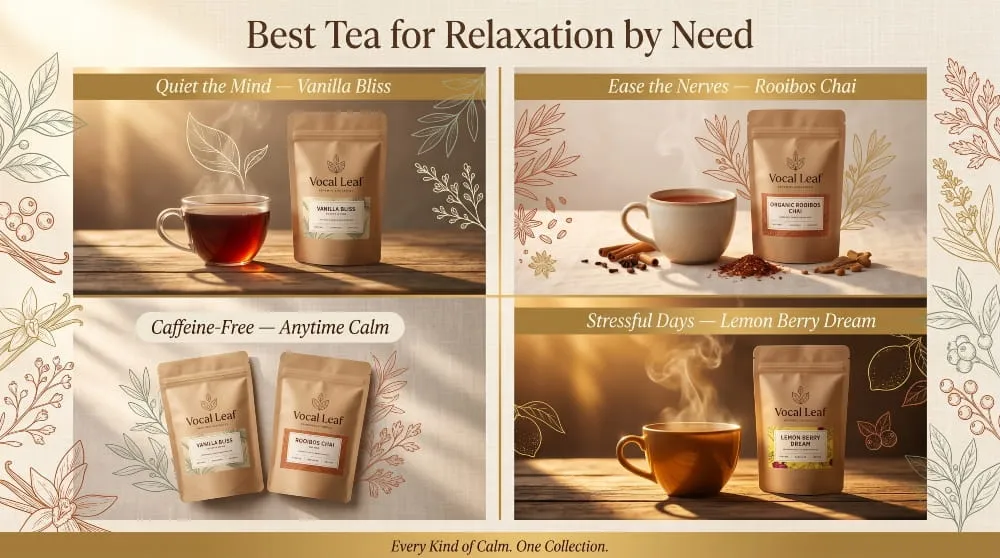
Relaxation isn’t one-size-fits-all. The tension a performer feels before stepping on stage is different from the mental exhaustion a teacher carries home after a full day of speaking. The nervous restlessness that keeps you from winding down at night is different from the low-grade stress that hums in the background of a demanding afternoon. The best tea for your relaxation needs depends entirely on what kind of calm you’re actually looking for, so here’s how to match the right blend to the right moment.
Best Tea to Relax Your Mind and Quiet Mental Chatter
Mental noise is one of the most common and least addressed forms of stress. It’s not always anxiety in the clinical sense; it’s the constant stream of thoughts, to-do lists, replayed conversations, and low-level worry that makes it impossible to feel genuinely at ease even when nothing is technically wrong.
For this kind of restlessness, you need a tea that works at the level of brain chemistry, not just comfort. L-theanine, naturally present in quality tea, is remarkably effective at quieting this kind of mental activity, increasing alpha-wave brain activity associated with calm focus, and reducing the mental friction that keeps the mind spinning. Vanilla Bliss is the standout choice here. Its deeply soothing character creates the kind of settled mental stillness that’s genuinely hard to manufacture any other way. A single cup, brewed slowly and sipped without distraction, can shift the quality of your thinking in a matter of minutes.
Best Tea to Relax Your Nerves and Ease Tension
Physical tension and nervous energy often travel together. Tight shoulders, shallow breathing, a jaw that won’t unclench, these are signs that your nervous system is running hotter than it should, and they call for a tea with real grounding power.
Organic Rooibos Chai Tea is particularly effective for this kind of tension. Rooibos is naturally caffeine-free, meaning it lacks the stimulating properties that can quietly amplify nervous energy. The warming spice profile adds a layer of physical comfort; there’s something about heat and spice together that encourages the body to release held tension in a way that lighter, cooler blends sometimes don’t. It’s the tea you reach for when your body needs to remember what relaxed actually feels like.
For those whose tension lives more in the mind than the body, Organic Loose Leaf Black Tea offers that characteristic L-theanine-driven calm that steadies the nervous system without dulling it, particularly useful before high-pressure moments when you need to be both relaxed and sharp.
Best Tea for Relaxation Without Caffeine
Caffeine sensitivity is more common than most people realize, and even those who handle it well during the day can find that it quietly disrupts sleep quality, amplifies anxiety, or adds an undercurrent of tension they can’t quite locate the source of. If you’re looking for the best relaxation tea without caffeine, the answer is clear: reach for a naturally caffeine-free base.
Both Vanilla Bliss and Organic Rooibos Chai Tea are completely caffeine-free by nature, not decaffeinated through chemical processing, but inherently free of caffeine from the ground up. This makes them genuinely appropriate at any hour, for any person, regardless of caffeine sensitivity. You get all of the ritual, all of the warmth, and all of the calming depth, without any of the stimulation that can quietly work against the relaxation you’re trying to create.
Best Hot Tea for Relaxation on Stressful Days
There’s a reason that, on the most difficult days, people reach for something hot instinctively. Warmth has a direct physiological effect on the body; it encourages blood vessels to dilate, muscles to soften, and breathing to slow. A hot cup of tea on a stressful day isn’t just emotionally comforting; it’s also physically soothing. It’s physically effective.
On those days when everything feels like too much, Lemon Berry Dream offers a bright, uplifting calm that cuts through the heaviness without adding more weight to it. Its light, clean character makes it feel like a breath of fresh air in cup form, exactly what an overwhelmed nervous system needs. For deeper, more enveloping comfort on particularly hard days, Vanilla Bliss delivers a warmth that feels almost like being held, rich, smooth, and genuinely restorative in the way that only a well-crafted hot tea can be.
The act of making it matters too. On stressful days, especially, the two or three minutes it takes to steep a loose-leaf tea properly is itself a form of medicine, a forced pause, a moment of sensory focus, a small but deliberate act of care for yourself in the middle of everything else.
Best Tea for Meditation
Vanilla Bliss is the best tea for meditation, since it’s caffeine-free and formulated to support quiet, sustained mental stillness without any stimulant pulling your focus outward. A pre-meditation cup works best about 15–20 minutes before you sit, giving the warmth and ritual of brewing time to settle the mind before the practice begins. Because Vanilla Bliss uses compostable, microplastic-free tea bags, it also pairs with the same intentionality many meditation practices emphasize, a small detail, but one that fits the ritual rather than working against it. For a longer meditation session or an evening practice, Organic Rooibos Chai Tea is a strong alternative. Its naturally caffeine-free profile maintains the same calm-without-stimulation effect, with a warmer, more grounding flavor for practices that lean toward stillness rather than energy.
How to Make the Perfect Relaxing Cup of Tea
Knowing which tea to choose is only half the equation. How you brew it determines whether you get a cup that’s genuinely calming or one that falls short of its potential. The good news is that brewing loose leaf tea well isn’t complicated, it just requires a little intention, and that intention itself becomes part of the relaxation experience.
Loose Leaf Brewing Guide for Maximum Calm
The foundation of a great relaxing cup starts with the leaves themselves. Because loose leaf tea is whole or minimally processed, it needs space and time to fully release its natural compounds, including the L-theanine that makes it so effective for calming the mind and body.
Here’s what a proper loose leaf brew looks like in practice:
- Amount: Use approximately 1 teaspoon of loose-leaf tea per 8 ounces of water. For a richer, more robust cup, particularly with black tea, you can nudge this slightly higher.
- Vessel: A quality infuser, strainer basket, or teapot with a built-in filter gives the leaves room to expand fully. This matters more than most people realize; leaves that can’t unfurl properly don’t steep evenly.
- Water: Always start with fresh, cold water, then bring it to the appropriate temperature. Tap water that’s been sitting or repeatedly boiled can introduce flat, off-note flavors that diminish the cup.
- Steep time: Follow the specific guidance for each blend. Under-steeping leaves the cup weak and underdeveloped; over-steeping can introduce bitterness that works against the calm you’re trying to create.
The result, when done right, is a cup that’s noticeably smoother, more complex, and more effective than anything that comes from a standard tea bag.
Water Temperature, Steep Time, and Ritual: Why the Process Matters
Temperature and timing are the two variables most people get wrong, and they matter more than most casual tea drinkers appreciate.
For Vocal Leaf’s black tea, water just off the boil, around 200 to 212°F (93 to 100°C), is ideal. Black tea leaves are robust enough to handle full heat, and that temperature is necessary to properly open the leaf and release its full depth of flavor and L-theanine content. Steep for three to five minutes, depending on your preference for strength.
For herbal and rooibos-based blends like Vanilla Bliss and Organic Rooibos Chai Tea, fully boiling water works beautifully; these blends are forgiving and benefit from the heat to fully release their botanical character. A steep of five to seven minutes gives you a rich, full-bodied cup that’s deeply soothing.
For Lemon Berry Dream, boiling or near-boiling water brings out the fruit’s brightness and citrus notes without dulling them. Five minutes is a reliable sweet spot.
Beyond the technical details, there’s something worth saying about the ritual itself. The act of heating water, measuring leaves, watching the color bloom through the cup, waiting, these are not inefficiencies to be shortcut. They are, quite literally, minutes of enforced slowness in a day that rarely offers any. Mindfulness research consistently shows that brief, sensory-focused activities reduce cortisol and activate the parasympathetic nervous system. In other words, making tea properly is itself relaxing; the calm begins before you’ve taken a single sip.
Simple Relaxing Tea Blend Recipes to Try at Home
One of the quiet pleasures of loose leaf tea is the ability to experiment, layering flavors and adjusting ratios to create something that feels genuinely personal. Here are a few simple approaches to try at home using Vocal Leaf teas.
The Evening Wind-Down Brew a full cup of Vanilla Bliss at full strength, then add a small spoonful of raw honey stirred in just before sipping. The honey adds a gentle sweetness that deepens the vanilla character and makes the whole cup feel like a proper evening ritual. Best taken slowly, with no screens, about an hour before bed.
The Afternoon Reset Brew Lemon Berry Dream is slightly stronger than usual, and pour it over a few ice cubes for a chilled, refreshing afternoon cup that resets your mood without weighing you down. It’s one of the most immediately uplifting ways to reclaim the second half of a difficult day.
Ground the Blend Brew Organic Rooibos Chai Tea for the full seven minutes, then add a small splash of warm oat milk and a pinch of cinnamon. The result is a deeply warming, naturally sweet cup that feels substantial and comforting, ideal for cold evenings or moments when you need something that genuinely settles the nervous system.
None of these requires special equipment or advanced technique. They just require the willingness to slow down for a few minutes, which, when you think about it, is the whole point.
Does Tea Actually Help You Relax? What the Research Says
It’s a fair question. In a wellness landscape full of overstated claims and products that promise more than they deliver, healthy skepticism is warranted. So let’s be direct: yes, tea genuinely helps you relax, and the evidence behind it is more substantial than most people realize. This isn’t folk wisdom dressed up as science. The calming effects of tea are grounded in real, measurable physiology, and the research has been building for decades.
Is Rooibos Tea Relaxing?
Rooibos operates through a somewhat different pathway than true teas, but its relaxing properties are well-supported. Native to South Africa and naturally caffeine-free, rooibos contains a unique combination of antioxidants, including aspalathin and nothofagin, that have been studied for their ability to reduce cortisol levels, the primary stress hormone responsible for keeping the body in a heightened state of alertness.
Research published in various phytotherapy journals has highlighted rooibos’s potential to support adrenal function and moderate the body’s stress response over time. Because it contains zero caffeine, it carries none of the stimulating properties that can quietly counteract relaxation, making it one of the most consistently calming tea bases available, at any hour of the day. For anyone who finds that other teas still leave them feeling slightly wired, rooibos is often the answer.
Vocal Leaf’s Organic Rooibos Chai Tea brings this naturally calming base together with warming botanicals that deepen its grounding effect, making it one of the most purposefully relaxing blends in the lineup.
Does Black Tea Relax You?
Black tea presents an interesting case because its caffeine content leads many people to assume it’s purely stimulating. The reality is considerably more nuanced. Black tea contains both caffeine and L-theanine, and research suggests that these two compounds work in combination rather than in opposition; L-theanine modulates the sharper edges of caffeine’s stimulating effect, producing a state of calm, sustained focus rather than jittery alertness.
A notable study conducted by University College London found that participants who drank black tea recovered from stressful tasks significantly faster than those who consumed a placebo, with measurably lower cortisol levels and greater feelings of calm following stressful events. The researchers attributed this effect specifically to the combination of compounds naturally present in black tea, chief among them L-theanine.
Vocal Leaf’s Organic Loose Leaf Black Tea preserves this natural compound profile through careful sourcing and minimal processing, delivering the grounded, composed relaxation that black tea, at its best, is genuinely capable of producing.
Conclusion
Relaxation isn’t something you have to chase. Sometimes it’s as simple as choosing the right cup of tea, brewing it with a little intention, and permitting yourself to slow down for a few minutes.
The science is clear, the ritual is ancient, and the results, when you choose quality, are very real. Whether you need to quiet a restless mind, ease physical tension, wind down before bed, or simply reclaim a moment of calm in a demanding day, there’s a Vocal Leaf blend built for exactly that.
Explore the full Vocal Leaf collection and find the tea that fits your moment. Your nervous system will thank you.
Frequently Asked Questions (FAQ’s)
What is the most relaxing tea?
The most relaxing tea is one that combines natural calming compounds with high-quality, organic ingredients, and no caffeine to undermine the effect. Vocal Leaf’s Vanilla Bliss consistently stands out as a top choice, delivering deep, soothing calm that’s ideal for unwinding at any hour.
What tea is best for relaxing nerves?
A naturally caffeine-free blend with grounding botanical ingredients is best for relaxing nerves. Vocal Leaf’s Organic Rooibos Chai Tea is an excellent choice; rooibos has been studied for its ability to reduce cortisol levels, easing the nervous tension that builds up throughout a demanding day.
What tea is good for relaxation before bed?
The best tea for relaxation before bed is completely caffeine-free and brewed as a deliberate wind-down ritual about an hour before sleep. Vocal Leaf’s Vanilla Bliss was specifically crafted for this purpose, smooth, deeply soothing, and free of any stimulants that could interfere with rest.
What type of tea relaxes you the most?
Loose leaf herbal and rooibos-based teas tend to deliver the deepest relaxation, as they’re naturally caffeine-free and rich in calming botanical compounds. For focused, grounded calm during the day, a quality loose leaf black tea, with its natural L-theanine content, is equally effective.
Why is tea so relaxing?
Tea contains L-theanine, a naturally occurring amino acid that increases alpha brain wave activity, the neurological state associated with calm, alert relaxation. Beyond the biochemistry, the ritual of brewing and sipping tea also activates the body’s parasympathetic nervous system, making the act of brewing and sipping tea genuinely calming.
How long does it take for relaxation tea to work?
Most people begin to notice the calming effects of tea within 20 to 40 minutes of drinking it, as L-theanine and other botanical compounds are absorbed into the bloodstream. Brewing loose leaf tea properly and sipping it slowly, rather than rushing through a cup, allows the full effect to develop naturally.
Is loose leaf tea better than tea bags for relaxation?
Yes, loose-leaf tea is significantly better for relaxation than standard tea bags. Whole and minimally broken leaves preserve a fuller profile of natural calming compounds, including L-theanine, and release them more evenly during steeping, producing a smoother, more effective cup than the dust and fannings typically found in tea bags.
Can you drink relaxation tea every day?
Yes, and for most people, drinking relaxation tea daily is one of the simplest and most sustainable wellness habits available. High-quality organic loose leaf blends like those from Vocal Leaf are gentle, natural, and free of synthetic additives, making them well-suited to daily use as part of a consistent routine for managing stress and supporting overall calm.