
Best Teas for Sleep | Complete Guide to Herbs, Benefits & Bedtime Blends

There’s a reason people have been reaching for a warm cup of tea before bed for thousands of years. Long before sleep supplements lined pharmacy shelves, herbal teas were the go-to remedy for restless nights, and modern science is now confirming what traditional medicine always knew.
If you’ve been lying awake wondering what tea is good for sleep, you’re not alone. Millions of people are searching for a natural, gentle way to wind down without relying on medications. The good news? The right herbal tea can genuinely help by calming your nervous system, reducing cortisol levels, and preparing your body and mind for deep, restorative sleep.
This guide covers everything you need to know: the best teas for sleep, the science behind why they work, which herbs are most effective, and how to find the right cup for your specific needs, whether you’re dealing with occasional insomnia, nighttime anxiety, or simply want a better bedtime ritual.
One important note before we dive in: not all teas are created equal when it comes to sleep. Some, like green tea and black tea, contain caffeine that can actively disrupt your sleep cycle. Others, particularly caffeine-free herbal teas, are specifically suited for nighttime use. Knowing the difference is the first step toward genuinely better sleep. Let’s get into it.
Why Tea Works for Sleep (The Science Behind It)
Tea isn’t just a comforting bedtime habit; there’s real biology behind why the right cup can help you fall asleep faster and sleep more deeply. Understanding how it works helps you make smarter choices about what you drink and when you drink it.
How Herbal Compounds Interact with the Nervous System
The sleep-promoting power of herbal tea comes down to specific plant compounds that directly influence your brain chemistry. Many of the best herbs for sleep tea, including chamomile, valerian, and lemon balm, contain flavonoids and terpenes that bind to GABA receptors in the brain. GABA is your nervous system’s primary calming neurotransmitter. When it’s activated, mental chatter quiets, muscle tension releases, and the body shifts out of its alert, wired state into something closer to rest.
Other herbs work by lowering cortisol (your primary stress hormone), supporting melatonin production, or gently reducing heart rate and blood pressure. The result isn’t sedation, it’s a gradual, natural unwinding that makes falling asleep feel effortless rather than forced.
This is precisely why herbal tea is good for sleep in a way that feels different from taking a supplement. You’re not overriding your body’s systems; you’re working with them.

Caffeine vs. Caffeine-Free: Why It Matters at Night
This is the distinction most people miss, and it matters more than any specific herb or blend. All tea made from the Camellia sinensis plant, green tea, black tea, white tea, oolong, and Earl Grey, contains caffeine. Even in smaller amounts, caffeine consumed in the evening can delay sleep onset, reduce total sleep time, and suppress deep sleep stages.
Caffeine-free herbal teas, by contrast, are made entirely from dried flowers, roots, leaves, and berries, none of which contain caffeine naturally. This makes them the only true category of tea for sleeping. When people ask what type of tea is best for sleep, the honest answer always starts here: it must be caffeine-free.
Decaffeinated versions of green and black tea are available. While they’re far better than their regular counterparts for evening use, most herbalists and sleep researchers still favour pure herbal blends for genuine sleep support.
How Long Does It Take for Sleep Tea to Work?
Most people notice a calming effect within 30 to 45 minutes of drinking herbal sleep tea, which is why the standard recommendation is to brew your cup about an hour before bed. This gives the active compounds time to absorb and begin interacting with your nervous system before you actually lie down.
Consistency also plays a role. Some herbs, particularly valerian and ashwagandha, tend to accumulate in the body over time, so their effects become more pronounced after a week or two of regular use. Others, like chamomile and lemon balm, work more immediately and are effective even on the first night.
The ritual itself matters too. The act of making tea, holding a warm cup, and slowing down signals to your brain that the day is winding down, a psychological cue that supports the physiological effects of the herbs.
The Best Herbal Teas for Sleep (Ranked by Evidence)
With hundreds of herbal options on the market, narrowing down the best teas for sleep can feel overwhelming. The teas that consistently stand out, both in traditional use and modern research, are the ones built around ingredients that genuinely interact with your body’s sleep systems, not just ones that taste pleasant at bedtime.

At Vocal Leaf, every blend is crafted with purpose. Here are the standout options for anyone looking for the best herbal tea for sleep from a brand built around wellness.
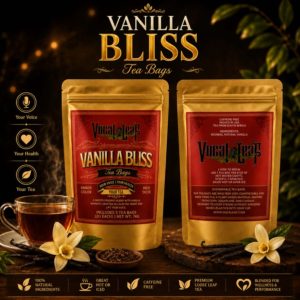
Vanilla Bliss
If you’re looking for the best calming tea for sleep that also happens to taste extraordinary, Vanilla Bliss is the place to start. This caffeine-free blend combines herbs traditionally used for relaxation with the naturally soothing warmth of vanilla, a scent and flavour that research suggests can reduce anxiety and promote a sense of calm.
It’s the kind of cup you make slowly, hold with both hands, and drink as a conscious signal to your nervous system that the day is done. For anyone building a consistent bedtime ritual, this is the blend that makes that ritual something to look forward to.
Organic Rooibos Chai
Rooibos is one of the most well-supported caffeine-free teas for sleep, and for good reason. Naturally free of caffeine and low in tannins, it won’t interfere with your sleep cycle the way traditional chai, made with black tea, would. Rooibos is also rich in antioxidants and has been studied for its ability to reduce cortisol levels, making it particularly useful for people whose sleeplessness is rooted in stress or an overactive mind.
Vocal Leaf’s Organic Rooibos Chai layers that foundation with warming spices, a blend that feels indulgent and grounding at once. If you’ve ever wanted the comfort of a chai latte at night without the caffeine keeping you wired, this is the best natural tea for sleep that delivers exactly that.
Lemon Berry Dream
For those who prefer something lighter and fruit-forward at bedtime, Lemon Berry Dream offers a refreshing alternative to the heavier, earthier blends. What makes it genuinely effective as a bedtime tea is its lemon-forward profile; lemon balm is one of the most evidence-backed herbs for sleep, shown in multiple studies to reduce anxiety, improve sleep quality, and ease the kind of restless, racing-thoughts insomnia that keeps people staring at the ceiling.
It’s bright, it’s gentle, and it’s the best loose leaf tea for sleep for anyone who finds traditional “sleepy” teas too heavy or medicinal in flavour. Served hot on cool evenings or brewed and chilled for a calming nighttime drink in warmer months, it’s genuinely versatile.
Organic Loose Leaf Black Tea
Black tea does contain caffeine, which makes it a different kind of recommendation in a sleep context, but an important one worth addressing. For people who are caffeine-sensitive or drink tea in the late afternoon rather than right before bed, understanding where black tea fits is useful.
That said, black tea contains L-theanine, an amino acid that promotes calm focus and reduces the jittery edge that caffeine alone can produce. Some people find that a moderate cup of quality black tea in the early evening, paired with a proper wind-down routine, doesn’t disrupt their sleep and actually helps them decompress from the day.
Vocal Leaf’s Organic Loose Leaf Black Tea is a clean, high-quality option for those moments. Just be mindful of your own caffeine sensitivity and keep it to earlier in the evening if sleep is your goal.
Shop Organic Loose Leaf Black Tea
The Case for Caffeine-Free: Why Herbal Tea Is the Smart Choice for Sleep
If there’s one rule that applies universally when it comes to tea and sleep, it’s this: caffeine has no place in your bedtime cup. Yet it’s one of the most common mistakes people make, reaching for a green tea or a chai because it feels calming, not realising that the caffeine content is quietly working against everything they’re trying to achieve.
Caffeine blocks adenosine, the chemical your brain accumulates throughout the day to build what scientists call “sleep pressure”, the biological urge to rest. Even modest amounts of caffeine consumed 4 to 6 hours before bed can delay sleep onset, reduce total sleep time, and suppress the deep, slow-wave sleep stages where the most physical and mental restoration occurs. You might still fall asleep, but the quality of that sleep is measurably worse.
This is why caffeine-free herbal tea for sleep isn’t just a preference, it’s the foundation of any effective tea-based sleep strategy.
What Makes Herbal Tea Different
Unlike conventional teas derived from the Camellia sinensis plant, herbal teas are tisanes, infusions made from dried flowers, roots, leaves, seeds, and berries. None of these contains caffeine naturally, which makes them inherently suited for evening use. Beyond being caffeine-free, the best herbal teas for sleep are built around plants with documented calming, anxiolytic, or sleep-promoting properties. They’re not just safe to drink at night, they’re actively working in your favour.
A well-formulated herbal tea blend for sleep does several things at once: it calms the nervous system, supports healthy cortisol rhythms, and creates the kind of physiological and psychological conditions where sleep comes naturally rather than feeling like something you have to chase.
Loose Leaf vs. Tea Bags
For anyone serious about sleep support, loose leaf tea for sleep is worth the small extra effort. Loose leaf teas contain whole or minimally broken plant material, which means a higher concentration of the essential oils, flavonoids, and active compounds that actually produce results. Most commercial tea bags use dust and fannings, the smallest broken particles left over from processing, which are faster to brew but significantly less potent.
A quality organic loose tea for sleep, properly steeped in water just off the boil, delivers a noticeably richer flavour and a more pronounced effect than the average supermarket tea bag. It’s a simple upgrade with a meaningful difference.
What About Decaf Green Tea for Sleep?
Decaf green tea is a reasonable middle ground for those who enjoy the grassy, clean flavour of green tea but want to avoid caffeine at night. The decaffeination process removes most of the caffeine, though not all of it, and preserves some of the L-theanine that makes green tea calming. It’s a better choice than regular green tea in the evening, but it still falls short of a purposefully blended caffeine-free herbal tea when genuine sleep support is the goal.
If decaf green tea is what you enjoy, it won’t hurt, but it won’t deliver the same depth of effect as herbs like chamomile, lemon balm, or passionflower that are specifically suited to sleep.
The bottom line is straightforward: when sleep is the goal, natural herbal teas, particularly organic, loose-leaf blends crafted around sleep-supporting botanicals, are the most effective and the most honest choice.
Is Green Tea Good for Sleep?
This is one of the most searched questions in the tea-and-sleep space, and the answer is more nuanced than a simple yes or no. Green tea occupies an interesting middle ground; it contains compounds that promote calm, but it also contains caffeine that can undermine sleep. Understanding exactly where each tea type falls helps you make smarter decisions about what goes in your cup after dark.
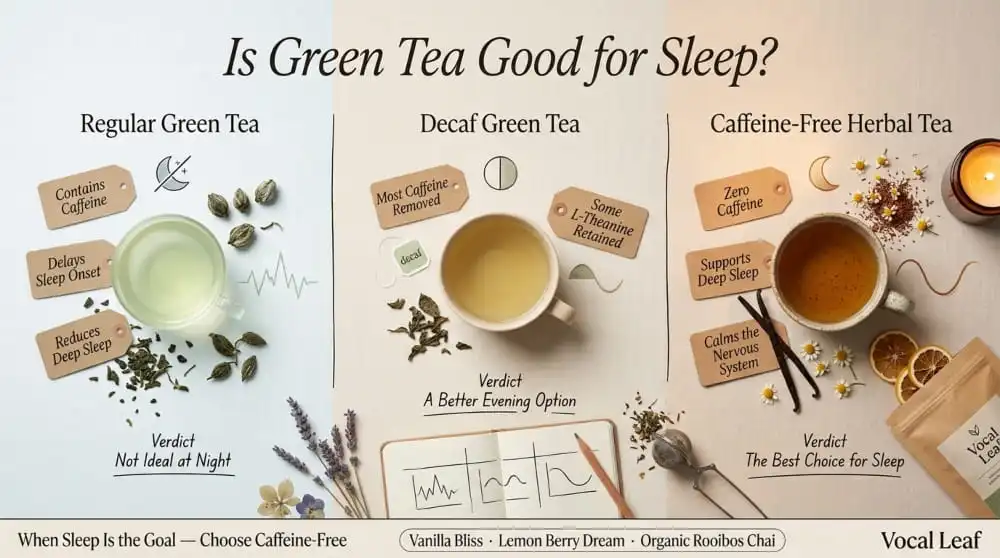
Regular Green Tea vs. Decaf Green Tea for Sleep
Regular green tea contains between 20 and 50mg of caffeine per cup, depending on the variety and brew time, less than coffee, but enough to meaningfully disrupt sleep if consumed within several hours of bedtime. At the same time, green tea is rich in L-theanine, an amino acid that promotes a relaxed, alert state and takes the edge off caffeine’s more stimulating effects. This is why green tea feels calmer than coffee, even at similar caffeine levels.
So is green tea good for sleep? As a nighttime drink, regular green tea is generally not the best choice. L-theanine is beneficial, but the caffeine works against you in ways that aren’t always obvious. You may fall asleep without much trouble but miss out on the deeper, more restorative sleep stages.
Decaffeinated green tea for sleep is a meaningfully better option. The decaffeination process removes most of the caffeine while preserving a portion of the L-theanine and antioxidants. If green tea is your preferred flavour profile and you want something for the evening, decaf is the sensible compromise. That said, it still won’t outperform a purposefully blended herbal tea when deep, quality sleep is the priority.
Oolong, White Tea, and Earl Grey: What to Know Before Bed
All three come from the same Camellia sinensis plant as green and black tea, which means they all contain caffeine, and none are ideal choices close to bedtime.
White tea is often assumed to be caffeine-free because of its delicate flavour and minimal processing, but this is a common misconception. It actually contains a comparable amount of caffeine to green tea, sometimes more. Oolong sits between green and black tea in both oxidation and caffeine content, making it similarly unsuitable as a sleep tea. Earl Grey, which is black tea scented with bergamot oil, carries the full caffeine load of black tea and is best kept to morning or early afternoon.
Is Earl Grey tea good for sleep? Not as a nighttime drink. The bergamot does have mild calming properties, but they don’t come close to offsetting the caffeine base’s stimulating effect.
Is Black Tea Good for Sleep?
Black tea is the most oxidised and highest-caffeine variety of traditional tea, typically containing 40-70mg per cup. Is black tea good for sleeping? For most people, drinking it in the evening is counterproductive to sleep; it can delay how quickly you fall asleep and reduce sleep quality, even if you don’t notice the effect consciously.
There is a nuance worth acknowledging. Black tea does contain L-theanine, and for less caffeine-sensitive people, an early-evening cup as part of a deliberate wind-down routine may not cause noticeable disruption. But as a general rule, if better sleep is the goal, black tea belongs in the morning.
Is Chai Tea Good for Sleep?
Traditional chai is made with a black tea base, which immediately puts it in the same category as any other caffeinated tea when it comes to sleep. The spices commonly used in chai, cinnamon, cardamom, ginger, and clove, are warming and comforting, and some have mild digestive or calming benefits. But those benefits don’t override the caffeine content of the black tea they’re blended into.
Is chai tea good for sleep? Not in its traditional form. The exception, and it’s a genuinely good one, is rooibos chai. Rooibos is a naturally caffeine-free South African herb that takes on chai spices beautifully, delivering all the warmth and complexity of a classic chai without any of the caffeine. Is rooibos tea good for sleep? Absolutely. It’s one of the better caffeine-free bases for a nighttime blend precisely because it’s gentle on the body, rich in antioxidants, and pairs naturally with the kind of warming spices that make a bedtime drink feel like a ritual rather than a remedy.
Here’s the section with a comparison table and Vocal Leaf recommendations added naturally at the end:
| Sleep Concern | What You Need | Vocal Leaf Recommendation |
|---|---|---|
| Stress & Racing Thoughts | Calming herbs that support GABA pathways | Vanilla Bliss |
| Poor Sleep Quality & Depth | Herbs that extend deep sleep stages | Vanilla Bliss |
| Digestive Discomfort | Warming spices with dual digestive & calming action | Organic Rooibos Chai |
| Sleep Deprivation Recovery | Consistent herbal support for sleep quality | Lemon Berry Dream |
| Sleep Apnea Support | Anti-inflammatory, respiratory-supportive herbs | Organic Rooibos Chai |
| Sleep & Weight Management | Metabolism-supportive caffeine-free blends | Organic Rooibos Chai |
| Chronic Insomnia | Lemon balm & calming botanicals used consistently | Lemon Berry Dream |
| General Better Sleep Ritual | Smooth, approachable caffeine-free evening blend | Vanilla Bliss |
What Herbal Sleep Tea Actually Does for Your Body
Knowing which teas to drink is one thing. Understanding what they’re actually doing for you, and whether tea can help with your specific sleep situation, is what turns a nice bedtime habit into a genuinely effective wellness practice.
Tea for Calming and Deep Sleep
The most immediate and well-documented benefit of herbal sleep tea is its effect on the nervous system. Calming teas for sleep work by reducing the physiological markers of stress, elevated heart rate, muscle tension, and racing thoughts that keep so many people from switching off at night. This isn’t a placebo effect. Compounds like apigenin in chamomile, rosmarinic acid in lemon balm, and valerenic acid in valerian root have measurable interactions with GABA receptors, the same pathway targeted by many pharmaceutical sleep aids, but through a gentler, non-habit-forming mechanism.
The result, for most consistent tea drinkers, is not just falling asleep more easily but experiencing more restful sleep overall. Soothing teas for sleeping help extend the time spent in deeper sleep stages, the phases responsible for physical recovery, memory consolidation, and immune function. If you’ve been waking up tired despite getting enough hours in bed, addressing sleep quality rather than sleep quantity is often the missing piece, and herbal tea is a meaningful tool for that.
Tea for Sleep and Digestion
There’s a strong and often underappreciated connection between gut health and sleep quality. Digestive discomfort, bloating, acid reflux, and indigestion are some of the most common reasons people wake in the night or struggle to fall asleep in the first place. Several of the best herbs for sleep tea are also excellent digestive supports.
Ginger, fennel, licorice root, and peppermint all have well-established digestive benefits, and when incorporated into an evening tea routine, they address two problems at once. A cup of tea for sleep and digestion about an hour before bed can calm an unsettled stomach while simultaneously preparing the nervous system for rest, making it particularly useful for people whose sleep problems have a digestive component.
Tea for Sleep Deprivation
It’s worth being clear about what herbal tea can and cannot do here. If you’re dealing with acute sleep deprivation, running significantly short on sleep over multiple nights, herbal tea alone won’t compensate for that deficit. Sleep debt requires sleep to resolve.
What tea for sleep deprivation can do is meaningfully improve the quality of the sleep you do get. By reducing sleep-onset time, easing nighttime anxiety, and supporting deeper sleep stages, a consistent herbal tea routine helps your body extract the maximum restorative benefits from however many hours you have available. Over time, these compounds: better-quality sleep each night, gradually reduce the burden of deprivation, and help reset your natural sleep rhythms.
Tea for Sleep and Weight Loss
The connection between sleep and weight management is well established in research. Poor sleep disrupts hunger hormones, increases cravings for high-calorie foods, and reduces the body’s ability to metabolise efficiently. By improving sleep quality, a consistent herbal tea habit indirectly supports healthier weight management over time.
Some herbs commonly found in sleep blends, including rooibos, ginger, and peppermint, also have mild metabolism-supporting or appetite-regulating properties. This makes a genuinely useful herbal sleep tea on both fronts, though it works best understood as part of a broader healthy lifestyle rather than a standalone solution.
Tea for Sleeping Problems and Disorders
For people dealing with ongoing sleep difficulties, chronic insomnia, anxiety-driven sleeplessness, and irregular sleep patterns, herbal tea offers genuine support as part of a consistent sleep hygiene routine. The keyword is consistent. The herbs that work best for sleep disorders tend to be most effective when used regularly, as part of a broader commitment to wind-down routines, reduced screen time, and a stable sleep schedule.
Herbal tea for sleep disorders is best approached as a long-term supportive habit rather than an acute fix. Used that way, nightly, intentionally, as part of a real bedtime ritual, it becomes one of the more accessible and sustainable tools available for people working toward genuinely better sleep.
How to Make Sleep Tea at Home
There’s something uniquely effective about a homemade sleep tea, not just because you control exactly what goes into it, but because the act of making it becomes part of the ritual itself. Measuring herbs, heating water, watching a blend steep, it’s a deliberate slowdown that signals to your nervous system that the evening is winding down before you’ve even taken a sip.

The good news is that making an effective herbal tea for sleep at home requires very little equipment and even less expertise. What matters most is knowing which herbs to use and how to combine them.
A Simple Base Herbal Tea Recipe for Sleep
This is the foundation, a clean, effective blend using widely available ingredients that works on its own or as a base for the more specific recipes below.
Ingredients (per cup):
- 1 tsp dried chamomile flowers
- ½ tsp dried lemon balm leaves
- ½ tsp dried passionflower
Combine the herbs in a tea infuser or small muslin bag. Pour water heated to around 90–95°C (just off a full boil) over the herbs and steep for 5 to 7 minutes, covered. Covering the cup while steeping traps volatile essential oils that would otherwise evaporate; this small step makes a real difference in potency. Strain, allow to cool slightly, and drink 45 to 60 minutes before bed.
The Best Bedtime Tea Ritual (And Why Routine Matters More Than the Blend)
Most people treat sleep tea as a last-minute fix; they brew a cup ten minutes before bed, drink it while scrolling their phone, and wonder why it doesn’t seem to do much. The tea isn’t the problem. The ritual is.
A consistent tea-before-bed routine works on two levels simultaneously. The herbs do their job physiologically, calming the nervous system, easing cortisol levels, and supporting the GABA pathways that help your brain shift into rest mode. But the ritual itself does something equally important: it trains your nervous system to recognise the sequence as a cue for sleep. After a few weeks of the same steps in the same order, your body begins winding down before the first sip. That’s not placebo; that’s conditioned response, the same mechanism behind every effective sleep hygiene practice.
Here is a bedtime tea routine that works:
60 minutes before bed, brew your tea. Boil filtered water and allow it to cool slightly before steeping. While the tea brews, step away from screens. The five minutes of steeping time is the natural transition point; use it to dim the lights, change into comfortable clothes, or simply sit quietly. The tea is already doing its work in the background.
45 minutes before bed, drink slowly. Hold the cup with both hands. Drink without a phone nearby. This isn’t ceremonial for the sake of ceremony; it’s about keeping your nervous system in the state the herbs are working to create. Bright screens trigger alertness responses that undercut what the tea is building.
30 minutes before bed, let the effect settle. Most herbal blends take 30 to 45 minutes to reach peak effect. If you drink and immediately lie down, you’re racing the herbs to sleep. Give them time. Read a physical book, do light stretching, or simply sit in low light.
Every night, same time. Timing is where most people give up too soon—the ritual compounds. After 10 to 14 nights, your brain starts associating the smell of the tea with sleep onset. That association becomes one of the most reliable tools you have for falling asleep faster, and it costs nothing beyond consistency.
Which Tea Works Best for a Bedtime Routine
For a nightly ritual, the blend you choose matters less than people assume, but it matters enough to get right. The ideal bedtime tea is caffeine-free, smooth enough to drink unhurried, and appealing enough that you actually look forward to making it.
Vanilla Bliss is built for exactly this. The warmth of vanilla has a documented calming effect on the nervous system; it’s one of the few flavour profiles that reliably reduces tension rather than stimulating it. It’s the kind of cup that makes the ritual feel like a reward rather than a prescription, which matters more than it sounds when you’re trying to build a habit that sticks.
For those who prefer something with more body and spice, Organic Rooibos Chai delivers the grounding warmth of a classic bedtime drink without any of the caffeine that would undo it. Rooibos has been studied for its effect on cortisol reduction; if your sleeplessness tends to come from an overactive, wired-at-night feeling, this is the more targeted choice.
Either way, the rule is the same: pick the one you’ll make tomorrow night again. A good routine built around an average tea beats an occasional cup of the best tea in the world.
How Vocal Leaf Teas Compare for Sleep
Not all sleep teas deliver equally, and with so many herbal options circulating online, it helps to see an honest side-by-side picture. The table below compares some of the most commonly searched sleep teas with Vocal Leaf’s range, focusing on caffeine content, primary sleep benefit, and overall suitability as a nighttime drink.
| Tea Type | Caffeine-Free | Primary Sleep Benefit | Vocal Leaf Alternative |
|---|---|---|---|
| Lemon Balm | Yes | Reduces anxiety, improves sleep quality | Lemon Berry Dream |
| Lemon Ginger | Yes | Digestive calm, mild relaxation | Organic Rooibos Chai |
| Passionflower | Yes | Strong GABA support, racing thoughts | Vanilla Bliss |
| Ashwagandha | Yes | Cortisol reduction, stress-driven insomnia | Vanilla Bliss |
| Rooibos Tea | Yes | Cortisol regulation, antioxidant support | Organic Rooibos Chai |
| Ginger Tea | Yes | Digestive support, indirect sleep aid | Organic Rooibos Chai |
| Tulsi (Holy Basil) | Yes | Adaptogenic, stress and cortisol support | Vanilla Bliss |
| Fennel Tea | Yes | Digestive comfort, mild relaxation | Organic Rooibos Chai |
| Ceylon Tea | No | Caffeinated, not suitable at night | Organic Rooibos Chai |
| Thyme Tea | Yes | Respiratory support, mild relaxation | Lemon Berry Dream |
The pattern across the table is consistent: many popular herbal teas offer one or two indirect sleep benefits, usually digestive comfort or mild stress reduction, but aren’t purpose-built for sleep. Vocal Leaf blends bring those individual benefits together into cohesive, flavour-balanced formulas designed specifically for the evening, so you’re not choosing between something that works and something you actually want to drink.
Conclusion
Better sleep rarely comes from a single dramatic change; it comes from small, consistent habits that compound over time. A nightly cup of the right herbal tea is one of the simplest and most sustainable of those habits. It works with your body’s natural rhythms rather than against them, costs nothing compared to supplements or sleep aids, and turns the act of going to bed into something genuinely restorative rather than something you dread.
Top Selling Products



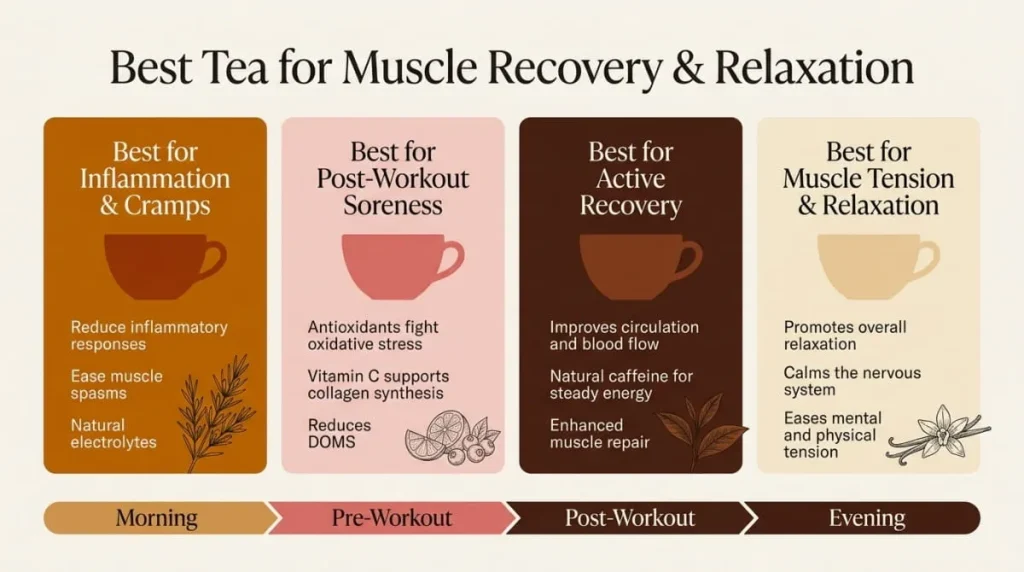
The Best Teas for Muscle Recovery & Pain Relief
Whether you pushed hard at the gym, spent hours on your feet, or carried the kind of physical tension that comes with performing night after…
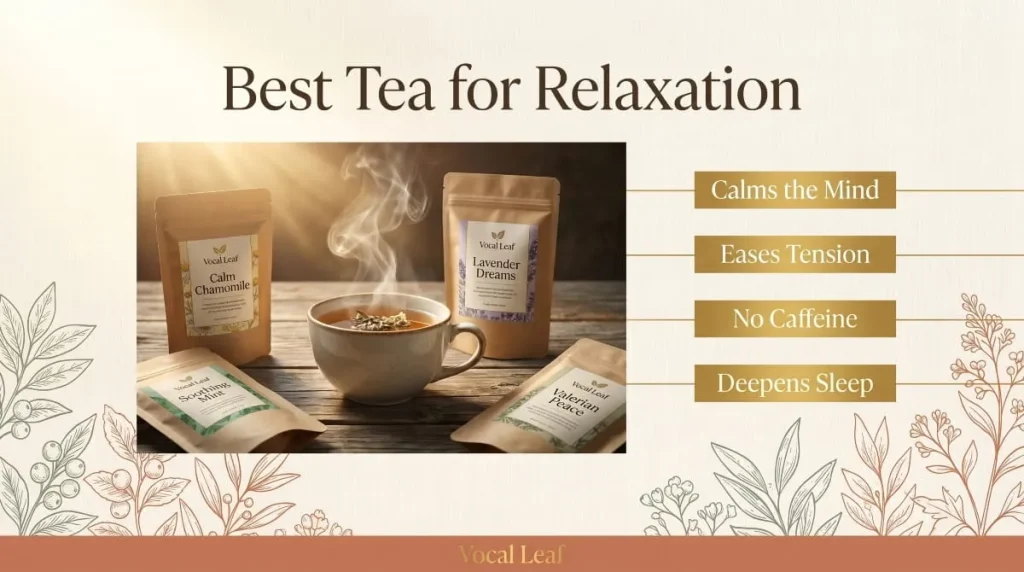
Best Tea for Relaxation | The Complete Guide to Teas That Actually Calm Your Mind and Body
There is a reason people have been reaching for a warm cup of tea at the end of a long day for thousands of years.…