Herbal Iced Tea | Benefits, Brewing Guide, and the Best Blends for Your Voice
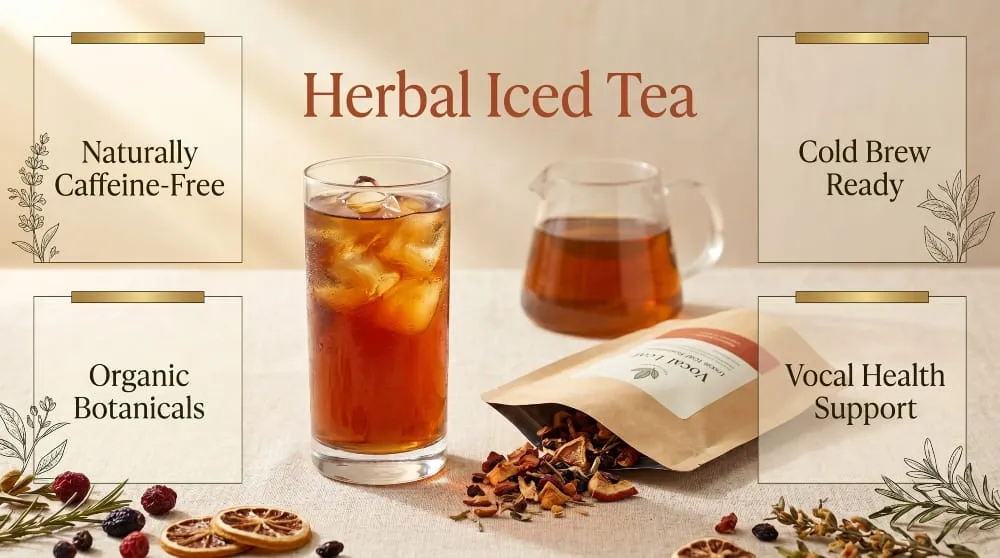
There’s a reason herbal iced tea has quietly become the drink of choice for singers, speakers, and anyone who depends on their voice for a living. It hydrates without the dehydrating effects of caffeine. It soothes without the crash. And when it’s made well, with the right botanicals, brewed the right way, it does something few beverages can: it actively supports the body while tasting like a reward.
But not all herbal iced tea is created equal. The bottled versions lining grocery store shelves are often loaded with sweeteners, artificial flavors, and heat-processed ingredients that strip out the beneficial components. What you actually want is loose leaf quality, cold-steeped or carefully brewed, from blends designed with purpose, not just flavor.
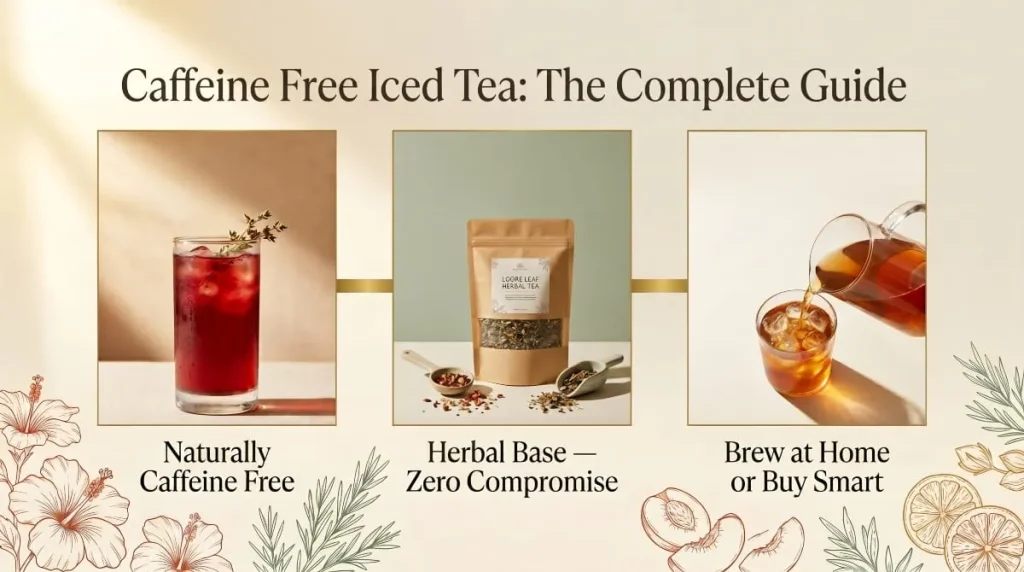
This guide covers everything you need to know about herbal iced tea: what makes it genuinely good for you, how to brew it properly at home, which styles work best for different needs, and how to choose blends that go beyond refreshment and actually support your vocal health, hydration, and recovery.
Whether you’re a performer cooling down after a show, a podcaster looking for a clean afternoon drink, or simply someone who wants a caffeine-free iced tea that doesn’t compromise on quality, you’re in the right place.
What Is Herbal Iced Tea?
Herbal iced tea is exactly what it sounds like, and yet most people have never actually had the real thing. At its core, herbal iced tea is made by steeping botanical ingredients dried fruits, roots, flowers, seeds, and plant compounds in water, then serving it chilled no tea leaves. No caffeine. No compromise on flavor.
What separates a genuinely good herbal iced tea from the mass-market version is intention. The best blends are formulated around specific compounds with specific benefits, then brewed in a way that preserves those properties rather than cooking them out. The result is a drink that’s refreshing and functional, something that works as hard as it tastes good.
How Herbal Iced Tea Differs from Regular Iced Tea
Most iced tea, the kind served at restaurants or sold in bottles, is brewed from the leaves of the Camellia sinensis plant. That includes black, green, and white tea. All of them contain caffeine. All of them contain tannins that can dry out mucous membranes, tighten throat tissue, and impair vocal clarity over time.
Herbal iced tea uses none of those leaves. Instead, it draws from a completely different category of ingredients, botanical blends crafted for flavor, function, or both. That distinction matters more than most people realize. When you’re looking for a cold drink that actually supports your body rather than quietly working against it, the gap between traditional iced tea and a well-made herbal iced tea is significant.
Why Caffeine-Free Matters for Iced Tea Drinkers
Caffeine is a diuretic. That means every caffeinated drink you consume is working against your hydration at the same time it’s quenching your thirst, a trade-off most people don’t think about until they’re performing, presenting, or recording and their voice starts to feel dry and thin.
For voice professionals especially, caffeine-free herbal iced tea isn’t just a preference; it’s a practical choice. Without caffeine, your body can absorb and retain the hydration it needs. Throat tissue stays supple. Vocal folds stay lubricated. You feel alert without the edge that caffeine brings, and you recover faster after extended vocal use.
It’s also worth noting that the best herbal iced teas are naturally caffeine-free, not chemically decaffeinated. That distinction matters because chemical decaffeination processes can alter the flavor and strip beneficial compounds from the plant material. Naturally caffeine-free means the botanicals were never caffeinated to begin with.
The Natural Compounds That Make Herbal Iced Tea Worth Drinking
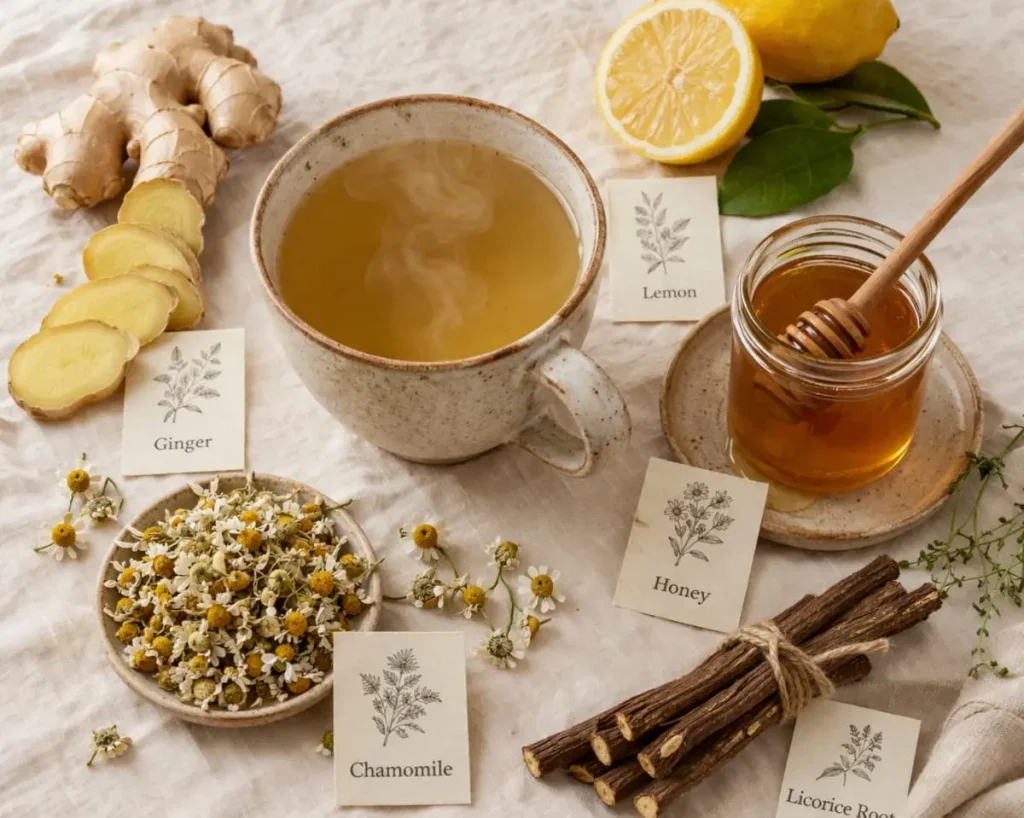
The functional value of herbal iced tea lies in the specific compounds present in each botanical blend. Depending on the ingredients used, a well-formulated herbal iced tea can deliver antioxidants that combat oxidative stress in throat tissue, naturally occurring acids that support a clean, clear vocal environment, and plant-based compounds that reduce inflammation along the upper respiratory tract.
These aren’t vague wellness claims. The botanicals used in premium loose leaf blends, the kind Vocal Leaf builds its products around, are selected because the compounds they carry have measurable effects on the body’s systems that matter most to performers and voice professionals.
When you drink herbal iced tea made from quality ingredients, you’re not just staying hydrated. You’re giving your body something to work with.
Is Herbal Iced Tea Good for You?
The short answer is yes, but the longer answer is more useful. Herbal iced tea is good for you in proportion to what’s actually in it. A cold-brewed organic blend made from carefully selected botanicals is a genuinely functional drink. A bottled “herbal iced tea” sweetened with high-fructose corn syrup and flavored with synthetic extracts is something else entirely.
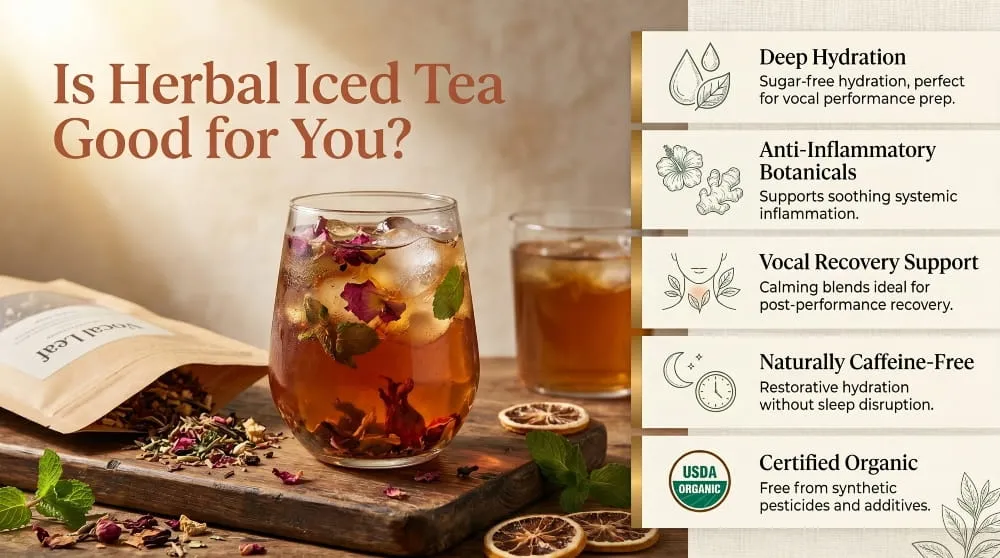
The distinction matters because the health conversation around iced tea tends to flatten everything into one category. It doesn’t belong there. What makes herbal iced tea worth drinking and worth choosing over other beverages is the combination of deep hydration, botanical compounds with real physiological effects, and the complete absence of ingredients that actively work against your body.
Hydration, Vocal Health, and Performance Recovery
Hydration is the foundation of vocal health, and herbal iced tea delivers it more effectively than most people expect. Unlike caffeinated beverages that trigger fluid loss, a well-made caffeine-free herbal iced tea contributes directly to your body’s hydration without the trade-off. For singers, teachers, public speakers, and podcasters who spend hours demanding peak performance from their voice, that difference is felt, not just theorized.
Beyond hydration, the botanical compounds in quality herbal blends support the upper respiratory tract in ways that matter specifically to voice professionals. Certain plant-based acids help maintain a clean vocal environment. Antioxidant-rich ingredients work against the oxidative stress that accumulates in throat tissue after prolonged vocal use. Anti-inflammatory compounds help the body recover faster between performances, recording sessions, or long teaching days.
Think of a well-formulated herbal iced tea less like a beverage and more like active recovery in a glass, something you reach for not just because it tastes good, but because it’s doing something useful while you drink it.
The Case for Unsweetened Herbal Iced Tea
Sugar is where most commercially prepared herbal iced teas quietly fall apart. Added sweeteners, whether refined sugar, artificial alternatives, or “natural” syrups, introduce ingredients that can trigger inflammation, coat the throat, and undermine the very benefits the botanical blend was designed to deliver.
Unsweetened herbal iced tea, by contrast, lets the plant compounds do their job without interference. It also trains the palate to appreciate the natural flavor complexity that quality botanicals carry, the brightness of dried fruit, the warm depth of spiced roots, and the clean finish that a well-balanced blend delivers.
If you’re new to unsweetened iced tea, the adjustment takes about a week. After that, most people find that sweetened versions taste heavy and one-dimensional by comparison. The goal isn’t deprivation, it’s letting the ingredients speak for themselves.
Why Organic Herbal Iced Tea Is the Smarter Choice
When you’re steeping botanical ingredients in water and drinking the result, everything that was on those botanicals ends up in your cup. Pesticide residues, synthetic fertilizers, and chemical processing agents don’t disappear during brewing; they concentrate.
Organic herbal iced tea eliminates that concern. Certified organic botanicals are grown without synthetic pesticides or chemical inputs, which means the only things steeping into your water are the plant compounds you actually want. For throat and vocal health applications, especially, that purity matters. You’re not trying to soothe inflammation while simultaneously introducing irritants.
Vocal Leaf’s blends are certified organic for exactly this reason. Every ingredient that goes into a pouch is selected by the same standard: clean sourcing, no shortcuts, nothing that undermines the blend’s purpose. When the goal is vocal health and performance recovery, organic isn’t a marketing Word; it’s the baseline.
How to Make Herbal Iced Tea (Complete Brewing Guide)
Making herbal iced tea at home is simpler than most people think, and the results are dramatically better than anything you can buy in a bottle. The method you choose matters, not just for convenience, but for flavor and for how well the botanical compounds actually extract into the water. Get it right, and you have a drink that’s genuinely superior to anything on a store shelf. Get it wrong, and you end up with something flat, bitter, or thin.
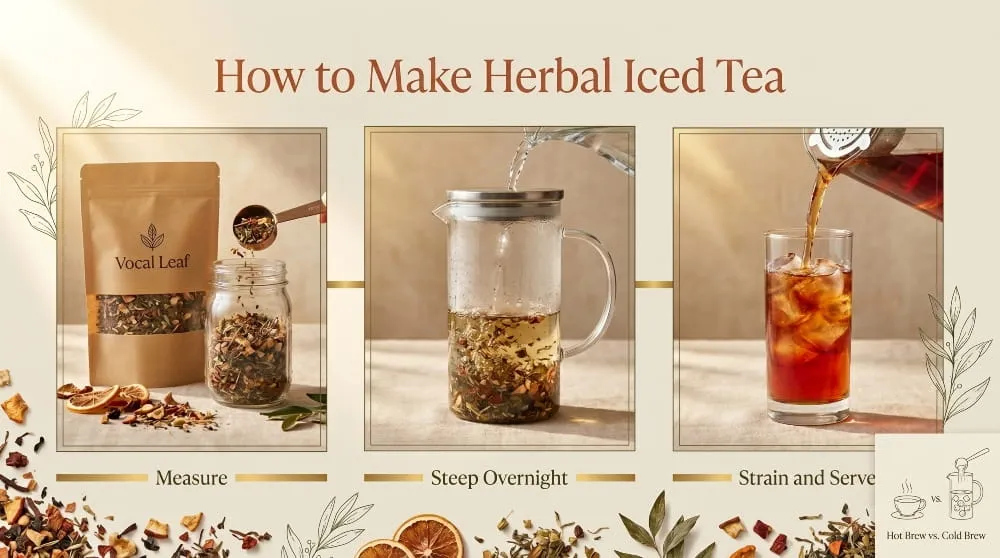
There are two core approaches: hot brew and cold brew. Each has its strengths, and both work beautifully with high-quality loose-leaf herbal blends. Here’s how to do both well.
How to Make Herbal Iced Tea with Loose Leaf Tea
Loose Leaf is the gold standard for a reason. Because the botanical material isn’t compressed into a bag, it has room to fully expand in water, which means better extraction, fuller flavor, and more of the beneficial compounds making it into your cup.
To make herbal iced tea with loose leaf tea, start by measuring approximately 1 to 1.5 teaspoons of the loose leaf blend per 8 ounces of water. Heat your water to around 200°F, just below a rolling boil, and steep for five to seven minutes, depending on the blend and your flavor preference. Once steeped, strain the botanicals completely, then allow the tea to cool to room temperature, transfer to a pitcher, and refrigerate until cold. Pour over ice to serve.
For a stronger concentrate that holds up better over ice, double the amount of loose Leaf per cup of water during the hot steep, then dilute with cold water or pour directly over a full glass of ice. This prevents the dilution problem that makes most homemade iced tea taste weak by the time you’re halfway through the glass.
How to Make Herbal Iced Tea with Tea Bags
Making iced tea with herbal tea bags follows the same fundamental logic; the main difference is convenience. If you’re brewing for one or using Vocal Leaf’s loose-leaf blends portioned into a reusable infuser, the process is nearly identical to the loose-leaf method above.
Use one tea bag per eight ounces of water, steep in hot water for five to six minutes, then remove the bag cleanly without squeezing, as squeezing extracts bitter compounds that aren’t worth the extra few drops. Cool, refrigerate, and serve over ice.
One tip worth following regardless of method: never pour hot tea directly over ice unless you’ve intentionally brewed a concentrate. The rapid dilution throws off the flavor balance, leaving you with something that tastes like an approximation of what you were going for rather than the real thing.
How to Cold Brew Herbal Iced Tea Overnight
Cold brew herbal iced tea is the method that rewards patience most generously. Instead of using heat to extract flavor quickly, cold brewing uses time, typically eight to twelve hours in the refrigerator, to draw out the botanical compounds slowly and gently. The result is a tea that’s noticeably smoother, less astringent, and often more nuanced in flavor than its hot-brewed equivalent.
To make cold-brew herbal iced tea, add 1.5 to 2 teaspoons of loose-leaf blend to 8 ounces of cold, filtered water, directly into a pitcher or jar. Stir briefly to ensure the botanicals are fully submerged, cover, and refrigerate overnight. Strain in the morning, and you have a cold-brew concentrate ready to drink straight or pour over ice.
Cold brewing is especially well-suited to fruit-forward blends like Vocal Leaf’s Lemon Berry Dream, where the delicate top notes of dried fruit extract beautifully at low temperatures without the slight bitterness that hot water can introduce.
Hot Brew vs. Cold Brew: Which Method Wins?
The honest answer is that it depends on what you’re prioritizing, and both methods are worth knowing.
Hot brewing is faster, extracts a fuller range of compounds in a shorter time, and works well for blends with denser botanicals, like spiced roots or woody herbs, that need heat to open up properly. Vocal Leaf’s Organic Rooibos Chai Tea, for example, benefits from a proper hot steep before chilling; the warming spice notes extract more completely with heat than they would in cold water over the same time frame.
Cold brewing takes more time but rewards you with a gentler, silkier cup. It’s ideal for lighter, more delicate blends, and it’s genuinely convenient; you set it up before bed, and it’s ready when you wake up. There’s also an argument that cold brewing better preserves certain heat-sensitive botanical compounds, making it the preferred method when functional benefits are the priority.
Suppose you can only choose one, cold brew for daily drinking and hot brew when you need a batch quickly, or you’re working with a spiced or root-heavy blend. Better yet, try both with the same blend and let your palate decide.
The Best Herbal Iced Tea Blends for Every Occasion
Not every herbal iced tea serves the same purpose, and the best ones are designed for a specific moment. A blend that’s perfect for unwinding after a long performance day is a different animal from one that’s built for hydrating during a summer recording session or impressing guests at a dinner gathering. Matching the right blend to the right occasion is what separates a good herbal iced tea experience from a great one.
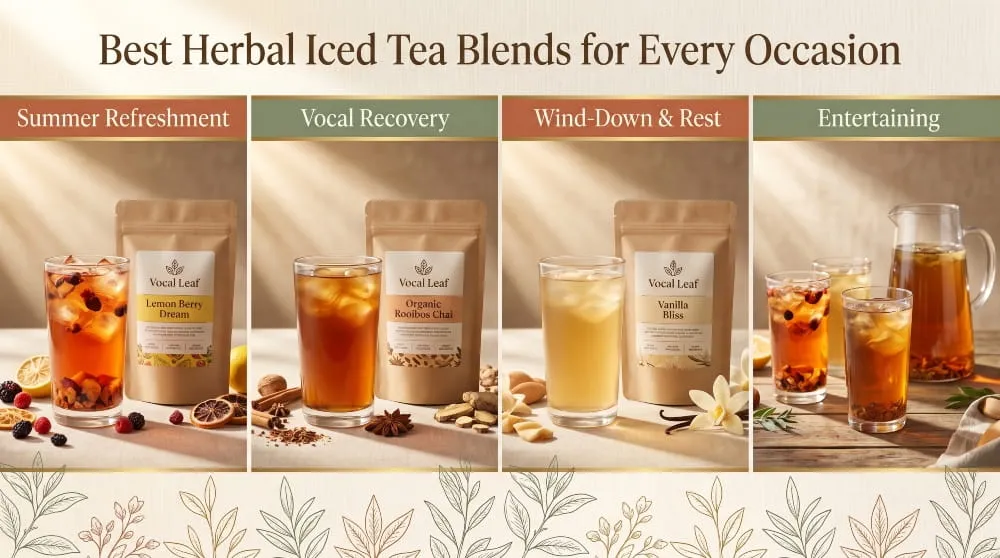
Vocal Leaf’s lineup was built with exactly this kind of intentionality. Each blend occupies a distinct position, with different flavor profiles, functional benefits, and moments when it truly shines. Here’s how to think about which blend belongs in which situation.
Best Fruity Herbal Iced Tea for Summer
Summer calls for something bright, clean, and immediately refreshing, the kind of iced tea that tastes like it was made for exactly this weather. Fruity herbal iced tea hits that mark better than any other style because the natural acidity and sweetness of dried fruit botanicals amplify beautifully when served cold over ice.
Vocal Leaf’s Lemon Berry Dream is the obvious choice here. Cold-brewed overnight and poured over a full glass of ice, it delivers a layered fruit-forward flavor that’s genuinely complex without being heavy, bright citrus up front, berry depth in the finish, and a clean close that makes the next sip just as satisfying as the first. It’s naturally caffeine-free, which means you can drink it through the afternoon without disrupting sleep or vocal hydration, and the organic botanicals mean there’s nothing artificial behind that flavor.
For summer entertaining or everyday warm-weather drinking, Lemon Berry Dream cold-brewed is the gold standard.
Best Herbal Iced Tea for Vocal Health and Recovery
When vocal health is the priority, the blend needs to do more than taste good; it needs to support the systems that voice professionals actively rely on. That means anti-inflammatory botanical compounds, ingredients that support a clean, lubricated vocal environment, and zero caffeine to ensure hydration isn’t undermined.
Organic Rooibos Chai Tea is Vocal Leaf’s most functionally dense blend for this purpose. Rooibos is naturally rich in antioxidants and carries no caffeine or tannins, which means it hydrates without the throat-drying effects associated with traditional iced teas. The warming spice compounds in the chai profile bring their own anti-inflammatory properties, making this blend particularly effective during periods of heavy vocal use, post-performance recovery, or any time the throat needs active support rather than passive hydration.
Hot-brewed and then chilled over ice, the Rooibos Chai delivers depth and warmth of flavor even cold, a rare quality in an iced tea and one that makes it feel substantial rather than thin.
Best Herbal Iced Tea for Relaxation and Wind-Down
The best herbal iced tea for winding down needs to shift the nervous system gently, from performance mode to recovery mode, without putting you to sleep before you’re ready or leaving you feeling groggy. It should feel like deceleration in a glass: smooth, grounding, and quietly restorative.
Vocal Leaf’s Vanilla Bliss was built for exactly this transition. The natural vanilla botanicals carry a warmth and softness that reads as comforting even when served cold, and the blend’s overall profile is designed for the end of the day, after the show, after the session, after the last lecture. Nothing is stimulating in it, nothing sharp, just a smooth and naturally sweet finish that signals to the body that the demanding part of the day is done.
Brewed slightly stronger than usual and poured over ice with a little extra steep time, Vanilla Bliss becomes a genuinely luxurious cold drink, the kind of thing that makes the wind-down ritual feel intentional rather than incidental.
Best Herbal Iced Tea Ideas for Entertaining
When you’re hosting, herbal iced tea earns its place on the table in a way that few non-alcoholic options can match. It looks beautiful in a clear pitcher, it scales easily to large batches, it accommodates every guest regardless of dietary preference or caffeine sensitivity, and, when you’re working with quality blends, it signals a level of care and intentionality that doesn’t go unnoticed.
The most effective approach for entertaining is to offer two distinct pitchers: something bright and fruit-forward alongside something deeper and more complex. Lemon Berry Dream cold-brewed in one pitcher and Vanilla Bliss or Rooibos Chai in another give guests a genuine choice and a conversation starter. Garnish with a few dried botanicals or a slice of citrus on the rim, and what you have is a beverage spread that looks considered and tastes exceptional, without a single artificial ingredient in sight.
For larger gatherings, brew the concentrate the night before using double the usual loose-leaf ratio, then dilute to taste when serving. The flavor holds beautifully for up to three days refrigerated, which means the prep work is done well in advance and you’re not scrambling the day of.
Herbal Iced Tea Recipes to Try at Home
The best herbal iced tea recipes are the ones you actually make repeatedly, not because they’re complicated or impressive, but because they’re reliable, genuinely delicious, and easy enough to fit into a daily routine. The three recipes below cover the core methods worth knowing: a foundational cold brew, a bright fruity variation, and a batch concentrate that makes large-volume brewing effortless. All three work beautifully with Vocal Leaf’s loose-leaf blends and can be adapted to your preferred strength and serving style.
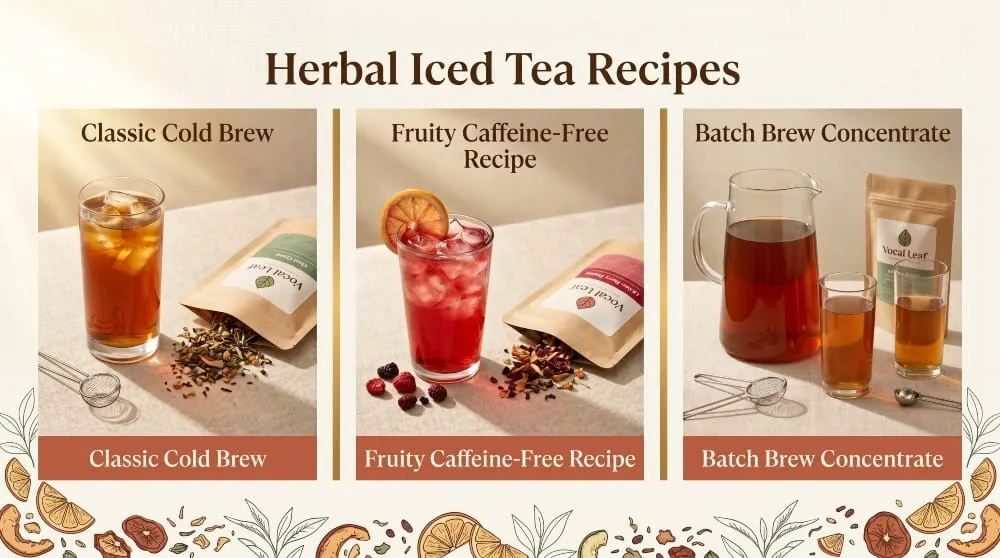
Classic Cold Brew Herbal Iced Tea Recipe
This is the recipe to come back to whenever you want something clean, smooth, and consistently good. Cold brewing extracts the botanical compounds slowly and gently, which means the flavor is rounder and more refined than a hot-brewed equivalent, with none of the bitterness that rushed steeping can introduce.
What you’ll need:
- 2 teaspoons Vocal Leaf loose leaf blend (Vanilla Bliss or Organic Rooibos Chai Tea works exceptionally well here)
- 8 oz cold, filtered water
- A glass jar or pitcher with a lid
- A fine mesh strainer
Method: Add the loose-leaf blend directly to your jar or pitcher. Pour cold-filtered water over the botanicals, stir briefly to ensure everything is submerged, then cover and refrigerate. Leave it for at least 8 hours; overnight is ideal. In the morning, strain out the botanicals completely and serve over ice.
The result is a tea with a silky texture and layered flavor that holds up beautifully over ice without becoming watery or flat as it sits. If you prefer a stronger brew, increase the loose leaf ratio to three teaspoons per eight ounces rather than extending the steep time, which can push the flavor toward bitter at the tail end of extraction.
Fruity Herbal Iced Tea Recipe (No Caffeine)
This recipe leans into the natural brightness of fruit-forward botanicals, the kind of flavor that reads as refreshing the moment it hits the palate. It’s naturally caffeine-free, requires no sweetener to taste balanced, and is best made with Vocal Leaf’s Lemon Berry Dream, a blend where the dried fruit compounds are specifically selected to shine cold.
What you’ll need:
- 2 teaspoons Vocal Leaf Lemon Berry Dream loose leaf
- 10 oz cold, filtered water
- Ice
- Optional: a slice of lemon or a few fresh berries for garnish
Method: Combine the loose Leaf and cold water in a jar, stir gently, and refrigerate for eight to ten hours. Strain into a full glass of ice. The slightly extended steep time, compared to the classic cold brew, draws out more of the fruit acidity and gives the tea a more vibrant, present flavor that doesn’t fade quickly over ice.
If you prefer a hot-brew version of this recipe, steep two teaspoons of Lemon Berry Dream in eight ounces of water just off the boil for 4 to 5 minutes, strain immediately, and pour over ice in a glass. The rapid chilling locks in the brightness before it has time to dull. Either way, this is a caffeine-free iced herbal tea recipe that tastes like it has no business being this good without any added sugar.
Iced Herbal Tea Concentrate for Batch Brewing
When you want herbal iced tea available throughout the week without brewing a fresh batch every day, a concentrate is the most practical and efficient approach. You brew once, refrigerate, and dilute to taste each time you pour a glass. The flavor integrity holds for up to five days, and because you’re working with a concentrate rather than a finished brew, it stays sharp and present even as the days pass.
What you’ll need:
- 4 teaspoons Vocal Leaf loose leaf blend of choice
- 8 oz hot water (just below boiling, around 200°F)
- A fine mesh strainer
- A glass jar or bottle for storage
Method: Steep four teaspoons of your chosen loose leaf blend in eight ounces of hot water for six to seven minutes. This is double the usual leaf-to-water ratio, producing a concentrated brew rather than a drink-ready tea. Strain thoroughly, allow to cool completely at room temperature, then transfer to a sealed glass jar and refrigerate.
To serve, combine one part concentrate with one to one and a half parts cold water or pour directly over a large glass of ice and let the melting dilute naturally over a minute or two. Adjust the ratio based on your preferred strength; the concentrate is forgiving and easy to calibrate.
This method works particularly well with Vocal Leaf’s Organic Rooibos Chai Tea, where the spiced botanicals develop even more depth as the concentrate rests overnight in the refrigerator. By day two, the flavor is richer and more complex than it was on day one, a rare quality in a homemade iced tea and one that makes batch brewing genuinely worth the small upfront effort.
How to Choose the Best Herbal Iced Tea Brands
The herbal iced tea market has expanded significantly, and that’s mostly good news: more options, more variety, more awareness that a well-made herbal blend is worth drinking. The catch is that quality varies wildly, and the labels don’t always make the differences obvious. Most people default to whatever is most visible on a shelf or most reviewed online without knowing what they’re actually evaluating. A little label literacy and a clear sense of what separates a functional blend from a flavored water product changes that entirely.

What to Look for on the Label
The label is where a brand either earns your trust or quietly reveals its shortcuts. A few things worth reading carefully before committing to any herbal iced tea brand.
Organic certification is the first filter. If the botanicals aren’t certified organic, you have no reliable way of knowing what was applied to them during cultivation, and whatever was applied ends up in your cup. This isn’t a fringe concern; it’s basic quality assurance.
The ingredient list should read like a list of plants, not a chemistry experiment. If you see “natural flavors,” “flavor extracts,” or ingredients you can’t place as a recognizable botanical, that’s a signal the flavor is being engineered rather than sourced. A truly well-made herbal iced tea gets its taste from the quality of its ingredients, nothing added, nothing manufactured.
Caffeine disclosure matters more than most brands acknowledge. Look for blends that are explicitly labeled as naturally caffeine-free, not just “low caffeine” or “caffeine reduced.” Naturally caffeine-free means the botanicals contain no caffeine to begin with, not that caffeine was removed through a chemical process afterward. That distinction has real implications for purity and for the drink’s effect on your body.
The sourcing language tells you something about the brand’s standards. Vague terms like “premium” or “finest ingredients” without specifics are marketing filler. Brands that are serious about their sourcing say something concrete, such as certified organic, single-origin botanicals, and traceable supply chains.
Loose Leaf vs. Tea Bags: Which Makes Better Iced Tea?
This comparison comes up constantly, and the answer is consistent: loose Leaf produces better iced tea, and the gap is wider than most people expect until they’ve experienced both side by side.
The reason comes down to surface area and ingredient quality. Tea bags, even good ones, compress the botanical material into a confined space, limiting how fully the ingredients can expand and release their compounds into the water. The result is a brew that extracts unevenly, often producing a flat or one-dimensional flavor profile that no amount of steeping time fully corrects.
Loose-leaf botanicals have room to move. They fully expand in water, release their compounds more fully, and produce a brew with noticeably greater depth, clarity, and complexity. For iced tea specifically, where the cold temperature already slows extraction, that fuller surface area contact makes a meaningful difference in the final cup.
There’s also an ingredient quality dimension. The botanical material used in tea bags, even from reputable brands, is often lower grade than that used in loose-leaf products: dust, fannings, and broken plant fragments rather than whole or loosely cut botanicals. The difference shows up immediately in flavor and in the brew’s functional value.
For anyone serious about getting the most from their herbal iced tea, whether that’s flavor, vocal health benefits, or both, loose Leaf is simply the better investment.
Why Vocal Leaf Is Built Differently
Most tea brands are built around flavor first and function as an afterthought, a health claim added to packaging after the blend was already formulated. Vocal Leaf works in the opposite direction. Every blend starts with a specific functional purpose, and the flavor is developed around the botanicals that best serve that purpose.
That difference in approach shows up in every detail. The ingredients are certified organic because anything less undermines the point of drinking a functional botanical blend. The blends are naturally caffeine-free because the people Vocal Leaf was built for, singers, speakers, podcasters, teachers, and performers, can’t afford the dehydration and vocal dryness that caffeine introduces. The loose-leaf format is non-negotiable because the full expression of each botanical compound requires room to extract properly.
There’s also something worth saying about what Vocal Leaf doesn’t do. There are no artificial flavors in any of the blends. No chemical decaffeination. No filler ingredients to bulk up the pouch weight. What’s in the packaging is exactly what’s described, and what’s described was chosen because it genuinely supports the body systems that voice professionals rely on most.
When you’re choosing between herbal iced tea brands, the question worth asking isn’t just which one tastes best. It’s the one that was actually built with your needs in mind. For anyone whose voice is their instrument, that answer is straightforward.
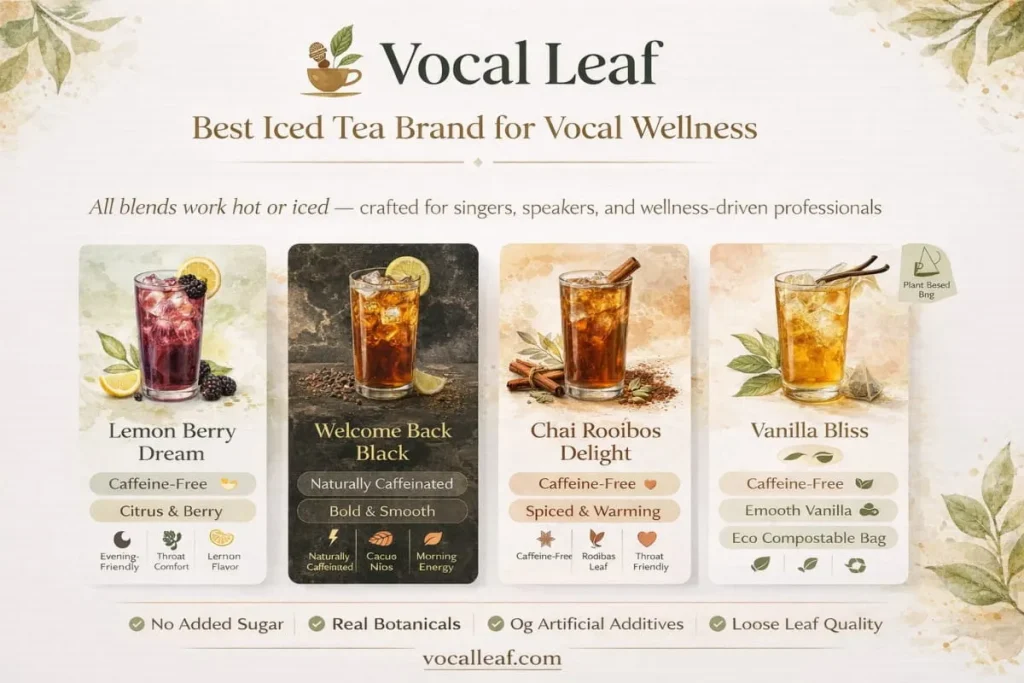
Vocal Leaf Blends, The Best Herbal Iced Teas for Voice Professionals
Every Vocal Leaf blend was formulated with one question at the center: what does a voice professional actually need from what they drink? The answer shaped everything: the botanical selection, the caffeine-free positioning, the organic sourcing, and the loose-leaf format. What emerged is a lineup in which each blend occupies a distinct, intentional position, serving a specific moment in the performer’s day without overlapping or competing with the others.
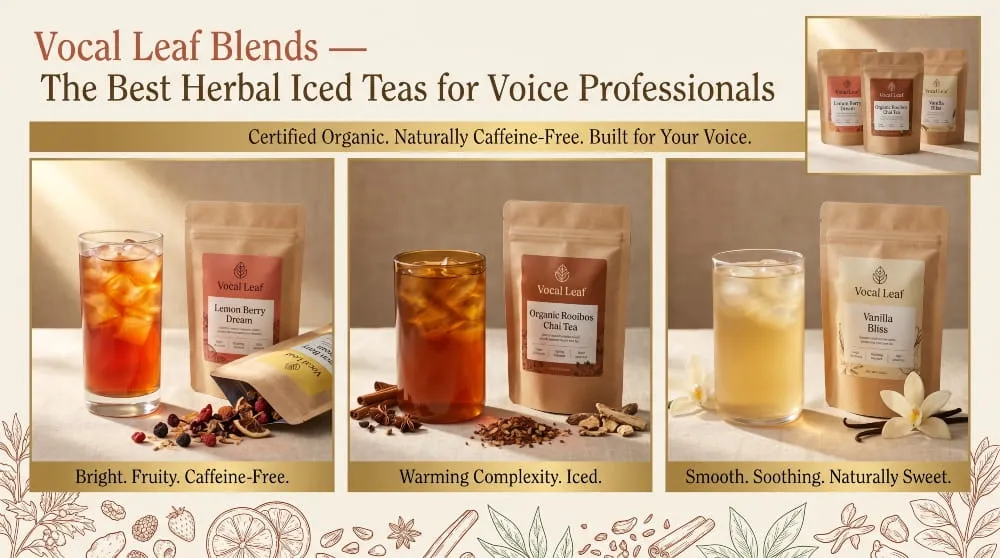
All four blends brew beautifully iced. All four are naturally caffeine-free and certified organic. And all four deliver something the bottled herbal iced tea market simply doesn’t: a drink that was built for your voice, not just your thirst.
Lemon Berry Dream, Bright, Fruity, Caffeine-Free
Lemon Berry Dream is Vocal Leaf’s most immediately accessible blend, the one that converts skeptics on the first sip. Cold-brewed overnight and poured over ice, it delivers a genuinely vibrant flavor profile: bright citrus acidity up front, a rounded berry sweetness through the middle, and a clean, lingering finish that makes the glass disappear faster than you planned.
Functionally, the naturally occurring acids in the fruit botanicals help maintain a clean vocal environment, supporting the kind of clean, unobstructed resonance that performers depend on. It’s completely caffeine-free, which means it hydrates without compromise, and it carries no added sweeteners; the flavor comes entirely from the quality of the organic botanicals themselves.
This is the blend for warm afternoons, pre-show hydration, summer batch brewing, and anyone who wants a herbal iced tea that tastes like a reward rather than a remedy. Cold brew is the recommended method, though a quick hot steep followed by an ice pour works equally well when time is short.
Organic Rooibos Chai Tea, Warming Complexity, Iced
Organic Rooibos Chai Tea is the blend that surprises people most when served cold. The expectation with a spiced chai profile is that it belongs in a warm mug, but brewed properly and chilled over ice, the Rooibos Chai becomes something genuinely compelling: a complex, layered iced tea with warmth of flavor that reads as sophisticated rather than seasonal.
The functional case for this blend is particularly strong. Rooibos is naturally free of caffeine and tannins, the compounds in traditional tea that dry out throat tissue and work against vocal lubrication. The absence of tannins is significant for voice professionals specifically, because it means you can drink this blend in volume without the drying, astringent effect that black or green iced teas introduce over time. The spice compounds layered through the chai profile add their own anti-inflammatory dimension, making the Rooibos Chai especially valuable during periods of heavy vocal use or post-performance recovery.
Hot-brew this one before chilling; the denser botanical material in the spice blend extracts more completely with heat, and the resulting flavor is noticeably fuller and more rounded than a cold brew of the same blend. Brew strong, cool completely, then pour over ice. It holds up beautifully as a batch concentrate and develops even more depth by day two in the refrigerator.
Vanilla Bliss, Smooth, Soothing, Naturally Sweet
Vanilla Bliss occupies a specific and irreplaceable position in the Vocal Leaf lineup; it’s the wind-down blend, the recovery drink, the thing you reach for when the performance is over, and the voice needs to shift from output mode to rest mode. Served over ice, it’s one of the most quietly luxurious herbal iced teas in the range: smooth, naturally sweet without a gram of added sugar, and grounding in a way that feels almost immediate.
The vanilla botanicals carry a softness that translates beautifully cold. There’s no sharpness, no astringency, no finish that demands anything from the palate, just a clean, warm sweetness that signals recovery and rest. For singers and speakers who’ve spent hours demanding precision from their vocal instrument, that gentleness isn’t incidental. It’s the point.
Vanilla Bliss also works exceptionally well as an entertaining option for guests who don’t typically drink herbal tea. The flavor profile is familiar enough to be immediately appealing and interesting enough to prompt the question, which is exactly what a good host blend should do. Brew slightly stronger than usual, chill fully, and serve over ice in a clear glass where the color can do some of the work.
All four blends are available at vocalleaf.com in loose-leaf format, certified organic, and formulated specifically for the demands that voice professionals place on their bodies every day. Whether you’re building a daily hydration ritual, stocking a green room, or simply looking for the best herbal iced tea you’ve ever made at home, this is where that search ends.
Conclusion
Herbal iced tea is one of the simplest upgrades a voice professional can make to their daily routine, and one of the most underestimated. The right blend, brewed the right way, does more than hydrate. It supports recovery, protects vocal tissue, and gives your body something genuinely useful between performances, sessions, and long, demanding days.
Vocal Leaf was built specifically for this. Every blend is certified organic, naturally caffeine-free, and formulated with the functional needs of singers, speakers, podcasters, and performers in mind, so they can’t afford to treat what they drink as an afterthought.
If you’ve made it this far, the next step is simple: brew a batch, experience the difference firsthand, and make it part of your routine for caring for your voice.
Frequently Asked Questions (FAQ’s)
What is the best herbal tea for making iced tea?
The best herbal teas for iced tea are naturally caffeine-free, fruit-forward, or botanically rich blends that extract cleanly in cold water and hold their flavor over ice. Vocal Leaf’s Lemon Berry Dream and Organic Rooibos Chai Tea are two standout options, both brew beautifully cold and deliver complex, satisfying flavor without any added sweeteners or artificial ingredients.
Can you cold brew herbal tea?
Yes, herbal tea is exceptionally well-suited to cold brewing. Simply combine loose-leaf botanicals with cold, filtered water, refrigerate for 8 to 12 hours, strain, and serve over ice. The slow, low-temperature extraction produces a smoother, less astringent cup than hot brewing, while retaining all the botanical compounds.
Is herbal iced tea good for your throat and voice?
A well-formulated herbal iced tea can actively support throat and vocal health. Naturally caffeine-free blends hydrate without the fluid-loss effect that caffeinated drinks trigger. At the same time, anti-inflammatory botanical compounds help soothe throat tissue and support recovery after extended vocal use, making herbal iced tea a practical daily choice for singers, speakers, and performers.
How long does homemade herbal iced tea last in the fridge?
Homemade herbal iced tea stays fresh in the refrigerator for up to five days when stored in a sealed glass container. Concentrates tend to hold their flavor integrity slightly longer than full-strength brews. For best results, strain the botanicals completely before storing; leaving them in the liquid past the steep window can push the flavor toward bitter over time.
What makes organic herbal iced tea different from conventional?
Organic herbal iced tea is made from botanicals grown without synthetic pesticides, chemical fertilizers, or artificial inputs, which means nothing ends up in your cup except the plant compounds you’re actually brewing for. Conventional botanicals can carry pesticide residues that concentrate during steeping, undermining the functional and health benefits the blend was designed to deliver.
Does herbal iced tea have caffeine?
True herbal iced tea, made from botanicals rather than traditional tea leaves, is naturally caffeine-free. Unlike black, green, or white iced teas, which are derived from the Camellia sinensis plant and contain caffeine, herbal blends are sourced from fruits, roots, and other plant compounds that contain no caffeine. This makes herbal iced tea a reliable choice for anyone managing caffeine intake or prioritizing consistent hydration.