
Best Teas for Anxiety | Stress Relief Picks and Tips
The best tea for anxiety is one built around L theanine, the calming amino acid found naturally in real loose leaf tea. It works by supporting alpha brain wave activity, the same relaxed but alert state you get from deep breathing or meditation, without making you drowsy. A 2016 review of human clinical trials found that most controlled studies on L theanine showed measurable reductions in stress and anxiety after acute stressful situations, which is part of why so many people now reach for a warm cup instead of reaching for their phone when nerves hit.
That is the appeal of a good calming tea, it is not a cure, but it gives your nervous system a genuine, research backed nudge toward steadier ground. Whether you are dealing with everyday tension, pre event jitters or the kind of restless energy that makes it hard to sit still, the right stress relief tea works on two levels at once, the physiological calm from what is actually in the cup and the psychological reset that comes from the ritual of slowing down to brew and sip it. This guide breaks down what to look for, when to reach for caffeine free options and which teas are worth keeping in your cupboard for the moments you need to feel calm fast.
What Is Tea for Anxiety and Does It Actually Work?
Tea for anxiety is exactly what it sounds like, a cup consumed specifically to ease stress, nervous energy or a racing mind and the effect is real, though it works through steady biological pathways rather than instant sedation. True tea (the kind made from the Camellia sinensis plant, like black tea) contains L theanine, which supports relaxed alertness rather than drowsiness, while the warmth and ritual of preparing a cup activates its own calming response independent of what is actually in it.
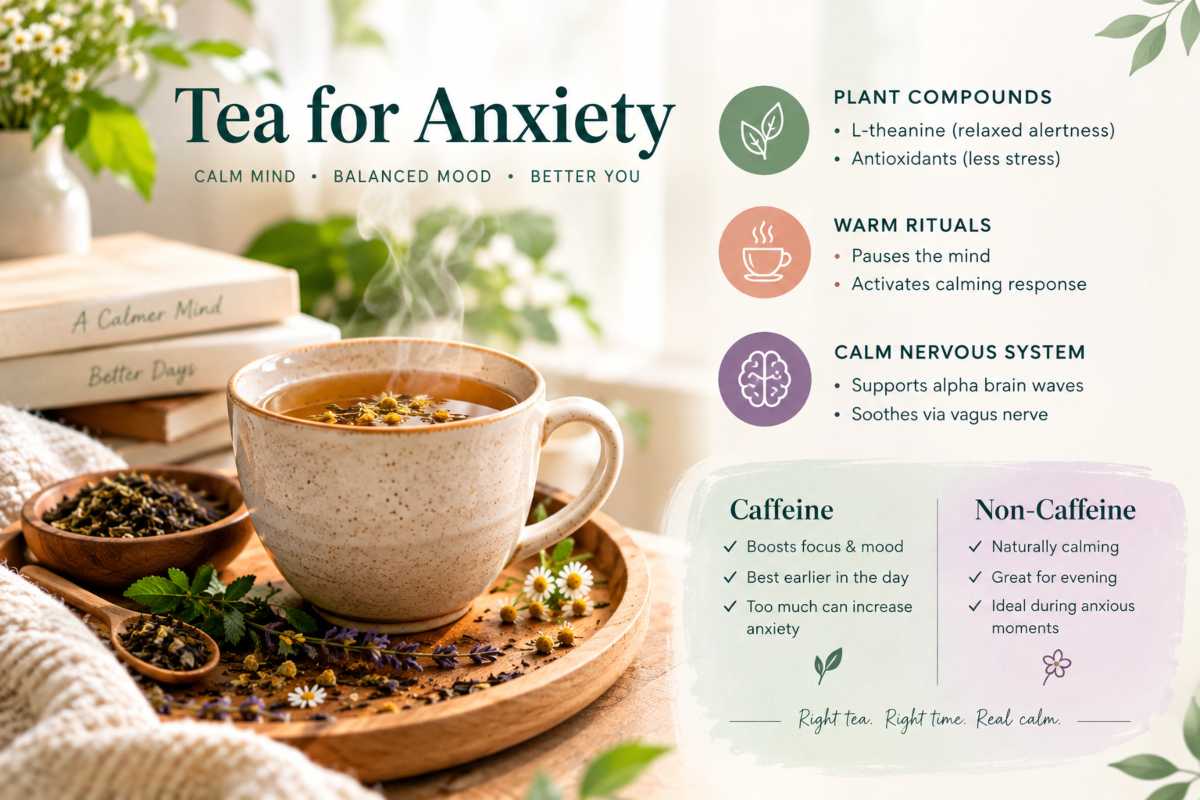
This is why a herbal tea for anxiety and a caffeinated loose leaf black tea can both genuinely help, just through different mechanisms, one through plant compounds, the other through a mix of mild stimulation and steady state focus. The best tea for anxiety, then, is not a single miracle blend, it is the right combination of ingredients and ritual matched to what your body actually needs at the moment.
How Warm Rituals and Herbal Compounds Support a Calm Nervous System
The act of brewing tea forces a built in pause, measuring, steeping, waiting, that interrupts the spiral of anxious thoughts before you have even taken a sip. On top of that behavioral reset, the compounds in tea do real physiological work, L theanine has been shown in clinical research to increase alpha brain wave activity, the same relaxed but focused state associated with meditation, without the sedation you’d get from something stronger. Warmth itself also plays a role, since warm liquids have a mild soothing effect on the vagus nerve, the same pathway that helps regulate your body stress response.
Caffeine vs Non Caffeine Why It Matters for Anxiety
Caffeine affects anxiety differently depending on the person and the dose, a moderate amount can sharpen focus and mood, but too much can mimic or deepen the physical symptoms of anxiety like a racing heart or jitteriness. This is why timing and tea choice matter, a lightly caffeinated black tea can work well earlier in the day when you want calm but alert focus, while a naturally caffeine free option, like rooibos, is the better call in the evening or during acute anxious moments when you do not want any stimulant in the mix. Vocal Leaf loose leaf tea lineup covers both ends of that spectrum, so the choice comes down to when you’re drinking and what kind of calm you’re after.
Best Calming Teas for General Stress and Anxiety Relief
A truly calming tea works on three levels at once, the natural compounds in the leaf, the warmth of the liquid itself and the slowing down effect of the ritual around drinking it. None of these needs to work alone, a tea that is mildly calming in composition becomes noticeably more effective when it is paired with a consistent, unhurried habit of making and drinking it the same way each day. This is where the best tea for anxiety earns its reputation, not as a fast acting fix, but as a small, repeatable anchor point in an otherwise stressful day. The right pick depends less on finding one “magic” ingredient and more on matching the tea properties to when and why you’re reaching for it.
What Makes a Tea “Calming” Adaptogenic Properties, Warmth and Ritual
A tea earns the “calming” label through a combination of what is in the cup and what happens around it. Naturally caffeine free blends, like rooibos, support the body stress response without adding stimulation, which is part of why rooibos based blends are often described as having adaptogenic style, stress buffering qualities. Add in the warmth of the drink itself, which has a gentle soothing effect on the nervous system and the deliberate pause of brewing and sipping and you get a calming tea that works through habit as much as through ingredients.
Vocal Leaf Picks for Everyday Calm
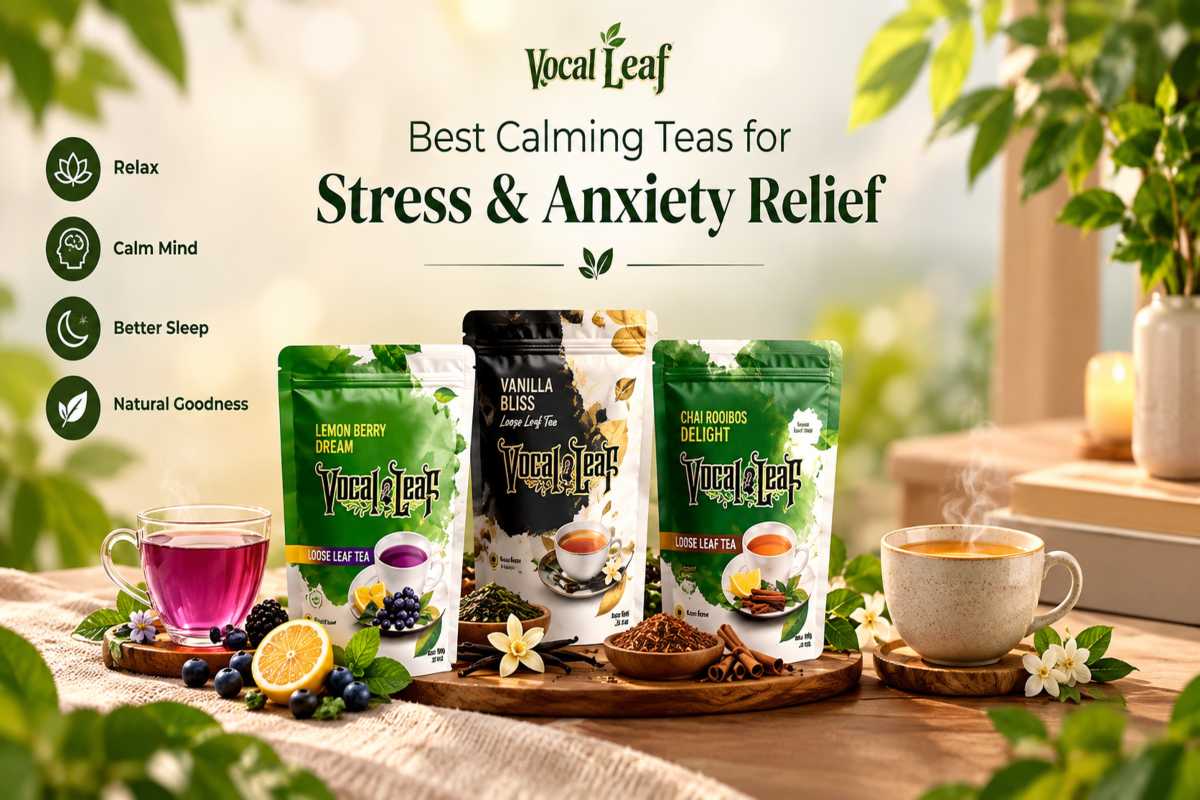
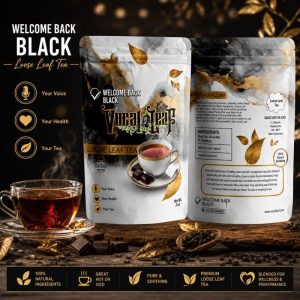
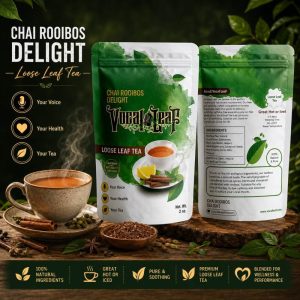
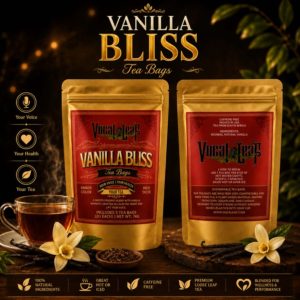
For a naturally caffeine free option built for daily calm Organic Rooibos Chai Tea is the straightforward pick, it delivers warmth and ritual without any stimulant to manage. For those who want a lightly caffeinated option that still leans calming rather than jittery organic Loose Leaf Black Tea offers steady, low key energy paired with L theanine relaxed focus effect. Vanilla Bliss works well as an evening wind down tea thanks to its soothing, comfort forward profile, while Lemon Berry Dream is a good fit for anyone who wants their calming ritual to feel bright and refreshing rather than heavy. Rotating between these four based on time of day and mood is a simple way to build a stress relief habit that doesn’t get stale.
Tea for Panic Attacks and Acute Anxiety Moments
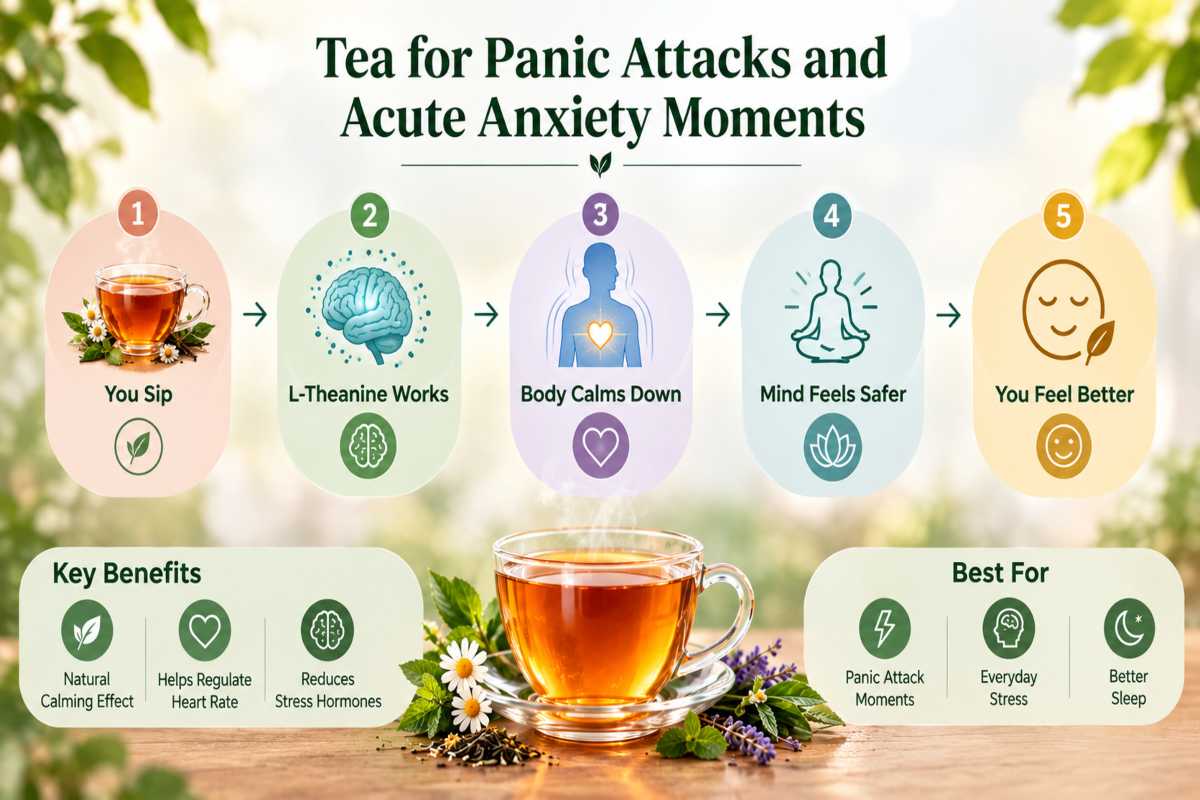
Tea can’t stop a panic attack once it’s in full swing, but a warm, caffeine free cup, sipped slowly alongside deep breathing, can help bring your body out of fight or flight faster than trying to power through alone. In a controlled lab study, participants given L theanine showed a measurable drop in heart rate and stress hormone markers when facing an acute stress task, compared to those given a placebo, evidence that the calming compounds in tea have a real, physiological effect on the body stress response, not just a placebo one. For tea for anxiety and panic attacks, the goal at the moment isn’t complex, pick something warm, caffeine free and familiar and let the process of making and drinking it become part of the calming itself.
What to Reach For in a High Stress Moment
In the middle of acute anxiety, simplicity wins, this is not the time for anything caffeinated or unfamiliar. A naturally caffeine free option like Organic Rooibos Chai Tea is a solid go to, since it won’t add any stimulant to an already activated nervous system and its warmth alone helps signal safety to the body. Keep the process itself simple too, heat water, steep and focus on the physical steps rather than the anxious thoughts, which gives your mind something concrete to redirect toward while the L theanine and warmth do their part.
Building a Calming Tea Ritual Before Stressful Events
The most effective use of tea for acute anxiety is not reactive, it is proactive, built into the lead up to a known stressful event rather than saved for the moment panic hits. Brewing a cup of Organic Rooibos Chai Tea or Vanilla Bliss 20–30 minutes before a high pressure moment gives the calming compounds time to take effect and gives your mind a consistent pre event cue it starts to associate with steadiness. Over time, this turns tea into more than a stopgap, it becomes a trained signal that tells your nervous system it’s safe to downshift, which is often more reliable than trying to calm down cold in the moment itself.
Tea for Social Anxiety and Performance Nerves
Tea for social anxiety works best when it is part of a pre performance routine, not a one off fix, the calming effect compounds when it’s paired with warmth, hydration and a few quiet minutes before you’re expected to speak, sing or perform. For voice professionals specifically, tea does double duty, it eases the nervous system the same way it would for any social anxiety trigger, while also warming and hydrating the vocal cords that stage nerves tend to tighten up.
This is where tea for social anxiety overlaps with something most general anxiety content never touches, the specific, physical relationship between calm nerves and a calm voice. For podcasters, speakers, and anyone who relies on their voice, choosing the right tea for podcasters can make a calming pre recording or pre-event ritual even more useful, helping you settle your nerves while keeping your voice comfortable.
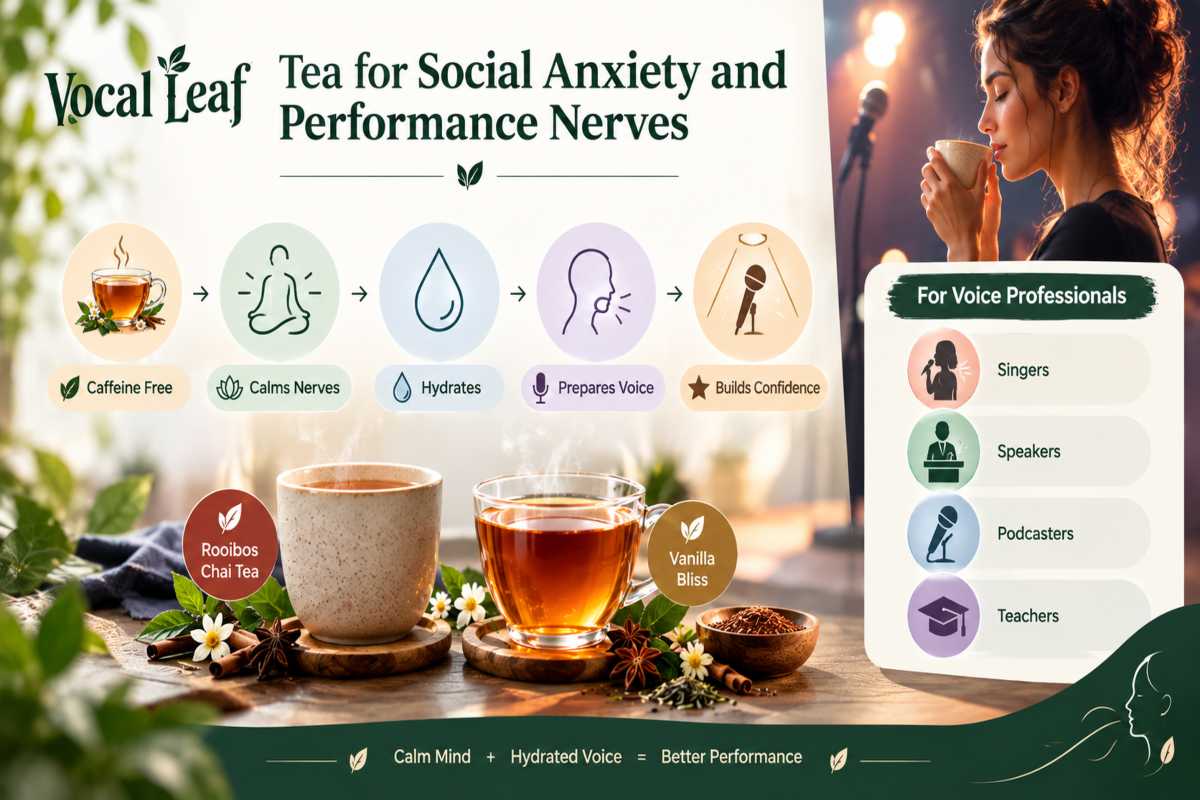
Calming Tea Before Speaking, Singing or Performing
Before any high stakes speaking or singing moment, caffeine free is the safer call, caffeine has a mild diuretic effect that can leave vocal cords drier at exactly the moment you need them lubricated, on top of adding jitteriness on top of existing nerves. A warm cup of Organic Rooibos Chai Tea or Vanilla Bliss about 30 minutes before going on supports both goals at once, the L theanine free but naturally soothing profile calms the nervous system, while the warmth and hydration prep the throat itself. Sipping slowly rather than gulping also slows your breathing down, which on its own helps blunt the physical edge of pre performance nerves.
Why Voice Professionals Reach for Tea Before High Pressure Moments
Singers, speakers, podcasters and teachers deal with a layered kind of anxiety, the general nervousness anyone might feel before a big moment, plus the added pressure of knowing their instrument is their own body. A pre show cup of tea addresses both at once, which is part of why it’s such a common ritual backstage and behind the mic, it is one of the few tools that calms the mind and conditions the voice in the same sip. This is the gap most anxiety content misses entirely, it treats “calm” as purely mental, when for a voice professional, physical vocal readiness is just as much a part of feeling settled before a performance as any breathing exercise or mindset shift.
Tea for Nervous Stomach and Stress Related Digestive Symptoms
A nervous stomach, that knotted, unsettled feeling before a stressful event, is a direct result of the gut brain connection and a warm, gentle tea is one of the simplest ways to ease it without adding anything harsh to an already sensitive system. The vagus nerve runs directly between the brain and the digestive tract, which is why anxiety so often shows up as a physical stomach symptom rather than staying “in your head.” For tea for stress and anxiety that specifically targets this overlap, the priority shifts slightly, you’re looking for something warm and mild rather than stimulating, since caffeine can add to digestive unease on top of everything else it does.
The Gut Anxiety Connection
Roughly 90% of the body’s serotonin, a neurotransmitter closely tied to mood regulation, is produced in the gut, not the brain, which helps explain why stress and digestive discomfort tend to arrive together rather than as separate problems. When the nervous system shifts into a stress response, digestion slows and tightens as blood flow gets redirected elsewhere, producing that familiar knotted or queasy feeling. Because this pathway runs in both directions, calming the nervous system through something as simple as a warm cup of tea can, in turn, help settle the stomach itself.
Gentle Teas for an Anxious Stomach
For an anxious stomach specifically, naturally caffeine free and mild is the goal, nothing acidic, nothing stimulating, nothing that asks much of a digestive system that’s already tense. Organic Rooibos Chai Tea is a strong fit here, since it is caffeine free and gentle enough to sip slowly without adding any digestive strain. Lemon Berry Dream Tea, taken in smaller sips rather than a full cup at once, can also work well when a touch of brightness feels more soothing than something heavier, the key across either option is sipping slowly, which keeps the calming effect working on both the nervous system and the stomach at the same time.
Best Non Caffeine Teas for Anxiety and Sleep
The best non caffeine tea for anxiety in the evening comes down to one simple rule, nothing that could interfere with sleep, since poor sleep itself is one of the biggest drivers of next day anxiety. Caffeine has a half life of roughly 5–6 hours in most people, meaning even an afternoon cup can still be active in your system come bedtime, working against the very calm you’re trying to build. For best tea for anxiety and sleep together, a naturally caffeine free option in the evening does double duty, easing tension in the moment while protecting the sleep that keeps anxiety in check the next day.
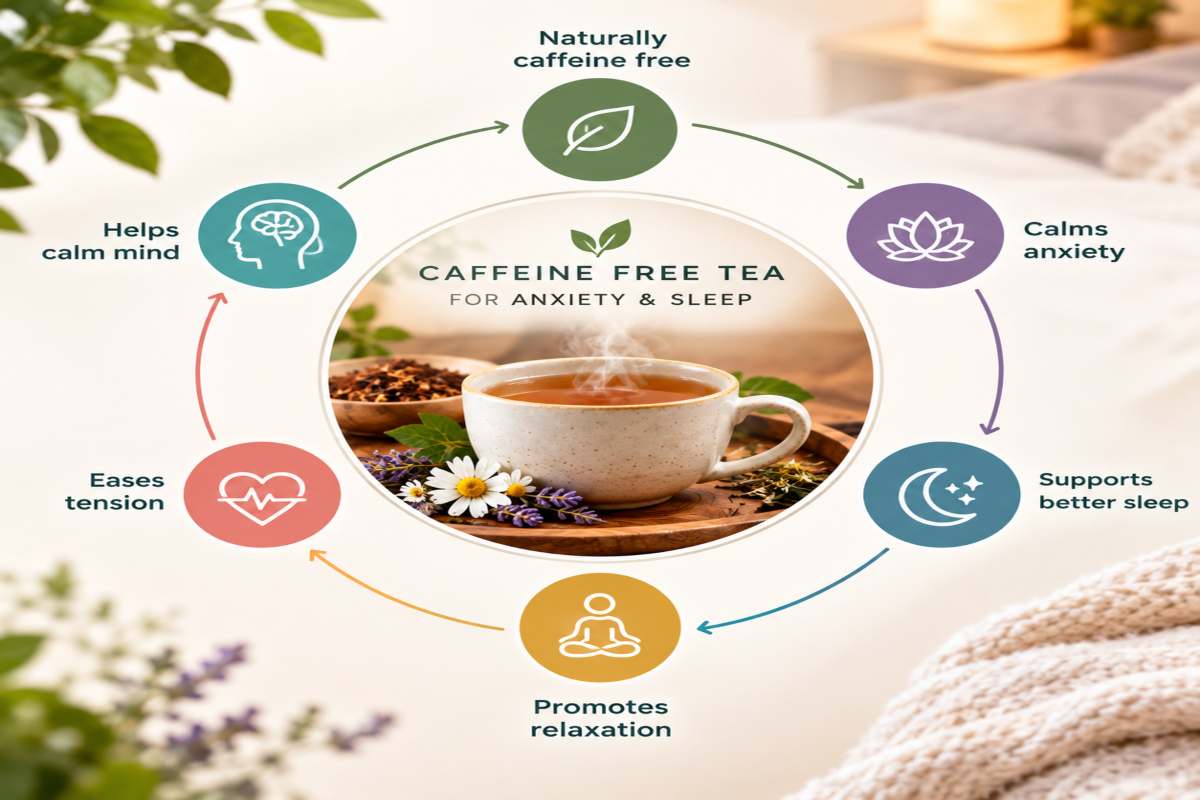
Why Caffeine Free Matters for Evening Anxiety
Caffeine and anxiety share overlapping physical symptoms, a faster heart rate, restlessness, a wired feeling, which means drinking caffeinated tea late in the day can mimic or amplify anxious symptoms even if the anxiety itself has nothing to do with caffeine. This is especially true for anyone already sensitive to stress, since a nervous system already on alert doesn’t need an added stimulant on top of it. Naturally caffeine free teas remove that variable entirely, leaving only the calming, warmth driven effects without any risk of adding jitteriness in the evening hours.
Pairing Anxiety Relief with Better Sleep
Good sleep and low anxiety reinforce each other, so an evening tea that supports both at once has an outsized effect on how calm the next day feels. Organic Rooibos Chai Tea, naturally caffeine free, is built for exactly this slot, warm, mild and free of anything that could delay sleep onset. Vanilla Bliss works well here too, with a soothing, comfort forward profile that fits naturally into a wind down routine. Making either one part of a consistent bedtime ritual, same tea, same time, same quiet ten minutes, trains the body to associate that cup with the shift from an anxious day into rest.
How to Build a Daily Calming Tea Ritual
A calming tea ritual works best when it is boring in the best way, same tea, same time, same few quiet minutes, because consistency is what turns a cup of tea from a one off mood boost into a reliable anxiety management tool. Research on habit formation shows that simple daily rituals tend to lower baseline stress over time, not because any single cup does much on its own, but because the brain starts associating the routine itself with a shift into calm. Building that ritual just takes two decisions, when you are drinking it and how you are brewing it.
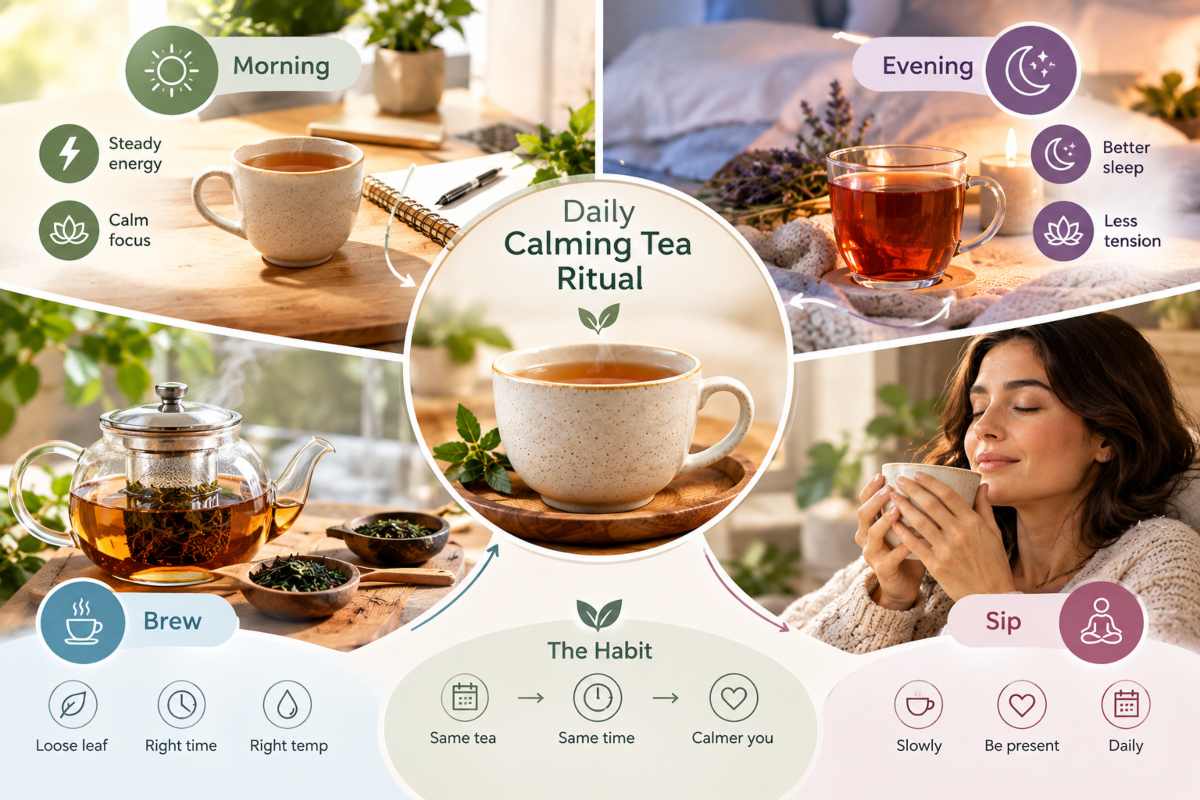
Morning vs Evening Routines
Morning and evening calls for different teas, since the goal at each end of the day isn’t the same. In the morning, a lightly caffeinated option like Organic Loose Leaf Black Tea offers steady, low key energy alongside its naturally calming compounds, useful for anyone whose anxiety tends to spike alongside the rush of starting the day. In the evening, the priority flips entirely toward naturally caffeine free options like Organic Rooibos Chai Tea or Vanilla Bliss, which won’t interfere with sleep and instead help close out the day on a settled note. Keeping the two routines distinct, rather than reaching for whatever closest, is part of what makes the ritual actually work over time.
Brewing for Maximum Calming Effect
How you brew matters almost as much as what you brew. Steeping loose leaf tea for its full recommended time, rather than rushing it, draws out more of the calming compounds and gives you a longer, more deliberate pause in the process itself. Sipping slowly rather than drinking on the move keeps the ritual mental benefit intact, since the calm comes as much from the unhurried few minutes as from what is in the cup. Over weeks of repetition, that small daily pause, brewed the same way, at the same time, becomes one of the most dependable tools in a broader approach to managing everyday anxiety.
Conclusion
The best tea for anxiety is not one perfect blend, it is the right tea for the right moment, brewed consistently enough that the ritual itself becomes part of the calm: black tea for steady morning focus, rooibos for acute stress or evening wind down and a warm cup before stepping up to speak or sing. None of this replaces professional support for anxiety that is persistent or severe, but as a daily tool for everyday stress and nerves, it holds up to real scrutiny. Explore Vocal Leaf full tea collection to find the blend that fits where you need calm most.
Frequently Asked Questions (FAQs)
What is the most calming tea?
Naturally caffeine free options like rooibos tend to be the most calming overall, since they deliver warmth and soothing compounds without any stimulant working against you.
What tea helps with panic attacks?
A warm, caffeine free cup sipped slowly alongside deep breathing can help ease the body out of fight or flight faster, though it works best as support, not a stand alone fix.
Is non caffeine tea better for anxiety?
For evening or acute anxiety, yes, caffeine can mimic anxious symptoms like a racing heart, so caffeine free options remove that risk entirely.
Can tea help with social anxiety?
Yes, especially as part of a, pre event ritual, the warmth and calming compounds ease nerves while the act of brewing slows your breathing down beforehand.
What is good for anxiety and sleep together?
A naturally caffeine free evening tea supports both at once, since it calms in the moment without risking the sleep disruption that fuels next day anxiety.
Top Selling Products


Caffeine Free Tea for Voice Professionals | What It Means
Caffeine free tea is widely misunderstood, and for voice professionals, that confusion has real consequences. Many singers, speakers, and performers reach for herbal tea before…
Apple Cinnamon Tea Benefits | What This Warming Blend Actually Does for Your Body
Apple cinnamon tea delivers genuine health benefits, not just comfort. The combination of apple-derived polyphenols and cinnamon’s active compound, cinnamaldehyde, creates a blend that targets…