
Caffeine Free Iced Tea | Recipes & Everything You Need to Know
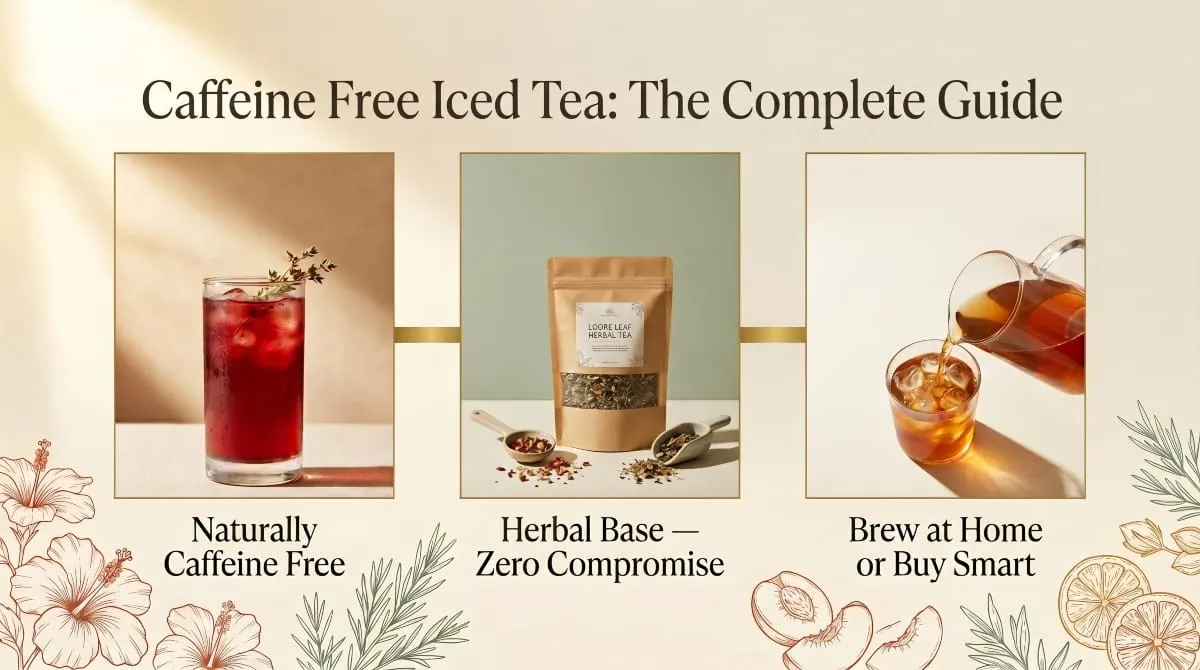
Most people assume iced tea is a safe, light drink that’s easy on the body and easy to enjoy all day. But if you’ve ever reached for a cold glass in the afternoon and then wondered why you couldn’t sleep that night, the answer is probably sitting right there in your cup.
Traditional iced tea is brewed from black or green tea leaves, and both contain caffeine. Not as much as coffee, but enough to matter, especially if you’re sensitive to it, pregnant, managing anxiety, or simply trying to wind down after a long day.
The good news? Caffeine-free iced tea is very real, genuinely delicious, and more available than most people realize. Whether you’re looking for the best caffeine free iced tea brands at the grocery store, a simple recipe you can cold brew at home, or just trying to figure out whether your favorite bottled iced tea actually qualifies, this guide covers all of it.
You’ll learn exactly which types of tea are naturally caffeine free, how to read labels so you’re never caught off guard, which brands deliver on taste without the stimulant, and how to brew a perfect pitcher yourself. By the end, you won’t just know what caffeine free iced tea is, you’ll know exactly which one belongs in your fridge.
Is Iced Tea Caffeine Free? (What Most People Get Wrong)
One of the most common assumptions in the beverage world is that iced tea is light, gentle, and naturally caffeine-free. And it’s understandable. Iced tea doesn’t feel like coffee. It doesn’t carry that same reputation. But the assumption is wrong, and for people actively avoiding caffeine, that misunderstanding can cause real problems.
The answer to “Is iced tea caffeine-free?” depends entirely on what the tea is made from, not how it’s served, not whether it’s sweet or unsweet, and not whether it comes in a bottle or a bag. The base ingredient is everything.
Why Traditional Iced Tea Contains Caffeine
Standard iced tea is brewed from Camellia sinensis, the same plant that produces black tea, green tea, white tea, and oolong. Every variety of this plant naturally contains caffeine. The amount varies depending on the type and how it’s brewed, but none of them are caffeine-free.
Black tea, the base for most classic iced teas, sweet teas, and popular bottled brands, typically delivers 25-50 mg of caffeine per eight-ounce serving. That’s roughly a third to half the caffeine in a standard cup of coffee. Drink two or three glasses over the course of a day, and the numbers add up quickly.
The confusion arises because iced tea is cold, refreshing, and often consumed casually, not the way most people think about a stimulant. But the brewing process doesn’t reduce the caffeine. Chilling the tea doesn’t neutralize it. Sweetening it doesn’t dilute it. If it started as black or green tea, it has caffeine.
Which Tea Types Are Naturally Caffeine Free
The cleanest path to genuinely caffeine-free iced tea is to choose a base that never had caffeine to begin with. Several herbal and plant-based teas are naturally caffeine-free, not through processing or chemical removal, but simply because they come from plants other than Camellia sinensis.
Rooibos is one of the best examples. It’s a South African red bush plant with zero caffeine, a naturally sweet and slightly earthy flavor, and enough body to hold up beautifully over ice. Hibiscus brews a vivid ruby-red iced tea with a tart, fruity character. Fruit-based herbal blends, think berry, peach, or citrus, are also naturally caffeine-free and among the most popular choices for cold brewing.
These aren’t compromise options. They’re legitimately flavorful, and for anyone who drinks iced tea primarily for the taste and refreshment, not the caffeine, they’re often the better choice.
Does Sugar-Free Iced Tea Have Caffeine?
This is where a lot of people get tripped up. Sugar and caffeine content are completely separate. A sugar-free iced tea can absolutely still contain caffeine, and most of the popular diet or sugar-free iced tea products on the market do, because they’re still made from caffeinated black or green tea.
Removing sugar doesn’t touch the tea base. Neither does adding artificial sweeteners, natural flavors, or fruit concentrates. If the ingredient list lists black tea or green tea as the base, the drink contains caffeine, regardless of what else has been removed or added.
The only way to know for certain is to check the label, specifically the ingredient list, not just the front-of-pack marketing. “Light,” “diet,” “sugar-free,” and “unsweetened” are not caffeine-free claims.
Does Decaf Mean the Same Thing as Caffeine Free?
No, and this distinction matters more than most people realize.
Decaffeinated tea has had most of its caffeine removed through a chemical or CO₂ extraction process. The key Word is most. FDA regulations allow a product to be labeled decaf if it retains only a small percentage of its original caffeine content, which means decaf iced tea still contains trace amounts of caffeine. For most people, that’s negligible, but for those with high caffeine sensitivity, during pregnancy, or under medical guidance to eliminate caffeine, trace amounts still count.
Naturally caffeine-free herbal teas, rooibos, hibiscus, and fruit blends contain no caffeine whatsoever because the source plant never produced it. That’s the difference between caffeine-free and decaf, and it’s the reason “naturally caffeine-free” is a more reliable label than “decaffeinated” when zero caffeine is genuinely the goal.
Types of Caffeine-Free Iced Tea
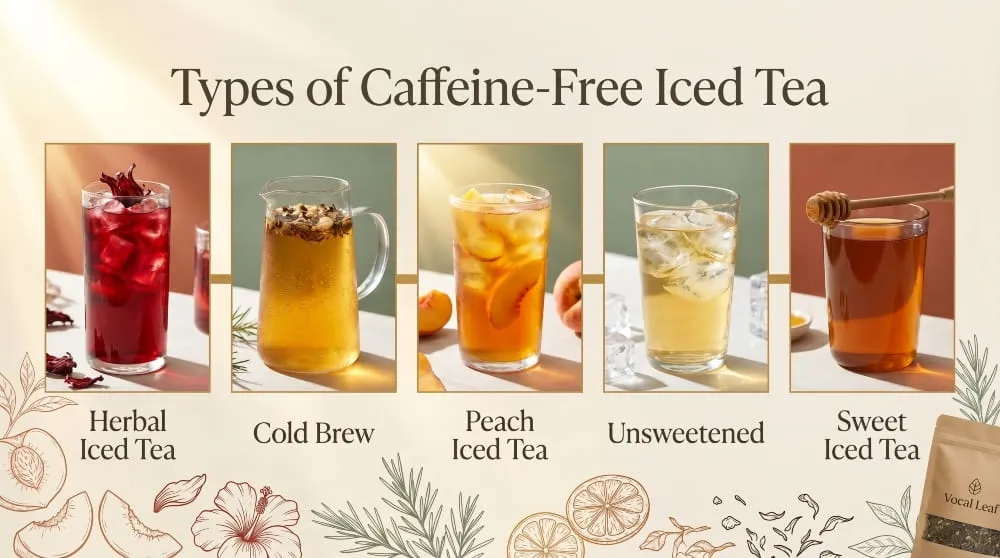
Not all caffeine free iced teas are the same, and that’s actually a good thing. The category has expanded well beyond a single herbal option sitting quietly at the back of the tea aisle. Today, there are genuinely excellent choices across every style, sweetness level, and brewing method. Understanding the main types helps you find the one that fits your taste, your routine, and your reason for going caffeine-free in the first place.
Caffeine Free Unsweetened Iced Tea
Unsweetened, caffeine-free iced tea is the purest expression of the category. No added sugar, no sweeteners, no flavoring, just clean, honest tea flavor over ice. It’s the go-to choice for people managing both their sugar and caffeine intake, and it gives you complete control over how you serve it.
Rooibos brewed unsweetened is a particularly strong option here. It has a natural, mild sweetness even without sugar, so it doesn’t taste flat or medicinal as some unsweetened teas can. Hibiscus unsweetened delivers a tart, cranberry-like character, bright and refreshing without anything added.
If you’ve avoided unsweetened iced tea in the past because it tasted thin or bitter, that was almost certainly a black tea problem. Caffeine-free herbal bases behave differently. They tend to be rounder, smoother, and more forgiving without sugar.
Caffeine Free Sweet Iced Tea
Sweet iced tea is a cultural institution in much of the world, and going caffeine-free doesn’t mean giving it up. The same style, brewed strong, sweetened while hot so the sugar fully dissolves, then poured over ice, works just as well with a caffeine-free base as it does with black tea.
Rooibos and fruit-forward herbal blends are the natural fits here. They have enough body and flavor to stand up to sweetening without becoming cloying, and they carry that classic iced tea character that makes a cold, sweet glass so satisfying on a warm day. If you’re making it at home, the process is identical to traditional sweet tea; the only thing that changes is what goes in the pot.
Caffeine Free Peach Iced Tea
Peach iced tea is one of the most searched-for and most-loved iced tea variations, and the caffeine-free version has become its own distinct category. The combination of fruity sweetness, floral aroma, and cold refreshment is hard to beat in summer, or honestly, any time of year.
Most caffeine-free peach iced tea is made on an herbal or rooibos base, with natural peach flavoring or real dried peach blended in. The result is a drink that tastes genuinely fruity without being artificial, and the lack of caffeine makes it something you can drink freely throughout the day without any second-guessing.
It’s also one of the most approachable entry points for people new to caffeine-free iced tea who aren’t sure they’ll like the switch. Peach flavor tends to smooth over any unfamiliarity with the herbal base, making the transition feel effortless.
Caffeine Free Herbal Iced Tea
Herbal iced tea is the broadest and most diverse type in the caffeine free category. Because herbal teas aren’t made from the Camellia sinensis plant, they’re caffeine-free by default, no processing required, no chemical removal, no residual trace amounts.
The flavor range is wide. Fruit-based blends lean sweet and bright. Floral options like hibiscus are vivid and tart. Spiced blends built around warming botanicals like cinnamon and clove translate surprisingly well over ice, especially when you want something more complex than a straightforward fruit tea.
Herbal iced teas also tend to be visually striking, deep reds, golden ambers, blush pinks, which makes them easy to dress up for entertaining or simply more enjoyable to drink when your glass looks beautiful.
Caffeine Free Cold Brew Iced Tea
Cold brew iced tea is made by steeping tea in cold or room temperature water for an extended period, usually six to twelve hours, rather than using hot water and chilling the result. It’s a slower process, but the payoff is significant.
Cold brewing pulls flavor from the tea differently than hot water does. The result is noticeably smoother, less astringent, and often more complex than a hot-brewed, then chilled, version of the same tea. Any bitterness that might come through at higher temperatures essentially disappears. For caffeine-free herbal teas specifically, cold brewing tends to highlight the natural sweetness and floral notes in the base rather than the grassy or vegetal tones that hot water can sometimes emphasize.
The method is simple: add your tea bags or loose leaf to a pitcher of cold water, refrigerate, and wait. No heat, no cooling time, no watching a pot. The low effort and superior result make it the preferred method for many people who drink iced tea regularly at home.
Caffeine Free Iced Tea Bags vs Loose Leaf
Both work. The right choice depends on how much you care about the final result and how much friction you’re willing to accept in the process.
Iced tea bags are convenient, consistent, and widely available. Most caffeine-free herbal options come in bag form, and their quality has improved considerably in recent years. For everyday iced tea brewed in a pitcher, bags are a perfectly reasonable choice.
Loose leaf tea is a step up in quality for one main reason: it has more room to expand and release its full flavor profile. Compressed tea dust in a standard bag simply can’t behave the same way as whole or cut leaf can in open water. The difference is most noticeable in flavor complexity and aroma; loose leaf tends to taste fresher, more layered, and more true to the plant it came from.
For caffeine-free iced tea specifically, loose leaf also gives you more control over the strength. You can adjust the amount precisely to match your brewing volume and personal taste, which is harder to calibrate with individual bags. If you’re cold brewing or making a large pitcher you plan to enjoy over several days, loose leaf is worth the small extra step.
Best Caffeine-Free Iced Tea Brands (Honest Breakdown)
The caffeine-free iced tea market has grown considerably, but it’s still a minefield if you’re not reading labels carefully. Brand names that feel safe, familiar, widely trusted, and stocked in every grocery store don’t automatically mean caffeine-free. Some brands offer a handful of caffeine-free options buried within a much larger lineup of caffeinated options. Other market flavors in ways that imply caffeine-free without actually delivering it.
Here’s an honest look at the most searched brands and what they actually offer.
Snapple Caffeine Free Iced Tea: Is It Actually Caffeine Free?
Snapple is one of the most searched names in the caffeine free iced tea conversation, and the answer is: it depends on which Snapple you’re holding.
Snapple’s core iced tea line, including its classic Lemon Tea and Peach Tea, is made from black and green tea, which means it contains caffeine. However, Snapple does produce a range of juice-based and fruit drink products that contain no tea or caffeine, and these are sometimes confused with their tea line.
If you’re specifically looking for a caffeine-free Snapple, you need to look past the standard tea bottles and check the label of whatever you’re picking up. The Word “tea” on the front does not guarantee a caffeine-free product in Snapple’s range. Read the ingredient list, not the flavor name.
Turkey Hill Caffeine Free Iced Tea
Turkey Hill is a regional brand with a loyal following, particularly in the northeastern United States, and they are one of the more straightforward players in this category. Turkey Hill offers explicitly labeled caffeine-free iced tea options, which are clearly marked, making them easier to shop for than some larger national brands.
Their caffeine-free line typically includes herbal and fruit-based varieties, as well as some decaffeinated options. As covered earlier, decaf and caffeine-free are not the same thing, so it’s worth confirming which type you’re selecting if zero caffeine is your hard requirement. That said, Turkey Hill’s labeling is generally more transparent than average, and their caffeine-free products are a reliable choice when you can find them.
Crystal Light Iced Tea, Caffeine Free or Not?
Crystal Light is a powdered drink mix brand, not a traditional iced tea brand, but it comes up frequently in caffeine-free iced tea searches, so it deserves a direct answer.
The short version: not all Crystal Light iced tea products are caffeine-free. Their classic Iced Tea mix is made with black tea and does contain caffeine. However, Crystal Light does offer some specifically caffeine-free varieties, including certain lemonade-tea blends and fruit punch options that contain no tea base.
Is Crystal Light lemon iced tea caffeine free? The standard lemon iced tea variety contains caffeine from black tea. If you want a caffeine-free Crystal Light option, look specifically for products labeled caffeine-free or that list no tea as an ingredient. The flavor name alone won’t tell you; the label will.
Crystal Light is also worth noting for what it is: a low-calorie, artificially sweetened drink mix. If you’re also trying to avoid aspartame or artificial sweeteners alongside caffeine, this category may not serve you well, regardless of the caffeine content.
Fuze, Arizona, and Other Bottled Options
Fuze and Arizona are two of the most recognized names in bottled iced tea, and both sit firmly in the caffeinated category for their mainstream products.
Fuze’s Raspberry Iced Tea, one of their most popular flavors, is made with black tea and contains caffeine. Arizona’s classic teas, including their iconic tall cans of Green Tea and Arnold Palmer, are similarly caffeinated. Neither brand has built its identity around caffeine-free options, and where they exist, their offerings are limited and not consistently available across markets.
The broader lesson with bottled iced tea brands is this: the bottle design, the fruit imagery, the pastel colors, none of them signal caffeine content. A peach-flavored bottle with soft, summery branding can still be built on a caffeinated black tea base. The only reliable signal is the ingredient list on the back label.
If you’re shopping for bottled caffeine-free iced tea consistently, you’ll have more success looking at brands that have built their entire identity around herbal teas rather than searching for caffeine-free exceptions within mainstream brands built on black or green tea.
Best Caffeine-Free Iced Tea Bags and K-Cups
For home brewing, the best caffeine free iced tea bags are almost always found in the herbal tea section rather than the regular tea aisle. Brands like Celestial Seasonings, Bigelow, and Harney & Sons offer well-regarded herbal options that brew beautifully over ice, and their caffeine-free status is clearly labeled.
When buying iced tea bags specifically, look for bags designed for larger pitchers. These are typically labeled “family size” or “iced tea bags” and are designed to brew 1 to 2 quarts at a time. They’re more economical and produce better-concentrated tea than using multiple standard bags.
Caffeine-free K-Cups for iced tea are a smaller but growing category. Several herbal tea K-Cups work perfectly well for brewing a strong concentrate over ice. The key is to brew on the smallest cup setting to get a concentrated result, then pour immediately over a full glass of ice to chill and dilute to drinking strength. Not every K-Cup marketed as “iced tea” is caffeine-free, so the same label-reading discipline applies here as everywhere else in this category.
Caffeine Free + Sugar Free Iced Tea, Can You Have Both?
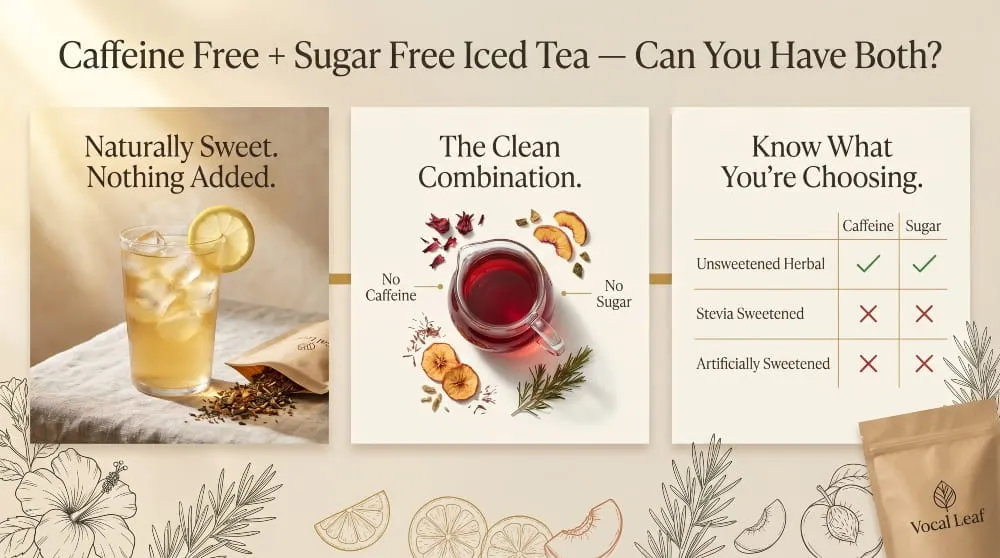
Yes, and more easily than most people expect. The assumption that giving up both caffeine and sugar means settling for something bland or medicinal is simply outdated. The best caffeine-free iced teas made from naturally sweet herbal bases don’t need sugar to taste good, which means going sugar-free in this category costs you far less than it does with traditional black tea, where sugar is often doing a lot of heavy lifting to balance bitterness.
That said, the market for sugar-free, caffeine-free iced tea is still cluttered with products that trade one ingredient for another in ways that aren’t always an improvement, understanding what you’re actually buying matters here more than in almost any other part of the iced tea category.
Best Sugar-Free Caffeine-Free Iced Tea Options
The cleanest, sugar-free, caffeine-free iced tea is one you make yourself from a naturally caffeine-free herbal base with no added sweetener. Rooibos brewed over ice is the strongest example; it has a natural, mild sweetness from the plant itself that makes it genuinely pleasant without anything added. Fruit-forward herbal blends built around berry, peach, or citrus notes behave similarly. The fruit character reads as sweet to the palate even when there’s no sugar in the cup.
Among bottled and packaged options, the most reliable sugar-free caffeine-free choices tend to come from brands that specialize in herbal teas rather than mainstream beverage companies offering a single diet variant in an otherwise caffeinated lineup. Look for products with a short ingredient list, a clear herbal base, and “sugar-free” because the product was never sweetened, not because the sugar was replaced with something else.
Unsweetened herbal iced teas, both bottled and brewed at home, are the gold standard for this combination: no caffeine, no sugar, no compromise.
Diet Caffeine Free Iced Tea Picks
Caffeine-free iced tea occupies a specific corner of the market for people who want the familiar sweet iced tea experience without the caffeine or calories. It’s a reasonable goal, but the execution varies significantly across brands and bases.
The challenge with most diet iced tea products is that they’re built on a caffeinated black or green tea foundation with caffeine removed through decaffeination, then sweetened with artificial sweeteners to replace the sugar. As discussed earlier, decaf still contains trace amounts of caffeine, so if you’re in this category for medical or sensitivity reasons, a diet decaf iced tea may not fully meet your needs.
The better approach for caffeine-free iced tea is an herbal base, sweetened with a natural zero-calorie sweetener like stevia. Several specialty tea brands now offer this combination, and the results have improved considerably as the category has matured. The taste gap between sugar-sweetened and stevia-sweetened herbal iced tea is much smaller than the equivalent gap in black tea, again because the herbal base already carries more natural flavor.
Aspartame Free Options for the Health-Conscious Drinker
Aspartame is the artificial sweetener found in a significant portion of the diet iced tea market, including some of the most widely available products in the caffeine-free iced tea space. For a growing number of consumers, avoiding aspartame is as important as avoiding caffeine and sugar, further narrowing the field but not eliminating good options.
The most straightforward way to get an aspartame-free, sugar-free, caffeine-free iced tea is to brew it yourself from an unsweetened herbal base and either drink it unsweetened or add a small amount of stevia, monk fruit, or raw honey, depending on your preference and dietary goals. This approach puts you completely in control of every ingredient and costs considerably less per serving than any packaged alternative.
For those who prefer a ready-made product, the label requires careful reading. “Sugar-free” does not specify which sweetener replaced the sugar, and aspartame can appear under the name phenylalanine in ingredient lists. Look explicitly for products sweetened with stevia or monk fruit, or better yet, products with no sweetener at all, just a naturally flavor-forward herbal base that doesn’t need one.
The cleanest combination, no caffeine, no sugar, no artificial sweeteners, is more achievable than the packaged beverage industry might have you believe. It just requires knowing what to look for and being willing to look past the label’s front to find it.
How to Make Caffeine-Free Iced Tea at Home
Making caffeine free iced tea at home is one of the easiest things you can do in the kitchen, and the results are almost always better than anything you’ll find in a bottle. You control the strength, the sweetness, the flavor, and every single ingredient. Once you’ve done it a few times, it becomes less of a recipe and more of a reflex.
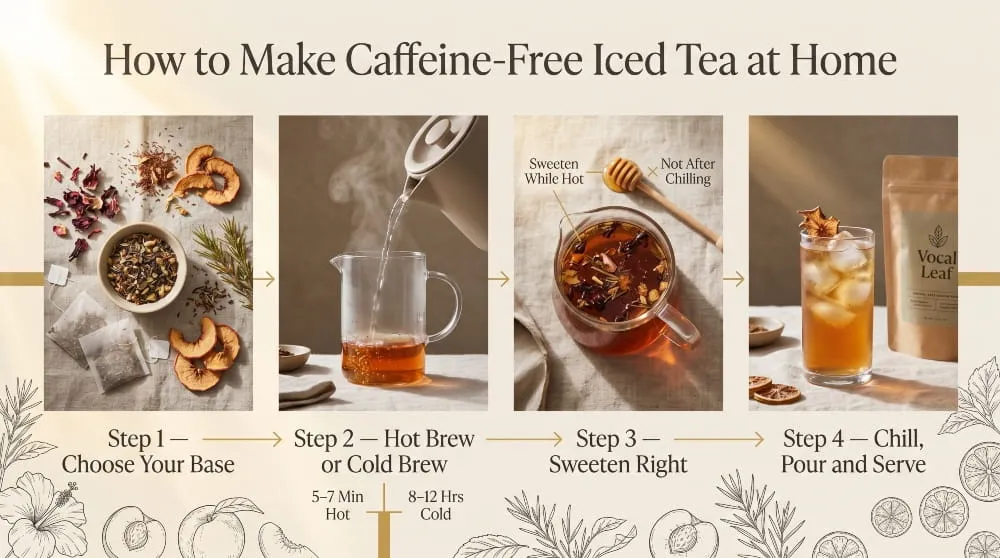
The two main methods are hot brew and cold brew. They produce slightly different results, and both are worth knowing. Beyond that, the variables are simple: what tea you use, how long you steep it, and what you add before serving.
Simple Caffeine-Free Iced Tea Recipe (Hot-Brew Method)
Hot brewing is the faster method, and the one most people are already familiar with from making hot tea. The process is straightforward: brew strong, sweeten while hot if desired, then chill.
Bring 2 cups of fresh water to a boil, then remove from the heat. Add two to three caffeine-free herbal tea bags, rooibos, hibiscus, or a fruit blend; all work beautifully, and steep for five to seven minutes. The longer you steep, the more concentrated and flavorful the result. Remove the bags without squeezing them, which can introduce bitterness in some herbal teas.
If you’re sweetening, add sugar or your preferred sweetener now while the tea is still hot. This is the key step: sugar dissolves completely in hot liquid and won’t settle to the bottom of a cold glass. Stir until fully dissolved, then add enough cold water to bring the total volume to two quarts. Pour into a pitcher, refrigerate until fully chilled, and serve over ice.
The whole process takes about fifteen minutes of active time, and the pitcher keeps well in the refrigerator for up to five days.
Caffeine-Free Cold Brew Iced Tea Recipe
Cold brew requires no heat at all, which makes it even simpler in practice; it just requires planning. The extended steep time in cold water slowly and gently pulls flavor from the tea, producing a result that’s noticeably smoother, cleaner, and less astringent than the hot-brew equivalent.
Add three to four caffeine-free herbal tea bags to a two-quart pitcher of cold, filtered water. There’s no heat involved, so the quality of your water matters more here. Filtered water produces a noticeably cleaner flavor. Place the pitcher in the refrigerator and let it steep for eight to twelve hours, or overnight. Remove the bags in the morning, sweeten to taste if desired, and serve immediately.
That’s the entire process: no boiling, no cooling time, no waiting for anything to come to temperature. The hands-on time is under two minutes. Cold-brew caffeine-free iced tea is also more forgiving if you forget about it; leaving it an extra few hours won’t ruin the batch the way over-steeping in hot water can.
Caffeine-Free Peach Iced Tea Recipe
Caffeine-free peach iced tea is worth making from scratch at least once, because a homemade version made with real fruit is in a completely different league from anything in a bottle or a mix.
Start with a hot-brewed base using a fruit-forward or rooibos herbal tea, two to three bags steeped in two cups of boiling water for six minutes. While the tea steeps, make a simple peach syrup: combine 1/2 cup sugar with 1/2 cup water and 2 ripe peaches, sliced, in a small saucepan over medium heat. Stir until the sugar dissolves, then simmer gently for 10 minutes, until the peaches soften and release their flavor. Remove from heat, strain out the solids, and let the syrup cool slightly.
Combine the brewed tea concentrate and the peach syrup in a pitcher, top with cold water to reach two quarts, stir, and refrigerate. The result is a naturally flavored, caffeine-free peach iced tea with real fruit character, fragrant, lightly sweet, and far more satisfying than any powdered mix or pre-bottled alternative.
For a sugar-free version, skip the simple syrup and add two ripe peaches directly to the cold brew pitcher overnight instead, the fruit steeps alongside the tea, imparting genuine peach flavor without added sugar.
Tips for Brewing the Perfect Pitcher
A few small habits make a consistent difference in the final result, regardless of which method or flavor you’re making.
Water quality is the most underrated variable. Tap water with a strong chlorine taste will come through in the finished tea. Filtered water is always worth the small effort, particularly for cold brew, where there’s no heat to mask off-notes.
Steeping time matters more than most people adjust for. The times listed in recipes are starting points, not rules. Suppose your tea tastes weak or flat, steep it longer next time. If it tastes bitter or sharp, pull the bags earlier. Herbal teas are generally more forgiving than black tea when it comes to over-steeping, but every blend is slightly different.
Always sweeten while the liquid is still hot if you’re using granulated sugar. Cold tea and undissolved sugar are a combination that produces a gritty, inconsistently sweet result, no matter how long you stir. If you’re sweetening a cold brew batch, use a liquid sweetener, simple syrup, honey dissolved in a small amount of warm water, or liquid stevia, so it integrates fully.
Finally, brew stronger than you think you need to. Ice dilutes. A pitcher that tastes perfectly balanced at room temperature will taste thin after sitting over a full glass of ice for five minutes. Brewing at 1.5 to 2 times your target strength, then diluting with cold water, gives you far more control over the final flavor than trying to hit it exactly at full volume.
How to Choose the Best Caffeine-Free Iced Tea for You
With so many options across so many formats, choosing the best caffeine-free iced tea comes down to knowing what you actually want from the drink and then knowing how to read what a product is actually offering you. Those two things together eliminate most of the confusion at the shelf or in the search results.
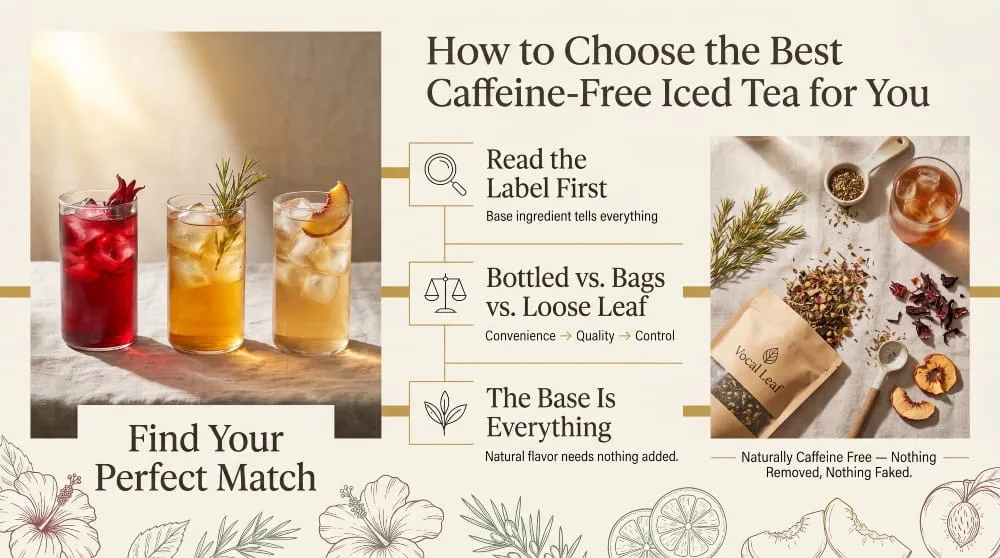
The category looks simple from the outside. It isn’t. But once you understand the three layers of the decision, what’s in it, what format suits your life, and what separates genuinely good tea from mediocre tea dressed up in nice packaging, the right choice becomes obvious quickly.
What to Look for on the Label
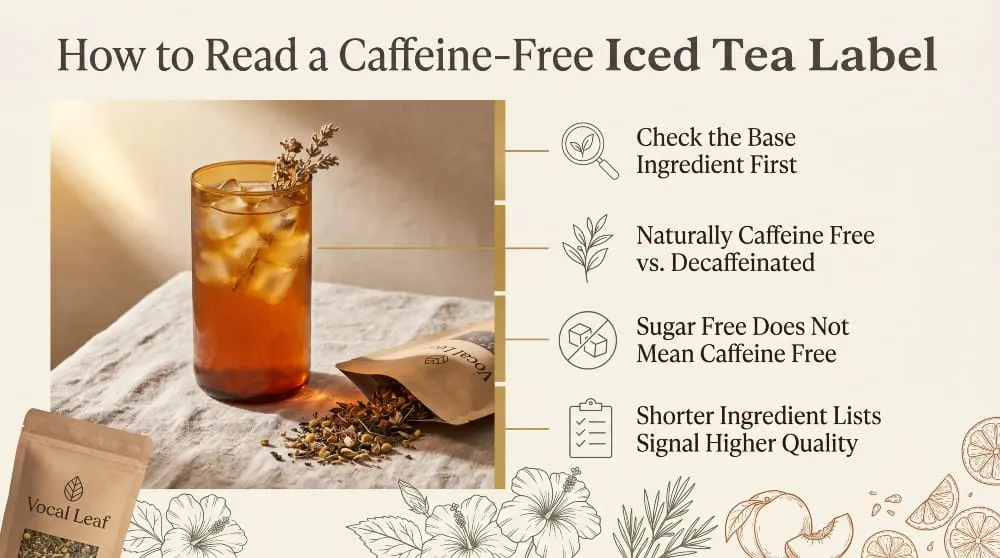
The front of a tea package is marketing. The back is information. Always start at the back.
The ingredient list is the single most important thing on any caffeine free iced tea label. It tells you the actual base of the product, which is the only reliable indicator of whether the tea is truly caffeine-free. If the first ingredient is black tea, green tea, or white tea, regardless of the flavor name, the product contains caffeine. If the first ingredient is a named herbal plant, fruit, or botanical, you’re in caffeine-free territory.
Watch for the Word “decaffeinated.” As established earlier in this guide, decaf is not the same as caffeine-free. Decaffeinated black tea iced tea contains trace amounts of caffeine. If the label says “naturally caffeine-free” and the base is herbal, that’s the cleanest claim in the category.
Beyond caffeine, scan for sweeteners if that matters to you. Sugar, high-fructose corn syrup, aspartame, sucralose, and acesulfame potassium are found in mainstream iced tea products, often in combination. If you’re avoiding any of these alongside caffeine, the ingredient list is the only place that tells you the truth. A product marketed as “diet” or “light” doesn’t specify which sweetener was used; you have to look.
Short ingredient lists are generally a good sign. The fewer ingredients between you and the tea itself, the closer the product is to what good iced tea actually should be.
Bottled vs. Bags vs. Loose Leaf, Which Is Worth It?
The honest answer is that all three have a legitimate place, and the right format depends on how you actually live, not on which one sounds most premium.
Bottled, caffeine-free iced tea wins on convenience, and nothing else. It’s ready immediately, requires no equipment, and travels anywhere. The tradeoff is cost per serving, ingredient quality, and the fact that you’re selecting from whatever a manufacturer decided to produce. For occasions where brewing isn’t practical, a well-chosen bottled option is perfectly reasonable. Just read the label before you buy it.
Iced tea bags are the middle ground, more effort than cracking open a bottle, less than managing loose leaf, and better quality than most bottled options. A good herbal tea bag brewed in a two-quart pitcher at home produces a fresh, clean result that costs a fraction of the price of the bottled equivalent per serving. For daily home drinking, bags are the practical choice for most people, and there’s no shame in that. The quality ceiling is lower than loose leaf, but still high enough to produce genuinely excellent iced tea.
Loose leaf tea is for people who care about the full experience. The flavor difference is real: whole or cut leaf has greater surface complexity, a broader aromatic range, and more nuance than compressed dust in a standard bag. Loose leaf also gives you precise control over strength and brewing variables that bags simply can’t match. The additional step of measuring and straining is minor once it becomes a habit. If iced tea is something you drink daily and enjoy as a small ritual rather than just for hydration, loose leaf is worth trying at least once—most people don’t go back.
The One Thing That Separates Great Caffeine-Free Iced Tea from Mediocre Options
It’s the base ingredient, and specifically, whether it was chosen for flavor or cost.
This is the dividing line in the caffeine free iced tea category that most marketing obscures. A mediocre caffeine-free iced tea is typically made with the cheapest available herbal filler, masked with artificial flavoring and sweeteners to create a recognizable taste profile. It’s not offensive. It’s just hollow. You drink it, it’s cold, it’s sweet, and it doesn’t leave any impression.
A great caffeine-free iced tea starts with a base that has inherent flavor character: rooibos, with its natural warmth and mild sweetness; hibiscus, with its vivid tartness; and a well-blended fruit and botanical combination where the ingredients actually complement each other. When the base is good, the tea needs very little else. The flavor is present without a sweetener. The aroma is genuine. The color is natural. It tastes like something, not like a simulation of something.
That quality signal is almost impossible to fake, and it shows up immediately in the first sip. It’s also the clearest indicator that you’ve found a caffeine-free iced tea worth sticking with, not just one that technically meets your requirements, but one you’d actually choose over a caffeinated alternative even if caffeine weren’t a consideration at all. That’s the standard worth holding the category to.
Conclusion
Caffeine-free iced tea isn’t a compromise; it’s a genuinely better choice for anyone who wants a cold, refreshing drink they can enjoy freely, without watching the clock or the consequences. The options are wider than most people realize, the quality ceiling is higher than the bottled aisle suggests, and making it at home costs almost nothing once you know what you’re doing.
Start with a naturally caffeine free herbal base, read labels carefully when buying packaged products, and don’t settle for a tea that needs artificial flavoring to taste like something. The real thing is easy to find, and even easier to brew yourself.
Frequently Asked Questions (FAQ’s)
Is iced tea caffeine free?
Most traditional iced tea is not caffeine free. It’s typically brewed from black or green tea, both of which naturally contain caffeine. Only iced teas made from herbal or plant-based ingredients, like rooibos or hibiscus, are genuinely caffeine-free.
Which iced tea brands are caffeine-free?
Brands that offer clearly labeled caffeine-free options include Turkey Hill and select herbal lines from Celestial Seasonings and Harney & Sons. Most mainstream bottled tea brands like Arizona and Fuze are built on caffeinated black or green tea bases, so always check the ingredient list before assuming.
Is Crystal Light lemon iced tea caffeine free?
The standard Crystal Light Lemon Iced Tea mix contains caffeine because it’s made with black tea. Only Crystal Light products that are specifically labeled caffeine-free, or that contain no tea base at all, are safe to assume caffeine-free.
Is Snapple iced tea caffeine free?
Most Snapple iced teas are not caffeine free. Their core tea lineup is made from black and green tea, both of which contain caffeine. Some Snapple fruit drink products contain no tea and are therefore caffeine-free, but these are not the same as their iced tea line.
Does sugar-free iced tea have caffeine?
Sugar content and caffeine content are completely separate. A sugar-free iced tea can still contain caffeine if it’s made from black or green tea; removing sugar doesn’t affect the caffeine level. Always check the ingredient list for the tea base, not just the sugar content.
Is the Iced Passion Tango Tea caffeine-free?
Yes, Starbucks Iced Passion Tango Tea is caffeine-free. It’s made from a hibiscus-based herbal blend that contains no black or green tea, so it naturally contains no caffeine. It’s one of the few genuinely caffeine-free options available at major coffee chains.
What is the best caffeine free iced tea?
The best caffeine-free iced tea is one made from a naturally caffeine-free herbal base, rooibos, hibiscus, or a quality fruit blend, with no artificial flavoring or added sweeteners masking a weak base. Brewed fresh at home from loose leaf or quality tea bags consistently outperforms bottled alternatives in both flavor and ingredient quality.
Can you make caffeine free iced tea at home?
Yes, and it’s straightforward. Steep two to three herbal tea bags in hot water for five to seven minutes, sweeten while hot if desired, top with cold water, and refrigerate. For a smoother result, cold brew instead, add tea bags to cold water and refrigerate overnight, no heat, no fuss, and better flavor than most store-bought options.
Top Selling Products



Best Iced Tea Brands 2026 | Healthiest and Cleanest Picks
Not all iced teas are created equal. Some are loaded with sugar and artificial flavours. Others are so weak they barely taste like Tea at…
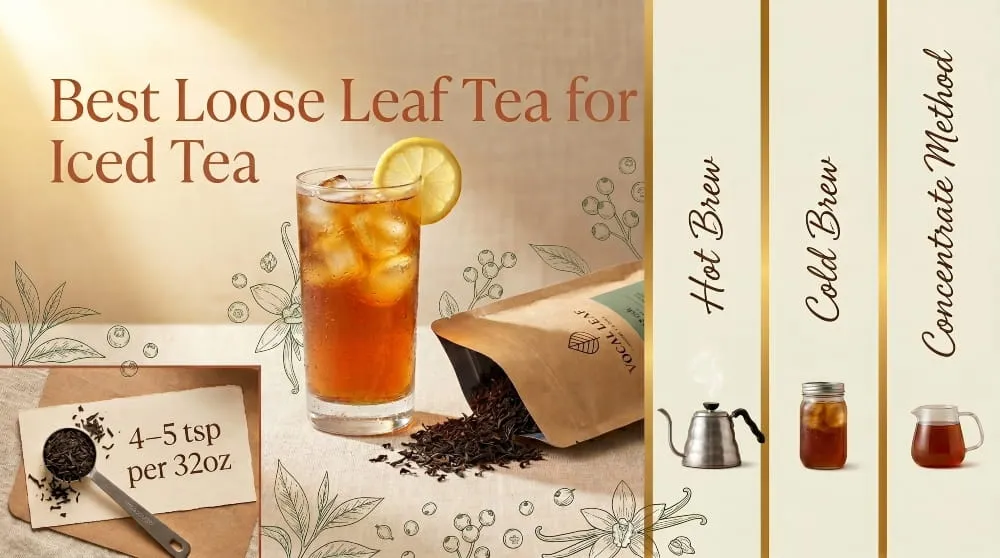
Best Loose Leaf Tea for Iced Tea | How to Brew It, Ratio Guide & Top Picks
There is a moment every iced tea drinker hits: you brew a pitcher, take a sip, and think, It’s fine, but it could be so…