
Best Tea Flavors | A Complete Guide by Type and Taste Profile
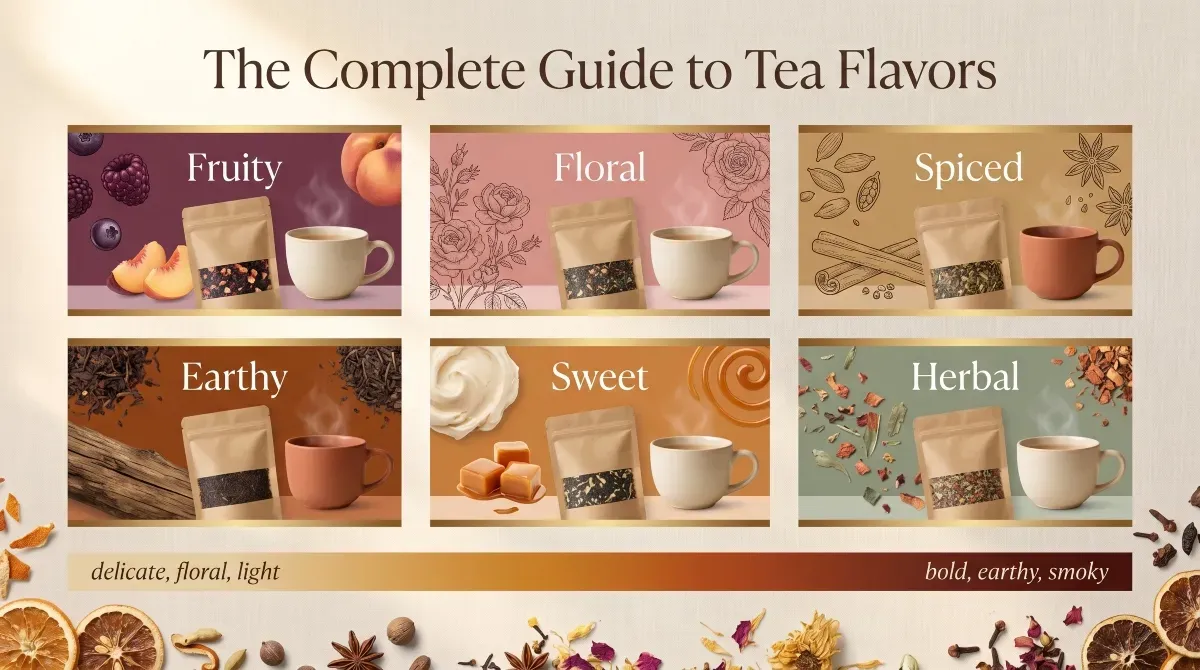
There are thousands of tea flavors in the world, and yet most people spend their entire lives drinking the same two or three. Not because they don’t want something better, but because nobody ever handed them a map.
Tea is one of the most flavor-diverse beverages on the planet. A single plant, Camellia sinensis, can produce tastes that range from clean and grassy to deep and smoky, from naturally sweet and floral to bold and malty. Add herbal varieties into the picture, and the flavor landscape becomes almost infinite. Fruity, spiced, earthy, dessert-like, cooling, warming, tea covers more sensory ground than most people realize.
But flavor in tea isn’t random. It follows patterns. The type of leaf shapes it, how it’s processed, where it’s grown, and what it’s blended with. Once you understand those patterns, choosing a tea stops feeling like a guessing game and starts feeling intuitive.
This guide maps the entire world of tea flavors, from the classic profiles of black, green, oolong, white, and rooibos teas, to fruit and spice blends, seasonal picks, and the surprisingly simple ways to enhance whatever you’re already brewing. Whether you’re just starting to explore beyond your usual bag or you’re looking to deepen your palate, everything you need is here.
What Are Tea Flavors? Understanding the Flavor Landscape
Tea flavor is not a single thing. It’s a conversation between the plant, the soil, the climate, the hands that processed the leaves, and whatever ended up in your cup. Before diving into specific types and recommendations, it helps to understand what’s actually happening when tea tastes the way it does, because once you see the logic behind it, every cup starts to make more sense.
What Gives Tea Its Flavor?
Three forces shape the flavor of any tea: its chemistry, its origin, and its method of preparation.
On the chemistry side, tea leaves contain hundreds of naturally occurring compounds that influence taste. Polyphenols, particularly catechins in green tea and theaflavins in black tea, are responsible for astringency and bitterness. Amino acids, especially L-theanine, contribute a soft, savory sweetness and the smooth, lingering quality you notice in well-made teas. Volatile aromatic compounds produce the floral, fruity, and earthy notes that make one tea smell and taste completely different from another.
Origin matters just as much. The same plant grown in different soils and climates produces distinctly different results, a concept borrowed from wine called terroir. A black tea from Assam, India, carries malty richness shaped by its humid lowland valleys. The same style of tea, grown in Darjeeling’s high-altitude, cool air, tastes lighter, more floral, almost muscatel. The land leaves a fingerprint on the leaf.
Processing is the final variable and often the most dramatic. Whether leaves are steamed, pan-fired, oxidized, roasted, aged, or left almost untouched determines whether a tea ends up grassy or smoky, delicate or bold. Green tea is minimally oxidized, which preserves its fresh, vegetal character. Black tea is fully oxidized, which develops depth and malt. Oolong sits somewhere between the two, which is why its flavor range is so wide. Processing is where the raw material becomes the experience.
The Tea Flavor Wheel Explained
A tea flavor wheel is a visual tool that organizes the full spectrum of tea tastes into categories, moving from broad descriptors at the center outward to increasingly specific ones at the edges. Think of it like a compass for your palate.
At the core, most wheels organize flavors into broad families: floral, fruity, vegetal, spicy, earthy, roasted, and sweet. From there, each category branches into more specific notes. Floral might split into rose, jasmine, and orchid. Earthy might lead to soil, wood, or mushrooms. Roasted branches into caramel, toasty, and smoky.
The wheel is useful not because you need to taste every note on it, but because it gives you language to navigate your preferences. If you know you enjoy the floral and fruity end of the spectrum, you have a direction. If earthy and roasted notes appeal to you, that’s a different path entirely. The wheel turns vague impressions into useful information.
How to Describe Tea Flavor: A Vocabulary Guide
Most people know when a tea tastes good. Fewer know how to explain why. A shared vocabulary makes both choosing and discussing tea significantly easier.
Astringent describes the dry, puckering sensation that comes from tannins, common in strong black teas and some green teas. It’s not bitterness exactly; it’s a textural quality that coats the mouth.
Malty refers to a warm, grain-like depth, the signature character of Assam black teas and many robust breakfast blends. It’s round, satisfying, and pairs naturally with milk.
Grassy describes the fresh, green, slightly vegetal quality found in lightly processed green teas. It’s clean and bright, reminiscent of fresh-cut herbs or spring leaves.
Floral covers a wide range of delicate, bloom-like notes, from the soft rose quality in certain white teas to the distinct bergamot character that defines Earl Grey.
Earthy notes are most prominent in aged and fermented teas like pu-erh. It reads as soil, forest floor, or damp wood, deeply grounding and complex.
Smoky is exactly what it sounds like: a wood-fire or charcoal quality that comes from specific roasting or drying processes. Lapsang souchong is the most recognizable example.
Sweet in tea rarely means sugary. It’s a soft, natural sweetness, honey-like, caramel-adjacent, or reminiscent of dried fruit, that emerges from certain cultivars and processing methods.
Umami is the savory, brothy quality most associated with high-grade Japanese green teas. It’s subtle, but once you notice it, it becomes one of the most distinctive and sought-after characteristics in tea.
Natural Flavors vs. Added Flavors in Tea: What the Labels Actually Mean
Walk down any tea aisle, and you’ll see “natural flavors” listed on a significant portion of what’s there. It’s worth knowing what that phrase actually means before you assume it signals quality.
In the United States, “natural flavors” is an FDA-defined term that covers flavoring substances derived from natural sources, including fruits, vegetables, herbs, spices, meat, dairy, and fermentation products. The keyword is derived. Natural flavors are extracted, concentrated, and often chemically processed before being applied to tea leaves. They are natural in origin but manufactured in practice. A tea labeled “peach flavor” with natural flavors on the ingredient list likely contains a peach-derived flavoring compound, not actual dried peach.
This is distinct from teas that achieve their flavor through direct blending, real fruit pieces, dried botanicals, whole spices, and flower petals mixed with the base tea. These teas carry their flavor through physical ingredients you can see and identify in the leaf.
Neither approach is inherently wrong, but the difference matters to anyone paying attention to what they’re consuming. A genuinely clean ingredient list will show you the components. A vague “natural flavors” declaration will not.
Artificial flavors follow the same flavor-first logic but use synthetically produced compounds rather than natural-source derivatives. The taste result may be nearly identical; the sourcing is not.
When flavor integrity matters to you, whether for health, taste, or transparency reasons, the clearest signal is a tea whose ingredient list reads like a pantry, not a laboratory report.
Flavors of Tea by Type, The Complete Taste Profiles
Every tea has a personality. Some are bold and immediately commanding. Others are quiet, revealing themselves slowly, cup by cup. Understanding the flavor profile of each major tea type is the foundation of building a palate, and the fastest way to stop choosing teas at random and start choosing ones you’ll actually love.
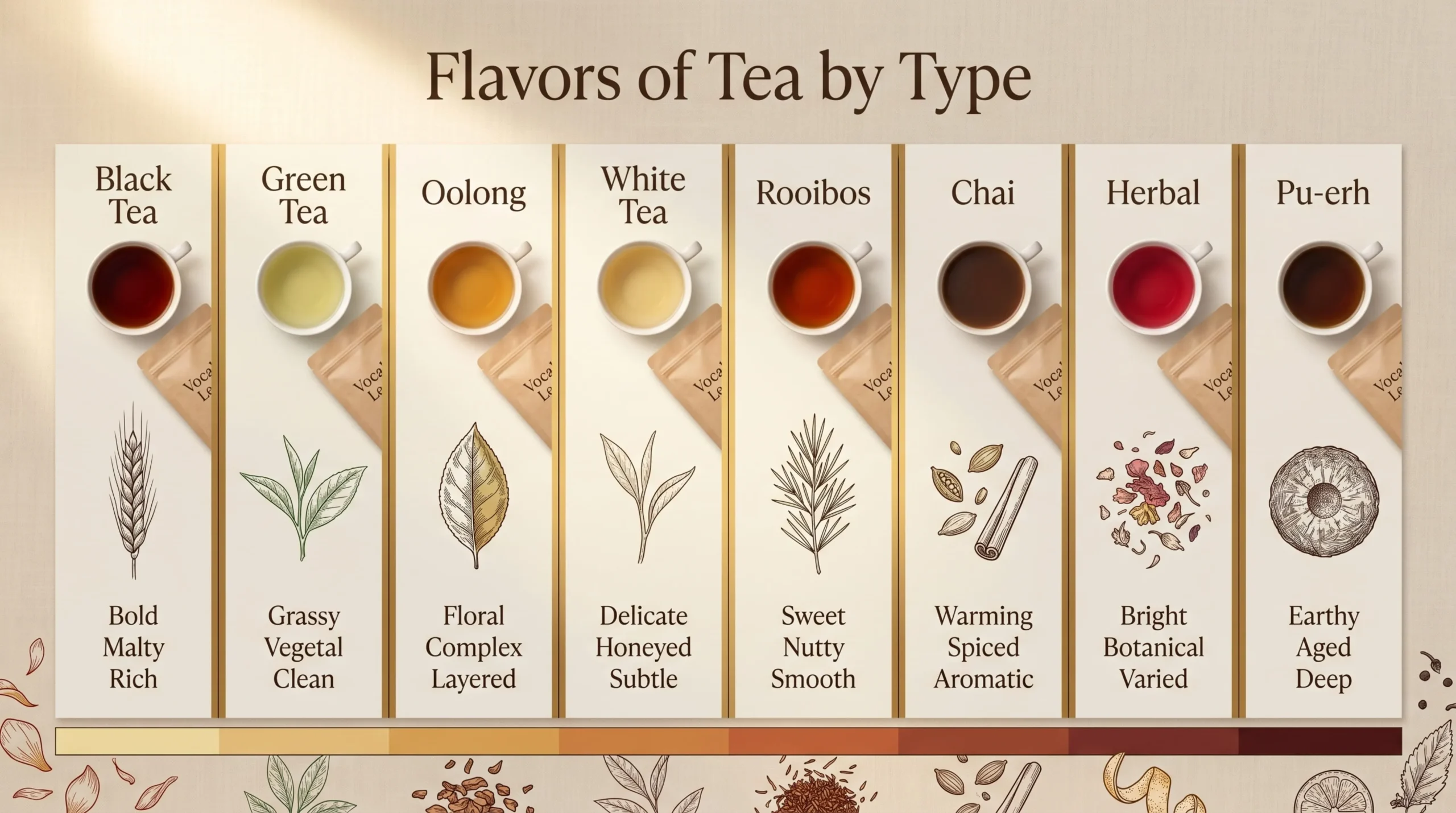
Black Tea Flavor Profile: Bold, Malty, and Rich
Black tea is the most consumed tea in the world, and its flavor is the one most people picture when they think of tea. Fully oxidized during processing, black tea develops a depth and strength that no other category quite matches.
The defining characteristic of black tea flavor is malt, a warm, toasty, grain-like richness that feels substantial in the mouth. Beneath that, depending on origin, you’ll find notes of dried fruit, caramel, cocoa, or a clean, brisk sharpness that cuts through milk with ease. Assam black teas lean into bold malt and body. Darjeeling teas are lighter, more floral, with a distinctive muscatel, a grape-like quality, that sets them apart. Ceylon teas from Sri Lanka tend toward bright, citrus-tinged profiles with a clean finish.
Black tea’s natural astringency is part of its character, not a flaw. Brewed well, at the right temperature, the right steep time, it’s robust without being harsh, strong without being bitter. It’s the tea for people who want their cup to mean something.
For those who want black tea’s depth with the added dimension of botanicals and fruit, a well-crafted flavored black tea blend delivers both. Vocal Leaf’s Organic Loose Leaf Black Tea delivers that classic malty foundation in loose leaf form, full-bodied, clean, and built for people who take their tea seriously.
Green Tea Flavor Profile: Grassy, Vegetal, and Clean
Green tea is minimally processed, which means it retains most of the leaf’s original character. What you taste in a well-brewed green tea is essentially the plant in its most honest form, and that honesty produces a flavor profile that is fresh, clean, and surprisingly complex once you know what to look for.
The dominant notes are grassy and vegetal: fresh-cut herbs, spring leaves, sometimes a light seaweed or spinach quality in Japanese-style varieties. Beneath those top notes sit a gentle sweetness, a soft floral quality in some cultivars, and the characteristic umami, a savory, brothy depth, that distinguishes high-quality green teas from ordinary ones.
Bitterness in green tea is largely a brewing issue. Water that’s too hot or steeping time that runs too long will pull harsh, bitter compounds from the leaf. Brewed correctly at lower temperatures with shorter steeping times, green tea is smooth, refreshing, and layered. The grassy edge that some people find off-putting softens considerably with good technique.
Flavor varies noticeably by region. Chinese green teas tend to be nuttier and more mellow. Japanese green teas are more intensely vegetal and umami-forward. Both are worth exploring if you’re building a genuine understanding of what green tea flavors can be.
Oolong Tea Flavor: The Spectrum Between Green and Black
Oolong is the most misunderstood tea category, not because it’s complicated, but because it refuses to be one thing. Partially oxidized, oolong sits deliberately between green and black tea, and its flavor range reflects that position across an extraordinary spectrum.
Lightly oxidized oolongs read almost like green tea, floral, fresh, sometimes creamy, with a delicate sweetness and a long, clean finish. More heavily oxidized oolongs move toward the black tea end of the dial, becoming deeper and richer, with notes of roasted nuts, honey, stone fruit, and warm wood. The same tea type can taste entirely different depending on how far the oxidation was taken and whether the leaves were roasted afterward.
What all oolongs share is complexity. A single cup often moves through multiple flavor impressions, something floral on the first sip, something toasty midway, something sweetly lingering at the finish. It’s a tea that rewards slow attention. For anyone who has tried green tea and black tea and felt like neither was quite right, oolong is frequently the answer.
White Tea Flavor Profile: Delicate, Floral, and Subtle
White tea undergoes the least processing of any true tea. The leaves, often young buds and the first tender growth of the season, are simply harvested and dried. What results is the most delicate flavor profile in the tea world.
White tea tastes light and clean, with a soft, natural sweetness that doesn’t announce itself so much as settle gently over the palate. Floral notes are common, sometimes honeysuckle, sometimes something closer to fresh hay or melon. There’s very little bitterness and very little astringency. The overall impression is one of subtlety and refinement.
Because white tea is so lightly handled, its flavor is acutely sensitive to brewing variables. Water temperature should be lower than you’d use for black tea, and steeping time matters more than usual. Get it right, and white tea is one of the most elegant cups available. It’s not the tea for someone craving intensity; it’s the tea for someone who wants to slow down.
Rooibos Tea Flavor, Naturally Sweet, Nutty, and Caffeine-Free
Rooibos comes from a shrub native to South Africa, not from the Camellia sinensis plant, which means it’s technically an herbal infusion rather than a true tea. But its depth, body, and versatility have earned it a permanent place alongside the classics.
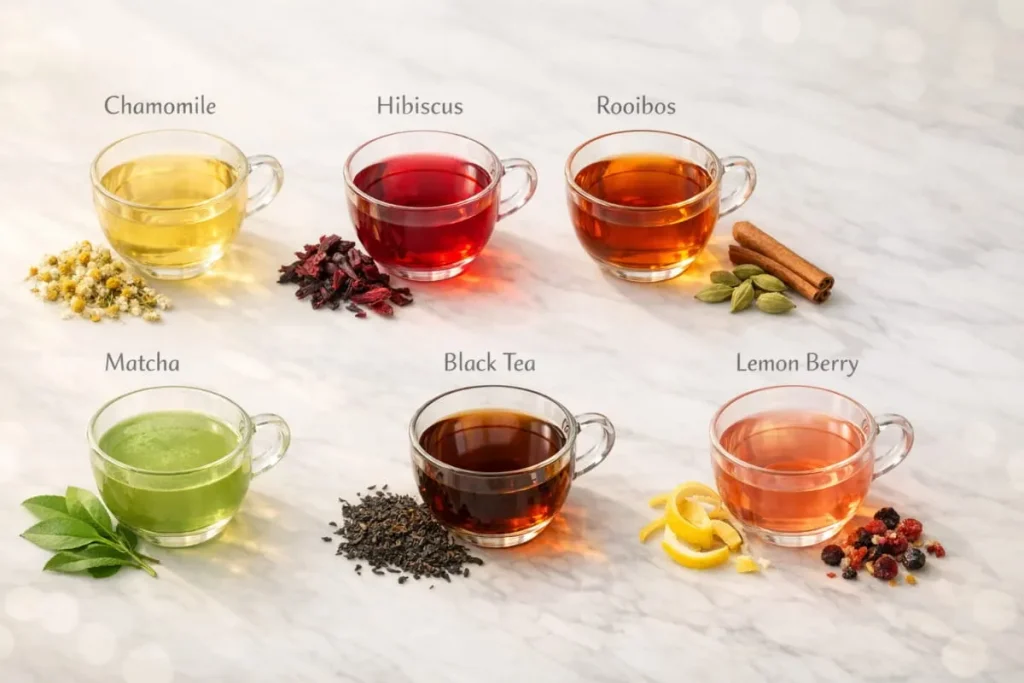
The flavor of rooibos is warm, naturally sweet, and gently nutty, with a smooth, round character that feels almost honeyed without any added sugar. There’s an earthy undertone, slightly woody, slightly vanilla-adjacent, that gives it substance without heaviness. It brews to a deep amber color and carries a richness that most herbal teas don’t.
What makes rooibos particularly distinctive is what it doesn’t have: caffeine. Naturally and completely caffeine-free, not decaffeinated through a chemical process, but simply free of caffeine by nature, rooibos is one of the few teas that can be enjoyed at any hour without consequence. It’s smooth enough to drink plain, versatile enough to take milk and spice beautifully, and gentle enough for anyone with caffeine sensitivity.
Vocal Leaf’s Organic Rooibos Chai Tea builds on this naturally sweet, nutty base with warming chai spices. This combination amplifies rooibos’s best qualities while adding the complexity of a well-crafted spice blend.
Chai Tea Flavor, Spiced, Warming, and Complex
Chai is less a tea type and more a brewing tradition, one that layers bold black tea or rooibos with a warming blend of spices to create something that is simultaneously tea, spice, and comfort in a single cup.
The classic chai flavor profile is built on a foundation of warming spices: cardamom, cinnamon, ginger, clove, and black pepper are the most common players, though the exact combination varies considerably by recipe and region. Together they produce a flavor that is aromatic, slightly sweet, gently spicy, and deeply warming, the kind of cup that feels like it’s doing something good while you drink it.
The base tea matters too. Traditional masala chai uses a strong, malty black tea as its backbone, something with enough body to hold up against the spices rather than disappear beneath them. Rooibos chai swaps that base for naturally caffeine-free rooibos, which brings a softer, sweeter character that lets the spices read a little more gently.
What gives chai its distinct flavor, the answer to the frequent question of what chai tea tastes like, is the interplay between bold and warm. It’s never a single note. It’s the spices in conversation with the base, producing something more complex than either ingredient achieves alone.
Herbal Tea Flavors, The Widest Variety of All
Herbal teas, more accurately called tisanes, are infusions made from everything except the tea plant itself: dried fruits, flowers, roots, bark, seeds, and botanicals of every description. Because the source material is so varied, herbal tea flavors span a wider range than any other category.
Fruity herbal blends, built around dried berries, hibiscus, citrus peel, and tropical fruits, are among the most popular, offering bright, tangy, and naturally sweet profiles that work particularly well as iced tea. Floral blends tend toward lighter, more aromatic cups. Root-based infusions (ginger, licorice root) skew toward warming and earthy notes. Spiced herbal blends overlap with the chai tradition, offering warmth and body without caffeine.
The best herbal teas achieve flavor through real ingredients, whole dried botanicals you can see and identify in the blend. A fruity herbal tea should contain actual fruit. A floral blend should smell like flowers when you open the bag. The ingredient list tells you everything you need to know about what you’re actually tasting.
Vocal Leaf’s Lemon Berry Dream and Vanilla Bliss both fall into this category, crafted from real botanicals and designed for people who want flavorful, caffeine-free options without sacrificing complexity or quality.
Pu-erh Tea Flavor, Earthy, Aged, and Deeply Complex
Pu-erh is unlike any other tea on this list. A fermented and aged tea from China’s Yunnan province, it undergoes a microbial transformation that sets its flavor profile entirely apart from anything produced by oxidation alone.
The taste of pu-erh is often described as earthy, sometimes intensely so. Notes of damp earth, forest floor, aged wood, leather, and even mushrooms are common in mature examples. Younger pu-erh (sheng or raw) can be astringent and green-edged, with some bitterness that softens over the years of aging. Older or ripened pu-erh (shou) is smoother, deeper, and more immediately approachable, rich, dark, and complex in a way that rewards experienced palates.
Pu-erh is not everyone’s first cup of tea. It asks something of the drinker, a willingness to sit with flavors that don’t announce themselves immediately but reveal their depth over time. For those who find it, it becomes one of the most distinctive and sought-after tea experiences available.
The Most Popular Tea Flavors: What People Love Most
If you’ve ever stood in front of a tea display and felt overwhelmed by the options, you’re not alone. The sheer variety of tea flavors available today is genuinely staggering. But underneath all of it, most teas cluster into a handful of flavor families, and once you know which family appeals to you, the whole landscape becomes easier to navigate.
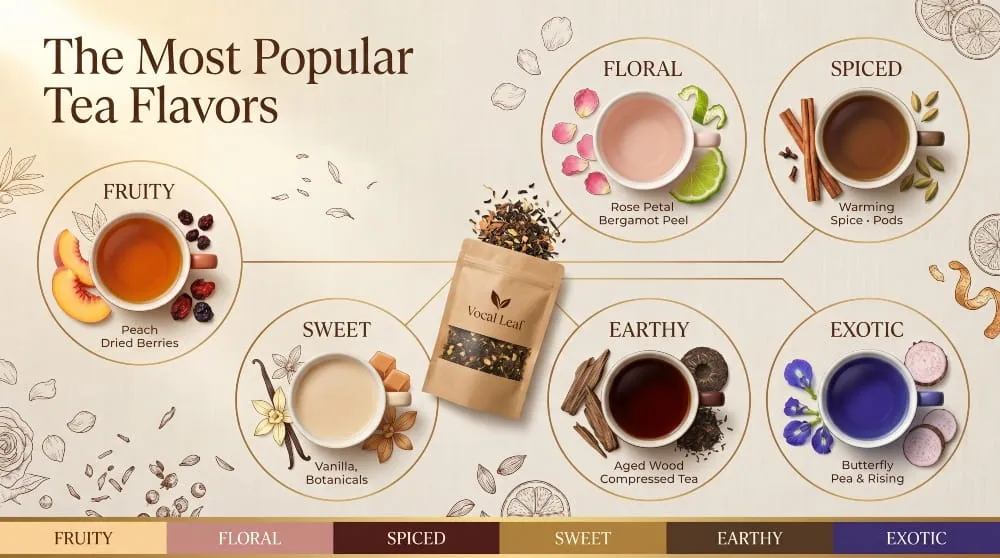
Here are the flavor categories that consistently attract the most attention, and what makes each one worth exploring.
Fruity Tea Flavors
Fruit-forward teas are the most universally approachable flavor category in the tea world. They’re bright, familiar, and naturally inviting, the kind of teas that convert non-tea-drinkers and satisfy experienced ones in equal measure.
Peach is arguably the most beloved fruity tea flavor. There’s something about its warm sweetness and soft tartness that pairs seamlessly with both black and herbal bases, and it translates beautifully to iced tea. Mango brings a tropical richness, lush, slightly thick in character, with a sweetness that feels indulgent without being cloying. Berry blends, whether built around blueberry, strawberry, or mixed wild berries, offer bright, slightly tart profiles that hold up well, brewed hot or cold.
Lemon and raspberry are the classics of the iced tea world, both offering a clean acidity that makes the cup feel refreshing rather than just sweet. Orange brings a citrus brightness with slightly more warmth than lemon. Watermelon is a newer arrival to the mainstream but has quickly earned its place, light, summery, and almost effervescent in character. Apricot sits somewhere between peach and honey, with a delicate sweetness and a faintly floral edge that distinguishes it from its more famous cousin.
What the best fruity teas share is this: the fruit flavor feels like it belongs in the cup, not like it was sprayed on afterward. Real fruit pieces and natural botanicals in the blend make a noticeable difference to both aroma and taste.
Vocal Leaf’s Lemon Berry Dream is built exactly this way, a loose leaf blend where the fruit character comes through cleanly, making it one of the most naturally flavorful options in this category.
Floral Tea Flavors
Floral teas occupy a quieter, more refined corner of the flavor spectrum. They don’t announce themselves the way fruity or spiced teas do; they unfold, revealing their character gradually with each sip.
Rose is the most recognizable floral tea flavor: lightly sweet, softly perfumed, and elegant without being cloying when handled well. It appears in blends across multiple base teas and works particularly well with white tea’s natural delicacy. Botanicals adjacent to jasmine, though jasmine itself is a common tea scenting ingredient, bring a similar soft floral quality, typically more sweet than sharp.
Bergamot deserves its own mention. The fragrant citrus peel that gives Earl Grey its signature flavor is technically a fruit, but its effect on a cup of tea reads as unmistakably floral, bright, perfumed, and distinct. It’s one of the most recognized tea flavors in the world for a reason: bergamot and black tea complement each other with unusual precision, the citrus aromatics softening the tea’s natural astringency and lifting the overall profile into something genuinely elegant.
Floral teas reward slower brewing and lower water temperatures. They’re at their best when nothing is rushed.
Spiced and Warming Tea Flavors
Spiced teas are built for a specific kind of moment, when you want your cup to feel like more than hydration. These are the teas that warm from the inside, that make cold mornings and slow evenings feel intentional.
Ginger is the workhorse of the spiced tea world. Its heat is immediate and honest, bright on the palate, warming in the chest, with a clean finish that doesn’t linger into bitterness. It works as a solo note or as part of a larger spice composition. Cinnamon adds sweetness and warmth simultaneously, one of the few spices that achieves both without sugar. Cardamom is more aromatic than hot, floral and slightly citrusy, with a complexity that elevates any blend it joins. Clove is the most intense of the group: deeply warming, slightly medicinal, and powerful enough that a little goes a long way.
Together, these spices form the backbone of chai, a blend tradition that has endured across centuries because the combination works so well. The spices amplify each other, and the right base tea brings them into focus rather than competing with them.
Vocal Leaf’s Organic Rooibos Chai Tea brings this spice profile to a naturally caffeine-free rooibos base, preserving all the warmth and complexity of a well-made chai while making it accessible at any time of day.
Dessert and Sweet Tea Flavors
Dessert teas are exactly what the name suggests: teas that evoke the flavors of something you’d find at the end of a meal, without the sugar, the calories, or the guilt. They’ve grown enormously in popularity as people look for satisfying evening drinks that don’t involve caffeine or alcohol.
Vanilla is the most universally loved flavor in this category. Soft, creamy, and naturally sweet, it pairs well with almost any tea base, smoothing rough edges, adding warmth, and creating a cup that feels indulgent without being heavy. Caramel follows a similar logic, adding a rich, buttery sweetness with a slightly toasted depth. Chocolate in tea reads as cocoa more than candy, a dark, slightly bitter warmth that pairs particularly well with rooibos and robust black teas. Almond brings a marzipan-adjacent sweetness that’s gentle and aromatic. Coconut adds a tropical creaminess that works well in both hot and iced preparations.
What makes dessert tea flavors work at their best is restraint. These blends should evoke the dessert, not replicate it. The tea itself should still be present; the sweetness and richness are a layer, not the whole picture.
Earthy and Smoky Tea Flavors
Not everyone wants their tea to be sweet or bright. For those who prefer depth over delicacy, earthy and smoky teas offer a completely different kind of satisfaction, grounding, complex, and unlike anything else in the flavor spectrum.
Lapsang souchong is the most dramatic example: a Chinese black tea dried over pine wood fires, producing a flavor that is unmistakably smoky, campfire, leather, and dark wood all at once. It’s polarizing, which is precisely the point. People who love it tend to love it deeply.
Pu-erh, as discussed earlier, delivers a different kind of earthiness: aged, fermented, and layered with forest-floor and damp-wood notes that develop further with each year the tea is stored. Hojicha-style teas, roasted rather than smoked, offer a gentler version of this territory: warm, toasty, with notes of caramel and roasted grain that feel comforting rather than challenging.
These teas ask more of the drinker, but they reward the effort with a depth that sweeter, brighter teas simply cannot offer.
Unique and Exotic Tea Flavors Worth Exploring
Beyond the familiar categories, a growing number of tea flavors have earned mainstream attention and deserve more.
Taro brings a subtly sweet, slightly nutty, distinctly purple-hued flavor that has crossed over from bubble tea culture into the broader tea world. Its flavor is gentle and almost starchy, unusual in the best way. Butterfly pea flower produces one of the most visually dramatic cups in tea, a deep indigo blue that shifts to purple or pink when acidic ingredients like lemon are added. Its flavor is mild and slightly earthy, but the visual experience is part of the appeal.
Soursop, a tropical fruit with a flavor that sits somewhere between strawberry, pineapple, and coconut, has gained significant attention for its distinctive sweetness and the wellness associations surrounding the fruit. Champaca, a fragrant flower used in perfumery and traditional South Asian tea culture, produces a cup with an almost otherworldly floral character, more intense than rose, more complex than jasmine.
These flavors represent where the tea world is heading: toward greater variety, greater curiosity, and a willingness to explore beyond what’s familiar. They’re worth trying, not because they’ll replace your favorites, but because they expand what you understand tea to be capable of.
Best Tea Flavors for Every Preference
The best tea flavor is always the one that matches where you are, your palate, your moment, and your intention for the cup. But that’s easier said than done when you’re standing in front of hundreds of options with no clear direction. This section cuts through the noise and points you toward the right starting place, whatever your preference.

Best Tea Flavors for Beginners, Where to Start
The most common mistake new tea drinkers make is starting with something too intense, a strong, astringent black tea brewed too long, or an earthy herbal blend that doesn’t match what they were expecting. The result is a first impression that doesn’t represent what tea is actually capable of.
The best tea flavors for beginners share a few qualities: they’re approachable without being bland, they have a clear flavor identity, and they’re forgiving to brew. Fruity herbal blends are an excellent entry point, naturally sweet, caffeine-free, and difficult to over-steep. Vanilla-based teas are similarly welcoming, offering a familiar warmth that feels immediately comfortable. Light rooibos blends bring body and natural sweetness without caffeine or bitterness, making them genuinely easy to enjoy from the first cup.
For those who want to explore true tea rather than herbal infusions, a lightly flavored black tea or a smooth rooibos chai gives you the structure and depth of real tea without the harshness that puts beginners off. The goal at the start isn’t to find the most sophisticated option; it’s to find something that makes you want another cup.
Vocal Leaf’s Vanilla Bliss and Lemon Berry Dream are natural starting points for exactly this reason; both are flavorful, intuitive, and smooth enough to drink without any prior tea experience.
Best Tea Flavors for Iced Tea: What Holds Up Cold
Not every tea translates well to ice. Some flavors that are elegant and nuanced when hot become thin and forgettable when chilled. The best iced tea flavors are those with enough body and character to stay present even when temperature and dilution work against them.
Fruity teas perform exceptionally well iced. Peach, berry, lemon, raspberry, and mango all intensify in appeal when served cold; the sweetness stays forward, the brightness remains, and the fruit character becomes even more refreshing. Black tea is the other natural choice for iced preparation: its bold, malty structure holds up against ice and dilution in a way that delicate green or white teas typically don’t. Sweet tea, the classic Southern preparation of strongly brewed black tea sweetened while hot, is the most enduring proof of this.
Rooibos blends also ice beautifully. Their natural sweetness and smooth body translate well to cold without losing depth, and their caffeine-free nature makes them appealing for afternoon and evening iced tea when caffeine isn’t wanted.
What to avoid iced: very delicate teas like high-grade white or lightly oxidized oolong tend to lose their defining qualities when chilled. They’re best appreciated hot, when their subtlety can be fully appreciated.
Lemon Berry Dream from Vocal Leaf is a standout in this category: bright, fruit-forward, and built for cold brewing, making it one of the most naturally satisfying iced tea options available.
Strongest and Most Flavorful Teas, For Bold Palates
Some people don’t want subtlety in their cup. They want a tea that announces itself, that has presence and depth, that tastes as it means it. For those palates, the options are clear.
Assam black tea is the benchmark for strength, malty, full-bodied, and assertive, standing up to milk without disappearing. Lapsang souchong takes boldness in a completely different direction: smoky, dark, and unlike anything else available. Pu-erh offers the deepest flavor complexity in the tea world, earthy, aged, and intensely layered for those willing to explore it.
In the spiced category, a strongly brewed chai, whether black tea- or rooibos-based, delivers both strength and complexity. The spices amplify the base rather than masking it, producing a cup with genuine presence.
The key distinction for bold tea drinkers is the difference between strong and bitter. Strong means full-flavored and substantial. Bitter means over-extracted or poorly sourced. Good technique, the right water temperature, appropriate steep time, and quality loose leaf over dust-filled bags produce strength without harshness every time.
Vocal Leaf’s Organic Loose Leaf Black Tea delivers in this category: full-bodied, clean, and bold enough to satisfy without the bitterness that lower-quality black teas often carry.
Sweetest Tea Flavors, Naturally Sweet Without Sugar
Natural sweetness in tea is one of its most underappreciated qualities. Many teas carry a genuine sweetness that has nothing to do with added sugar; it emerges from the leaf itself, from the botanicals in the blend, or from the way certain compounds interact with the palate.
Rooibos is the clearest example. Its natural sweetness is honeyed and warm, present from the first sip without any enhancement. Vanilla-based blends build on that natural sweetness with a soft, creamy depth that reads as indulgent even when completely unsweetened. Fruity herbal teas, particularly those built around berry, peach, or tropical fruit botanicals, carry a natural sweetness from the fruit itself, making added sugar genuinely unnecessary.
Among true teas, some oolong varieties develop remarkable natural sweetness through their processing, a honeyed, almost caramel quality that surprises people expecting something more astringent. Certain white teas carry a delicate sweetness, too, though it’s subtle enough to reward attention rather than announce itself.
For anyone trying to reduce sugar intake without giving up satisfying drinks, naturally sweetened teas are among the most effective tools available. The sweetness is real; it simply comes from the plant rather than the sugar jar.
Most Flavorful Herbal Teas, The Best Caffeine-Free Options
The assumption that caffeine-free means flavor-free is one of the most persistent and inaccurate ideas in the tea world. The best herbal teas are among the most flavorful cups available; they simply achieve that flavor through botanicals rather than through oxidized tea leaves.
Rooibos stands above most herbal options for sheer depth and body. It brews dark, tastes rich, and carries a complexity that makes it feel substantial rather than thin. Chai-spiced rooibos amplifies that further, adding layers of cardamom, cinnamon, ginger, and clove to an already satisfying base.
Fruit-forward herbal blends, built on hibiscus, dried berries, citrus peel, and tropical botanicals, deliver brightness and intensity that rivals anything in the caffeinated category. Their flavor is vivid and immediate, particularly when brewed strong or served cold.
Ginger-based herbal teas offer warmth and presence that most people underestimate until they taste a well-made version. The heat of ginger, the sweetness of fruit, and the earthiness of root botanicals combine into something that feels genuinely purposeful in the cup.
The common thread in all the best caffeine-free herbal teas is ingredient quality. Blends made with whole, recognizable botanicals deliver flavor that pre-ground or artificially flavored alternatives simply cannot match.
Vocal Leaf’s Organic Rooibos Chai and Vanilla Bliss represent this standard, deeply flavorful, completely caffeine-free, and built from ingredients you can actually identify.
Best Tea Flavor Combinations, Pairing and Blending Guide
Some flavors are simply better together than they are alone. Tea blending is an art form with centuries of tradition behind it, and understanding which combinations work and why opens up a new dimension of the tea experience.
Lemon and ginger are perhaps the most proven pairing in tea: the brightness of citrus and the warmth of ginger create a balance that is simultaneously refreshing and soothing, each element making the other more interesting. Vanilla and rooibos work together because vanilla’s creaminess smooths rooibos’s natural earthiness, and rooibos’s warmth gives vanilla something to anchor to. Berry and black tea is another enduring combination; the fruit’s brightness cuts through the tea’s astringency, producing a cup that is more balanced and interesting than either component on its own.
Bergamot and black tea, the Earl Grey combination, is the most famous tea pairing in the world for good reason: the floral citrus aromatics of bergamot and the malty depth of black tea enhance rather than compete with each other.
When building your own combinations at home, the guiding principle is contrast and complement simultaneously. Pair something bright with something deep, something sweet with something earthy, something warming with something clean. The best tea flavor combinations create a cup where you can taste each element and yet the whole is clearly greater than its parts.
Seasonal Tea Flavors, Matching Your Cup to the Calendar
There’s something instinctive about reaching for different teas at different times of year. The same cup that felt perfect in January can feel completely wrong in July, not because the tea changed, but because you did. Season, temperature, light, and mood all shape what we want in a cup, and the best tea drinkers learn to follow those cues rather than fight them.
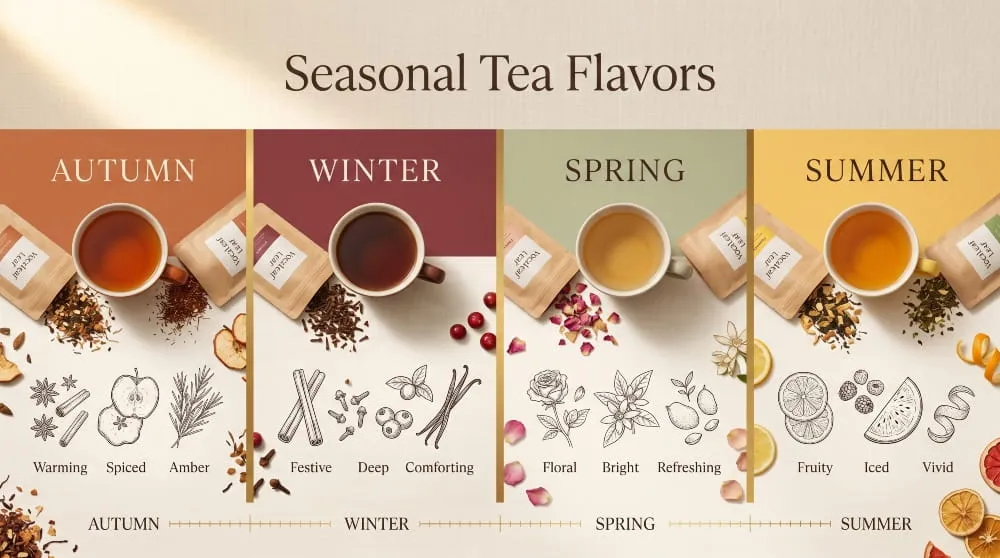
Matching your tea to the season isn’t a rule; it’s a practice. And once you start paying attention to it, the experience of drinking tea becomes considerably richer.
Best Fall Tea Flavors, Warming Spices, Harvest Fruits, Amber Blends
Autumn has a flavor profile of its own: warm, amber, slightly sweet, with an earthy undercurrent that mirrors what’s happening outside. The best fall tea flavors lean into that character rather than working against it.
Warming spices are the natural starting point. Cinnamon, cardamom, clove, and ginger, the same compounds that define chai, feel exactly right as temperatures drop and the light shifts. They create a physical sense of warmth that goes beyond the cup’s temperature, producing a drink that makes you want to slow down and stay where you are.
Harvest fruit flavors, apple, pear, fig, dried apricot, bring a different kind of autumnal character: sweet and slightly jammy, reminiscent of the season’s last fruits at their ripest. These work particularly well layered over a rooibos or black tea base, where the tea’s natural depth gives the fruit something substantial to rest against.
Amber blends, teas that combine malty black tea or warm rooibos with spice and light sweetness, are the signature of fall tea drinking. They have color, body, and a lingering warmth that suits the season intuitively. Brewed strong and taken with a little honey, they’re one of the most satisfying cups the tea world offers between September and November.
Vocal Leaf’s Organic Rooibos Chai Tea is precisely this kind of autumn cup, naturally sweet rooibos meeting warming chai spices in a combination that feels made for the season.
Winter and Holiday Tea Flavors, Cinnamon, Clove, Cranberry, Dessert Profiles
Winter tea flavors operate at a different register than fall. Where autumn calls for warmth and harvest richness, winter reaches for something more festive, deeper spices, dessert-adjacent sweetness, and the kinds of flavors that feel ceremonial rather than everyday.
Cinnamon and clove intensify in appeal as the weather turns coldest, their heat and aromatic depth feeling genuinely necessary rather than optional. Cranberries bring a tart brightness that cuts beautifully through richer, sweeter blends, a counterpoint that keeps holiday tea flavors from becoming cloying. Orange peel, cardamom, and warming vanilla are other winter staples, evoking the spiced warmth of seasonal drinks without the alcohol or excess sugar.
Dessert-profile teas find their peak audience in winter. Vanilla, caramel, chocolate, and almond-flavored blends feel celebratory and indulgent during the holiday season, the kind of cup you’d reach for after a heavy meal or on a quiet evening when something comforting is called for. They satisfy a craving for sweetness without delivering a sugar load, making them genuinely useful during a season when most everything else is already rich.
Holiday tea flavors are also among the most giftable teas of any category. A thoughtfully blended winter tea communicates care, and the best ones are enjoyable well beyond the occasion that inspired them.
Vocal Leaf’s Vanilla Bliss earns its place here as a year-round option that reaches its full potential in winter, warming, smooth, and naturally sweet in exactly the way a cold evening calls for.
Spring and Summer Iced Tea Flavors, Citrus, Floral, Light Fruit
As temperatures climb, the entire logic of tea drinking shifts. The cups that felt essential in winter start to feel heavy. What the season calls for instead is brightness, lightness, and refreshment, and tea delivers all three when you choose the right flavors.
Citrus is the defining flavor of warm-weather tea. Lemon, in particular, has an almost chemical relationship with iced tea; its acidity cuts through sweetness, its brightness amplifies the tea’s own character, and the combination produces something that feels purpose-built for heat. Orange and grapefruit share a similar energy, with slightly more complexity and warmth.
Floral teas find a natural audience in spring, specifically. There’s a seasonal resonance to a cup that smells like blooming things when the world outside is doing the same. Light, floral herbal blends served cold are among the most elegant iced tea options available, refined without being complicated, refreshing without being generic.
Light fruit flavors, berry, peach, watermelon, tropical blends, are summer’s natural vocabulary. They’re bright enough to feel refreshing, sweet enough to feel satisfying, and versatile enough to work equally well in a pitcher on the porch or a single glass on the commute. Cold brewing amplifies their best qualities: the fruit character comes forward, the tea base softens, and the result is smoother and less bitter than hot-brewed tea poured over ice.
Lemon Berry Dream from Vocal Leaf was essentially designed for this season: cold-brewed, poured over ice, and consumed somewhere warm. It’s the kind of iced tea that makes people ask what they’re drinking.
Cozy Tea Flavors for Any Time of Year
Not every tea needs a season. Some cups transcend the calendar entirely, not because they’re neutral or bland, but because their warmth and comfort feel appropriate regardless of the month or the weather outside.
Vanilla is the most seasonally agnostic flavor in tea. Its softness and warmth feel right on a cold morning and equally right on a cool evening in the middle of August. Rooibos has a similar quality, naturally sweet, smooth, and warming in a way that doesn’t demand a specific context. Lightly spiced blends that lead with cinnamon or cardamom rather than the full intensity of a winter chai occupy a similar space: warm enough to feel comforting, restrained enough not to feel out of place in warmer months.
The cozy tea category is really about intention more than ingredients. It’s the cup you make when you need to slow down, when the day has been long, when you want something that asks nothing of you except to be present with it. The best cozy teas are reliable, they taste the same every time, they require no special preparation, and they deliver the same uncomplicated satisfaction whether it’s February or June.
That reliability is its own kind of quality. And it’s why certain teas become permanent fixtures in a collection that otherwise changes with the season.
Flavored Tea Varieties, Loose Leaf vs. Bagged
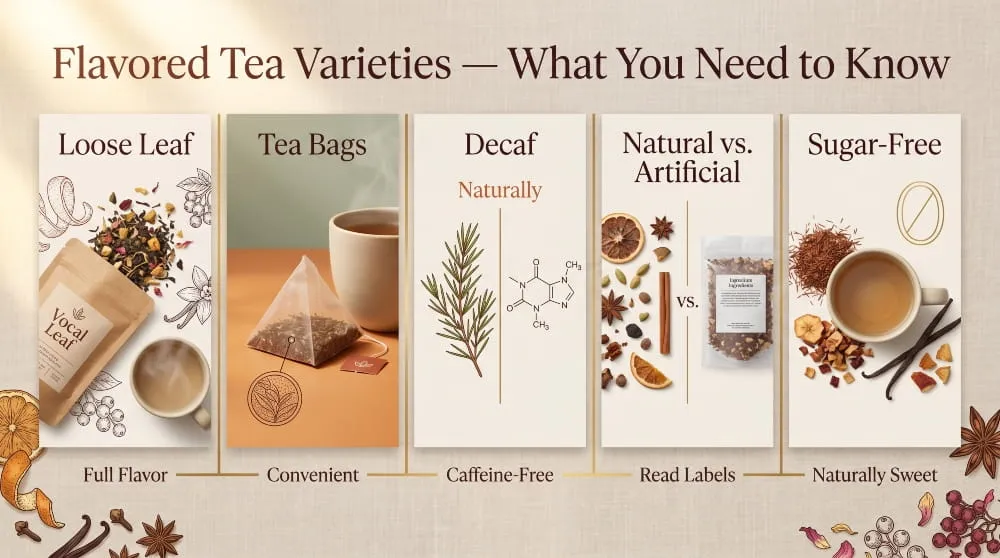
Before choosing a tea flavor, there’s a more fundamental decision that shapes everything about the experience: the form the tea comes in. Loose leaf and bagged teas are not simply different packaging for the same product. They represent different grades of leaf, different flavor intensities, and often different approaches to quality altogether. Understanding the distinction and knowing what to look for within each category makes every subsequent tea decision easier and more informed.
Best Flavored Loose Leaf Tea: What to Look For
Loose leaf tea starts with a structural advantage: the leaves are whole or minimally broken, which means the essential oils, aromatic compounds, and flavor-producing chemistry remain largely intact until the moment you brew. When you add flavoring botanicals, fruit pieces, flower petals, spices, and dried citrus peel to whole loose leaf tea, those ingredients have room to express themselves fully during steeping. The result is a cup with more dimensions, more aroma, and more of what made you choose that flavor in the first place.
What separates excellent flavored loose leaf tea from mediocre versions comes down to a few observable qualities. The first is ingredient visibility; you should be able to look at the blend and identify what’s in it. Dried berries, real citrus peel, whole spices, and recognizable botanicals are signs of a blend built on actual ingredients rather than sprayed-on flavoring compounds. The second is the aroma before brewing. Open the bag or tin and take a genuine breath. The scent should be clear, true to the flavor described, and derived from the ingredients themselves. If the dry leaf smells artificial or chemical, it will taste that way too.
The third quality to look for is the base tea itself. Even the most thoughtfully sourced botanicals cannot compensate for a low-grade base. Flavored loose leaf tea should taste like tea first and the added flavor second, the two elements in balance, neither one drowning the other.
Vocal Leaf’s loose leaf lineup, including Lemon Berry Dream, Organic Rooibos Chai Tea, and Vanilla Bliss, is built on this standard. Real ingredients, visible in the blend, produce flavor that’s genuine rather than manufactured.
Flavored Tea Bags, Convenience Without Compromise
The reputation of bagged tea has improved considerably in recent years, and fairly so. The early criticism of tea bags was largely valid; mass-market bags were filled with tea dust and fannings, the lowest grade of processed leaf, chosen for speed of extraction rather than flavor quality. That picture is more complicated today.
A well-made flavored tea bag uses a higher-grade leaf than its discount-shelf counterparts, and in a larger bag format that gives the leaf and botanicals enough room to expand and steep properly. Pyramid bags, in particular, allow for a closer approximation of the loose leaf experience. The three-dimensional shape gives ingredients genuine room to move in the water, which matters for both flavor extraction and aroma.
The truth is that convenience and quality are no longer mutually exclusive in the tea bag category. The relevant question isn’t whether bagged tea can be good; it can, but whether the specific bag you’re buying is made with ingredients worth the name on the label. Reading the ingredient list applies here exactly as it does to loose leaf: recognizable components, minimal mystery additives, and a base tea grade that actually contributes to the cup.
For daily drinking situations where loose leaf preparation isn’t practical, a good flavored tea bag delivers what it promises. For the full sensory experience, the aroma of the dry blend, the visual character of the steeping leaves, and the maximum flavor complexity, loose leaf remains the better option.
Decaf Flavored Tea, All the Taste, None of the Caffeine
Decaf tea occupies an important space for people who love the flavor and ritual of tea but need to limit or eliminate caffeine, whether for health reasons, pregnancy, sleep sensitivity, or simply a preference for keeping caffeine consumption intentional. The question worth asking is how the caffeine was removed, because the method matters considerably to the final flavor.
The most common decaffeination process for true teas uses chemical solvents, ethyl acetate or methylene chloride, to strip caffeine from the leaf. These processes are effective at removing caffeine, but they’re not selective. They also strip volatile aromatic compounds that contribute directly to flavor, which is why many decaf teas taste noticeably flatter than their caffeinated equivalents. The caffeine left; some of the flavor did too.
A better, though less common, alternative is CO₂ decaffeination, which uses pressurized carbon dioxide to extract caffeine while leaving flavor compounds largely intact, selectively. Decaf teas produced this way retain significantly more of their original character. They cost more to produce, which is reflected in the price, but the cup quality justifies it.
The cleanest solution for anyone seeking genuinely flavorful caffeine-free tea is to bypass decaffeination altogether and choose naturally caffeine-free teas. Rooibos contains no caffeine by nature, not because it was removed, but because the plant never had it. The flavor is completely unaffected by any chemical process because none was needed. This is the meaningful distinction between “naturally caffeine-free” and “decaffeinated”: one is a property of the plant, the other is a manufacturing step.
Natural vs. Artificially Flavored Tea: How to Read the Difference
The Word “natural” on a tea label creates an impression of purity that the ingredient list doesn’t always support. Understanding what these terms actually mean, legally and practically, is one of the most useful pieces of knowledge a tea drinker can have.
Natural flavors, as defined by food regulatory standards, are flavoring substances derived from natural source materials, such as fruits, vegetables, herbs, spices, or fermentation products. The origin is natural, but the process of extracting, concentrating, and applying those compounds to tea leaves is industrial. A “peach-flavored” tea labeled as containing natural flavors actually contains a processed peach-derived flavoring agent, not dried peach. It may taste convincing, but the ingredient is not what the name implies.
Artificially flavored tea uses synthetically produced flavor compounds, molecules created in a laboratory rather than extracted from a natural source. Regulatory standards in most markets require this to be disclosed explicitly on the label. The taste difference between natural and artificial flavoring can be hard to detect, but sourcing differences are significant for consumers who care about what they’re putting in their bodies.
The clearest marker of genuinely transparent flavoring in tea is an ingredient list that reads plainly: dried fruit, flower petals, spices, botanical extracts that are themselves recognizable ingredients. When you can picture every item on the list, you understand exactly where your flavor is coming from. When the list includes “natural flavors” as a catch-all, you don’t, and that gap in transparency is worth taking seriously.
Sugar-Free and Unsweetened Flavored Tea Options
One of tea’s most significant advantages over other flavored beverages is that flavor and sweetness are entirely separable. A tea can be intensely fruity, richly spiced, or deeply complex without containing a gram of sugar, and for anyone monitoring sugar intake, this is not a minor distinction.
The key is understanding where the tea’s sweetness actually comes from. Many flavored teas taste sweet, not because sugar was added, but because the botanicals themselves carry natural sweetness. Rooibos is honey-like in its natural state. Vanilla adds a perception of sweetness without sugar. Fruit botanicals, dried berries, peach pieces, and tropical fruit add small amounts of natural sugars that read as sweetness in the cup without the spike of added refined sugar.
Reading ingredient lists carefully matters here, too. Some flavored teas, particularly commercial iced tea blends and pre-sweetened bagged varieties, contain added sugar, cane syrup, or sweetening agents that aren’t immediately obvious from the front of the packaging. A tea labeled “naturally flavored” can still contain added sugar. The ingredient list is the only reliable place to confirm what you’re actually drinking.
For those who want maximum flavor without any sweetness at all, including the natural sweetness of fruit botanicals, robust black teas, earthy herbal blends, and unflavored single-origin teas deliver complexity and depth on entirely different terms. The flavor in those cups comes solely from the leaf and the craft of processing, with no botanical sweetness in the picture. It’s a different kind of satisfying, drier, more austere, and in its own way, no less complex.
Frequently Asked Questions (FAQ’s)
What is the most flavorful tea?
Rooibos chai and well-crafted black tea blends are among the most flavorful options, offering natural depth, body, and complexity in every cup. For pure intensity across all tea types, a full-bodied Assam black tea or a spiced rooibos blend consistently delivers the most satisfying flavor experience.
What tea flavor is best for beginners?
Fruity herbal blends and vanilla-based teas are the best starting point for beginners; they’re naturally sweet, easy to brew, and immediately approachable, free of bitterness. Rooibos blends are equally welcoming, offering warmth and body without caffeine or any learning curve.
What flavor is chai tea?
Chai tea tastes warm, spiced, and aromatic, a bold combination of cardamom, cinnamon, ginger, clove, and black pepper layered over a rich tea base. The overall flavor is simultaneously sweet, warming, and complex, with each spice contributing to an unmistakably distinctive profile.
What flavor is oolong tea?
Oolong tea flavors range from light and floral to rich and roasted, depending on its level of oxidation, making it the most flavor-diverse tea category. Lightly oxidized oolongs taste fresh and honey-sweet, while heavily oxidized versions develop deeper, nuttier, stone-fruit complexity.
What does black tea taste like?
Black tea tastes bold, malty, and full-bodied, with a natural astringency that gives it structure and strength. Depending on origin, additional notes of dried fruit, caramel, cocoa, or bright citrus may appear, but the defining character is always its robust, satisfying depth.
What flavor is rooibos tea?
Rooibos tea has a naturally sweet, smooth, and gently nutty flavor with warm honey-like undertones and a slightly woody depth. It contains no caffeine by nature and no bitterness, making it one of the most inherently pleasant and easy-drinking teas available.
What gives tea its flavor?
Tea flavor comes from three primary sources: naturally occurring compounds in the leaf (including polyphenols, amino acids, and volatile aromatics), the terroir of where the plant was grown, and how the leaves were processed after harvest. Together, these variables determine whether a tea tastes grassy, malty, floral, earthy, or sweet.
What are the most popular tea flavors?
The most popular tea flavors globally include peach, lemon, berry, vanilla, chai spice, and classic malty black tea. Fruity and naturally sweet profiles consistently attract the widest audience, while spiced blends like chai maintain strong year-round demand across all demographics.
What flavors go well with green tea?
Honey, lemon, ginger, mint, and light fruit flavors like mango or citrus pair exceptionally well with green tea, complementing its natural grassy freshness without overpowering it. The best additions enhance green tea’s delicate character rather than masking it with anything too bold or heavy.
Can you add flavor to tea without sugar?
Yes, honey, fresh citrus, ginger, mint, fruit pieces, and botanical infusions all add genuine flavor to tea without any refined sugar. Many teas, particularly rooibos and fruit-forward herbal blends, also naturally contain sweetness from their ingredients, making added sugar completely unnecessary.
What are natural flavors in tea?
Natural flavors in tea are flavoring substances derived from natural source materials, fruits, spices, or botanicals, that have been extracted, concentrated, and applied to the tea leaves during production. Despite their natural origin, they are processed ingredients rather than whole foods, which distinguishes them from teas flavored with actual dried fruit, flower petals, or spices.
What is the strongest-tasting tea?
Assam black tea is widely considered the strongest-tasting true tea, valued for its intense malt, full body, and assertive character that holds up confidently against milk. Lapsang souchong rivals it in intensity with its bold, smoky profile, while strongly brewed chai delivers both strength and aromatic complexity.[/vc_column_text][/vc_column][/vc_row]
Top Selling Products





Best Tea for Singers | What Actually Helps Your Voice
If you sing, whether you perform professionally, teach voice lessons, or spend your weekends in rehearsal, you’ve probably wondered whether tea actually does anything useful…

Best Tea for Vocal Cords | Herbs, Hydration and Recovery
If your voice feels tired, strained, or dry, the right tea for your vocal cords can make a real difference, not by healing damaged tissue,…

Best Way to Store Loose Leaf Tea (5 Rules That Actually Work)
The best way to store loose leaf tea is in an opaque, airtight container kept in a cool, dark, and dry place, away from heat,…

How to Make Loose Leaf Tea the Right Way Every Method
Knowing how to make loose leaf tea the right way comes down to five simple steps that work for any tea type and any setup,…

Caffeine Free Tea for Voice Professionals | What It Means
Caffeine free tea is widely misunderstood, and for voice professionals, that confusion has real consequences. Many singers, speakers, and performers reach for herbal tea before…

Caffeine Free Tea: The Complete Guide to Hydration, Sleep, Energy, and Weight Loss
Caffeine free tea is one of the most practical beverage upgrades a person can make, and one of the most misunderstood. It hydrates you better…
Best Tea for Laryngitis | Soothe Your Voice Naturally
The best tea for laryngitis is a warm, caffeine free loose leaf blend that hydrates the throat and eases the strain on inflamed vocal cords.…

What Is Chai Tea? The Ultimate Guide to Ingredients, Benefits, Types & How It’s Made
If you’ve ever wondered what chai tea is, you’re not alone. It’s one of the most searched beverage questions online, yet the answer is often…
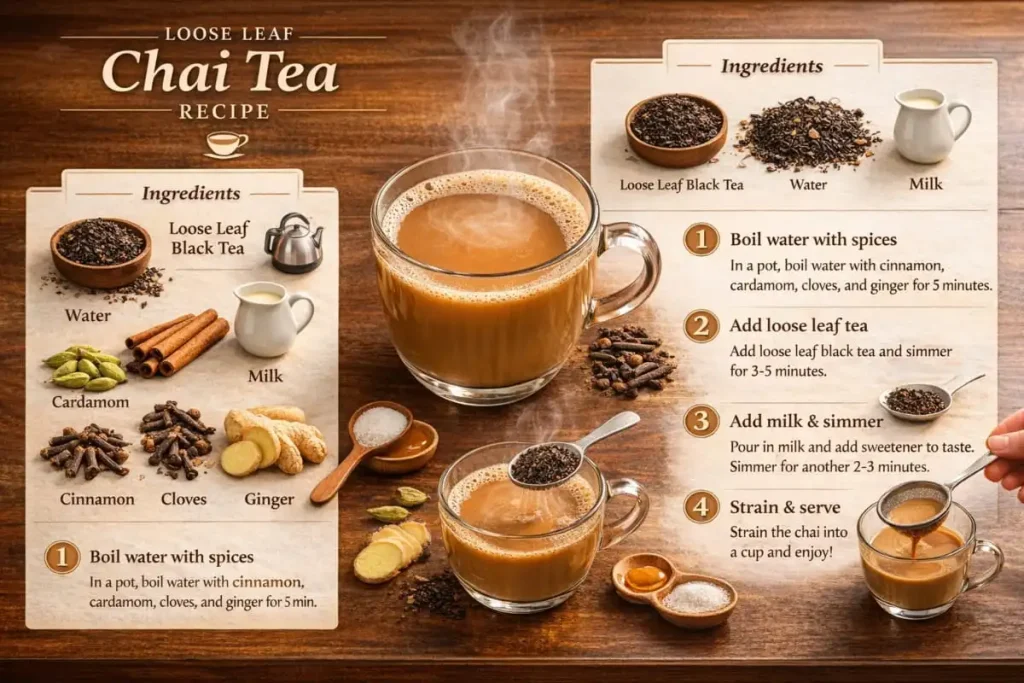
Loose Leaf Chai Tea Recipe | How to Brew It Right Every Time
There is something almost meditative about making chai from scratch. The moment those spices hit the warm milk, cardamom releasing its floral sweetness, ginger building…

Best Tea for Your Voice | Does It Make You Sound Deeper
What it can do is change how your voice feels and sounds in the moment, which is where most of the confusion starts. If you…
The Best Tea for Performers & Speakers, And Why Your Voice Deserves Better
You spend hours rehearsing the words. You perfect the tone, the breath, the timing. But then you reach for whatever is nearby, a cup of…
Best Tea for Stress Relief | Calming Loose Leaf Blends
Stress is something everybody carries. It shows up in tight shoulders, restless nights, and a mind that won’t quiet down after a long day. And…