Best Tea for Anxiety | A Guide to Herbs That Calm the Nervous System

Tea can help with anxiety by delivering herbs and compounds that directly influence the nervous system, reduce cortisol levels, support GABA receptors, and promote calm without sedation. The key is matching the right herb to the right anxiety symptom, which is what this guide does. Some days, anxiety shows up quietly, a tightness in the chest, a mind that won’t stop running, a body that feels wound too tight to rest. Other days it’s louder, bleeding into sleep, digestion, and focus until everything feels harder than it should.
Reaching for a cup of tea in those moments isn’t just a habit. For thousands of years, herbalists and healers across cultures have turned to specific plants precisely because they work, not as a cure, but as a gentle, reliable way to help the nervous system find its footing again.
Today, modern research is catching up with what traditional medicine has long understood: certain herbs contain compounds that interact directly with the brain’s stress and relaxation pathways. Chamomile binds to the same receptors as anti-anxiety medications, just far more gently. Lemon balm raises GABA levels, the brain’s primary calming neurotransmitter. L-theanine, found naturally in green and black tea, promotes a state of alert calm without sedation. These aren’t placebo effects. There’s real science behind the cup.
But not all anxiety teas are created equal. The difference between a tea bag stuffed with low-grade chamomile dust and a properly sourced, full-leaf herbal blend is the difference between a pleasant drink and something that actually moves the needle. Quality, preparation, and choosing the right herb for your specific experience, whether that’s chronic stress, anxious sleeplessness, nausea, or low mood, all determine how much relief you actually feel.
This guide covers the best teas for anxiety across every major need: stress relief, sleep, depression overlap, nausea, and daily calm. You’ll learn which herbs work, why they work, and how to use them, so the next time anxiety shows up, you’ll know exactly what to reach for.
Why Tea Works for Anxiety (The Science Behind the Calm)
Anxiety isn’t just a feeling; it’s a physiological state. When stress hits, the body releases cortisol and adrenaline, the nervous system shifts into high alert, and GABA (the brain’s primary calming neurotransmitter) gets outpaced by excitatory signals. What makes certain teas genuinely effective for anxiety is that their active compounds intervene in this exact chain of events, not by suppressing the nervous system, but by restoring balance to it.
How Herbal Compounds Interact with the Nervous System
Different herbs work through different mechanisms, and understanding this is what separates strategic tea drinking from simply hoping for the best.
Chamomile contains apigenin, a flavonoid that binds to benzodiazepine receptors in the brain, the same receptors targeted by certain prescription anti-anxiety medications, but with a fraction of the potency and none of the dependency risk. Lemon balm works by inhibiting the enzyme that breaks down GABA, effectively keeping more of your brain’s natural calming signal in circulation longer. Passionflower operates through a similar GABA-enhancing pathway, which is why it’s particularly useful when anxiety is disrupting sleep.
Kava takes a different route entirely, acting on GABA-A receptors and ion channels to produce noticeable muscle recovery and relaxation and a reduction in acute anxiety, one of the most pharmacologically active herbal options available. Lavender, meanwhile, has been shown to modulate serotonin transport, supporting mood stability over time.
The point is this: these aren’t vague wellness claims. They’re documented interactions between plant compounds and the human nervous system, which is precisely why choosing the right herb for your specific experience matters.

L-Theanine, Adaptogens, and the Stress-Cortisol Connection
Not all anxiety is the same. There’s the acute kind, a sudden spike of stress before a performance, a difficult conversation, a sleepless night. And there’s the chronic kind, a sustained background hum of tension that grinds the body down over weeks and months. The best teas for anxiety address both, but through different mechanisms.
L-theanine, an amino acid found naturally in green and black tea, is one of the most well-researched calming compounds in the plant world. It promotes alpha brainwave activity, the same relaxed-but-alert mental state associated with meditation, without causing drowsiness. For anyone who needs to stay functional while managing anxiety, this makes L-theanine-rich teas particularly valuable. It also works synergistically with caffeine, smoothing out the sharp edges of stimulation and replacing jitteriness with focused calm.
Adaptogens work at a deeper, slower level. Herbs like ashwagandha and reishi mushroom help regulate the HPA axis, the hypothalamic-pituitary-adrenal system that governs the body’s cortisol response. Over time, regular use of adaptogenic teas can lower the baseline stress load the body is carrying, making anxiety less frequent and less intense rather than simply dampening it in the moment. Think of L-theanine as immediate relief and adaptogens as long-term resilience.
Why Loose Leaf Tea Delivers More Active Botanicals Than Tea Bags
The form your tea comes in isn’t just a matter of preference; it directly affects how much of the active compounds actually make it into your cup.
Most commercial tea bags are filled with what the industry calls “dust and fannings”, the fine broken particles left over after whole leaves and botanicals are processed. These fragments have a much larger surface area relative to their volume, which means they oxidize faster, lose volatile aromatic compounds during storage, and produce a thinner, less potent brew. By the time a standard chamomile tea bag reaches your cup, a significant portion of the apigenin and essential oils that make chamomile effective have already degraded.
Loose leaf teas and whole dried botanicals, by contrast, retain their cellular structure until the moment they hit hot water. The herbs expand, slowly and fully release their compounds, and produce a more complete extraction. You’re getting more of what the plant actually contains, more active flavonoids, more essential oils, more of the compounds that interact with your nervous system in the ways described above.
For everyday enjoyment, the difference may be subtle. But when you’re using tea purposefully, as a tool for managing anxiety, stress, or sleeplessness, the quality of your ingredients is the difference between a pleasant ritual and one that actually delivers.
L-Theanine: The Compound in Tea That Reduces Anxiety Without Sedation
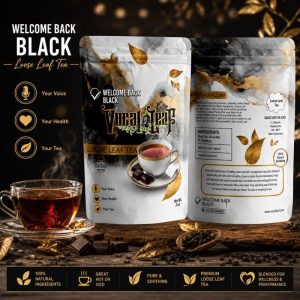
L-theanine is an amino acid found naturally in black tea leaves, and it is one of the most studied compounds for anxiety relief. It works by increasing alpha brain wave activity, the same relaxed-but-alert state associated with meditation, and by supporting the production of GABA, dopamine, and serotonin. Unlike pharmaceutical anxiolytics, L-theanine does not cause drowsiness or impair cognitive function, which makes it particularly valuable for performers, speakers, and anyone who needs to stay sharp while managing anxiety. Research suggests an effective dose is 100–200mg, which is achievable with high-quality loose-leaf black tea steeped for a full 10–12 minutes to maximize extraction. Vocal Leaf’s Organic Loose Leaf Black Tea delivers L-theanine alongside naturally occurring antioxidants, making it a practical daily option for anxiety that doesn’t shut you down.
The Vocal Leaf Approach to Anxiety Relief
At Vocal Leaf, we started with a simple observation: the people who care most about their voice, singers, speakers, teachers, podcasters, and performers, are also the people most likely to experience anxiety as a physical, professional problem. Stage fright isn’t metaphorical for them. A stress response that tightens the throat, disrupts sleep the night before a performance, or unsettles the stomach before a recording session has direct, measurable consequences on their work. Calming the nervous system isn’t a luxury for this community’s wellness. It’s a functional necessity.

That intersection, between vocal health and nervous system health, is where our teas live.
Why Vocal Health and Nervous System Health Are Deeply Connected
The voice is one of the most stress-sensitive instruments in the human body. Anxiety triggers the sympathetic nervous system, which causes the muscles around the larynx to tighten, reduces salivary flow, accelerates breathing in ways that undermine breath support, and can inflame delicate vocal tissue. Chronic stress compounds all of this, elevating cortisol over time and affecting vocal fold hydration, immune resilience, and recovery after heavy use.
This means that caring for your voice and caring for your nervous system are not separate practices. They feed each other directly. A performer who sleeps poorly due to anxiety arrives at rehearsal with a compromised instrument. A teacher who carries chronic stress through a full day of speaking will feel it in their throat by mid-afternoon. Managing anxiety isn’t separate from vocal care; it is vocal care.
The herbs that support the nervous system most effectively, chamomile, lemon balm, rooibos, and passionflower, also happen to be gentle on the throat, hydrating, anti-inflammatory, and free of the compounds (like caffeine or astringent tannins at high levels) that can work against vocal health. It’s a natural alignment, and one we’ve deliberately built our blends around.
Our Recommended Teas for Anxiety-Prone Voices and Performers
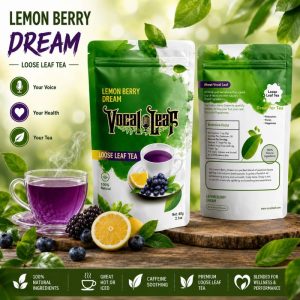
For daily stress management and all-day calm, Lemon Berry Dream is our first recommendation. Lemon balm anchors the blend with its GABA-supporting properties. At the same time, the bright berry notes make it genuinely enjoyable to drink consistently, which matters because the herbs that work best for anxiety are most effective when used as a daily practice rather than a one-off remedy.
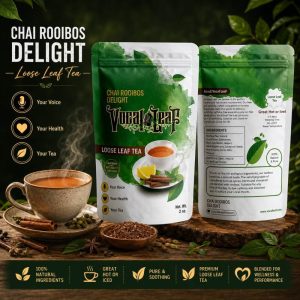
For those who need a reliable caffeine-free foundation they can return to throughout the day without accumulating stimulant load, Organic Rooibos Chai is the blend we reach for. The rooibos base supports adrenal health and cortisol regulation, the warming spices make it deeply satisfying, and its complete absence of caffeine means it works equally well at 8 am and 8 pm, including the night before a performance when sleep is everything.
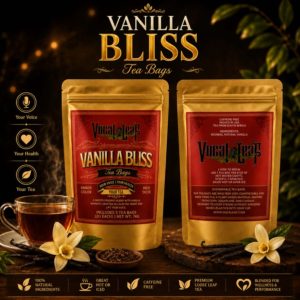
When the goal is evening wind-down, quieting the mind, releasing physical tension, and transitioning toward genuine rest, Vanilla Bliss offers the kind of soft, enveloping calm that makes it easy to close the day. It’s the blend we’d hand to a performer the night before a show, or a teacher at the end of a week that asked too much of them.
And for those who want the quiet, clean energy of a caffeinated tea without the jitteriness that can amplify anxiety, our Organic Loose Leaf Black Tea delivers L-theanine alongside its natural caffeine, the combination that produces focused calm rather than nervous stimulation, making it the right morning choice for anyone who needs to be present and clear-headed without the edge.
Every Vocal Leaf tea is sourced as loose leaf for a reason: more surface area, fuller extraction, and more of the active botanicals that actually reach your nervous system. If you’re going to use tea as a tool for anxiety, and the evidence says you should, it’s worth using one that’s built to work.
The Best Teas for Anxiety
There’s no single best tea for anxiety because anxiety itself isn’t one-size-fits-all. The right choice depends on what you’re experiencing: acute stress, chronic tension, restless nights, low mood, or a nervous stomach. The teas below represent the most effective, well-researched options available, each with a distinct profile and a specific job to do.

Chamomile, The Classic Calming Tea
Chamomile is the most widely recognized calming tea in the world, and its reputation is earned. The active compound apigenin binds to benzodiazepine receptors in the brain, producing a gentle sedative and anxiolytic effect without the grogginess or dependency associated with pharmaceutical alternatives. Clinical studies have shown regular chamomile supplementation can meaningfully reduce generalized anxiety symptoms over time, not just in the moment, but as a sustained practice.
It’s mild enough to drink daily, versatile enough to pair with other herbs, and one of the safest options available for most people. If you’re new to herbal teas for anxiety, chamomile is the natural starting point. Brew it strong for at least 5 minutes to get the full benefit of its active compounds.
Lemon Balm, The Underrated Anxiety Herb
Lemon balm deserves far more attention than it typically gets. A member of the mint family, it works by inhibiting GABA transaminase, the enzyme that breaks down GABA in the brain, effectively prolonging the presence of your nervous system’s primary calming signal. The result is a noticeable reduction in mental restlessness, improved mood, and a quieting of the kind of low-grade anxious hum that makes it hard to focus or unwind.
What makes lemon balm particularly useful is its versatility. It eases anxiety during the day without sedating, but also helps transition the mind toward sleep at night. It’s one of the best herbal teas for stress and anxiety relief, and it blends beautifully with chamomile and passionflower for a more comprehensive calming effect. Vocal Leaf’s Lemon Berry Dream brings lemon balm to the forefront in a blend that’s bright, calming, and easy to reach for any time of day
Passionflower Tea, For Anxiety-Driven Insomnia
Passionflower occupies a specific and valuable niche: it’s the best calming tea for anxiety that directly disrupts sleep. Like lemon balm, it works by enhancing GABA, but its effects are more pronounced on sleep latency and sleep quality than on daytime anxiety management. Studies comparing passionflower to low-dose pharmaceutical sleep aids have shown comparable results for mild to moderate sleep disturbance, with none of the morning grogginess associated with pharmaceutical sleep aids.
If your anxiety primarily shows up at night, racing thoughts when you lie down, difficulty switching off, waking at 2 am with your mind already running, passionflower is the herb to prioritize. It blends particularly well with valerian root and chamomile for a comprehensive nighttime tea. Drink it thirty to sixty minutes before bed for best results.
Rooibos, The Caffeine-Free Foundation
Rooibos doesn’t carry the pharmacological punch of kava or passionflower. Still, it earns its place on this list for a different reason: it’s the ideal base for an anxiety-supportive tea practice. Naturally caffeine-free and rich in antioxidants, particularly aspalathin and nothofagin, rooibos has been shown to reduce cortisol secretion from the adrenal glands and support the adrenal system under stress. It’s also one of the most gentle, universally tolerated herbs available.
Crucially, rooibos is never chemically decaffeinated; it simply contains no caffeine by nature, which makes it genuinely suitable for sensitive individuals, evening drinking, and anyone whose anxiety is worsened by stimulants. Vocal Leaf’s Organic Rooibos Chai combines this naturally calming base with warming spices, making it one of the most satisfying caffeine-free options for daily stress management. Think of rooibos as the reliable foundation for your anxiety tea ritual.
Mushroom Tea (Lion’s Mane, Reishi), For Anxiety and Cognitive Calm
Medicinal mushroom teas have moved well beyond wellness trend territory; the research behind both lion’s mane and reishi is substantive enough to take seriously. Reishi (Ganoderma lucidum) is more directly relevant for anxiety, with studies demonstrating its ability to reduce fatigue, lower cortisol, and support immune function under stress. It works as an adaptogen, gradually reducing the body’s hyperreactive response to stressors.
Lion’s mane addresses a different but related dimension: cognitive anxiety. The kind of anxiety that shows up as brain fog, scattered thinking, or an inability to concentrate under pressure. Its active compounds, hericenones and erinacines, stimulate nerve growth factor production, supporting neural health and cognitive resilience. Together, a reishi-lion’s mane blend addresses both the emotional and cognitive dimensions of anxiety in a way few single herbs can. The flavor profile is earthy and robust, making it a natural fit for those who prefer their calming teas to be savory rather than floral.
Valerian Root, For Nighttime Anxiety and Sleep
Valerian root is one of the most studied herbs for sleep and nighttime anxiety, and one of the most potent. Its active compounds, valerenic acid and isovaleric acid, interact with GABA receptors and serotonin receptors to produce a sedative effect strong enough to be clinically meaningful. Multiple meta-analyses have found valerian supplementation improves sleep quality and reduces the time it takes to fall asleep, particularly in individuals whose sleep problems are anxiety-driven.
The tradeoff is its flavor: valerian root has a distinctly earthy, pungent quality that not everyone finds pleasant on its own. Blending it with chamomile, passionflower, or lemon balm significantly improves drinkability while also enhancing its calming effect through complementary mechanisms. Take it seriously; this is one of the strongest natural options for nighttime anxiety, and give it thirty to sixty minutes to work before expecting results. Vocal Leaf’s Vanilla Bliss offers a gentler, more palatable evening blend for those who want the calming depth of a complex herbal formula without valerian’s intensity.
Best Caffeine-Free Tea for Anxiety
Caffeine is a direct anxiety trigger. It raises cortisol, increases heart rate, and activates the sympathetic nervous system, the exact system anxiety already has in overdrive. For anyone managing anxiety seriously, the tea they choose needs to be genuinely caffeine-free, not just low-caffeine.
This is where the distinction between naturally caffeine-free and chemically decaffeinated matters. Chemically decaffeinated teas use solvent processing that strips beneficial compounds alongside the caffeine. Naturally caffeine-free herbal teas, those made from roots, flowers, fruits, and botanicals rather than the Camellia sinensis plant, never contained caffeine to begin with, which means their calming compounds arrive intact.
Vocal Leaf’s Organic Rooibos Chai Tea and Lemon Berry Dream are both naturally caffeine-free. Rooibos contains aspalathin, a flavonoid shown to reduce cortisol secretion, making it one of the most physiologically appropriate herbs for anxiety relief. Lemon Berry Dream pairs that foundation with citrus botanicals that support hydration and adrenal function, two factors that quietly worsen anxiety when neglected.
If you are sensitive to caffeine or drink tea in the evening to manage anxiety-related insomnia, naturally caffeine-free loose leaf tea is not a compromise. It is the correct choice.
Best Tea for Stress and Anxiety Specifically
Stress and anxiety are closely related but not identical, and the distinction matters when choosing the right tea. Anxiety is often internal, a persistent sense of unease or worry that can exist even in the absence of an obvious external trigger. Stress, by contrast, is typically a response to something real and pressing: a deadline, a conflict, a demanding schedule, a season of life that’s asking more than usual. When stress becomes chronic, it feeds anxiety directly, and that’s where most people find themselves when they start searching for help.

The best tea for stress and anxiety combined needs to work on both levels: calming the immediate mental and physical tension that stress creates, while also supporting the body’s underlying stress-response system so that anxiety doesn’t simply refill the space relief empties.
What Makes Stress-Driven Anxiety Different
Stress-driven anxiety has a distinct physiological signature. It’s primarily cortisol-mediated, the body’s stress hormone, that stays elevated longer than it should, keeping the nervous system in a low-grade state of alert even when the immediate stressor has passed. Over time, this sustained cortisol load depletes neurotransmitters, disrupts sleep architecture, affects digestion, and lowers the threshold at which the body triggers a stress response. Small things start to feel large. Recovery takes longer. The baseline shifts upward and stays there.
This is different from anxiety that arises without a clear external cause, and it responds to a somewhat different set of interventions. Herbs that directly address cortisol regulation, adaptogens, in particular, become more important here than fast-acting calming herbs alone, because the root issue isn’t just an overactive mind. It’s a body that has lost its ability to down-regulate stress efficiently.
Teas That Lower Cortisol vs. Teas That Calm the Mind
It helps to think about anxiety teas in two broad categories, because they work through different mechanisms and serve different moments.
Cortisol-lowering teas work at the hormonal and adrenal level, gradually reducing the body’s overall stress load. Ashwagandha is the most well-documented in this category, with clinical trials showing meaningful reductions in serum cortisol after consistent use over four to eight weeks. Rooibos supports adrenal function and has been shown to directly inhibit cortisol secretion. Reishi mushroom regulates the HPA axis over time. These are the teas to drink daily, consistently, as a long-term foundation, not the ones to reach for when you need to calm down in the next twenty minutes.
Mind-calming teas, by contrast, work through the nervous system more immediately. Lemon balm raises GABA availability, producing noticeable mental quieting within an hour of consumption. Chamomile acts on benzodiazepine receptors for gentle, fast-acting calm. L-theanine in green and black tea shifts brainwave activity toward a relaxed, focused state within thirty to forty-five minutes. These are the teas for acute stress moments, before a difficult meeting, during a demanding afternoon, or when the mental noise simply needs to come down.
The most effective approach to stress-driven anxiety uses both categories in tandem: adaptogens and rooibos as a daily practice to lower the cortisol baseline, and lemon balm, chamomile, or L-theanine-rich teas as responsive tools for the moments when stress peaks.
Best Blends for Daily Stress Management
For daily stress management, consistency matters more than potency. The goal is to build a reliable routine that keeps the nervous system supported throughout the day, rather than reaching for the strongest possible herb only when things get overwhelming.
A practical approach is to structure your tea around the arc of the day. A morning cup of Organic Loose Leaf Black Tea delivers L-theanine alongside natural caffeine, creating the kind of focused calm that sets a steady tone rather than a wired one. Mid-morning or afternoon, Lemon Berry Dream, with its lemon balm base, offers a natural reset point when stress starts to accumulate, and mental clarity begins to slip. In the evening, shifting to something like Organic Rooibos Chai supports adrenal recovery and signals to the body that the demanding part of the day is done.
The key insight for managing stress and anxiety with tea is that you’re not just treating symptoms, you’re building a physiological environment in which anxiety has less room to take hold. That’s a practice, not a single cup.
Best Tea for Social Anxiety
Social anxiety is neurologically distinct from generalized anxiety. It peaks acutely, before a meeting, a performance, or a conversation, rather than running as a constant background state. The most effective teas for social anxiety are those that work quickly and don’t dull alertness, since social situations require you to be present, not sedated.
L-theanine, found in black tea, is the most evidence-supported option for this use case. Its ability to raise alpha brainwave activity produces a calm yet focused state that directly counters the hypervigilance that social anxiety creates. For performers and speakers, professionals whose social anxiety has professional consequences, this matters more than generic calming.
Vocal Leaf’s Organic Loose Leaf Black Tea is the practical choice here. Steep it for 10–12 minutes at 203°F, 30–45 minutes before any high-social-stakes situation. L-theanine reaches peak plasma concentration within 30–60 minutes, aligning calm with the moment you need it.
Best Herbal Tea for Anxiety and Depression
Anxiety and depression are frequently discussed as separate conditions, but for many people, they arrive together, and the overlap is more than coincidental. Research consistently shows that generalized anxiety disorder and major depressive disorder share underlying neurobiological mechanisms: dysregulation of serotonin and GABA pathways, chronic HPA axis activation, elevated cortisol, and systemic inflammation. Treating one while ignoring the other rarely produces lasting relief, which is why the most useful herbal teas for anxiety and depression are those that address shared root causes rather than targeting either condition in isolation.

The Anxiety-Depression Overlap and What Herbs Address Both
The herbs best suited to this overlap are those with a broad-spectrum effect on mood neurotransmistry, compounds that support serotonin availability, enhance GABA activity, and reduce neuroinflammation simultaneously. This rules out single-mechanism herbs like kava (effective for anxiety, less relevant for depression) and points toward a more specific shortlist: St. John’s Wort, lemon balm, and saffron are the three with the most substantive clinical evidence.
What makes these herbs particularly valuable for the anxiety-depression overlap is that they don’t force the nervous system in one direction. They don’t sedate or stimulate. They regulate, gradually restoring a more balanced neurochemical environment in which both excessive worry and persistent low mood have less room to operate.
Important Caveats: When to Consult a Healthcare Provider
Herbal teas can be a meaningful part of managing mild to moderate anxiety and low mood, but there are important boundaries worth stating clearly.
St. John’s Wort, despite being available over the counter, has clinically significant interactions with a wide range of medications, including antidepressants, birth control pills, blood thinners, and antiretroviral drugs. Taking it alongside SSRIs or SNRIs can trigger serotonin syndrome, a potentially serious condition. If you are currently taking any prescription medication, consult your doctor before introducing St. John’s Wort in any form.
More broadly, persistent depression, particularly moderate to severe depression, requires professional evaluation and care. Herbal teas are not a substitute for therapy, psychiatric treatment, or medication when clinically indicated. They can complement a broader treatment plan, support mild symptoms, and contribute to the kind of daily nervous system care that makes other interventions more effective. But they work best as part of a thoughtful approach to mental health, not as a replacement for one.
If your anxiety or depression is significantly affecting your daily functioning, relationships, or sense of self, that is a signal to seek support from a qualified healthcare provider, not just a better tea blend.
Best Tea for Anxiety and Insomnia
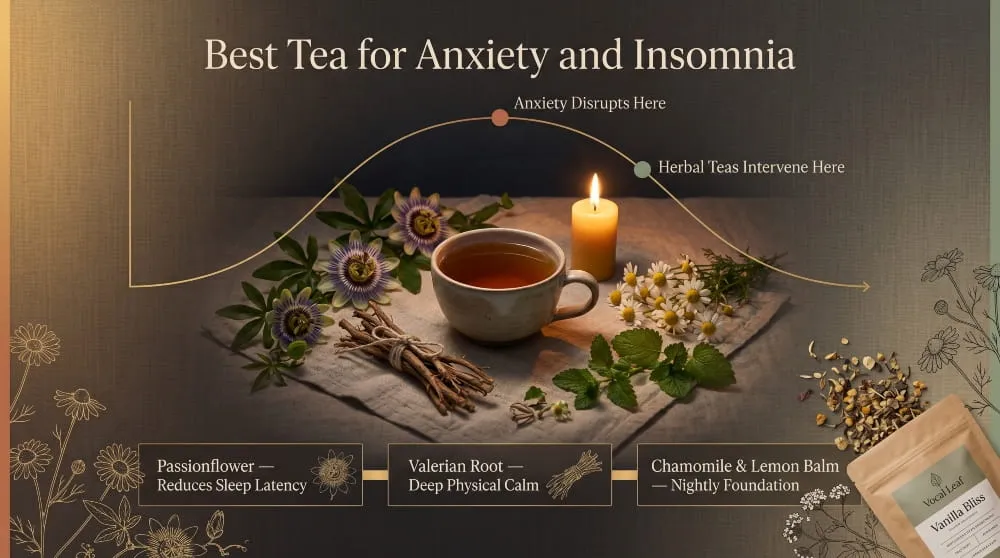
Anxiety and insomnia have a frustrating relationship: each one makes the other worse. Anxiety activates the sympathetic nervous system, raises cortisol, and keeps the brain in a state of vigilant alertness that is physiologically incompatible with sleep onset. Poor sleep, in turn, reduces emotional regulation, lowers stress tolerance, and makes the nervous system more reactive the following day. For many people, breaking this cycle is one of the most important things they can do for their mental health, and the right nighttime tea is one of the most practical tools available to help them do so.
Why Anxiety Disrupts Sleep, and How Nighttime Teas Help
Sleep requires a specific neurochemical transition: cortisol must drop, core body temperature must fall, and GABA activity must rise enough to quiet the mental chatter that anxiety keeps running. When anxiety is present, this transition stalls. The mind stays active, the body stays tense, and the gap between lying down and actually falling asleep stretches into an anxious, frustrating interval that becomes a source of stress in itself.
Nighttime herbal teas directly intervene in this transition. The herbs most effective for anxiety-driven insomnia, passionflower, valerian root, chamomile, and lemon balm, all operate on GABA pathways in ways that lower the neurological activation threshold for sleep. They don’t knock you out. They remove the interference. The warmth of the liquid itself supports the drop in core body temperature that signals the brain toward sleep, and the ritual of preparing and drinking tea activates the parasympathetic nervous system, the body’s rest-and-digest mode, in a way that a pill simply cannot replicate.
Best Teas to Drink Before Bed for Anxious Minds
Passionflower is the most targeted option for anxiety-driven insomnia specifically. Its GABA-enhancing mechanism directly addresses the neurological overactivation that keeps anxious minds awake, and clinical studies have shown it reduces sleep latency, the time it takes to fall asleep, without producing morning grogginess. It works best when the primary problem is mental: racing thoughts, an inability to switch off, or the particular misery of lying awake replaying the day.
Valerian root is the stronger sedative option, with decades of research supporting its use for sleep disturbance across multiple mechanisms. For anxiety that manifests as physical tension, a body that won’t release, muscles that stay braced, valerian’s combination of GABA activity and mild muscle-relaxant properties makes it particularly effective. Its flavor is assertive and earthy, which is why it performs best in blended teas where other herbs smooth it out.
Chamomile remains one of the most reliable options for gentle nightly use. It’s mild enough to drink every evening without building tolerance, effective enough to produce noticeable calm within thirty to forty-five minutes, and universally accessible. For anxious minds that are more unsettled than truly wired, chamomile is often sufficient on its own.
Lemon balm, particularly when combined with passionflower or chamomile, adds a mood-softening dimension to a nighttime blend, quieting not just the racing mind but also the low-level emotional restlessness that often accompanies anxiety at night. Vocal Leaf’s Vanilla Bliss brings this kind of complexity to an evening blend, offering the layered calm that makes it easier not just to fall asleep, but actually to want to.
For best results, drink your nighttime tea 30 to 60 minutes before bed, early enough for the active compounds to take effect before you lie down, and close enough to sleep that the ritual itself becomes part of the transition.
Caffeine-Free vs. Naturally Decaffeinated: Why It Matters
When choosing a tea for anxiety and insomnia, the caffeine question deserves more attention than it usually gets, because not all caffeine-free teas are the same, and the difference matters for sensitive individuals.
Chemically decaffeinated teas start as caffeinated varieties and have their caffeine removed through processing, typically using solvents, water, or CO₂ methods. Even the cleanest decaffeination processes leave trace amounts of caffeine behind, and the processing itself can degrade the delicate aromatic compounds and antioxidants that make a tea therapeutically valuable. For someone whose anxiety is sensitive to stimulants, even small residual amounts of caffeine can be enough to interfere with sleep onset.
Naturally caffeine-free teas, rooibos, chamomile, passionflower, lemon balm, valerian, and most other true herbal infusions contain no caffeine whatsoever because they never contained any to begin with. There’s nothing to remove, no processing required, and no residual stimulant effect. This makes them genuinely suitable for anxious sleepers in a way that decaffeinated teas, however well-intentioned, simply cannot guarantee.
Vocal Leaf’s herbal blends are naturally caffeine-free, never chemically decaffeinated, which is a meaningful distinction for anyone using tea as a nightly tool for anxiety and sleep. When the goal is genuine rest, starting with an ingredient that is clean by nature rather than processed into compliance is always the better foundation.
Best Tea for Nausea and Anxiety
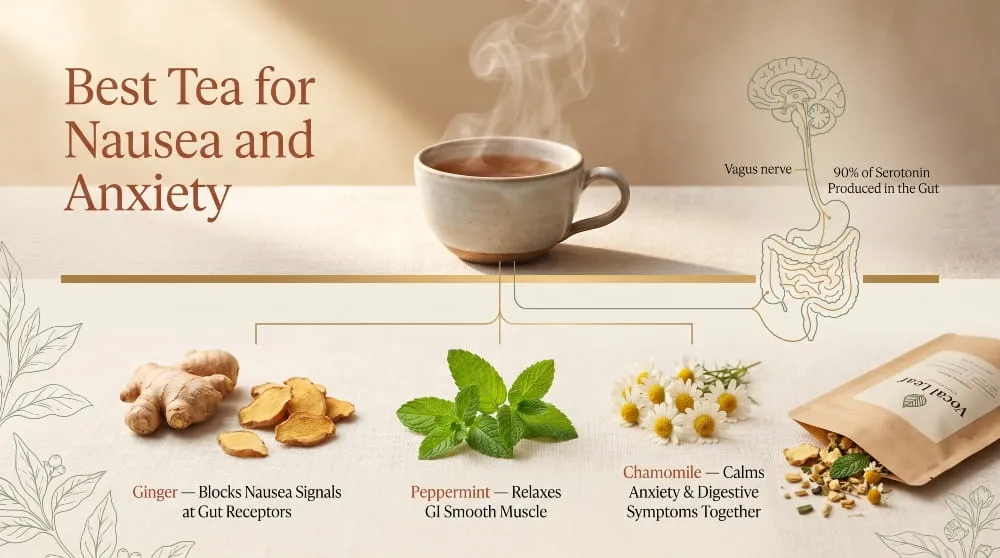
For many people, anxiety doesn’t stay in the mind. It migrates, tightening the chest, shortening the breath, and, frequently, unsettling the stomach, from mild queasiness to genuine nausea. If you’ve ever felt sick before a high-pressure moment, or noticed that stress reliably triggers digestive discomfort, you’re experiencing one of the most well-documented pathways in human physiology: the gut-brain axis.
The Gut-Brain Connection and Anxiety-Induced Nausea
The gut and brain are in constant, bidirectional communication through the vagus nerve, a long, branching nerve that runs from the brainstem down through the chest and into the abdomen, carrying signals in both directions. The enteric nervous system lining the gastrointestinal tract contains more neurons than the spinal cord and produces roughly 90% of the body’s serotonin. This isn’t a peripheral system reacting to the brain; it’s an equal participant in the conversation.
When anxiety activates the sympathetic nervous system, digestion becomes a casualty almost immediately. Blood flow is redirected away from the gut toward the muscles. Gastric motility, the rhythmic contractions that move food through the digestive tract, becomes irregular. Stomach acid secretion changes. The result can be nausea, cramping, bloating, or a general sensation of digestive unease that persists as long as the anxiety state does.
This is why addressing nausea and anxiety together, rather than separately, produces better results. A tea that only calms the mind while ignoring the gut leaves half the problem unaddressed. The most effective options for anxiety-induced nausea are those that work on both systems simultaneously.
Ginger, Peppermint, and Chamomile for Digestive Anxiety Symptoms
Ginger is the most potent anti-nausea herb available without a prescription, with a mechanism of action that is both direct and well-documented. Its active compounds, gingerols and shogaols, act on the 5-HT3 serotonin receptors in the gut that are directly implicated in nausea signaling, effectively interrupting the nausea response at its neurochemical source. Ginger also accelerates gastric emptying, reducing the sensation of heaviness or stagnation that often accompanies anxiety-driven digestive disturbance.
For acute nausea, ginger works quickly, often within fifteen to twenty minutes of consumption. It has the additional benefit of being warming and grounding in a way that many people find inherently calming, making it useful as much for its sensory effects as for its pharmacological ones. Brewed strong from fresh root or high-quality dried ginger, it produces a tea with genuine therapeutic presence.
Peppermint addresses the muscular dimension of digestive anxiety. Menthol, its primary active compound, relaxes smooth muscle in the gastrointestinal tract, directly relieving the cramping and spasm that anxiety-induced gut tension produces. It’s particularly effective for the kind of nausea that comes with a feeling of tightness or constriction rather than active queasiness, and for the bloating and discomfort that can follow an anxious episode even after the acute anxiety has passed.
There’s a parasympathetic dimension to peppermint tea as well. The act of inhaling its volatile menthol compounds while drinking, the steam, the scent, the cooling sensation, activates sensory pathways that help shift the nervous system away from sympathetic overdrive. It’s one of those teas where the experience of drinking it is part of the medicine.
Chamomile completes this trio by working on both the nervous system and the gut simultaneously. Its antispasmodic properties relax the smooth muscle of the gastrointestinal tract, easing cramping and irregular motility. At the same time, its apigenin content produces the gentle anxiolytic effect that addresses the root cause driving the digestive symptoms. Of the three, chamomile is the most comprehensively suited to anxiety-induced nausea because it treats the anxiety and the nausea through the same cup.
For nausea that arrives alongside acute anxiety, before a performance, a difficult event, or a period of sustained stress, a blend of ginger and peppermint offers fast, targeted relief. For the more persistent digestive unease that accompanies chronic anxiety, chamomile used consistently as part of a daily tea practice tends to produce the most meaningful long-term improvement, particularly when combined with other nervine herbs that address the underlying stress load. In either case, the gut-brain connection means that calming the nervous system and soothing the digestive system are not two separate tasks; they’re the same one, approached from both ends.
Ingredient Spotlight, What to Look For in an Anxiety Tea
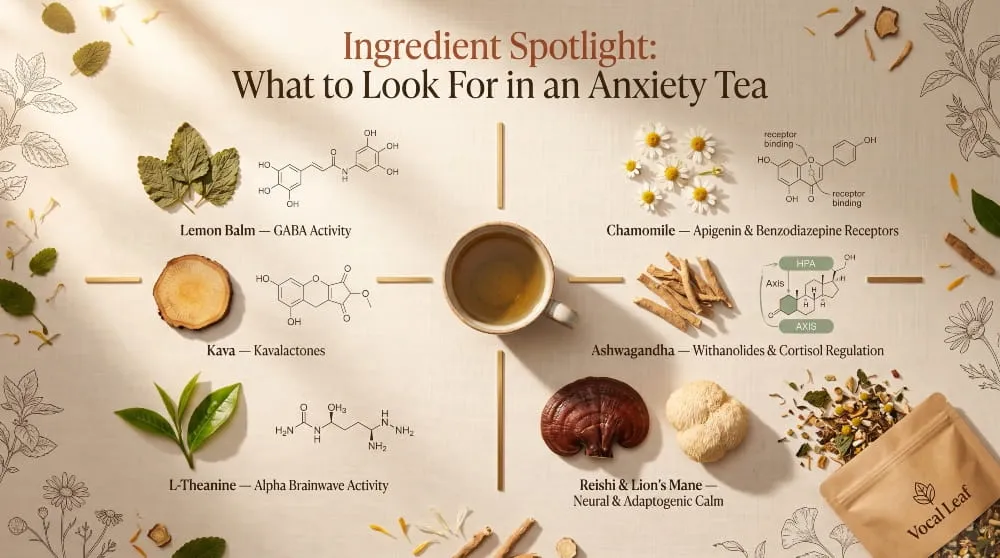
Reading a tea label is easy. Understanding what’s actually in the cup, and whether it will do anything meaningful for anxiety, requires knowing which compounds matter and why. The herbal tea market is crowded with blends that gesture at calm through pleasant packaging and vague wellness language without delivering the active constituents that make a real difference. What follows is a frank look at the key ingredients that distinguish an effective anxiety tea from an expensive placebo.
Lemon Balm, Rosmarinic Acid, and GABA Activity
Lemon balm’s primary active compound, rosmarinic acid, works by inhibiting GABA transaminase, the enzyme responsible for breaking down GABA in the brain. The practical effect is that more of your nervous system’s natural calming neurotransmitter remains available for longer, leading to a measurable, relatively rapid reduction in mental restlessness. Rosmarinic acid also carries meaningful anti-inflammatory and antioxidant properties, which matter because chronic neuroinflammation is increasingly understood as a contributor to both anxiety and mood dysregulation.
What to look for: whole dried lemon balm leaves rather than extract powders, and blends where lemon balm is listed as a primary ingredient rather than buried at the end of a long formula. The volatile oils responsible for its distinctive citrus-herb scent are also partly responsible for its calming effect, which means a lemon balm tea that smells vibrant is generally one that’s retained more of its therapeutic value.
Chamomile, Apigenin, and Its Receptor Binding
Chamomile’s anxiolytic reputation rests primarily on apigenin. This flavonoid binds with meaningful affinity to benzodiazepine receptors in the brain, the same receptor sites targeted by anti-anxiety medications like diazepam, but with far gentler agonist activity and no dependency profile. This isn’t a loose analogy; it’s a documented pharmacological mechanism that explains why chamomile produces a reliably calming effect rather than simply a pleasant one.
Apigenin also has demonstrable anti-inflammatory effects and has been shown to modulate serotonin activity, adding a mood-supportive dimension beyond its direct anxiolytic action. The key quality variable with chamomile is the flower itself; whole chamomile flowers retain significantly more apigenin than the fragmented dust found in most commercial tea bags. If the chamomile in your blend doesn’t smell distinctly floral and slightly apple-like when brewed, it has likely lost much of what makes it effective.
Kava, Kavalactones
Kava stands apart from every other herb on this list in one important respect: its effect is acute, noticeable, and fast. The active compounds, kavalactones, of which there are around 18 identified varieties, act on GABA-A receptors, cannabinoid receptors, and voltage-gated sodium and calcium channels simultaneously, producing a state of pronounced physical relaxation and mental calm that most people can feel within 30 to 60 minutes.
The specific kavalactone profile of a kava product matters considerably. Noble-variety kava, the traditionally consumed form, has a kavalactone profile associated with calm and mild euphoria. Tudei and other non-noble varieties have profiles more associated with sedation and nausea, and are considered lower quality. When evaluating a kava tea, look for noble-variety sourcing and a kavalactone content specification. A product that doesn’t disclose its variety or potency is difficult to evaluate and harder to trust.
Ashwagandha, Withanolides, and HPA Axis Regulation
Ashwagandha’s therapeutic value for anxiety sits primarily in its withanolide content, a group of steroidal lactones that modulate the hypothalamic-pituitary-adrenal axis, the body’s central command system for the stress response. By regulating HPA axis activity, ashwagandha gradually lowers the body’s cortisol output. It reduces the sensitivity of the stress-response system, meaning that stressors produce a smaller physiological response over time.
This is not an herb that announces itself immediately. The meaningful clinical benefits documented in research, reduced cortisol levels, lower anxiety scores, and improved stress resilience typically emerge after four to eight weeks of consistent daily use. The withanolide content of ashwagandha products varies significantly depending on the part of the plant used and the processing method; root-based preparations are generally considered superior to leaf-based ones, and a standardized extract with a declared withanolide percentage offers more reliable potency than an unstandardized herbal powder.
L-Theanine in Green and Black Tea
L-theanine is one of the few calming compounds that works without sedation, a distinction that makes it uniquely valuable for daytime anxiety management. This amino acid, found naturally in Camellia sinensis leaves, promotes alpha brainwave activity: the relaxed, alert mental state associated with focused attention and meditative calm. It does this by modulating glutamate receptors and increasing GABA, serotonin, and dopamine availability, a broad-spectrum neurochemical effect from a single compound.
When consumed alongside caffeine, as it naturally occurs in green and black tea, L-theanine smooths the stimulant’s sharper edges, replacing jitteriness with a cleaner, more sustainable energy. This synergistic relationship is well documented and explains why tea-based caffeine feels qualitatively different from coffee-based caffeine for most people. The L-theanine content of a given tea depends on growing conditions, shade cultivation, and processing; younger leaves and shade-grown varieties generally contain more. Vocal Leaf’s Organic Loose Leaf Black Tea delivers this natural L-theanine alongside its caffeine, making it a reliable choice for mornings when clarity and calm need to coexist.
Reishi and Lion’s Mane Mushroom Compounds
Medicinal mushrooms offer a distinct class of active compounds for anxiety support: beta-glucans, triterpenes, and specific neuroprotective molecules that act at the intersection of immune function, inflammation, and neurological health.
Reishi’s triterpenes, particularly ganoderic acids, are the primary drivers of its adaptogenic and anxiolytic effects. They modulate the HPA axis similarly to ashwagandha, support adrenal function under chronic stress, and have demonstrated sedative properties in research settings. Reishi also has significant anti-inflammatory activity, which is relevant given the emerging understanding of neuroinflammation’s role in anxiety and mood disorders.
Lion’s mane operates through a more cognitively oriented pathway. Its unique compounds, hericenones (from the fruiting body) and erinacines (from the mycelium), stimulate nerve growth factor production, supporting neural plasticity and resilience. The anxiety-relevant benefit here is cognitive: lion’s mane tends to reduce the brain fog, scattered thinking, and cognitive fragility that often accompany chronic anxiety, improving the kind of clear-headed functioning that anxiety erodes. Together, reishi and lion’s mane address anxiety from complementary angles, one calming the stress-response system, the other restoring the cognitive infrastructure that anxiety undermines.
Loose Leaf vs. Tea Bags for Anxiety Relief
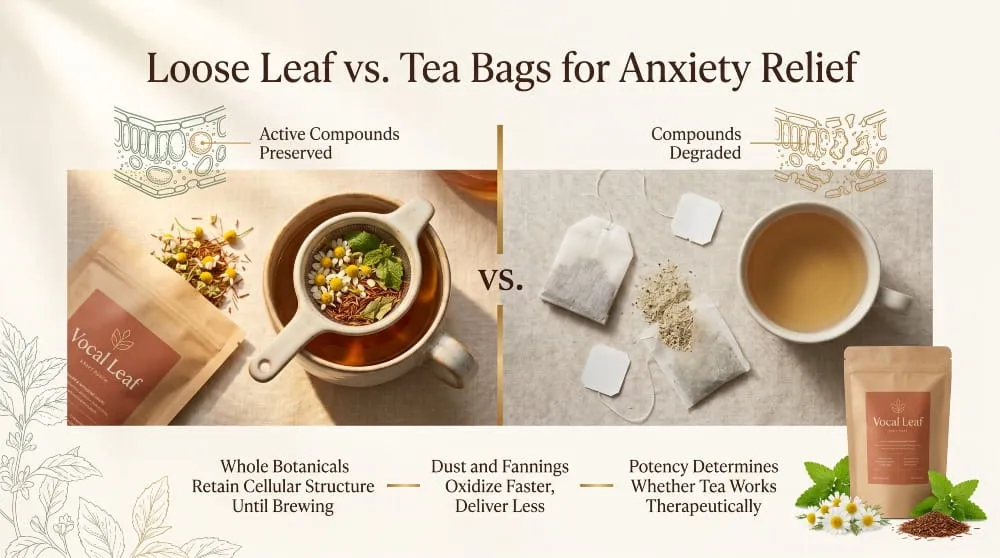
Most people choose between loose leaf and tea bags based on convenience. When you’re using tea therapeutically, as a genuine tool for managing anxiety, stress, or sleeplessness, the choice becomes something more consequential. The form your tea comes in directly determines how much of the active compounds responsible for its calming effects actually make it into your cup. And in that context, the difference between a quality loose-leaf blend and a standard commercial tea bag isn’t a matter of preference. It’s a matter of whether the tea works.
Why Potency Matters When Using Tea Therapeutically
The herbs that help with anxiety, chamomile, lemon balm, passionflower, valerian, and ashwagandha, contain active compounds that are sensitive to handling, storage, and processing. Apigenin in chamomile, rosmarinic acid in lemon balm, and the volatile essential oils that carry much of lavender’s calming effect are not indestructible molecules. They degrade with oxidation, heat exposure during processing, and time spent in storage after the plant material has been broken down.
Commercial tea bags are predominantly filled with what the industry classifies as dust and fannings, the fine particles and broken fragments that remain after whole botanicals are processed and sorted. These fragments have a dramatically higher surface area relative to their mass, which accelerates oxidation and causes the most volatile therapeutic compounds to dissipate faster. By the time a chamomile tea bag reaches your cup, a meaningful portion of the apigenin and essential oils that make chamomile effective for anxiety have already degraded, not because the herb is poor quality, but because the form it’s in has compromised it.
Whole and lightly cut loose-leaf botanicals retain their cellular structure until they come into contact with hot water. The active compounds remain protected in the plant material until extraction, so more of what the herb actually contains reaches your nervous system. When the goal is anxiety relief, that difference in bioactive delivery is precisely what distinguishes a tea that feels pleasant from one that actually shifts something.
How to Brew for Maximum Herbal Extraction
Brewing loose-leaf tea for anxiety relief is straightforward, but a few variables can make a meaningful difference in potency.
Temperature matters more than most people realize. Delicate herbs like lemon balm and chamomile release their volatile aromatic compounds, and much of their calming effect, at temperatures slightly below boiling. Water that’s too hot can drive off essential oils before they have a chance to infuse into the liquid. For most nervine herbs, water between 90°C and 95°C (just off the boil) produces a fuller, more therapeutically complete extraction than a rolling boil poured directly over the leaves.
Steeping time is the other critical variable. Most herbal teas for anxiety benefit from a longer steep than people typically give them, five to seven minutes minimum, and up to ten for denser botanicals like valerian root or ashwagandha. A two-minute steep produces a pleasant-tasting tea; a seven-minute steep produces a therapeutically meaningful one. Covering your cup or teapot while steeping traps the volatile steam and the essential oils it carries back into the liquid, rather than letting them escape into the air.
Use enough herb. A level teaspoon is a starting point, not a ceiling. For anxiety relief, a heaped teaspoon per cup, or a tablespoon for a larger mug, extracts a more potent brew. When the goal is calm rather than just flavor, brewing with intention produces a noticeably different result.
What to Avoid: Fillers, Artificial Flavors, and Low-Grade Botanicals
The herbal tea market is large enough to accommodate a wide range of quality, and not all of it is honest about what’s actually in the blend. A few ingredient categories are worth actively avoiding when choosing a tea for anxiety relief.
Artificial flavors are the most common form of misdirection in commercial herbal teas. A tea that smells powerfully of lavender or chamomile due to added fragrance compounds contains far less of the actual herb than the scent suggests. Artificial flavoring is cheap; quality botanicals are not. When a tea’s aroma comes from the herb itself, complex, slightly variable, true to the plant, that’s a reliable signal of genuine botanical content. When it smells uniformly, perfectly, identically, as the label claims, regardless of batch, that uniformity is usually manufactured.
Fillers like lemongrass, hibiscus, and rose hips are not inherently problematic ingredients; they have their own value, but they are frequently used in large proportions to reduce the cost of a blend while maintaining volume. If the herbs with genuine anxiolytic properties appear midway or toward the end of an ingredient list, the blend likely contains more filler than function.
Low-grade botanicals, old stock, improperly stored, or sourced without quality controls, produce teas that taste flat and deliver little therapeutic benefit regardless of what the label promises. Freshness in dried herbs is visible: vibrant color, distinct aroma, and structural integrity in the leaf material. Pale, dusty, odorless botanicals have lost their volatile compounds, which make them effective. Vocal Leaf sources its herbs as whole or lightly cut loose leaf specifically to preserve these qualities from harvest to cup, because a tea built for anxiety relief actually has to contain what anxiety relief requires.
How to Build an Anti-Anxiety Tea Ritual
The most effective anxiety teas aren’t the ones you reach for when things fall apart. They’re the ones you drink before that point, consistently, intentionally, as part of a daily structure that keeps the nervous system supported rather than constantly playing catch-up. A well-designed tea ritual does something a single cup never can: it builds a physiological baseline that makes anxiety less frequent, less intense, and easier to recover from.
The framework is simple. Different herbs serve different moments in the day, and matching the right tea to the right time amplifies each herb’s effect.
Morning Routine, Teas for All-Day Calm
The goal of a morning anxiety tea isn’t sedation; it’s establishing a stable neurological foundation for the day ahead. That means choosing something that supports focus and calm simultaneously, without the cortisol spike that a strong caffeine hit on an empty, already-stressed nervous system can trigger.
Green tea or a quality black tea is the right starting point for most people. The natural L-theanine present in Camellia sinensis leaves modulates the caffeine it’s consumed alongside, converting what could be a jittery stimulant experience into something smoother and more sustained. The result is the alert, grounded mental state that anxious people often struggle to reach, present, and function, without the wired edge. Vocal Leaf’s Organic Loose Leaf Black Tea delivers exactly this: clean, L-theanine-rich caffeine that sets a steady tone rather than a reactive one.
If caffeine sensitivity is part of your anxiety picture, a morning adaptogen tea, ashwagandha, rooibos, or a reishi blend, starts the HPA axis regulation process early, building the cortisol resilience that pays dividends across the rest of the day. The morning cup, in this case, is less about immediate effect and more about the long-term baseline it contributes to over weeks of consistent use.
Afternoon Reset, Teas for Stress at Work
The afternoon is where stress accumulates, and anxiety finds its footing. Decision fatigue sets in, energy dips, and the nervous system, already carrying the morning’s load, becomes more reactive and less resilient. This is the moment most people reach for more caffeine, which can sharpen the cognitive edge briefly while adding to the underlying tension. A better approach is a mid-afternoon tea that resets the nervous system rather than pushing it harder.
Lemon balm is the ideal afternoon herb. Its GABA-supporting rosmarinic acid produces noticeable mental quieting without drowsiness. You can drink it at 2 pm and remain entirely functional, simply less frayed. It addresses the specific quality of afternoon anxiety that shows up as an inability to concentrate, a low threshold for irritation, or a general sense of being slightly overwhelmed by ordinary demands. Vocal Leaf’s Lemon Berry Dream makes this reset genuinely enjoyable, bright, and flavorful enough to feel like a break, and calming enough actually, to function as one.
For days when stress is running particularly high, a blend that includes ashwagandha or holy basil adds adaptogenic depth to the afternoon cup, supporting adrenal function in real time while lemon balm addresses the immediate mental experience of stress. The combination of fast-acting nervine and slower adaptogen in a single afternoon tea covers both the symptom and the system driving it.
Evening Wind-Down, Teas for Nighttime Anxiety
The evening tea ritual serves a specific and important purpose: signaling to the nervous system that the demands of the day are over and the transition toward rest has begun. This signal matters more than most people realize. The nervous system doesn’t switch off automatically at a fixed hour; it needs cues, and a consistent evening tea ritual is one of the most reliable.
Thirty to sixty minutes before bed is the ideal window. The herbs most effective for nighttime anxiety, passionflower, valerian root, chamomile, and lemon balm, typically take between twenty and forty-five minutes to reach their full effect, which means drinking them at the right time is part of using them correctly.
Vanilla Bliss is the evening blend we return to for this purpose; its layered herbal complexity produces the kind of genuine, enveloping calm that makes the transition to sleep feel natural rather than effortful. For those who want the rooibos-based warmth of something spiced and grounding without any stimulant load, Organic Rooibos Chai works beautifully as an early evening tea, satisfying enough to feel like a proper drink, yet gentle enough to support rather than disrupt the wind-down process.
One practical note: keep the evening ritual consistent the same tea, the same time, the same quiet few minutes of preparation. Over time, the ritual itself becomes a parasympathetic trigger, and the nervous system begins to associate the act of making that cup with the permission to let go of the day. That conditioned response, built through repetition, is part of what makes a tea ritual more effective than a random tea. The habit is part of the medicine.
Best Tea for Performance Anxiety and Stage Fright
Performance anxiety is anxiety with a deadline. It arrives on cue, right before you walk on stage, step to the microphone, or open your mouth to sing, and it does something general anxiety does not: it attacks the very instrument you need most. For singers and speakers, performance anxiety tightens the laryngeal muscles, dries the vocal mucosa, elevates the larynx, and constricts the breath support system. Managing it is not just about feeling calmer. It is about protecting function.
The tea protocol for performance anxiety has two priorities that must be balanced: calming the nervous system without suppressing the alertness and vocal energy a performance requires, and maintaining vocal fold hydration that anxiety-driven, shallow breathing and a dry mouth compromise.
What works for performance anxiety specifically
Vocal Leaf’s Organic Loose Leaf Black Tea addresses the priority. Its naturally occurring L-theanine produces calm without sedation, the relaxed alertness that separates a controlled performance from a shutdown one. Singers who use it report reduced pre-show jitteriness without the dulling effect of heavily sedative herbs.
Lemon Berry Dream addresses the second priority. The citrus botanicals and lemon peel support mucosal hydration, while the brew’s warmth relaxes laryngeal tension. Singers and speakers have long used warm citrus-based drinks in pre-performance routines for exactly this reason; the sensory warmth triggers a physical release in the throat that no supplement can replicate.
Timing for performance anxiety
Steep and drink 45–60 minutes before performance. This gives L-theanine time to reach effective plasma levels while ensuring the hydration window is active when you need it. Avoid steeping at temperatures above 212°F or for more than 12 minutes; over-extraction increases bitterness and can trigger the very throat tension you are trying to release.
For chronic performance anxiety, the kind that affects rehearsal, not just opening night, building a daily loose-leaf tea habit around these two products provides cumulative nervous system support rather than acute relief alone.
Conclusion
A single intervention rarely solves anxiety, but it can be meaningfully supported by the right daily habits, and few habits are as accessible, evidence-backed, and genuinely pleasant as a well-chosen cup of tea.
The herbs covered in this guide each bring something distinct to the table. Some work quickly, calming the nervous system in the moment. Others work slowly, rebuilding the stress resilience that chronic anxiety erodes. The most effective approach uses both a consistent daily practice anchored by adaptogens and nervines, responsive to what each part of the day actually demands.
Quality matters. The difference between a therapeutic tea and a pleasant-tasting one comes down to what’s actually in the cup, whole botanicals, properly sourced, brewed with enough intention to extract what makes them work.
Start with one tea, one ritual, one part of the day. Build from there. The nervous system responds to consistency more than intensity, and the cumulative effect of the right herbs, taken regularly, is greater than any single cup suggests.
Frequently Asked Questions (FAQ’s)
What is the best tea for anxiety?
Chamomile and lemon balm are consistently the top choices for anxiety relief. Chamomile binds to the same brain receptors targeted by anti-anxiety medications, while lemon balm raises GABA levels to quiet mental restlessness. For best results, choose a high-quality loose-leaf blend that lists these herbs as its primary ingredients.
What is the best herbal tea for anxiety and stress relief?
Lemon balm, ashwagandha, and rooibos work particularly well for combined stress and anxiety relief. Lemon balm addresses immediate mental tension, while ashwagandha and rooibos regulate cortisol over time for longer-term stress resilience. Using both types consistently, one for acute relief, one for daily support, produces the most meaningful results.
What tea is best for anxiety and depression?
Lemon balm, St. John’s Wort, and saffron tea are the strongest herbal options for the anxiety-depression overlap. All three influence serotonin pathways while also supporting GABA activity, addressing both conditions through shared neurobiological mechanisms. Note that St. John’s Wort interacts with several medications, so consult a healthcare provider before use.
Is lemon balm or chamomile better for anxiety?
Both are effective, but they work best for slightly different anxiety profiles. Chamomile is better for physical tension and gentle sedation, while lemon balm is more effective for mental restlessness and daytime anxiety without drowsiness. Many of the best herbal teas for anxiety combine both herbs to cover the full spectrum of symptoms.
What is the best nighttime tea for anxiety and insomnia?
Passionflower is the most targeted option for anxiety-driven insomnia, reducing sleep latency by enhancing GABA activity without morning grogginess. Valerian root is the stronger choice when physical tension is also present, while chamomile works well for milder nightly use. Drink any of these thirty to sixty minutes before bed for best results.
Can tea really help with anxiety disorders?
Herbal teas containing compounds like apigenin, rosmarinic acid, and kavalactones have documented interactions with the brain’s anxiety pathways, and clinical research supports their use for mild to moderate anxiety symptoms. They are most effective when used consistently daily rather than occasionally. For diagnosed anxiety disorder, tea works best as a complement to professional treatment rather than a standalone solution.
What’s the best tea to drink for stress and anxiety every day?
Lemon balm tea is the most practical choice for daily stress and anxiety management; it calms the mind without sedating, is safe for consistent use, and produces cumulative benefits over time. Pairing it with an adaptogenic tea like rooibos or ashwagandha covers both immediate relief and long-term cortisol regulation. This two-pronged daily approach addresses stress and anxiety at both the symptomatic and systemic levels.
Is kava tea safe for anxiety?
Kava is safe for most healthy adults when consumed in moderate amounts using noble-variety preparations, and it is one of the most pharmacologically effective herbal options for acute anxiety relief. It should not be combined with alcohol, sedative medications, or used daily over extended periods at high doses. Anyone with liver conditions or taking prescription medication should consult a healthcare provider before use.
What teas help with nausea caused by anxiety?
Ginger, peppermint, and chamomile are the most effective teas for anxiety-induced nausea, each working through a different mechanism. Ginger blocks nausea signals at the gut’s serotonin receptors, peppermint relaxes gastrointestinal smooth muscle, and chamomile addresses both digestive symptoms and the underlying anxiety. For acute nausea during a stress response, ginger or peppermint works fastest; for ongoing digestive anxiety symptoms, daily chamomile use produces the most sustained relief.