
Best Teas for a Cold That Actually Work

Best teas for a cold combines warmth, hydration and gentle steam to ease congestion, calm a scratchy throat and help your body rest while it fights off the virus. Sipped hot within the first day or two of symptoms, it does more for comfort than almost any other remedy sitting in your kitchen cabinet.
Hydration alone makes a bigger difference than most people realize, even a mild 1–2% drop in fluid intake can bring on a headache and make congestion feel worse. Tea delivers that fluid intake while adding warmth that loosens mucus and soothes an irritated throat, something a glass of water on its own can not do.
This guide covers exactly what to reach for with a head cold, a stuffy nose or a scratchy throat, how often to drink it and what else helps when you are feeling run down. If you are ready to stock up, our Loose Leaf Tea collection is a good place to start.
What Makes a Tea “Best” for a Cold
A tea earns the title of best tea for a cold when it does three things at once: delivers steady hydration, releases warm steam that loosens congestion and coats an irritated throat as you swallow. Warm liquids increase blood flow to the throat and sinuses, which is part of why a hot cup feels more relieving than a cold drink when you are sick.
Steeping loose leaf tea longer, typically 8–12 minutes, draws out more of the natural compounds behind that soothing effect than a quick steeped tea bag does. Reaching for a cup every few hours, rather than one large mug in the morning, keeps the hydration and warmth working through the day instead of in a single short burst.
Best Tea for a Head Cold vs a Chest Cold
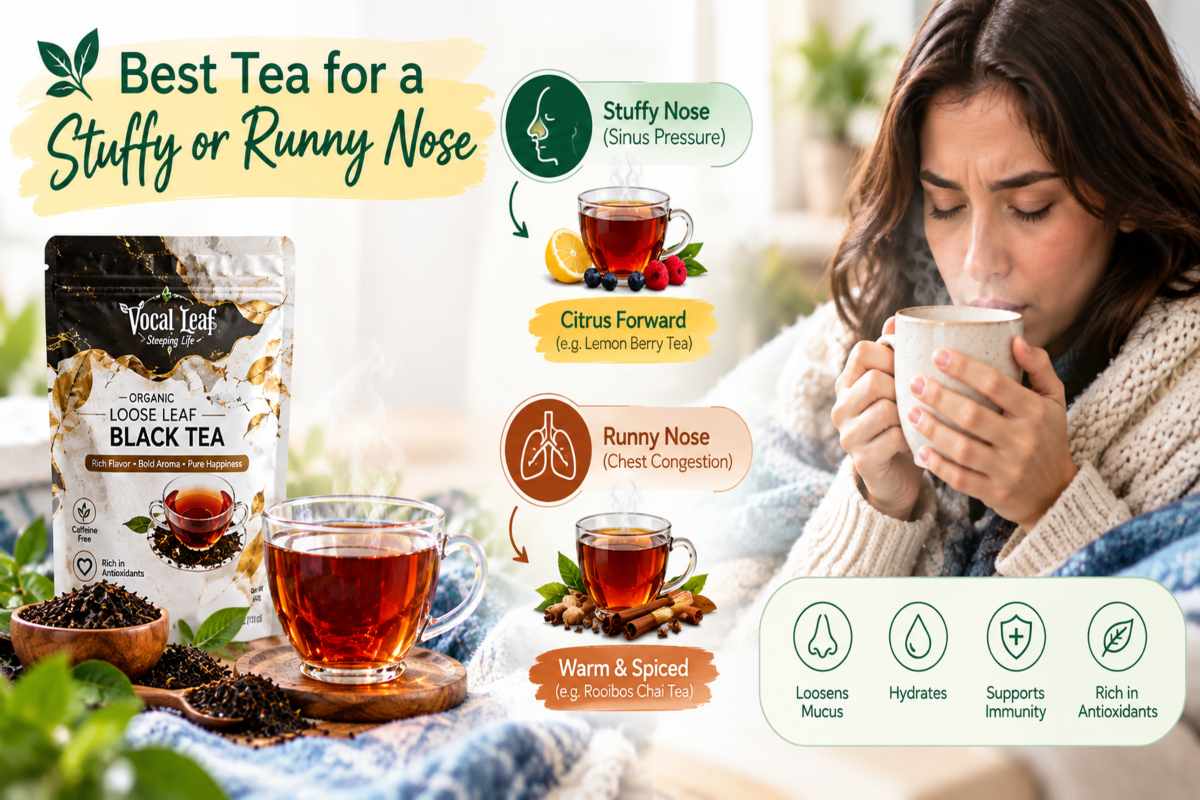
A head cold and a chest cold call for slightly different cups, since the first sits in your sinuses and the second settles into your airways. For sinus pressure, headache and a runny nose, a brighter, citrus forward tea helps thin mucus and refresh a foggy head. For chest congestion, a warmer, spiced tea works better at loosening tightness and easing coughing. Matching the tea to where the cold actually is makes a bigger difference than reaching for whatever’s closest in the cabinet.

Best for Head Cold Symptoms
When sinus pressure and a runny nose are the main complaints, best tea for head cold relief usually means something citrus forward and steeped hot enough to release steam into your sinuses as you drink. Lemon Berry Dream fits that need well, with lemon peel, lemon oil and freeze dried lemon granules that brighten a foggy head while the steam works on congestion. Drinking it slowly, close to your face, adds a light steam inhalation effect on top of the hydration itself.
Best for Chest Congestion Days
Chest congestion responds better to a warmer, spice forward cup that helps loosen tightness with every sip. Our Organic Rooibos Chai Tea brings cinnamon and warming spices into the mix, which pairs naturally with the deep breathing that comes from drinking something hot. A slow, steady cup, rather than a fast gulp, gives the warmth more time to work on chest tightness.
Best Tea for a Stuffy or Runny Nose
The best tea for stuffy nose relief is one steeped hot enough to release steam, since inhaling that steam while you sip helps loosen mucus and open blocked sinuses. The same holds true for a runny nose, warmth and steady fluid intake help thin mucus so it drains rather than pools, which is part of why staying hydrated is one of the most consistently recommended steps for cold symptoms. A cup held close to your face, breathed in slowly before each sip, does more for a stuffy nose than the tea itself.
Warming Blends for Sinus Pressure
For sinus pressure specifically, a robust, full bodied tea tends to feel more effective than a light one, since the deeper warmth carries more steam with each sip. Our Organic Loose Leaf Black Tea brews strong and hot, making it a solid choice when sinus pressure is the main complaint. Sipping it slowly over 10–15 minutes, rather than drinking it quickly, gives the steam more time to work on congestion before the cup cools.
What to Drink When You are Sick Beyond Tea
Tea is one of the best things to drink when you are sick, but it works best alongside plain water rather than in place of it. The goal is steady fluid intake throughout the day, not just a hot cup here and there. Broth based soups and diluted juice are good additions too, since they replace fluids lost to fever or a runny nose while adding a bit of sodium and vitamin C. Even a small drop in fluids, as little as 1–2%, is enough to bring on a headache, which is why spacing drinks out every hour or two matters more than the total volume in any single sitting.
Alternating tea with water keeps you from getting “hydration fatigue”, a hot mug is easy to look forward to, but a body fighting off a cold needs fluids in a steady stream all day, not concentrated in a couple of cups. Room temperature water between cups of tea is an easy way to keep that intake going without overloading on caffeine if you are drinking Loose Leaf Black Tea throughout the day.
Best Tea for Cold and Flu Season
The best tea for cold and flu season isn’t a single cup reached for once symptoms hit, it’s a daily habit that keeps you hydrated and calm through the months when colds spread easiest. Cold weather, closed indoor spaces and dry air all make it easier for viruses to spread and for your throat and sinuses to get irritated, which is why a consistent tea routine matters more in fall and winter than any other time of year. A steady habit built before you’re sick does more for immune support than a strong cup after symptoms already show up.

Building an Immune Support Tea Routine
A simple immune support routine is one cup at a consistent time each day, evening works well, since it’s also when stress and poor sleep can leave you more susceptible to catching whatever’s going around. Vanilla Bliss is a good fit for that evening slot, offering a calming, caffeine conscious cup that supports rest without disrupting sleep. Since sleep quality plays a real role in how well your body fights off illness, a wind down tea like this pulls double duty during cold and flu season.
How Often Should You Drink Tea When You Have a Cold
A good rule of thumb is 3 to 5 cups a day while you are actively sick, spaced a few hours apart so the warmth and hydration keep working steadily rather than in one concentrated dose. That range gives you enough fluid intake to matter without overloading on liquid right before bed or crowding out plain water and meals. Fewer than that and you lose the steady steam and hydration effect that makes tea useful for a cold in the first place; more than that and you’re often just adding volume without adding benefit.
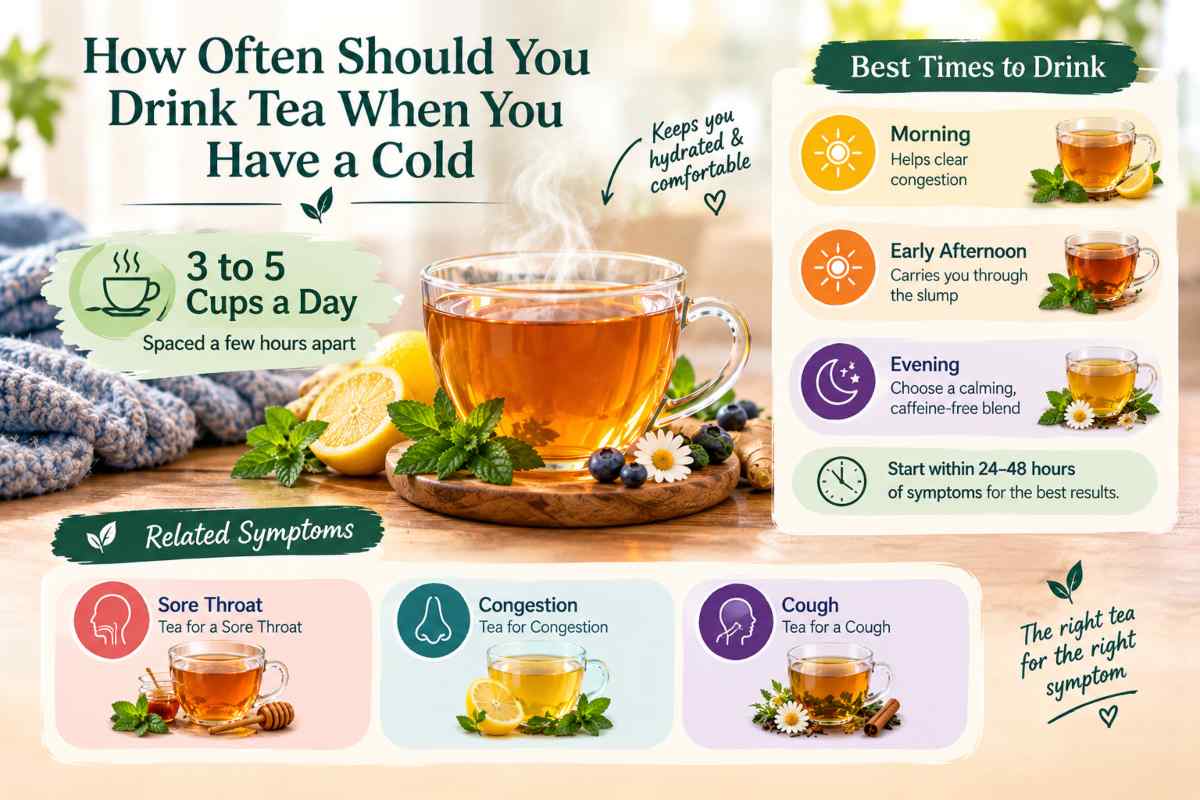 Timing matters as much as the total count. A cup first thing in the morning helps clear overnight congestion, one in the early afternoon carries you through the slump when symptoms often feel worse and an evening cup, something calming rather than a robust, caffeinated blend, supports the rest your body needs to recover. Starting this routine within the first 24 to 48 hours of symptoms tends to make the biggest difference, since that is the window where warmth and hydration have the most to work with before congestion fully sets in.
Related Symptoms
A cold rarely shows up as just one symptom, if a scratchy throat, ongoing congestion or a lingering cough is bothering you more than general cold symptoms, it’s worth looking at the tea best suited to that specific issue rather than a general cold remedy. Each of these responds a little differently to warmth and steeping time, which is why a dedicated approach tends to work better than treating every symptom the same way.
If a sore throat is the main complaint, Tea for a Sore Throat covers what soothes throat irritation specifically. For ongoing chest or sinus congestion beyond the first day or two of a cold, Tea for Congestion breaks down what helps mucus clear. And if a cough is lingering after other symptoms fade, Tea for Cough covers what eases that specifically.
Conclusion
The best tea for a cold is not one specific blend so much as a habit, warm, hydrating cups spaced through the day, matched to whatever symptom is bothering you most, started as early as possible after symptoms show up. Whether it is a citrus forward cup for a stuffy head, a warming spiced blend for chest congestion or a calming pour before bed to support the rest your body needs to recover, the right tea makes the difference between white knuckling a cold and actually feeling looked after while you get through it. Explore the full lineup at Vocal Leaf to find the cup that fits wherever your cold has settled in.
Frequently Asked Questions (FAQs)
Does tea help with a cold?
Yes, warm tea eases congestion, soothes throat irritation and keeps you hydrated, all of which support your body’s natural recovery. It won’t cure a cold, since colds are viral, but it meaningfully eases how you feel while it runs its course.
Is hot tea good for a cold?
Hot tea is generally more helpful than cold drinks when you’re sick, since the warmth and steam loosen mucus and increase blood flow to the throat and sinuses. Lukewarm tea works too if your throat feels too raw for something very hot.
What is the best tea to drink when sick?
It depends on your main symptom, a citrus forward tea suits sinus pressure, a warmer spiced blend suits chest congestion and a calming blend supports rest in the evening. Matching the tea to the symptom works better than reaching for one blend for everything.
How many cups of tea should you drink with a cold?
Around 3 to 5 cups a day, spaced a few hours apart, keeps hydration and warmth working steadily without crowding out water or meals. Starting this within the first day or two of symptoms tends to help the most.
Can tea replace water when you are sick?
No, tea adds helpful warmth and hydration, but it works best alongside plain water rather than in place of it. Alternating the two throughout the day covers fluid needs more reliably than tea alone.
Top Selling Products





Best Tea for Singers | What Actually Helps Your Voice
If you sing, whether you perform professionally, teach voice lessons, or spend your weekends in rehearsal, you’ve probably wondered whether tea actually does anything useful…

Best Tea for Vocal Cords | Herbs, Hydration and Recovery
If your voice feels tired, strained, or dry, the right tea for your vocal cords can make a real difference, not by healing damaged tissue,…
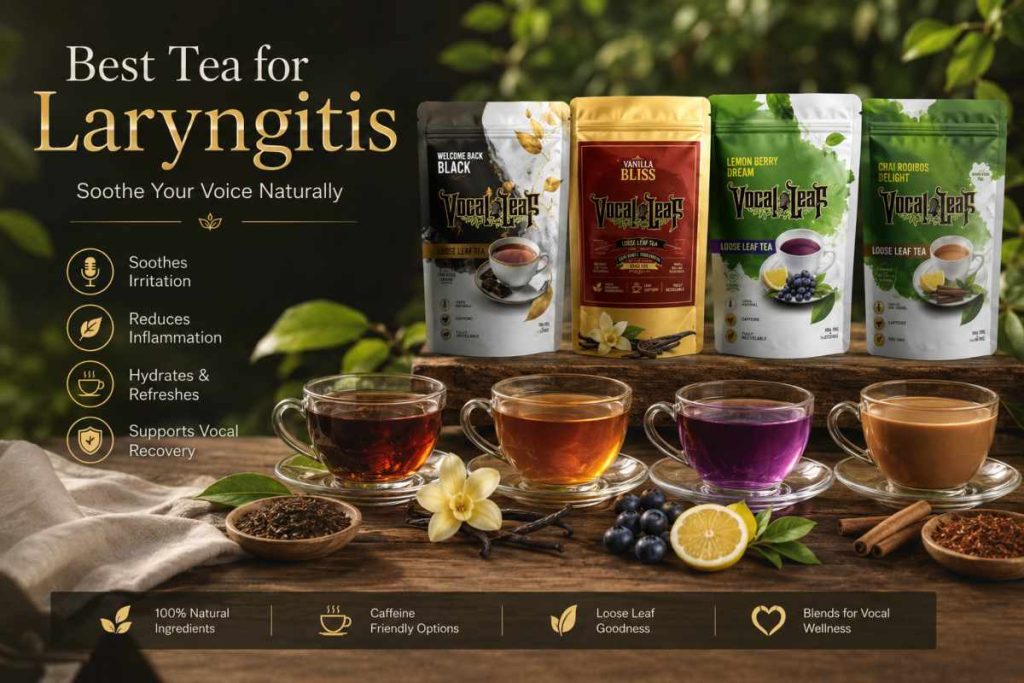
Best Tea for Laryngitis | Soothe Your Voice Naturally
The best tea for laryngitis is a warm, caffeine free loose leaf blend that hydrates the throat and eases the strain on inflamed vocal cords.…

What Is Chai Tea? The Ultimate Guide to Ingredients, Benefits, Types & How It’s Made
If you’ve ever wondered what chai tea is, you’re not alone. It’s one of the most searched beverage questions online, yet the answer is often…

Best Tea for Your Voice | Does It Make You Sound Deeper
What it can do is change how your voice feels and sounds in the moment, which is where most of the confusion starts. If you…

The Best Tea for Performers & Speakers, And Why Your Voice Deserves Better
You spend hours rehearsing the words. You perfect the tone, the breath, the timing. But then you reach for whatever is nearby, a cup of…
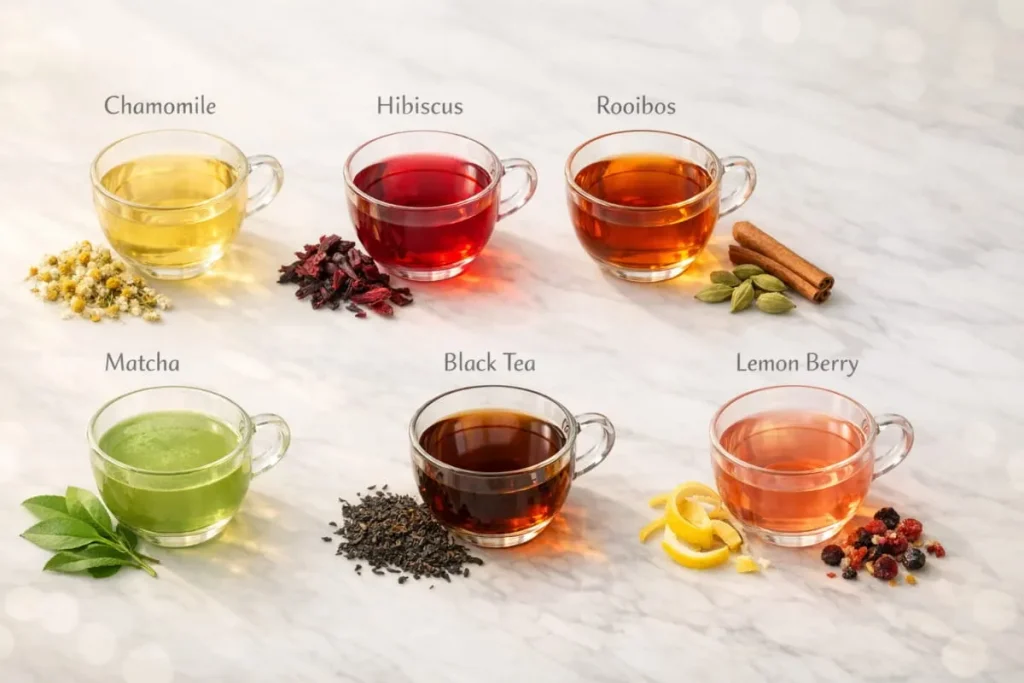
Best Tea for Stress Relief | Calming Loose Leaf Blends
Stress is something everybody carries. It shows up in tight shoulders, restless nights, and a mind that won’t quiet down after a long day. And…

Best Tea for Dry Throat | The Teas That Help and the Ones That Hurt
The best teas for a dry throat are caffeine-free herbal blends, teas with no tannins to strip moisture from the throat lining and no caffeine…

Best Teas for Acid Reflux, Heartburn and GERD
Acid reflux doesn’t just cause heartburn. If you have searched for tea good for acidity, you are asking the same question, acidity and acid reflux…

Best Morning Tea for Energy and Focus Without Coffee Crash
The best tea to drink in the morning is black tea if you want steady, coffee level energy without the crash, rooibos chai if you…
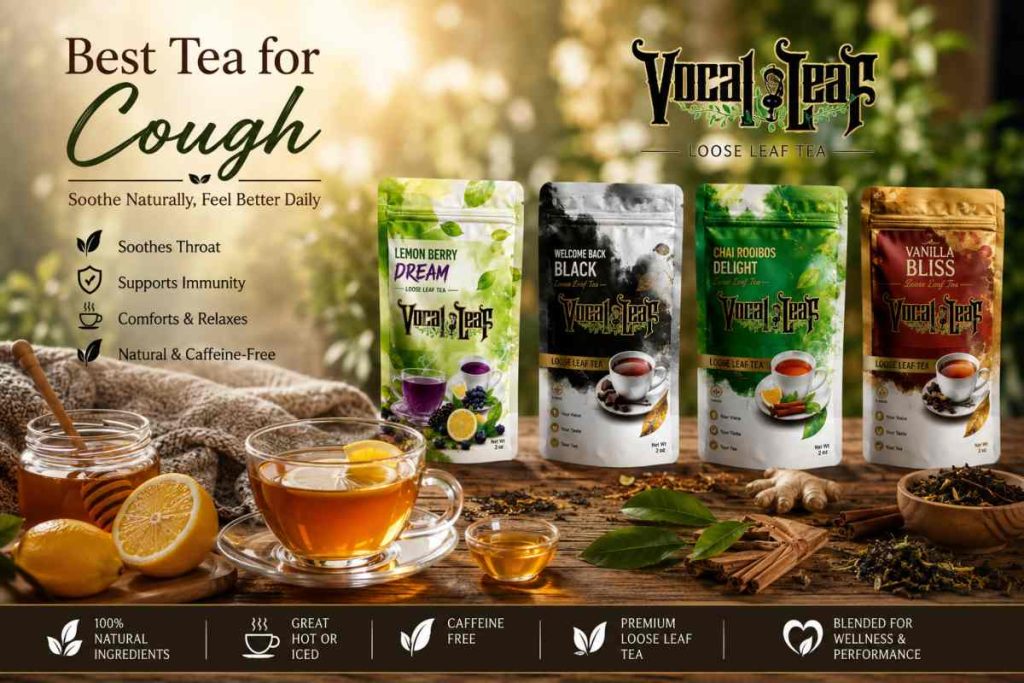
Best Tea for Cough | The Complete Guide to Soothing Relief
The best tea for cough relief is a warm, hydrating blend that soothes irritated throat tissue while easing the reflex that triggers coughing in the…

Best Teas for Inflammation | Guide to Nature’s Most Powerful Anti-Inflammatory Herbs
The best tea for inflammation depends on where and how inflammation is affecting you. For systemic and gut inflammation, rooibos and black tea offer daily…