
Caffeine Free Tea for Voice Professionals | What It Means

Caffeine free tea is widely misunderstood, and for voice professionals, that confusion has real consequences. Many singers, speakers, and performers reach for herbal tea before a performance without realizing that not all caffeine free options are equal, and some may actually work against vocal clarity.
True caffeine free tea is made from plants that never contained caffeine to begin with. Unlike decaffeinated tea, which starts as a traditional tea leaf and undergoes chemical processing to strip most of its stimulant content, naturally Caffeine Free herbal tea delivers zero stimulants from the start. No jitters. No elevated heart rate. No tension in the muscles that support your voice.
For anyone who relies on their voice professionally, that distinction matters. Caffeine is a known vasoconstrictor and diuretic; it tightens blood vessels, increases fluid loss, and can dry out the delicate tissue lining your throat and vocal cords. Choosing a naturally Caffeine Free loose leaf tea eliminates that risk while still delivering the warmth, hydration, and botanical compounds your voice needs most.
At Vocal Leaf, every Caffeine Free blend is naturally decaffeinated, never chemically processed, so what reaches your cup is pure plant benefit, nothing removed or altered. In this guide, we’ll explain exactly what Caffeine Free tea means, how it differs from decaf, what benefits it offers for your voice and overall health, and which Vocal Leaf blends are worth keeping in your pre-performance routine.
What Is Caffeine Free Tea?
Caffeine Free tea is a beverage made from plants that naturally contain no caffeine, typically herbs, flowers, fruits, or roots, rather than traditional tea leaves. Because these plants never contained caffeine to begin with, nothing needs to be removed or chemically processed before they reach your cup.
This matters more than most people realize. Traditional teas, black, green, white, and oolong, all come from the Camellia sinensis plant, which produces caffeine as a natural compound. Herbal infusions come from an entirely different botanical family, which is why they carry none of that stimulant load. For voice professionals, especially, that botanical difference is the reason Caffeine Free tea supports hydration and vocal clarity in a way that even lightly caffeinated teas cannot.
Caffeine Free Tea Meaning
The term caffeine free tea describes any drink made from herbs, roots, flowers, or fruit that contains no naturally occurring caffeine. These beverages are technically called tisanes, plant-based infusions that are not derived from the tea plant, though the Word tea is widely used in everyday language to refer to them.
The more important distinction is between Caffeine Free and decaffeinated. Decaf tea begins as a conventional tea leaf and undergoes a processing method to strip out most of its caffeine, though not all of it. Caffeine free tea never had caffeine to remove. That difference in origin is what makes naturally Caffeine Free options the more reliable choice for anyone avoiding stimulants entirely.
Is Tea Caffeine Free?
Not automatically. Any tea made from Camellia sinensis, including black, green, white, and oolong, contains caffeine by nature, regardless of how lightly it is brewed. Caffeine levels vary by type and steep time, but no traditional tea is naturally stimulant-free.
The only teas that qualify as truly caffeine free are those made entirely from non-Camellia sinensis plants: herbal infusions. If the label does not say herbal or naturally caffeine free, assume the tea contains caffeine unless it has been decaffeinated.
Can Tea Be Caffeine Free?
Yes, but only through one of two routes. The first is a plant-based herbal blend that contains no caffeine because its source plants never produced it. The second is a decaffeinated tea, which starts as a traditional tea leaf and undergoes processing to significantly reduce its caffeine content, though small trace amounts typically remain.
For anyone who needs zero caffeine, whether for vocal performance, sleep, pregnancy, or caffeine sensitivity, naturally Caffeine Free herbal tea is the only option that reliably delivers a 0 mg cup every time.
Is There a Caffeine Free Tea?
Yes, and the category is far broader than most people expect. Any herbal blend made from plants outside the Camellia sinensis family qualifies, including a wide range of flavors from bright and fruity to warm and earthy. Vocal Leaf’s Caffeine Free range is built entirely around this principle: blends like Lemon Berry Dream Tea, Organic Rooibos Chai, and Vanilla Bliss are naturally caffeine free, not chemically decaffeinated, making them particularly well-suited for singers, speakers, and performers who need reliable, stimulant-free hydration before and after voice work.
Caffeine Free Tea for Singers and Voice Professionals
Caffeine free tea matters most for singers, speakers, and performers who can not afford throat dryness or vocal tension before going on. Vocal Leaf Lemon Berry Dream and Organic Rooibos Chai deliver hydration with zero stimulant load, so there is no vasoconstriction pulling moisture from the vocal folds pre show. Vanilla Bliss works the same way post-performance, supporting recovery without any compound that disrupts sleep. For a voice professional, caffeine free is not a preference, it is a performance variable.
Why This Distinction Matters for Your Voice
Caffeine is both a vasoconstrictor and a mild diuretic. Research suggests even moderate caffeine intake, as little as 200 mg, can measurably reduce saliva production, which directly affects vocal fold lubrication. For a professional voice user performing or recording, that level of dryness has audible consequences.
Choosing a naturally caffeine free tea removes that variable entirely. No chemical residue, no trace stimulant, no risk of tension in the muscles surrounding the larynx. Just clean botanical hydration in a form that the voice responds well to.
Caffeine Free vs Decaf Tea: What’s the Difference?
Caffeine Free and decaffeinated are not the same thing, and for anyone carefully managing their stimulant intake, the difference is worth understanding. Caffeine Free tea is made from plants that never contain caffeine. Decaf tea is made from traditional tea leaves that have had most of their caffeine chemically removed, with a small but measurable amount always remaining.

That last point is where most of the confusion lies. The FDA allows decaffeinated products to retain trace caffeine, and most decaf teas contain between 1 and 5 mg per cup as a result. For the average person, that residual amount is insignificant. For a singer managing vocal inflammation, a pregnant woman, or someone with genuine caffeine sensitivity, it is not.
How the Caffeine Numbers Actually Compare
The gap between beverage types is wider than most people expect:
Only the bottom row delivers a genuinely stimulant-free cup. Every other option carries some degree of caffeine, whether naturally present or residual from processing.
Is Decaf Tea Caffeine Free?
No. Decaffeination is a reduction process, not an elimination process. Depending on the method used (CO₂ extraction, water processing, or solvent-based methods, the amount of caffeine retained varies, but it is never zero. For most people, this is a non-issue. For voice professionals who need consistent, reliable hydration without any stimulant effect on the laryngeal muscles or salivary glands, that residual amount matters.
The Taste Difference
Decaf tea preserves the flavor profile of the original leaf; it tastes close to conventional black or green tea, though processing can slightly reduce its depth and astringency. If your goal is to replicate the taste of traditional tea with less stimulant, decaf is a reasonable compromise.
Naturally, Caffeine Free tea tastes entirely different because it comes from entirely different plants. The flavor depends on the botanical source; some blends are smooth and earthy, others are bright and fruit-forward. Vocal Leaf’s caffeine free range spans both ends of that spectrum: Vanilla Bliss and Organic Rooibos Chai Tea offer warmth and depth, while Lemon Berry Dream delivers a lighter, fruit-forward cup, all naturally caffeine free, never chemically decaffeinated.
Which One Should You Choose?
If you want a familiar tea flavor with significantly less caffeine, decaf is a practical option. If you need zero stimulants for vocal performance, sleep quality, pregnancy, or caffeine sensitivity, naturally Caffeine Free herbal tea is the only option that actually delivers that guarantee. There is no processing residue to account for, no regulatory threshold to work around. The caffeine was never there to begin with.
What Teas Are Naturally Caffeine Free?
Any tea that is not made from the Camellia sinensis plant is naturally caffeine free. That single botanical boundary is all that separates a stimulant-free cup from one that contains caffeine, not the color of the tea, not whether it is organic, and not how lightly it is brewed.
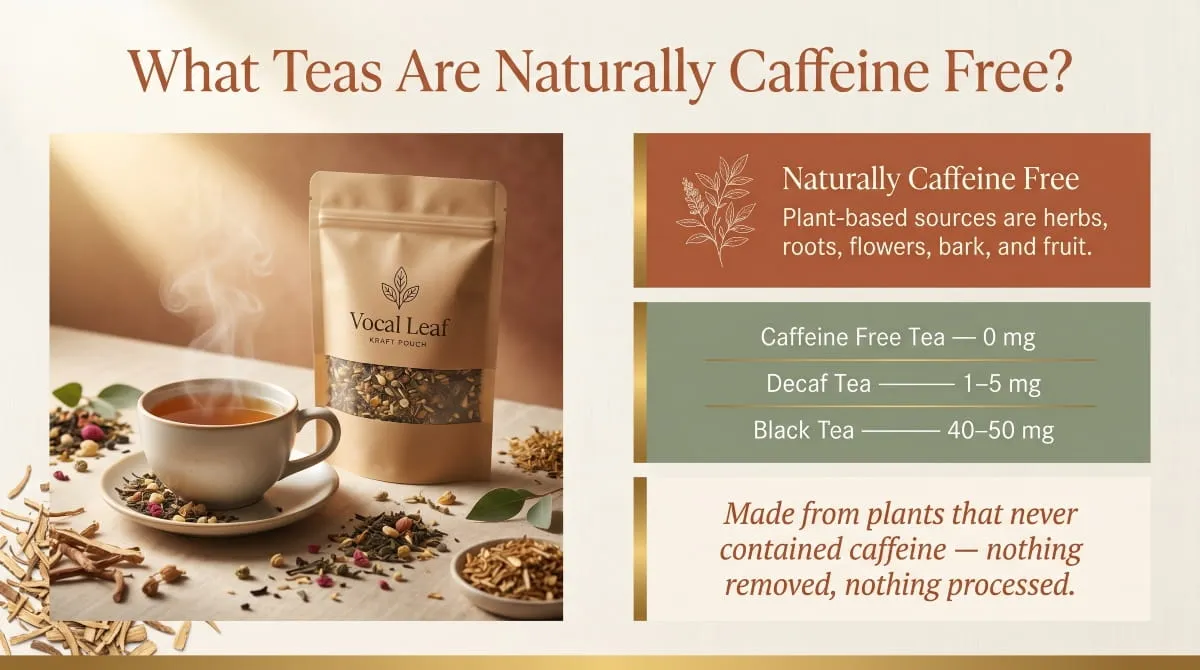
Traditional black, green, white, and oolong teas all come from Camellia sinensis and naturally contain caffeine. Herbal infusions, technically called tisanes, come from an entirely separate family of plants and contain zero caffeine because their source plants never produced it.
Which Teas Are Caffeine Free?
The category is broader than most people expect. Any blend made from herbs, roots, flowers, bark, or fruit qualifies, provided no Camellia sinensis leaf is included. The flavor range is equally wide, from smooth and earthy to bright and fruit-forward, which is why naturally Caffeine Free tea is a genuinely versatile category rather than a niche compromise.
Vocal Leaf’s caffeine free range is built entirely on this botanical principle. Every blend is sourced from plants that are naturally stimulant-free, never chemically decaffeinated, so the cup you brew contains exactly what the plant provides and nothing that had to be processed out. Lemon Berry Dream offers a bright, fruit-forward profile. Organic Rooibos Chai delivers warmth and depth. Vanilla Bliss sits at the smooth, calming end of the spectrum. All three are naturally Caffeine Free and particularly well-suited for voice professionals who need reliable hydration without any stimulant effect on the vocal tract.
One Clarification Worth Making
White tea, green tea, and black tea are not Caffeine Free, even when labeled organic, single-origin, or minimally processed. Organic certification describes farming methods, not caffeine content. The caffeine in these teas comes from the plant itself and cannot be removed by how the leaf is grown or dried. Only herbal blends made entirely from non-Camellia sinensis plants qualify as genuinely caffeine free.
If zero stimulant intake is the goal, whether for vocal performance, sleep, pregnancy, or caffeine sensitivity, the only reliable choice is a naturally Caffeine Free loose-leaf tea made from botanicals that never contained caffeine to begin with.
Is Caffeine Free Tea Good for You?
Yes, Caffeine Free tea is good for you, and for voice professionals in particular, it offers benefits that go beyond general wellness. Because it contains no stimulants, it hydrates without the vasoconstriction, fluid loss, or laryngeal tension that caffeine can cause. That makes it one of the most practical daily beverages for anyone who depends on their voice.

Health Benefits
The benefits of Caffeine Free herbal tea come from the plant compounds in each blend, antioxidants, flavonoids, and polyphenols that support the body in different ways depending on the botanical source. Research published in the Journal of Human Nutrition and Dietetics found that regular herbal tea consumption was associated with improved antioxidant status and reduced markers of oxidative stress, the same inflammatory process that contributes to vocal fatigue and tissue irritation in high-use voice professionals.
At a practical level, the benefits most relevant to voice health are:
- No stimulant effect on the cardiovascular or nervous system, which means no elevated heart rate, no muscle tension around the larynx, and no interference with the fine motor control that singing and speaking require
- Genuine hydration contribution, because there is no caffeine to trigger mild diuretic fluid loss, every cup counts toward the mucosal hydration that keeps vocal folds supple and responsive.
- Plant compounds that support calm and reduce the cortisol-driven tension that often affects voice quality under performance pressure
Vocal Leaf’s caffeine free blends are formulated around exactly these principles. Organic Rooibos Chai is rich in polyphenols and completely stimulant-free. Vanilla Bliss supports evening wind-down without any compounds that would interfere with sleep quality or next-day vocal recovery. Lemon Berry Dream offers antioxidant-forward hydration that works equally well before a performance or after one.
Is Caffeine Free Tea the Same as Drinking Water?
Not exactly, and the difference works in your favor. Plain water hydrates, but it delivers nothing beyond fluid. Caffeine Free herbal tea hydrates and delivers bioactive plant compounds that water cannot. For vocal health specifically, the warmth of a brewed herbal tea also supports blood flow to the throat and helps relax the surrounding musculature, unlike cold water.
That said, herbal tea works best as a complement to adequate water intake rather than a replacement for it. Most voice professionals benefit from treating Caffeine Free tea as their hot beverage of choice while maintaining steady water intake throughout the day.
How Much Is Too Much?
For most healthy adults, three to five cups of naturally Caffeine Free herbal tea per day is a reasonable and well-tolerated amount. Beyond that, the limiting factor is not caffeine; it is the concentration of whatever botanicals are in the blend. High volumes of any single herbal ingredient over an extended period can interact with certain medications or affect blood pressure in sensitive individuals, so rotating between different blends is a sensible practice.
Anyone pregnant, managing a chronic condition, or taking prescription medication should consult a healthcare professional before making herbal tea a significant part of their daily intake. The absence of caffeine does not make every botanical compound neutral in every context.
Is Caffeine Free Tea Safe During Pregnancy?
Yes, naturally caffeine free herbal tea is generally considered a safe way to stay hydrated during pregnancy, since it carries none of the stimulant or diuretic effects of caffeinated tea. Vocal Leaf’s caffeine free blends, including Vanilla Bliss and Organic Rooibos Chai, contain zero caffeine because they’re made from plants that never produced it. As with any dietary change during pregnancy, check the ingredient list and confirm with your healthcare provider before making any herbal tea a daily habit. This is the same standard that applies to caffeine sensitivity and vocal performance use elsewhere in this guide.
How Is Caffeine Free Tea Made?
Naturally Caffeine Free tea is not made by removing caffeine; it is made from plants that never contained caffeine to begin with. That single fact explains why it is categorically different from decaffeinated tea, and why it is the more reliable choice for anyone who needs a genuinely stimulant-free cup.
Naturally Caffeine Free Tea
The production process for naturally Caffeine Free herbal tea is straightforward because it involves no chemical stages. Plant material, roots, bark, dried fruit, or botanicals from outside the Camellia sinensis family, is harvested, dried, and cut or blended for brewing. When hot water passes through that material, it extracts flavor compounds, polyphenols, and other plant actives. No caffeine is present in the source plant, so none appears in the cup.
This is how every Vocal Leaf caffeine free blend is made. The Organic Rooibos Chai starts with certified organic rooibos, a plant native to South Africa that naturally produces no caffeine, combined with warming botanicals that support vocal comfort. Lemon Berry Dream and Vanilla Bliss follow the same principle: botanical sources selected for both flavor and function, with zero chemical processing at any stage. Naturally caffeine free, never chemically decaffeinated.
If you are brewing at home, the process mirrors what happens commercially: steep the dried plant material in hot water for five to ten minutes, and the extraction is complete. No additional steps, no residue to account for.
How Decaffeinated Tea Is Made
Decaf tea starts from a different place entirely. Because traditional tea leaves naturally contain caffeine, manufacturers must actively remove it before the product reaches the consumer. Three main methods are used commercially:
The CO₂ process uses pressurized carbon dioxide to selectively extract caffeine molecules while leaving most flavor compounds intact. It is considered the most flavor-preserving method and leaves no chemical residue. The Swiss Water method uses hot water filtration to gradually draw caffeine out of the leaf, which is effective but can reduce the depth of flavor. The ethyl acetate method uses a solvent derived from fruit fermentation to dissolve caffeine. It is widely used, but leaves trace solvent residue in some products.
All three methods reduce caffeine significantly, but none eliminate it. Between 1 and 5 mg typically remains per cup, a small amount by most standards, but meaningful for voice professionals, pregnant women, or anyone with genuine stimulant sensitivity.
Why the Difference Matters
The distinction comes down to origin, not processing. Naturally Caffeine Free tea contains zero stimulant because the plant never produces one. Decaf tea contains reduced stimulants because a chemical or mechanical process removed most of what the plant produced naturally, but could not remove all of it.
For casual caffeine reduction, decaf is a practical option. For vocal performance, consistent sleep quality, pregnancy, or any situation where zero stimulant intake is genuinely important, naturally Caffeine Free herbal tea is the only option that delivers that outcome with certainty.
Caffeine Free Tea: Flavor, Everyday Use, and Practical Questions
Caffeine free tea covers a wider range of flavors and use cases than most people expect. This section addresses practical questions that arise once someone decides to make the switch, from taste differences to tannin content to what parents should know about serving herbal tea to children.
Does Caffeine Free Tea Taste Different?
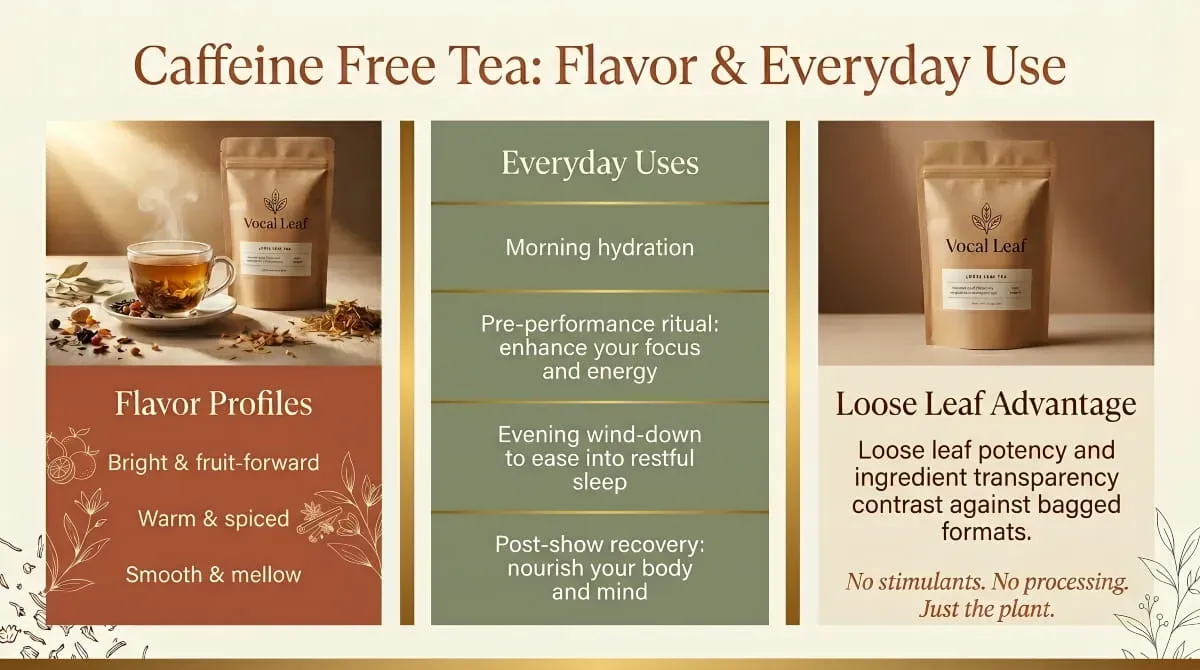
Yes, and the difference is significant, but that is not a drawback. Because naturally Caffeine Free tea comes from botanical sources outside the Camellia sinensis family, its flavor is entirely determined by the plant it comes from rather than by the tea leaf. The result is a much broader flavor spectrum than traditional tea offers.
Vocal Leaf’s caffeine free range reflects that variety deliberately. Lemon Berry Dream is bright and fruit-forward, clean on the palate and well suited to mornings or pre-performance hydration. Organic Rooibos Chai sits at the warm, spiced end of the spectrum, with the kind of depth that makes it a satisfying alternative to a morning coffee ritual. Vanilla Bliss is smooth and gently sweet, the kind of cup that works well in the evening without any compound that would interfere with sleep or next-day vocal recovery.
If you are transitioning from caffeinated tea or coffee, the adjustment is less about tolerance and more about recalibrating expectations. These are not lesser versions of a familiar drink; they are a different category entirely, with their own flavor logic.
Does Caffeine Free Tea Have Tannins?
Traditional tea leaves are naturally high in tannins, the polyphenolic compounds responsible for the astringency and slight bitterness associated with black and green tea. Most naturally Caffeine Free herbal teas contain little to no tannins, which is why they tend to taste smoother, sit more gently on the stomach, and cause less throat dryness than conventional tea. For voice professionals, that lower tannin load is a meaningful advantage. Tannins can contribute to the same mucosal dryness as caffeine, particularly at high concentrations.
Caffeine Free Tea That Tastes Like Coffee
The roasted, bitter depth of coffee comes primarily from the Maillard reaction during roasting, a flavor profile that some botanical blends can approximate without caffeine. Blends built around roasted root ingredients can offer a rich, slightly bitter warmth that satisfies the sensory experience of a coffee-style drink. For voice professionals who have given up coffee for vocal health reasons, this category offers a practical transition point that does not require abandoning the ritual entirely.
Caffeine Free Tea for Kids
Naturally Caffeine Free herbal tea is generally considered appropriate for children in moderation, provided the blend is mild and the ingredients are transparent. The key considerations are concentration, children should drink weaker brews than adults, and ingredient selection. Some botanical compounds that are well tolerated in adults can have stronger effects in smaller bodies. Blends with simple, single-note botanical profiles are the safest starting point. As with any dietary change for a child, consulting a healthcare professional before making herbal tea a regular part of their routine is a sensible practice.
Sugar-Free vs. Caffeine Free: Not the Same Thing
These two labels are frequently confused and refer to entirely different properties. A sugar-free tea can still contain significant caffeine if it is based on black or green tea leaves. A Caffeine Free tea can still contain added sugar if it was sweetened during processing. The only way to confirm both properties are present is to check that the base ingredient is a herbal botanical rather than a Camellia sinensis leaf, and that no sweeteners have been added.
For voice professionals monitoring both stimulant intake and sugar consumption, both of which can affect vocal fold hydration and tissue inflammation, reading the ingredient list rather than relying on front-of-pack labeling is always the more reliable approach.
Does Caffeine Free Tea Interact With Medications?
Yes, and this is one of the most important things to understand about herbal tea that most guides overlook. The absence of caffeine does not make every caffeine free tea pharmacologically neutral. Herbal blends contain active plant compounds, and some of those compounds interact with prescription medications in ways that are clinically meaningful.
This does not make caffeine free tea unsafe for most people. It means that anyone managing a chronic condition or taking regular medication should approach herbal tea the same way they would any botanical supplement, with awareness of what is in the blend and how those compounds behave in the body.
Calming Botanicals and Sedative Medications
Several plant compounds used in herbal blends for their relaxation properties work through mechanisms similar to those of mild sedatives; they modulate the nervous system in ways that can compound the effects of prescription sleep aids, anti-anxiety medications, and other CNS-acting drugs. For most healthy adults, drinking one or two cups in the evening does not have a significant effect. For someone on a prescribed sedative or anxiolytic at therapeutic doses, the additive effect can increase drowsiness beyond what either substance would produce alone.
If you take medication that affects the central nervous system and want to add a calming herbal tea to your evening routine, a brief conversation with your prescribing physician is the sensible first step.
Cardiovascular Botanicals and Blood Pressure Medication
Some herbal ingredients have documented effects on blood pressure, a property that is beneficial in healthy adults but potentially problematic in those already taking antihypertensive medication. The concern is not toxicity but additive effect: combining a botanical that lowers blood pressure with a medication that does the same can push readings lower than either was intended to achieve alone.
If you are on blood pressure medication, check the ingredient list of any herbal blend before making it a daily habit and flag it with your healthcare provider if you are unsure.
Herbal Compounds and Anticoagulants
Certain plant compounds found in herbal teas can affect platelet aggregation and clotting time at high intake levels. For most people, this effect is negligible. For someone taking warfarin or another anticoagulant where precise dosing is clinically important, consistent high intake of specific botanicals may shift clotting metrics enough to affect medication management. This is a dose-dependent concern; an occasional cup is unlikely to be relevant, but three to five cups daily of a concentrated botanical blend is a different situation.
Anyone on anticoagulant therapy should disclose their herbal tea use to their prescribing physician, as they would any other regular supplement.
What This Means in Practice
For healthy adults with no chronic conditions and no regular prescription medications, naturally Caffeine Free herbal tea is safe, well-tolerated, and genuinely beneficial. The interactions described above apply to specific clinical contexts; they are not reasons to avoid herbal tea, but reasons to be informed about what is in the blend you are drinking regularly.
Vocal Leaf’s Caffeine Free range, Organic Rooibos Chai, Lemon Berry Dream, and Vanilla Bliss, uses transparent ingredient sourcing and simple botanical profiles. If you are managing a health condition and want to understand exactly what is in each blend before adding it to your routine, the ingredient list is the right place to start. When in doubt, your healthcare provider is the right person to ask.
Caffeine Free Tea for Anxiety and Caffeine-Sensitive Individuals
For anyone who experiences anxiety, heart palpitations, or caffeine intolerance, the choice of daily beverage is not trivial. Even small amounts of caffeine, amounts that most people would consider negligible, can trigger a cascade of physical responses in sensitive individuals that affect both comfort and performance. Naturally caffeine free herbal tea removes that variable entirely.
Why Caffeine Is Particularly Problematic for Sensitive Individuals
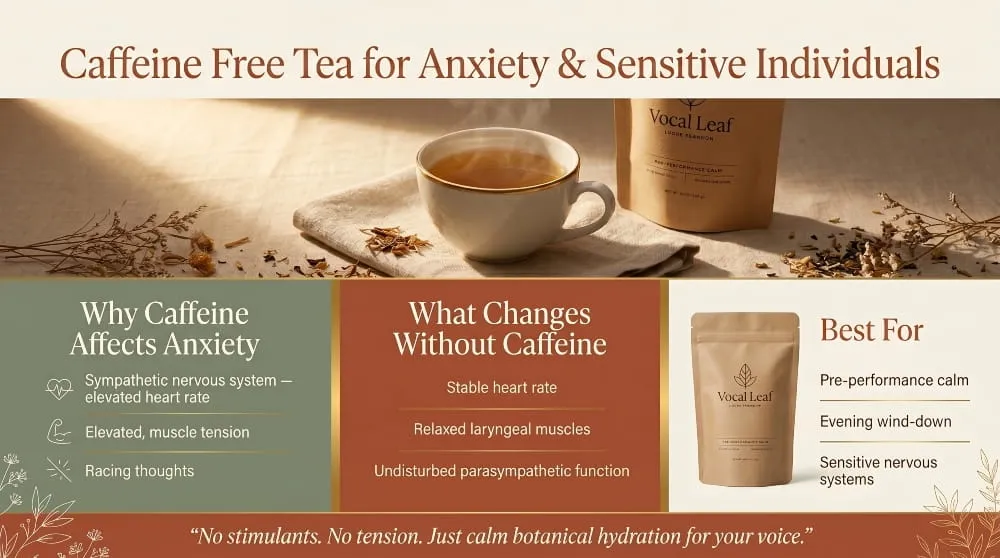
Caffeine works by blocking adenosine receptors in the brain, the receptors responsible for signaling fatigue and promoting calm. In doing so, it elevates cortisol and adrenaline, increases heart rate, raises blood pressure, and activates the sympathetic nervous system. For most people, this produces a manageable alertness effect. For someone with anxiety sensitivity or caffeine intolerance, the same mechanism produces restlessness, racing thoughts, palpitations, and a physiological stress response that can take hours to resolve.
This matters for voice professionals beyond the anxiety dimension. The same adrenaline response that triggers anxiety symptoms also creates tension in the muscles surrounding the larynx, the very muscles that need to be relaxed and well-coordinated for clean, controlled vocal production. A stimulant-free beverage ritual is not just a wellness choice for a performer; it is a performance variable.
What Caffeine Free Tea Offers Instead
Because naturally Caffeine Free herbal tea contains no compounds that activate the sympathetic nervous system, it provides the warmth and ritual of a hot beverage without the physiological escalation. Heart rate stays stable. Muscle tension around the throat and jaw does not increase. The parasympathetic nervous system, the one responsible for calm, recovery, and fine motor coordination, remains undisturbed.
Vocal Leaf’s caffeine free range is built specifically for this context. Vanilla Bliss is formulated for calm and evening use, smooth, gentle, and free of any botanical compound that would interfere with sleep quality or next-day vocal recovery. Organic Rooibos Chai offers depth and warmth with a polyphenol-rich profile that supports the body without stimulating it. Lemon Berry Dream provides a lighter option that works equally well before a performance as after one, hydrating, stimulant-free, and easy on the vocal tract.
Nighttime Use and Sleep Quality
Sleep disruption is one of the most reliable anxiety amplifiers, and caffeine is one of the most reliable sleep disruptors. Its half-life in the body is approximately five to six hours, meaning a cup of caffeinated tea consumed at 3 pm still has half its stimulant load active at 8 pm. For anxious individuals or those with caffeine sensitivity, even that residual amount can delay sleep onset, reduce deep sleep duration, and worsen next-day anxiety.
Naturally, Caffeine Free herbal tea has no half-life to manage. It can be consumed in the evening without affecting sleep architecture, making it a practical tool for anyone using a pre-sleep routine to support recovery, vocal or otherwise.
An Important Caveat
Removing caffeine from the equation resolves the stimulant concern, but it does not make every herbal blend universally appropriate. Some botanical compounds interact with prescription medications, particularly those that affect the cardiovascular or central nervous systems, as covered in the previous section. If you are managing severe anxiety, a cardiac condition, or taking regular medication, the same guidance applies here: check the ingredient list, and consult your healthcare provider if you are unsure whether a specific blend is right for your situation.
For the majority of caffeine-sensitive individuals and voice professionals, naturally Caffeine Free herbal tea is not a compromise; it is a straightforward better choice than any caffeinated or decaffeinated alternative.
Caffeine Free Tea for Acid Reflux and Sensitive Stomachs
For anyone managing acid reflux, GERD, or a sensitive stomach, Caffeine Free tea is a meaningful upgrade over conventional tea, but ingredient selection still matters. Removing caffeine eliminates one significant digestive trigger, while the blend’s botanical composition determines whether the cup soothes or aggravates what remains.
Why Caffeine Is a Specific Reflux Trigger
Caffeine relaxes the lower esophageal sphincter, the muscular valve that prevents stomach acid from traveling upward into the esophagus. When that valve loses tone, even a modest amount of stomach acid can produce the burning sensation associated with reflux. Switching to naturally Caffeine Free tea removes this mechanism entirely, which is why voice professionals with acid reflux are consistently advised to eliminate caffeinated beverages. Acid reflux is one of the most common causes of chronic vocal inflammation, hoarseness, and laryngeal irritation. The throat is the first tissue the rising acid contacts.
Low-Acidity Botanicals and the Voice
Not all Caffeine Free blends are equal when it comes to reflux. Some botanical ingredients are naturally acidic and can irritate the esophageal lining in sensitive individuals, even without caffeine. Others are genuinely low in acidity and supportive of the mucosal lining that protects both the digestive tract and the vocal folds.
Vocal Leaf’s caffeine free range sits at the gentler end of the botanical spectrum. Organic Rooibos Chai is built around rooibos, a naturally low-acidity plant with a smooth, non-irritating profile that is well tolerated by sensitive stomachs and widely recommended in reflux management contexts. Vanilla Bliss follows the same principle: a calm, low-acidity blend with no sharp botanical compounds that would challenge a sensitive esophagus. Lemon Berry Dream has a brighter flavor profile, if you are managing severe reflux, start with a weaker brew and monitor your response, as fruit-forward botanicals vary in acidity depending on concentration.
What to Avoid if Reflux Is Your Primary Concern
Some botanical ingredients that appear in Caffeine Free blends carry their own LES-relaxing properties independent of caffeine, meaning they can trigger the same reflux mechanism that caffeine does, just through a different compound. Anyone managing frequent heartburn or GERD symptoms should approach strongly acidic or LES-active botanical ingredients with the same caution they would apply to caffeine itself.
Brew strength also matters more than most people account for. A mildly brewed cup of an otherwise borderline botanical is often well tolerated, while a strong steep of the same ingredient at double the concentration can produce symptoms. If you are testing a new blend, start with a shorter steep time and a smaller amount of leaf before committing to full-strength daily consumption.
The Vocal Health Connection
For voice professionals, the acid reflux and Caffeine Free tea conversation is not purely digestive; it is directly vocal. Laryngopharyngeal reflux, the form of acid reflux that affects the throat rather than the chest, is estimated to contribute to a significant proportion of chronic hoarseness and vocal fatigue cases in professional voice users. Many performers are unaware they have it because it often presents without the classic heartburn sensation. The consistent daily choice of low-acidity, naturally Caffeine Free tea over caffeinated or acidic alternatives is one of the most practical preventive measures available without medical intervention.
Choosing a blend like Organic Rooibos Chai or Vanilla Bliss as a daily habit addresses both the caffeine trigger and the acidity variable simultaneously, two of the most controllable dietary factors in vocal inflammation management.
Loose Leaf vs Tea Bags: Which Is Better for Caffeine Free Tea?
When choosing Caffeine Free tea, most people focus on flavor or botanical ingredients, but the brewing method you use shapes the quality of what ends up in your cup. Loose leaf and tea bags differ in ways that matter for flavor depth, ingredient transparency, and long-term health considerations.

Flavor and Botanical Potency
Loose-leaf Caffeine Free tea generally produces a stronger, more complex cup. Because the plant material is larger and less processed, essential oils and bioactive compounds have more surface area to infuse during brewing, resulting in more flavor and greater botanical benefits in each steep.
Tea bags typically contain smaller-cut or more finely processed plant material. These brew quickly and consistently, but the resulting cup is often flatter in flavor and lower in the compound concentration that makes herbal tea genuinely useful for voice health, hydration, and relaxation support.
For voice professionals, drinking Caffeine Free tea as a functional daily habit rather than a casual beverage, the potency difference is meaningful, not just a matter of taste preference.
Ingredient Transparency
Loose-leaf tea makes it straightforward to assess what you are actually drinking. The ingredients are visible, intact, and identifiable: dried botanicals, root pieces, and bark, all of which can be examined before brewing. This transparency is one of the core reasons Vocal Leaf is built around loose-leaf rather than bagged formats. Every blend in the range, Lemon Berry Dream, Organic Rooibos Chai, Organic Loose Leaf Black Tea, and Vanilla Bliss, uses whole botanical ingredients with clearly listed sourcing, so you know exactly what is entering your throat before a performance or a recording session.
Bagged teas vary considerably in quality. Higher-grade products use whole or minimally processed ingredients in paper or biodegradable mesh. Lower-grade products can contain finely ground herb material, sometimes called fannings or dust, which brews quickly but delivers a lower concentration of the plant’s active compounds.
Microplastics and Packaging
An increasingly documented concern with certain tea bag formats is the potential release of microplastic particles during brewing. Some pyramid-style and silky mesh bags are manufactured from plastic-based materials that, when exposed to boiling water, can release particles into the cup. Research published in Environmental Science & Technology found that a single plastic tea bag at brewing temperature released approximately 11.6 billion microplastic particles into the water, a finding that has shifted how many health-conscious consumers evaluate the format question.
Loose-leaf tea brewed with a stainless steel or ceramic infuser avoids this issue entirely. For voice professionals who are already making careful choices about what contacts their vocal tract, this is a relevant consideration, not a peripheral one.
Convenience vs Control
Tea bags offer genuine advantages in portability and consistency; they are practical for travel, office use, and situations where brewing equipment is limited. That convenience is real and worth acknowledging.
Loose leaf gives you control that bagged formats cannot match: over-brew strength, steep time, portion size, and the ability to blend botanicals to suit a specific purpose, a lighter pre-performance cup versus a more concentrated post-show recovery brew. For daily functional use, the control compounds over time into meaningfully better outcomes.
Choosing the Right Caffeine Free Tea: A Final Word
Caffeine Free tea is not a compromise category; it is a genuinely superior choice for anyone who depends on their voice, manages caffeine sensitivity, or wants the benefits of a daily tea ritual without the stimulant cost.
This guide has covered what Caffeine Free tea actually means, how it differs from decaf at a botanical and regulatory level, what it offers for vocal health and general wellness, and how to navigate ingredient interactions, reflux sensitivity, and format decisions with confidence. The through-line across every section is the same: understanding what is in your cup, and why it matters for your voice, is the most practical thing a performer can do before reaching for a kettle.
Vocal Leaf’s caffeine free range, Lemon Berry Dream, Organic Rooibos Chai, and Vanilla Bliss, is built on exactly that principle: naturally caffeine free, never chemically decaffeinated, formulated for the specific demands of professional voice use. If you have read this far, you already know more about Caffeine Free tea than most people who sell it. The next step is simply choosing the right loose-leaf tea for your voice and making it a daily habit.
Frequently Asked Questions (FAQs)
Is Caffeine Free Tea Really Caffeine Free?
Yes, naturally caffeine free tea is truly caffeine free because it is not made from the Camellia sinensis plant. Vocal Leaf Organic Rooibos Chai, for example, is sourced from rooibos, a plant that never produced caffeine to begin with. Decaf tea is different, it starts as a conventional tea leaf and may still contain small trace amounts after processing.
Does Caffeine Free Tea Contain Any Caffeine at All?
No, authentic caffeine free herbal tea contains 0 mg of caffeine. The confusion usually comes from mixing up caffeine free with decaf. Decaffeinated tea can retain 1–5 mg per cup even after processing, while naturally caffeine free tea never has any to remove.
Is White Tea Caffeine Free?
No, white tea is not caffeine free. It arrives from the same Camellia sinensis plant as green and black tea and naturally contains caffeine. It typically has less than black tea, but the amount is still measurable unless it’s been specifically decaffeinated.
What Tea Has No Caffeine?
Tea made from herbs, roots, flowers, or fruit, rather than the tea plant, is naturally caffeine free. Vocal Leaf’s Organic Rooibos Chai, Lemon Berry Dream and Vanilla Bliss are all built this way. These are technically herbal infusions and they contain zero caffeine.
Is Drinking Caffeine Free Tea Healthy?
Yes, caffeine free herbal tea can support relaxation, digestion and hydration without any stimulant effect. The specific benefits depend on the botanical blend, but moderate daily consumption is generally well tolerated by most healthy adults.
How Much Caffeine Is in Caffeine Free Tea?
Naturally no caffeine herbal tea contains 0 mg of caffeine per cup. If a product is labeled “decaf” rather than “caffeine free,” it may still carry small trace amounts, typically 1–5 mg per serving.
What is the Difference Between Caffeine Free and Decaf Tea?
Caffeine free tea is produced from plants that never contained caffeine. Decaf tea starts as regular tea and goes through a process to remove most, but not all, of its caffeine. Decaf still carries small trace amounts; naturally caffeine free herbal tea has none.
Top Selling Products
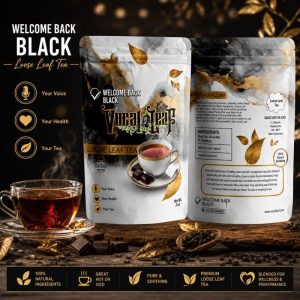
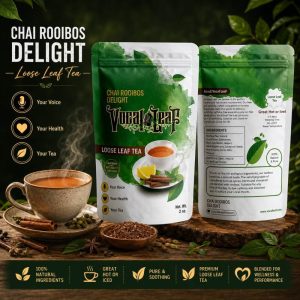
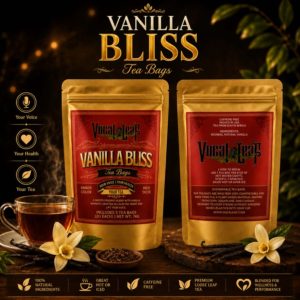
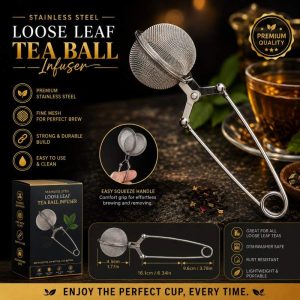


Best Way to Store Loose Leaf Tea (5 Rules That Actually Work)
The best way to store loose leaf tea is in an opaque, airtight container kept in a cool, dark, and dry place, away from heat,…

How to Make Loose Leaf Tea the Right Way Every Method
Knowing how to make loose leaf tea the right way comes down to five simple steps that work for any tea type and any setup,…

Caffeine Free Tea: The Complete Guide to Hydration, Sleep, Energy, and Weight Loss
Caffeine free tea is one of the most practical beverage upgrades a person can make, and one of the most misunderstood. It hydrates you better…
Loose Leaf Chai Tea Recipe | How to Brew It Right Every Time
There is something almost meditative about making chai from scratch. The moment those spices hit the warm milk, cardamom releasing its floral sweetness, ginger building…

Best Teas for Anxiety | Stress Relief Picks and Tips
The best tea for anxiety is one built around L theanine, the calming amino acid found naturally in real loose leaf tea. It works by…

Best Tea Flavors | A Complete Guide by Type and Taste Profile
There are thousands of tea flavors in the world, and yet most people spend their entire lives drinking the same two or three. Not because…
Apple Cinnamon Tea Benefits | What This Warming Blend Actually Does for Your Body
Apple cinnamon tea delivers genuine health benefits, not just comfort. The combination of apple-derived polyphenols and cinnamon’s active compound, cinnamaldehyde, creates a blend that targets…