
You make loose leaf tea by steeping 1 teaspoon of tea leaves in hot water for 3–5 minutes, then straining and serving.
How to Make Loose Leaf Tea the Right Way Every Method

Knowing how to make loose leaf tea the right way comes down to five simple steps that work for any tea type and any setup, teapot, infuser or cup. Done right, loose leaf tea delivers better flavor, aroma and quality than tea bags. For singers, speakers, teachers and anyone who depends on their voice, that difference matters more than most people realize. Knowing how to make loose leaf tea correctly means getting the full benefit from every cup: cleaner hydration, gentler extraction, and no fillers or additives that can irritate a sensitive throat. Whether you are brewing black, green, herbal, or oolong tea, the method is the same: consistent, straightforward, and easy to repeat.
This guide explains how to make tea with loose leaf tea using practical steps that work for any setup, teapot, infuser, or cup. If you have ever wondered how to make loose leaf tea the right way, this article answers those questions directly. By the end, you will know exactly what tools to use, how much tea to measure, and how long to steep for results that taste as good as they perform.
What Do You Need to Make Loose Leaf Tea
To make loose leaf tea, you need loose tea leaves, hot water, a brewing vessel, and a strainer. These basics are all it takes, and for voice professionals, keeping the setup simple also means keeping the brew clean, with no additives or processing that can compromise a sensitive throat.
Here is what you need to make loose leaf tea at home:
Loose leaf tea: High-quality leaves suited to your preference, black, green, oolong, white, or herbal tea. Whole leaves brew cleaner and gentler than the broken-leaf dust found in most tea bags.
Fresh water: Clean, filtered water produces better taste and consistent results. For singers and speakers, filtered water also avoids the mineral aftertaste that tap water can leave in the throat.
A kettle or heat source: Used to bring water to the right temperature for the tea type. Precise temperature matters, too hot damages delicate leaves and increases tannins that can dry the throat.
A brewing vessel: A teapot, mug, or cup large enough for the leaves to expand fully. Restricted leaves mean uneven extraction and weaker flavor.
A strainer or infuser: A mesh infuser, fine strainer, or built-in teapot filter keeps the leaves out of the cup. A clean, particle-free brew is especially important for anyone performing or presenting the same day.
These five items cover every brewing method. With the right tools in place, loose-leaf tea becomes a simple, repeatable, and easy-to-incorporate into a daily vocal care routine.
How to Make the Perfect Cup of Loose Leaf Tea
To make the perfect cup of loose leaf tea, use good-tasting water, measure the tea correctly, control the water temperature, steep for the right amount of time, and remove the leaves entirely once brewing is complete. For voice professionals, each of these steps also protects the throat, the difference between a cup that soothes and one that irritates often comes down to temperature and timing.

Start With Quality Water
Water quality directly affects taste and throat feel. Use fresh spring or filtered water, and avoid untreated tap water, chlorine, and minerals, which dull flavor and can leave a drying residue that singers and speakers notice immediately. Clean water lets the tea’s natural compounds come through without interference.
Choose the Right Brewing Vessel
Use a teapot, gaiwan, mug, or heat-safe cup, and preheat it with hot water before brewing. A vessel with a built-in filter works best. If yours does not have one, use a wide infuser basket or strain when pouring, and avoid small tea balls that pack the leaves too tightly. Restricted leaves mean uneven extraction and a thinner, less effective cup.
Measure the Tea Properly
Use 1 teaspoon of loose-leaf tea per 8 ounces of water as your starting point. Whole leaves need room to expand fully, so give them space; a packed infuser extracts unevenly and often results in a bitter brew. Weight gives the most accurate measurement when consistency matters. This ratio works whether you are making a single cup or scaling up for a full pot.
Use the Correct Water Temperature
Temperature is the most important variable for both flavor and throat comfort. Water that is too hot increases tannin extraction, which creates astringency that coats and dries the throat, the opposite of what a voice professional needs.
- Green or white tea: 170–185°F
- Oolong tea: 185–210°F
- Black tea: just off boiling
- Pu-erh: full boil for ripe, slightly below boil for raw
Getting the temperature right protects delicate leaf compounds and keeps the brew smooth rather than sharp.
Control Steeping Time
Steep by taste, not by color. Start checking at 1 to 2 minutes and remove the leaves as soon as the flavor feels balanced, full, but not sharp. Over-steeping releases excess tannins that make tea taste dry and astringent, which is particularly noticeable for anyone using their voice the same day. Many loose-leaf teas support multiple infusions; increase steep time slightly with each infusion to maintain strength.
Adjust and Experiment
Every tea brews a little differently, and personal preference plays a role. Adjust one variable at a time, temperature, time, or leaf ratio, and pay attention to how the flavor shifts. Watch the leaves unfurl in the water. Notice the aroma as the cup cools. The more deliberately you brew, the more consistently you get a cup that works for both taste and vocal comfort.
How Much Loose Leaf Tea to Use
Use 1 teaspoon of loose-leaf tea per 8 ounces of water as your standard starting point. This ratio produces balanced flavor and consistent strength for most tea types. For voice professionals, it also matters for a practical reason: too much tea means higher tannin concentration, which can create a drying, astringent feeling in the throat that performers and speakers want to avoid.
For a Single Cup
For 1 cup, measure 1 teaspoon of loose-leaf tea into 8 ounces of hot water. This gives the leaves enough room to expand fully and release flavor evenly without tipping into bitterness. It is also the most controllable format, easy to taste, easy to adjust, and easy to repeat.
For a Gallon
For a full gallon, use 12 to 16 teaspoons of loose-leaf tea. A gallon equals 16 cups, but scaling down slightly from the one-teaspoon-per-cup rule prevents over-extraction during the longer steeping time required by large batches. Start with 12 teaspoons, taste after steeping, and increase by 1 teaspoon for the next batch if you prefer a stronger brew.
This is particularly useful for singers and speakers preparing tea ahead of a rehearsal, class, or performance; a batch brewed at the right ratio stays smooth and easy on the throat throughout the day.
Key Measuring Tips
Large or rolled leaves take up more volume than their weight suggests; use the same weight as a guide rather than relying on teaspoon volume alone. Finely cut or broken leaves pack more tightly and extract faster, so use slightly less to avoid bitterness. And when you want a stronger cup, adjust the steeping time rather than adding extra leaves; more leaves raiseleaves raise tannin extraction and strength, while longer steeping gives you depth without the sharpness.
The right ratio keeps every cup clean, balanced, and consistent, whether you are brewing one cup before a morning practice or a full pitcher for the day ahead.
How to Make Loose Leaf Tea by Type
Different tea types require specific water temperatures and steeping times, and getting these right matters beyond flavor alone. For voice professionals, the distinction between tea types is also practical: some teas are naturally higher in tannins, some are caffeine-free, and some are better suited to mornings, pre-performance windows, or evening recovery. Using the correct method for each tea preserves its flavor, aroma, and the properties that make it useful in the first place.

How to Make Loose Leaf Green Tea
Heat water to 170–180°F, well below boiling. Add 1 teaspoon per cup, pour slowly over the leaves, and steep for 2–3 minutes. Strain immediately once the time is up. Green tea is the most temperature-sensitive of the common types: boiling water destroys the delicate compounds that give it its clean, slightly sweet character, replacing them with bitterness. For singers and speakers, green tea brewed at the right temperature is one of the gentler caffeinated options, smooth rather than sharp, and easy on the throat.
How to Make Loose Leaf Black Tea
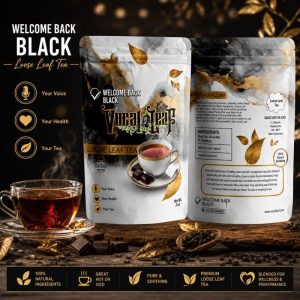
Heat water to a full boil (200–212°F). Add 1 teaspoon per cup and steep for 3–5 minutes, then strain completely. Black tea produces a strong, full-bodied cup with more caffeine and higher tannin content than green or white tea. It is best suited to mornings or situations where alertness matters more than throat sensitivity. Vocal Leaf Organic Loose Leaf Black Tea brews clean and full-bodied, steep toward the lower end of the time range if you prefer a smoother finish.
How to Make Loose Leaf Oolong Tea
Heat water to 185–205°F. Add 1 teaspoon per cup and steep for 3–4 minutes, then strain. Oolong sits between green and black tea in terms of oxidation, caffeine, and tannin levels, making it one of the most versatile options for voice professionals: robust enough to feel satisfying, yet gentle enough not to coat the throat. The leaves unfurl slowly during steeping and release flavor in layers, making oolong one of the best candidates for multiple infusions.
Quick reference
- Green tea: lower temperature (170–180°F), shorter steep (2–3 min), handle carefully
- Oolong tea: medium-high heat (185–205°F), moderate steep (3–4 min), re-steep well
- Black tea: full boil, longer steep (3–5 min), highest tannin and caffeine
Loose Leaf Tea Steeping Time Chart
Use this table as a starting point and adjust based on taste. For stronger tea, extend the steeping time slightly rather than adding more leaves. Extra leaf volume increases tannin extraction and strength, which can work against throat comfort.
| Tea Type | Tea Amount | Water Temperature | Steeping Time | Notes |
|---|---|---|---|---|
| White Tea | 3–4 g | ~180°F | 2–3 minutes | Light flavor, avoid boiling |
| Green Tea | 3–5 g | 170–185°F | 2–3 minutes | Lower heat prevents bitterness |
| Oolong Tea | 3–5 g | 180–210°F | 2–3 minutes | Optional quick rinse before steeping |
| Black Tea | 3–4 g | Just under boiling | 3 minutes | Strong, full-bodied flavor |
| Pu-erh Tea | 3–5 g | 200–210°F | 3 minutes | Brief rinse improves clarity |
| Herbal Tea | 3–4 g | Full boil | 5 minutes | Naturally caffeine-free |
This table shows the standard temperature and steeping ranges for common loose leaf tea types. Use it as a starting point and adjust based on taste.
Tip:Use the same ratios for larger pots by scaling the tea and water together. Adjust the steeping time slightly for stronger tea rather than adding more leaves.
Basic Method: How to Make Loose Leaf Tea at Home
To make loose leaf tea at home, add measured tea leaves to a brewing vessel, pour hot water over them, steep for the correct time, then strain and serve. This method works for all tea types and serves as the foundation for every variation covered in this guide. Master it once, and every other method becomes simple.
Step-by-Step Instructions
1. Measure the tea leaves. Use 1 teaspoon of loose-leaf tea per 8 ounces of water. Accurate measuring keeps tannin levels predictable and flavor consistent, important for anyone brewing for a specific purpose, whether that is a gentle pre-performance cup or a stronger morning brew.
2. Heat the water. Bring fresh, filtered water to the correct temperature for your tea type. Do not guess, temperature is the variable most likely to make the difference between a smooth cup and a bitter one, and for voice professionals, between a brew that soothes and one that dries.
3. Add the tea to the vessel. Place the loose leaves directly into a teapot, cup, or infuser. Give the leaves room; a packed vessel extracts unevenly, often brewing harsher than intended.
4. Pour hot water over the leaves. Submerge the leaves slowly and fully so they expand evenly from the start. Even coverage produces even extraction.
5. Steep for the recommended time. Steep for 2–5 minutes, depending on the tea type. Taste at the lower end of the range and remove the leaves as soon as the flavor feels balanced. Steeping by taste rather than by timer gives you more control and a consistently better result.
6. Strain and serve. Remove the leaves completely using a strainer or infuser. Leaving them in the cup after brewing continues extraction and increases bitterness; always remove them cleanly before drinking.
Why This Method Works
This approach works because it removes every variable that leads to a bad cup, imprecise measuring, wrong temperature, restricted leaves, and over-steeping. It requires no special equipment and produces clean, full flavor every time. For singers, speakers, and anyone treating tea as part of a vocal care routine, the repeatability is the point: a method this consistent means you always know what you are getting before a performance, a class, or a long day of voice use.
Loose Leaf Tea to Water Ratio, Full Reference Guide
The tea-to-water ratio is the single most-asked question about loose-leaf tea, and the answer depends on how much you are making. Getting this right matters beyond flavor: at the right ratio, loose-leaf tea stays smooth and balanced. Too much leaf raises tannin concentration, even with ideal temperature and steeping time, producing a cup that dries the throat and overpowers the natural compounds that make loose-leaf tea worth drinking in the first place.
Use the table below as your starting reference for any batch size, then adjust the steeping time, not the leaf quantity, to get more or less strength.
Loose Leaf Tea Ratio by Batch Size
| Batch Size | Water Volume | Loose Leaf Tea | Notes |
|---|---|---|---|
| Single Cup | 8 oz | 1 tsp (2–2.5 g) | Standard starting ratio for all tea types. |
| Mug | 12 oz | 1½ tsp (3–3.5 g) | Scale proportionally, do not guess. |
| Large Mug | 16 oz | 2 tsp (4–5 g) | Use a wide infuser to give leaves room to expand completely. |
| Small Pot | 20 oz | 2½ tsp (5–6 g) | Preheat the pot with hot water before adding leaves. |
| Standard Pot | 32 oz | 4 tsp (8–10 g) | Steep toward the lower end of the recommended time range. |
| Per Gallon | 128 oz (1 gal) | 12–16 tsp (24–32 g) | Start at 12 tsp, then increase on the next batch if you want a stronger profile. |
How Much Loose Leaf Tea Per Cup
For a standard 8-ounce cup, use 1 teaspoon of loose-leaf tea, roughly 2 to 2.5 grams by weight. This produces balanced strength for most tea types without pushing tannin levels high enough to create bitterness or throat dryness. If you prefer a stronger cup, steep for 30 to 60 seconds longer rather than adding more leaf.
How Much Loose Leaf Tea Per 8 oz, 12 oz, and 16 oz
The one-teaspoon-per-8-ounce rule scales directly. For a 12-ounce mug, use 1½ teaspoons. For a 16-ounce vessel, use 2 teaspoons. The ratio stays consistent; what changes with larger volumes is the importance of using a wide enough infuser basket, so the additional leaves have room to expand fully. A packed infuser at any batch size extracts unevenly, producing a harsher result than the ratio alone would suggest.
How Much Loose Leaf Tea Per Pot
For a standard 32-ounce teapot, use 4 teaspoons of loose-leaf tea. For a smaller 20-ounce pot, use 2½ teaspoons. Pot brewing gives the leaves the most room to expand of any method, which means even extraction and a clean, full flavor throughout the pot. Preheat the pot with hot water before adding the leaves; a cold vessel lowers the water temperature on contact and disrupts the steeping process.
How Much Loose Leaf Tea Per Gallon
How much loose leaf tea per gallon? Use 12 to 16 teaspoons about 24–32 grams per gallon of water, start at 12 teaspoons for a balanced brew and work up to 16 for something stronger. A gallon equals 16 standard cups, but scaling straight from the one teaspoon per cup rule over extracts at this batch size, which is why the range starts lower.
The longer contact time during gallon brewing draws more from the leaves than a single cup steep does. Starting at 12 teaspoons gives you a clean, balanced result. Taste after steeping and increase to 14 or 16 teaspoons on the next batch if you want more strength. For singers, speakers, and teachers brewing tea in bulk before a long day, this is the most practical batch size. A gallon made at the right ratio stays smooth and consistent throughout the day without the throat-drying effect of an over-concentrated brew.
Measuring by Weight vs. Volume
Teaspoons are a reliable guide for most everyday brewing, but weight gives more consistent results across different tea types. Whole rolled leaves like oolong take up significantly more volume per gram than flat green tea leaves or finely cut black tea. A teaspoon of rolled oolong contains far less actual leaf by weight than a teaspoon of broken black tea, which means the flavor and tannin output of that teaspoon varies more than the measurement suggests.
If you drink the same tea daily and want consistent results every time, a small kitchen scale removes this variable entirely. 2 to 2.5 grams per 8 ounces is the weight equivalent of 1 teaspoon for most tea types. Use this as your baseline and adjust from there based on taste.
Key Ratio Rules
When the cup is too strong, reduce steeping time, not leaf quantity. Removing the leaf changes the flavor profile; shortening the steep reduces intensity while maintaining balance. When the cup is too weak, steep slightly longer before reaching for more leaf. When scaling up to large batches, always start at the lower end of the leaf range and adjust on the next brew; over-extracted large batches are difficult to fix and wasteful to discard.
How to Make Loose Leaf Tea With and Without Special Tools
You can make loose-leaf tea with everyday kitchen items or dedicated tea tools. The method stays the same; what changes is how you keep the leaves out of the cup. As long as the leaves steep freely and are fully removed before drinking, the result is the same.

With and Without a Strainer
To brew with a strainer, steep the leaves directly in your cup or pot, then pour the finished tea through a fine-mesh sieve into a second cup. This removes all leaf particles, producing a clean, clear result.
To brew without a strainer, place the leaves in the cup, steep fully, then pour very slowly; the leaves settle to the bottom and stay behind as the liquid flows out. This works best with larger-leaf teas that sink quickly and cleanly. Finely cut leaves stay suspended longer and are harder to separate.
How to Use a Loose Leaf Tea Infuser
To brew with an infuser, add the leaves to the infuser basket, place it in your cup or teapot, pour hot water over it, and steep. Remove the infuser completely once the time is up; do not leave it sitting in the cup. A wide infuser basket allows full leaf expansion, producing better flavor than a tightly packed tea ball.
To brew without an infuser, add the leaves directly to the vessel and steep fully, then strain or pour carefully. Direct steeping gives the leaves maximum room to expand, which can produce a slightly fuller flavor; the tradeoff is the extra step of separating the leaves after steeping.
Using a Coffee Filter or Tea Ball
To brew with a coffee filter, place the measured leaves in the center of the filter, fold it into a pouch, tie it loosely with a piece of string, and steep as you would a tea bag. This works particularly well for finely cut or broken leaves that are difficult to strain cleanly.
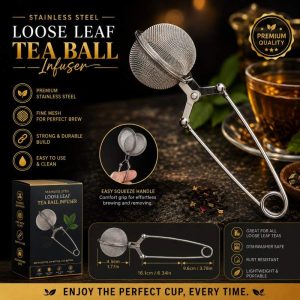
To brew with a tea ball, open the ball, add the leaves, close it securely, and steep in hot water. Leave at least one-third of the interior empty so the leaves have room to expand; a fully packed tea ball restricts movement and produces uneven, often bitter extraction.
Loose-leaf tea does not require special equipment. Any setup that gives the leaves room to steep and makes them easy to remove delivers a clean, well-extracted cup.
How to Make Loose Leaf Tea Using Different Equipment
You can make loose leaf tea with almost any kitchen equipment that heats water and allows the leaves to steep and be removed. The core sequence never changes: measure, steep, strain; only the tool does. For voice professionals who travel, teach, or perform away from home, this flexibility matters: a good cup of loose-leaf tea is never more than a few minutes away, regardless of what equipment is available.
In a Teapot
A teapot is the most natural vessel for loose-leaf tea. Add the measured leaves directly to the pot, pour hot water over them, steep for the correct time, and strain into a cup when done. The larger interior gives leaves ample room to expand, resulting in even extraction and a cleaner flavor. If your teapot has a built-in filter, use it; if not, pour through a fine-mesh strainer placed over the cup.
If you do not have a teapot, a wide-mouthed mug, a heat-safe jar, or any similarly sized container, a wide-mouthed mug or a heat-safe jar will work; any similarly sized container will work just as well using the same steps.
In a Kettle
Most kettles are designed for heating water only, not for steeping. Heat the water in the kettle first, then pour it over the leaves in a separate vessel. If you have a kettle specifically designed for brewing, with a built-in basket or infuser, you can add the leaves before heating, steep once the water reaches the desired temperature, then strain into a cup.
If you do not have a kettle, heat water in a small pot, a microwave-safe container, or any other heat source until it reaches the right temperature for your tea type.
In a Pot
Add water to a saucepan and bring it to the correct temperature for your tea, not a full rolling boil for green, white, or delicate herbal teas. Remove the pot from the heat, add the tea leaves, steep for the recommended time, then strain into a cup. Keeping the pot off direct heat during steeping prevents temperature overshoot, which is the most common reason pot-brewed tea turns bitter.
In a French Press
A French press works exceptionally well for loose-leaf tea. Add the measured leaves to the press, pour hot water over them, place the lid on without pressing, and steep for the correct time. When steeping is complete, press the plunger slowly and evenly, then pour immediately; do not leave the tea sitting against the pressed grounds, or it will continue to extract and turn bitter. The mesh filter strains cleanly and gives the leaves good room to expand.
In a Keurig
Use a reusable K-Cup filled with your loose-leaf tea. Run the machine on the hot water setting rather than the brew cycle to avoid the pressurized extraction designed for coffee. Once the water has passed through, allow the cup to steep for an additional minute before drinking. This method works best with teas that extract quickly, black tea and robust herbal blends, rather than delicate green or white teas, where temperature control matters more.
In a Coffee Maker
Place the loose leaf tea in a paper filter in the basket, run hot water through once, then allow the brewed tea to steep in the carafe for an additional 1–2 minutes before serving. This method is best suited to large batches. Clean the machine thoroughly before use; coffee oils left in the basket and carafe transfer easily and will compete with the tea’s flavor.
In a Microwave or on the Stove
To brew in a microwave, heat fresh water in a microwave-safe cup until it reaches the right temperature for your tea type, add the leaves directly or in an infuser, steep for the recommended time, then strain and drink. Avoid overheating the water; microwaves heat unevenly, and water can reach boiling temperature without appearing to, which can damage delicate teas.
To brew on the stove, heat water in a small pot to the correct temperature, remove from the heat, add the leaves, steep, and strain into a cup. The stove method gives you the most control over temperature of any non-kettle option, which makes it a reliable choice when precision matters.
Every method here produces a proper cup. The equipment changes the experience slightly; a French press pours differently than a teapot, and a stovetop brew gives more control than a microwave, but the fundamentals of good loose-leaf tea remain the same regardless of what you are working with.
How to Make Iced Tea with Loose Leaf Tea
To make iced tea with loose leaf tea, brew the tea at double strength, strain the leaves completely, then cool and serve over ice. The double-strength step is essential, dilution from the ice is unavoidable, and brewing at normal concentration produces a thin, flat result once it hits the cold water. Done correctly, loose-leaf iced tea is cleaner, smoother, and noticeably more flavorful than anything made with tea bags.
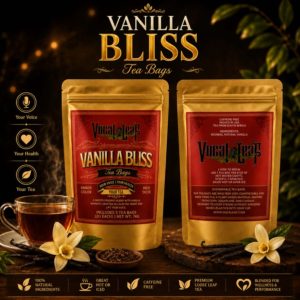
For voice professionals, iced tea made from loose leaf has a practical advantage over store-bought or powdered alternatives: no preservatives, no added sweeteners, and no artificial flavoring that can coat or irritate the throat. Vocal Leaf’s Lemon Berry Dream Tea and Vanilla Bliss both cold brew exceptionally well, smooth, naturally flavored, and easy on the voice in warm weather or during long rehearsal days.

If you are looking for how to make loose leaf iced tea, the methods below cover every reliable approach.
Hot Brew Method
The hot-brew method extracts full flavor quickly and produces the clearest, most consistent results. It is the best starting point if you are new to loose-leaf iced tea.
To hot brew loose-leaf iced tea:
- Use twice the standard amount: 2 teaspoons of loose-leaf tea per 8 ounces of water.
- Heat water to the correct temperature for your tea type.
- Steep for the normal recommended time; do not extend steeping to compensate for dilution, as this increases bitterness rather than strength.
- Strain the leaves completely and immediately.
- Pour the concentrate over ice, or refrigerate until cold, then serve.
The result is bold, clear iced tea without cloudiness. Straining promptly and completely is the step most people skip; any leaves left in contact with the warm liquid will continue to extract, making the final cup sharper than intended.
Cold Brew Loose Leaf Tea
Cold brew is the gentlest brewing method available, and for voice professionals, it is often the best choice for daily hydration. Steeping in cold water over time extracts sweetness and body without pulling the harsh tannins and bitter compounds that hot water releases. The result is a naturally smooth cup that is easy to drink in larger quantities throughout the day.
To cold-brew loose-leaf tea, add 1 teaspoon of loose-leaf tea to 8 ounces of cold, filtered water in a jar or pitcher. Cover and refrigerate for 8 to 12 hours, then strain and serve. There is no temperature to manage and no steeping window to watch; preparation takes about two minutes the night before, and the tea is ready when you need it.
Choosing the Right Method
The hot brew method is best when you want iced tea quickly and prefer a bold, defined flavor. Cold brew is best for daily use, gentle hydration, and teas with delicate or naturally sweet flavor profiles. Sun tea sits between the two, slower than hot brew and faster than cold brew, and is well suited to a warm afternoon when you are not in a hurry.
All three methods work with any loose-leaf tea. If you are specifically brewing for vocal comfort, cold brew is worth making a habit of. The lower tannin extraction and naturally smooth result make it the most throat-friendly option of the three.
Common Mistakes When Making Loose Leaf Tea
Most problems with loose-leaf tea come down to a small number of repeatable errors, and once you know what causes a bad cup, they are easy to avoid. For voice professionals, these mistakes carry an extra consequence beyond flavor: a poorly brewed cup can actively undermine vocal comfort rather than support it.
Using Water That Is Too Hot
Boiling water damages delicate tea leaves, particularly green and white teas, by breaking down the compounds that give them their clean, slightly sweet character. What replaces those compounds is bitterness and astringency, the sharp, drying sensation at the back of the throat that anyone using their voice regularly will notice immediately. Always match water temperature to the tea type, and when in doubt, pull the kettle just before boiling rather than after.
Steeping for Too Long
Oversteeping is the most common reason loose-leaf tea tastes harsh. The longer the leaves sit in hot water past their ideal window, the more tannins and bitter compounds are released into the cup. Color is not a reliable guide here; some teas darken quickly while remaining mild, while others stay light and become intensely astringent. Taste the tea at the lower end of the recommended time range, and remove the leaves as soon as the flavor feels balanced. For voice professionals, a slightly under-steeped cup is always preferable to an over-steeped one.
Using Too Much or Too Little Tea
Too much tea raises the tannin concentration, even when steeped correctly, producing a cup that is harsh and drying, regardless of how carefully you manage the temperature and time. Too little tea produces a weak, flat result with none of the flavor or functional properties that make loose-leaf tea worth drinking. Measure consistently, 1 teaspoon per 8 ounces, and adjust steeping time rather than leaf quantity when you want more strength.
Restricting the Tea Leaves
Leaves that cannot fully expand do not fully extract. A tightly packed tea ball or small infuser forces the leaves to steep in a compressed state, which produces uneven extraction, often bitter at the center and weak at the edges, and none of the layered flavor that whole-leaf tea is capable of delivering. Use a wide infuser basket, steep the leaves directly in the vessel, or choose a teapot with a built-in filter that gives the leaves room to move.
Ignoring Water Quality
Tap water containing chlorine, fluoride, or high mineral content dulls flavor, introduces off-notes, and can leave a drying residue in the throat that filtered water does not. The tea itself may be excellent, but the water undermines it at every cup. Use fresh, filtered or spring water consistently; it is the single easiest upgrade available and makes a noticeable difference from the first sip.
Judging Strength by Color
Color tells you very little about what is actually happening in the cup. Some teas produce deep color within the first minute, while remaining mild and smooth; others stay pale throughout steeping, building significant strength and astringency. Relying on color leads to over-steeping more often than not, because the tea looks ready before it actually is. Taste is the only reliable indicator; use it every time.
Avoiding these six mistakes does not require special equipment or advanced technique. It requires attention to the variables that matter: temperature, time, ratio, leaf room, and water quality, and the habit of tasting rather than assuming. For anyone who brews tea as part of a vocal care routine, that attention pays off in every cup.
Loose Leaf Tea vs Tea Bags
Loose leaf tea vs tea bags comes down to more than format, they differ in ingredient quality, flavor potential, brewing control and long term value. They differ in ingredient quality, flavor potential, brewing control, and long-term value, and for voice professionals, the differences go further than taste alone.
Taste
Loose-leaf tea uses whole or large-cut leaves that expand fully during steeping, releasing flavor gradually and evenly. Tea bags typically contain the smallest fragments and dust left over from tea production, a byproduct grade known in the industry as fannings. These fine particles extract quickly, producing an initial burst of color and strength, followed by bitterness and flatness. There is no layered flavor, no re-steep potential, and no aromatic complexity that whole-leaf tea delivers when brewed correctly.
Ingredient Quality
Whole leaves retain their essential oils, natural compounds, and structural integrity through less processing. Fannings and dust lose much of this during cutting and handling, which is why tea bag tea tastes flatter even when brewed carefully. For voice professionals, ingredient quality also matters at the functional level. Whole-leaf teas contain the natural compounds most associated with throat comfort and hydration, and less processing means fewer additives and fewer chances for irritants to enter the cup.
Cost and Value
Tea bags appear cheaper at the point of purchase, but the comparison changes when you account for re-steeping. Most whole-leaf teas can be steeped two to four times before flavor is exhausted, which brings the cost per cup significantly lower than the single-use tea bag equivalent. Higher-quality loose-leaf teas, particularly oolongs and pu-erhs, can yield six or more infusions from a single measure. The upfront cost per gram is higher; the cost per enjoyable cup is often lower.
Brewing Control
Tea bags offer almost no control. The leaf quantity and grind size are fixed, and the paper or nylon enclosure limits how freely the material can extract. Every cup brews the same way, regardless of what you want from it. Loose-leaf tea gives you full control over every variable, leaf quantity, water temperature, steeping time, and vessel size, which means you can brew deliberately for flavor, for strength, or for throat comfort depending on what the day requires.
Convenience
Tea bags are faster and require no equipment. That is a genuine advantage in certain situations, for travel, in shared office kitchens, and in moments when speed matters more than quality. Loose-leaf tea takes slightly more preparation, but the gap is smaller than most people expect: measuring the leaves and using a simple infuser adds perhaps 90 seconds to the process. For anyone building a daily tea habit with a specific purpose in mind, that ninety seconds is a reasonable trade.
For voice professionals specifically, the choice is rarely neutral. Tea bags introduce more unknowns, variable ingredient quality, paper or nylon in contact with hot water, and added flavoring in many commercial blends. In contrast, loose-leaf tea keeps the process clean, controlled, and consistent. That consistency is what makes it a reliable part of a vocal care routine rather than just a beverage.
How to Fix Loose Leaf Tea That Tastes Bad
If your loose leaf tea tastes bitter, weak, flat or chalky, the fix is almost always one variable, water temperature, steep time, leaf amount or water quality. Find the one that’s off and adjust it, most cups are fixed on the very next brew.
If the tea tastes bitter
Bitterness means over-extraction, too much heat, too long a steep, or too much leaf. Lower the water temperature by 5 to 10 degrees on your next brew, reduce the steeping time by 30 seconds, or use slightly less leaf. If the bitterness appears mid-cup rather than at first sip, the leaves were left in contact with the water after brewing was complete. Always remove them fully and immediately once the flavor is where you want it.
For voice professionals, bitterness is worth taking seriously beyond flavor. A bitter, over-extracted cup has a higher tannin concentration, which creates the astringent, throat-drying sensation that is the opposite of what tea should be doing for the voice.
If the tea tastes too weak
Weak tea means under-extraction, not enough leaf, not enough time, or water that was not hot enough for the tea type. Add a small amount more leaf on the next brew, extend the steeping time by 30-second intervals until the strength is right, and confirm your water temperature matches the tea type. Avoid the instinct to steep for much longer to compensate; controlled increments give you a cleaner result than a long, unmonitored steep.
If the tea tastes flat or dull
Flat flavor usually points to water quality or leaf age. Switch to fresh, filtered, or spring water if you have been using tap water. Check when the tea was opened; loose-leaf tea loses vitality over time, particularly green and white teas, which are best used within six months of opening. If the leaves smell faint or papery rather than fresh and aromatic, the issue is the tea itself, not the brewing method.
If the tea tastes dry or chalky
A dry, chalky finish typically indicates the steep run is too long or the water is too mineral-rich. Shorten the steeping time first. If the problem persists with correct timing, switch to softer filtered water; high mineral content in tap water can create a coating sensation in the mouth and throat that has nothing to do with the tea itself.
The one-variable rule
When diagnosing a bad cup, change one variable at a time. Adjusting temperature, time, leaf quantity, and water source simultaneously makes it impossible to determine which factor fixed the problem or caused it. Isolate the variable, correct it, and brew again. Most loose-leaf tea issues resolve in one or two adjustments.
How Long Loose Leaf Tea Lasts (Storage & Freshness)
Loose-leaf tea stays fresh for a long time when stored correctly. Most varieties retain good flavor for 6 to 12 months after opening, though the range varies significantly by tea type and how carefully it is stored.
Green and white teas are lightly processed and lose their freshness fastest; use them within six months of opening for the best flavor and the most intact natural compounds. Black, oolong, and pu-erh teas are more oxidized and stable, often remaining enjoyable for a year or more when stored properly.

For voice professionals who rely on tea as part of a daily routine, buying in amounts you will use within these windows means every cup is working at its best rather than just tasting acceptable.
The four enemies of loose-leaf tea are air, light, heat, and moisture. Store tea in an airtight container away from direct sunlight, and keep it well away from spices, coffee, and cooking areas. Loose-leaf tea absorbs surrounding odors readily and will take on those flavors over time. A cool, dark cupboard away from the stove is ideal.
Loose-leaf tea does not spoil in the way that food does, but it does fade. If the aroma when you open the container is faint or papery rather than fresh and distinct, the tea has passed its peak. A dull aroma almost always means a dull cup; trust your nose before you brew.
Can You Reuse Loose Leaf Tea?
Yes, and for most whole-leaf teas, the second or third infusion is often as good as the first, sometimes better. Resteeping is one of the practical advantages of loose-leaf tea over tea bags, and it is one of the reasons the cost-per-cup comparison favors loose-leaf tea over the upfront price it suggests.
Whole-leaf teas, particularly oolong, green, white, and pu-erh, are designed for multiple infusions. These leaves unfurl slowly during the first steep and continue releasing flavor in subsequent rounds. Each infusion draws out slightly different compounds, which means the flavor profile shifts subtly from steep to steep rather than simply fading. Many experienced tea drinkers find the second infusion of a good oolong or pu-erh more nuanced than the first.
To re-steep, use the same water temperature as the first brew and increase the steeping time by 30 to 60 seconds with each subsequent infusion to compensate for partially spent leaves. Steep again promptly after the first brew. Leave the leaves sitting wet for more than an hour, and the next cup suffers for it. When the aroma is gone, and the flavor has become thin and watery, the leaves have given everything they have.
For voice professionals who drink tea throughout the day, re-steeping the same leaves across multiple cups is a practical way to maintain consistent, clean hydration without measuring and resetting the whole process each time.
How to Make Loose Leaf Tea Without Measuring Tools
Precise measuring produces consistent results, but it is not required for a good cup. Visual and taste-based cues work reliably once you have brewed a few times and have a feel for what the right amount looks like.
For a single cup, use a small pinch, roughly what fits between your thumb and two fingers held together. Larger, rolled leaves like oolong need a slightly more generous pinch because they take up more volume before they unfurl. Finely cut leaves pack more tightly and extract faster, so use a slightly smaller pinch to avoid bitterness.
Pour hot water over the leaves and begin tasting at the one-minute mark. Remove the leaves when the flavor feels balanced, present and smooth, not sharp or overwhelming. With loose-leaf tea, strength is controlled more by timing than by leaf quantity, which means your palate is a more reliable guide than a measuring spoon once you know what you are looking for.
If a cup comes out too strong, reduce the steeping time next time. Suppose it comes out too weak, steep slightly longer before adjusting the leaf quantity. Change one thing at a time, and the adjustment process stays clear.
Health Benefits of Brewing Loose Leaf Tea Correctly
Brewing technique matters beyond flavor. The way you brew loose-leaf tea directly affects which compounds reach the cup and at what concentration, and for voice professionals who drink tea with a specific purpose in mind, getting the technique right is part of getting the benefit.
Loose-leaf tea contains antioxidants, polyphenols, and amino acids, particularly L-theanine in green and white teas, that are sensitive to heat and time. Water that is too hot or steeping that runs too long breaks down these compounds before they reach the cup, replacing their contribution with bitterness and excess tannins. Correct temperature and timing preserve them. This is not a marginal difference: green tea brewed at the right temperature and steeped for two minutes is a meaningfully different cup from the same tea brewed at a full boil for five minutes, in flavor, mouthfeel, and what it does to the throat.
Tannins deserve specific attention for voice professionals. At the right concentration, achieved through proper steeping, tannins contribute structure and body to the cup without causing problems. Over-extracted, they create astringency that coats and dries the throat, tightens the tissue, and works directly against vocal comfort and hydration. The difference between a cup that helps and a cup that hinders often comes down to whether the leaves were removed at the right time.
Whole-leaf tea also produces a cleaner cup physically. Without the fine particles and dust that pass through tea bag paper, there is less sediment and fewer suspended solids in the finished brew, a practical benefit for anyone particular about what they are putting in contact with their throat before speaking or performing.
Brewing technique does not transform tea into medicine, and no cup of tea replaces proper vocal warm-up, rest, or hydration throughout the day. But brewed correctly, loose-leaf tea is a genuinely useful daily habit: clean, consistent, and worth doing right.
Conclusion
Making loose-leaf tea well comes down to a few variables: water quality, temperature, leaf-to-water ratio, steeping time, and the habit of paying attention to what the cup is telling you. None of it is complicated. It just requires a little more intention than dropping a bag in hot water, and that intention is exactly what separates a cup that tastes good from one that actively does something useful.
For singers, speakers, teachers, and anyone who depends on their voice, that distinction matters more than it does for most. A cup brewed at the right temperature, steeped for the right amount of time, and made from whole leaves in clean water is not just a better-tasting beverage; it is a consistent, controllable part of a daily vocal care routine. Done right, it hydrates without drying, soothes without coating, and delivers the natural compounds in the leaves in their most intact form.
The methods in this guide work for any setup, any tea type, and any level of experience. Start with the basic method, learn what your preferred teas need, and adjust from there. The more deliberately you brew, the more reliable the result, and the more useful every cup becomes.
When you are ready to brew, explore Vocal Leaf’s loose leaf tea collection, crafted specifically for voice professionals and built to perform as well as it tastes.
Frequently Asked Questions (FAQ’s)
[/vc_column_text]Use 1 teaspoon (2–2.5g) of loose leaf tea per 8 oz (1 cup) of water for a balanced flavor.
Yes, you can steep loose-leaf tea directly in a cup and strain it with a spoon, a coffee filter, or a fine-mesh sieve.
The best way is to use fresh, filtered water at the correct temperature for the tea type, and to steep for the recommended time without over-brewing.
Yes, a French press works well for loose leaf tea, add leaves, hot water, steep, then press slowly to strain.
Brew loose leaf tea hot using double strength, then pour over ice or chill in the refrigerator before serving.
Yes, add loose leaf tea to cold water and steep in the fridge for 8–12 hours for a smooth, less bitter taste.
Black tea needs near-boiling water; green tea, cooler water (160–180°F); and herbal tea, boiling water.
Simmer loose leaf chai with water, spices, and milk for 10–15 minutes, then strain and sweeten to taste.
Loose leaf tea is often fresher, higher quality, and provides better flavor than standard tea bags.
Top Selling Products




Related Posts

Best Way to Store Loose Leaf Tea (5 Rules That Actually Work)
The best way to store loose leaf tea is in an opaque, airtight container kept in a cool, dark, and dry place, away from heat,…

Caffeine Free Tea for Voice Professionals | What It Means
Caffeine free tea is widely misunderstood, and for voice professionals, that confusion has real consequences. Many singers, speakers, and performers reach for herbal tea before…

Caffeine Free Tea: The Complete Guide to Hydration, Sleep, Energy, and Weight Loss
Caffeine free tea is one of the most practical beverage upgrades a person can make, and one of the most misunderstood. It hydrates you better…
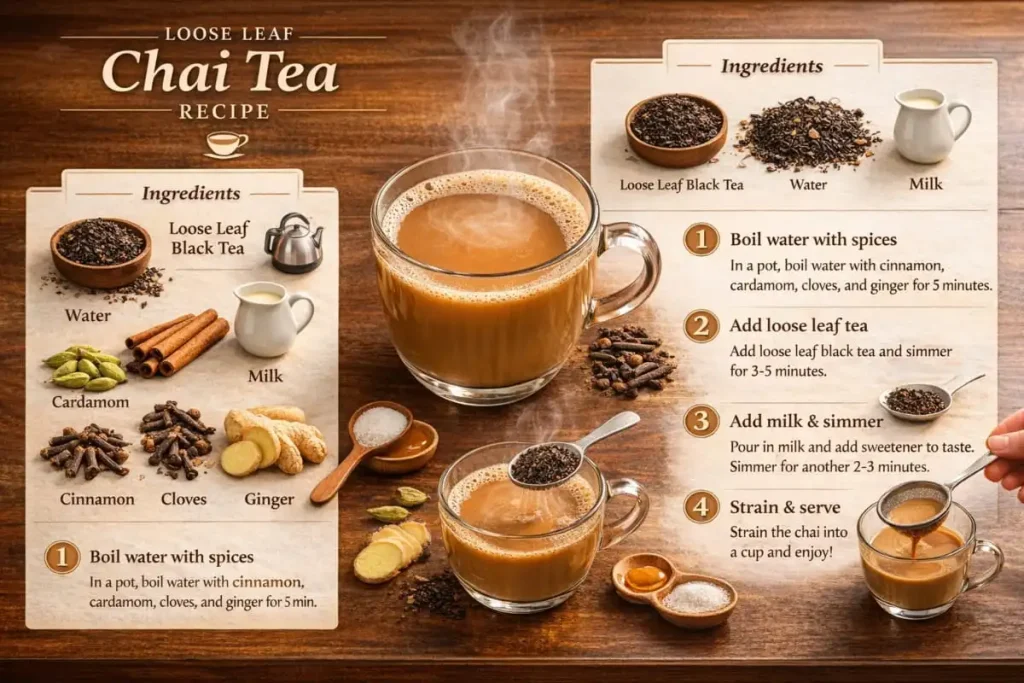
Loose Leaf Chai Tea Recipe | How to Brew It Right Every Time
There is something almost meditative about making chai from scratch. The moment those spices hit the warm milk, cardamom releasing its floral sweetness, ginger building…

Best Tea Flavors | A Complete Guide by Type and Taste Profile
There are thousands of tea flavors in the world, and yet most people spend their entire lives drinking the same two or three. Not because…