
Best Way to Store Loose Leaf Tea (5 Rules That Actually Work)

The best way to store loose leaf tea is in an opaque, airtight container kept in a cool, dark, and dry place, away from heat, light, moisture, and strong odors. Follow those five conditions and your tea stays fresh, potent, and ready to work.
But if you are reaching for tea before a performance, a long teaching day, or a studio session, there is more at stake than flavor. The botanicals in your blend, lemon peel, rooibos, and warming spices, begin losing their potency the moment they are exposed to the wrong environment. A stale cup tastes flat. More importantly for voice professionals, it delivers less of what you brewed it for.
Whether you store your loose leaf tea in a tin, a pouch, or a glass jar, the same five rules apply. This guide covers all of them: the best containers, the right location, how long each tea type lasts, how to store used leaves for reuse, and the single mistake most people make without realizing it.
Why Proper Tea Storage Matters for Your Voice
Loose leaf tea is a dried botanical product. That makes it sensitive to four environmental enemies: air, light, heat, and moisture.
Oxygen triggers oxidation, dulling the flavor compounds and breaking down the delicate oils that give your tea its aroma and character. Light degrades the active compounds over time, the same ones that make a well-formulated herbal blend soothing rather than just warm water. Heat accelerates the aging of essential oils. Moisture is the most damaging of all: it can cause mold growth and accelerate leaf deterioration faster than any other factor.
There is a fifth enemy that often gets overlooked: strong odors. Tea leaves are highly absorbent. Store your Organic Rooibos Chai next to a coffee canister, and within weeks, it will start tasting like coffee. The same applies to spices, candles, and anything else with a strong scent nearby.
Control these five factors and your tea will stay fresh, flavorful, and effective for months. Ignore even one of them consistently, and you will notice the difference in the cup, and potentially in how your voice feels before a performance.
The 5 Rules for Storing Loose Leaf Tea
Rule 1: Use an airtight container.
Air is the first enemy. Every time your tea is exposed to ambient air, oxidation accelerates. The container does not need to be vacuum-sealed, but it must close firmly with no gaps. A lid that requires a deliberate press to close is better than one that simply rests on top.
Rule 2: Block out all light.
UV exposure degrades the plant compounds in your tea steadily over time, even through clear glass. Opaque containers are always the safer choice. If you prefer glass for aesthetic reasons, it must live in a closed cabinet, not on a countertop or windowsill.
Rule 3: Keep it cool and stable.
Heat accelerates the degradation of essential oils. More importantly, even small temperature fluctuations are harder on tea than consistent warmth. A pantry shelf that stays at a steady 68°F does more for freshness than a “perfect” container sitting next to the stove.
Rule 4: Protect from moisture.
Humidity is the fastest way to ruin dried botanicals. Even brief exposure to steam, from a kettle, a dishwasher, or a bathroom, can introduce enough moisture to start deterioration. Never scoop tea with a wet spoon, and never open your tin directly over a boiling kettle.
Rule 5: Isolate from strong odors
Keep each blend in its own container. Do not store tea near coffee, spices, candles, or cleaning products. Tea leaves absorb ambient aromas over time, and once that cross-contamination happens, it cannot be reversed.
Best Containers for Storing Loose Leaf Tea
Choosing the right container is the single most impactful storage decision you will make. Here is how the main options compare:
| Container Type | Light Protection | Seal Quality | Odor Risk | Best For |
|---|---|---|---|---|
| Opaque Stainless Steel Tin | Excellent | Excellent | None | Long-term storage, daily use |
| Ceramic Canister with Lid | Excellent | Good | None | Countertop storage in dark kitchens |
| Resealable Foil / Pouch | Good | Good (when pressed) | Low | Short-term, travel, gifting |
| Glass Jar | Poor (unless dark) | Good | None | Acceptable with strict discipline |
| Plastic Container | Poor | Variable | Moderate | Last resort only |
Opaque stainless steel or ceramic tins are the gold standard. They block light completely, seal firmly, and do not impart any off-flavors to the leaves. Stainless steel is chemically inert and odor-neutral, ideal for keeping a delicate blend like Lemon Berry Dream Tea tasting exactly as it should.
Glass jars are acceptable under one strict condition: the jar must live in a closed, dark cabinet at all times. Clear glass on a countertop or windowsill is one of the fastest ways to degrade the quality of a tea. If you use glass, treat it as you would your spice jars.
Resealable foil pouches, like the kraft pouches your Vocal Leaf tea ships in, are excellent for short- to medium-term storage. After opening, press out as much air as possible, reseal firmly, and store upright in a cool, dark spot. For any tea you will use within a few weeks, the original pouch is all you need. For longer storage, transfer to a tin.
Plastic containers are a last resort. Plastic can absorb and transfer odors, and over time, it may impart an off-flavor to the leaves. If plastic is your only option, make sure it is food-safe and airtight, and plan to use the tea within a month.
One practical rule: use a container that is as close in volume to the amount of tea you have as possible. A half-empty large tin means more air exposure per gram of tea. Two smaller tins are better than one large, half-full one.
What if you have no tin? Store in the original sealed pouch, placed inside a ziplock freezer bag, and press flat to remove air. It is not ideal, but it keeps light and moisture out until you find a dedicated container.
Where to Store Your Tea
The right container only works if it is in the right location. In order of preference, the three best spots are a closed kitchen cabinet away from the stove, a pantry shelf with stable temperature, or a dedicated tea drawer.
Avoid storing tea near your stove, oven, or dishwasher, as they are all sources of both heat and steam. Avoid windowsills and open shelving exposed to natural light. And avoid the refrigerator for loose-leaf tea: humidity cycles every time the door opens, and condensation is the fastest way to damage dried botanicals.
The underlying principle is stability. Loose-leaf tea does not degrade primarily over time; it degrades due to inconsistency. A well-sealed tin in a calm cabinet will outlast a loosely closed pouch in a fluctuating environment by months.
How Long Does Loose Leaf Tea Last?
Shelf life varies by tea type, but proper storage helps you reach the high end of each range. Here is how the four Vocal Leaf blends sit within the broader spectrum:
| Tea Type | Shelf Life (Sealed) | Shelf Life (Opened) | Vocal Leaf Blend |
|---|---|---|---|
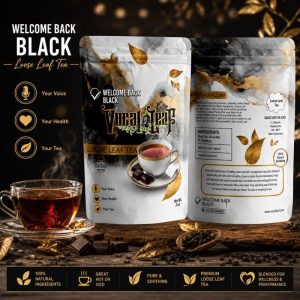
| Black Tea | 2–3 Years | 18–24 Months | Organic Loose Leaf Black Tea |
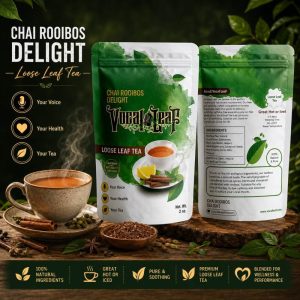
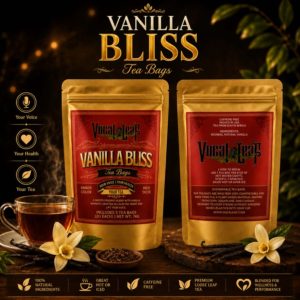
| Rooibos / Herbal | 2–3 Years | 18–24 Months | Organic Rooibos Chai · Vanilla Bliss |
| Fruit & Botanical Blends | 12–18 Months | 12 Months | Lemon Berry Dream |
Vanilla Bliss, Organic Rooibos Chai, and Organic Loose Leaf Black Tea are among the most shelf-stable teas you can buy. Rooibos, in particular, is naturally caffeine-free and low in tannins, making it exceptionally resistant to oxidation. Lemon Berry Dream contains dried fruit and botanical ingredients that lose aroma more quickly, so use it within 12 months of opening.
One practical tip: write the date you opened each tin on a small piece of tape on the bottom of the tin. It removes the guesswork entirely.
How to Store Loose Leaf Tea Long-Term
For long-term storage, the goal is simple: seal it tight, keep it dark, leave it alone.
Use an opaque, airtight container made of stainless steel or ceramic, and place it in a cool, stable environment, such as a pantry shelf or a closed kitchen cabinet. Keep each blend in its own dedicated container so flavors never cross. Write the opening date on the bottom of each tin. And do not open the container more than necessary: every exposure to air shortens the tea’s effective life.
What to avoid for long-term storage:
Do not refrigerate loose-leaf tea. Every time the refrigerator door opens, the temperature shifts, and condensation forms inside, even in a well-sealed container. That moisture is the fastest path to degraded botanicals. Room temperature, sealed, and dark is a far better environment than cold with humidity swings.
Freezing is only viable if the tea is vacuum-sealed and you commit not to open it until you use the entire portion. For everyday home storage, it adds unnecessary complexity. The teas most worth freezing are delicate Japanese green teas, not the robust rooibos and black tea blends that form the core of a vocal care routine.
How to Store Loose Leaf Tea After Use (Re-Steeping Guide)
Storing loose leaf tea after use is one of the most common questions, and one of the most underserved by generic storage guides.
Quality loose-leaf tea is designed to be re-steeped. Most Vocal Leaf blends produce a second and even third infusion with different but still worthwhile character. The rules for storing used leaves are simple:
Keep the window short. Re-steep used leaves within 6 to 12 hours. After that, flavor degrades significantly and bacterial growth becomes a concern. If you brewed your morning cup at 7 am, the leaves are fine for a second steep at lunch. They are not fine the next morning.
Do not seal wet leaves. Never store wet tea leaves in an airtight container. Trapped moisture causes rapid spoilage. A small ceramic dish, loosely covered, on the countertop works well if you are re-steeping the same day. If you need to hold them for a few hours in a warm kitchen, the refrigerator is appropriate; the leaves are already wet, so condensation is not a new risk.
Longer second steep. Used leaves have already given up some of their compounds. Increase your second steep time by 50 to 100 percent to compensate; a two-minute first steep becomes a three- to four-minute second steep.
Which Vocal Leaf blends re-steep best: The Organic Rooibos Chai and Organic Loose Leaf Black Tea both re-steep well. The Rooibos Chai opens up on the second steep, producing a smoother, slightly less spiced cup. The black tea holds up robustly for two full steeps. Lemon Berry Dream and Vanilla Bliss are pleasant on the second steep but lose more of their aromatic complexity. Enjoy the first cup fully and treat any second steep as a gentle bonus.
How to store loose leaf tea for reuse during the same session: If you are preparing multiple cups throughout the day, common for teachers, podcasters, and performers, keep the leaves in your infuser basket with the lid resting on top but not sealed. Set it on a small plate in a cool spot. This keeps the leaves accessible, slows oxidation slightly, and avoids the moisture trap of a sealed container.
Should You Refrigerate or Freeze Loose Leaf Tea?
No to refrigeration. No to freezing for everyday use.
Refrigerators create temperature fluctuations every time the door opens, and that means condensation, the fastest way to degrade dried botanicals. Even a well-sealed tin is not immune to moisture exposure during those temperature shifts.
Freezing is sometimes recommended for matcha and high-grade Japanese green teas, which are genuinely delicate. Vocal Leaf blends are whole loose-leaf rooibos, black tea, and botanical blends; none of them need freezing. They are shelf-stable by nature. Room temperature, sealed, and away from light is exactly right.
Signs Your Tea Has Gone Stale
Stale tea will not harm you, but it will not help you either. Watch for these signals:
Faded aroma is the first sign. Fresh tea should smell immediately vibrant when the tin is opened, sharp, complex, and true to the blend. A tin that produces a faint, dusty, or papery smell has lost significant potency.
Flat flavor in the cup is the next sign. If a blend that previously tasted layered now tastes thin or one-dimensional, the essential oils and flavor compounds have degraded.
A pale brew color in the cup suggests the active compounds have weakened, particularly in black teas.
Any musty or off smell indicates moisture damage. Discard the tea and inspect the container seal before refilling.
If your voice-soothing cup tastes like nothing, it is not working for you. The botanicals that deliver comfort, lemon peel, warming spices, and rooibos depth are the first things to go.
How to Organize Your Loose Leaf Tea
A simple system prevents the most common storage mistakes:
Label each tin on the bottom with the blend name and the date it was opened. Keep all tins in one dedicated cabinet or drawer, not scattered across the kitchen. If you have multiple blends, place the ones you use daily at the front and occasional blends toward the back. When a tin starts to feel light, that is your cue to finish it before restocking.
The Vocal Leaf kraft pouches are designed to stand upright in a drawer, reseal, press out the air, and store efficiently without needing a tin for short-term use.
Proper storage is not complicated. An airtight tin, a dark cabinet, a stable temperature, and a dry spoon, that is the entire system. For voice professionals who rely on their tea to perform before it is even brewed, those four habits are the difference between a cup that works and one that does not.
Browse our full range of loose-leaf teas crafted for vocal health, each formulated and packaged to stay fresh from the moment it ships to the last cup in the tin.
Frequently Asked Questions (FAQ’s)
Can you freeze loose-leaf tea?
You can, but it is rarely necessary for the tea types most useful for vocal care. Freezing is most worthwhile for delicate Japanese green teas. Rooibos and black tea, the base of Vocal Leaf’s core blends, are shelf-stable at room temperature for 18 to 24 months when sealed and stored correctly. If you do freeze tea, vacuum seal it first and do not open the container until you are ready to use the entire portion.
How long does loose-leaf tea last once opened?
Properly stored in an airtight, opaque container in a cool dark place, most opened loose leaf tea stays at full quality for 12 to 24 months. Rooibos and black teas last toward the longer end. Fruit and botanical blends are best used within 12 months of opening.
What is the best container to store loose leaf tea?
An opaque, airtight stainless steel or ceramic tin. It blocks light completely, seals firmly, and does not impart off-flavors. If you have no tin, the original resealable kraft pouch stored in a dark cabinet is the next best option.
Can I store loose leaf tea in glass jars?
Yes, with one condition: the jar must be stored in a completely dark cabinet at all times. Clear glass on a countertop or windowsill degrades the tea steadily over time due to UV exposure. If you cannot guarantee a dark location, use an opaque container.
Should loose-leaf tea be refrigerated?
No. Refrigerators introduce humidity cycles that damage dried botanicals. Room temperature, sealed, and in a cool dark cabinet is the correct environment for all Vocal Leaf blends.
How do I know if my loose leaf tea has gone bad?
Check for faded aroma, flat flavor in the cup, pale brew color, or any musty smell. Stale tea is not harmful, but it has lost its potency, which makes it less useful for vocal care.
What is the shelf life of loose leaf tea?
Unopened: 2 to 3 years for rooibos and black teas, 12 to 18 months for fruit and botanical blends. Opened and stored correctly: 12 to 24 months for rooibos and black teas, up to 12 months for fruit blends.
How to keep loose-leaf tea fresh the longest?
Airtight opaque container, cool dark location, no refrigeration, date-label each tin when opened, and use a dry spoon every time you scoop.
Top Selling Products

)
&description=&image=https://vocalleaf.com/wp-content/uploads/2026/02/How-to-Store-Loose-Leaf-Tea-1024x765.webp)

How to Make Loose Leaf Tea the Right Way Every Method
Knowing how to make loose leaf tea the right way comes down to five simple steps that work for any tea type and any setup,…

Caffeine Free Tea for Voice Professionals | What It Means
Caffeine free tea is widely misunderstood, and for voice professionals, that confusion has real consequences. Many singers, speakers, and performers reach for herbal tea before…

Caffeine Free Tea: The Complete Guide to Hydration, Sleep, Energy, and Weight Loss
Caffeine free tea is one of the most practical beverage upgrades a person can make, and one of the most misunderstood. It hydrates you better…
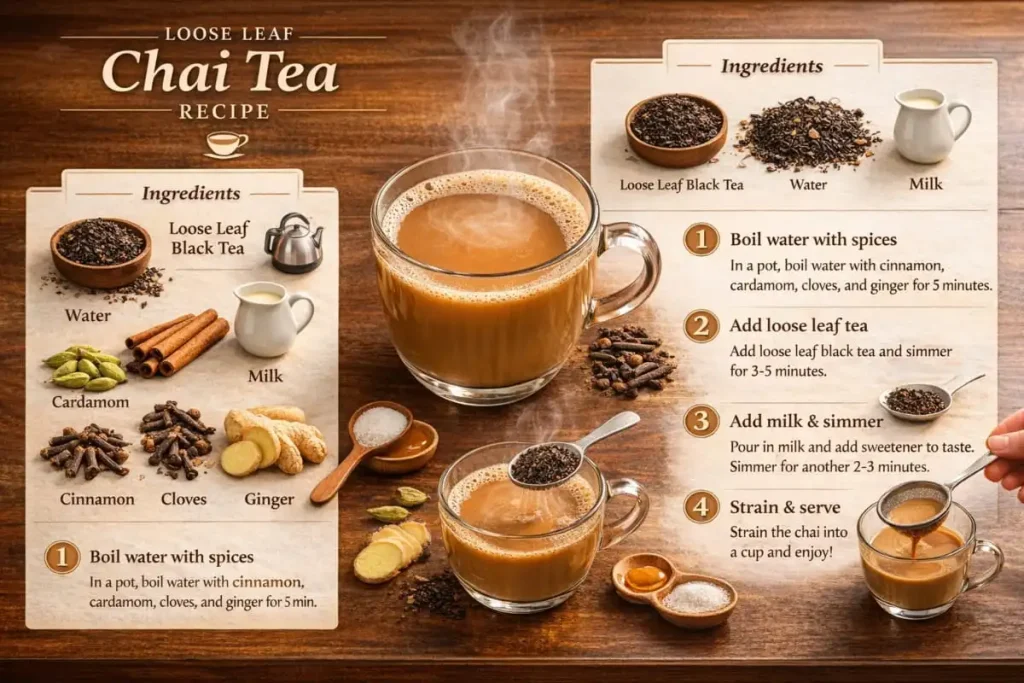
Loose Leaf Chai Tea Recipe | How to Brew It Right Every Time
There is something almost meditative about making chai from scratch. The moment those spices hit the warm milk, cardamom releasing its floral sweetness, ginger building…
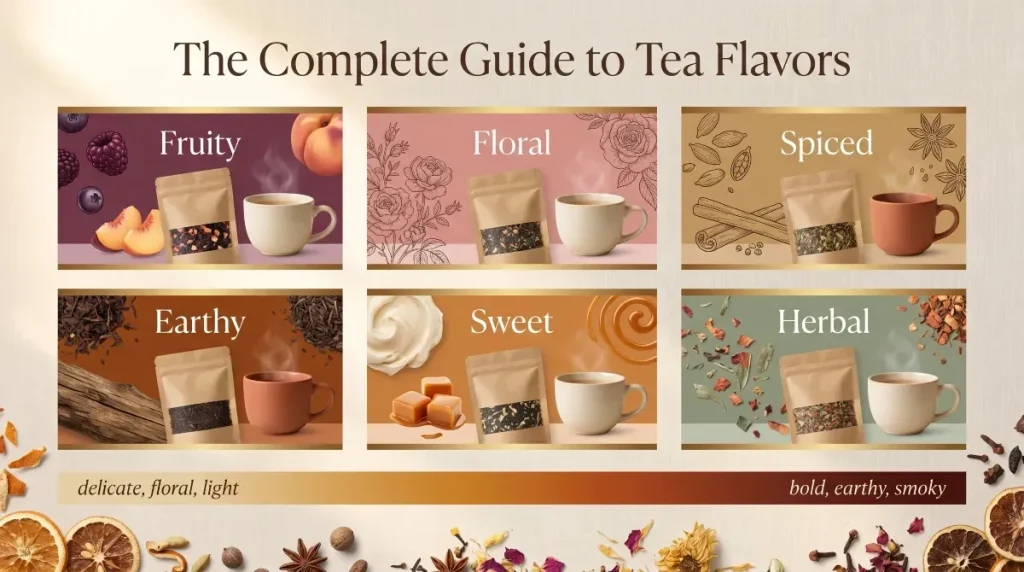
Best Tea Flavors | A Complete Guide by Type and Taste Profile
There are thousands of tea flavors in the world, and yet most people spend their entire lives drinking the same two or three. Not because…