
Tea for Podcasters | What Actually Works Best

The best tea for podcasters is a warm, hydrating loose leaf tea that soothes the vocal cords and keeps the throat lubricated through hours of talking, without the drying, acidic effects of coffee or the sugar crash of energy drinks. For anyone recording episodes back to back, that difference shows up fast: a dry, strained voice by the second half of the session versus a clear, steady one from the first minute to the last.
Podcasting puts unusual demand on the voice. Unlike a normal conversation, an episode can run 45 minutes to two hours of near continuous talking, often in a dry, air conditioned studio with little natural pause. That kind of sustained vocal load is closer to what singers or public speakers experience than what most people do in a typical workday, which is exactly why the same tea traditions that vocal performers have relied on for generations apply just as well behind a podcast mic.
The right cup, sipped at the right time, keeps the vocal cords hydrated and the throat relaxed, so the voice holds its tone and energy instead of thinning out or turning raspy as the recording goes on. This guide covers what to drink before, during and after recording, how to build a simple voice care routine around it and why the quality of the tea itself, not just the act of drinking something warm, makes the real difference. If you are ready to build that routine, Vocal Leaf loose leaf tea collection was designed specifically for the demands voice professionals put on their instrument.
What Makes Tea Good for Podcasters and Voice Professionals
Tea works for podcasters because it hydrates the throat while it’s warm, which relaxes the vocal cords and keeps them lubricated through long stretches of talking. That combination, warmth plus hydration, is what separates tea for voice work from other beverages that either dry the throat out or do nothing to support it.
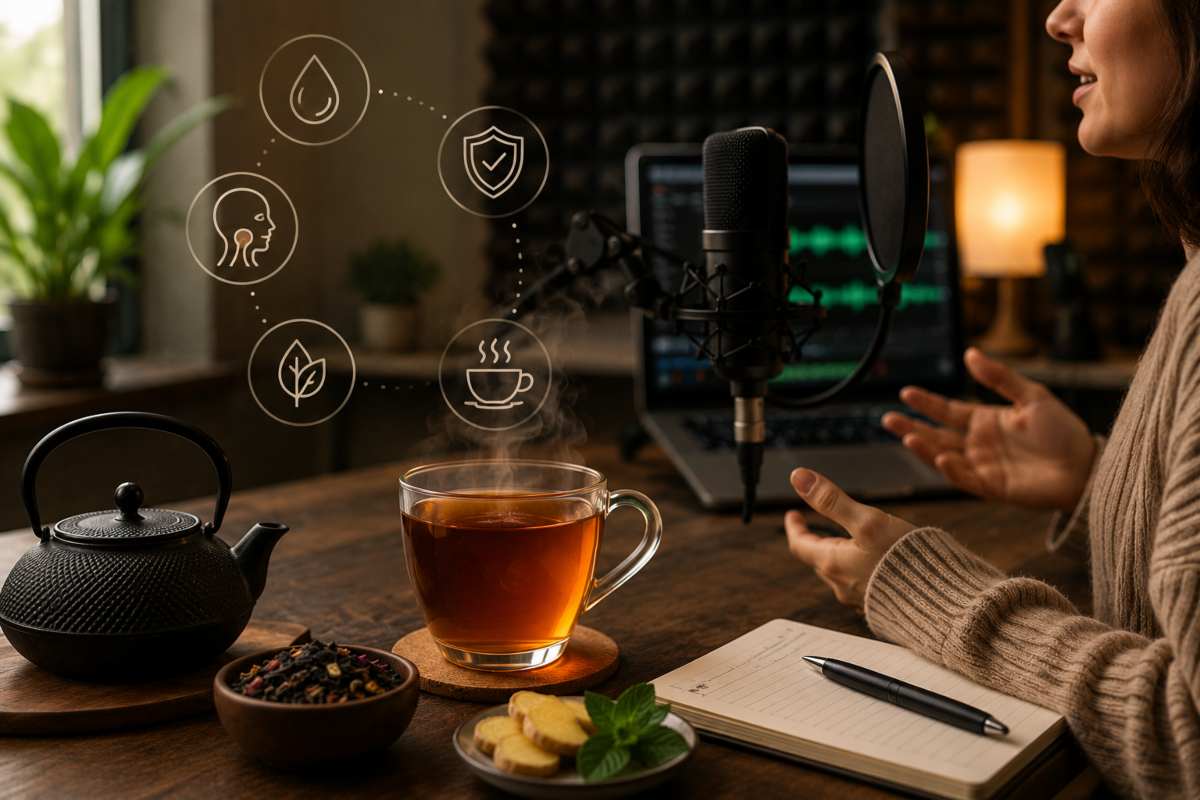
A 2018 study in the Journal of Voice found that vocal fold hydration directly affects vocal efficiency, meaning a well hydrated voice requires less physical effort to sound clear and full. For anyone spending hours behind a microphone, that’s the difference between a voice that holds up and one that starts to fade.
How Tea Hydrates and Soothes the Vocal Cords
Warm tea coats the throat and vocal folds with moisture, which reduces the friction that builds up as they vibrate against each other during speech. This matters most in recording environments, where dry studio air and long uninterrupted talking pull moisture from the throat faster than normal conversation does. Sipping tea steadily through a session, rather than all at once beforehand, keeps that hydration topped up, which is one reason tea for recording voice works best as an ongoing habit rather than a single pre show cup.
Why Tea Beats Coffee and Cold Drinks for Talkers
Coffee is a diuretic, which means it pulls hydration out of the body at exactly the moment a podcaster needs to hold onto it. Cold drinks tighten the throat muscles and can constrict the vocal cords, making the voice feel stiffer rather than more relaxed. Tea avoids both problems, it is warm, it hydrates rather than dehydrates and it goes down smooth without the acidity that coffee brings to an already taxed throat. Vocal Leaf Lemon Berry Tea is a citrus forward option built for exactly this kind of everyday use, light enough for a pre recording cup, soothing enough to sip through a full episode.
Why Podcast Hosts Need a Voice Care Routine
Podcast hosts need a voice care routine because the voice is a muscle system and like any muscle put under repeated load, it fatigues without recovery. A single episode can involve 45 minutes to two hours of near continuous talking, far more sustained vocal effort than a typical conversation, which is why treating voice care as a routine, not an afterthought, is what separates hosts who sound consistent episode after episode from those who do not.

The Physical Toll of Talking for Hours
Extended talking works the vocal folds the same way a workout works any other muscle: with repetition comes fatigue and with fatigue comes reduced control. Voice researchers estimate that professional voice users, a category that includes teachers, broadcasters and increasingly podcasters, are up to several times more likely to experience voice problems than the general population, largely because of how much daily vocal load their work requires. For a podcast host recording multiple episodes a week, that cumulative strain adds up fast without a routine in place to offset it.
Common Signs of Vocal Strain Podcasters Ignore
Vocal strain rarely announces itself dramatically, it shows up as small shifts that are easy to write off as a rough day. A voice that sounds rougher by the second half of an episode, a throat that feels tight or scratchy after recording or needing to clear the throat more than usual mid conversation are all early signs of strain. Left unaddressed, these small signals can compound into a hoarse or fatigued voice that takes longer to recover between sessions, which is exactly what a consistent hydration and tea routine is designed to prevent.
The Best Tea to Drink Before Recording a Podcast
The best tea to drink before recording a podcast is a caffeine free, warm loose leaf blend steeped long enough to fully hydrate the throat without leaving it dry or jittery from caffeine. Tea before recording podcast sessions works best when it is part of a short pre show ritual, something consistent enough that the body and voice come to associate it with settling into a calm, focused state before the mic goes live.
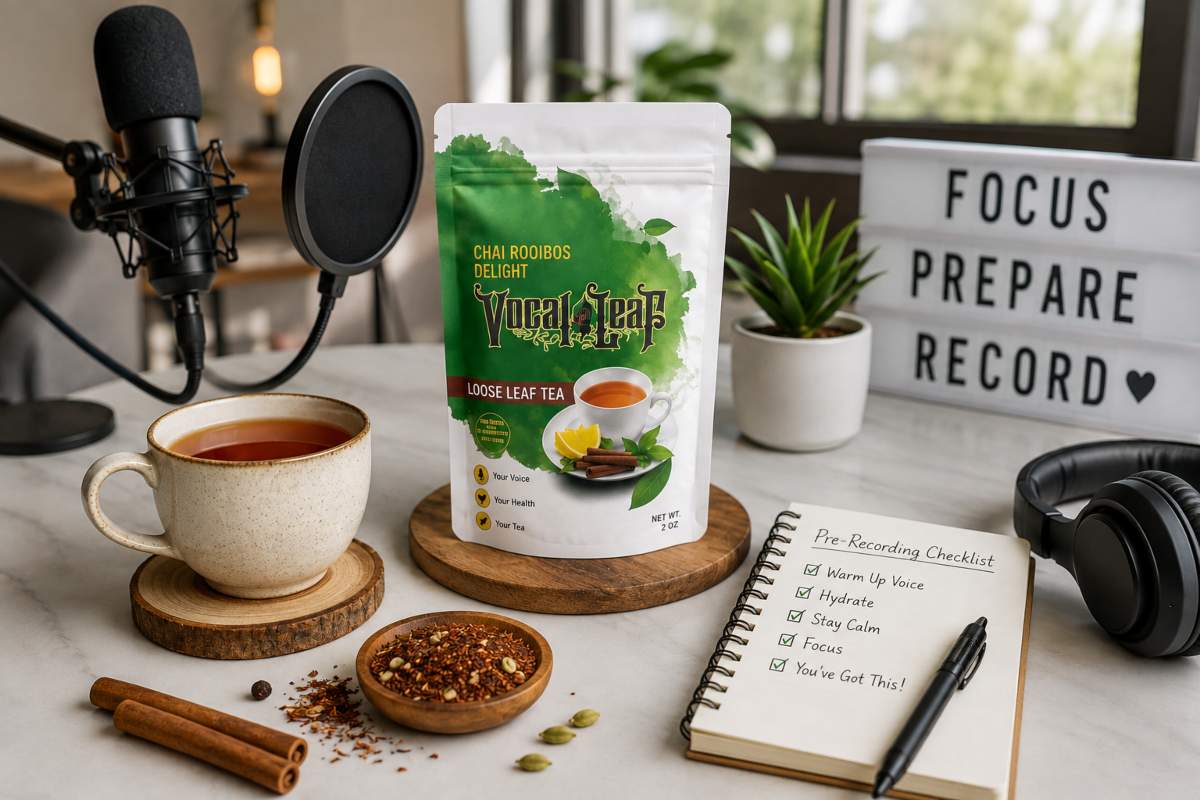
Ideal Steep Time and Temperature for Pre Recording Tea
Steep time and water temperature both affect how soothing a tea actually feels going down. Water that is too hot can feel harsh on an already sensitive throat, while an under steeped cup won’t release enough of the tea’s natural compounds to have much effect.
- Water temperature 203–212°F for most loose leaf blends
- Steep time 10–12 minutes for a fuller, more soothing cup
- Strength slightly stronger than a casual sipping cup, since the goal here is throat coverage, not just flavor
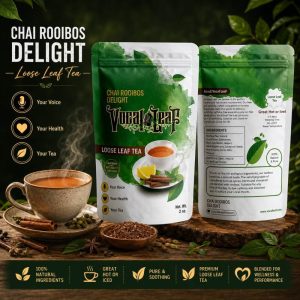
Vocal Leaf Organic Rooibos Chai Tea is naturally caffeine free and steeps into a warm, full bodied cup that is well suited to this kind of pre recording routine.
How Long Before Recording You Should Drink It
Drinking tea roughly 20 to 30 minutes before recording gives it enough time to warm and hydrate the throat without needing a bathroom break mid episode. Drinking it too close to record time can leave a host still finishing the cup as the mic goes live, while drinking it too far in advance loses some of the throat coating benefit by the time the episode actually starts. A 20 to 30 minute window hits the balance, enough time to settle in, not enough time for the effect to fade.
Tea for Vocal Strain and Hoarse Voice Prevention
Tea for vocal strain works by keeping the vocal folds hydrated enough that they can vibrate smoothly instead of catching or rubbing against each other, which is the root cause of most hoarseness. For podcasters, prevention matters more than treatment, once a voice turns hoarse mid recording, no cup of tea fixes it in the moment, so the real value comes from staying ahead of the strain before it starts.
What Causes a Hoarse Voice After Recording
A hoarse voice after recording usually comes down to dehydrated vocal folds working harder than they should to produce sound. Long stretches of talking, dry studio air and caffeine or alcohol earlier in the day all pull moisture away from the throat and without enough hydration to replace it, the vocal folds start to swell slightly and vibrate less efficiently. That extra effort is what listeners hear as a rougher, more strained voice by the back half of an episode and it’s also what a host feels as tightness or scratchiness once recording wraps.

Building a Daily Habit, Not Just a Pre Show Fix
A single cup of tea before recording helps, but it can not undo dehydration that’s built up over days or weeks of inconsistent care. Voice specialists generally recommend treating vocal hydration as a daily practice rather than an occasional fix, since the tissue of the vocal folds responds to sustained hydration over time, not a one off dose right before use. Working a cup of Vocal Leaf Organic Loose Leaf Black Tea into a regular morning or afternoon routine, recording day or not, builds the kind of baseline hydration that actually prevents strain from accumulating in the first place.
Beyond Podcasters, Tea for Public Speakers, Teachers, Singers and Voice Actors
The voice care that helps podcasters applies just as directly to anyone else whose work depends on sustained talking or performing. Tea for public speakers, teachers, singers and voice actors follows the same core logic, warm, consistent hydration reduces strain on the vocal folds, even though each of these roles puts a slightly different kind of demand on the voice.
Tea for Teachers Who Talk All Day
Teachers often talk for six or more hours a day, frequently projecting over classroom noise, which places a vocal demand on par with many professional performers. That combination of volume and duration makes teachers one of the highest risk groups for chronic vocal strain and a warm tea routine between classes or during prep periods offers the same throat hydrating benefit that helps podcasters recover between recording sessions. Tea for teachers voice works best as something sipped steadily throughout the day rather than saved for after the last bell.
Tea for Singers and Voice Actors Before a Performance
Singers and voice actors rely on precise vocal control and a dry or under hydrated throat makes that control noticeably harder to achieve, notes catch, tone things and the voice tires faster than it should. Tea for singers voice and voice actors typically follows a similar pre performance window to podcasting: a warm cup roughly 20 to 30 minutes before stepping in front of a mic or microphone booth, chosen for its hydrating effect rather than heavy flavor that could linger on the palate. A closer look at how this applies specifically to vocal performance is covered in Vocal Leaf tea for singers guide.
Loose Leaf Tea vs Bagged Herbal Blends for Voice Care
Loose leaf tea generally offers better voice care value than bagged herbal blends because it retains more of the plant natural oils and compounds, which get stripped away faster in the crushed, dust like leaf typically used in tea bags. For voice care specifically, that difference matters: a fuller bodied steep means more of the throat soothing effect per cup, not just a lighter version of the same flavor.
Why Ingredient Quality Matters for Your Voice
Tea bags are usually filled with fannings or dust, the broken leftover pieces from processing whole leaves, which steep quickly but release less of their beneficial compounds overall. Whole loose leaves, by contrast, unfurl fully during a longer steep, releasing their oils and natural properties more completely into the cup. For someone drinking tea specifically to hydrate and soothe the throat rather than just for taste, that fuller extraction is the difference between a cup that does real work and one that is mostly warm water with a hint of flavor.
What to Look for in a Voice Support Tea Blend
A good voice support blend should be caffeine free or low caffeine, made from whole ingredients rather than artificial flavoring and steeped long enough to fully hydrate, generally 10 to 12 minutes for loose leaf.

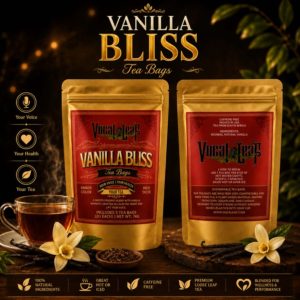
Look for blends built around soothing, throat friendly ingredients rather than heavily sweetened or highly acidic flavor profiles, since both sugar and acidity can work against the calming effect you are going for. Vocal Leaf Vanilla Bliss is built around exactly this profile, a smooth, whole leaf blend designed to be gentle on the throat while still steeping into a satisfying, full flavored cup.
What to Drink During and After Recording Sessions
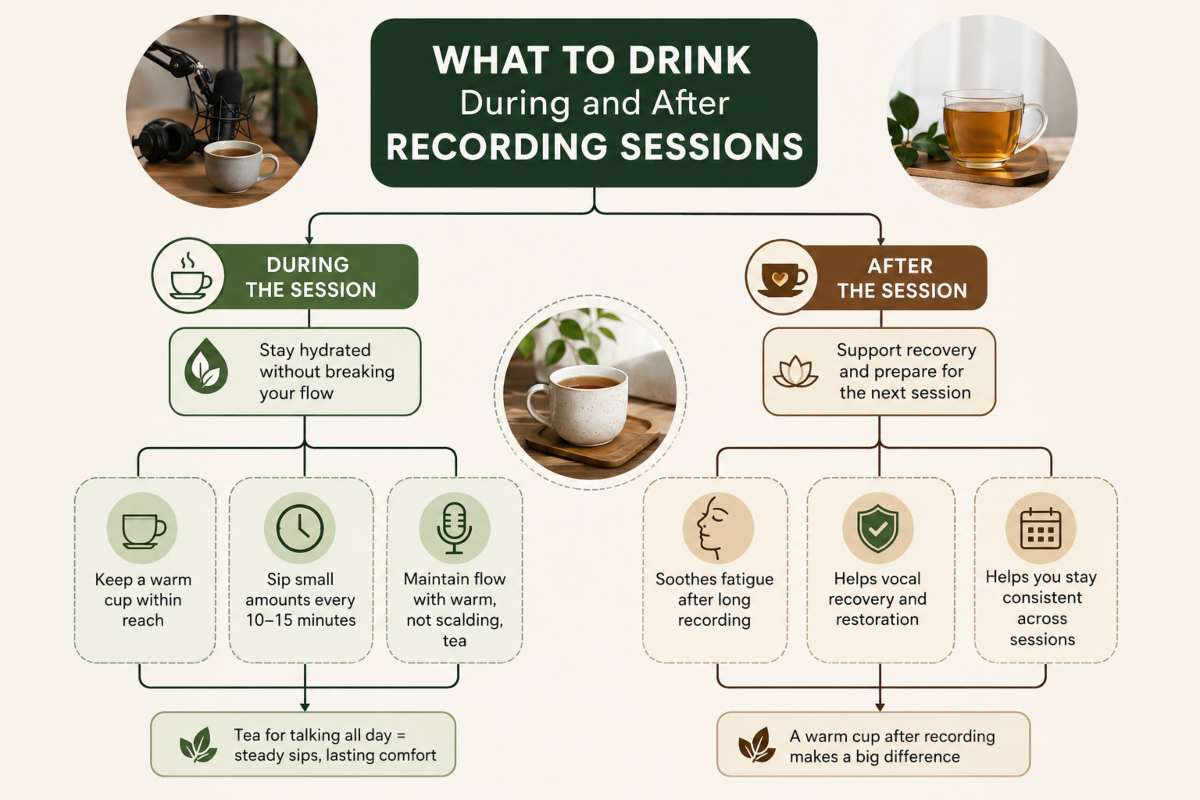
The best approach during and after recording is to keep sipping something warm and hydrating rather than treating tea as a one time pre show fix, a room temperature or warm cup within reach lets a host maintain hydration without breaking the flow of conversation and a follow up cup afterward supports recovery before the next session.
Staying Hydrated Mid Episode Without Breaking Flow
Small, frequent sips work better mid recording than large gulps, since a full swallow mid sentence can interrupt pacing or show up as an audible pause. Keeping a cup at a warm but not scalding temperature means it is ready to sip between thoughts without needing a break in the conversation.
This is where tea for talking all day becomes less about a single cup and more about a steady rhythm, a few sips every 10 to 15 minutes keeps the throat from drying out over a long episode without ever requiring a real pause. For a broader look at building this into an everyday habit, Vocal Leaf tea for voice guide covers the full routine in more depth.
Post Recording Recovery Tea Routine
Once recording wraps, the vocal folds are at their most fatigued point of the day, which makes a post session cup as valuable as anything sipped beforehand. A warm cup after recording helps ease any tightness that builds up during the episode and starts the recovery process before the voice is asked to work again the next day. Hosts who record multiple episodes in a week tend to notice the difference most here, recovery between sessions is often what determines whether the fifth episode of the week sounds as clear as the first.
Conclusion
The best tea for podcasters is a warm, caffeine free loose leaf blend sipped before, during and after recording, a routine, not a one time fix, that keeps the vocal folds hydrated through hours of talking. Since podcasting demands the same vocal stamina as teaching or performing, a cup 20–30 minutes before recording, steady sips through the session and a follow up cup after all help prevent the strain and hoarseness that build up over repeated episodes. Vocal Leaf makes loose leaf tea built for exactly this, anyone whose voice is their instrument.
Frequently Asked Questions (FAQs)
What should I drink before recording a podcast?
A warm, caffeine free loose leaf tea about 20 to 30 minutes before recording works best. It hydrates the throat without the drying effects of coffee or the stiffening effect of cold drinks, so the voice starts the session relaxed rather than strained.
How do I protect my voice for podcasting?
Build a daily hydration habit rather than relying on a single pre show fix, sip tea consistently before, during and after recording sessions. Avoiding caffeine and cold drinks around recording time, along with steady sips throughout the episode, helps prevent the fatigue that builds up over hours of talking.
What tea helps with talking a lot?
Warm, caffeine free loose leaf blends help most, since they hydrate the vocal folds without pulling moisture out the way coffee does. Steeping for a full 10 to 12 minutes gets the most soothing effect out of the leaves.
How soon after recording should I drink tea?
Right after wrapping up is ideal, since the vocal folds are at their most fatigued point of the day. A warm cup post recording supports faster recovery before the next session.
Can the wrong drink make podcasting worse for your voice?
Yes, coffee, alcohol and very cold beverages can all dehydrate or tighten the throat, making strain worse rather than better. Sticking to warm, hydrating options like tea avoids adding to the vocal load recording already puts on the voice.
Top Selling Products






Best Tea for Singers | What Actually Helps Your Voice
If you sing, whether you perform professionally, teach voice lessons, or spend your weekends in rehearsal, you’ve probably wondered whether tea actually does anything useful…

Best Tea for Vocal Cords | Herbs, Hydration and Recovery
If your voice feels tired, strained, or dry, the right tea for your vocal cords can make a real difference, not by healing damaged tissue,…

Best Tea for Laryngitis | Soothe Your Voice Naturally
The best tea for laryngitis is a warm, caffeine free loose leaf blend that hydrates the throat and eases the strain on inflamed vocal cords.…

What Is Chai Tea? The Ultimate Guide to Ingredients, Benefits, Types & How It’s Made
If you’ve ever wondered what chai tea is, you’re not alone. It’s one of the most searched beverage questions online, yet the answer is often…

Best Tea for Your Voice | Does It Make You Sound Deeper
What it can do is change how your voice feels and sounds in the moment, which is where most of the confusion starts. If you…

The Best Tea for Performers & Speakers, And Why Your Voice Deserves Better
You spend hours rehearsing the words. You perfect the tone, the breath, the timing. But then you reach for whatever is nearby, a cup of…

Best Tea for Stress Relief | Calming Loose Leaf Blends
Stress is something everybody carries. It shows up in tight shoulders, restless nights, and a mind that won’t quiet down after a long day. And…

Best Tea for Dry Throat | The Teas That Help and the Ones That Hurt
The best teas for a dry throat are caffeine-free herbal blends, teas with no tannins to strip moisture from the throat lining and no caffeine…

Best Teas for Acid Reflux, Heartburn and GERD
Acid reflux doesn’t just cause heartburn. If you have searched for tea good for acidity, you are asking the same question, acidity and acid reflux…

Best Morning Tea for Energy and Focus Without Coffee Crash
The best tea to drink in the morning is black tea if you want steady, coffee level energy without the crash, rooibos chai if you…

Best Tea for Cough | The Complete Guide to Soothing Relief
The best tea for cough relief is a warm, hydrating blend that soothes irritated throat tissue while easing the reflex that triggers coughing in the…

Best Teas for a Cold That Actually Work
Best teas for a cold combines warmth, hydration and gentle steam to ease congestion, calm a scratchy throat and help your body rest while it…