Ingredients for Loose Leaf Chai Tea
Before you brew a single cup, getting your ingredients right makes all the difference. Chai is a forgiving recipe in many ways, but it rewards quality. The better your tea and spices, the better your cup, every single time. Here’s exactly what you need and why each ingredient earns its place.

The Essential Spice List
The spice blend is the soul of any chai recipe. You can use pre-mixed chai masala powder if you’re short on time, but grinding or crushing your own whole spices gives you a depth of flavor that pre-ground blends rarely match. Whole spices retain their essential oils far longer, and those oils are where all the aroma and complexity come from.
Here’s what a classic chai spice blend looks like and what each one brings to the cup:
- Cardamom, the non-negotiable. Green cardamom pods, lightly crushed, give chai its signature floral, slightly citrusy warmth. Without it, the drink simply isn’t chai.
- Cinnamon: Use a small piece of a true cinnamon stick rather than pre-ground powder. It adds sweetness and body without overpowering the other spices.
- Fresh ginger, A thin slice or two of fresh ginger root delivers a clean, bright heat that dried ginger can’t quite replicate. If fresh isn’t available, dried ground ginger works; just use it sparingly.
- Cloves are intensely aromatic and slightly peppery. A little goes a long way. One or two whole cloves are usually enough for a single serving.
- Black pepper, often overlooked but quietly essential. A few cracked peppercorns sharpen the entire spice profile and help the other flavors bloom.
Start with these five, and you have a complete, balanced chai masala. From there, personal adjustments, a pinch of nutmeg, a star anise, and a small piece of fennel are entirely welcome.
Best Loose Leaf Tea Base to Use
The tea base is what gives chai its strength and structure. It needs to be bold enough to hold its own against milk and a full spice blend, which is why the choice of loose leaf tea matters more than most people realize.
Assam is the gold standard for chai. Grown in the Brahmaputra valley of northeast India, Assam black tea is malty, full-bodied, and naturally assertive, exactly what chai needs. It doesn’t get lost in the milk. It doesn’t fade behind the spices. It holds the whole cup together.
Ceylon black tea is a slightly lighter option, producing a brighter, less malty cup. It works well if you prefer a cleaner, lighter chai, particularly for iced versions, where a lighter body is an advantage.
Darjeeling is the most delicate of the three, known for its muscatel floral notes and lighter color. It can absolutely be used for chai, but it requires a gentler hand with the spices so the tea’s natural character isn’t completely buried. Best suited for those who want a more refined, subtler cup.
For most people brewing a traditional loose leaf chai tea recipe at home, Assam is the right starting point. It’s authentic, affordable, and practically foolproof.
Milk and Sweetener Options
Chai is traditionally made with whole milk, and there’s a reason that tradition has held: the fat in whole milk softens the spices, rounds out the tannins in the black tea, and creates that signature creamy texture that makes chai feel as comforting as it tastes.
That said, milk alternatives work beautifully with some minor adjustments. Oat milk is currently the most popular choice among non-dairy drinkers; its naturally creamy consistency and mild sweetness complement the spice blend without fighting it. Coconut milk adds a rich, slightly tropical note that pairs particularly well with cardamom and ginger. Almond milk is thinner and more neutral, which works if you want the spices to take center stage.
For a sweetener, jaggery is the most traditional option, an unrefined cane sugar with a molasses-like depth that adds complexity beyond plain sweetness. Regular cane sugar is perfectly fine and what most home recipes use. Honey is a popular modern choice, though it should be stirred in after brewing rather than simmered, since heat diminishes its flavor. Maple syrup adds an interesting warmth if you’re feeling adventurous.
The ratio of milk to water is worth noting here as well. A classic stovetop chai uses roughly equal parts water and milk, though many people prefer more milk for a creamier result. This is entirely personal; adjust as you see fit.
How to Source Quality Loose Leaf Chai
Quality loose leaf chai is more accessible than it used to be, but knowing what to look for saves you from wasting money on mediocre blends.
If you’re buying a pre-blended loose leaf chai, look for products that list real, identifiable ingredients, whole spices, named tea origins, and no artificial flavouring. The ingredient list should read like a spice rack, not a chemistry lab.
Specialty tea shops, both local and online, are your best source for single-origin Assam or Ceylon if you’d prefer to build your own blend from scratch. Reputable online retailers like Upton Tea Imports, Harney & Sons, or small-batch artisan sellers on dedicated tea platforms typically offer higher-quality tea than you’ll find on supermarket shelves.
If you’re sourcing whole spices separately, Indian grocery stores are genuinely the best option, with fresher stock, better prices, and a wider selection than most mainstream supermarkets carry. Buy whole spices in small quantities and grind or crush them as needed. Freshness matters enormously with spices, and a jar sitting on a shelf for 2 years has already lost most of its flavour.
Good ingredients don’t need to be expensive. They just need to be real.
How to Make Loose Leaf Chai Tea (Step-by-Step Recipe)
This is where everything comes together. Making chai from loose leaf tea at home is simpler than most people expect; it doesn’t require special equipment, exotic techniques, or years of practice. What it does require is a little patience and a willingness to pay attention. Follow these steps, and you’ll have a cup that rivals anything you’d order at a specialty café.

Measuring Your Loose Leaf Tea, Ratios That Work
Getting the ratio right is the single most important variable in any loose leaf chai tea recipe. Too little tea and the spices have nothing to anchor them. Too much and the tannins take over, leaving you with a bitter, astringent cup.
The baseline ratio that consistently works well is 1 heaping teaspoon of loose leaf tea per cup (approximately 240ml) of liquid. Since chai is brewed with a combination of water and milk rather than water alone, your total liquid, say, one cup of water plus one cup of milk for two servings, should have about two teaspoons of loose leaf tea to start.
For spices, a reliable starting point per two servings looks like this:
- 4 to 5 green cardamom pods, lightly crushed
- 1 small cinnamon stick
- 2 to 3 thin slices of fresh ginger
- 2 whole cloves
- 3 to 4 black peppercorns, cracked
These are starting ratios, not laws. Once you’ve made this recipe a couple of times, you’ll naturally begin adjusting to your own taste, more ginger on cold mornings, an extra cardamom pod when you want something more fragrant. That’s the point of making chai from loose leaf tea at home.
How to Simmer Chai on the Stovetop
The stovetop method is the traditional way to make chai from loose leaf tea, and it produces the richest, most developed flavour of any brewing method. Here’s exactly how to do it.
Start with a small saucepan, nothing elaborate. Add your water and your whole spices first, then place the pan over medium heat. You want to bring the spiced water to a gentle simmer, not a rolling boil. This gives the spices time to open up slowly and release their oils into the liquid before the tea even enters the equation.
Once the water is simmering and you can smell the spices beginning to bloom, usually about two to three minutes, add your loose-leaf tea directly into the pan. Let the tea simmer in the spiced water for another two minutes. You’ll see the water deepen to a rich amber-brown, which is exactly what you’re looking for.
Now add your milk. Pour it directly into the simmering pan and raise the heat slightly. Watch the pot carefully here; milk has a habit of boiling over the moment you look away. Stir gently and let the whole mixture come up to just below a full boil. When you see it beginning to rise, reduce the heat and simmer for another 2 to 3 minutes. This final simmer is where the magic happens; the tea, spices, and milk merge into something unified rather than separate.
Add your sweetener of choice at this stage, stir to dissolve, and then strain.
Steeping Time and Temperature Guide
One of the most common mistakes people make when learning to brew loose leaf chai tea is either understeeping or oversteeping, and both produce disappointing results for different reasons.
The stovetop method runs hotter than a standard steep, which means the tea extracts faster. The window you’re working with is roughly 2 to 3 minutes for the tea in water, followed by 2 to 3 minutes after adding milk, for a total of 6 minutes at most. Beyond that, the tannins in black tea become increasingly dominant, and the cup turns bitter regardless of how good your ingredients are.
Temperature-wise, chai is brewed at a gentle simmer rather than a full boil. Think of it as keeping the liquid consistently hot and active, without letting it boil over. A full boil drives off aromatics and can make the milk taste slightly scorched, neither of which you want. Medium heat throughout, with a brief rise when the milk goes in, is the sweet spot.
If you prefer a stronger cup, resist the instinct to steep longer. Instead, increase the amount of loose-leaf tea you use. More tea, same time, that’s how you build strength without bitterness.
How to Strain and Serve
Straining loose leaf chai is a step that deserves more attention than it usually gets. A fine-mesh strainer is the tool of choice here; it catches both the loose-leaf tea and the smaller spice fragments that would otherwise end up in your cup.
Hold your strainer over your mug and pour the chai through it in a slow, steady stream. If you’re using a particularly fine loose-leaf tea, you may want to strain it twice; the second pass catches the fine particles that make it through the first time and gives you a noticeably cleaner cup.
Traditional chai is served immediately and hot, often poured from a height to create a light froth on the surface, a technique used by chai wallahs across India that aerates the drink and enhances the aroma. It’s worth trying at least once, even if it requires a little practice to avoid splashing.
Serve your chai in a pre-warmed mug for best results. A cold mug drops the temperature of your chai faster than you’d expect, and chai genuinely tastes better when it stays warm through the last sip. Simply pour a small amount of hot water into your mug, let it sit for thirty seconds, then discard it before pouring in your chai.
That’s it. That’s how you make loose-leaf chai tea from scratch, properly, intentionally, and in a way that actually does justice to the ingredients you chose.
How to Brew Loose Leaf Chai Tea: 3 Different Methods
There’s more than one way to brew loose leaf chai tea well. The method you choose depends on the equipment you have, the time you have, and honestly, the kind of chai experience you’re after. A stovetop simmer and a French press produce very different cups from the same ingredients, and knowing the strengths of each method helps you make the right call every time.
 Here are three proven approaches, each one capable of producing excellent chai when executed with care.
Stovetop Simmering Method (Traditional)
This is how chai has been made for generations across South Asia, and it remains the gold standard for a reason. The stovetop method isn’t just a brewing technique; it’s a process that fundamentally alters the drink’s character. Simmering the spices in water, adding loose-leaf tea, then finishing with milk creates layers of flavour that no passive steeping method can fully replicate.
The heat does something important here. It doesn’t just extract, it integrates. The spices, tea, and milk genuinely meld together over the course of the simmer, producing a cup that tastes unified rather than assembled. The milk takes on the color and warmth of the spices. The tea softens slightly at the edges. Everything becomes one thing.
The process itself is straightforward: spices into cold water, bring to a gentle simmer, add loose-leaf tea after 2 minutes, pour in milk, simmer together for another 2 to 3 minutes, sweeten, strain, and serve. The full recipe walkthrough lives in the section above, but the core principle is patience and low, consistent heat.
If you have 15 minutes and access to a stovetop, this is always the method to choose. The result speaks for itself.
Teapot or Infuser Method
The teapot or infuser method is the most accessible way to brew loose-leaf chai tea for people who already have a loose-leaf setup at home. It’s faster than the stovetop, requires minimal cleanup, and still produces a genuinely good cup, though with a slightly different flavor profile.
The key difference is that this method steeps rather than simmers, meaning the spices and tea extract into hot water rather than actively cooking in it. The result is a cleaner, brighter chai, less rich and creamy than the stovetop version, but more delicate and nuanced in its spice character.
To brew chai this way, place your loose-leaf tea and whole spices, crushed, directly into your infuser basket or teapot. Bring your water to just below boiling, around 90 to 95°C (195 to 205°F), and pour it over the leaves and spices. Steep for four to five minutes, then remove the infuser or strain the tea into your cup.
Here’s where the method diverges slightly from standard tea brewing: add your warmed milk separately after straining. Heat your milk on the stovetop or froth it with a frother, then pour it into your steeped chai concentrate at roughly one part chai to one part milk, adjusting to taste. Sweeten as desired.
The infuser method works particularly well with pre-blended loose-leaf chai, where the spices have already been calibrated to work within a standard steep time. It’s also the most practical option if you’re brewing a single cup quickly on a weekday morning without wanting to monitor a saucepan.
French Press Method for Chai
The French press is an underrated tool for brewing loose-leaf chai tea, and once you try it, you’ll understand why it has a quiet but dedicated following among home tea enthusiasts. The full immersion brewing style, where the leaves and spices sit completely submerged in hot water for the entire steep, extracts flavor with a thoroughness that drip or infuser methods can’t match.
It also gives you exceptional control. You decide exactly when the extraction stops by pressing the plunger, allowing you to dial in strength with more precision than most other methods.
To make chai in a French press, add your loose-leaf tea and lightly crushed whole spices directly into the carafe. Pour hot water again, just below boiling, over the top, and give everything a gentle stir to make sure the leaves and spices are fully saturated rather than floating on the surface. Place the lid on with the plunger pulled up, and steep for 4 minutes for a medium-strength chai, or up to 5 minutes if you prefer something bolder.
Press the plunger slowly and steadily, then pour immediately, leaving brewed chai sitting on the pressed grounds continues the extraction and risks bitterness. As with the infuser method, add your warmed milk separately after pressing.
One practical note: rinse your French press thoroughly after brewing chai. Spice residue, particularly from cardamom and cloves, can linger and affect the flavor of whatever you brew next. A quick rinse with hot water and a gentle scrub is usually enough to keep things clean.
Each of these three methods produces a genuinely satisfying cup of loose-leaf chai. The stovetop gives you tradition and depth. The infuser gives you speed and clarity. The French press gives you strength and control. Know what you’re after, choose accordingly, and brew with confidence.
Ratios, Timing & Troubleshooting
Even with great ingredients and a solid method, small miscalculations in ratio or timing can quietly undermine your cup. The good news is that loose leaf chai is far more forgiving than most people assume, and once you understand why something went wrong, fixing it is straightforward. This section covers the numbers that matter and the most common problems home brewers encounter when learning to make loose leaf chai tea.

How Much Loose Leaf Tea Per Cup of Chai
The ratio question is one of the most searched and most inconsistently answered in the world of home chai brewing. Here’s a clear, reliable framework to work from.
For a standard single serving, roughly 240ml or one cup of finished chai, use 1 heaping teaspoon of loose leaf tea. This assumes you’re brewing with a combination of water and milk, which is the traditional approach. If you’re brewing a chai concentrate that you plan to dilute with milk afterward, increase that to 1.5 to 2 teaspoons per cup of water, since the milk you add later will naturally dilute the strength.
For spices, the ratio scales proportionally. The starting point for one to two servings looks like this:
- 4 cardamom pods, lightly crushed
- 1 small cinnamon stick (roughly 5cm)
- 2 to 3 slices of fresh ginger
- 2 whole cloves
- 3 to 4 cracked black peppercorns
When scaling up for a larger batch, say, four to six servings, don’t simply multiply the spices by the same factor as the tea. Spices intensify disproportionately in larger volumes. A good rule of thumb is to increase spice quantities by about 60 to 70 percent when doubling the recipe, then taste and adjust from there rather than committing to a fixed formula.
The water-to-milk ratio is another variable worth pinning down. The classic split is 1:1, equal parts water and milk. This produces a well-balanced chai with good body and color. If you prefer a creamier, richer cup, shift toward a 40:60 water-to-milk ratio. For something lighter, lean the other direction. There’s no wrong answer here; it’s purely a matter of personal preference.
Why Your Chai Is Too Weak or Too Bitter
These are the two most common complaints from people learning to brew loose-leaf chai tea at home, and they almost always come down to one or two easily correctable variables.
If your chai is too weak, the most likely culprit is insufficient tea rather than insufficient steeping time. This is a mistake worth understanding clearly: steeping longer to compensate for too little tea doesn’t make your chai stronger; it makes it more bitter. The solution is to use more loose-leaf tea in your next brew, keeping your steeping time the same. Additionally, check your heat level. If you’re using the stovetop method and the liquid never reaches a proper simmer, the extraction will be shallow regardless of how long you wait. Low, consistent heat is essential, not a lukewarm soak.
Weak spice presence is a separate issue. If the tea strength is fine but the chai lacks warmth and complexity, your spices may be old. Whole spices lose their potency over time, and a cardamom pod that’s been sitting in a jar for eighteen months has already surrendered most of its essential oils. Fresh spices make a dramatic difference; this is one variable that’s easy to overlook and hard to compensate for.
If your chai is too bitter, over-extraction is almost certainly the cause. Black tea, particularly the robust Assam varieties that work best in chai, releases tannins aggressively when heated for too long. Beyond the five or six-minute total brew window, those tannins dominate the cup, and no amount of sweetener fully masks them.
The fix is simple: shorten your simmer time and use slightly more tea to maintain strength. Brewing hotter and faster is better than brewing cooler and longer for loose leaf chai. Also, check your water temperature if you’re using the infuser or French press method. Water at a full rolling boil (100°C) extracts more aggressively than water at 90 to 95°C, pushing the tea toward bitterness faster than you might expect.
Adjusting Spice Strength to Taste
One of the genuine pleasures of making loose leaf chai at home is the freedom to make it exactly as you like it. The base recipe is a starting point, not a prescription, and understanding how each spice behaves gives you the confidence to make meaningful adjustments rather than just guessing.
Cardamom is the most dominant spice in a classic chai blend. If your chai consistently tastes more perfumed or floral than you’d like, reduce the cardamom by one pod at a time until you find your threshold. Conversely, if you want your chai to smell and taste more intensely aromatic, crushing the pods more thoroughly before adding them releases more of their oils into the liquid.
Ginger is the spice that delivers heat and brightness. Fresh ginger gives a clean, sharp warmth that builds gradually. If you want more heat, add an extra slice or two, or grate a small amount directly into the pan rather than using slices, which increases the surface area and therefore the extraction. For less heat, a single thin slice is usually enough to register as background warmth without asserting itself.
Cinnamon and cloves tend to work best when balanced. Too much cinnamon and the chai starts tasting like a dessert. Too many cloves and it veers into medicinal territory. If either of these is overwhelming your cup, halve the quantity before making any other adjustments; the effect is usually immediate and significant.
Black pepper is the spice most people forget to adjust, which is a missed opportunity. A little more cracked pepper sharpens the entire blend and makes every other spice taste more vivid. It’s subtle but genuinely effective, worth experimenting with before you add anything else.
The broader principle here is to change one variable at a time. Adjust a single spice, brew the chai, taste it, then decide what to change next. Chai that you’ve tuned over five or six batches to match your exact preferences is a completely different experience from a recipe you followed once and never revisited.
Ready to Brew Chai Without the Caffeine Crash?
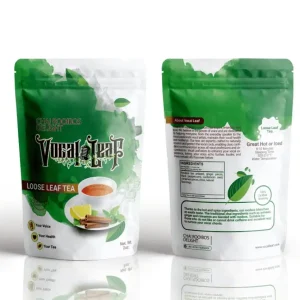
You’ve mastered the loose-leaf chai recipe; now meet a blend built for every hour of the day. Vocal Leaf’s Chai Rooibos Delight Tea delivers everything you love about traditional chai, warming cardamom, ginger, cinnamon, and cloves, on a naturally caffeine-free rooibos base.
No caffeine jitters. No compromising on flavor. Just a rich, aromatic cup you can enjoy morning, afternoon, or right before bed.
It’s 100% loose leaf, so every brewing method in this guide works perfectly with it.
→ Grab your pouch of Chai Rooibos Delight Tea for just $10, and make chai an all-day ritual.
A Final Word on Getting Chai Right
Making loose-leaf chai tea at home is one of those small domestic rituals that rewards you far beyond the effort it asks for. A handful of whole spices, good loose leaf tea, warm milk, and fifteen minutes of attention, that’s genuinely all it takes to produce something that feels considered, intentional, and deeply satisfying.
What this guide has tried to make clear is that there’s no single correct version of chai. The traditional stovetop recipe is a foundation, not a ceiling. Once you understand the ratios, the timing, the role each spice plays, and how different brewing methods change the character of the final cup, you stop following a recipe and start making your chai. That’s when it gets interesting.
The best loose leaf chai tea recipe is ultimately the one you’ve adjusted to suit your own taste. Maybe that’s extra cardamom and a generous pour of oat milk. Maybe it’s strong Assam with barely any sweetness and fresh ginger that makes your eyes water slightly. Maybe it takes you three or four batches to find it. That’s not failure, that’s the process working exactly as it should.
Start with the stovetop method. Use good Assam. Don’t over-steep. Taste as you go.
Everything else follows naturally from there.
Tried this loose leaf chai tea recipe? Adjust it, own it, and make it part of your routine. The best cup of chai you’ll ever have is probably the one you’ve made so many times it no longer requires a recipe at all.
Frequently Asked Questions
Can I reuse loose leaf chai tea?
Yes, but with modest expectations. Loose-leaf tea can be steeped a second time, though the flavor will be noticeably lighter. For chai specifically, adding a few fresh spices to the second brew helps compensate for what the leaves have already given up in the first steep.
How long does brewed chai last?
Brewed loose-leaf chai keeps well in the refrigerator for up to three days when stored in a sealed container. Leave out the milk if you plan to store it; add fresh, warmed milk when you’re ready to drink it for the best flavour and texture.
What’s the best loose leaf chai tea to buy?
For most home brewers, a quality Assam-based loose-leaf chai blend is the best starting point, bold, malty, and built to hold up to milk and spices. Reputable options include Harney & Sons, Vahdam, and Upton Tea Imports, all of which offer transparent ingredient sourcing and consistent quality.
How is loose leaf chai different from chai concentrate?
Loose-leaf chai is brewed fresh from whole tea leaves and real spices, giving you full control over strength, spice balance, and sweetness. Chai concentrate is a pre-made liquid shortcut, convenient, but typically higher in sugar, lower in complexity, and far less customizable than anything you’d brew from scratch at home.