Does Tea Actually Help with a Cough?
Yes, and there’s solid science behind it, not just tradition. Tea has been used as a remedy for coughs and respiratory complaints across virtually every culture for thousands of years, and modern research has largely validated what generations of grandmothers already knew. The right tea, brewed correctly and drunk at the right temperature, can meaningfully reduce cough frequency, soothe an irritated throat, loosen mucus, and help you breathe more comfortably.
That said, tea is not a cure. Understanding what it actually does, and what it doesn’t, helps you use it more effectively.
The Science Behind Tea and Cough Relief
A cough is the body’s reflex response to irritation or obstruction in the airways. That irritation can come from infection, inflammation, mucus buildup, dryness, or an external trigger like allergens or acid reflux. Tea addresses several of these pathways simultaneously, which is what makes it so consistently useful.
Many herbal teas contain active compounds with demonstrated therapeutic effects. Gingerols in ginger reduce airway inflammation. Menthol in peppermint acts as a natural decongestant, creating a cooling sensation that temporarily opens airways and reduces cough sensitivity. Thymol, the primary compound in thyme, has been shown in clinical studies to act as a mild expectorant and antispasmodic, helping loosen mucus and calm the cough reflex. Chamomile contains apigenin and other antioxidants that reduce inflammation in the throat and respiratory tract.
These aren’t folk remedies waiting to be disproven. Several European countries classify thyme-based preparations as approved medicinal treatments for bronchitis and upper respiratory infections.

How Steam, Warmth, and Herbal Compounds Work Together
Part of what makes hot tea so effective is that it delivers three mechanisms of relief at once.
The warmth of the liquid soothes inflamed throat tissue on contact, providing immediate comfort and reducing the urge to cough. Heat also promotes circulation to the mucous membranes, which helps the body’s natural healing response.
The steam rising from the cup acts as a mild form of inhalation therapy. Breathing in warm, herb-infused steam before and during each sip helps hydrate dry nasal passages, loosen chest congestion, and deliver volatile compounds, like menthol from peppermint or thymol from thyme, directly into the airways where they’re needed most.
The herbal compounds themselves then work systemically once absorbed, reducing inflammation, thinning mucus, and in some cases directly calming the nerve signals that trigger coughing.
Honey, when added to tea, adds benefit: it coats the throat with a protective film, extends the soothing effect, and has well-documented antimicrobial properties. A 2021 review published in BMJ Evidence-Based Medicine found that honey was more effective than usual care for upper respiratory symptoms, including cough, and wasand was superior to some over-the-counter remedies.
What Tea Can (and Can’t) Do for a Cough
Tea is genuinely effective for symptom relief, reducing discomfort, easing irritation, loosening mucus, and helping you rest more comfortably. If your cough stems from a cold, a mild respiratory infection, dry air, or throat irritation, consistent tea drinking throughout the day can make a real, noticeable difference.
What tea won’t do is treat the underlying cause of a bacterial infection, and it isn’t a substitute for medical care if your cough is severe, prolonged, or accompanied by high fever, difficulty breathing, or chest pain. Think of tea as a powerful first-line comfort measure, one that works with your body’s recovery process, not around it.
The teas that perform best for coughs aren’t random. They’ve been selected across centuries of use and increasingly supported by research. Here are the nine that consistently deliver.
Our Recommended Teas for Cough Relief
Understanding which herbs help with a cough is one thing. Having a tea that’s already blended, sourced with care, and ready to brew when you’re feeling your worst is another. At Vocal Leaf, every tea in our collection is built around a simple premise: your voice and your throat deserve better than generic wellness blends. These four teas each serve a distinct role in relieving coughs and throat irritation. Here’s how to match them to what you’re dealing with.

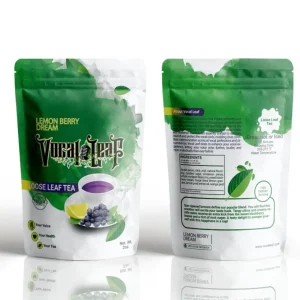
Lemon Berry Dream, Best for Immune Support and Throat Soothing
When a cough arrives with the first signs of a cold, that familiar combination of a scratchy throat, low energy, and the sense that something is coming, Lemon Berry Dream is the tea to reach for first.
Its bright citrus profile delivers a meaningful dose of natural vitamin C, which plays a direct role in immune function and tissue repair. The berry botanicals bring their own antioxidant load, supporting the body’s defence response from the inside, while the warm liquid soothes the throat on the surface. It’s a naturally caffeine-free blend, which means you can drink it consistently throughout the day without any concern, and consistency is exactly what early-stage immune support requires.
For singers, teachers, and speakers, this is also an excellent daily maintenance tea during cold and flu season. The vocal health benefits of staying ahead of throat inflammation are significant, and a cup of Lemon Berry Dream each morning is an effortless way to do it.
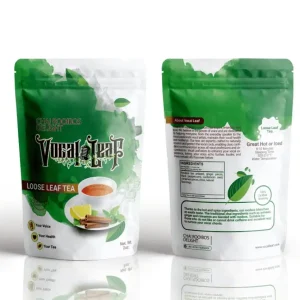
Organic Rooibos Chai, Best for Nighttime Cough and Anti-Inflammatory Relief
If there is one tea designed for the moment when a cough is making sleep feel impossible, it is this one.
Rooibos is naturally caffeine-free and rich in quercetin and aspalathin, two antioxidants with well-documented anti-inflammatory effects on the respiratory tract. The chai spice blend, cinnamon, cardamom, clove, and ginger, layers on additional anti-inflammatory and mild expectorant action that works quietly and continuously through the night. Cinnamon has demonstrated antimicrobial properties. Cardamom has been used for centuries, specifically for respiratory complaints. Clove contains eugenol, a potent natural anti-inflammatory compound.
Together, they make Organic Rooibos Chai one of the most genuinely therapeutic evening teas for a cough, not just comforting, but actively useful. Sweeten it with raw honey before bed, drink it warm rather than piping hot, and let the combination do its work while you rest. It is also one of the best natural caffeine-free teas for a cough you’ll find outside of a specialty apothecary.
Vanilla Bliss, Best for Dry Cough and Throat Comfort
Vanilla Bliss was made for the kind of cough that doesn’t produce anything; it just irritates. The dry, scratchy, relentless cough that leaves the throat raw and the voice hoarse, and that seems to worsen in the evening when there are no distractions from it.
The botanical blend is built around gentle, throat-soothing herbs that calm irritation without any harshness. The. The vanilla base gives it a naturally smooth, creamy quality that feels coating and comforting on an inflamed throat. It is completely caffeine-free, making it appropriate at any hour, and its mild, sweet profile makes it one of the easiest teas to drink consistently, even when you have no appetite for anything strong or medicinal.
For a dry cough specifically, consistency matters more than intensity. Vanilla Bliss is the tea you sip slowly throughout the evening and last thing before bed, keeping the throat hydrated, soothed, and protected through the hours when a dry cough is at its most disruptive.
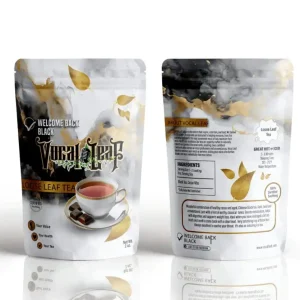
Organic Loose Leaf Black Tea, Best for Daytime Immune Strength
Black tea earns its place in a cough relief routine not as a throat remedy but as a systemic immune and antioxidant support, the daytime foundation that helps the body recover faster from whatever is driving the cough in the first place.
Organic Loose Leaf Black Tea is rich in theaflavins and thearubigins, polyphenol antioxidants unique to black tea that have demonstrated anti-inflammatory and antiviral properties in research settings. It also contains L-theanine, which synergizes with its antioxidants to support a calm, focused immune response rather than an overreactive inflammatory response. For anyone dealing with a cough linked to an upper respiratory infection, this matters.
The moderate caffeine content makes it the right choice for morning and midday, providing the energy to get through the day while the antioxidants work quietly in the background. It is also worth noting that black tea has been shown to support the beneficial bacteria in the gut microbiome, and gut health plays a more significant role in immune function than most people realise.
Brew it strong, add honey rather than sugar, and treat it as your daytime anchor while the more targeted herbal teas handle the direct symptom relief.
The 9 Best Teas for Cough Relief
If you’ve ever wondered what tea is actually best for a cough, not just comforting, but genuinely effective, the answer depends on what kind of cough you’re dealing with. Different herbs target different mechanisms: some break up mucus, some calm the cough reflex, some coat and protect raw throat tissue, and some reduce the inflammation that drives the irritation in the first place.
The nine teas below are the most consistently effective natural options, each with a distinct role. Together, they cover nearly every cough scenario you’re likely to face.

Ginger Tea, Best for Chest Congestion and Inflammation
Ginger has been used medicinally for over 5,000 years, and its reputation as a remedy for respiratory complaints is well earned. The active compounds, primarily gingerols and shogaols, are potent anti-inflammatories that work on the tissues lining the throat and airways, reducing the swelling and irritation that make a cough so relentless.
For coughs tied to chest congestion, ginger is particularly effective. It acts as a natural bronchodilator, helping to relax the muscles around the airways and make breathing easier. It also has mild expectorant properties, meaning it encourages the body to move mucus up and out rather than allowing it to settle deeper in the chest.
Ginger tea is the right choice when your cough feels tight or heavy, or is accompanied by that uncomfortable pressure in the chest, particularly during a cold or flu.
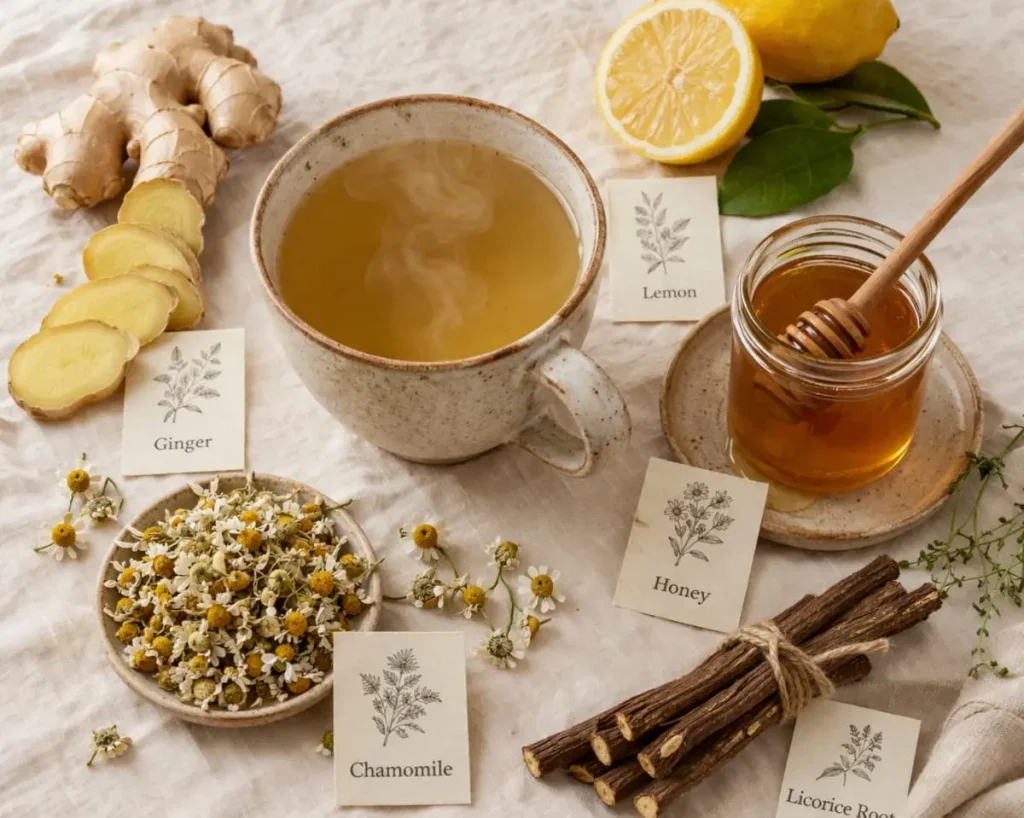
How to brew: Slice four or five coins of fresh ginger root and steep in boiling water for 8–10 minutes. The longer it steeps, the more potent the brew. Add raw honey and a squeeze of lemon for enhanced effect. Fresh root is significantly more effective than powder.
Peppermint Tea, Best for Breaking Up Mucus and Clearing Airways
Peppermint’s power comes from menthol, one of the most well-studied natural compounds for respiratory relief. Menthol activates cold-sensitive receptors in the mouth and throat, creating the sensation of clearer airways and reduced congestion, even when the physical obstruction hasn’t changed. That cooling, opening sensation isn’t a placebo; it meaningfully reduces cough sensitivity and the urge to cough.
Beyond its sensory effects, peppermint has genuine decongestant and antimicrobial properties. It helps thin and loosen mucus in the chest and sinuses, making it easier to clear. The steam from a hot cup of peppermint tea delivers menthol directly to the nasal passages and upper airway, amplifying the effect.
This is the best tea for coughs accompanied by heavy mucus, sinus congestion, or that suffocating feeling of blocked airways.
How to brew: Steep 1–2 teaspoons of dried peppermint leaf, or 4–5 fresh leaves, in just-boiled water for 5–7 minutes. Cover the cup while it steeps to trap the volatile menthol compounds. Breathe in the steam slowly before each sip.
Chamomile Tea, Best for Dry, Irritated Coughs
Chamomile is the gentlest option on this list, and for a specific type of cough, that gentleness is exactly what’s needed. If your cough is dry, no mucus, just a raw, burning sensation in the throat that triggers constant irritation, chamomile’s anti-inflammatory and antispasmodic properties are a near-perfect match.
The key compounds, particularly apigenin and bisabolol, reduce inflammation in the throat’s mucous membranes and calm the involuntary muscle spasms that cause a dry, repetitive cough. Chamomile also has mild sedative qualities, making it one of the best teas to drink for a cough at night. It soothes while helping you relax into sleep, which is when the body does its most significant repair work.
How to brew: Use a good quality loose-leaf chamomile and steep for 5 minutes in water just off the boil. Longer steeping increases the bitterness without a meaningful therapeutic benefit. Sweeten lightly with honey, which adds its own throat-coating effect.
Vocal Leaf pick: Vanilla Bliss layers chamomile-adjacent soothing botanicals with a naturally sweet, creamy profile, is completely caffeine-free, and is ideal for the last cup of the evening when a dry cough is keeping you awake.
Thyme Tea, Best for Persistent and Bronchial Coughs
Thyme is arguably the most clinically validated herb on this list for cough relief. Its primary active compound, thymol, has demonstrated expectorant and antispasmodic effects in multiple controlled studies, including trials comparing thyme-based preparations favourably against pharmaceutical cough syrups for bronchitis. Several European health authorities recognise thyme as a legitimate medicinal treatment for upper respiratory infections.
What makes thyme particularly valuable is how it addresses a persistent or bronchial cough: it loosens and thins mucus so it can be expelled more easily, while simultaneously calming the coughing reflex. Hence, the body isn’t in a constant cycle of irritation. If you’ve had a cough that has lingered for more than a week, or one that’s settled deep into the chest with a rattling, productive quality, thyme tea is one of the best natural interventions available.
How to brew: Steep 1–2 teaspoons of dried thyme, or a small bunch of fresh thyme, in boiling water for 8–10 minutes. Strain well. Add honey and lemon. Drink two to three cups daily at the acute stage.
Licorice Root Tea, Best for Soothing a Raw, Scratchy Throat
When a cough has left your throat feeling raw, abraded, and painfully sensitive, licorice root is one of the most effective herbal remedies available. Glycyrrhizin, the primary compound in licorice root, coats and protects irritated mucosal tissue, reduces inflammation in the throat lining, and has demonstrated antiviral properties that may help address the underlying infection driving the cough.
Licorice root also has mild expectorant properties and acts as a demulcent, forming a protective, soothing layer over inflamed tissue on contact. The relief from a well-brewed cup can be felt almost immediately in the throat, which makes it a good choice when the cough is more of a constant, nerve-triggered scratch than a productive clearing reflex.
One caution: licorice root should not be consumed in large quantities over extended periods, and those with high blood pressure should use it sparingly. For short-term cough relief, it is both safe and highly effective.
How to brew: Use 1 teaspoon of dried licorice root per cup, steeped for 5–7 minutes. It has a naturally sweet flavour and rarely needs additional sweetener.
Slippery Elm Tea, Best for Throat Coating and Irritation
Slippery elm bark has a unique mechanism that sets it apart from most herbal teas: it contains mucilage, a gel-like substance that, when mixed with water, literally coats the throat. This physical coating protects the inflamed mucous membranes from further irritation, reduces friction each time you swallow, and creates a sustained soothing effect that lingers well after the cup is finished.
It is one of the most direct remedies for a cough driven by throat irritation rather than chest congestion. Singers and voice professionals have used slippery elm for generations precisely because it protects the delicate tissues of the throat without suppressing the voice or drying out the vocal cords, unlike some over-the-counter medications.
How to brew: Slippery elm is typically sold as a powder. Stir 1 teaspoon into a small amount of warm water to form a paste, then add the remaining hot water and stir thoroughly. Drink slowly. A few drops of lemon help cut the thick texture.
Marshmallow Root Tea, Best for a Dry, Tickly Cough
Like slippery elm, marshmallow root is a demulcent; its high mucilage content forms a protective coat over irritated throat tissue. But where slippery elm is more aggressive in its coating action, marshmallow root works with a lighter touch, making it particularly well-suited to the maddening, dry, tickly cough that seems to have no productive purpose except to exhaust you.
Marshmallow root also has documented anti-inflammatory effects on the mucous membranes of the throat and upper respiratory tract. Early research suggests it may reduce the sensitivity of cough receptors, meaning the threshold for triggering the cough reflex is raised, and you simply cough less.
How to brew: Unlike most herbs, marshmallow root is best prepared as a cold infusion, steeped in room-temperature water for several hours or overnight. This preserves the mucilage, which heat can partially break down. If you need it urgently, a hot brew still delivers benefit, just slightly less.
Green Tea, Best for Antioxidant Support During Illness
Green tea earns its place on this list not as a direct cough suppressant, but as a systemic support during illness. It is exceptionally rich in epigallocatechin gallate (EGCG), one of the most potent antioxidants found in any food or beverage, with demonstrated antiviral and immune-modulating properties.
When your body is fighting the infection causing the cough, green tea helps support that process from the inside. Research has also shown that the L-theanine naturally present in green tea works synergistically with its antioxidants to reduce inflammation, including in the throat and respiratory tract.
Green tea is best used as a daytime companion to more targeted cough remedies, such as thyme or ginger, rather than as a standalone treatment. Its moderate caffeine content makes it less suitable as a nighttime option.
How to brew: Steep at a lower temperature than most herbal teas, around 75–80°C (170°F), for 2–3 minutes. Overheating green tea makes it bitter and degrades some of its beneficial compounds.
Vocal Leaf pick: Organic Loose Leaf Black Tea offers similar antioxidant support with a bolder, more robust flavour, a strong daytime option when you need both comfort and immune reinforcement. Black tea contains L-theanine and polyphenols that support the body’s defence response without the delicate brewing requirements of green tea.
Rooibos Tea, Best Caffeine-Free Option for Nighttime Coughs
Rooibos is naturally caffeine-free, making it one of the best teas for a cough at night, when you need relief without anything that will interfere with the sleep your body desperately needs to recover. Beyond its caffeine-free status, rooibos is rich in quercetin and aspalathin, two antioxidants with meaningful anti-inflammatory effects on the respiratory tract.
It has a naturally sweet, slightly earthy flavour that pairs beautifully with honey and warming spices, and its gentle action makes it suitable for children and those who are sensitive to more potent herbs. For a cough triggered by a cold, rooibos blended with warming spices like cinnamon, clove, and cardamom delivers both comfort and an added anti-inflammatory punch.
How to brew: Steep for 5–7 minutes in fully boiling water. Rooibos is more robust than green or white tea and benefits from a longer, hotter brew. Sweeten with honey and add a cinnamon stick for extra warmth.
Vocal Leaf pick: Organic Rooibos Chai is the ideal evening cough tea, a naturally sweet, spiced rooibos blend that delivers warmth, anti-inflammatory benefits, and calm without a trace of caffeine. It’s the cup that helps you wind down when a persistent cough has made sleep feel impossible. Also try Lemon Berry Dream, a bright, vitamin C-rich herbal blend that supports immune recovery while soothing the throat with each sip.
Best Tea by Cough Type
Not all coughs are the same, and the best tea for your cough depends entirely on what kind you’re dealing with. A dry, scratchy cough needs a different approach than a wet, productive one. A tickly cough that won’t stop needs different herbs than a deep, mucusy cough. Matching the tea to the cough type is what separates genuine relief from just something warm to hold.

Best Tea for a Dry Cough
A dry cough produces no mucus; it’s pure irritation. The throat is inflamed, the cough reflex is hypersensitive, and every tickle sends you into another exhausting cycle of coughing that accomplishes nothing except making your throat rawer.
The priority here is coating, calming, and reducing inflammation. You need a demulcent, a tea that forms a protective layer over the irritated tissue and raises the threshold that triggers the cough reflex.
Best choice: Marshmallow root or chamomile. Marshmallow root’s mucilage coats the throat and calms the nerve signals that drive the cough. Chamomile’s antispasmodic compounds reduce the involuntary muscle contractions behind that persistent dry hack. Brew either with raw honey, which adds its own protective coating and extends the soothing effect between cups.
If your dry cough is also accompanied by a scratchy, raw throat, which it usually is, licorice root tea is an excellent addition, either brewed alone or combined with chamomile for a gentler, sweeter cup.
Best Tea for a Wet or Productive Cough
A wet cough is the body doing its job, trying to clear mucus from the airway. Your goal isn’t to suppress it but to help it work more efficiently by thinning and loosening the mucus so it can be expelled more easily, and by reducing the inflammation that’s keeping the airways irritated and overproducing secretions.
Best choice: Ginger or thyme. Both are natural expectorants; they help thin mucus and encourage the body to move it upward and out. Ginger also reduces airway inflammation, while thyme has antispasmodic properties that prevent the cough from becoming more exhausting than necessary. Peppermint makes an excellent complement; its menthol helps open congested airways and make each productive cough more effective.
Avoid overly thick, coating teas like marshmallow root for a wet cough; they can work against the body’s natural clearing reflex.
Best Tea for a Chesty Cough with Mucus
A chesty cough is a wet cough that’s gone deeper, the congestion has settled into the chest, and there’s that uncomfortable heaviness, tightness, or rattling sensation with each breath or cough. This is where tea needs to work harder.
Best choice: Thyme, followed closely by ginger. Thyme’s thymol compound is specifically effective for bronchial congestion; it has demonstrated expectorant action in clinical settings and is the basis for several European pharmaceutical cough preparations. It loosens mucus in the lower respiratory tract and helps the body expel it, while its antispasmodic action calms the coughing fits that a chesty cough often triggers.
Ginger helps reduce bronchial inflammation that traps mucus in the chest. Brew them together, a slice of fresh ginger and a teaspoon of dried thyme in the same cup, for a combined effect that’s significantly more potent than either alone. Add honey and lemon. Drink it hot, and breathe the steam before each sip.
Best Tea for a Tickly or Persistent Cough
The tickly cough is one of the most frustrating; it’s often not productive, doesn’t seem to have a clear trigger, and returns almost immediately after each coughing fit. It’s frequently what remains after a cold has otherwise cleared: a lingering hypersensitivity in the throat or upper airway that keeps firing the cough reflex at the slightest stimulus.
A chronic or persistent cough lasting more than three weeks warrants a conversation with a doctor. But for the familiar post-cold tickle that lingers for days or a couple of weeks, the right tea can significantly accelerate recovery.
Best choice: Licorice root or marshmallow root. Both work on the nerve sensitivity driving the tickle rather than on mucus or inflammation alone. Licorice root’s glycyrrhizin coats and protects the irritated mucosal surface that’s triggering the reflex; marshmallow root’s mucilage does the same while also reducing receptor sensitivity. Either one, drunk consistently throughout the day, can break the cycle of irritation that keeps a tickly cough alive long after the original illness has passed.
Best Tea for a Scratchy or Irritated Throat Cough
Sometimes the cough isn’t coming from the chest at all; it’s pure throat. A scratchy, raw, irritated throat that sends you coughing at every swallow, every inhale of cold air, every word spoken too loudly. This is especially common for singers, teachers, and speakers who put daily strain on their voices and can’t afford for throat irritation to compound into something worse.
Best choice: Slippery elm or licorice root. Slippery elm’s mucilage physically coats the throat with each sip, providing a sustained barrier between the inflamed tissue and further irritation. The relief is tangible and immediate in a way that few other herbal remedies match. Licorice root layers on top with anti-inflammatory action that addresses the underlying swelling driving the irritation.
For anyone whose voice and vocal health matter professionally, this is the pairing to keep on hand year-round, not just during illness.
Best Tea for a Nighttime Cough
A cough at night is its own particular misery. Lying down shifts mucus, increases airway sensitivity, reduces saliva production, and removes the distractions that make a daytime cough bearable. The result is a cough that seems to intensify the moment you try to sleep, just when your body needs rest most.
The right tea for a nighttime cough needs to do two things simultaneously: address the cough itself and help the body relax into sleep. Caffeine is obviously counterproductive here, so the choice should always be a herbal, naturally caffeine-free option.
Best choice: Rooibos, chamomile, or a blend of both. Rooibos delivers anti-inflammatory antioxidants without any caffeine, while chamomile adds its well-known calming and antispasmodic effects, quieting both the cough reflex and the nervous system at once. Sweeten generously with honey, which will continue coating the throat as you sleep.
Organic Rooibos Chai is the ideal nighttime cough companion, warming, naturally sweet, completely caffeine-free, and blended with anti-inflammatory spices that work while you rest. Drink it 30 minutes before bed, warm rather than piping hot, and let it do its work.
Best Tea for Cough by Cause or Condition
The cause of a cough matters as much as the cough itself. A cough triggered by acid reflux needs a completely different approach than one caused by a viral infection or seasonal allergies. Using the wrong tea won’t necessarily make things worse, but using the right one, matched specifically to the underlying cause, is what produces real, lasting relief rather than temporary comfort.

Best Tea for a Cold and Cough
The common cold triggers a cough through a combination of throat inflammation, post-nasal drip, and increased mucus production. The best tea for a cold and cough needs to address all three: reduce inflammation, thin and clear mucus, and support the immune system in resolving the infection.
Best choice: ginger-honey-lemon tea. It covers every base, ginger reduces inflammation and acts as an expectorant, lemon delivers vitamin C and helps cut through mucus, and honey coats and protects the raw throat. This combination has stood the test of centuries precisely because it works across the full spectrum of cold symptoms simultaneously.
Lemon Berry Dream is a natural fit here, a bright, vitamin C-rich herbal blend that delivers immune support and throat soothing in every cup, without the need to source and prepare individual ingredients.
Best Tea for Flu-Related Cough
A flu cough tends to be more aggressive than a cold cough, deeper, more painful, often accompanied by chest tightness, body aches, fever, and a level of exhaustion that makes even brewing tea feel like an effort. The cough is frequently both dry and productive at different stages, and the body needs significant systemic support alongside direct symptom relief.
Best choice: Thyme- or elderberry-based herbal tea, with ginger. Thyme addresses the bronchial cough directly with expectorant and antispasmodic action. Elderberry has well-documented immune-modulating properties that may reduce the duration and severity of influenza. Ginger helps manage the accompanying inflammation and, combined with honey and lemon, makes for a tea that feels restorative when you’re at your lowest.
Hydration matters enormously during flu, so prioritise volume, multiple cups throughout the day, as much as the specific choice of tea.
Best Tea for Bronchitis and Chest Cough
Bronchitis, inflammation of the bronchial tubes, produces one of the most persistent and uncomfortable coughs: deep, rattling, frequently productive, and slow to resolve. Both acute bronchitis (typically viral) and chronic bronchitis require an approach focused on loosening mucus in the lower airways and calming the bronchial inflammation driving the persistent cough.
Best choice: Thyme, without question. The clinical evidence for thyme in bronchitis specifically is stronger than for almost any other herbal remedy. Its thymol content works as both an expectorant and a bronchial antispasmodic, loosening and thinning the mucus congesting the lower airways while reducing the painful spasms of a bronchial cough. A 2006 study published in Arzneimittelforschung found a thyme-ivy preparation as effective as the pharmaceutical expectorant ambroxol for acute bronchitis.
Brew thyme strongly, steep for a full 10 minutes, and drink consistently three times daily. Add ginger for additional anti-inflammatory support.
Best Tea for Allergy Cough
The immune system’s overreaction to an airborne trigger, such as pollen, dust, or pet dander, drives an allergy cough, causing inflammation in the airways and throat and often accompanied by post-nasal drip that produces a persistent, irritating cough. Unlike an infectious cough, there is no pathogen to fight, so the priority is purely anti-inflammatory and antihistamine action.
Best choice: Nettle leaf tea or peppermint tea. Nettle leaf is a natural antihistamine; it inhibits several inflammatory pathways involved in the allergic response, including histamine release. Peppermint complements it by opening congested airways and reducing the post-nasal drip that triggers the cough reflex.
Green tea is a strong supporting option for its quercetin content. Quercetin is a natural antihistamine and anti-inflammatory compound that, when consumed regularly during allergy season, may reduce overall symptom severity.
Best Tea for GERD or Acid Reflux Cough
A cough caused by GERD (gastroesophageal reflux disease) is one of the most commonly misdiagnosed coughs. The stomach acid that travels up into the oesophagus and throat causes chronic irritation and inflammation, leading to a persistent cough unrelated to the respiratory system. It often worsens after eating or when lying down, and it won’t respond to standard cough remedies the way an infectious cough will.
Tea selection for a GERD cough requires particular care, because some otherwise excellent cough teas, peppermint and licorice root among them, can actually relax the lower oesophageal sphincter and worsen acid reflux. Avoid both for this specific condition.
Best choice: Chamomile or marshmallow root. Chamomile has well-documented antispasmodic and anti-inflammatory effects on the digestive tract, reducing the gastric irritation that drives reflux. Marshmallow root coats and soothes the oesophageal lining that acid has irritated, reducing the throat inflammation that triggers the cough. Both are gentle on the digestive system and safe for regular use.
Drink chamomile or marshmallow root tea 20–30 minutes after meals and again before bed, when reflux and its associated cough are most disruptive.
Best Tea for Post-Nasal Drip Cough
Post-nasal drip, excess mucus from the sinuses dripping down the back of the throat, is one of the most common causes of a persistent cough, particularly at night and in the morning. The dripping mucus irritates the throat, triggering a reflexive cough that can last for weeks, especially after a cold or during allergy season.
Best choice: Peppermint or ginger. Peppermint’s menthol content directly addresses sinus congestion, reducing mucus production and helping clear the passages that are overproducing mucus. Ginger reduces the underlying sinus inflammation driving the excess secretion. Together, they target post-nasal drip at the source rather than just managing the throat irritation it causes.
Steam inhalation before drinking, leaning over the cup and breathing deeply for a minute before each sip, significantly amplifies the decongestant effect.
Best Tea for COVID Cough
A COVID-related cough can present in several ways: dry and persistent in the acute phase, or lingering and difficult to shift during recovery. The underlying mechanisms involve significant airway inflammation, and in some cases, ongoing sensitivity that extends well beyond the acute infection.
Best choice: Thyme for an active, productive cough; marshmallow root or chamomile for the dry, persistent post-COVID cough. Thyme’s demonstrated anti-inflammatory and expectorant actions make it the strongest option during the acute phase, when mucus and chest involvement are present. For the lingering dry cough that many people experience after COVID has otherwise resolved, the demulcent and antispasmodic properties of marshmallow root and chamomile are more appropriate, calming the hypersensitive airways rather than stimulating further mucus movement.
Green tea’s EGCG has also shown antiviral properties in laboratory research, and its anti-inflammatory action supports respiratory recovery. Organic Loose Leaf Black Tea offers similar antioxidant support with a more robust, satisfying flavour for daytime recovery drinking.
Best Tea for Cough and Congestion
A cough and congestion rarely travel alone. The same inflammation that fills the chest with mucus often blocks the sinuses, stuffs the nose, and creates that suffocating, heavy feeling that makes even breathing feel like work. When congestion and cough arrive together, the right tea needs to address both, opening the airways from above while loosening the mucus trapped below.

Best Tea for Chest Congestion and Cough
Chest congestion develops when excess mucus accumulates in the bronchial tubes and lower airways, producing that unmistakable tight, heavy pressure in the chest and a cough that sounds and feels deeper than usual. The goal is to thin the mucus so it can be expelled, reduce bronchial inflammation that keeps the airways narrowed, and calm the coughing reflex enough to make the whole process less exhausting.
Best choice: Thyme or ginger, ideally both brewed together. Thyme is the most clinically supported expectorant herb available without a prescription; its thymol content actively loosens mucus from the lower airways and helps the body clear it efficiently. Ginger works in parallel, reducing bronchial inflammation and gently dilating the airways to make breathing easier between coughing fits.
Brew them together in a single cup, one teaspoon of dried thyme and three to four slices of fresh ginger root, steeped in boiling water for a full ten minutes. Add raw honey and lemon. Drink it as hot as is comfortable, and take a moment to inhale the steam slowly before each sip. That steam delivers active compounds directly into the chest, amplifying the effect beyond what the liquid alone can achieve.
For nighttime chest congestion, when lying down makes everything worse, Organic Rooibos Chai provides warming, anti-inflammatory support without any caffeine. The spice blend gently works throughout the night while the rooibos base keeps inflammation in check.
Best Tea for Sinus Congestion and Cough
Sinus congestion and cough frequently occur together because blocked sinuses produce excess mucus that drains down the back of the throat, leading to post-nasal drip that irritates the throat lining and triggers a persistent, often unproductive cough. Clear the sinuses, and the cough frequently improves alongside.
Best choice: Peppermint tea, with ginger as a strong secondary option. Peppermint’s menthol content is one of the most effective natural decongestants available. It works directly on the sinus passages, reducing inflammation in the nasal mucosa, thinning the mucus that’s causing the blockage, and creating an immediate sensation of clearer, more open airways. The effect is fast, noticeable, and repeatable with each cup.
The steam from a freshly brewed cup of peppermint tea is almost as valuable as the liquid itself. Before drinking, hold the cup close and breathe the steam in slowly and deliberately, in through the nose if you can manage it, out through the mouth. This delivers menthol directly to the congested sinus passages, providing relief within minutes.
Ginger supports by addressing the underlying sinus inflammation at the root. For a sinus-congestion cough that has been building for several days, brewing peppermint and ginger together gives you the immediate decongestant action of menthol, alongside the stronger anti-inflammatory effects of ginger’s active compounds.
Best Tea for Stuffy Nose and Cough
A stuffy nose and cough, that blocked, pressured feeling across the face, combined with a throat that won’t stop, are among the most common presentations of a cold or sinus infection, and among the most uncomfortable. Breathing through the mouth dries the throat further, worsening the cough, while the blocked nose prevents the natural mucus drainage that would otherwise clear the congestion.
Best choice: Peppermint tea, strongly brewed. For a stuffy nose specifically, menthol’s action on nasal receptors is unmatched among herbal options. It doesn’t physically open the nasal passages; it activates cold-sensitive nerve receptors that create the sensation and reflex response of openness, reducing congestion perception and encouraging the nose to drain more effectively.
For the accompanying cough, a teaspoon of raw honey stirred into the peppermint tea adds throat coating and its own antimicrobial properties, addressing the throat irritation the mouth-breathing has caused. If the stuffy nose and cough have settled in for more than a few days, add ginger to the brew. The combination of menthol and gingerols targets both nasal congestion and the bronchial inflammation that prolonged mouth-breathing and post-nasal drip are likely to have compounded.
Lemon Berry Dream makes an excellent daytime companion for this kind of multi-symptom congestion. Its bright citrus profile delivers vitamin C for immune support, while the warm liquid keeps the airways hydrated and the throat soothed between stronger therapeutic brews.
Best Tea to Soothe a Sore Throat and Cough
A sore throat and cough are two symptoms that feed each other. The throat inflammation triggers the cough reflex, and every cough aggravates the already-irritated tissue, creating a cycle that can feel impossible to break. The right tea interrupts that cycle at multiple points simultaneously, which is why it consistently outperforms lozenges and sprays that address only one layer of the problem at a time.

What Makes a Tea Good for Throat Soothing?
Not every warm liquid soothes a sore throat equally. What separates a genuinely therapeutic tea from a comforting cup of hot water comes down to three distinct mechanisms, and the best throat teas deliver more than one of them.
The first is coating action. Certain herbs contain mucilage, a gel-like compound that physically coats the throat lining on contact, creating a protective barrier between the inflamed tissue and further irritation. Every swallow, every inhale of cold air, every word spoken is softened by that layer.
The second is the anti-inflammatory action. Some herbs reduce the underlying swelling in the throat tissue itself, not just masking the sensation but addressing the biological process driving it. This is what produces lasting relief rather than temporary comfort.
The third is antispasmodic action. The cough that accompanies a sore throat is often partly a nerve response; the inflamed tissue sends constant signals that trigger the cough reflex even when there’s nothing to clear. Herbs with antispasmodic properties calm those nerve signals, reducing cough frequency and breaking the cycle of irritation.
The best teas for a sore throat and cough deliver all three.
Best Tea for a Scratchy, Dry Throat
A scratchy throat, that rough, abraded feeling that worsens with every swallow and makes speaking uncomfortable, is most effectively treated with a combination of coating and anti-inflammatory action. The tissue is inflamed and hypersensitive, and it needs both physical protection and a reduction in the underlying swelling.
Best choice: Slippery elm or licorice root. Slippery elm’s mucilage coats the throat immediately and persistently, providing relief that extends well beyond the cup itself. Licorice root adds potent anti-inflammatory action via glycyrrhizin, which reduces swelling in the throat lining and has mild analgesic properties that take the edge off the pain. Together, they cover both the symptom and the cause.
Raw honey is non-negotiable here; stir a generous teaspoon into either tea. Honey’s own demulcent properties extend the coating effect, and its well-documented antimicrobial compounds support the body’s effort to resolve any underlying infection driving the throat irritation.
Vanilla Bliss is a naturally soothing, caffeine-free option whose smooth, creamy botanical profile makes it one of the most comforting choices for a raw, scratchy throat, particularly in the evening when the throat has taken a full day’s worth of strain.
Best Tea for an Itchy or Tickly Throat
An itchy, tickly throat is a specific kind of misery; the sensation is less painful than a raw sore throat but arguably more maddening, because it produces a near-constant urge to cough that’s difficult to suppress and rarely satisfying when you do. The trigger is usually nerve hypersensitivity in the throat lining rather than significant tissue damage, which means the solution is less about reducing inflammation and more about calming the nerve signals that trigger the itch-cough reflex.
Best choice: Marshmallow root or chamomile. Marshmallow root’s mucilage forms a film over the sensitive throat tissue, physically reducing the stimuli reaching the nerve endings beneath. Early research suggests it may also directly reduce receptor sensitivity, essentially raising the threshold at which the throat decides a cough is necessary. Chamomile works as an antispasmodic, calming the reflex muscle contractions that an itchy throat keeps triggering.
Drink slowly and deliberately, small sips held briefly in the throat before swallowing allow the mucilage and active compounds to make fuller contact with the irritated tissue. This isn’t a tea to rush through.
Best Tea for Throat Inflammation or Swelling
When the throat is visibly swollen, painful to swallow, tender to touch, producing that tight, constricted feeling, the priority shifts firmly toward anti-inflammatory action. Coating alone won’t address the underlying swelling; you need herbs whose active compounds work at the tissue level to reduce inflammation directly.
Best choice: Ginger or chamomile, with licorice root as a strong addition. Ginger’s gingerols are among the most potent natural anti-inflammatories available; they inhibit some of the same inflammatory pathways as ibuprofen, which is why ginger tea can produce genuinely noticeable relief for a swollen, inflamed throat rather than just surface comfort. Chamomile’s apigenin compound reduces inflammatory markers in mucous membranes, making it particularly well-suited for throat swelling.
For significant throat inflammation, brew ginger strongly, five or six slices of fresh root steeped for a full ten minutes, and drink it hot enough to be therapeutic but not so hot that it adds further irritation to already-sensitive tissue. Three to four cups throughout the day will deliver more sustained anti-inflammatory benefits than a single strong cup.
Lemon Berry Dream supports the relief of throat inflammation with its vitamin C-rich botanical profile. Vitamin C plays a direct role in tissue repair and immune response, making it a valuable daily cup alongside more targeted anti-inflammatory teas.
Throat-Coating Teas vs. Anti-Inflammatory Teas: What’s the Difference?
Understanding this distinction helps you choose more precisely and combine teas more effectively.
Throat-coating teas work mechanically. Their mucilage or demulcent compounds form a physical protective layer over the throat lining, reducing friction and shielding irritated tissue from further stimulus. They provide fast, noticeable relief because the action is direct and immediate. Slippery elm, marshmallow root, and licorice root are the primary examples. Their limitation is that they address the symptom, the irritation, without necessarily reducing the inflammation that causes it.
Anti-inflammatory teas work biochemically. Their active compounds, gingerols, apigenin, and thymol, are absorbed and act on the inflammatory pathways in the throat tissue itself, reducing swelling and the immune response that drives pain and irritation. Relief takes slightly longer to build but addresses the underlying cause rather than just the surface experience. Ginger, chamomile, and green tea are the clearest examples.
In practice, the most effective approach for a sore throat and cough combines both. A cup of slippery elm or marshmallow root gives you immediate comfort; a cup of ginger or chamomile lays the anti-inflammatory foundation for lasting improvement. Alternating between the two throughout the day, or finding blends that incorporate both mechanisms, is consistently more effective than relying on either approach alone.
For singers, speakers, teachers, and anyone whose throat health directly affects their professional life, building this dual approach into a daily routine, not just during illness, is one of the most practical things you can do for long-term vocal health.
Tea for Cough in Specific Populations
A cough is not a one-size-fits-all problem, and neither is the tea you use to address it. The same brew that works beautifully for a healthy adult may be too strong, contraindicated, or simply inappropriate for a child, a pregnant woman, or someone whose livelihood depends on the precise health of their voice. Here’s how to navigate tea for cough relief when the stakes are more specific.

Best Tea for Kids’ Cough
Children respond well to herbal teas for cough relief; the warmth, the honey, and the gentle herbal action can provide meaningful comfort without the side effects that some over-the-counter children’s cough medicines carry. That said, not every herb appropriate for adults is appropriate for children, and age matters significantly in determining what is safe.
For children over two years old, chamomile and rooibos are the safest and most consistently effective options. Chamomile’s antispasmodic and anti-inflammatory properties gently calm the cough reflex and reduce throat irritation. At the same time, rooibos provides antioxidant support without caffeine, tannins, or any compounds that cause concern in young children. Both are mild enough to drink daily and gentle enough not to overwhelm a child’s system.
Ginger tea, diluted and sweetened with honey, is appropriate for children over two and offers stronger expectorant action for a chesty or mucus cough. Keep the brew lighter than you would for an adult, half the usual amount of ginger, steeped for a shorter time, and ensure it has cooled to a comfortable drinking temperature before serving.
Raw honey should never be given to children under twelve months due to the risk of infant botulism. For children between one and two years, consult a paediatrician before introducing honey regularly. For children over two, a teaspoon of raw honey stirred into chamomile or rooibos is not only safe but adds genuine therapeutic benefit, coating the throat and extending the soothing effect between cups.
Peppermint tea is generally not recommended for children under five, as menthol can occasionally cause breathing difficulties in very young children. Thyme and licorice root are best reserved for older children and adults. When in doubt, chamomile and rooibos cover most childhood cough scenarios safely and effectively, and both are palatable enough that children will actually drink them.
Best Tea for Cough During Pregnancy
Pregnancy significantly narrows the list of herbal teas appropriate for cough relief, not because tea is inherently risky, but because certain herbs that are safe and effective in the general population have not been sufficiently studied in pregnancy or have known contraindications. The priority is always the safest effective option, not simply the most potent one.
Safe and well-tolerated options during pregnancy include ginger tea, chamomile, and rooibos. Ginger is the most extensively studied herb in pregnancy, primarily for its effectiveness against nausea, and its safety profile at moderate quantities is well established. Its anti-inflammatory properties extend to cough and throat relief, making it a practical first-line option. Chamomile soothes the throat, calms the cough reflex, and has a long history of safe use in pregnancy at normal quantities. Rooibos is caffeine-free, antioxidant-rich, and considered safe throughout all trimesters.
Herbs to avoid during pregnancy, even though they appear elsewhere on this page as effective cough remedies, include thyme in large medicinal quantities, licorice root, and peppermint in high concentrations. These are not necessarily dangerous in the small amounts found in flavoured foods or occasional cups, but as therapeutic doses taken multiple times daily for cough relief, they warrant caution and medical guidance.
Raw honey is safe during pregnancy and adds meaningful throat-soothing and antimicrobial benefits to any of the teas above.
A clear reminder: the information here is general guidance, not medical advice. Always consult your midwife, obstetrician, or doctor before using any herbal tea medicinally during pregnancy. Your individual health circumstances, trimester, and dosage all affect what is appropriate for you.
Organic Rooibos Chai and Vanilla Bliss are both caffeine-free, gently blended, and among the most pregnancy-friendly options in the Vocal Leaf range. They are comforting, effective, and easy to drink consistently without concern.
Best Tea for Cough for Singers and Voice Professionals
For singers, professional speakers, podcasters, teachers, and anyone whose voice is not just a convenience but a career, a cough is never just a cough. Every day of vocal strain, every night of disrupted sleep from a persistent cough, every performance attempted with an inflamed, irritated throat carries real professional consequences. The approach to tea, and to throat health generally, needs to reflect that.
The good news is that tea is one of the most effective tools available for maintaining vocal health, not just for acute cough relief. Used consistently and intelligently, the right teas reduce baseline throat inflammation, keep the vocal cords hydrated and protected, and shorten recovery time when illness does arrive.
For an active cough with throat involvement, the priority is coating and anti-inflammatory action without anything that dries the vocal tissue. This rules out high-caffeine teas taken in excess; caffeine is a mild diuretic and can contribute to vocal cord dehydration if it replaces rather than supplements water intake. It also means avoiding overly astringent teas, which can create a drying, contracting sensation in the throat.
The most effective teas for singers and voice professionals with a cough are slippery elm, marshmallow root, chamomile, and rooibos, all of which soothe, coat, and protect the vocal tissue without drying or astringent effects. Licorice root adds anti-inflammatory depth and is a long-standing favourite in the professional vocal community for good reason.
Beyond the acute cough, building a daily tea ritual around vocal health is one of the most practical investments a voice professional can make. Lemon Berry Dream in the morning for immune and antioxidant support. Organic Loose Leaf Black Tea mid-morning for L-theanine and polyphenol support. Vanilla Bliss in the afternoon for gentle, continuous throat soothing. Organic Rooibos Chai in the evening to wind down, reduce inflammation accumulated through the day, and prepare the voice for the recovery that happens during sleep.
Vocal Leaf exists precisely for this, a tea brand built not just around wellness in general, but around the specific, daily demands of people for whom the voice is everything. A cough treated early, consistently, and with the right herbs is a cough that doesn’t become the thing that cancels the performance.
Honey and Lemon in Your Tea: Why This Combination Works
Honey and lemon are two of the most searched cold remedies on the internet, and for good reason. Honey coats the throat, reduces irritation, and has demonstrated antimicrobial properties that support recovery. Lemon delivers vitamin C and a mild astringent effect that can help cut through mucus and brighten the flavor of an otherwise heavy-tasting herbal brew.
Together, they don’t just taste good. They work with your tea rather than against it.
Add raw honey, not processed, after your tea has steeped and cooled slightly, below 140°F. Heat destroys honey’s beneficial enzymes, so pouring it into boiling water wastes what makes it effective. A fresh squeeze of lemon goes in at the same time. One to two teaspoons of honey and half a lemon per cup is the standard starting point.
Lemon Berry Dream is particularly well-suited to this combination. Its lemon peel, freeze-dried lemon granules, and orange peel already carry citrus brightness; adding fresh lemon and honey deepens that profile while layering in the throat-soothing effect you’re looking for when you’re sick.
Quick Reference, Best Tea for Every Cough Type
Not sure which tea to reach for? Use this table to instantly match your symptoms to the right brew.
| Cough Type |
Best Tea / Herb |
Why It Works |
| Dry Cough |
Marshmallow root / Chamomile |
Coats and protects the throat lining, calms the cough reflex with antispasmodic action. |
| Wet / Productive Cough |
Thyme / Peppermint |
Natural expectorants that thin mucus and stimulate airway clearance. |
| Chesty / Congestion |
Ginger / Thyme |
Warming anti-inflammatory action that loosens deep chest mucus. |
| Tickly / Persistent |
Licorice root |
Coats irritated mucosal tissue and calms nerve sensitivity in the throat. |
| Sore Throat + Cough |
Rooibos Chai / Lemon Berry |
Anti-inflammatory spice blend and vitamin C-rich botanicals for recovery. |
| Nighttime Cough |
Chamomile / Rooibos |
Caffeine-free and calming; addresses the cough without disrupting sleep. |
| Cold + Flu Cough |
Ginger, Honey & Lemon |
Combines antimicrobial, anti-inflammatory, and immune-boosting action. |
Bookmark this table for the next time a cough catches you off guard. And if you want teas that are already blended, sourced, and ready to brew, explore the Vocal Leaf collection built specifically for throat and vocal health.
The Right Tea Makes All the Difference
A cough is the body asking for help. Tea, the right tea, matched to the right symptoms, is one of the most effective, time-tested answers available.
Whether you’re reaching for ginger to loosen a chesty cough, marshmallow root to quiet a dry tickle, or a warming cup of Rooibos Chai to get some sleep finally, the herbs in your cup are doing real, measurable work. The key is knowing which one to choose and drinking it consistently enough for it to work.
At Vocal Leaf, every blend is crafted with throat and vocal health at its core, because your voice deserves more than generic wellness. Explore the full collection at vocalleaf.com and find the tea that’s right for what you’re dealing with today.
Frequently Asked Questions (FAQ’s)
What is the best tea for a cough?
Ginger, thyme, and peppermint are consistently the most effective teas for a cough, each targeting different aspects of the problem: inflammation, mucus, and airway congestion, respectively. For a dry, irritated cough, chamomile or marshmallow root is better matched. The best tea depends on your cough type, but any of these brewed with raw honey will deliver meaningful relief.
Does hot tea help with a cough?
Yes, hot tea helps with a cough through three simultaneous mechanisms: the warm liquid soothes and reduces inflammation in the throat on contact, the steam hydrates and opens congested airways, and the herbal compounds deliver targeted therapeutic action throughout the respiratory tract. Research from the Common Cold Centre at Cardiff University confirmed that hot drinks provide significantly greater symptom relief than the same drink served at room temperature.
What tea is best for a dry cough?
Marshmallow root and chamomile are the best teas for a dry cough. Marshmallow root’s mucilage physically coats the throat and calms the nerve signals triggering the cough reflex, while chamomile’s antispasmodic compounds reduce the involuntary muscle contractions behind a dry, repetitive cough. Both work best sweetened with raw honey, which extends the soothing effect between cups.
What tea is best for a wet cough with mucus?
Thyme and ginger are the most effective teas for a wet cough with mucus. Thyme acts as a natural expectorant, thinning mucus and helping the body expel it more efficiently, while ginger reduces airway inflammation that drives excess mucus production. Peppermint complements both by opening congested airways and making each productive cough more effective.
Is ginger tea good for a cough?
Yes, ginger tea is one of the most effective natural remedies for a cough. Its active compounds, gingerols and shogaols, reduce airway inflammation, act as mild expectorants to loosen mucus, and have demonstrated bronchodilator properties that ease chest tightness. It is particularly effective for coughs associated with colds, flu, chest congestion, and sore throat.
Is green tea good for a cough?
Green tea supports recovery from a cough primarily through its high concentration of EGCG, a potent antioxidant with anti-inflammatory and antiviral properties that help the body fight the underlying infection driving the cough. While it is not a direct cough suppressant, drinking green tea consistently during illness provides meaningful systemic immune support, helping shorten the duration and severity of the cough.
Does tea help break up mucus?
Yes, hot tea helps break up mucus in two key ways. The heat of the liquid reduces mucus viscosity, making it thinner and easier for the body to clear, while the steam continuously hydrates the airways and prevents further thickening. Specific herbs amplify this significantly: thyme and peppermint are natural expectorants that actively thin mucus and stimulate the body’s clearing mechanisms beyond what heat and hydration alone can achieve.
What tea stops coughing fast?
For fast cough relief, licorice root and marshmallow root are the most immediate options; their mucilage coats the throat on contact, reducing irritation and triggering the reflex within minutes of the first sip. Peppermint tea provides rapid relief for a congestion-driven cough through menthol’s fast-acting airway-opening effect. Any of these works faster when sweetened with honey, which adds its own protective coating to the throat.
What tea is good for a cough and sore throat?
Slippery elm, licorice root, and ginger are the most effective teas for a cough and sore throat together. Slippery elm coats and protects the raw throat tissue, licorice root reduces the underlying inflammation causing the soreness, and ginger addresses both the inflammation and the bronchial component of the cough. Sweeten with raw honey for additional throat-coating and antimicrobial benefits.
What tea is good for cough and congestion?
Peppermint and ginger are the best teas for cough and congestion. Peppermint’s menthol opens congested nasal passages and sinuses while thinning mucus throughout the respiratory tract. Ginger reduces bronchial inflammation and loosens chest congestion through its expectorant action. Brewed together in a single cup and drunk hot, inhaling the steam deliberately before each sip, they provide some of the fastest natural relief available for this combination of symptoms.
Can tea make a cough worse?
In most cases, no, but there are exceptions worth knowing. Very hot tea can further irritate an already inflamed throat if drunk too quickly, so warm rather than scalding is always better when the throat is raw. Highly caffeinated teas consumed in excess can contribute to mild dehydration, which thickens mucus. Peppermint and licorice root teas can worsen a cough caused by acid reflux, as both may relax the oesophageal sphincter and encourage further reflux. Matching the tea to the correct cause of the cough avoids these issues entirely.
What tea is safe for a cough during pregnancy?
Ginger tea, chamomile, and rooibos are the safest and most effective teas for a cough during pregnancy. All three have well-established safety profiles at normal quantities and provide meaningful cough and throat relief without the concerns associated with more potent herbs. Avoid thyme in medicinal doses, licorice root, and high-concentration peppermint during pregnancy. Always consult your midwife or doctor before using any herbal tea therapeutically while pregnant.
What is the best herbal tea for a cough?
The best herbal tea for a cough depends on the type of cough. Thyme is the most clinically validated option for a productive or bronchial cough, marshmallow root and chamomile are most effective for a dry or tickly cough, and peppermint is best for congestion-driven coughs. For a versatile option that works across cough types, ginger tea with honey and lemon addresses inflammation, mucus, and throat soreness simultaneously, making it the most broadly effective single herbal tea for cough relief.
How often should you drink tea when you have a cough?
Three to five cups throughout the day is the most effective approach; consistency matters more than quantity in any single sitting. Spacing cups every two to three hours keeps the throat continuously hydrated and soothed, maintains a steady level of herbal compounds in the system, and prevents the mucus thickening that occurs when hydration drops. A final cup before bed, caffeine-free and sweetened with honey, extends the soothing effect through the night when coughs typically worsen.













)
&description=&image=https://vocalleaf.com/wp-content/uploads/2026/04/Best-Tea-for-Cough-1024x572.webp)