The Best Caffeinated Teas for a Sore Throat
Herbal teas may lead the conversation around throat remedies, but caffeinated teas deserve their place in the discussion. Many of them carry genuine anti-inflammatory and antimicrobial properties, and for people who rely on caffeine to function, especially when illness is already draining their energy, knowing which caffeinated teas are actually helpful for a sore throat is practical, useful information.
The key distinction to keep in mind: caffeinated teas are mildly dehydrating compared to herbal varieties, so pairing them with plenty of water throughout the day matters more when you’re sick. With that caveat noted, here are the best caffeinated teas for a sore throat and what each one brings to the cup.

Green Tea, Antioxidants, and Mild Anti-Inflammatory Properties
Green tea is arguably the strongest caffeinated option for a sore throat, and it’s not particularly close. It’s one of the most antioxidant-dense beverages in the world, primarily due to its high concentration of epigallocatechin gallate, EGCG, a catechin with well-documented anti-inflammatory and antiviral properties.
When you drink green tea while dealing with a sore throat, you’re delivering those antioxidants directly to irritated throat tissue with every sip. Studies have suggested that green tea consumption can reduce the severity of upper respiratory infections, which are often the underlying cause of throat soreness.
Matcha green tea takes this a step further. Because matcha is made from whole ground tea leaves rather than steeped leaves, it delivers a significantly higher concentration of EGCG and other catechins than regular brewed green tea. If you’re comfortable with the slightly stronger caffeine content, matcha is one of the most potent green tea options for immune and Throat support.
Jasmine green tea and mint green tea offer the same core antioxidant benefit with additional layers. Jasmine adds a mild calming effect, while mint green tea introduces a touch of menthol’s numbing quality alongside the anti-inflammatory base. Ginger green tea is perhaps the most therapeutically complete caffeinated option, combining green tea’s antioxidants with ginger’s antimicrobial and circulation-boosting properties in a single cup.
Adding honey to any green tea preparation meaningfully amplifies its effectiveness for a sore throat. It improves the flavor if you find plain green tea too grassy or bitter when you’re unwell.
Black Tea, Tannins That Help Reduce Swelling
Black tea works through a different mechanism than green tea, and it’s one worth understanding. Black tea is rich in tannins, astringent compounds that cause proteins to contract and tighten on contact. When you drink black tea, those tannins interact with the swollen, inflamed tissue lining your Throat and create a mild astringent effect that can temporarily reduce swelling and soreness.
This is why hot black tea with honey has been a go-to home remedy for throat pain across generations; the tannins address the swelling while the honey coats and soothes. It’s a combination that genuinely works and holds up to scrutiny beyond mere anecdotal tradition.
Ceylon tea, English breakfast tea, and orange pekoe are all black tea varieties that deliver the same core tannin benefit. They differ mainly in flavor profile and origin rather than therapeutic mechanism, so choosing between them is largely a matter of personal preference. All of them are reasonable choices when your Throat is sore, and you want a caffeinated option with real soothing properties.
The one consideration: black tea is more caffeinated than green tea, which means its dehydrating effect is slightly stronger. Keep water close by, and consider adding a generous amount of honey to every cup; it helps offset the drying quality while adding its own layer of throat protection.
Earl Grey Tea, Black Tea with Added Bergamot Benefits
Earl Grey is black tea infused with bergamot oil, and that addition is more meaningful for sore throat relief than most people realise. Bergamot oil contains compounds, primarily limonene and linalool, with mild antimicrobial and anti-inflammatory properties that complement the tannin base of the black tea beneath it.
Is Earl Grey tea good for a sore throat? Yes, genuinely. It delivers everything black tea offers for throat inflammation, with the added dimension of bergamot’s bioactive compounds. The aroma alone, that distinctive floral-citrus scent, has a mild decongestant quality that can make breathing feel slightly easier when your Throat and sinuses are both affected.
Earl Grey with honey and a squeeze of lemon is a particularly well-rounded combination for throat pain. The tannins reduce swelling, the bergamot adds antimicrobial activity, the honey coats and protects, and the lemon contributes vitamin C and a mild acidic environment that’s inhospitable to certain bacteria. It’s one of those combinations where every ingredient is genuinely pulling its weight.
Chai Tea, Spice Compounds That Fight Infection
Chai tea is a blend of black tea with a collection of warming spices, typically ginger, cinnamon, cardamom, cloves, and black pepper. That spice profile makes it one of the most therapeutically interesting caffeinated teas for sore throat relief.
Each spice in a traditional chai blend contributes something meaningful. Ginger brings its antimicrobial and anti-inflammatory gingerols. Cinnamon has documented antibacterial properties. Cloves contain eugenol, a natural analgesic compound that actively numbs pain, the same compound used in some dental pain relief applications. Cardamom soothes the digestive system and has mild antimicrobial properties. Together, these spices create a genuinely potent blend that goes well beyond the base benefits of the black tea itself.
Is chai tea good for a sore throat? Particularly when the soreness comes with body aches, chills, or the general heaviness of a cold or flu, chai is one of the most comforting and actively beneficial caffeinated choices available. A hot chai tea latte made with non-dairy milk and sweetened with honey rather than sugar takes that comfort a step further. Just be mindful that dairy milk can increase mucus production, which is worth avoiding when you’re already congested.
Oolong and White Tea, Lighter Options Worth Considering
Oolong and white tea occupy different points on the oxidation spectrum from green and black tea, and both are worth considering as gentler caffeinated options for a sore throat.
Oolong tea sits between green and black tea in terms of oxidation, which means it carries both catechins from the green tea side and tannins from the black tea side, a middle-ground combination of the antioxidant and astringent benefits discussed above. It’s lower in caffeine than black tea, making it a more hydrating choice during illness, and its smooth flavour makes it easy for most people to drink repeatedly throughout the day.
White tea is the least processed of all true teas, made from young tea leaves and buds that are simply dried rather than oxidized. This minimal processing preserves an exceptionally high concentration of catechins and antioxidants, in some cases higher than that of green tea. It’s also the most delicate in flavor and the lowest in caffeine among caffeinated teas, making it genuinely soothing rather than stimulating. For someone with a sore throat who wants a light, easy-to-drink caffeinated option with real antioxidant support, white tea is a quietly excellent choice.
Jasmine tea, typically a jasmine-scented green or white tea, combines the antioxidant base of its underlying tea with the mild calming and antimicrobial properties of jasmine blossoms. It’s one of the more pleasant-tasting options on this list, which matters when illness makes everything feel harder than it should.
The Best Tea Combinations and Ingredients for a Sore Throat
Choosing the right tea is only half the equation. What you add to that tea can be just as important, sometimes more so. The difference between a plain cup of chamomile and chamomile tea with honey and lemon isn’t just flavor. It’s a meaningful upgrade in therapeutic value, and understanding why each ingredient works will help you build the most effective cup possible every single time.

Honey in Tea, Why It’s the #1 Add-In for Throat Pain
If there’s one ingredient that belongs in every cup of tea you drink while your Throat is sore, it’s honey. And the reasons go well beyond sweetness.
Raw honey is one of the most well-researched natural antimicrobial substances available. It contains hydrogen peroxide, methylglyoxal, and defensin-1, compounds that actively inhibit the growth of bacteria responsible for throat infections. When you stir honey into hot tea, you’re not just improving the taste. You’re adding a layer of direct antimicrobial activity to every sip that travels down your inflamed Throat lining.
Honey also has a physical coating effect. It’s viscous enough to cling to irritated mucous membranes, creating a temporary protective layer over raw tissue that reduces the pain of swallowing. This combination of antimicrobial action and physical soothing is why tea and honey together are so consistently effective, and why it has remained one of the most trusted home remedies across virtually every culture for centuries.
Hot tea with honey is good for a sore throat in a way that either ingredient alone simply isn’t. The warmth of the tea opens up the throat tissue and increases circulation, and the honey coats and protects what the heat has relaxed. They work together, not just alongside each other.
One practical note: add honey after the tea has cooled slightly from boiling. Extremely high temperatures can degrade some of honey’s more delicate antimicrobial enzymes. Warm to hot is the sweet spot, effective and preserving.
Lemon in Tea, Vitamin C, pH, and Throat Benefits
Lemon is honey’s natural partner in throat tea, and it earns that position through several distinct mechanisms working simultaneously.
The most obvious contribution is vitamin C, a well-established immune system supporter that your body produces in abundance during infection. Squeezing fresh lemon into tea gives you a meaningful dose of it in a form that’s easy to consume even when swallowing is uncomfortable.
Beyond vitamin C, lemon’s acidity creates a slightly inhospitable environment for certain bacteria in the Throat. It also helps thin mucus, which is particularly useful when soreness is accompanied by postnasal drip or congestion. And the citric acid in lemons acts as a mild astringent, gently tightening inflamed tissue, which can help reduce swelling and discomfort.
Why is lemon tea good for a sore throat? Because it’s addressing the problem from multiple angles at once, immune support, antimicrobial environment, mucus management, and mild astringency, all in a single squeeze. Combined with the warmth of the tea and the coating of honey, lemon elevates a simple remedy into something genuinely comprehensive.
Ginger + Lemon + Honey Tea, The Ultimate Sore Throat Recipe
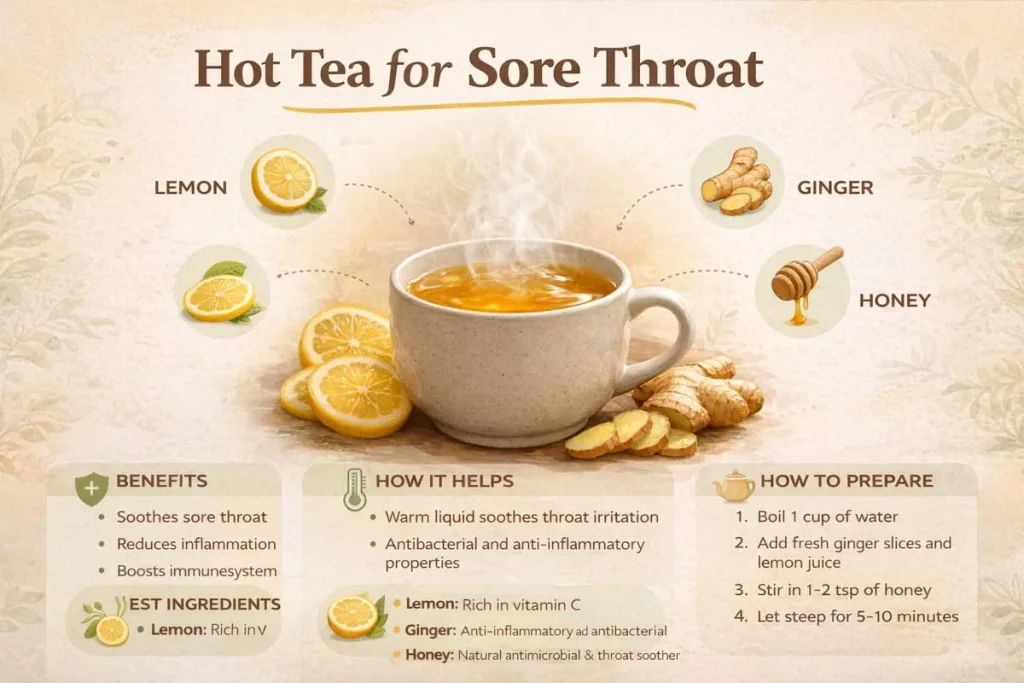
If you could design the ideal tea for a sore throat from scratch, you’d likely end up with some version of ginger, lemon, and honey tea. This combination has become near-universal in natural remedy traditions worldwide, and when you examine what each ingredient contributes, the logic is immediately clear.
Ginger brings powerful anti-inflammatory and antimicrobial compounds, gingerols and shogaols, that work directly against the infection or irritation driving the soreness. Lemon contributes vitamin C, astringency, and a pH environment that discourages bacterial growth. Honey coats, soothes, and adds its own layer of antimicrobial protection while making the whole combination genuinely pleasant to drink.
Together, they cover nearly every dimension of sore throat relief: inflammation, infection, physical coating, immune support, and warmth. Ginger lemon honey tea is not just comforting; it is, by a reasonable measure, the most complete natural tea remedy for a sore throat that you can make with ingredients likely already in your kitchen.
To make it properly: steep fresh, sliced ginger in just-boiled water for 5 to 10 minutes, squeeze in half a lemon, and stir in a generous teaspoon of raw honey once the temperature has dropped slightly from boiling. Drink it hot, slowly, and repeat two to three times throughout the day.
Green Tea with Honey and Lemon
Green tea with honey and lemon is a slightly lighter but equally effective variation on the same principle. The green tea base brings EGCG and catechins, antioxidants that reduce inflammation and support the immune response against the viral or bacterial cause of the sore Throat. The honey and lemon add all of the above: coating, antimicrobial activity, vitamin C, and astringency.
This combination works particularly well for people who prefer a less intense flavor profile than ginger provides, or who want the additional antioxidant depth that green tea offers over plain hot water. It’s also a good choice when the sore Throat is mild to moderate, enough to warrant real treatment, but not so severe that you need the strongest possible remedy.
Green tea with lemon alone is worth drinking even without honey if sweetness isn’t desired; the antioxidants and the lemon’s vitamin C work independently and remain effective. But for maximum sore-throat relief, the honey is worth adding.
Chamomile Tea with Honey
Chamomile tea with honey is the combination most suited to evenings and nighttime throat relief. Chamomile’s anti-inflammatory flavonoids calm irritated tissue and reduce swelling, while its mild sedative properties help ease the restlessness and discomfort that make sleeping difficult when you’re sick. Honey’s coating and antimicrobial effects carry through the night, continuing to protect the Throat lining while your body focuses its energy on recovery during sleep.
Honey vanilla chamomile tea, either homemade by adding a small amount of pure vanilla extract or using a pre-blended variety, takes this combination a step further. The vanilla adds a mild soothing quality of its own and makes the cup genuinely enjoyable, which matters when you’re trying to drink therapeutic tea consistently rather than reluctantly.
Is chamomile tea with honey good for a sore throat? It’s arguably the best combination specifically for nighttime use, calming, anti-inflammatory, and soothing in equal measure.
Turmeric and Ginger Tea, Anti-Inflammatory Combination
Turmeric and ginger tea bring together two of the most studied anti-inflammatory plants in natural medicine. Curcumin, turmeric’s primary active compound, has been shown to inhibit multiple inflammatory pathways simultaneously, making it one of the most potent natural anti-inflammatory substances known. Ginger’s gingerols confer anti-inflammatory and antimicrobial activity, and the two compounds appear to act synergistically when combined.
For a sore throat driven by significant inflammation, the kind that makes every swallow genuinely painful, or that comes with visible redness and swelling, turmeric ginger tea is one of the most targeted choices available. Adding a small amount of black pepper to the cup meaningfully increases curcumin absorption, and honey rounds out the combination with its coating and antimicrobial properties.
The flavor is warm, earthy, and slightly spicy, not everyone’s first instinct, but effective enough that it’s worth acquiring a taste for during illness.
Cinnamon and Clove Tea, Warming Antimicrobial Blend
Cinnamon and clove tea is one of the more underappreciated combinations for sore throat relief, particularly when the throat pain comes with the deep, aching discomfort of a developing cold or infection.
Cinnamon contains cinnamaldehyde, a compound with documented antibacterial and antifungal properties. It’s also warming in the same circulatory sense as ginger; it increases blood flow to the areas it reaches, supporting the immune response and creating that deep, spreading warmth that feels therapeutic rather than just pleasant. Cloves bring eugenol, the same natural analgesic compound found in dental pain relief products, which provides a mild but genuine numbing effect on irritated throat tissue.
Together, cinnamon and clove tea create a warming, antimicrobial, mildly pain-relieving combination that’s particularly effective for sore throats accompanied by the chills and body heaviness of early illness. Add honey to amplify both the soothing and antimicrobial effect, and you have a cup that genuinely earns its place in any sore throat remedy toolkit.
How to Make the Best Tea for a Sore Throat at Home
Knowing which tea to choose is one thing. Making it properly is another. The difference between a well-prepared cup and a carelessly made one isn’t just flavor, it’s potency. Steeping temperature, timing, ingredient quality, and the order in which you add things all affect how much therapeutic value actually ends up in your cup. Here’s how to get it right.

Basic Hot Ginger Lemon Honey Tea Recipe
This is the foundation. Once you understand this recipe, every variation becomes intuitive.
What you need: Fresh ginger root (about a one-inch piece), half a lemon, one to two teaspoons of raw honey, and two cups of filtered water.
How to make it:
Start by peeling and slicing the ginger into thin coins; the thinner the slices, the more surface area you expose, and the more of ginger’s active compounds transfer into the water. Bring your water to just below a boil, around 90 to 95 degrees Celsius, and add the ginger slices directly to the pot or a heatproof mug. Let it steep for at least 5 minutes, and up to 10 if you want a stronger, more medicinal result.
While the ginger is steeping, cut your lemon and set it aside. Once the steeping time is up, remove the ginger slices and allow the tea to cool for sixty to ninety seconds, just enough to bring it from scalding to comfortably hot. This step matters more than most people realize, as discussed in the next section.
Squeeze the lemon in now, while the tea is hot enough to release the oils from the lemon peel if you run it along the rim of the mug. Then add your honey and stir until it dissolves completely. Drink slowly, letting each sip linger briefly at the back of the Throat before swallowing.
That last detail, drinking slowly and deliberately, maximizes the contact time between the tea’s active compounds and your inflamed Throat tissue. It sounds minor. It isn’t.
Steeping Temperature and Time: Why It Matters
Most people either pour boiling water directly onto their tea and drink it immediately or steep it for thirty seconds and move on. Both approaches leave significant therapeutic value on the table.
Temperature matters because different compounds extract at different heat levels. For herbal teas, chamomile, peppermint, ginger, and sage, use water just off the boil (around 90 to 95°C) to extract the active compounds most efficiently without destroying the more heat-sensitive ones. Boiling water poured directly onto delicate herbal flowers like chamomile can actually degrade some of its beneficial flavonoids before they make it into your cup.
For green tea specifically, lower is better. Water around 75 to 80°C preserves the catechins, including EGCG, that make green tea valuable for a sore throat. Green tea steeped in boiling water tends to go bitter, which discourages consistent drinking, and the excess heat can diminish some of its more delicate antioxidant content.
Steeping time is equally important. Most herbal teas for sore throat relief need at least five minutes to release their active compounds meaningfully. Throat coat varieties and denser herbs like licorice root and thyme benefit from steeping for closer to seven to ten minutes. Green and black teas are quicker; two to four minutes is generally optimal before tannin overextraction makes them unpleasantly astringent.
And the honey timing discussed above bears repeating here: always add honey after steeping, once the tea has cooled slightly from its peak temperature. Raw honey contains enzymes and antimicrobial compounds that begin to break down above approximately 40°C. Adding it to scalding liquid undermines the very properties that make it so effective for throat pain.
How Often Should You Drink Tea When Your Throat Hurts?
The honest answer is: more often than you probably are.
One cup of tea when you wake up and one before bed will provide comfort, but it won’t deliver the sustained therapeutic benefit that consistent sipping throughout the day does. The active compounds in tea, whether it’s ginger’s gingerols, chamomile’s apigenin, or honey’s antimicrobial enzymes, don’t accumulate in the throat tissue. They pass through. Frequent, steady intake maintains a consistent presence of those compounds at the site of inflammation.
A practical target when you’re actively dealing with a sore throat is 3 to 5 cups spread throughout the day. This also supports hydration, which is independently critical during illness. Your immune system functions significantly better when you’re well hydrated, and the mucous membranes lining your Throat are better able to defend against infection when they’re not dried out.
Drinking hot tea is particularly good for a sore throat in the morning, when overnight breathing has typically left the Throat at its driest and most irritated. Starting the day with a full, properly made cup, slowly sipped before breakfast, sets a better baseline for the hours that follow.
If waking up in the night with throat pain, a thermos of warm ginger-honey tea kept on the bedside table is genuinely worth the effort. Reaching for it in the night without having to get up removes the friction that usually means you just suffer through it instead.
Adding Turmeric, Cinnamon, or Apple Cider Vinegar
Once you’re comfortable with the basic ginger-lemon-honey foundation, these three additions are worth knowing about; each adds a distinct therapeutic dimension without significantly complicating the preparation.
Turmeric is the most impactful upgrade. A quarter to half a teaspoon of ground turmeric stirred into your ginger lemon honey tea transforms it into one of the most anti-inflammatory beverages you can drink during illness. Curcumin, turmeric’s active compound, inhibits multiple inflammatory pathways simultaneously. The key to making it work: add a small pinch of black pepper. Piperine, the active compound in black pepper, increases curcumin absorption by up to 2,000 percent. Without it, most of the curcumin passes through your system without being absorbed. With it, the addition becomes genuinely potent.
Cinnamon adds a warming, mildly antibacterial quality and significantly improves the flavour of most throat teas. Half a teaspoon of ground cinnamon, or a cinnamon stick steeped alongside the ginger, contributes cinnamaldehyde, a compound with documented antibacterial properties, and a deep warming quality that’s particularly comforting when illness has left you feeling cold and depleted.
Apple cider vinegar is the most polarizing addition and the one that requires the most care. A teaspoon stirred into warm tea creates a mildly acidic environment in the Throat that some bacteria find inhospitable, and the acetic acid in apple cider vinegar has antimicrobial properties of its own. However, undiluted or in large quantities, it can further irritate an already sensitive throat lining. The rule is simple: always dilute it well, keep the quantity small, and don’t use it if your Throat is already raw and severely inflamed. When the soreness is moderate and the tea is well-prepared, a small amount of apple cider vinegar can be a useful addition. When the Throat is at its most painful, skip it and stick with honey and lemon.
Best Tea for Sore Throat with Specific Symptoms
A sore throat rarely arrives alone. More often than not, it brings company, congestion, a cough, a fever, a headache, or the particular discomfort of being pregnant and limited in what you can safely take. The tea that works best for a straightforward sore throat isn’t always the right choice when other symptoms are layered on top.
This section matches the right tea to the full picture of what you’re experiencing, not just the throat pain in isolation.

Sore Throat and Congestion or Stuffy Nose
When a sore throat comes paired with congestion, a stuffy nose, or a runny nose, the priority shifts slightly. You need a tea that addresses throat inflammation while also opening the airways and thinning the mucus that’s making everything worse.
Peppermint tea is the strongest first choice here. Menthol, its primary active compound, is one of the most effective natural decongestants available. It activates cold receptors in the nasal passages and Throat simultaneously, creating a sensation of opened airways that provides genuine, if temporary, relief from stuffiness. The steam from a hot cup of peppermint tea amplifies this effect considerably; breathing slowly over the cup before drinking delivers menthol vapor directly to congested sinuses.
Ginger tea is the second essential recommendation for this combination. Ginger acts as a natural expectorant, helping loosen and clear mucus from the airways rather than allowing it to sit and worsen congestion and throat irritation. A ginger peppermint blend, either combined in one cup or alternated throughout the day, addresses sore Throat and congestion as a pair rather than treating each symptom separately.
Eucalyptus tea, where available, is also worth considering. Eucalyptol, the active compound in eucalyptus, is clinically recognized as a mucolytic and bronchodilator, and it effectively relieves congestion. Thyme tea offers a similar expectorant quality alongside its antimicrobial properties, making it a strong supporting option when the stuffy nose suggests an active infection rather than simple irritation.
What to avoid when congestion is part of the picture: dairy-based milk teas and excessively sweet preparations. Dairy can thicken mucus and worsen congestion, and high sugar intake during illness can dampen immune function at exactly the wrong moment.
Sore Throat and Cough
A sore throat combined with a cough creates a particularly frustrating feedback loop: the cough irritates the Throat further, the throat irritation triggers more coughing, and the cycle compounds throughout the day and night.
The best tea for a sore Throat and cough needs to address both the inflammation and the cough reflex simultaneously. Licorice root tea is the standout choice for this combination. Its glycyrrhizin content coats and soothes the Throat lining, reducing the irritation that triggers the cough reflex. At the same time, its mild expectorant quality helps clear the mucus that’s often driving the cough from below. Throat Coat tea, one of the most popular commercial herbal blends, uses licorice root as its primary ingredient for exactly this reason.
Thyme tea earns a strong second mention here. Thymol, its active compound, is both antimicrobial and expectorant; it helps loosen mucus while fighting the infection causing the cough, rather than just masking the symptom. For a productive cough alongside a sore throat, thyme tea is one of the most genuinely therapeutic options available.
Honey is non-negotiable in any tea you drink for this combination. Multiple clinical studies have found that honey is as effective as some over-the-counter cough suppressants in reducing cough frequency and severity, particularly in children. However, its benefits extend to adults as well. A generous amount of honey in every cup isn’t optional here; it’s a core part of the remedy.
For nighttime relief specifically, when coughing tends to intensify and disrupts sleep most severely, chamomile tea with honey addresses the cough, soothes the Throat, and adds its mild sedative quality to help you actually rest through the discomfort.
Sore Throat and Fever
When a sore throat accompanies a fever, your body is actively fighting an infection and running a fever to do so. The approach to tea shifts in two important ways: hydration becomes the top priority, and you want ingredients that support the immune response rather than just addressing surface-level throat comfort.
Elderberry tea is the most targeted choice when a fever is present. Its anthocyanins and immune-supporting compounds work with your body’s elevated immune activity rather than simply soothing its symptoms. Research on elderberry extracts consistently shows reduced duration and severity of flu-like illness, exactly the scenario where sore Throat and fever tend to co-occur.
Ginger tea with honey and lemon remains one of the best teas for a sore Throat and fever because it covers multiple bases simultaneously. Ginger’s anti-inflammatory and antimicrobial compounds support the immune response; honey adds its own antimicrobial layer; and lemon’s vitamin C provides the immune system with additional resources. The warmth and steam help manage the discomfort that comes with fever-related body aches and chills.
Echinacea tea deserves mention here specifically for fever-accompanied illness. It has a reasonably well-supported body of research suggesting it can reduce the duration of upper respiratory infections when taken early in the illness, and a sore throat with fever is almost always an early signal that the immune system is working to resolve the illness.
The most important practical consideration when fever is involved: drink more tea than you think you need. Fever accelerates fluid loss significantly, and dehydration worsens both the fever and the throat inflammation. Three to five cups of tea throughout the day is a minimum; six to eight is better, supplemented with water between cups.
Sore Throat and Headache
The combination of a sore Throat and headache typically signals one of two things: dehydration or the early stages of a viral illness in which inflammation is beginning to affect multiple systems simultaneously. Either way, the tea strategy addresses both possibilities at once.
Peppermint tea is the strongest recommendation for this specific combination. Menthol has a well-documented effect on tension-type headaches. Applied topically, it’s as effective as acetaminophen in some studies, and when consumed as tea, it provides meaningful systemic cooling and muscle-relaxing effects that can ease head and neck tension alongside throat pain. A strong cup of peppermint tea with honey addresses the Throat while simultaneously creating conditions more conducive to headache relief.
Ginger tea is the close second. Ginger has been studied specifically for headache and migraine reduction, with several trials showing it can reduce the severity of head pain when consumed early in an episode. Combined with its throat benefits, ginger tea is arguably the most efficient single choice when you need one cup to work on two problems.
Staying well-hydrated is particularly important when a headache accompanies throat pain, since dehydration often drives the headache even when infection is also present. Herbal teas count toward fluid intake, but pairing each cup with a glass of water ensures you’re covering both the therapeutic and the hydration dimensions of recovery.
Sore Throat While Pregnant, Safe Options
Pregnancy changes the calculus on almost every remedy, and tea is no exception. Several herbal teas that are genuinely effective for sore throat relief are not considered safe during pregnancy, particularly in the first trimester, due to their potency or effects on uterine muscle tone.
The good news is that several of the most effective sore throat teas are considered safe in normal culinary quantities during pregnancy, and they work well enough that you don’t need to reach for the ones that carry risk.
Ginger tea is generally considered safe during pregnancy in moderate amounts; up to 1 gram of dried ginger per day is the commonly cited guideline, and it remains one of the most effective teas for throat inflammation and immune support. The additional benefit for many pregnant women is that ginger also helps manage nausea, making it a particularly practical choice during the first trimester when morning sickness and illness can overlap.
Chamomile tea with honey is widely drunk during pregnancy in moderate quantities. It provides gentle anti-inflammatory relief alongside calming, sleep-supportive properties, particularly valuable when illness and pregnancy-related discomfort are compounding. High-dose or very concentrated chamomile preparations are generally advised against during pregnancy, but a normal cup of chamomile tea is considered low-risk by most healthcare guidelines.
Lemon tea, simply hot water with fresh lemon and honey, is one of the safest and most universally recommended options during pregnancy. It delivers vitamin C, gentle astringency, and the antimicrobial properties of honey without the concerns associated with stronger herbal preparations.
Teas to approach carefully or avoid during pregnancy include: licorice root in significant quantities, sage tea in therapeutic doses, thyme tea in large amounts, and any blend containing herbs not specifically assessed for pregnancy safety. When in doubt, particularly in the first trimester, checking with a healthcare provider before introducing any new herbal tea is the right call. The safest and most effective combination for most pregnant women dealing with a sore throat remains ginger, lemon, and honey: simple, gentle, and genuinely effective.
Teas to Avoid or Limit When You Have a Sore Throat
Most conversations about tea and sore throats focus on what to drink. But knowing what to limit, or avoid entirely, is equally important. Some teas and tea preparations that feel comforting in the moment can quietly undermine your recovery, worsening congestion, accelerating dehydration, or suppressing the immune response your body depends on. Here’s what to watch out for.

Why Milk Tea Can Increase Mucus Production
Milk tea is one of the most popular hot beverages in the world, and the instinct to reach for it when you’re unwell is completely understandable. It’s warm, familiar, and comforting in a way that feels inherently restorative. The problem is that dairy milk has a well-documented tendency to thicken existing mucus secretions in many people, not necessarily to increase mucus production from scratch, but to make the mucus that’s already present denser, stickier, and harder to clear.
When your sore Throat is accompanied by postnasal drip, congestion, or a cough, which it very often is, thicker mucus means more irritation at the back of the Throat with every swallow, more frequent throat-clearing that further aggravates inflamed tissue, and a general worsening of the congestion that’s already making you miserable.
Is milk tea good for a sore throat? For some people with purely isolated throat soreness and no upper respiratory symptoms, a moderate amount of milk tea is unlikely to cause significant harm. But for the majority of people whose sore Throat comes with a cold or respiratory illness, milk tea is genuinely counterproductive. The dairy component undermines exactly the conditions you’re trying to create: clear airways, thin mucus, and reduced throat irritation.
The practical alternative: if you want the comfort and body of a milk-based tea, unsweetened oat milk or almond milk are reasonable substitutes that don’t have the same tendency to thicken mucus. A chai made with oat milk and sweetened with honey rather than sugar captures most of the comfort of a traditional milk tea without the respiratory downside.
Caffeinated Teas, Dehydration Risk
Caffeinated teas, black tea, green tea, chai, and Earl Grey have genuine benefits for a sore throat, as covered earlier in this guide. But they come with a trade-off that becomes more significant during illness: caffeine is a mild diuretic, meaning it increases fluid output and works against the deep hydration your body needs when it’s fighting an infection.
This doesn’t mean caffeinated teas are off-limits when you’re sick. It means they shouldn’t be your primary source of fluid intake. One or two cups of green or black tea throughout the day is reasonable and still delivers real therapeutic benefit. Relying on four or five cups of caffeinated tea while skipping water and herbal alternatives is where the risk of dehydration becomes significant.
The clearest sign that caffeine is working against you: if your Throat feels drier and more irritated after a cup of tea rather than soothed, the caffeine content may be contributing. Switching to herbal teas for the majority of your intake, and treating caffeinated tea as an occasional supplement rather than a primary remedy, resolves the issue while preserving the benefits.
There’s also a sleep dimension worth considering. Quality sleep is one of the most powerful recovery tools available during illness, and caffeine consumed in the afternoon or evening disrupts it. When you’re sick, protecting your sleep is worth more than the marginal benefit of an extra cup of caffeinated tea. After midday, herbal teas are the better call, chamomile, ginger, or peppermint in the evening, and leave the black and green tea for morning.
Iced Tea and Cold Drinks: Helpful or Harmful?
The question of whether iced tea is good for a sore throat is more nuanced than a flat yes or no, and the honest answer depends on what stage of the illness you’re in and what’s driving the discomfort.
Cold liquids, including iced tea, can provide temporary numbing relief during the acute phase of severe throat pain. The cold temperature reduces nerve sensitivity in the inflamed tissue, creating a brief window of reduced pain that some people find genuinely helpful. If your Throat is so intensely inflamed that hot liquids feel uncomfortable rather than soothing, cold tea won’t hurt you, and the temporary numbing effect is a legitimate form of relief.
The limitation is that cold tea doesn’t deliver the broader benefits that make hot tea valuable for a sore throat. The warmth that increases circulation, relaxes muscle tissue, opens airways, and amplifies the effects of anti-inflammatory compounds is absent. Cold tea is the symptom-management version of the remedy; it addresses the immediate pain without addressing the underlying inflammation that causes it.
Iced tea and other cold drinks do nothing for the congestion or mucus issues that typically accompany a sore throat, and cold temperatures can cause some people’s throat muscles to tighten rather than relax, temporarily worsening the sensation of soreness.
The sensible approach: use cold or iced tea strategically for acute pain relief when needed, but keep the majority of your tea intake hot or warm, where the real therapeutic value lives.
Sweet Tea and Added Sugars: What to Know
Sweet tea, particularly the heavily sweetened Southern-style variety, sits in a similar category to milk tea: comforting, familiar, and mildly counterproductive when your body is trying to recover from illness.
The core issue is sugar. High sugar intake has a measurable suppressive effect on immune function. Research has shown that consuming significant amounts of sugar can temporarily reduce the activity of white blood cells, the primary responders your immune system deploys against infection. During illness, when your immune system is already working at capacity, adding a significant sugar load is working against it at exactly the wrong moment.
Is sweet tea good for a sore throat? A lightly sweetened tea is unlikely to cause meaningful harm, and the warm liquid and hydration still provide benefit. But the heavily sweetened versions, whether commercial sweet tea, sugary chai lattes, or tea loaded with multiple teaspoons of white sugar, are worth reconsidering during illness.
The alternative is straightforward: use raw honey as your sweetener instead of sugar. Honey provides the sweetness that makes tea more palatable and easier to drink consistently, while simultaneously adding antimicrobial and coating properties that actively support throat recovery. It is, in this sense, the only sweetener that makes your tea both more pleasant and more effective at the same time.
Flavored commercial teas with added sugar or artificial sweeteners fall into the same category of moderation. The tea base itself may be beneficial, but the sugar content offsets some of that value. When illness is the context, a simpler, less sweetened preparation is almost always better.
When Tea Isn’t Enough, Signs Your Sore Throat Needs Medical Attention
Tea is one of the most effective natural tools available for sore throat relief. It soothes inflammation, supports the immune system, coats irritated tissue, and makes the experience of being unwell significantly more manageable. For the vast majority of sore throats, the kind caused by a common cold, dry air, mild viral infection, or seasonal allergies, consistent tea drinking, rest, and hydration are genuinely sufficient to support recovery.
But some sore throats are not in that category. And knowing the difference matters.
Some specific symptoms and patterns indicate a sore throat has moved beyond the reach of home remedies, including tea, and into territory that requires professional medical assessment. Continuing to treat these situations at home doesn’t just delay recovery; it also undermines it. In some cases, it allows a treatable condition to progress to a more serious stage.

Symptoms That Mean You Should See a Doctor
A sore throat warrants medical attention, sooner rather than later, if you experience any of the following:
Severe or worsening throat pain that makes swallowing liquids difficult or near-impossible is a signal that the inflammation has progressed beyond typical viral irritation. If drinking tea, something warm and soothing, has become genuinely painful rather than relieving, that’s clinically significant.
A sore throat lasting longer than a week without clear improvement is one of the most important thresholds to be aware of. Most viral sore throats resolve within five to seven days with appropriate rest and home care. A throat that remains equally sore or worsens after seven days is not following the expected pattern and needs to be evaluated.
A high fever accompanied by a sore Throat, particularly above 38.5°C (101.3°F), suggests the body is mounting a significant immune response to an active infection. While low-grade fever is a normal part of illness, a persistently high fever alongside throat pain should be assessed by a doctor, not managed at home indefinitely.
White patches, spots, or a coating on the tonsils are a visual warning sign that should always be taken seriously. This presentation is commonly associated with strep throat or tonsillitis, both bacterial infections that typically require antibiotic treatment. No herbal tea, however potent, treats bacterial strep throat on its own.
Swollen, tender-to-the-touch, or visibly enlarged neck lymph nodes indicate that the immune system is responding to an infection significant enough to activate a lymphatic response. Combined with throat pain, this pattern warrants a strep test at a minimum.
Difficulty breathing, or a sensation of throat tightening, is an urgent symptom. If swelling in the Throat is affecting your ability to breathe freely, this is a medical emergency and requires immediate attention, not another cup of tea.
Pain or difficulty opening the mouth, facial swelling, or swelling on one side of the Throat can indicate a peritonsillar abscess, a serious complication of untreated tonsillitis that requires prompt medical drainage and antibiotic treatment. This is one of the most commonly missed escalation signals in adults who are managing a sore throat at home.
An earache occurring alongside throat pain is another symptom the Mayo Clinic specifically flags as a reason to seek medical evaluation. The ear and Throat share nerve pathways, and referred ear pain from a throat infection often signals a more significant infection than a straightforward viral sore throat.
A recurring sore throat that resolves and then recurs within days or weeks suggests an underlying issue that a single course of home treatment will not resolve. Recurrent strep, chronic tonsillitis, acid reflux, or other conditions can all present this way and require professional diagnosis to address properly.
A Note on Strep Throat Specifically
Strep throat deserves particular mention because it is one of the most common reasons adults and children seek medical care for a sore throat, and it is also one of the most commonly undertreated conditions when home remedies are relied upon for too long.
Streptococcal pharyngitis, also known as strep throat, is a bacterial infection caused by Group A Streptococcus. Unlike viral sore throats, strep throat does not resolve on its own as reliably, and untreated strep carries a small but real risk of complications, including rheumatic fever and kidney inflammation. Herbal teas with antimicrobial properties, particularly licorice root, sage, thyme, and oregano, can help soothe the Throat and may provide some antibacterial support while you’re waiting for a medical appointment. They are not, however, a substitute for a strep test or the antibiotic course typically required to confirm a strep infection.
If your sore Throat came on suddenly, is significantly more painful than a typical cold sore throat, and is accompanied by fever and swollen glands, but notably without a runny nose or cough, that clinical pattern is strongly associated with strep rather than a viral infection. See a doctor. Drink your ginger honey tea on the way.
The Right Way to Think About Tea and Medical Care
Tea and medical treatment are not opposites. They are genuinely complementary. Drinking chamomile, ginger, or licorice root tea while waiting for a doctor’s appointment is sensible; it relieves discomfort, supports hydration, and helps keep the throat tissue as calm as possible during the assessment. Continuing to drink therapeutic teas alongside a prescribed antibiotic course is entirely appropriate and may support faster recovery.
The mistake to avoid is using the temporary comfort that good tea provides as a reason to delay assessment of symptoms that genuinely warrant it. Feeling slightly better after a cup of honey ginger tea does not mean a bacterial infection is resolving. It means the tea is doing its job of managing the symptoms, which is valuable, but distinct from treating the underlying cause.
When in doubt, a same-day appointment or urgent care visit to rule out strep or tonsillitis takes less than twenty minutes and gives you the information you need to treat the situation correctly. Tea is one of the most effective natural sore throat remedies available. A doctor’s diagnosis is entirely different, and when the symptoms above are present, it’s more important than the other.







)
&description=&image=https://vocalleaf.com/wp-content/uploads/2026/03/What-Tea-Is-Good-for-a-Sore-Throat.webp)