
Best Tea for Singers | What Actually Helps Your Voice
If you sing, whether you perform professionally, teach voice lessons, or spend your weekends in rehearsal, you’ve probably wondered whether tea actually does anything useful for your voice. It’s one of the most common questions in vocal health circles, and the honest answer is more nuanced than most tea brands will tell you.
Tea is not a cure. It doesn’t strengthen your vocal cords, fix strain, or make a tired voice perform like a fresh one. But the right tea, chosen at the right time and temperature, can meaningfully support how your voice feels, reducing dryness, easing irritation, and helping your throat stay comfortable through long rehearsals, demanding performances, and the recovery period that follows.
This guide covers everything singers need to know: which teas genuinely help, which ones to approach carefully, when to drink them, and how to build a simple routine that keeps your voice feeling its best day to day.
The best tea for singers is not a single product; it’s the right tea matched to the right moment. Here’s how to find it.
Does Tea Actually Help Singers?
The short answer is yes, but not in the way many singers hope.
Tea supports the singing voice primarily through two mechanisms: hydration and throat comfort. When you sip warm herbal tea regularly, you’re encouraging consistent fluid intake, which keeps the mucous membranes surrounding the vocal cords moist. Those membranes need to stay hydrated to vibrate efficiently. When they dry out, from dehydration, air conditioning, alcohol, or extended vocal use, the voice becomes effortful, breathy, or fatigued more quickly.
The second mechanism is comfort. Warm liquid relaxes the muscles and tissues surrounding the larynx, reducing the tension that builds up during long rehearsals or high-pressure performances. That relaxation doesn’t fix technique problems, but it does create a more favorable physical environment for singing.
What tea cannot do, in fact, is reach the vocal cords themselves. Nothing you drink touches the vocal cords directly, they sit too far below the throat for any liquid to make contact. The soothing effect you feel is happening in the throat tissue above the cords, not on them. This matters because many singers drink tea, expecting it to coat or protect their voice during a performance, when in reality the benefit lies in preparation and recovery, not the performance itself.
Tea is also not a substitute for vocal rest, proper technique, or medical care. Suppose your voice is genuinely distressed, you have persistent hoarseness, sharp pain when singing, or recurring strain. Tea. Tea is a comfort tool, not a treatment. Use it as part of a smart routine, not as a reason to push through a voice that’s asking for rest.
So, is tea bad for singing in any situation? It can be, if you choose the wrong type. Strongly caffeinated teas, teas with aggressive menthol, or very hot drinks can all work against a singer rather than supporting them. The goal is always gentle, warm, and throat-friendly, not stimulating, not numbing, not drying.
Best Tea to Drink Before Singing Timing and Temperature
How and when you drink tea matters as much as which tea you choose.
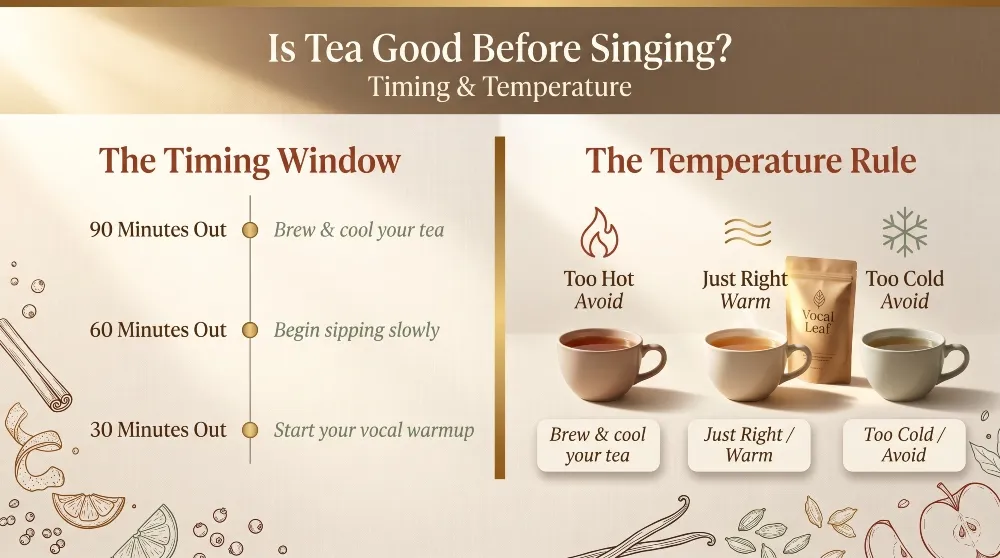
The optimal window for pre-singing tea is 30 to 90 minutes before vocal use. This gives the warmth time to relax your throat, the hydration time to absorb, and your stomach time to settle so you’re not singing over a full stomach. Drinking tea immediately before a performance and gulping it quickly is likely to leave you feeling more bloated than supported.
Temperature is where many singers get this wrong. Very hot tea feels therapeutic; the instinct is that more heat means more benefit. It doesn’t. Overly hot liquid can irritate the delicate tissue of the throat, causing inflammation rather than easing it. The rule is simple: if you can’t sip it comfortably without flinching, it’s too hot for your voice. Let freshly brewed tea cool for three to five minutes before drinking. The ideal temperature feels like a warm hug in your throat, comfortable enough to sip slowly without thinking about it.
Cold tea is a problem entirely different. Cold temperatures cause the muscles surrounding the larynx to constrict, reducing flexibility and range of motion. It’s similar to sprinting after sitting in a cold bath: the muscles simply don’t respond as well when they’re cold. Room temperature or warm is always the safer choice before singing.
Before a performance, keep a few things out of your tea. Avoid adding large amounts of honey; a small amount is fine, but too much leaves the throat feeling coated. Avoid adding fresh lemon or citrus juice, which is highly acidic and can trigger reflux in sensitive singers. And avoid dairy-based additions entirely, as milk proteins can increase mucus production for many people, leaving the voice feeling heavier than it should.
A practical pre-singing routine: make a gentle caffeine-free herbal tea about an hour before your rehearsal or performance. Let it cool to a comfortable warm temperature. Sip it slowly over 15 to 20 minutes while you go through your physical warmup. By the time you start your vocal warmup, your throat is relaxed, hydrated, and ready.
What Tea Do Singers Drink?
Ask a group of professional singers what’s in their backstage thermos, and you’ll get a surprisingly consistent answer: warm, herbal, and caffeine-free.
The reasons are practical. Caffeine is a mild diuretic; it encourages the body to lose fluid faster than normal, which works directly against the hydration singers depend on. Tannins in some teas create an astringent, drying sensation in the throat. And strongly aromatic or spiced blends can be unpredictable before vocals, triggering throat clearing or irritation at the worst possible moment.
What most experienced vocalists gravitate toward is the opposite: gentle herbal blends that feel smooth, non-drying, and easy to sip, with no unwanted side effects. Ginger-based teas are extremely common, as is rooibos, which offers a naturally caffeine-free base with a warming, full-bodied flavor. Blends that include gentle warming spices, cinnamon, cardamom, aniseed, without aggressive menthol or high acid content tend to be favorites because they feel therapeutic without being harsh.
Is Ginger Tea Good for Singers?
Ginger is one of the most widely recommended ingredients in the singer’s toolkit, and for good reason.
Ginger has well-documented anti-inflammatory properties and can help reduce mild throat irritation that builds up during heavy vocal use. It also helps manage excess mucus, a common complaint among singers, particularly in cold weather or allergy season, that leaves the voice feeling congested and less free. The warmth of a ginger-based tea adds to its appeal: the physical sensation of warmth relaxes the throat and reduces tension in the surrounding muscles.
Is lemon ginger tea good for singers? With one caveat: the ginger portion is beneficial, but the lemon depends entirely on how it’s incorporated. Dried lemon peel, used in small amounts as part of a loose leaf blend, delivers brightness without the acid load of fresh lemon juice. Fresh lemon juice, particularly in large amounts, can be sufficiently acidic to aggravate reflux in susceptible singers.
The timing consideration with ginger is worth noting: very intense ginger consumed close to singing can occasionally aggravate reflux-prone singers. At a moderate strength and 30 to 60 minutes before singing, it works beautifully. Immediately before going on stage is not the moment for a strong ginger brew.
Is Green Tea Good for Singers?
Green tea sits in complicated territory for singers, and the honest answer depends on the individual and the context.
The concern is caffeine. Even in moderate amounts, green tea has roughly a third of the caffeine of coffee; caffeine can have a mild diuretic effect and contribute to vocal dryness over time. Green tea also contains tannins, which can leave an astringent feeling in the throat that some singers find uncomfortable before vocals.
The antioxidant benefits of green tea are real. For singers who tolerate caffeine well and aren’t using it directly before heavy vocal work, it’s a reasonable choice on low-demand days. The practical fix: a shorter steep time of two to three minutes rather than five significantly reduces both caffeine and tannin intensity, producing a gentler cup that’s far more throat-friendly.
Is green tea good for singing? On a maintenance basis, for singers who tolerate caffeine well and brew it lightly, yes. Before a demanding performance or rehearsal, a caffeine-free herbal tea is the smarter choice.
Is Black Tea Good for Singers?
Black tea is the most caffeinated of the common tea types and therefore requires the most care in a singer’s routine.
The case for black tea is energy; many singers reach for it as a morning alternative to coffee, and at a lighter brew strength, it delivers a gentler, more sustained lift without the sharp acidity that makes coffee difficult for reflux-prone voices. The case against it is hydration: strong, long-brewed black tea contributes to dryness, as singers feel in their voices.
Is black tea good for singers? Yes, with parameters. Brew it lightly, three to four minutes rather than five. Pair it with a large glass of water. And keep it well away from the 90-minute window before any significant singing. Used this way, it’s a sensible compromise for singers who need morning energy without the full vocal trade-offs of coffee.
Is lemon tea good for singers? A herbal or black tea with dried lemon incorporated works well. Fresh lemon juice added in significant amounts carries the same acid caution as described above; the distinction matters more than it might seem for reflux-prone voices.
The Best Herbal Teas for Singers: What to Look For
When singers talk about herbal tea for singing, they’re describing a category rather than a specific ingredient. The best herbal teas for singers share a set of properties that make them genuinely voice-friendly: caffeine-free, non-acidic, smooth-tasting, free of harshness or strong bitterness, and designed to encourage slow, steady sipping.
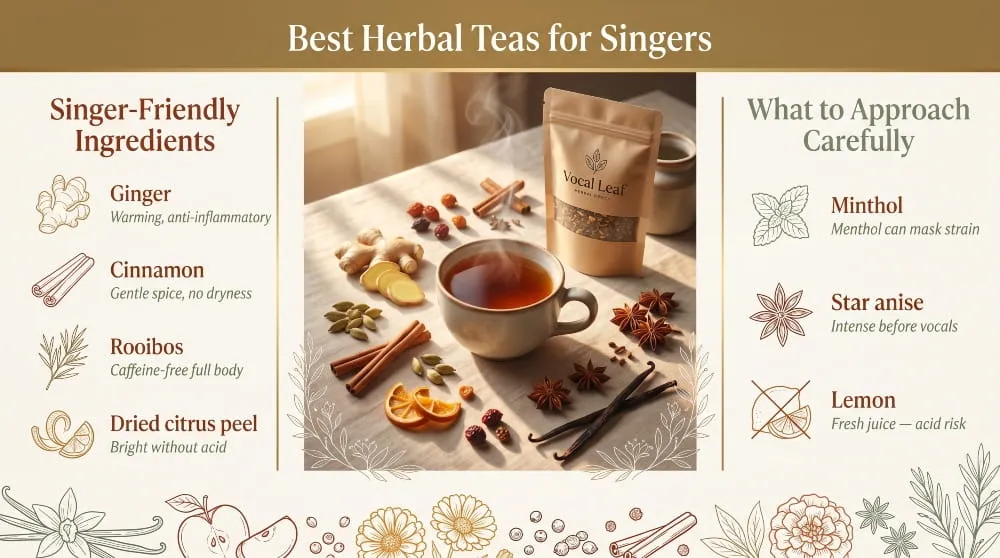
The ingredients that tend to work well in singer-focused blends include ginger, which is warming and helps with irritation; rooibos, which provides a full-bodied caffeine-free base with no tannins; cinnamon and cardamom, which add warming depth without being sharp; and dried citrus peel in small quantities, which gives brightness without the acid load of fresh juice.
Ingredients to approach carefully include strong mint and menthol, which can create a numbing sensation that masks throat strain; licorice root, which is genuinely soothing but should be avoided by singers with high blood pressure, acid reflux, or certain medications; and highly aromatic spice mixes that feel intense going down.
Herbal teas designed specifically for singers, rather than general wellness blends, tend to balance these considerations more carefully. The difference is in the formulation: a tea made with singers in mind is calibrated to support the voice at specific moments, not just to taste pleasant.
Throat Soothing Tea for Singers What Actually Calms Irritation and Soreness
Every singer knows the feeling: the throat that protests after a heavy rehearsal, the morning after a late-night gig when the voice feels tight and rough, the scratchy pre-show anxiety that makes you want to reach for anything comforting.
Throat irritation in singers can come from multiple sources: sustained vocal use, dry air in rehearsal rooms or studios, acid reflux reaching the larynx, post-nasal drip from allergies, or accumulated dehydration over a long day. Tea helps address the comfort side of this equation, not the root cause. But in the recovery window, comfort matters.
The best tea for a singer’s sore throat shares the same properties as the best pre-singing tea: warm, gentle, caffeine-free, and easy to sip slowly. The only change is the timing: pre-singing tea is about preparation, and post-singing tea is about recovery. The priority after heavy vocals is calming irritation and reducing the urge to clear your throat, which, in a feedback loop, can cause further irritation many singers painfully recognize.
Tea works best for throat recovery when paired with the basics: vocal rest, warm steam if available, and consistent water intake throughout the recovery period. Tea is the comfortable layer on top of those fundamentals.
When throat pain moves beyond normal post-rehearsal fatigue, sharp pain during singing, hoarseness that persists for more than one to two weeks, and a feeling of strain that returns quickly, tea is no longer the relevant tool. Those are signals to reduce vocal load, rest properly, and if they persist, consult a voice specialist.
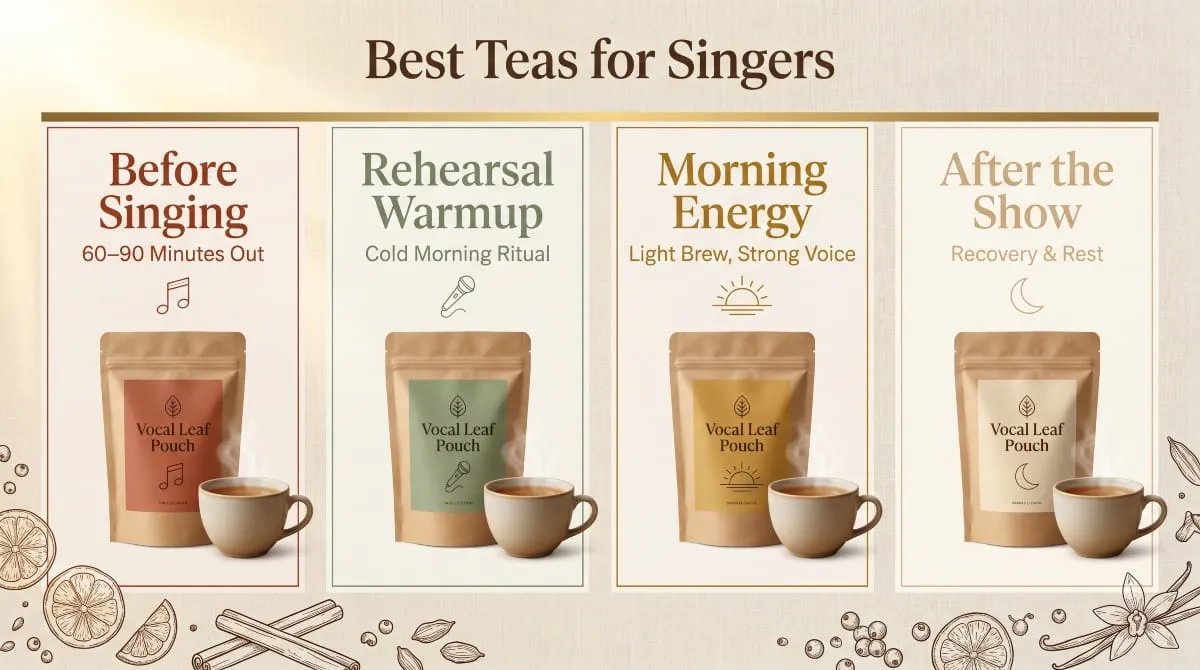
Best Tea for Singers by Situation, Matched to What Your Voice Needs
The most practical way to think about singers’ tea is not which tea is best, but which tea is best right now. Different moments in a vocal day call for different choices, and matching the tea to the moment is where the real value lives.
Before singing, 60 to 90 minutes out
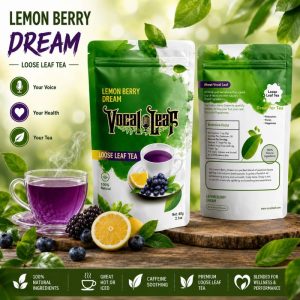
This is the most important window. You want warm, caffeine-free, and gentle. Lemon Berry Dream Tea was built specifically for this moment, a caffeine-free loose leaf blend of lemon peel, blackberry leaves, apple pieces, orange peel, cinnamon, and marigold blossoms. The citrus notes are bright without being acidic because they come from dried peel rather than juice. Brew at 203–212°F, steep for 10–12 minutes, and let it cool before drinking.
Warming up on a cold rehearsal morning
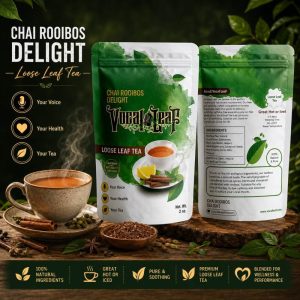
When the throat is stiff and the morning is cold, a warming spice blend does more good than a light fruity tea. Organic Rooibos Chai Tea uses a caffeine-free rooibos base with ginger, cinnamon, cardamom, and aniseed. It warms the body and the voice without the drying tannins of traditional caffeinated chai.
When you need energy without sacrificing your voice
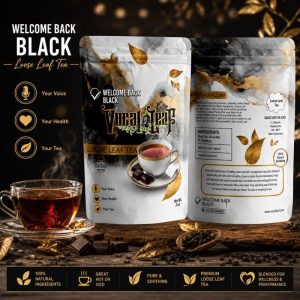
On teaching days, studio prep, or low-demand practice sessions where you still want a caffeine lift, Loose Leaf Black Tea, a premium Chinese black tea blended with cacao nibs, gives a smooth, sustained energy that sits far easier on the voice than coffee. Brew light, pair with water, and keep it away from the 90-minute pre-singing window.
Post-performance recovery
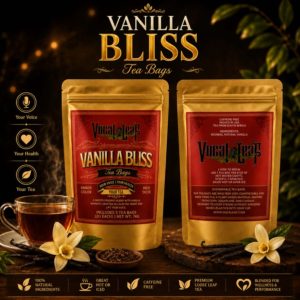
After a show or long rehearsal, the last thing you want is to measure loose-leaf tea at midnight. Vocal Leaf’s Vanilla Bliss, a smooth South African rooibos with natural vanilla, comes in compostable pyramid bags and needs no preparation beyond hot water: no caffeine, no tannins, no bitterness. Steep for three to five minutes, let it cool, and sip slowly while the voice settles.
| Moment | Best Tea | Caffeine | Why It Works |
|---|---|---|---|
| 60–90 min Before Singing | Lemon Berry Dream | None | Bright, hydrating, and non-acidic warmth to prep the vocal folds. |
| Cold Rehearsal Morning | Chai Rooibos Delight | None | Warming spices on a tannin-free rooibos base to soothe deep irritation. |
| Low-Demand Morning Energy | Welcome Back Black | Yes (Brew Light) | Provides a smooth lift without the harsh acidity of coffee. |
| Post-Show Recovery | Vanilla Bliss | None | Gentle, calming, and zero dryness—perfect for overnight tissue repair. |
How to Make Singer’s Tea at Home
Not every vocal support tea needs to come pre-blended. Many singers make their own versions using loose ingredients, and understanding the method lets you adapt it to what’s available.
A simple singer’s tea recipe starts with a base of rooibos or a mild herbal tea, something that provides warmth and body without caffeine. To that base, a small piece of fresh ginger (or a pinch of dried ginger) adds anti-inflammatory warmth. A small amount of honey, stirred in once the water is warm rather than boiling, adds a smooth sweetness. If you enjoy citrus, a small strip of dried lemon peel rather than fresh juice gives the flavor without the acid.
The method matters: brew with water at around 200–210°F, steep for no longer than 10 minutes to avoid bitterness, and always let it cool before drinking. The result should feel smooth, warm, and easy, not sharp, not intense, not medicinal.
This is a maintenance and recovery tea, not a pre-performance ritual. For pre-performance use, a carefully formulated loose-leaf blend gives more consistent results than home assembly, where ingredient quality and ratios vary.
A Singer’s Complete Daily Tea Routine
The singers who protect their voices most effectively don’t wait for a problem to appear. They build consistent habits around vocal hydration that work quietly every day, so the voice shows up ready when it matters.
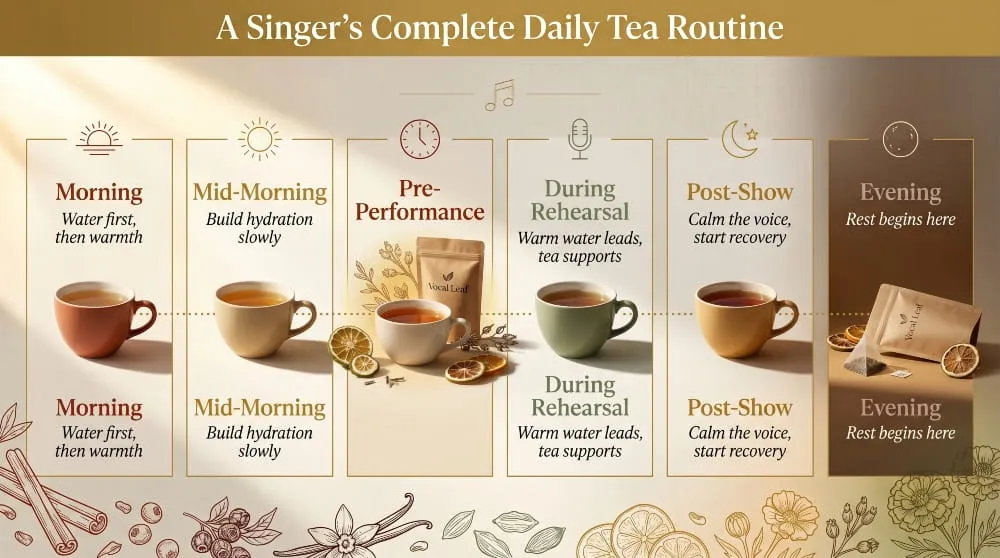
Morning. Begin with a large glass of room-temperature water before anything else; the voice has been dry all night and needs water first, not tea. Follow it with a warm, gentle herbal tea to ease the throat into the day. On vocal days, Chai Rooibos Delight offers warming comfort for morning stiffness. On lighter days, a light brew of Welcome Back Black Tea works for singers who want a moderate caffeine lift.
Mid-morning. This is a hydration maintenance window, not an intervention. Alternate between warm water and a light herbal tea. Lemon Berry Dream, sipped slowly mid-morning, is ideal for singers with a rehearsal or performance later in the day; it builds ongoing hydration while keeping the throat comfortable heading into vocal work.
Pre-rehearsal or pre-performance (60–90 minutes before singing). This is the most important window in the vocal day. Caffeine-free, warm, sipped slowly. Lemon Berry Dream is the most purposeful choice here. By the time you’re on stage or in the studio, the hydration and comfort are already working in your favor.
During rehearsal or performance. Tea steps back. During active singing, warm water is the primary tool. If you sip tea during breaks, keep it warm, caffeine-free, and take small sips rather than large drinks that affect breath support.
Post-rehearsal recovery. The throat has been working hard. This is the moment for something gentle, calming, and free of anything stimulating. Vanilla Bliss is ideal, caffeine-free rooibos with natural vanilla, smooth and non-drying, ready in minutes wherever you are.
Evening. The voice recovers during sleep. A final warm cup of Vanilla Bliss before sleep, no caffeine, no tannins, no bitterness, is one of the simplest and most effective things a singer can add to their recovery routine.
What Singers Should Avoid Drinking
Knowing what to avoid is as important as knowing what to reach for. Several common drinks actively work against the voice, and on performance and rehearsal days, the wrong choice at the wrong time can undo preparation.
Alcohol is the most damaging drink a singer can consume before performing. As a vasodilator, it causes the body to lose fluid faster than normal, dehydrating the voice even after just one or two drinks. Beyond dryness, alcohol impairs the fine muscle coordination that singing demands. Avoid it on the day of any singing commitment and limit it to the night before a demanding vocal day.
Dairy significantly increases mucus production in the throat for many singers, making the voice feel heavier and transitions less clean. Eliminating dairy for 24 to 48 hours before singing is the quickest way to test whether it’s a factor for you.
Ice-cold drinks cause the muscles surrounding the larynx to constrict, reducing the flexibility required for singing. Room temperature or warm is always the safer choice on vocal days.
Coffee is a diuretic that pulls hydration from the body when singers need it most. A lightly brewed black tea paired with a large glass of water is a meaningfully gentler alternative for morning energy.
Fresh citrus juice added directly to tea is acidic enough to aggravate reflux in susceptible singers. Blends that use dried lemon or orange peel deliver the citrus character without the acid load; the distinction matters more than it sounds for reflux-prone voices.
Frequently Asked Questions (FAQ’s)
What is the best tea for singers?
Warm, caffeine-free herbal tea is the most consistently singer-friendly choice. For pre-performance support, Lemon Berry Dream. For rehearsal warmup, Chai Rooibos Delight. For post-show recovery, Vanilla Bliss. The best tea depends on the moment more than any single product.
Does tea help your singing voice?
Yes, through hydration support and throat comfort. Tea doesn’t strengthen vocal cords or fix strain. Nothing you drink touches the vocal cords directly, but the right tea at the right time keeps the surrounding throat tissue moist, relaxed, and comfortable, which, in turn, affects how singing feels.
What tea do singers drink?
Most experienced vocalists gravitate toward warm, caffeine-free herbal blends. Ginger-based teas, rooibos blends, and warming herbal mixes with cinnamon and cardamom are common. Heavily caffeinated, minty, or acidic teas are generally avoided before significant vocal use.
Is ginger tea good for singers?
Yes. Ginger is warming, helps reduce mild throat irritation, and can ease excess mucus. Consume it 30 to 60 minutes before singing at a moderate strength, and avoid very intense ginger immediately before going on stage.
Is green tea good for singers?
It depends on the individual and context. Green tea contains caffeine and tannins, both of which can contribute to dryness. Brewed lightly, it’s reasonable on low-demand days. Before a performance or heavy rehearsal, a caffeine-free herbal tea is the better choice.
Is black tea good for singers?
Yes, with parameters. Brew it lightly, pair it with water, and keep it well away from the pre-singing window. It’s a more voice-friendly alternative to coffee for morning energy on low-vocal-demand days.
Is hot tea bad for singing?
Very hot tea can irritate throat tissue and cause inflammation. Warm tea, comfortable to sip without flinching, is the right temperature. Let freshly brewed tea cool for a few minutes before drinking.
Should I drink tea before singing?
Yes. Warm, caffeine-free herbal tea consumed 30 to 90 minutes before singing is one of the simplest things a singer can do to support throat comfort. Sip slowly, keep it warm rather than hot, and pair it with regular water intake.
What herbal teas are good for singers?
Rooibos, ginger-based blends, cinnamon and cardamom mixes, and blends using dried citrus peel rather than juice are all well-suited to singers. The key properties are: caffeine-free, non-acidic, smooth, and warm.
Is tea bad for singing in any situation?
Yes, strongly caffeinated tea before performing, very hot tea that irritates the tissues, heavy menthol blends that numb the throat, and teas with licorice root for singers with acid reflux or high blood pressure can all work against the voice rather than supporting it.
How do you make singer’s tea at home?
Use a rooibos or mild herbal base, add fresh or dried ginger, stir in a small amount of honey once the water is warm, and use dried lemon peel if you want citrus. Brew at 200–210°F for no more than 10 minutes. Let it cool before drinking.
Top Selling Products




Best Tea for Vocal Cords | Herbs, Hydration and Recovery
If your voice feels tired, strained, or dry, the right tea for your vocal cords can make a real difference, not by healing damaged tissue,…
Best Tea for Laryngitis | Soothe Your Voice Naturally
The best tea for laryngitis is a warm, caffeine free loose leaf blend that hydrates the throat and eases the strain on inflamed vocal cords.…

What Is Chai Tea? The Ultimate Guide to Ingredients, Benefits, Types & How It’s Made
If you’ve ever wondered what chai tea is, you’re not alone. It’s one of the most searched beverage questions online, yet the answer is often…

Best Tea for Your Voice | Does It Make You Sound Deeper
What it can do is change how your voice feels and sounds in the moment, which is where most of the confusion starts. If you…
The Best Tea for Performers & Speakers, And Why Your Voice Deserves Better
You spend hours rehearsing the words. You perfect the tone, the breath, the timing. But then you reach for whatever is nearby, a cup of…
Best Tea for Stress Relief | Calming Loose Leaf Blends
Stress is something everybody carries. It shows up in tight shoulders, restless nights, and a mind that won’t quiet down after a long day. And…

Best Tea for Dry Throat | The Teas That Help and the Ones That Hurt
The best teas for a dry throat are caffeine-free herbal blends, teas with no tannins to strip moisture from the throat lining and no caffeine…
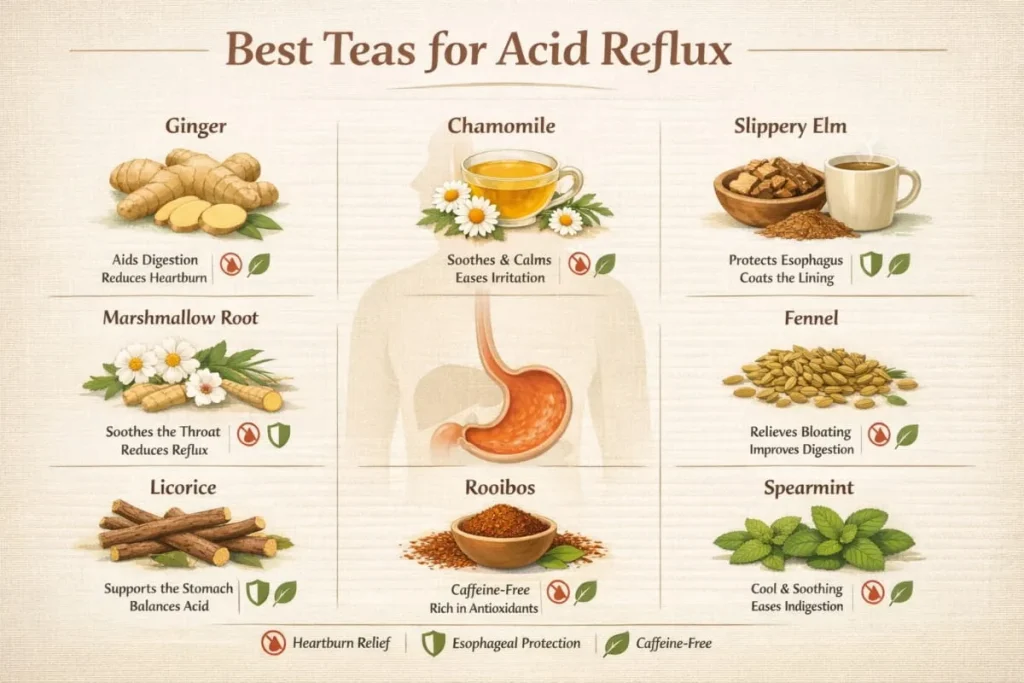
Best Teas for Acid Reflux, Heartburn and GERD
Acid reflux doesn’t just cause heartburn. If you have searched for tea good for acidity, you are asking the same question, acidity and acid reflux…

Best Morning Tea for Energy and Focus Without Coffee Crash
The best tea to drink in the morning is black tea if you want steady, coffee level energy without the crash, rooibos chai if you…

Best Tea for Cough | The Complete Guide to Soothing Relief
The best tea for cough relief is a warm, hydrating blend that soothes irritated throat tissue while easing the reflex that triggers coughing in the…

Best Teas for a Cold That Actually Work
Best teas for a cold combines warmth, hydration and gentle steam to ease congestion, calm a scratchy throat and help your body rest while it…

Best Teas for Inflammation | Guide to Nature’s Most Powerful Anti-Inflammatory Herbs
The best tea for inflammation depends on where and how inflammation is affecting you. For systemic and gut inflammation, rooibos and black tea offer daily…