Vocal Leaf

Best Tea for Laryngitis | What to Drink (and What to Avoid)

Best Tea for Laryngitis Vocal Leaf

If your voice sounds hoarse, strained, or raspy, you’re probably searching for the best tea for laryngitis something simple that can soothe your throat and help you speak comfortably again. Laryngitis happens when the voice box (larynx) becomes inflamed, often due to a cold, overuse, irritation, or infection. The result? Dryness, scratchiness, coughing, and that frustrating hoarse voice that makes every Word feel like an effort.

The good news is that the right tea can genuinely help.

Warm, non-irritating loose leaf teas support recovery in three important ways: they keep you hydrated (essential for inflamed vocal tissue), deliver gentle warmth that eases throat tension, and provide natural plant compounds that may help calm irritation at the source. When you choose a blend formulated with voice health in mind, tea becomes more than a comforting drink; it becomes a practical, at-home tool for managing laryngitis symptoms and giving your voice the conditions it needs to recover.

In this guide, you’ll discover which teas help laryngitis the most, which blends are best for soothing inflammation and cough, and how to prepare and sip safely so you don’t accidentally irritate your throat further. If you’re also dealing with a sore, irritated throat, we cover that separately; this guide focuses specifically on laryngitis.

What Laryngitis Is (and Why Your Voice Gets Hoarse)

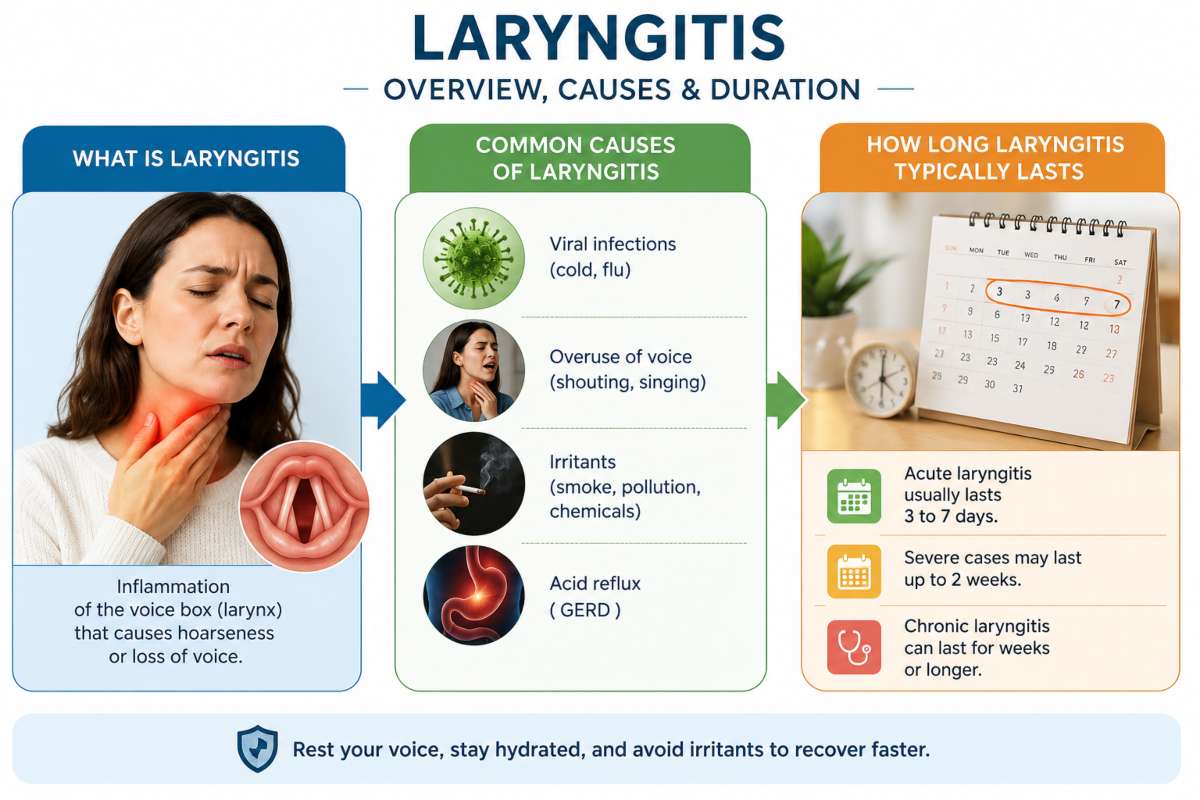
Laryngitis is inflammation of your larynx (voice box), the structure that houses your vocal folds. When those tissues become irritated or swollen from a cold, a viral infection, allergies, acid reflux, dry air, or simply overuse, they can’t vibrate normally. That’s why your voice may sound raspy, weak, scratchy, or strained during a laryngitis episode.

People often search for tea for laryngitis because the symptoms can feel intense even when the underlying cause is mild: throat dryness, frequent clearing, persistent coughing, and discomfort when speaking. The goal isn’t just short-term comfort; it’s reducing irritation so your inflamed larynx can settle and your voice can return to full strength.

Does Tea Actually Help With Laryngitis, or Is It Just Soothing?

Is tea good for laryngitis? In many cases, yes, especially when you choose the right kind. Tea won’t resolve every cause of laryngitis overnight, but it can support your recovery in ways that genuinely matter.

When people ask “does tea help laryngitis,” they’re usually looking for relief from dryness and discomfort. Warm tea helps by keeping throat tissues moist, easing that raw, scratchy feeling, and making swallowing and speaking feel less strained. The right loose leaf blend can also deliver natural plant compounds that may help calm irritation from the inside.

That said, not every tea supports healing. Very hot drinks, highly acidic ingredients, or strongly caffeinated teas can aggravate inflammation, particularly if acid reflux is present. That’s why the question isn’t just which tea helps laryngitis; it’s also which teas are gentle, hydrating, and non-irritating enough to support recovery without adding new triggers.

Best Tea for Laryngitis

What Matters Most: Hydration, Warmth, Steam, and Irritation Control

When choosing the best tea for laryngitis, focus on what the drink actually does for your throat, not just how it tastes. The teas that support recovery most reliably share four qualities: they hydrate consistently, deliver gentle warmth, work alongside moisture in the air, and avoid ingredients that trigger further irritation.

Hydration is the foundation.

Laryngitis inflames and dries out the larynx, and dry vocal tissue heals more slowly. Research consistently shows that adequate hydration is one of the most important factors in vocal recovery. Warm, non-caffeinated fluids are especially effective because they hydrate without the mild diuretic effect that caffeine introduces. Sipping throughout the day matters more than drinking large amounts at once.

Warmth helps, but temperature matters.

A common question is whether hot tea helps laryngitis or makes it worse. The answer depends on the temperature. Warm tea relaxes throat muscles, eases tension around the larynx, and makes swallowing feel less uncomfortable. Scalding hot drinks do the opposite; they can further irritate already-inflamed tissue. Let your tea cool to a comfortably warm temperature before sipping, and treat it as a slow, steady ritual rather than a quick drink.

Tea works best as part of a moisture strategy.

Warm drinks alone do a lot, but pairing them with humid air amplifies the effect. Steam from a warm shower, a humidifier running overnight, or simply inhaling gently over a fresh cup all help reduce throat tightness and keep the larynx from drying out between sips. Think of warm tea and ambient moisture as two sides of the same recovery habit.

Irritation control is what separates a helpful tea from a harmful one.

Not all teas are safe choices when your larynx is inflamed. Strongly caffeinated teas can dry throat tissue. Highly acidic ingredients can aggravate reflux, which in turn can cause laryngitis. Overly spicy or astringent blends can intensify rawness rather than calm it. The right choice is a smooth, naturally caffeine-free loose-leaf blend that keeps your throat comfortable throughout multiple cups throughout the day, not just the first sip.

The Best Teas for Laryngitis

When your voice is raspy or weak, choosing the best tea for laryngitis comes down to one goal: soothe irritation while keeping the throat and inflamed larynx consistently hydrated. The most reliable choices are warm, naturally caffeine-free loose-leaf blends, gentle enough to sip throughout the day without drying throat tissue or adding new irritants.

Best Overall: Caffeine-Free Blends for All-Day Sipping

The most effective everyday tea for laryngitis is one you can reach for repeatedly without worrying about caffeine, acidity, or harsh ingredients that could aggravate already-sensitive tissue. Consistency matters more than any single cup; steady hydration throughout the day does more for an inflamed larynx than one strong brew in the morning.

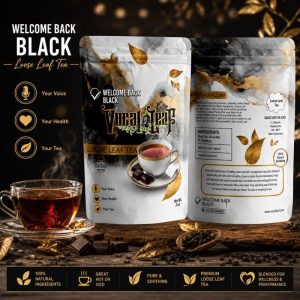
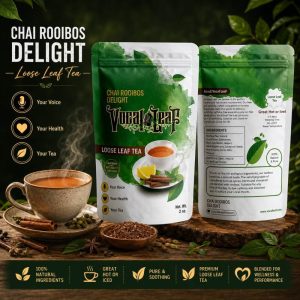
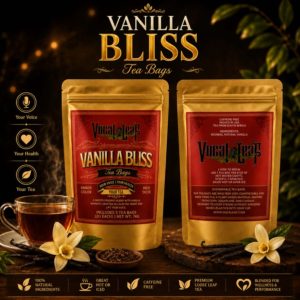
Vocal Leaf’s four blends are all built around this principle. Lemon Berry Dream offers a smooth citrus-forward profile that’s naturally caffeine-free and easy on an irritated throat. Vanilla Bliss delivers a soft, warming character suited to slow sipping when your voice feels strained. Organic Rooibos Chai offers a gently spiced, full-bodied warmth without any caffeine. And the Organic Loose Leaf Black Tea, while containing natural caffeine, brings L-theanine, a compound associated with calm, focused energy rather than the jittery dryness that pure caffeine can introduce. If you’re managing active laryngitis, the caffeine-free options are a stronger starting point; black tea works better in the recovery phase, when symptoms are easing.

Best Tea for Laryngitis With a Cough

When a cough accompanies laryngitis, your throat is dealing with two problems simultaneously: inflammation around the larynx and repeated mechanical irritation from coughing itself. Each cough aggravates the tissue that’s already trying to heal, which is why the tea choice here matters more than usual.

The most practical approach is warm, smooth, and caffeine-free something you can sip in small amounts frequently rather than in large quantities at once. Lemon Berry Dream works particularly well in this scenario: the citrus compounds provide a gentle brightness that doesn’t feel harsh on an irritated throat, and the blend steeps well at a comfortably warm temperature that soothes rather than scalds. Vanilla Bliss is the softer option when your throat feels too raw even for citrus; its smooth, mellow profile makes it easy to drink consistently without any sharpness.

The temperature rule applies here as much as anywhere: warm, not hot. Scalding liquid on an already inflamed larynx compounds the problem rather than resolving it.

Matching the Tea to How Your Throat Actually Feels

Laryngitis doesn’t feel the same for everyone, and the right tea depends on your specific symptoms right now.

If your throat feels raw, burning, easily aggravated, sensitive to anything sharp, the priority is the smoothest, most neutral option available. Vanilla Bliss is the natural choice here: no citrus acidity, no spice, just a gentle warmth that you can sip slowly without any risk of adding irritation.

If your throat feels dry and scratchy, persistently dehydrated, or triggers frequent clearing, the priority shifts to volume and frequency. Any of the caffeine-free blends work well, but the focus is on drinking more often rather than drinking more at once. Small, steady sips throughout the day keep throat tissue consistently moist, unlike two or three large cups.

If your throat feels tight, strained, tense, or uncomfortable when you try to speak, warmth and relaxation become the priority. Organic Rooibos Chai delivers exactly this: a full-bodied warmth that pairs naturally with voice rest, steam, and the slower pace that a strained larynx needs. It also pairs well with a humidifier running in the background, since warm tea and ambient moisture together do more for throat tension than either does alone.

Whatever your symptoms, the through-line is the same: caffeine-free, smooth, warm, and easy to return to all day long.

Choosing the Right Tea for Your Laryngitis Symptoms

The best tea for laryngitis isn’t one-size-fits-all; it depends on whether your throat feels raw, dry, tight, or inflamed. Matching the blend to your specific symptoms is what separates a tea that genuinely supports recovery from one that simply tastes comforting.

Best Tea for Laryngitis

When Your Throat Feels Raw or Scratchy

A raw throat is the most sensitive state your larynx can be in. The tissue is actively inflamed, easily aggravated, and unreceptive to anything sharp, acidic, or strongly flavored. This is not the moment for bold or complex blends; it’s the moment for the smoothest, most neutral option available.

Vanilla Bliss is the right choice here. Its soft, mellow character means there’s no citrus brightness, no spice, and no astringency to catch on irritated tissue. Steep it at a comfortably warm temperature not steaming hot and sip slowly. The goal is to coat and calm, not to stimulate. Small, frequent sips do more for a raw throat than a large cup consumed quickly, because it’s the warmth and moisture that matter, not the volume.

If your rawness is accompanied by frequent throat clearing or a persistent dry sensation, increase how often you reach for the cup rather than how much you drink at once.

When Your Throat Feels Tight or Strained

A tight, strained throat the kind that makes speaking feel like effort responds best to warmth and the physical relaxation that comes with it. The larynx is a muscle-dependent structure, and sustained tension around it slows recovery. Warm tea, rest, and humid air work together here in a way that cold or room-temperature drinks simply don’t replicate.

Organic Rooibos Chai is the strongest match for this symptom profile. Its naturally full-bodied warmth delivers the depth that a tight throat needs without any caffeine load that could introduce tension or dryness. The gentle spice character is mild enough to stay comfortable on sensitive tissue while still providing that soothing heat that loosens throat tension over time. Sip it alongside a humidifier running in the room, or after a warm shower, and you’re pairing two of the most effective moisture strategies available for laryngitis recovery.

When Your Throat Feels Dry and Dehydrated

Dryness in laryngitis isn’t just uncomfortable; it actively slows healing. Vocal tissue needs consistent surface hydration to repair, and a larynx that stays dry between cups isn’t getting the conditions it needs for recovery. Studies on vocal health consistently show that systemic hydration is one of the most impactful variables in how quickly the voice returns to full function.

The answer to dryness is frequency, not quantity. Any of Vocal Leaf’s naturally caffeine-free blends serve this purpose well. Lemon Berry Dream and Vanilla Bliss are particularly suited to all-day sipping because neither has the mild diuretic effect that caffeinated teas can cause. Keep a cup nearby and return to it regularly throughout the day. If you find yourself clearing your throat often, treat that as a signal to sip, not to wait until you feel genuinely thirsty.

When Laryngitis Comes With a Cough

A cough alongside laryngitis means your throat is absorbing mechanical stress on top of inflammation; each cough disturbs the tissue that’s trying to settle. The tea strategy here shifts toward smooth blends that can be drunk immediately after coughing, without any sharpness or burn.

Lemon Berry Dream works well in this scenario because the citrus compounds provide a clean, gentle brightness that doesn’t feel harsh even on an already-cough-irritated throat. It steeps well at a warm, not hot, temperature, and the light citrus character can help ease the dry, scratchy feeling that often triggers the next cough. For moments when even gentle citrus feels like too much, Vanilla Bliss is the fallback: nothing sharp, nothing stimulating, just consistent warmth and moisture.

Temperature discipline matters most here. A drink that’s too hot will aggravate the same tissue the cough is already irritating.

When Laryngitis Is Related to Acid Reflux

Reflux-related laryngitis, sometimes called LPR (laryngopharyngeal reflux), has a specific complication that affects tea choice: acidic ingredients and caffeine can both trigger the reflux that’s causing the laryngitis in the first place. Managing the tea is part of managing the root cause, not just the symptoms.

For reflux-aggravated laryngitis, the caffeine-free, low-acid options are non-negotiable. Vanilla Bliss and Organic Rooibos Chai are the strongest choices. Both are naturally caffeine-free, neither has high acidity, and both can be sipped throughout the day without risk of triggering a reflux episode. Avoid drinking tea immediately before lying down, keep portions moderate rather than large, and let each cup cool adequately before sipping.

Quick Symptom Match

If you want a fast decision without reading every section, here’s the direct map:

Raw, burning, easily aggravated throat → Vanilla Bliss, sipped warm and slowly. Tight, strained, tense throat → Organic Rooibos Chai, paired with steam or humid air. Dry, scratchy, persistently dehydrated throat → any caffeine-free Vocal Leaf blend, sipped frequently throughout the day. Cough alongside laryngitis → Lemon Berry Dream at warm temperature, or Vanilla Bliss if citrus feels too sharp. Reflux-related laryngitis → Vanilla Bliss or Organic Rooibos Chai, low acid, no caffeine.

Browse the full loose leaf tea collection to find the right blend for where your voice is today.

Best Tea for Laryngitis and Cough (Symptom-Based Relief)

When laryngitis comes with a cough, the best tea is one that’s warm, smooth, and caffeine-free something you can return to repeatedly throughout the day without adding any new irritation to tissue that’s already under stress from both inflammation and coughing.
The challenge with laryngitis and cough together is that each cough mechanically disrupts the inflamed laryngeal tissue that’s trying to recover. It’s a compounding cycle: dryness triggers coughing, coughing aggravates inflammation, inflammation increases dryness. Tea doesn’t break that cycle through any single ingredient; it breaks it through consistent warmth and hydration, which keep throat tissue moist enough to reduce the dryness-triggered cough reflex. Frequency matters more than volume. Small, steady sips throughout the day outperform two or three large cups, because the throat needs continuous moisture rather than periodic floods.

Best Tea for Laryngitis and Cough

The right laryngitis treatment tea won’t replace medical care when it’s needed, but it can be a powerful support tool. The best choices focus on three outcomes: soothing the throat, keeping tissues hydrated, and reducing irritation so your voice and throat can recover.

What Makes a Tea Helpful for Laryngitis + Cough?

If you want tea to help with laryngitis, look for options that are:

  • Warm and gentle (comfort without burning)
  • Caffeine-free (less dryness, easier to sip often)
  • Easy to drink repeatedly throughout the day
  • Compatible with honey, which many people find naturally soothing

This is why mild herbal teas, like chamomile or light ginger, tend to be the most reliable options for laryngitis when coughing is involved.

The Most Practical Laryngitis Tea Treatment Approach

Instead of hunting for one magical tea, think of tea as a simple treatment routine:

1) Sip small amounts frequently

A few big cups won’t help as much as steady hydration. Frequent warm sips keep the throat comfortable and reduce that dry, scratchy feeling that often triggers coughing.

2) Choose a tea that’s soothing, not stimulating

A tea good for laryngitis is usually smooth and calming. If your tea feels sharp, spicy, very acidic, or overly strong, it can make coughing worse.

3) Add honey if it helps your throat feel calmer

Honey is one of the most common add-ins for a reason: it often helps tea feel more soothing and easier to drink when your throat is irritated.

Best Tea Choices When Cough is Part of the Problem

If your main goal is symptom relief, these are strong go-to options:

  • Chamomile-based teas for a smooth, soothing feel
  • Mild ginger tea if you want warmth and gentle comfort (keep it light if your throat feels raw)
  • Herbal blends designed for throat comfort, especially when you want something you can sip all day

This combination approach, warm herbal tea + consistent sipping + throat-friendly add-ins, is one of the most effective ways to use tea for laryngitis treatment for real symptom support.

When Tea Helps Most (and When It Doesn’t)

Tea helps most when your cough is linked to dryness, irritation, or a lingering cold. But if you have severe pain, high fever, breathing difficulty, worsening symptoms, or your voice loss lasts beyond several days, tea should be supportive, not the only plan.

Bottom line: the best tea for laryngitis and cough is the one you can drink consistently, comfortably, and safely, because steady hydration and irritation control are what give your throat the best chance to heal.

Getting the Most From Your Tea: Add-Ins, Temperature, and Timing

The fastest way to make tea more effective for laryngitis is to pay attention to three things beyond the blend itself: what you add to it, how hot you drink it, and when you reach for it. Small adjustments to any one of these can meaningfully change how your throat responds, especially when your voice is at its most strained.

Honey, Lemon & Throat-Friendly Mixes

Honey as a Tea Add-In for Laryngitis

Adding honey to warm tea for laryngitis is one of the most consistently recommended home strategies because it addresses the two things that make laryngitis uncomfortable: dryness and rawness. Honey creates a smooth, coating sensation in the throat that makes each sip easier to tolerate, encourages more consistent drinking throughout the day, and pairs naturally with the warmth that helps ease tension around the larynx.

The one preparation rule that matters most: add honey only after the tea has cooled from steaming hot to comfortably warm. Honey added to scalding liquid loses some of its character, and, more importantly, a scalding drink will aggravate inflamed tissue regardless of what’s in it. The goal is warmth that soothes, not heat that burns.

Honey works well with all four Vocal Leaf blends. Still, it pairs especially naturally with Lemon Berry Dream, where it softens the citrus brightness into something gentler for a raw or sensitive throat, and with Vanilla Bliss, where it deepens the smooth, mellow character without adding any sharpness.

Lemon as a Tea Add-In: When It Helps and When to Skip It

Lemon in tea for laryngitis is popular for good reason: the brightness cuts through the heavy, congested feeling that often accompanies laryngitis, and a small squeeze can make a warm drink feel fresher and easier to sip. But lemon is acidic, and acidity on an already-inflamed larynx can sting rather than soothe if the ratio or the throat condition isn’t right.

The rule is simple: use less lemon than you think you need, especially in the early days of laryngitis when tissue is most inflamed. A small squeeze, far less than a standard lemon wedge, added to a full cup of warm tea is enough to add brightness without the acid load. If it stings, remove it entirely and rely solely on honey until the inflammation subsides. If it feels fine, it’s a useful addition.

Lemon Berry Dream already carries a natural citrus character from freeze-dried lemon granules and lemon peel in the blend itself, which means it delivers that brightness in a form that steeps gently into the tea rather than landing as a sharp acid hit from raw juice. For readers who want the lemon quality without the risk of overdoing it, this blend does the work without requiring any additional squeezing.

For reflux-related laryngitis specifically, skip added lemon entirely; acid is a likely contributor to the laryngitis in the first place, and adding more of it to the drink works against recovery.

Timing Your Tea for Maximum Effect

When you drink tea matters almost as much as what you drink. For laryngitis, three times a day is consistently the most valuable.

First thing in the morning, before speaking. The larynx dries out overnight, and in the morning vocal tissue is at its most dehydrated and most vulnerable to strain. A warm cup before any voice use before conversation, before a call, before any performance or presentation gives the tissue the surface moisture it needs to function without added stress. Lemon Berry Dream works well here for its clean, brightening quality that matches the morning; Vanilla Bliss is the softer option for mornings when the throat feels particularly raw.

Between meals, consistently throughout the day. The single most common mistake in laryngitis recovery is treating tea as a twice-a-day remedy rather than a continuous habit. Vocal health research identifies sustained surface hydration of the laryngeal mucosa as one of the primary determinants of recovery speed, meaning the goal is to keep throat tissue consistently moist throughout the day, not rehydrating it periodically after it’s already dried out.

Before bed, as part of a voice rest routine. Organic Rooibos Chai is the natural choice for the evening; its full-bodied warmth pairs with the rest and stillness the larynx needs overnight, and its naturally caffeine-free profile means it won’t interfere with sleep, which is itself a critical part of vocal recovery.

A Simple Preparation Approach

There’s no need for a complex recipe. The most effective tea for laryngitis is the one you actually prepare and drink consistently, and that means keeping the preparation simple enough to repeat throughout the day without effort.

Steep any of the Vocal Leaf blends according to their instructions: Lemon Berry Dream at 203–212°F for 10- 12 minutes, hot or iced, depending on preference and season. Allow the cup to cool to a comfortably warm temperature before sipping. Add honey if it helps you drink more comfortably or more frequently. Add a small squeeze of lemon only if your throat tolerates it. Sip slowly and return to it within the hour.

That’s the full routine. The consistency of it, not any single ingredient or preparation trick, is what gives the larynx the recovery conditions it needs.

Browse the loose leaf tea collection to find the right blend for your current symptoms.

How to Drink It for the Best Effect (the Part Most People Miss)

You can make the best laryngitis tea in the world, but how you drink it matters.

  • Sip slowly, more often, instead of chugging one big cup.
  • Keep it warm, not boiling (very hot drinks can irritate inflamed tissues)
  • Pair tea with throat-friendly habits: voice rest, humid air, warm showers, and avoiding smoke/irritants.
  • If lemon or strong ginger makes your throat sting, scale back; the best tea is the one that feels soothing with every sip.

In short, for hot tea laryngitis relief, aim for warm, gentle, and consistent, with honey as your number one add-on.

How Hot Should Your Tea Be? Temperature, Steam, and What Actually Helps

For laryngitis, the ideal tea temperature is comfortably warm, not steaming hot, not lukewarm. This single variable matters more than most people expect, and getting it wrong in either direction reduces the tea’s actual effectiveness.

The Temperature Rule for Laryngitis

Very hot drinks are counterproductive when the larynx is inflamed. The tissue lining the throat and voice box is already irritated and sensitive; adding scalding liquid to it creates a secondary source of irritation on top of the inflammation that’s already there. A 2020 study published in the International Journal of Cancer found that regularly consuming drinks above 60°C (140°F) was associated with increased esophageal irritation, which gives a useful reference point. If it feels hot rather than warm, it’s too hot for a compromised throat.

The right range is a temperature at which you can sip comfortably without any burning sensation, which most people would describe as “pleasantly warm.” After steeping, let the cup sit for 3 to 5 minutes before drinking. If you can hold the cup comfortably in both hands without it feeling uncomfortably hot, the tea is close to the right temperature for an inflamed larynx.

The opposite error: drinking cold tea also reduces its effectiveness. Cool or room-temperature liquid doesn’t deliver the muscle-relaxing warmth that eases tension around the larynx, and it can feel uncomfortable on sensitive tissue in a different way. Warm is the target, consistently.

Can You Drink Hot Tea With Laryngitis?

Yes, with the temperature discipline described above. The question people are really asking when they search this is whether tea will make laryngitis worse, and the honest answer is: the tea itself won’t, but the temperature can. A well-chosen loose-leaf blend, steeped and cooled to a comfortably warm temperature, is one of the most practical recovery tools available for laryngitis. The same blend consumed at a scalding temperature works against you.

The practical check is simple: sip once and pause. If the liquid feels sharp, burning, or stinging as it contacts the throat, it needs more cooling time. If it feels warming, soothing, and easy to swallow, you’re in the right range. That sensation of warmth without any bite is the signal that the tea is doing what it’s supposed to do.

Pairing Warm Tea With Steam and Humid Air

Warm tea hydrates the larynx from the inside; steam and humid air hydrate it from the outside. Used together, they form the most effective moisture strategy available for laryngitis recovery at home, and the difference between using one versus both is meaningful.

When you sip warm tea in a dry room, the throat tissue is simultaneously being rehydrated by the drink and dried out by the air. A humidifier running in the background, or a warm shower taken while a cup of tea cools to drinking temperature nearby, closes that loop. The larynx stays consistently moist rather than cycling between hydration and dryness with each cup.

Organic Rooibos Chai is particularly well-suited to this pairing. Its full-bodied warmth makes it a natural fit for the slower, more deliberate pace of a steam-and-sip recovery routine the kind you build around voice rest, a humidifier running overnight, and consistent hydration across the day. Lemon Berry Dream works well for the same routine during daytime hours when you want something brighter and more energising without any caffeine.

The combination of warm tea, humid air, and voice rest isn’t complicated, but it’s consistently what vocal health recovery looks like in practice.

Caffeine, Tannins, and Irritation Triggers: What to Avoid With Laryngitis

The wrong ingredients, temperature, or preparation can undermine the best tea for laryngitis. Understanding what to avoid is as practically useful as knowing what to reach for.

Caffeine, Black Tea, and Irritation Triggers

Caffeine and Laryngitis

Caffeine isn’t automatically off-limits with laryngitis, but it deserves attention, particularly when throat dryness is already a symptom. Caffeine has a mild diuretic effect that can counter the sustained hydration an inflamed larynx needs. For people whose laryngitis is triggered or worsened by acid reflux, caffeine is a known reflux stimulant that can compound the problem rather than help it.

The practical signal is straightforward: if your throat feels noticeably drier, scratchier, or more strained after a caffeinated drink, that’s your larynx telling you to switch. The naturally caffeine-free blends in the Vocal Leaf range, Lemon Berry Dream, Vanilla Bliss, and Organic Rooibos Chai remove this variable entirely, which is why they’re the stronger starting point during active laryngitis rather than the recovery phase.

Black Tea and Laryngitis: The Honest Answer

Black tea is worth addressing specifically because it’s the most commonly consumed tea, and people reasonably want to know whether they should give it up during laryngitis recovery. The short answer is no, but timing and preparation matter.

Vocal Leaf’s Organic Loose Leaf Black Tea contains two things relevant to laryngitis: caffeine and tannins. Tannins are the polyphenol compounds responsible for black tea’s characteristic depth and slight astringency. In healthy tissue, they’re unremarkable, but in already-inflamed tissue they can cause a mild drying or tightening sensation that worsens discomfort. The caffeine consideration is the same as above.

The practical approach is to treat the black tea as a recovery-phase drink rather than an acute-phase one. Once the most intense inflammation has settled and the voice is returning rather than at the height of hoarseness, a well-steeped, comfortably warm cup of the black tea is a reasonable choice. It still delivers warmth, hydration, and the L-theanine that distinguishes it from lower-quality black teas. During the acute phase, start with the caffeine-free options and return to the black tea once the larynx is less sensitive.

If you do drink it during recovery, steep it lighter than usual, let it cool adequately, and have a glass of water or a caffeine-free cup first. Your throat is typically at its driest first thing in the morning, when black tea is most likely to feel harsh.

Other Common Irritants That Work Against Recovery

Beyond caffeine and tannins, several other common additions can cancel out the benefits of an otherwise well-chosen tea.

Excessive acidity is the most frequent issue. A small amount of lemon in warm tea can be pleasant and is generally tolerable once initial inflammation has settled. Still, heavy lemon, undiluted citrus juice, or anything that creates a stinging sensation on contact with the throat is working against recovery, not supporting it. For reflux-related laryngitis, acidic add-ins should be avoided entirely.

Alcohol dehydrates the body; it disrupts the body’s fluid balance, not just the throat, and relaxes the lower esophageal sphincter, increasing the risk of reflux. A single drink during active laryngitis can undo hours of careful hydration. It’s the most straightforward thing to avoid until the voice has fully recovered.

Very hot drinks have already been covered in the temperature section, but they belong on this list too: a scalding cup of even the gentlest blend will irritate an inflamed larynx regardless of what’s in it.

The simplest version of all of this is: if a drink makes your throat burn, tighten, or triggers coughing, it’s adding to the problem. The goal of every cup during laryngitis recovery is the opposite: warmth without edge, hydration without dryness, comfort that compounds rather than disrupts.

When Tea Isn’t Enough: Signs You Need Medical Guidance

Tea is a genuinely useful support tool for laryngitis, but it works within a defined range of symptoms, and recognising when you’ve moved outside that range is as important as knowing which blend to reach for.

When Tea Isn’t Enough laryngitis

Red Flags That Warrant Medical Attention

Most cases of laryngitis resolve on their own within 1 to 2 weeks with rest, hydration, and irritation control. When it doesn’t, or when symptoms escalate beyond mild hoarseness and throat discomfort, the situation requires professional evaluation rather than continued home management.

Hoarseness or voice changes that persist beyond two weeks without improvement are the clearest signal that something beyond standard laryngitis is present. Chronic hoarseness can indicate structural changes, growths, or nerve involvement that will not resolve with tea and voice rest. High fever alongside throat symptoms suggests a bacterial infection that may require antibiotics. Severe pain when swallowing, progressive swelling in the throat, or any sensation that your airway feels restricted or narrowed is a medical emergency. Difficulty breathing or noisy, laboured breathing means you need urgent care, not a warmer cup of tea.

Coughing up blood, sudden complete voice loss with no prior gradual hoarseness, or a lump sensation in the throat that doesn’t resolve are all symptoms that require prompt investigation regardless of whether other laryngitis symptoms are present. In each of these cases, warm tea remains a reasonable comfort measure alongside medical care, but it should not be the primary plan.

When Reflux or Post-Nasal Drip Is the Root Cause

Two of the most commonly overlooked drivers of persistent laryngitis are acid reflux, specifically laryngopharyngeal reflux (LPR), and post-nasal drip. Both cause ongoing irritation of the larynx from sources unrelated to a cold or vocal overuse, which is why the usual recovery timeline doesn’t apply when either is present.

LPR is worth suspecting if your voice is consistently worse in the morning, worsens after meals, or flares when you lie down all patterns that match the movement of stomach acid into the throat rather than a viral infection. When reflux is driving the laryngitis, acidic additives, caffeine, and large volumes of liquid close to bedtime can all aggravate symptoms even when the drink itself seems gentle. Vanilla Bliss and Organic Rooibos Chai are the most appropriate choices in this context; both are naturally caffeine-free, neither carries significant acidity, and both can be sipped in moderate amounts without the reflux triggers that compromise other options. Avoid drinking tea within 2 hours of lying down if reflux is suspected.

Post-nasal drip creates a different but related pattern: constant low-grade throat irritation, persistent throat clearing, and a cough that never fully resolves. Tea helps with surface comfort and hydration, making this more tolerable. Still, the underlying drainage needs to be addressed, whether through allergy management, environmental changes, or medical treatment for the laryngitis to fully resolve. Staying well-hydrated with warm, caffeine-free tea throughout the day supports the mucous membranes and can reduce the thickness of drainage, but it’s a supporting role rather than a cure.

In both cases, loose leaf collection can be part of a consistent daily habit that keeps the larynx as comfortable as possible while the root cause is properly addressed.

The Right Blends, the Right Add-Ins

The best tea for laryngitis is warm, naturally caffeine-free, and gentle enough to drink throughout the day without adding new irritation to already-inflamed tissue. Vocal Leaf’s four blends each suit a different symptom profile, so the right choice depends on where your voice is right now rather than on a single universal answer.

Vanilla Bliss is the gentlest starting point, smooth, mellow, and free of anything sharp or astringent, making it the most appropriate choice when the throat feels raw, burning, or at its most sensitive. Lemon Berry Dream is the stronger daytime option, delivering natural citrus brightness in a form that’s easy on the throat and well-suited to consistent all-day sipping. Organic Rooibos Chai is the evening and recovery blend, full-bodied warmth without caffeine, best paired with voice rest, steam, and the slower pace that a strained larynx needs. The Organic Loose Leaf Black Tea belongs in the recovery phase rather than the acute phase: its L-theanine content makes it a more considered choice than standard black tea, but its caffeine and tannins mean it works better once the most intense inflammation has settled.

Honey is the one add-in worth keeping in the routine. Stirred into any of these blends after the cup has cooled to a comfortably warm temperature, it smooths the sipping experience, makes it easier to drink consistently, and adds a coating quality that many people find genuinely soothing on a raw or dry throat.

Preparation Checklist

Temperature is the variable that matters most. Comfortably warm, not steaming, not cool, is the target for every cup. If the first sip creates any burning or stinging sensation, the tea needs more cooling time. If it has gone lukewarm or cold, it has lost the warming quality that helps ease laryngeal tension.

Steep time affects intensity. Lemon Berry Dream steeps at 203–212°F for 10- 12 minutes; follow the full steep for maximum benefit. For any blend that feels too strong or drying on a sensitive throat, reduce steep time rather than temperature. Lighter is always safer during acute laryngitis.

Frequency matters more than volume. Small, steady sips throughout the day keep laryngeal tissue consistently moist, in a way that two or three large cups cannot. Vocal health research identifies sustained surface hydration of the laryngeal mucosa as one of the primary variables in recovery speed, which means the habit of returning to the cup regularly, rather than the size of any individual serving, is where most of the benefit comes from.

What to Avoid

Very hot drinks aggravate inflamed laryngeal tissue regardless of what’s in them; the temperature is the irritant, not the blend. This is the most common preparation mistake and the easiest to fix.

Heavy acidity, particularly from large amounts of lemon juice or other acidic add-ins, can sting a raw throat and trigger coughing, and, for reflux-related laryngitis, it compounds the root cause rather than addressing it. A small amount of lemon is generally tolerable once initial inflammation has settled; during the acute phase, skip it entirely.

Caffeine warrants attention when throat dryness is a prominent symptom. If a caffeinated drink consistently leaves the throat feeling drier or more strained, the caffeine-free options are the more appropriate choice until the voice has fully recovered.

Alcohol dehydrates systemically and increases reflux risk, both outcomes that work directly against laryngitis recovery. It is the most straightforward thing to avoid for the duration of active symptoms.

The through-line across all of this is simple: anything that makes the throat burn, tighten, or triggers coughing is adding to the problem. Every cup during laryngitis recovery should feel soothing from the first sip to the last.

One Final Note on Voice Rest

Tea supports recovery; voice rest enables it. No blend, however well-chosen, compensates for continued vocal strain during active laryngitis. The most effective recovery routine combines consistent warm hydration with genuine rest: minimising unnecessary speaking, avoiding whispering (which strains the larynx more than a quiet, normal voice), and giving the inflamed tissue the stillness it needs to repair. The full loose-leaf collection is built around this kind of intentional, voice-first approach to recovery.

Conclusion

Finding the best tea for laryngitis isn’t about a single remedy; it’s about building a consistent, gentle habit that provides your inflamed larynx with warmth, hydration, and an irritation-free environment it needs to recover. The right blend, at the right temperature, sipped regularly across the day does more for a hoarse, strained voice than any one cup consumed occasionally.

Vocal Leaf’s four blends each play a specific role in that recovery routine. Vanilla Bliss for the most sensitive, raw-throat moments. Lemon Berry Dream for clean, bright hydration throughout the day. Organic Rooibos Chai for evening warmth and the slower pace of voice rest. The Organic Loose Leaf Black Tea for the recovery phase, once the acute inflammation has settled. None of them require anything complicated: steep, cool to comfortably warm, sip steadily, and return to the cup before the throat has a chance to dry out again.

Temperature, frequency, and irritation control matter as much as the blend itself. Keep every cup warm, not hot. Sip small amounts often rather than large amounts occasionally. Avoid anything that makes the throat burn, tighten, or triggers coughing. And if symptoms escalate hoarseness beyond two weeks, fever, difficulty swallowing, or any sense of airway restriction seek medical guidance rather than continuing to manage at home.

Used consistently and thoughtfully, tea is one of the most accessible tools available for laryngitis recovery. The voice needs rest, moisture, and time. The right cup supports all three.

Explore the full loose leaf collection and find the blend that fits where your voice is today.

Frequently Asked Questions (FAQ’s)

Is tea good for laryngitis?

Yes, warm, naturally caffeine-free tea is genuinely useful for laryngitis because it supports sustained surface hydration, which inflamed laryngeal tissue needs to recover. The key is choosing a smooth, non-irritating blend and drinking it consistently throughout the day rather than relying on one or two cups. Vocal Leaf’s caffeine-free blends Lemon Berry Dream, Vanilla Bliss, and Organic Rooibos Chai are all designed for this kind of all-day sipping without drying the throat further.

What tea helps laryngitis the most?

The tea that helps laryngitis most depends on your specific symptoms. For a raw, burning throat, Vanilla Bliss is the gentlest choice, smooth, mellow, and free of anything sharp or astringent. For consistent daytime hydration, Lemon Berry Dream offers clean citrus brightness in a naturally caffeine-free blend. For evening recovery and throat tension, Organic Rooibos Chai delivers full-bodied warmth without caffeine. The most effective approach is to match the blend to the symptom rather than searching for a single universal answer.

Does hot tea help with laryngitis?

Warm tea helps with laryngitis, but the temperature matters significantly. Very hot drinks can aggravate already-inflamed laryngeal tissue and add a secondary source of irritation on top of the existing inflammation. The target is comfortably warm: a temperature at which you can sip without any burning or stinging. Allow each cup to cool for three to five minutes after steeping before drinking, and use that first sip as a temperature check: if it feels sharp or hot rather than soothing, it needs more time.

Is green tea good for laryngitis?

Green tea is not the strongest choice during active laryngitis. It contains both caffeine, which can have a mild drying effect on throat tissue, and tannins, which can create an astringent sensation on an already-sensitive larynx. If you prefer green tea and your symptoms are mild, a light steep is less likely to cause problems. Still, Vocal Leaf’s naturally caffeine-free blends are a more appropriate starting point when the larynx is at its most inflamed, simply because they remove both variables entirely.

Is peppermint or mint tea good for laryngitis?

Peppermint and mint teas are not part of the Vocal Leaf range, and for good reason: mint can be a mixed experience for an inflamed larynx. The cooling sensation some people enjoy can feel sharp or triggering on sensitive throat tissue, and mint is a known reflux trigger for some individuals, which is particularly relevant since reflux is itself a common cause of laryngitis. If you’re managing active laryngitis, a smooth, caffeine-free blend without the cooling compounds is a more reliable choice.

Is chamomile tea good for laryngitis?

Chamomile is widely recommended for laryngitis because it’s gentle, caffeine-free, and easy to tolerate on a sensitive throat, all of which are genuine positives. Vocal Leaf’s blends are built around the same core principles: naturally caffeine-free, smooth, and formulated with voice health in mind. If chamomile has been your go-to, Vanilla Bliss serves the same “gentle, all-day sipping” role with the added assurance of being purpose-built for voice professionals rather than a general wellness tea.

Does ginger tea help with laryngitis?

Ginger tea can feel warming and soothing for some people with laryngitis. Still, it carries a risk that isn’t always acknowledged: brewed at full strength or consumed on a very raw throat, ginger’s natural heat can intensify irritation rather than calm it. It’s also a potential reflux trigger for some individuals. Organic Rooibos Chai delivers a comparable level of warming, full-bodied quality without the sharpness risk, making it a more predictable choice when you want warmth and depth without the variability that ginger introduces.

What tea helps soothe a sore throat when it’s part of laryngitis?

When laryngitis comes with a sore throat, the priority is a blend that’s smooth enough to swallow comfortably and non-irritating enough to return to frequently. Vanilla Bliss is the most appropriate choice for this combination; its mellow, gentle character means it won’t catch on sore or inflamed tissue. Lemon Berry Dream works well once the initial soreness has eased and the throat can tolerate mild citrus brightness without discomfort. Both are naturally caffeine-free, which supports the consistent hydration a sore, laryngitis-affected throat needs throughout the day.

Previous Post
Caffeine Free Tea: The Complete Guide to Hydration, Sleep, Energy, and Weight Loss
Next Post
What Is Chai Tea? The Ultimate Guide to Ingredients, Benefits, Types & How It’s Made

Related Posts

Leave a Reply

Your email address will not be published. Required fields are marked *

Fill out this field
Fill out this field
Please enter a valid email address.
You need to agree with the terms to proceed