
The Best Teas for Acid Reflux | A Complete Guide to What Helps, What Hurts, and How to Brew for Relief
Acid reflux doesn’t just cause heartburn. It creeps up your esophagus, irritates your throat, and disrupts your sleep. For anyone who relies on their voice, singers, teachers, speakers, and podcasters, it silently causes damage long before symptoms feel serious.
If you’ve been reaching for a cup of tea, hoping it’ll help, you’re instinctively onto something. But here’s what most guides won’t tell you upfront: not all teas are created equal when it comes to reflux. Some genuinely soothe the esophageal lining and calm the digestive system. Others, even popular ones you’d expect to help, can quietly make things worse.
This guide cuts through the confusion. You’ll find out exactly which teas are good for acid reflux, which ones to avoid (and why), how to brew them for maximum benefit, and when to drink them. Whether you’re dealing with occasional heartburn or managing chronic GERD, the right cup of tea can be one of the simplest, most effective tools in your daily routine.
Let’s start with the ones that actually work.
What Does Tea Actually Do for Acid Reflux?
Before diving into which tea is good for acid reflux, it helps to understand what’s actually happening in your body, and why your choice of cup matters more than you might think.
How Acid Reflux Affects Your Throat and Digestive Tract
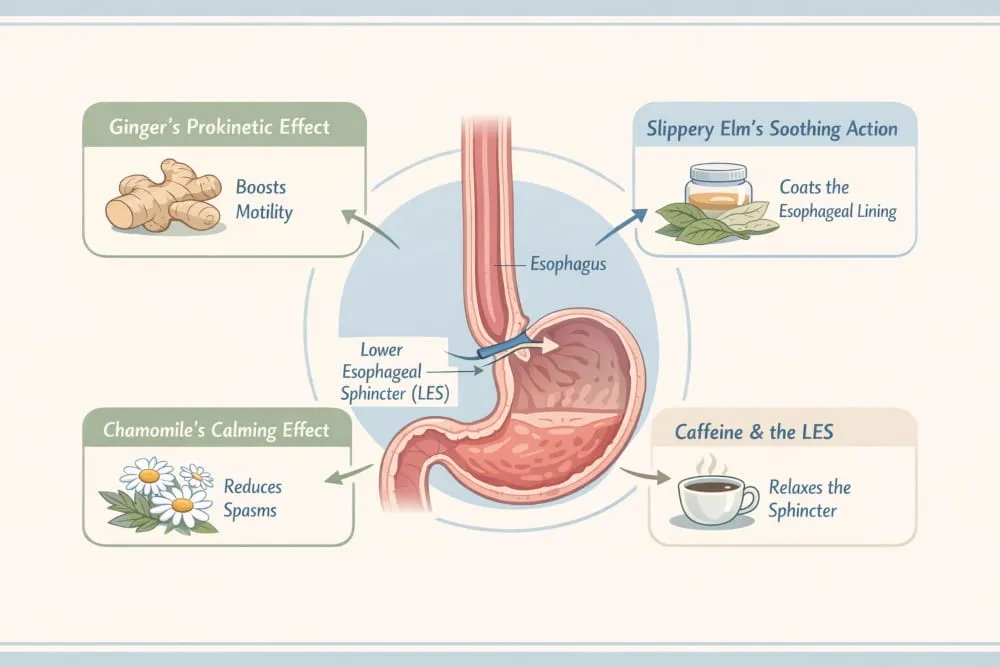
Acid reflux occurs when the lower esophageal sphincter (LES), the muscular valve between your stomach and esophagus, relaxes at the wrong time. Stomach acid escapes upward, irritating the sensitive lining of the esophagus and, in many cases, reaching all the way to the throat.
The result isn’t just heartburn. Chronic reflux causes inflammation along the entire upper digestive tract, erodes the delicate tissues of the esophagus, and, particularly for those who use their voice professionally, damages the vocal cords. Singers and speakers often notice hoarseness, a persistent need to clear the throat, or a feeling of something stuck in the airway. These are classic signs that acid is reaching places it shouldn’t.
Over time, unmanaged reflux can develop into GERD (gastroesophageal reflux disease), making dietary and lifestyle choices, including what you drink, genuinely consequential.
Why Some Teas Soothe Reflux, and Others Trigger It
Tea’s effect on acid reflux comes down to three main factors: caffeine content, acidity, and the specific plant compounds in each variety.
Caffeine is one of the primary culprits. It relaxes the lower esophageal sphincter, which is the last thing you want when you’re already prone to reflux. This is why caffeinated teas, green, black, matcha, need to be approached carefully, and why caffeine-free herbal teas are generally the smarter starting point.
Acidity is the second factor. Teas with a low pH (hibiscus and some citrus blends, for example) can directly irritate an already inflamed esophageal lining, even if they’re caffeine-free.
The third factor, and the one that separates genuinely therapeutic teas from the rest, is the bioactive plant compounds each tea contains. Certain herbs carry anti-inflammatory, antispasmodic, or mucilage-forming properties that don’t just avoid causing harm; they actively support healing.
The Key Compounds to Look For
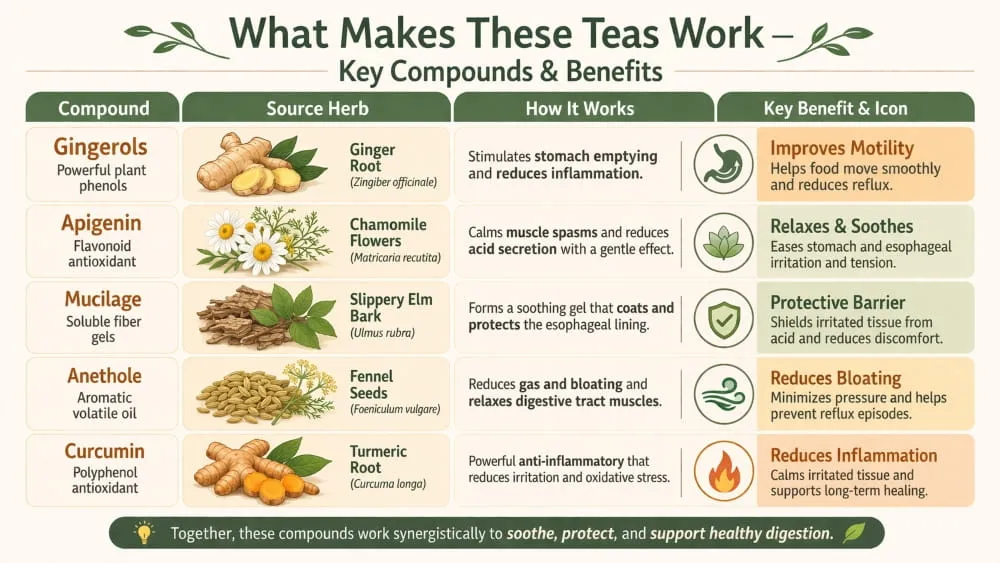
When choosing a tea that’s good for acid reflux, these are the compounds worth understanding:
Anti-inflammatory agents like gingerols (in ginger) and apigenin (in chamomile) reduce inflammation in the esophagus and stomach lining, easing the discomfort that comes with chronic reflux.
Mucilage-forming compounds found in slippery elm and marshmallow root create a protective coating along the esophagus and stomach wall, essentially forming a natural buffer against acid.
Alkaline or pH-neutral profiles help neutralize excess stomach acid rather than adding to it. Herbal teas like chamomile and licorice root tend to sit on the gentler end of the pH spectrum.
Antispasmodic properties in fennel and certain mints help relax the digestive tract and reduce the gas and bloating that often accompany reflux.
Knowing what to look for makes it much easier to cut through the noise and find teas that actually do something useful. The next section covers exactly that.
The Best Teas for Acid Reflux Relief (Ranked)
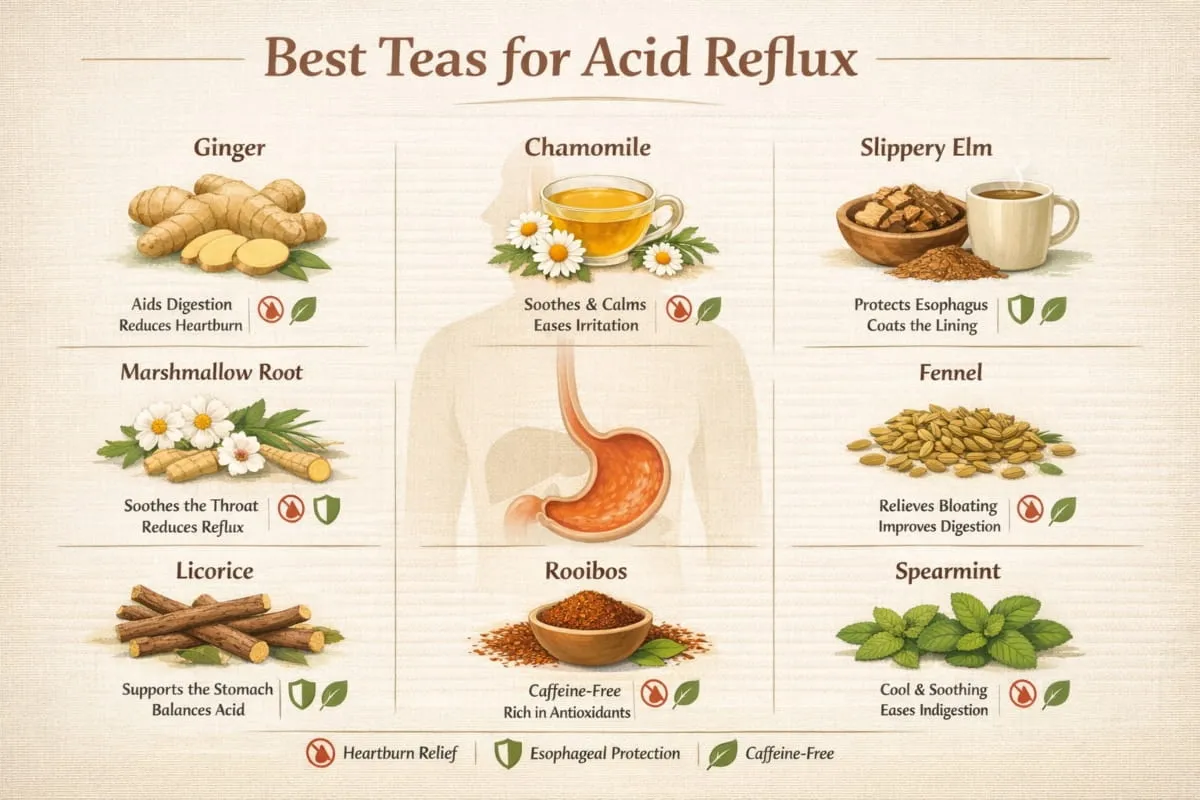
Not every herbal tea earns its reputation. The teas below have genuine therapeutic merit for acid reflux, backed by their plant compounds rather than just tradition. They’re ranked by overall effectiveness, safety profile, and consistency as reliable options for reflux sufferers.
Ginger Tea, The #1 Choice for Acid Reflux
If there’s one tea that earns the top spot without argument, it’s ginger. Ginger tea has been used for digestive complaints for thousands of years, and modern research provides that tradition with a solid foundation.
The active compounds in ginger, primarily gingerols and shogaols, have potent anti-inflammatory and prokinetic properties. That second Word matters: prokinetic means ginger helps food move through the stomach faster, reducing the pressure that causes acid to reflux upward in the first place. Less pressure on the LES means less acid escaping into the esophagus.
Ginger tea is also one of the few options that works across multiple reflux symptoms simultaneously. It eases nausea, reduces inflammation along the esophageal lining, and calms the overall digestive environment without relaxing the lower esophageal sphincter, which is exactly what you don’t want a tea to do.
Best form: Fresh ginger root steeped in hot water gives you the highest concentration of active compounds. Dried ginger tea bags (such as Yogi Ginger Tea) are convenient. Ginger combined with lemon and honey makes for a particularly effective and pleasant cup; the honey adds a soothing coating effect. In contrast, lemon, used in modest amounts, adds flavor without significantly affecting acidity for most people.
Dosage and timing: One to two cups per day is a reasonable starting point. The best time to drink ginger tea for acid reflux is 20–30 minutes before a meal, so the gingerols have time to prime your digestive system. Avoid drinking it on an empty stomach if you’re sensitive; a small amount of food first can help prevent mild gastric irritation.
One important note: in very large amounts, ginger can cause a mild irritant effect in some people. Stick to a reasonable daily amount and adjust based on how your body responds.
Chamomile Tea, The Calming Reflux Remedy
Chamomile is arguably the most well-rounded tea for acid reflux. Where ginger works primarily on motility and inflammation, chamomile takes a broader approach, calming the nervous system, reducing muscle spasms in the digestive tract, and gently soothing the esophageal lining.
Its key compound, apigenin, is a flavonoid with anti-inflammatory and antispasmodic properties. This is why chamomile tea is particularly effective for reflux that’s triggered or worsened by stress; it addresses both the digestive and the neurological sides of the equation simultaneously.
Chamomile tea is also one of the most esophagus-friendly options available. It’s caffeine-free, has a gentle alkaline quality, and doesn’t relax the LES. Adding a small spoonful of raw honey to chamomile tea enhances the effect. Honey has mild antimicrobial properties and provides an additional coating layer for the throat and esophagus. A lavender-chamomile blend takes the calming effect a step further, making it especially good for evening use.
The best time to drink chamomile tea for acid reflux is 30 minutes before bed. It supports both digestive calm and deeper sleep, both of which directly reduce nighttime reflux episodes.
Licorice Root Tea, The Natural Coating Agent
Licorice root is one of the most clinically studied herbs for digestive health, and for good reason. It contains compounds that stimulate mucus production in the stomach lining, creating a natural protective barrier against acid.
The form that matters here is DGL (deglycyrrhizinated licorice). Standard licorice root contains glycyrrhizin, which, at high doses, can raise blood pressure and cause other side effects. DGL licorice has that compound removed, making it safe for regular use while retaining the gut-protective benefits.
Licorice root tea for acid reflux works best as a preventive measure, drunk before meals or at the onset of symptoms, it helps buffer the esophagus and stomach before acid has a chance to cause damage. The flavor is naturally sweet and earthy, which makes it one of the more pleasant medicinal teas to drink regularly.
Slippery Elm Tea, Ancient Soothing Herb
Slippery elm is less well-known than ginger or chamomile, but among people managing chronic reflux, it has a devoted following, and the mechanism is easy to understand.
When slippery elm bark comes into contact with water, it produces a thick, gel-like substance called mucilage. This mucilage coats the throat, esophagus, and stomach lining on the way down, forming a physical barrier between sensitive tissue and stomach acid. It doesn’t neutralize acid; it protects surfaces from acid damage.
How to prepare: Stir 1 teaspoon of slippery elm powder into warm (not boiling) water, then drink slowly. Boiling water can break down the mucilage before it has a chance to do its job. Drink it 30 minutes before meals or immediately when reflux symptoms begin.
Slippery elm tea is also one of the best options for acid reflux with a sore throat; the coating effect reaches all the way up to the vocal cords, making it particularly relevant for singers and speakers dealing with reflux-related vocal irritation.
Marshmallow Root Tea, Underrated but Powerful
Marshmallow root works through the same mucilage mechanism as slippery elm, but with a slightly different compound profile and a subtler, more neutral flavor. It’s often overlooked in favor of more well-known herbs, but for people who find slippery elm’s texture off-putting, marshmallow root is an excellent alternative.
Like slippery elm, marshmallow root tea coats the esophageal lining and relieves the burning sensation that follows acid exposure. It’s best prepared as a cold or lukewarm infusion; steep the root in cold water for several hours rather than using boiling water, which again helps preserve the mucilage. Drink it between meals for sustained protective benefit.
Fennel Tea, Gentle Digestive Support
Fennel has long been used as a digestive aid across multiple culinary traditions, and its application to acid reflux is well-grounded. Fennel seeds contain anethole, a compound that relaxes the smooth muscle of the gastrointestinal tract, reducing spasms and relieving the gas and bloating that frequently accompany reflux.
Fennel tea works well as a post-meal drink; it helps the stomach process food more efficiently and reduces the internal pressure that contributes to reflux episodes. It’s caffeine-free, mildly alkaline, and gentle enough for daily use.
Worth knowing: CCF tea, a traditional Ayurvedic blend of cumin, coriander, and fennel, is one of the most effective herbal combinations for overall digestive support. If fennel alone doesn’t do enough, a CCF blend is worth exploring. All three herbs are reflux-safe and work synergistically to calm and support the digestive system.
Spearmint Tea, The Safer Mint for Reflux Sufferers
Mint and acid reflux have a complicated relationship, and the type of mint makes all the difference. Peppermint (covered in the caution section below) is generally problematic for reflux. Spearmint, however, is a different story.
Spearmint contains significantly less menthol than peppermint, which means it’s far less likely to relax the lower esophageal sphincter. It still provides a gentle, calming effect on digestion, easing bloating and discomfort, without the LES-relaxing mechanism that makes peppermint risky for GERD sufferers.
If you enjoy mint tea and don’t want to give it up entirely, spearmint is the version to reach for. Use it in moderation and monitor how your body responds. A small percentage of people find even spearmint mildly aggravating.
Turmeric Tea, Anti-Inflammatory Support
Turmeric’s active compound, curcumin, is one of the most studied natural anti-inflammatory agents available. For acid reflux, its value lies in reducing chronic inflammation along the esophageal lining, the kind that builds up over time with repeated acid exposure.
Turmeric tea alone has a fairly earthy, pungent flavor, which is why the ginger-turmeric combination is so popular and so effective. Together, they address both the inflammatory response and the motility issues that drive reflux. Add a small pinch of black pepper to your turmeric tea, as piperine significantly increases curcumin absorption.
Turmeric is best consumed warm, not hot, and ideally with a small amount of fat (a drop of coconut oil or a splash of plant-based milk) to further enhance absorption. One cup per day is sufficient for most people.
Lemon Balm Tea, Calm the Gut-Brain Connection
Lemon balm is a member of the mint family, but unlike peppermint, it doesn’t carry the same LES-relaxing risk. Its primary value for reflux sufferers is its ability to reduce anxiety and calm the gut-brain axis, which plays a more significant role in digestive function than most people realize.
Stress is a well-documented reflux trigger. Lemon balm tea addresses that pathway directly, reducing the nervous system activity that can exacerbate digestive symptoms. It’s particularly useful for people whose reflux worsens during stressful periods, and it pairs well with chamomile for an evening wind-down blend.
Rooibos Tea, Caffeine-Free and Gentle
Rooibos is one of the most reflux-friendly teas available, naturally caffeine-free, low in tannins, and with a mild, slightly sweet flavor profile that requires no added sugar. It doesn’t carry the LES-relaxing risk of caffeinated teas and sits comfortably within a neutral-to-mildly alkaline pH range.
It’s not a therapeutic powerhouse like ginger or slippery elm. Still, it’s an excellent daily drinking tea for people managing reflux who want something satisfying and safe without the medicinal character of herbal blends. For Vocal Leaf’s audience specifically, singers, speakers, and performers who already deal with vocal sensitivity, rooibos offers a reliable, throat-friendly option that can be enjoyed any time of day.
A rooibos chai blend, built on a rooibos base rather than black tea, is worth highlighting here. Traditional chai’s spice profile (cinnamon, cardamom, ginger) is largely reflux-compatible when the caffeinated black tea base is replaced with rooibos, making it a smarter choice for those who love the warming, spiced character of chai without the caffeine and tannin load.
Throat Coat Tea, Targeted for Vocal and Esophageal Relief
Throat Coat is a commercial herbal blend, most commonly associated with the Traditional Medicinals brand, that typically combines slippery elm, licorice root, and marshmallow root. For acid reflux sufferers, particularly those experiencing reflux-related throat irritation, it functions as a convenient all-in-one coating tea.
The combination of mucilage-forming herbs works throughout the upper digestive and respiratory tracts, coating the esophagus, soothing the throat, and relieving the raw, scratchy sensation caused by acid exposure. For anyone whose reflux reaches the vocal cords, Throat Coat sits at the intersection of digestive relief and vocal care, making it one of the most purposeful teas on this list.
| Rank | Tea | Key Compounds | Primary Benefit | Best Form / Time | Caffeine | Verdict |
|---|---|---|---|---|---|---|
| 1 | Ginger Tea | Gingerols, shogaols | Reduces inflammation, speeds gastric emptying | Fresh root / 20–30 min before meals | None | ⭐ Best Overall |
| 2 | Chamomile Tea | Apigenin, flavonoids | Antispasmodic, calms gut-brain axis | Dried flowers / 30 min before bed | None | ⭐ Best for Nighttime |
| 3 | Slippery Elm | Mucilage polysaccharides | Physically coats and protects esophagus | Powder in water / Before meals | None | ⭐ Best Heartburn Relief |
| 4 | Marshmallow Root | Mucilage, pectin | Coats and soothes inflamed tissue | Cold infusion / Between meals | None | ⭐ Best for Throat |
| 5 | Licorice (DGL) | Glycyrrhizin (DGL form) | Stimulates protective mucus production | Loose root / Before meals | None | ⭐ Best Barrier |
| 6 | Fennel Tea | Anethole, volatile oils | Reduces bloating and LES pressure | Simmered seeds / After meals | None | ⭐ Best for Bloating |
| 7 | Spearmint Tea | Carvone, low menthol | Gentle digestive calming (No LES risk) | Fresh leaves / Mid-morning | None | ⭐ Safest Mint |
| 11 | Throat Coat Blend | Slippery elm + licorice | Targets vocal and esophageal irritation | Bag / When symptoms present | None | ⭐ Best for Vocal Relief |
| 12 | Decaf Green Tea | EGCG, antioxidants | Antioxidant support without LES risk | CO₂ Decaf / Mid-morning | Trace Only | ✅ Best Caffeine Swap |
Teas to Avoid (Or Use with Caution) for Acid Reflux
Knowing which teas are good for acid reflux is only half the picture. Some teas, even ones with a healthy reputation, can aggravate reflux, worsen heartburn, or undermine the very symptoms you’re trying to manage. The good news is that most of these aren’t absolute prohibitions. With the right adjustments, several can still have a place in your routine.
Peppermint Tea: Why It Can Make Reflux Worse
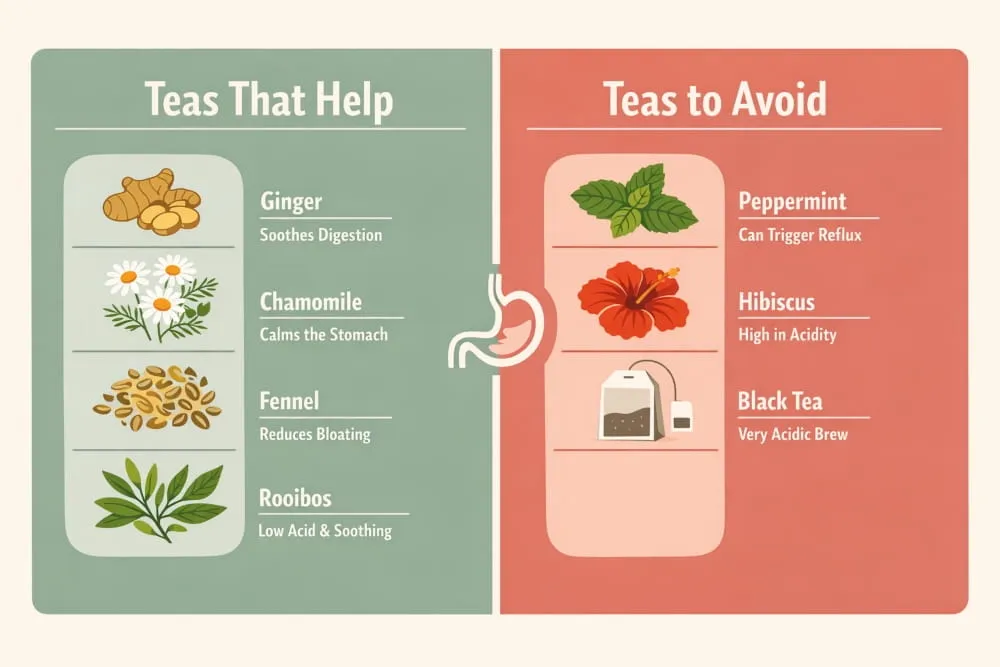
Peppermint is one of the most counterintuitive entries on this list. It’s widely marketed as a digestive tea, and for conditions like IBS or general stomach cramping, that reputation is earned. But for acid reflux specifically, peppermint tea is often the wrong choice, and understanding why matters.
Peppermint’s high menthol content relaxes smooth muscle tissue throughout the digestive tract. That includes the lower esophageal sphincter. A relaxed LES is precisely what allows stomach acid to escape upward, so drinking peppermint tea when you’re prone to reflux can directly trigger or worsen an episode, even if it temporarily soothes the stomach below.
This doesn’t mean you have to give up mint tea entirely. As covered in the previous section, spearmint contains significantly less menthol and poses a lower risk of LES relaxation. If you enjoy mint and want to keep it in your routine, spearmint is the straightforward alternative.
Green Tea and Matcha, Caffeinated, But Not Off Limits
Green tea occupies a middle ground that’s worth understanding clearly. It contains caffeine, less than black tea or Coffee, but enough to relax the LES and stimulate acid production in caffeine-sensitive individuals. Matcha, a concentrated form of green tea, has a higher caffeine content and warrants greater caution.
That said, green tea also contains L-theanine and antioxidant compounds that have mild anti-inflammatory properties, which is why the research picture is more nuanced than a simple “good” or “bad” verdict. For many people with mild reflux, a single cup of green tea, particularly when consumed with food rather than on an empty stomach, causes no issue at all.
If you’re a green tea drinker who doesn’t want to give it up, decaffeinated green tea is the practical middle ground. The decaffeination process removes the primary reflux trigger while preserving most of the antioxidant content. Avoid drinking it first thing in the morning on an empty stomach, keep portions moderate, and pay attention to how your body responds.
Matcha, given its caffeine concentration, is better avoided during active reflux flare-ups and reintroduced cautiously once symptoms are stable.
Black Tea and Earl Grey: What to Know
Black tea is the most caffeinated of the true teas, and it also contains tannins, astringent compounds that can irritate the stomach lining with regular consumption. For someone managing acid reflux, this combination makes black tea worth approaching carefully rather than reaching for it daily.
That said, black tea is still considerably gentler on the esophagus than Coffee. If you’re transitioning away from Coffee specifically because of reflux, black tea is a reasonable intermediate step, lower acidity, lower caffeine than an espresso, and far less likely to trigger severe symptoms. Just don’t treat it as a free pass.
Earl Grey adds bergamot oil to the equation, which is generally well-tolerated but can cause mild citrus-related irritation in sensitive individuals. If you enjoy Earl Grey, watch for any correlation between your symptoms and consumption, and switch to a bergamot-free black tea or a decaf version if needed.
Chai Tea, Spices That May Irritate
Traditional chai is brewed on a black tea base, which immediately introduces caffeine and tannins. Beyond that, the spice blend in conventional chai can be a mixed bag for reflux sufferers. Cinnamon and cardamom are generally well tolerated and even mildly beneficial for digestion. Black pepper and cloves, however, can irritate the esophageal lining, particularly when it’s already inflamed from chronic reflux.
The practical solution, as mentioned earlier, is to choose a chai based on rooibos rather than black tea. Rooibos chai retains the warming, spiced character people love about chai while eliminating concerns about caffeine and tannins. It’s one of the more elegant workarounds for chai lovers managing reflux, satisfying the craving without the consequences.
Hibiscus Tea, High Acidity Warning
Hibiscus tea has a lot going for it nutritionally; it’s rich in antioxidants and has been studied for its effect on blood pressure. But for acid reflux, it presents a clear problem: hibiscus is naturally highly acidic, with a pH that can drop well below 3 in some preparations.
Drinking hibiscus tea when you’re dealing with reflux is likely to aggravate an already irritated esophageal lining rather than soothe it. This is one of the cleaner “avoid” recommendations on this list; the acidity is too pronounced to make regular consumption a reasonable risk for most reflux sufferers.
Lemon Tea, When Citrus Backfires
Lemon adds brightness and flavor, and in small amounts, it’s fine for many people. But lemon is acidic, and for those with sensitive esophageal tissue or active reflux symptoms, lemon-forward teas can push the pH in the wrong direction.
The nuance here is that lemon’s effect varies significantly from person to person. A modest squeeze of lemon in a large cup of ginger tea may be completely fine for one person and noticeably aggravating for another. The rule of thumb: if your reflux is well-managed and symptoms are mild, small amounts of lemon are unlikely to be a problem. If you’re in a flare-up or dealing with GERD, it’s best to set aside lemon-based teas until things stabilize.
Iced Tea and Sweet Tea: The Overlooked Triggers
Iced tea often flies under the radar in reflux conversations, but it carries the same fundamental concerns as its hot counterpart, and sometimes more. Most commercial iced teas are made from black tea, so caffeine and tannins are still present. Bottled versions frequently contain significant amounts of added sugar, which slows gastric emptying and increases the likelihood of reflux.
Sweet tea deserves a specific mention here. The sugar load in a standard glass of sweet tea, which can exceed 30 grams, creates conditions in the stomach that actively promote acid reflux. If iced tea is something you drink regularly, unsweetened herbal iced tea (chamomile, fennel, or rooibos cold-brewed) is a far better option and genuinely reflux-friendly.
Milk Tea and Bubble Tea, Complex Reflux Variables
Milk tea sounds intuitively soothing, but milk has a reputation for coating the stomach; the reality is more complicated. While milk temporarily buffers stomach acid, it also stimulates additional acid production afterward, which can worsen reflux symptoms over time. When combined with caffeinated black tea, the effects compound.
Bubble tea adds further variables: sweetened syrups, tapioca pearls (which are slow to digest), and often large volumes of milk or flavored creamer. For anyone managing acid reflux, bubble tea is best treated as an occasional indulgence rather than a regular drink. On days when symptoms are already present, it’s worth skipping entirely.
Green Tea and Acid Reflux: A Deep Dive
Green tea is one of the most searched topics within the broader acid reflux conversation, and for good reason. It sits in an ambiguous middle ground, leaving most people genuinely uncertain whether their morning cup is helping or hurting. The answer isn’t a simple yes or no, so this section gives it the thorough treatment it deserves.
Is Green Tea Acidic?
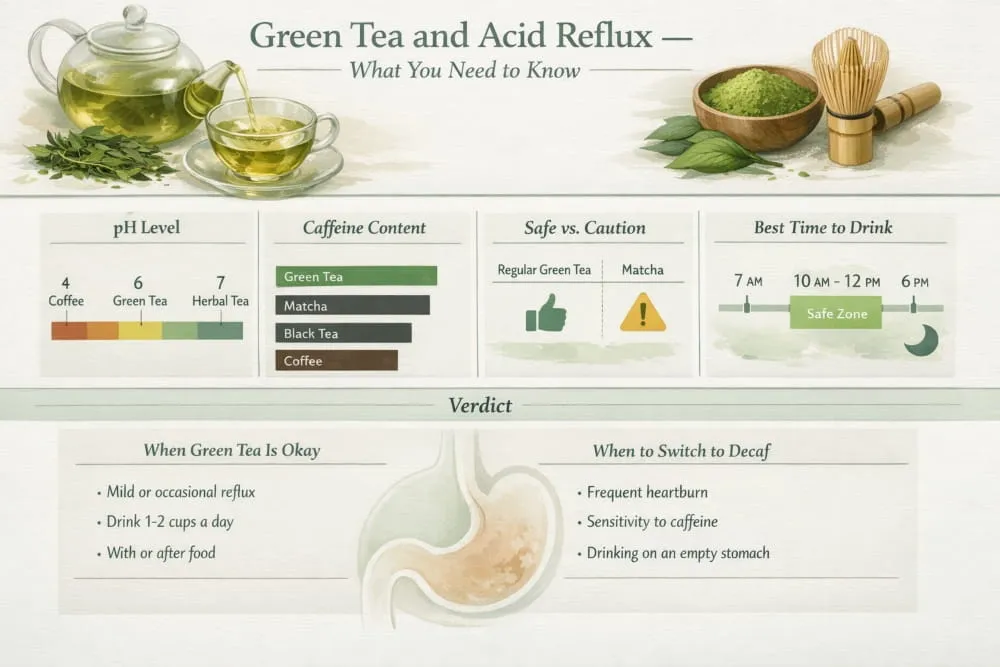
Green tea typically has a pH that falls between 7 and 10, depending on the variety, brewing time, and water quality, which places it in a relatively gentle range compared to Coffee (pH 4–5) or hibiscus tea (pH 3 or lower). In terms of direct acidity, green tea is not a significant concern for most reflux sufferers.
The more relevant issue isn’t green tea’s pH, it’s its caffeine content. Even though green tea contains considerably less caffeine than Coffee or black tea, it’s enough to trigger LES relaxation in caffeine-sensitive people. It also stimulates gastric acid secretion, which is the mechanism that matters most for reflux. So while green tea won’t burn the esophagus the way a highly acidic beverage might, it can still open the door for stomach acid to do that job on its own.
Decaf Green Tea for Acid Reflux: Is It Safer?
For most people, yes, and meaningfully so. Decaffeinated green tea removes the primary physiological trigger for reflux while preserving the vast majority of its antioxidant content, including EGCG (epigallocatechin gallate), the compound most associated with green tea’s health benefits.
If green tea is something you genuinely enjoy and don’t want to eliminate, switching to a high-quality decaf green tea is the most practical option. It allows you to retain the ritual and flavor profile while significantly reducing the risk of reflux. Look for teas that use the CO₂ decaffeination method, which removes caffeine most effectively while doing the least damage to the tea’s natural compounds.
One caveat: decaf doesn’t mean zero caffeine. A small residual amount remains, so if you’re extremely caffeine-sensitive, even decaf green tea may warrant some caution. However, for most reflux sufferers, it represents a significant improvement over the regular version.
Matcha vs. Regular Green Tea for Reflux
If regular green tea requires moderation, matcha requires more. Matcha is made from whole ground green tea leaves rather than steeped and discarded leaves, which means you’re consuming the entire leaf, and with it, a substantially higher concentration of caffeine and other compounds.
A standard cup of matcha contains roughly two to three times the caffeine of a regular cup of steeped green tea. For someone managing acid reflux, that elevated caffeine load makes matcha a meaningfully higher-risk choice. The same LES-relaxing and acid-stimulating mechanisms apply, just with greater intensity.
Matcha is also often consumed in ways that introduce variables: blended into lattes with milk and sweeteners, or in a concentrated ceremonial shot, which introduces additional reflux considerations. If you love matcha, it’s not necessarily off the table forever. Still, it warrants genuine caution during symptomatic periods and should not be a daily habit for anyone with active GERD.
Can You Drink Green Tea If You Have GERD?
The honest answer is: it depends on your individual sensitivity, how much you drink, and when you drink it.
GERD (gastroesophageal reflux disease) represents chronic, clinically significant reflux rather than occasional heartburn, which means the stakes of consistent dietary triggers are higher. For many people with GERD, even moderate caffeine consumption is enough to perpetuate symptoms, and green tea, consumed daily, can contribute to that cycle.
That said, some people with GERD tolerate a single cup of green tea without issue, particularly when it’s consumed with food. The food acts as a buffer, slowing gastric emptying and reducing the likelihood of acid escaping upward. Drinking green tea on an empty stomach, on the other hand, is where GERD sufferers are most likely to notice a negative response.
The practical approach: if you have GERD and want to keep green tea in your life, start with decaf, always have it with food, limit yourself to one cup per day, and track your symptoms honestly over two to three weeks. Your body’s response is more informative than any general guideline.
Best Time to Drink Green Tea with Acid Reflux
Timing makes a real difference. The worst times to drink green tea if you have reflux are first thing in the morning on an empty stomach, immediately before lying down, and late at night when your body’s digestive activity slows and stomach acid has nowhere productive to go.
The best time is mid-morning or early afternoon, alongside or shortly after a meal. This is when your digestive system is most active, gastric acid is being put to productive use, and the caffeine in green tea is least likely to cause LES relaxation that leads to symptoms.
If you’re reaching for green tea in the evening for its calming qualities, it’s worth substituting chamomile or lemon balm instead; you’ll get the relaxation benefits without the caffeine-related reflux risk.
Is Tea Better Than Coffee for Acid Reflux?
This is one of the most common questions people ask when they’re first trying to manage reflux through diet, and it’s a sensible one. Coffee is widely known as a reflux trigger, so the instinct to switch to tea is reasonable. But the full answer is more nuanced than a straight swap.
How Caffeine Triggers Reflux
Caffeine is the shared villain in this comparison. Regardless of whether it comes from Coffee or tea, caffeine triggers reflux through two distinct mechanisms.
First, it relaxes the lower esophageal sphincter, the valve that keeps stomach acid where it belongs. A weakened or overly relaxed LES allows acid to travel upward into the esophagus, producing the burning sensation and irritation that define reflux. Second, caffeine directly stimulates the stomach’s parietal cells to produce more gastric acid, increasing the volume of acid available to cause damage.
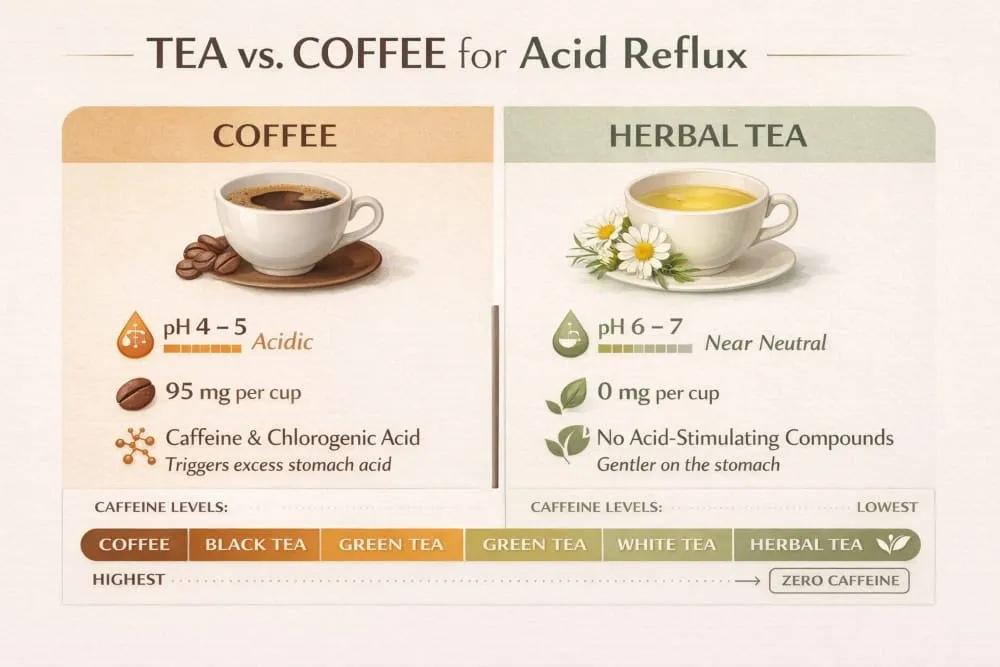
Coffee compounds this problem beyond caffeine alone. It contains chlorogenic acids and N-alkanoyl-5-hydroxytryptamides, compounds that independently stimulate acid secretion, separate from any caffeine effect. This means even decaf coffee retains some acid-stimulating properties, which is why many reflux sufferers find that decaf coffee still causes symptoms while decaf tea does not.
Tea vs. Coffee, pH Comparison
On the pH scale, Coffee typically falls between 4.5 and 5.5, firmly in acidic territory. Black tea sits between 4.9 and 5.5, making it comparable in acidity to Coffee at the lower end of that range. Green tea is milder, generally ranging from 7 to 10, depending on preparation. Herbal teas vary widely; hibiscus can drop below 3, while chamomile, rooibos, and fennel sit at a gentle neutral to slightly alkaline range.
The pH comparison alone, however, doesn’t tell the complete story. The acidity of a beverage and its effect on reflux are related but not identical. Coffee’s reflux-aggravating properties go well beyond its pH; the compound profile drives significant acid secretion independently. Tea, particularly herbal tea, generally lacks those additional acid-stimulating compounds, which is why the comparison tends to favor tea even when the pH numbers look similar on paper.
Which Teas Have the Least Caffeine?
If your goal is to reduce caffeine’s contribution to reflux, understanding the caffeine spectrum across teas helps you make smarter daily choices.
Herbal teas, chamomile, ginger, rooibos, fennel, licorice root, marshmallow root, spearmint, lemon balm, contain zero caffeine. They’re derived from plants, roots, and flowers rather than the Camellia sinensis plant, which is the source of all caffeinated true teas. For acid reflux management, these are the baseline safe choices.
Among true teas, the caffeine ranking from lowest to highest runs roughly: white tea → green tea → oolong tea → black tea. Decaffeinated versions of any of these reduce the caffeine load significantly, though not to zero.
If you’re making a direct switch from Coffee to tea for reflux reasons, starting with caffeine-free herbal teas gives you the cleanest break from the primary trigger. From there, you can reintroduce lower-caffeine true teas cautiously if you find you miss the character of a properly brewed tea.
The Verdict: When Tea Is the Better Choice
In most cases, yes, tea is the better choice for acid reflux than Coffee, but the degree of advantage depends entirely on which tea you choose.
A cup of chamomile, ginger, or rooibos tea is dramatically better for reflux than Coffee in every meaningful way: no caffeine, no additional acid-stimulating compounds, no LES relaxation, and, in the case of ginger and chamomile, active therapeutic benefit for the digestive tract. The comparison isn’t close.
A strong cup of black tea, on the other hand, is only marginally better than a mild coffee, with similar pH, comparable caffeine content, and a tannin load that can irritate the stomach lining with daily consumption, and calling that a meaningful upgrade would be generous.
The honest takeaway: tea beats Coffee for acid reflux when you’re choosing the right teas. Caffeine-free herbal teas represent a genuine lifestyle improvement for reflux sufferers who are used to reaching for Coffee. Swapping one caffeinated drink for another and expecting dramatically different results, though, misses the point. The goal isn’t just to drink tea; it’s to drink teas that actively support your digestive health, rather than simply doing slightly less harm.
Decaf Tea for Acid Reflux: Does It Actually Help?
For people who love tea but struggle with reflux, decaffeinated tea feels like an obvious solution. Remove the caffeine, keep the ritual. But does it actually make a meaningful difference, or is decaf just a placebo with better marketing? The short answer is that it genuinely helps, with some important distinctions worth understanding before you stock your pantry.
How Caffeine Affects the Lower Esophageal Sphincter
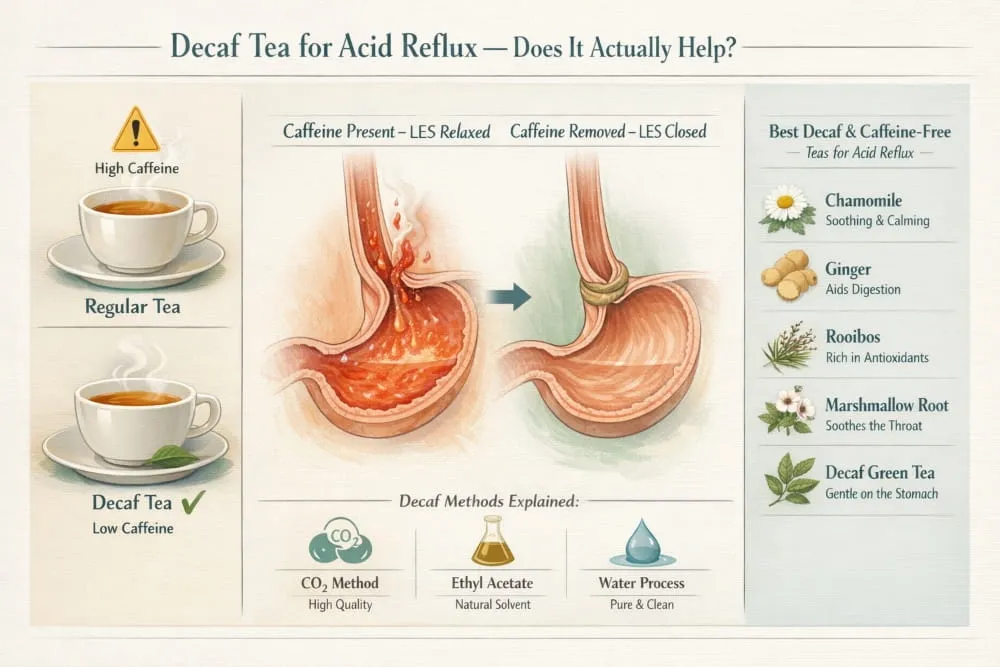
To understand why decaf matters, it helps to revisit what caffeine does to the digestive system, specifically. The lower esophageal sphincter is a ring of muscle that acts as a one-way valve between the stomach and esophagus. Under normal conditions, it opens to let food down and closes tightly to keep stomach acid in. Caffeine interferes with that closing mechanism.
By relaxing the smooth muscle tissue of the LES, caffeine effectively props the valve open, allowing gastric acid to travel upward into the esophagus. This happens whether the caffeine comes from Coffee, black tea, green tea, or matcha. The source doesn’t change the mechanism. Caffeine also directly stimulates gastric acid secretion, meaning more acid is produced while the barrier keeping it contained is weakened. It’s a two-front problem, and decaffeination addresses both.
Best Decaf Teas for Acid Reflux
It’s worth drawing a clear distinction between two categories that are often conflated: decaffeinated tea and caffeine-free herbal tea.
Decaffeinated tea refers to true teas, green, black, oolong, and white, that have undergone a process to remove most of their caffeine content. These still come from the Camellia sinensis plant and retain their tannins and other compounds, just with the caffeine removed.
Caffeine-free herbal teas, chamomile, ginger, rooibos, fennel, licorice root, marshmallow root, and lemon balm never contained caffeine to begin with. They’re derived from herbs, roots, flowers, and spices rather than tea leaves, which makes them the cleanest option for anyone managing reflux.
For pure reflux management, caffeine-free herbal teas are the stronger recommendation. Ginger and chamomile remain the top choices for their active therapeutic properties. Rooibos is excellent for daily drinking, naturally caffeine-free, low in tannins, gentle on the stomach, and flavorful enough to satisfy without any medicinal character. Decaffeinated green tea is a solid middle-ground option for those who want the antioxidant profile of green tea without its LES-relaxing effect.
Is Decaffeinated Green Tea Safe for GERD?
For most people with GERD, decaffeinated green tea is considerably safer than its regular counterpart, and for many, it’s well tolerated. Removing the caffeine eliminates the primary mechanism by which green tea aggravates reflux, and the antioxidant compounds that remain are not known to trigger LES dysfunction or stimulate excess acid production as caffeine does.
That said, decaf doesn’t mean zero caffeine. Most decaffeinated teas contain 2-15mg of caffeine per cup, compared to 20–45mg in regular green tea. For most reflux sufferers, that residual amount is inconsequential. For those who are highly caffeine-sensitive or managing severe GERD, even that small amount may occasionally be noticeable, though this represents the minority rather than the rule.
Caffeine-free green tea, products specifically formulated or blended to contain no caffeine, is a step beyond decaf and worth seeking out if you find even decaf green tea occasionally problematic.
What to Look for on the Label
Not all decaf teas are processed the same way, and the decaffeination method affects both the safety and the quality of what ends up in your cup.
The CO₂ method (supercritical carbon dioxide extraction) is the gold standard. It removes caffeine selectively while leaving antioxidants, flavor compounds, and beneficial plant chemicals largely intact. Teas decaffeinated this way tend to taste closer to the original and carry more of the health-relevant compounds you’re drinking tea for in the first place.
The ethyl acetate method is common and inexpensive but uses a chemical solvent that can strip beneficial compounds along with the caffeine, leaving a flatter, less nutritious tea. It’s not harmful, but it’s the lesser option.
Beyond the decaffeination method, check the ingredient list for additives, natural flavors, and sweeteners, particularly if you’re buying flavored decaf blends. For reflux management, the simpler the ingredient list, the better. A single-herb or single-tea decaf with no added citric acid, natural flavors, or sweeteners gives you the cleanest possible cup. It removes any uncertainty about what might be contributing to symptoms.
How to Make the Best Teas for Acid Reflux
Knowing which teas help is one thing. Knowing how to prepare them properly is what makes the difference between a cup that actually works and one that falls flat, or worse, accidentally introduces variables that aggravate symptoms. Each recipe below is kept simple, purposeful, and optimized for reflux relief.

How to Make Ginger Tea for Acid Reflux
Fresh ginger root makes the most potent cup; the active gingerols are most concentrated before drying and processing. Bags are convenient, but if you’re making ginger tea for therapeutic reasons, fresh is worth the extra two minutes.
What you need:
- 1-inch piece of fresh ginger root, peeled and thinly sliced (or grated)
- 2 cups of filtered water
- Optional: raw honey to taste
Method: Bring the water to a gentle boil, add the ginger, then reduce the heat and simmer for 10 minutes. The longer you simmer, the stronger the cup. Strain into a mug, let it cool to a comfortable drinking temperature, and add honey if desired. Drink it warm, not scalding hot, as this can irritate sensitive esophageal tissue.
Best time to drink: 20–30 minutes before a meal. This primes the digestive system and reduces post-meal reflux episodes. One to two cups per day is sufficient for most people.
How to Make Chamomile Tea for Reflux Relief
Chamomile is more delicate than ginger and requires less heat and shorter steeping to preserve its active compounds. Over-steeping chamomile can turn the cup bitter and reduce its calming effect.
What you need:
- 1 chamomile tea bag or 1 heaped tablespoon of dried chamomile flowers
- 1 cup of water, heated to just below boiling (around 90°C / 195°F)
- Optional: raw honey
Method: Pour the hot water over the chamomile, cover the cup with a saucer (this traps the volatile oils that would otherwise evaporate), and steep for 5 minutes. Remove the bag or strain the flowers, add honey if using, and drink slowly.
Best time to drink: 30 minutes before bed. Chamomile’s antispasmodic and mild sedative properties make it particularly effective for managing nighttime reflux, and the pre-sleep timing supports both digestive calm and better sleep quality.
Ginger Lemon Honey Tea Recipe for Acid Reflux
This is the most popular combination for good reason; it layers three complementary effects in one cup. Ginger handles the motility and inflammation, honey coats and soothes, and lemon adds brightness without significantly altering acidity when used in modest amounts.
What you need:
- 1-inch piece of fresh ginger, sliced or grated
- 2 cups of filtered water
- Juice of ¼ lemon (no more, restraint matters here)
- 1 teaspoon raw honey
Method: Simmer the ginger in water for 8–10 minutes. Strain into a mug and allow to cool slightly; the water should be warm but not boiling before you add the honey, as excessive heat degrades honey’s beneficial enzymes. Add the lemon juice last. Stir and drink warm.
If you find even a small amount of lemon aggravates your symptoms, omit it without hesitation. The ginger and honey combination alone is effective; the lemon is a flavor enhancement, not a therapeutic necessity.
Turmeric Ginger Tea Recipe for Acid Reflux
The ginger-turmeric combination is one of the most anti-inflammatory cups you can brew. Together, they address inflammation from two distinct pathways, gingerols from ginger and curcumin from turmeric, making this blend particularly valuable for people dealing with chronic esophageal inflammation from long-term reflux.
What you need:
- 1-inch piece of fresh ginger, sliced
- ½ teaspoon ground turmeric (or a small piece of fresh turmeric root)
- 2 cups of filtered water
- Small pinch of black pepper (essential, it increases curcumin absorption by up to 2000%)
- ½ teaspoon coconut oil or a splash of plant-based milk (fat further enhances curcumin absorption)
- Raw honey to taste
Method: Combine water, ginger, and turmeric in a small saucepan. Bring to a gentle boil, then reduce the heat and simmer for 10 minutes. Strain into a mug, add black pepper, coconut oil or milk, and honey. Stir well and drink warm.
This tea has an earthy, warming flavor that most people find pleasant, especially in colder months. One cup per day is enough to produce meaningful levels of anti-inflammatory compounds.
Fennel Seed Tea Recipe (CCF Blend)
Fennel seed tea is excellent on its own as a post-meal digestive aid. Still, the CCF blend, cumin, coriander, and fennel, is the full-spectrum version that addresses gas, bloating, sluggish digestion, and acid buildup simultaneously. It’s an Ayurvedic staple that translates seamlessly into a modern reflux-management routine.
What you need (single serving):
- ½ teaspoon fennel seeds
- ¼ teaspoon cumin seeds
- ¼ teaspoon coriander seeds
- 2 cups of filtered water
Method for fennel tea alone: Add fennel seeds directly to boiling water, reduce the heat, and simmer for 5–7 minutes. Strain and drink warm water after meals.
Method for CCF blend: Lightly crush all three seeds using a mortar and pestle, just enough to crack them open and release their oils. Add to boiling water, simmer for 7–10 minutes, strain, and drink. No sweetener is needed; the blend has a naturally pleasant, mildly sweet flavor from the fennel and coriander.
Best time to drink: 15–20 minutes after meals, when the digestive system needs support in processing food without generating excess acid.
Persimmon Tea Recipe for Acid Reflux
Persimmon leaf tea is less commonly known in Western markets but has a long history of use in East Asian traditional medicine for digestive complaints. It has a mild, slightly earthy flavor and is naturally caffeine-free. The tannins in persimmon leaves have an astringent quality that may help soothe irritated mucosal tissue.
What you need:
- 1–2 teaspoons dried persimmon leaves (available from specialist tea retailers or Asian grocery stores)
- 2 cups of water
Method: Bring water to just below boiling. Steep the dried leaves for 5–7 minutes, covered. Strain and drink warm. Because persimmon leaves contain tannins, avoid over-steeping; a longer steep will intensify astringency and may cause mild stomach discomfort in sensitive individuals.
This is a gentle, occasional-use tea rather than a daily staple for reflux management. Think of it as a useful addition to your rotation rather than a primary remedy.
Herbal Tea Blends You Can Make at Home
Some of the most effective teas for acid reflux are combinations rather than single herbs. Once you’re comfortable with individual teas, blending them at home gives you flexibility, better flavor, and layered therapeutic effects.
A few combinations worth keeping in your pantry:
Calm & Coat Blend, chamomile flowers + marshmallow root + a small amount of licorice root. This combination covers the anti-inflammatory, antispasmodic, and esophageal-coating bases in one cup. Steep for 7 minutes in near-boiling water, strain well, and drink before bed.
Morning Digestive Blend, fresh ginger + fennel seeds + a thin slice of fresh turmeric. Simmer for 10 minutes, strain, add a pinch of black pepper, and a small amount of honey. Drink 20 minutes before breakfast to set the digestive system up well for the day.
Throat & Esophagus Soothe, slippery elm powder + marshmallow root + chamomile. Combine equal parts slippery elm and marshmallow root (half a teaspoon each), add one chamomile tea bag, and steep in warm (not boiling) water for 10 minutes. This is the blend to reach for when reflux has already caused throat irritation or vocal discomfort. The mucilage from both slippery elm and marshmallow root coats the entire upper tract on the way down.
The key principle when making any homemade herbal blend for acid reflux: keep it simple, use quality ingredients, and pay attention to temperature. Most mucilage-forming herbs lose effectiveness when boiled, and most volatile aromatic compounds (the ones responsible for chamomile’s calming effect, for example) evaporate if you leave the cup uncovered while steeping. Small details, meaningful difference.
When and How Much Tea Should You Drink for Acid Reflux?
Choosing the right tea is the first step. Knowing when to drink it, and how much, is what turns a good choice into a genuinely effective habit. Timing matters more than most people realize with acid reflux, because the digestive system operates differently across the day, and the wrong cup at the wrong moment can undermine an otherwise sound choice.
Best Time to Drink Tea for Acid Reflux (Morning vs. Night)
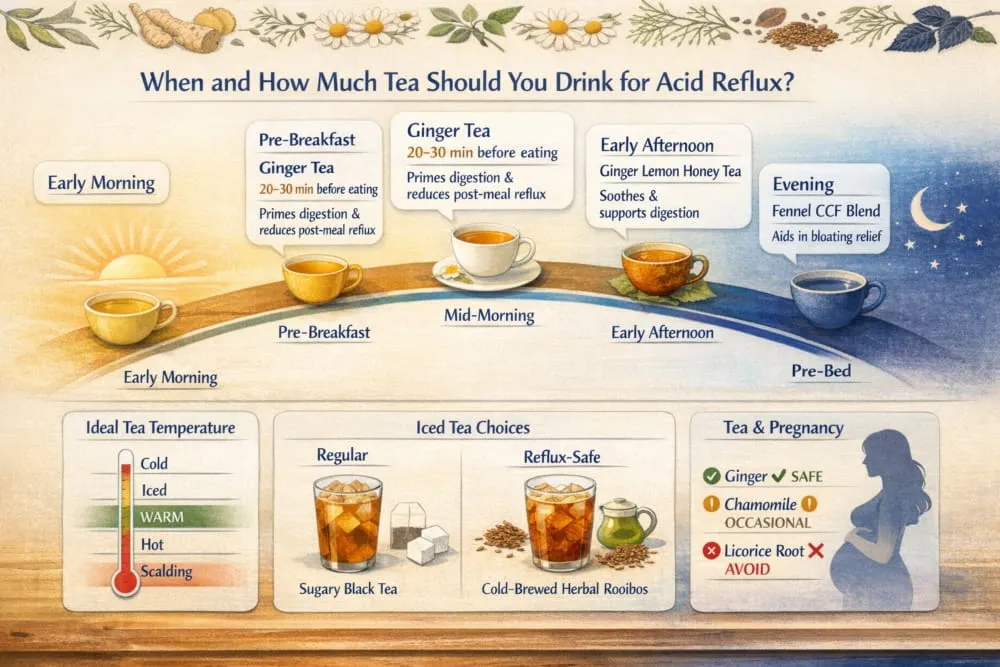
The morning is the trickiest time for reflux sufferers. The stomach is empty, gastric acid is concentrated, and the esophagus hasn’t had anything to buffer it since the night before. Drinking caffeinated tea first thing in the morning on an empty stomach, even a relatively gentle option like green tea, is one of the most reliable ways to trigger early-day symptoms.
If you want tea in the morning, start with something light and food-adjacent. A warm cup of ginger tea 20 minutes before breakfast is ideal; it prepares the digestive system, stimulates healthy gastric motility, and reduces the likelihood of post-meal reflux. Alternatively, fennel or chamomile makes a gentle morning opener. The rule of thumb is simple: something in your stomach before or alongside the tea, and caffeine-free wherever possible in the early hours.
Mid-morning and early afternoon are the most forgiving windows. Digestion is active, you’ve eaten, and your body is in a natural rhythm of processing. If you’re going to include any caffeinated tea in your day, green tea or a light oolong, this is the time to do it, always with food rather than on its own.
Evening is when the choices you make matter most for overnight comfort. Acid reflux tends to worsen when lying down, and what you drink in the two to three hours before bed directly influences whether you sleep through the night or wake with that familiar burning sensation.
What Tea Is Best for Acid Reflux at Night?
Chamomile is the clear first choice for nighttime use. Its antispasmodic properties calm the digestive tract, its mild sedative effect supports deeper sleep, and its complete absence of caffeine means it won’t interfere with your body’s wind-down process. A cup of chamomile, ideally with a small amount of raw honey, drunk 30 minutes before bed, is one of the most consistently recommended habits for people managing reflux.
Marshmallow root or slippery elm tea is the better choice if your primary nighttime symptom is a burning throat or esophageal discomfort rather than general digestive restlessness. The mucilage these herbs produce coats the esophageal lining before you lie down, providing a physical barrier against any acid that may rise during sleep. Drink it slowly and remain upright for at least 20–30 minutes afterward.
Lemon balm is worth considering if stress or anxiety tends to drive your evening reflux; it addresses the nervous system component that chamomile alone may not fully cover.
What to avoid entirely in the evening: peppermint tea, any caffeinated tea, hibiscus, and anything with added citrus or sweeteners. These are the combinations most likely to contribute to nighttime reflux episodes.
How Often Should You Drink Ginger Tea?
One to two cups per day is the sweet spot for most people. That’s enough to deliver a meaningful daily dose of gingerols, the active anti-inflammatory compounds in ginger, without pushing into the range where ginger’s naturally warming, stimulating properties begin to cause mild gastric irritation in sensitive individuals.
The best time to drink ginger tea for acid reflux is before meals, not after. Drinking it 20–30 minutes before eating gives the gingerols time to prime the digestive system, improve gastric motility, and reduce the post-meal acid surge that drives reflux. If you only have one cup per day, make it a pre-meal cup rather than a post-meal one.
As for how much ginger per cup, a one-inch piece of fresh root, or roughly one teaspoon of dried ginger, is sufficient. More isn’t necessarily better. Very strong ginger tea, consumed on an empty stomach, can occasionally cause mild nausea or a sensation of warmth in the chest that can be mistaken for reflux. Keep the concentration reasonable, and you’ll get all the benefits without the drawbacks.
Hot vs. Warm vs. Iced, Which Temperature Is Safest?
Temperature is an underappreciated variable in the conversation about acid reflux. The esophageal lining is already sensitive in people dealing with chronic reflux, and extreme temperatures at either end of the spectrum add stress to compromised tissue.
Very hot tea, anything you’d describe as scalding or that you need to blow on repeatedly before drinking, is worth avoiding. Consistently high-temperature liquids are associated with esophageal irritation independent of acidity, and for tissue that’s already inflamed from acid exposure, that’s an unnecessary additional insult.
Warm tea, the kind you can sip comfortably within a minute or two of brewing, is the optimal temperature for reflux management. It’s soothing rather than stimulating, and for mucilage-forming teas like slippery elm and marshmallow root, a warm temperature (rather than boiling) actually better preserves the coating compounds.
Iced tea introduces its own set of considerations. Cold temperatures are generally well tolerated by the esophagus, but most iced teas are made from black tea, which reintroduces caffeine and tannins into the equation. Cold-brewed herbal iced tea, on the other hand, is a genuinely good option for warm weather. Rooibos, chamomile, and fennel all cold-brew well and make for refreshing, reflux-safe drinks. Avoid commercial bottled iced teas, which typically contain added sugar, natural flavors, and caffeine, all of which work against your reflux management goals.
| Temperature Type | Effect on Reflux | Best Teas | Verdict |
|---|---|---|---|
| Scalding Hot (70°C+) | Directly irritates already inflamed esophageal tissue. | None recommended. | Avoid |
| Hot (60–70°C) | Too stimulating for sensitive tissue; increases irritation risk. | Any herbal — but let it cool first. | Caution |
| Warm (45–60°C) | Optimal — soothing; preserves beneficial mucilage compounds. | Ginger, Chamomile, Rooibos, Fennel. | Ideal |
| Room Temp (20–25°C) | Well tolerated; safe for most herbal options. | Chamomile, Rooibos, Lemon Balm. | Safe |
| Cold Brewed (4–8°C) | Gentle on esophagus; reduces tannin extraction. | Rooibos, Chamomile, Spearmint. | Safe |
| Iced / Commercial | Commercial versions often contain sugar/additives that trigger reflux. | Cold-brewed herbal only. | Caution |
Tea for Acid Reflux During Pregnancy: What’s Safe?
Pregnancy adds a layer of complexity to acid reflux management that deserves careful attention. Reflux is extremely common during pregnancy. The growing uterus places upward pressure on the stomach, and pregnancy hormones relax the LES, but not every herbal remedy that’s safe under normal circumstances is appropriate during pregnancy.
Ginger tea is generally considered safe during pregnancy in moderate amounts and is one of the few remedies with reasonable evidence behind it for both reflux and pregnancy-related nausea. One to two cups of mild ginger tea per day is the widely cited reasonable range, though it’s always worth confirming with your midwife or OB-GYN.
Chamomile is where guidance becomes more cautious. While pregnant women widely use chamomile tea, some sources advise limiting it during pregnancy, particularly in the first trimester, due to its mild uterine-stimulating properties when concentrated. Occasional use of a standard-strength cup is generally considered low-risk, but daily high-dose consumption is worth discussing with your healthcare provider first.
Licorice root should be avoided during pregnancy. The glycyrrhizin in licorice root has been associated with adverse pregnancy outcomes in research, and even DGL versions are generally not recommended as a regular remedy during this period.
Rooibos, fennel in moderate amounts, and lemon balm are generally considered among the safer options for pregnancy-related reflux. That said, the consistent advice holds across all herbal teas during pregnancy: check with your healthcare provider before making any herbal tea a daily habit, particularly in the first trimester when caution is most warranted.
Tea for Acid Reflux with Other Symptoms
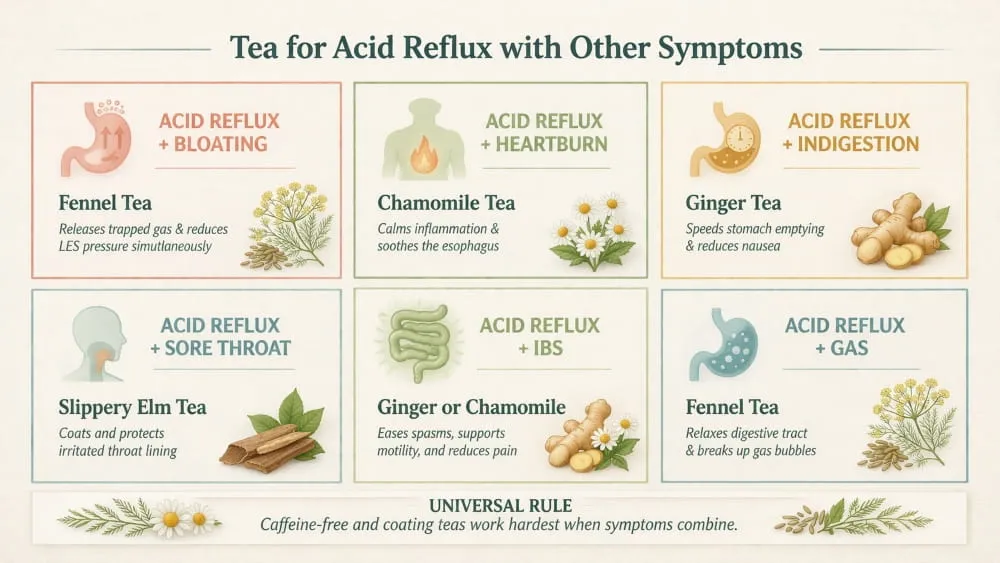
Acid reflux rarely arrives alone. For most people, it comes packaged with at least one other digestive complaint, bloating, heartburn, indigestion, gas, and sometimes with throat symptoms that extend well beyond the stomach. When that’s the case, choosing the right tea means matching it not just to reflux in general, but to the specific combination of symptoms you’re actually dealing with.
Best Tea for Acid Reflux and Bloating
Bloating and acid reflux share a common driver: excess gas and pressure in the digestive tract that pushes upward, stressing the LES and forcing acid into the esophagus. Addressing bloating often directly reduces reflux, making this a particularly worthwhile combination of symptoms to target.
Fennel is the standout choice here. Its active compound, anethole, relaxes the smooth muscle of the gastrointestinal tract, releasing trapped gas and reducing the internal pressure that contributes to both bloating and reflux. The CCF blend, cumin, coriander, and fennel, expands on this by adding the carminative properties of all three seeds, making it one of the most effective post-meal teas for anyone dealing with reflux and bloating together.
Ginger is a strong secondary option, particularly if the bloating tends to follow meals. Its prokinetic effect, speeding up gastric emptying, reduces the window during which fermentation and gas buildup can occur in the stomach. A ginger and fennel combination, either blended or drunk in sequence, covers both the motility and the gas-relief angles efficiently.
Best Tea for Acid Reflux and Heartburn
Heartburn is the most recognizable symptom of acid reflux, the burning sensation in the chest that occurs when stomach acid contacts the esophageal lining. When heartburn is the dominant complaint, the teas that offer the most immediate relief are those with coating and alkalizing properties rather than purely anti-inflammatory ones.
Slippery elm and marshmallow root are the first line of response. Both produce mucilage that physically coats the esophagus, creating a barrier between the irritated tissue and any additional acid. Drunk at the onset of heartburn, slowly, in warm rather than hot form, they provide relief that is noticeably more targeted than most other herbal options.
Chamomile is the better choice when heartburn is stress-related or occurs as part of a broader pattern of digestive tension. Its antispasmodic properties calm the muscular environment of the esophagus and upper digestive tract, reducing the spasm-like quality of heartburn. For ongoing GERD-related heartburn, a daily chamomile habit before bed, combined with slippery elm or marshmallow root when symptoms flare, provides both preventive and responsive coverage.
Best Tea for Acid Reflux and Indigestion
Indigestion, the feeling of uncomfortable fullness, sluggish digestion, or upper abdominal discomfort after eating, and acid reflux frequently occur together because they share the same root cause: food sitting in the stomach longer than it should, increasing pressure on the LES.
Ginger is the most therapeutically appropriate tea for this combination. Its prokinetic properties accelerate gastric emptying, meaning food moves out of the stomach and into the small intestine more efficiently, reducing both the pressure and the duration during which acid can reflux. Drinking ginger tea 20–30 minutes before meals is more effective than drinking it after the fact; prevention works better than damage control with this particular symptom pairing.
For post-meal indigestion that’s already set in, fennel or a CCF blend offers faster symptomatic relief, reducing gas, easing the sensation of fullness, and calming the upper digestive tract without adding further burden to an already stressed system.
Tea for Acid Reflux and Sore Throat
When acid reaches the throat, a condition sometimes called laryngopharyngeal reflux or silent reflux, the resulting soreness, rawness, and persistent need to clear the throat require a different approach than standard reflux management. The esophagus is already irritated, and the throat and vocal cords may be inflamed from repeated exposure to acid.
This is where coating teas become essential rather than optional. Slippery elm tea is the most targeted option; its mucilage travels the full length of the upper tract, coating the throat and vocal cords on the way down and providing relief that no anti-inflammatory tea can match in terms of directness. Marshmallow root works through the same mechanism and is a useful alternative or complement.
Throat Coat tea, the commercial blend combining slippery elm, licorice root, and marshmallow root, is particularly well-suited for this symptom combination precisely because it addresses both the esophageal and the throat components in one cup. For singers, teachers, speakers, and anyone whose livelihood depends on vocal function, this intersection of acid reflux and throat health is where tea choice becomes genuinely consequential. Protecting the vocal cords from acid damage starts with protecting the esophagus, and coating teas are the most direct tool available for that job.
Drink these teas slowly, remain upright afterward, and avoid anything acidic, caffeinated, or mint-forward in the same window.
Tea for Acid Reflux and IBS
The overlap between acid reflux and irritable bowel syndrome is more common than most people expect; both conditions involve dysfunction of the smooth muscle and nervous system regulation of the digestive tract, and they frequently coexist. The challenge when choosing tea for this combination is that some remedies effective for reflux can aggravate IBS, and vice versa.
Chamomile is one of the few teas that meaningfully addresses both conditions. Its antispasmodic properties calm the entire gastrointestinal tract, from the esophagus to the lower bowel, and its effect on the gut-brain axis makes it particularly relevant for IBS, which has a strong neurological component. It’s caffeine-free, gentle, and well-tolerated by most people with both conditions.
Peppermint, which is often recommended for IBS specifically because of its antispasmodic effect on the lower GI tract, should still be avoided or minimized here due to its LES-relaxing effect on the upper end. Spearmint offers a similar lower-GI calming effect with considerably less risk to the esophageal valve.
Fennel is another reliable option for IBS and reflux together; its carminative and antispasmodic properties extend throughout the digestive tract, and it doesn’t raise concerns about LES relaxation as peppermint does. Lemon balm, with its combined digestive and anxiolytic properties, is worth including in the rotation.
Tea for Acid Reflux and Gas
Gas and acid reflux create a feedback loop that can make both symptoms feel more severe than either would alone. Trapped gas increases intra-abdominal pressure, which forces acid upward, and the resulting discomfort compounds the already uncomfortable experience of bloating and reflux together.
Carminative teas, those that specifically address gas formation and release, are the most useful category here. Fennel leads the list, followed closely by ginger, spearmint, and cardamom. All four help relax the smooth muscle of the GI tract and encourage the release of trapped gas without adding further acid burden or relaxing the LES in a way that worsens reflux.
The CCF blend deserves a second mention in this context; it is specifically formulated in Ayurvedic tradition to address exactly this kind of combined gas-and-digestive-discomfort picture. Drinking after meals as a consistent habit reduces both the gas that drives acid upward and the general digestive sluggishness that contributes to reflux in the first place. Simple, inexpensive, and genuinely effective for people who regularly deal with this particular symptom combination.
Lesser-Known Teas for Acid Reflux, Worth Trying?
The teas covered so far, ginger, chamomile, slippery elm, and fennel, are the workhorses of reflux management. But the herbal world is considerably broader, and many lesser-known teas keep coming up in the reflux conversation. Some deserve their reputation. Others are neutral at best. A few warrant genuine caution. Here’s a clear-eyed verdict on each.
Lavender Tea Lavender’s primary value for reflux is indirect but real. Like chamomile, it works on the nervous system, reducing anxiety and tension that frequently drive or worsen digestive symptoms. It has mild antispasmodic properties and is completely caffeine-free. It’s not a frontline reflux remedy, but as part of an evening wind-down blend alongside chamomile or lemon balm, it earns its place.
Jasmine Tea Jasmine tea is almost always a green or white tea base scented with jasmine flowers, which means caffeine is typically present. The jasmine itself is gentle and mildly calming, but the underlying tea determines whether it’s appropriate for reflux. Jasmine green tea warrants the same moderate caution as any caffeinated green tea. Jasmine paired with a rooibos or herbal base, however, is a pleasant and reflux-safe option.
Tulsi Tea (Holy Basil) Tulsi, also known as holy basil, is an adaptogenic herb with anti-inflammatory and gastroprotective properties, making it a genuinely useful option for reflux sufferers. It helps regulate cortisol, which matters because stress-driven acid production is a well-documented reflux pathway. Tulsi is caffeine-free, widely available, and has a pleasant, slightly clove-like flavor. Worth adding to the rotation, particularly for people whose reflux correlates with high-stress periods.
Moringa Tea Moringa leaf tea is nutritionally impressive, rich in antioxidants and anti-inflammatory compounds, and has a mildly alkaline profile that makes it generally safe for acid reflux. It won’t aggravate symptoms, and its anti-inflammatory properties may offer some indirect benefit to the esophageal lining over time. It’s not a targeted reflux remedy, but it’s a sound caffeine-free choice for daily drinking.
Nettle Tea Nettle has strong anti-inflammatory credentials and is caffeine-free, making it safe for reflux sufferers. Some traditional herbalism traditions use it for digestive complaints, though the direct evidence for acid reflux specifically is limited. It’s unlikely to cause harm and may offer mild benefit, a reasonable rotation option rather than a primary remedy.
Lemongrass Tea Lemongrass has carminative and mild antispasmodic properties, which make it useful for the gas and bloating that often accompany acid reflux. It’s caffeine-free and has a pleasant, citrusy flavor without the acidity risk of actual citrus. The lemon association in its name occasionally confuses; lemongrass tea is not acidic in the way lemon tea is, and most reflux sufferers tolerate it well—a solid supporting player in a digestive herbal rotation.
Dandelion Root Tea Dandelion root is a gentle digestive bitter; it stimulates bile production. It supports liver function, which can improve overall digestion and reduce the conditions that contribute to reflux. It’s caffeine-free and generally well-tolerated. The bitterness is noticeable but not unpleasant when blended with something warmer like ginger or cinnamon. Worth exploring for people whose reflux is tied to sluggish digestion or to fatty meals.
Barley Tea Barley tea, popular across East Asia, particularly in Japan and Korea, is a roasted grain tea with a naturally nutty, slightly caramel flavor. It’s caffeine-free, mildly alkaline, and has been traditionally used as a digestive aid. Some research suggests it may help reduce acid reflux symptoms by improving gastric motility. It’s an easy, pleasant daily option that functions more like a mild food than a medicinal herb, low-risk and worth trying.
Cinnamon Tea: Cinnamon is a double-edged herb for reflux. In small amounts, it has anti-inflammatory properties and may support healthy digestion. In larger quantities, however, cinnamon can be warming and stimulating, irritating an already sensitive esophageal lining. A modest amount in a ginger or rooibos blend is generally fine for most people. Pure cinnamon tea consumed in large volumes or on an empty stomach is more likely to cause problems than benefit. Moderation is the watchword here.
Cardamom Tea Cardamom is one of the more reflux-friendly spices; it has carminative properties, a pleasant flavor, and doesn’t carry the risk of LES relaxation that other warming spices do. It works particularly well as part of a rooibos chai blend, contributing warmth and digestive support without the caffeine of a black tea base. Cardamom tea on its own is mildly pleasant and unlikely to aggravate symptoms for most people.
Anise Tea Anise, not to be confused with star anise, though both share a similar flavor, has carminative and antispasmodic properties comparable to those of fennel. It helps relieve gas and digestive tension, making it a reasonable choice for the bloating and pressure that frequently accompany acid reflux. It’s caffeine-free and generally gentle. If you enjoy fennel tea, anise can fill a similar functional role and make for a pleasant alternative.
Guava Leaf Tea Guava leaf tea has a modest body of research supporting its use for digestive health, including some evidence for reducing gastric acid secretion, which is directly relevant to acid reflux. It’s caffeine-free, has a mild earthy flavor, and is widely consumed across Southeast Asia and Latin America as a digestive remedy. The evidence is preliminary rather than conclusive, but the safety profile is good, and the directional benefit for reflux is plausible. Worth trying if you can source quality dried guava leaves.
Soursop Tea (Guyabano) Soursop leaf tea is commonly consumed in tropical regions for a wide range of digestive and health complaints. It’s caffeine-free and has anti-inflammatory properties, putting it in a broadly safe range for acid reflux. The evidence for reflux is largely anecdotal, but the absence of caffeine, significant acidity, or LES-relaxing compounds makes it unlikely to cause harm. A neutral-to-mildly-positive option for those who have access to it and are curious.
Sambong Tea Sambong is a medicinal herb widely used in the Philippines, primarily known for its diuretic and anti-urolithiasis properties. Its direct relevance to acid reflux is limited, and the evidence base for digestive applications is thin. It’s unlikely to harm, but it’s not a tea most reflux sufferers would have reason to prioritize over more established options.
Thyme Tea Thyme has genuine antimicrobial and anti-inflammatory credentials, and there’s some traditional use for digestive complaints, including indigestion and bloating. For acid reflux, its anti-inflammatory properties may offer a mild indirect benefit. It’s caffeine-free and makes a pleasant savory-herbal cup. Not a primary reflux remedy, but a reasonable caffeine-free choice with some digestive upside.
Rosehip Tea Rosehip is high in vitamin C and antioxidants, which is nutritionally appealing, but its natural acidity is a concern for reflux sufferers. Rosehip tea tends to sit on the acidic side of the pH spectrum. While it won’t affect everyone negatively, those with sensitive esophageal tissue or active GERD may find it aggravating. Approach with caution and monitor your response carefully before making it a regular habit.
White Tea White tea is the least processed of the true teas and contains the lowest caffeine levels among caffeinated teas, typically 15–30mg per cup. Its delicate flavor and minimal processing mean it’s gentler on the digestive system than black or green tea, though caffeine is still present. For those who want the ritual of a properly brewed cup of tea with minimal risk of reflux, white tea is the most forgiving caffeinated option. Decaf white tea, where available, is better still.
Yellow Tea Yellow tea is rare outside of China and sits between green and white tea in terms of processing and caffeine content. Its flavor is smoother and less astringent than green tea, and its caffeine level is comparably low. Like white tea, it’s one of the gentler caffeinated options for reflux sufferers, worth exploring as an occasional choice, though caffeine management still applies.
Butterfly Pea Flower Tea Butterfly pea flower tea is caffeine-free and has gained popularity largely for its striking blue-purple color and antioxidant content. Its direct relevance to acid reflux is limited; there’s little evidence of a specific digestive benefit, but its caffeine-free status and mild, neutral flavor make it a safe choice. It’s unlikely to help or harm reflux in any significant way, making it a fine aesthetic addition to a herbal tea collection without being a therapeutic priority.
Persimmon Leaf Tea Persimmon leaf tea has a long history in East Asian traditional medicine. It contains tannins and antioxidant compounds that may offer mild soothing properties for the digestive tract. It’s caffeine-free and generally well-tolerated. As covered in the recipe section, it’s best prepared at just below boiling and not oversteeped. A useful rotation option rather than a daily staple, and more accessible than it might appear through specialty tea retailers.
The pattern across most of these lesser-known teas is consistent: caffeine-free status is the baseline requirement for reflux safety, and any additional therapeutic benefit is a bonus rather than a guarantee. When in doubt, default to the well-evidenced options: ginger, chamomile, slippery elm, fennel, and treat these as interesting additions to a rotation that’s already working rather than replacements for what’s proven.
Building Your Acid Reflux Tea Routine
Managing acid reflux through tea isn’t about finding one magic cup and drinking it obsessively. It’s about building a daily rhythm around choices that consistently support your digestive system and consistently avoid those that undermine it. Done well, it becomes less of a medical protocol and more of a genuinely enjoyable habit.
The Safest Teas for Acid Reflux
The clearest and most consistently effective options are ginger, chamomile, slippery elm, marshmallow root, licorice root, fennel, spearmint, rooibos, lemon balm, and turmeric. These teas are caffeine-free, non-acidic, and carry active compounds that either protect the esophageal lining, reduce inflammation, improve gastric motility, or calm the digestive environment. Any daily routine built around these options is on solid ground.
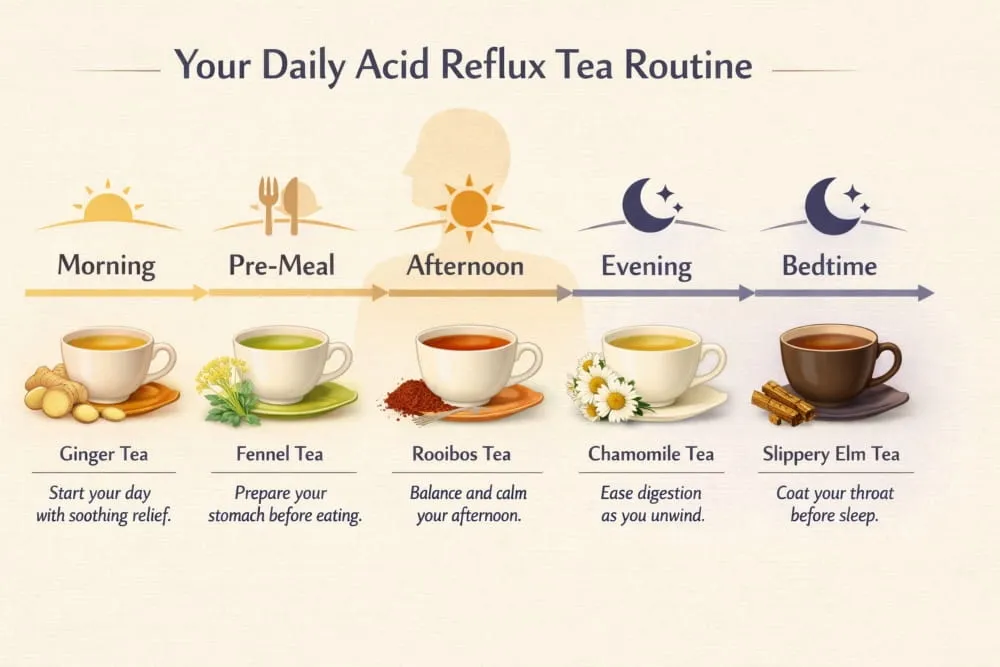
For most people, a practical inner circle looks something like this: ginger before meals, chamomile in the evening, and rooibos or fennel as a reliable all-day option when you want something satisfying without any therapeutic agenda. Slippery elm or marshmallow root on days when symptoms flare. That rotation covers the majority of scenarios acid reflux sufferers encounter day to day.
Teas to Approach with Caution or Avoid
Peppermint is the clearest avoid for most reflux sufferers; its LES-relaxing effect is well-documented and directly counterproductive. Hibiscus and rosehip carry acidity levels that can aggravate inflamed esophageal tissue. Caffeinated teas, black, green, matcha, oolong, chai on a black tea base, warrant moderation at minimum, and elimination during active flare-ups. Sweet tea, commercially bottled iced tea, milk tea, and bubble tea introduce sugar loads and additional variables that consistently work against reflux management goals.
This isn’t a permanent elimination list for everyone. Individual tolerance varies, and some people manage green tea or even black tea without difficulty when consumed mindfully with food. But if your symptoms are persistent or worsening, these are the first things to pull back before adjusting anything else.
How to Build a Daily Tea Ritual Around Reflux Relief
The goal is a routine that feels natural rather than medicinal, something you’d maintain long-term because it genuinely fits your day, not because it feels like a treatment protocol.
A simple framework that works for most people:
Start the morning with warm ginger tea 20–30 minutes before breakfast. This primes the digestive system, supports gastric motility, and reduces the likelihood of post-meal reflux before the day has even begun. Mid-morning and afternoon are good windows for rooibos, fennel, or a gentle herbal blend, satisfying, flavorful, and completely free of the caffeine concerns that make other teas complicated. If you miss the ritual of a properly brewed cup of tea, decaf green tea with food in the early afternoon is a reasonable option for most people.
Save chamomile for the evening. Thirty minutes before bed, a warm cup of chamomile with a small amount of raw honey is one of the most consistently effective habits for reducing nighttime reflux and supporting restful sleep. On days when throat irritation is present, particularly relevant for anyone whose voice takes the brunt of reflux damage, replace or supplement the chamomile with slippery elm or a Throat Coat blend.
The overarching principle is consistency over intensity. One heroic cup of ginger tea won’t reverse chronic reflux. A calm, sustained daily routine built around the right teas will make a meaningful, compounding difference over weeks and months.
A Final Word, and Where Vocal Leaf Fits In
For singers, speakers, teachers, podcasters, and anyone whose voice is both a tool and an asset, acid reflux isn’t just a digestive inconvenience. It’s a direct threat to vocal health, and the teas you choose every day are your first line of defense.
At Vocal Leaf, every tea in our caffeine-free and herbal lineup is crafted with exactly this in mind. Whether you’re looking for a soothing daily option that won’t aggravate your reflux, a warming blend to replace your morning coffee habit, or a throat-friendly cup that works as hard as you do, our range is built for people who take what they put in their bodies, and what they do with their voice, seriously.
Explore our caffeine-free teas and herbal blends, and find the teas that make your daily routine work better for you.
Frequently Asked Questions (FAQ’s)
What is the best tea for acid reflux?
Ginger tea is the top choice for acid reflux, thanks to its anti-inflammatory and prokinetic properties that reduce acid production and improve gastric motility. Chamomile, slippery elm, and licorice root tea are also among the most effective options.
Is ginger tea good for acid reflux?
Yes, ginger tea is one of the best teas for acid reflux. Its active compounds, gingerols, reduce esophageal inflammation and help food move through the stomach faster, thereby reducing the pressure that causes acid reflux.
Is chamomile tea good for acid reflux?
Yes, chamomile tea is excellent for acid reflux. It has antispasmodic and anti-inflammatory properties that calm the digestive tract, soothe the esophageal lining, and ease reflux symptoms, particularly when consumed 30 minutes before bed.
Is green tea bad for acid reflux?
Green tea can aggravate acid reflux in sensitive individuals because its caffeine relaxes the lower esophageal sphincter and stimulates gastric acid production. Decaffeinated green tea is a safer alternative for most reflux sufferers.
Is peppermint tea good or bad for acid reflux?
Peppermint tea is generally bad for acid reflux. Its high menthol content relaxes the lower esophageal sphincter, allowing stomach acid to backflow, worsening reflux symptoms despite its reputation as a digestive tea.
Is tea better than Coffee for acid reflux?
In most cases, yes, particularly caffeine-free herbal teas, which eliminate the LES-relaxing and acid-stimulating effects of caffeine. Caffeinated teas like black tea are only marginally better than Coffee and should still be consumed with caution.
Is decaf tea safe for acid reflux?
Yes, decaf tea is generally safe for acid reflux. Removing caffeine eliminates the primary trigger for LES relaxation and excess acid production. Caffeine-free herbal teas are the safest option, while decaf green or black tea is a reasonable middle ground.
What tea is good for acid reflux at night?
Chamomile tea is the best choice for acid reflux at night, as it calms the digestive tract, supports restful sleep, and contains no caffeine. Slippery elm or marshmallow root tea is ideal if throat or esophageal irritation is the primary nighttime symptom.
What tea is good for acid reflux and bloating?
Fennel tea is the best option for acid reflux with bloating. Its active compound, anethole, relaxes the GI tract, releases trapped gas, and reduces the internal pressure that drives both bloating and acid reflux. The CCF blend, cumin, coriander, and fennel, is even more effective.
Can you drink tea for acid reflux during pregnancy?
Yes, with care. Ginger tea is generally considered safe in moderate amounts during pregnancy and helps with both reflux and nausea. Chamomile should be used occasionally rather than daily, and licorice root should be avoided entirely during pregnancy.
Is iced tea bad for acid reflux?
Most commercial iced teas are bad for acid reflux; they’re typically made from caffeinated black tea and contain high amounts of added sugar, both of which worsen reflux symptoms. Cold-brewed herbal iced tea made from rooibos, chamomile, or fennel is a safe alternative.
What herbal teas are best for acid reflux?
The best herbal teas for acid reflux are ginger, chamomile, slippery elm, marshmallow root, licorice root, fennel, and rooibos. All are caffeine-free, non-acidic, and contain compounds that actively soothe or protect the esophagus and digestive tract.
Is licorice root tea good for acid reflux?
Yes, licorice root tea, particularly in its DGL (deglycyrrhizinated) form, is beneficial for acid reflux. It stimulates protective mucus production in the stomach lining, creating a natural barrier against acid damage.
Is slippery elm tea good for acid reflux?
Yes, slippery elm tea is highly effective for acid reflux. When mixed with water, it produces a thick mucilage that coats the esophagus and stomach lining, physically protecting irritated tissue from further acid exposure.
Why is peppermint tea bad for acid reflux?
Peppermint tea is bad for acid reflux because its high menthol content relaxes the lower esophageal sphincter, the valve that prevents stomach acid from rising into the esophagus. This directly causes or worsens reflux, even though peppermint soothes the stomach below.