
Black Tea for Weight Loss | Benefits and When to Drink It
Black tea for weight loss supports by boosting metabolism, reducing fat absorption, and improving gut bacteria associated with leaner body composition. It is not a magic solution, but as a daily habit, consumed plain and consistently, it is one of the most evidence backed beverages you can add to a weight management routine.
Most teas make vague wellness promises. Black tea has peer reviewed research behind it, a meaningful caffeine content that actually moves the needle on fat oxidation, and a polyphenol profile that works on multiple metabolic pathways at once. The rest of this guide breaks down exactly how it works, when to drink it, and how to prepare it to get the most out of every cup.
Does Black Tea Help with Weight Loss?
Black tea does help with weight loss, not by burning fat on its own, but by creating measurable physiological conditions that make weight management easier and more consistent over time.
What the Research Says About Black Tea and Metabolism
The evidence is more specific than most tea content lets on. A 2017 study published in the European Journal of Nutrition found that black tea altered gut microbiome composition in ways associated with reduced fat storage, an effect distinct from green tea and one that operated through the large intestine rather than the bloodstream. A separate line of research points to theaflavins and thearubigins, the polyphenols unique to black tea oxidation process, as compounds that inhibit pancreatic lipase, the enzyme responsible for breaking down dietary fat for absorption.
Less fat absorbed means fewer calories extracted from the same meal.Black tea also contains between 40–70mg of caffeine per cup, enough to meaningfully increase thermogenesis and fat oxidation during light activity without the spike and crash pattern of higher caffeine drinks. The metabolic lift is real, measurable, and stackable across multiple cups per day.
How Black Tea Supports Weight Management Differently Than Other Beverages
Most weight loss beverages work on one mechanism. Black tea works on three simultaneously caffeine driven thermogenesis, polyphenol driven fat absorption inhibition, and microbiome remodeling that shifts gut bacteria toward profiles associated with lower body weight. That combination is what separates it from plain coffee (no polyphenols), herbal infusions (no caffeine, no theaflavins), and even water (no active compounds at all).
There is also a practical advantage that rarely gets mentioned. Black tea has enough flavor complexity and natural astringency to replace calorie dense drinks, sweetened coffee beverages, sodas, flavored waters, without feeling like a deprivation. That substitution effect alone can create a meaningful daily calorie deficit over weeks and months. A quality loose leaf tea brewed properly delivers far more of these active compounds than a standard tea bag, because the full leaf retains intact cell structure where polyphenols are concentrated.
Is Black Tea Actually Good for Weight Loss or Is It Overhyped?
The honest answer is it depends entirely on how you use it. Black tea consumed plain, no sugar, no cream, no sweeteners, contributes to weight loss in a genuine, compounding way. Black tea consumed with two spoons of sugar and full fat milk contributes almost nothing beyond the calories it adds.
The overhype comes from two directions. Some sources overstate the effect, implying black tea alone produces dramatic fat loss without dietary changes. Others dismiss it entirely because the effect size in any single study is modest. Both miss the point. Black tea is a metabolic support tool, not a primary driver. Used consistently as part of a lower calorie, higher activity lifestyle, it accelerates results that are already in motion. That is not a small thing, it is exactly the kind of compounding daily advantage that determines whether a weight loss effort succeeds or stalls.
Black Tea Benefits for Weight Loss
The benefits of black tea for weight loss are not incidental, they are built into the chemistry of the leaf itself. Caffeine, polyphenols, and fermentation derived compounds each target a different part of the weight management equation, and they work better together than any one of them would alone.
How Caffeine and Polyphenols Work Together in Black Tea
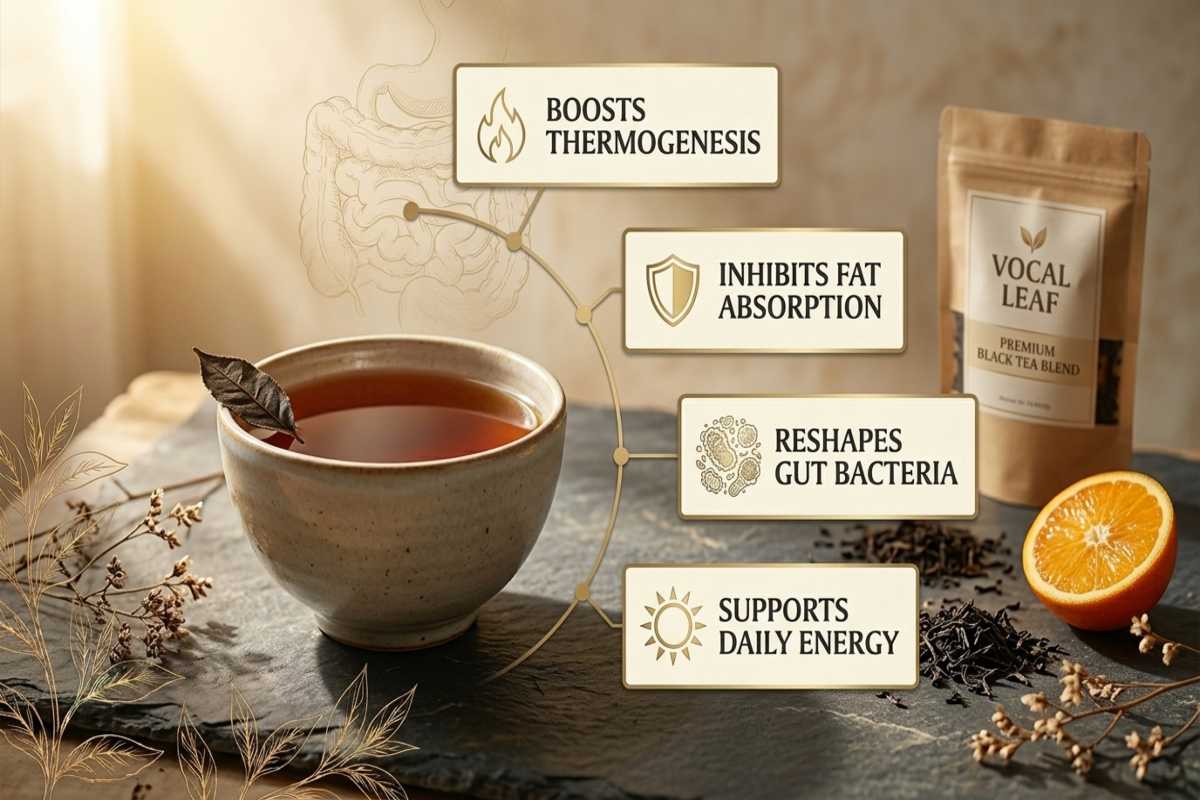
Caffeine and polyphenols are the two active pillars of black tea effect on body weight, and their interaction is more synergistic than additive. Caffeine stimulates the central nervous system, raising the rate at which the body burns calories at rest, a process called thermogenesis. On its own, that effect is real but limited. What amplifies it is the presence of theaflavins and thearubigins, black tea signature polyphenols, which inhibit fat absorption at the digestive level while simultaneously supporting the hormonal signals that regulate appetite.
The practical result is that black tea creates a mild but sustained calorie deficit from two directions at once slightly more calories burned, slightly fewer calories absorbed. Across multiple cups per day over weeks and months, that dual action compounds into a meaningful metabolic advantage. For a deeper look at how this connects to overall tea for metabolism support, the relationship between these compounds and metabolic rate is worth understanding before building a daily routine.
Black Tea and Gut Microbiome Changes Linked to Fat Metabolism
This is where black tea separates itself from almost every other weight loss beverage in a scientifically significant way. The 2017 European Journal of Nutrition study mentioned earlier found that black tea polyphenols, because of their large molecular size, are not fully absorbed in the small intestine. Instead, they travel to the large intestine where they act as a prebiotic, selectively feeding bacteria associated with lean body composition while suppressing bacterial strains linked to obesity.
The researchers found that black tea produced gut microbiome shifts comparable to those seen with green tea, but through an entirely different biological pathway. This matters because it suggests black tea weight management benefit is not just about caffeine or short term metabolism, it is also about reshaping the microbial environment that governs how efficiently the body extracts and stores energy from food over time. That is a longer term effect, and a more durable one.
Why Drinking Black Tea Without Additives Matters for Results
Every benefit described above assumes one thing the cup is plain. Sugar, honey, cream, and flavored syrups do not simply reduce black tea weight loss effect, they actively work against it. Sugar spikes insulin, which promotes fat storage and suppresses the fat oxidation process that caffeine helps initiate. Cream adds caloric density that negates the thermogenic advantage. Even small daily additions compound into hundreds of extra calories per week across multiple cups.
This is not about strict deprivation, it is about understanding that the active compounds in black tea operate in a specific physiological environment. Adding sugar changes that environment. Drinking black tea plain, steeped correctly from quality loose leaf, allows the caffeine, theaflavins, and prebiotic compounds to do exactly what the research shows they can do.
Additional Health Benefits That Support a Weight Loss Lifestyle
Weight loss rarely happens in isolation. It requires sustained energy, stable mood, manageable stress, and consistent sleep, all of which black tea supports in ways that make a calorie conscious lifestyle easier to maintain. The caffeine content provides clean, moderate energy without the anxiety response associated with higher caffeine sources. The L theanine present in black tea, though in lower concentrations than in less oxidized teas, takes the edge off that caffeine, producing a state of calm alertness that supports both focus and adherence to routine.
Black tea also contains manganese and potassium, minerals that support muscle function and cardiovascular health during increased physical activity. For anyone building an exercise habit alongside dietary changes, that physiological support matters. The cumulative picture is a beverage that contributes to weight loss not just through direct metabolic action, but by supporting the entire lifestyle infrastructure that makes sustained weight management possible.
Black Tea vs Green Tea for Weight Loss Which Is Better?
Black tea and green tea both support weight loss, but they do it through different mechanisms and at different points in the metabolic process. Which one is better depends on what your body needs most and for many people, black tea has a stronger practical advantage.
How Black and Green Tea Differ at the Compound Level
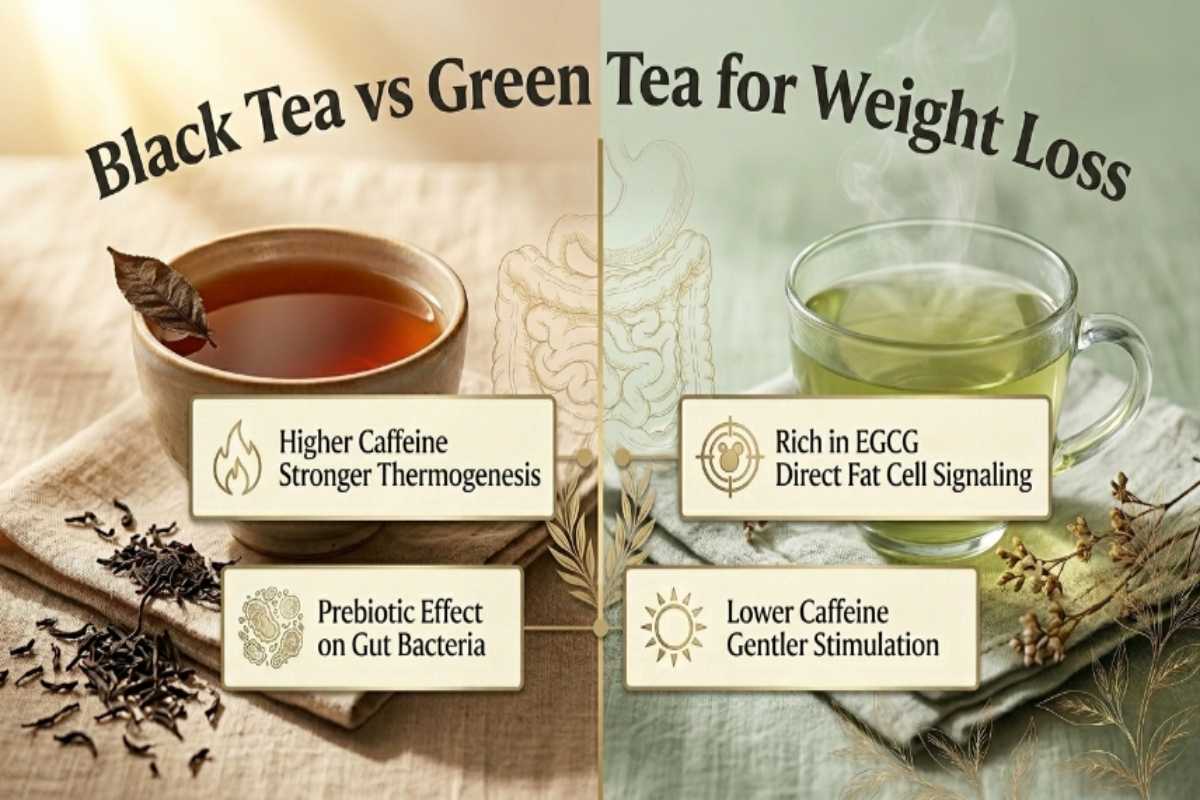
Both teas come from the same plant, but oxidation, the process that turns green tea leaves black, fundamentally changes their chemical composition. Green tea retains high concentrations of EGCG epigallocatechin gallate, a catechin that is well researched for its direct effect on fat cell signaling and thermogenesis. Black tea, through oxidation, converts those catechins into theaflavins and thearubigins, larger polyphenol molecules with their own distinct biological activity.
This is not a case of one tea being a degraded version of the other. They are chemically different products that act on different systems. Green tea polyphenols are absorbed primarily in the small intestine and enter the bloodstream relatively quickly. Black tea polyphenols, because of their larger molecular size, pass through to the large intestine where they exert prebiotic effects on gut bacteria. One works upstream. One works downstream. Both contribute to weight management, but through genuinely separate pathways.
Which Delivers More Caffeine, and Why That Matters for Fat Oxidation
Black tea wins on caffeine, and that matters more than most comparisons acknowledge. A standard cup of black tea contains 40–70mg of caffeine. Green tea typically delivers 20–45mg. That gap is meaningful because caffeine is the primary driver of thermogenesis and fat oxidation in both beverages. More caffeine, consumed at the right time, means a stronger and longer lasting metabolic signal, particularly during physical activity, when fat oxidation rates are already elevated and caffeine amplifies them further.
For anyone using tea as a pre exercise metabolic support tool, or simply drinking multiple cups throughout the day, black tea higher caffeine ceiling gives it a practical edge. The energy it provides is also more noticeable, which supports adherence, a factor that matters more to long term weight loss outcomes than any single compound effect size.
The Case for Black Tea Over Green Tea and When Green Tea Wins
Black tea is the stronger choice when caffeine sensitivity is low, when gut health is a priority alongside weight loss, and when flavor profile matters for daily consistency. Its bolder, more robust taste holds up without sweeteners better than green tea does for most palates and since unsweetened consumption is essential for weight loss benefits, that palatability advantage is not trivial.
Green tea wins in specific circumstances when caffeine sensitivity is high and a lower stimulant option is needed, when EGCG direct fat cell signaling effect is the primary target, or when someone simply prefers it and will drink it consistently. Consistency always beats theoretical compound superiority. A tea you drink every day outperforms a tea you find unpleasant and avoid.
For daily use with a clear metabolic goal, Vocal Leaf Organic Loose Leaf Black Tea is built for exactly that purpose, full leaf structure that retains the theaflavin and thearubigin content that drives the results described throughout this guide.
Can You Drink Both Black and Green Tea for Weight Loss?
Yes, and there is a logical case for doing so. Since black and green tea act on different biological pathways, black tea in the large intestine, green tea in the small intestine and bloodstream, drinking both introduces complementary mechanisms rather than redundant ones. The combined polyphenol profile covers more of the metabolic spectrum than either tea alone.
A practical approach is to use black tea in the morning or before exercise, when its higher caffeine content is most useful, and incorporate the other at a lower stimulant point in the day. The total caffeine load across both should stay within a range that does not disrupt sleep, typically under 400mg per day for most adults. Within that ceiling, combining both teas is a reasonable and well supported strategy for anyone serious about using tea as a consistent weight management tool.
Black Tea Weight Loss Recipes
The way you prepare black tea determines whether it supports weight loss or quietly works against it. These recipes move from the simplest and most effective baseline to common variations, with an honest assessment of what each one actually does metabolically.

Plain Black Tea The Baseline Recipe
Plain black tea, properly steeped, is the most effective preparation for weight loss and the benchmark every variation should be measured against. There are no additives to interfere with polyphenol absorption, no calories to offset the thermogenic effect, and no insulin response to suppress fat oxidation. It is the version the research consistently uses, and it is the version that delivers the full compound profile intact.
To prepare it correctly, use one heaped teaspoon of loose leaf weight loss tea per eight ounces of water heated to between 200–212°F. Steep for three to five minutes, longer steeping increases tannin extraction, which intensifies bitterness without meaningfully increasing polyphenol content. Pour immediately after steeping ends. Loose leaf matters here whole and broken leaf structures retain the cell integrity where theaflavins and thearubigins concentrate. Dust and fannings in standard tea bags release tannins faster and polyphenols less efficiently. Drink it plain. That is the recipe. Everything else is a variation with trade offs.
Black Tea with Lemon for Weight Loss and Why Lemon Adds Value
Black tea with lemon is the one variation that genuinely enhances rather than compromises the weight loss preparation. Lemon juice is acidic, and that acidity serves a specific functional purpose, it stabilizes polyphenols during digestion, slowing their breakdown in the digestive tract and improving the amount that reaches the large intestine where microbiome remodeling occurs. Research on tea and citrus interactions suggests that acidic environments increase the bioavailability of certain tea compounds by a meaningful margin.
Beyond the chemistry, lemon adds brightness and complexity that makes unsweetened black tea significantly more palatable for people who find plain black tea too austere. That palatability factor supports daily consistency, which, as established earlier, is the variable that determines long term results more than any single preparation detail.
Squeeze half a fresh lemon into a steeped, slightly cooled cup of black tea. Avoid bottled lemon juice, which contains preservatives that can interfere with polyphenol stability. No sweetener needed, the citrus rounds out the bitterness naturally.
Black Tea with Honey Does It Help or Hurt?
Honey in black tea is the most common compromise people make when transitioning away from sugar, and it is worth being direct about what it does. Honey adds calories and triggers an insulin response, both of which work against the metabolic conditions black tea is trying to create. Raw honey contains beneficial enzymes and antioxidants, but those properties do not offset its sugar content in the context of a weight loss preparation.
A teaspoon of honey adds approximately 21 calories and 5–6 grams of sugar. Across three cups per day, that is 63 calories and 15–18 grams of added sugar before any food is consumed. For someone in a modest caloric deficit, that is a meaningful leak. The insulin spike that follows also temporarily suppresses fat oxidation, which directly counters the thermogenic effect the caffeine in that same cup is trying to produce.
If honey is necessary to make black tea drinkable during a transition period, use the smallest amount possible and treat it as a short term bridge rather than a permanent preparation. The goal is plain tea or tea with lemon. Honey moves you further from that goal, not closer.
Black Tea with Lemon and Honey The Classic Combination
Black tea with lemon and honey is the most searched preparation in this category, and the honest assessment is that it sits somewhere between the two variations above. The lemon still delivers its polyphenol stabilizing benefit. The honey still adds sugar and a mild insulin response. Whether the combination supports or slightly undermines weight loss depends entirely on quantity.
A half lemon squeeze with a quarter teaspoon of honey in eight ounces of black tea is a preparation that most people can drink consistently, adds minimal caloric interference, and still delivers the core benefits of the tea itself. That is a reasonable trade off for someone who would otherwise not drink black tea at all. A full teaspoon of honey per cup, repeated three times daily, starts to accumulate in a way that matters.
The practical guidance is to use lemon freely, use honey sparingly, and reduce the honey incrementally over two to three weeks until the lemon alone is doing the flavor work. Most people find that once their palate adjusts, the honey becomes unnecessary and the cup becomes measurably more effective as a result.
Black Tea with Ginger for Weight Loss
Black tea with ginger combines two metabolically active ingredients that work on complementary systems, black tea driving thermogenesis and polyphenol activity, while ginger contributes its own warming, digestion supporting compounds. The combination is legitimate, not just traditional.
Ginger contains gingerols and shogaols, compounds shown in clinical research to increase the thermic effect of food, meaning the body burns slightly more calories processing meals consumed alongside or after ginger intake. A 2012 meta analysis published in the European Journal of Nutrition found that ginger consumption had a significant effect on body weight and waist to hip ratio across multiple controlled trials. When added to black tea rather than consumed as a standalone supplement, ginger bioactive compounds are delivered in a hot aqueous solution that supports absorption while the tea polyphenols address fat metabolism through a parallel pathway.
To prepare it, steep your loose leaf black tea as normal, then add two to three thin slices of fresh ginger root to the cup while it steeps, or simmer the ginger separately and combine. Fresh root delivers more active gingerols than dried powder. Drink it plain, the ginger adds enough warmth and spice that most people find sweetener unnecessary once they try it without. This is one of the more effective variations in this guide, and one where the metabolic case is genuinely stronger than the baseline cup alone.
Is Black Tea with Sugar Good for Weight Loss? What to Avoid
Black tea with sugar is not good for weight loss. That is the direct answer, and the reasoning behind it is specific enough to be worth understanding rather than just accepting.
Sugar does two things that directly conflict with black tea weight loss mechanisms. First, it raises blood glucose, triggering an insulin release. Elevated insulin is the body primary fat storage signal, it actively suppresses lipolysis, the process of breaking down stored fat for energy. The caffeine in black tea is simultaneously trying to initiate fat oxidation. Sugar and caffeine are working against each other in the same cup.
Second, research on polyphenol absorption suggests that sugar may compete with certain flavonoid transport mechanisms in the small intestine, potentially reducing the bioavailability of the compounds driving black tea metabolic benefit. The numbers are also straightforward. A teaspoon of sugar adds 16 calories and approximately 4 grams of glucose.
Two teaspoons per cup, a conservative estimate for most people who sweeten their tea, across three daily cups adds up to nearly 100 extra calories and 24 grams of added sugar before a single meal is consumed. Over a week, that is 700 calories. Over a month, close to 3,000, the caloric equivalent of nearly a pound of fat, added back in through the beverage meant to help remove it.
Jaggery, raw cane sugar, coconut sugar, and similar alternatives carry the same core problem they are still sugar, still spike insulin, and still undermine the fat oxidation environment black tea is designed to support. If sweetness is non negotiable, reduce the amount incrementally over two to three weeks rather than switching sweetener types. Most palates adapt fully within a month, and plain or lemon only black tea becomes genuinely enjoyable, not a compromise.
Which Black Tea Is Best for Weight Loss?
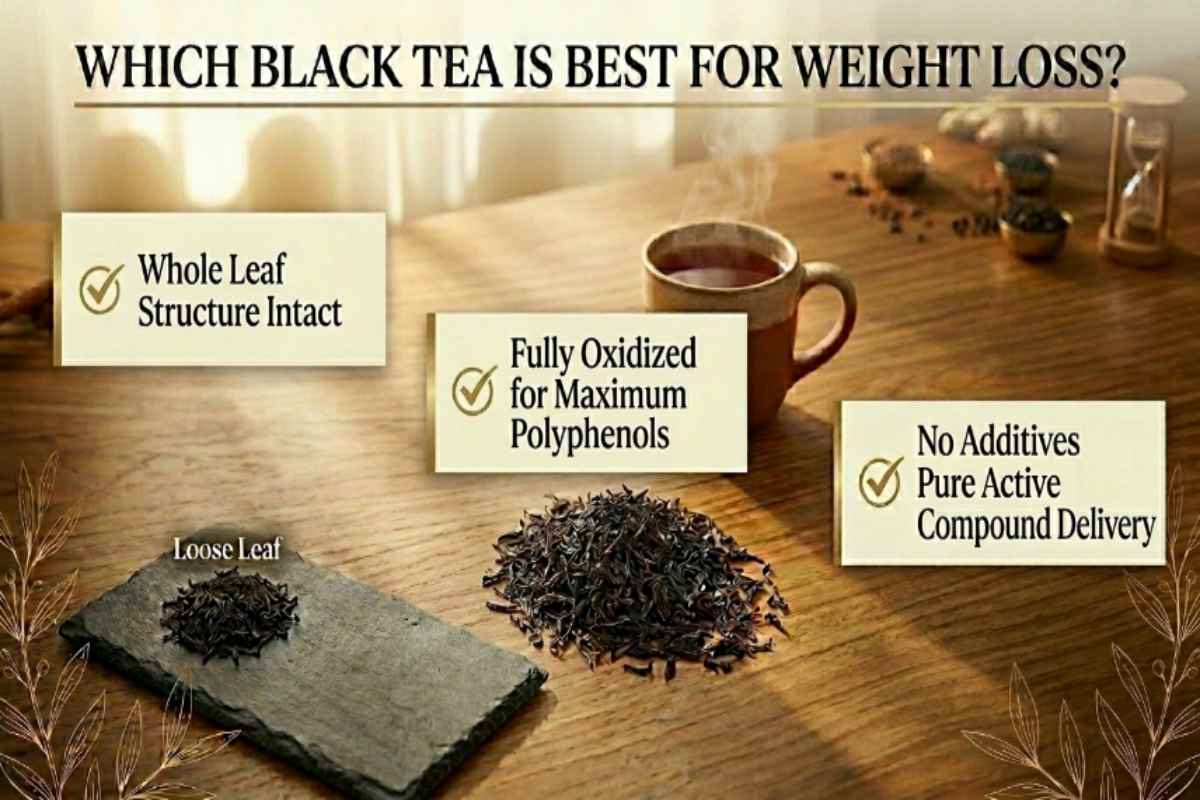
The best black tea for weight loss is a whole leaf, unflavored loose leaf black tea steeped from full or broken leaf grades, not dust, not fannings, and not pre bagged blends with added flavoring that dilutes the active compound concentration. Format and leaf quality determine how much of the metabolically active material actually makes it into your cup.
What to Look for in a Loose Leaf Black Tea
Four factors determine whether a black tea will deliver meaningful weight loss support or simply taste like tea without producing much else.
Leaf grade matters first. Whole leaf and broken leaf grades retain more intact cell structure than the dust and fannings used in most commercial tea bags. That intact structure is where the aflavins and thearubigins concentrate, and it is what distinguishes a cup that actively supports metabolism from one that merely resembles it. Look for visible leaf pieces with some dimensional structure, not a fine powder that dissolves instantly.
Oxidation level matters second. Fully oxidized black tea contains the highest concentrations of the polyphenols specific to black tea weight loss mechanism. Partially oxidized teas, oolongs, for example, have a different compound profile that produces different effects. For the mechanisms described in this guide, full oxidation is what you want.
Source transparency matters third. A tea that discloses its origin gives you information about growing conditions, harvest timing, and processing methods, all of which affect polyphenol content. Single origin or clearly sourced blends are more reliable than generic black tea with no provenance information.
Absence of additives matters fourth. Flavoring agents, essential oils, and blending ingredients added for aroma or taste occupy volume in the blend that would otherwise be active leaf. For weight loss purposes specifically, the purest preparation delivers the most.
Why Loose Leaf Outperforms Tea Bags for Active Compounds
The performance gap between loose leaf and tea bags is structural, not incidental. Standard tea bags are filled with dust and fannings, the smallest particles produced during tea processing, which are swept up after whole and broken leaf grades are separated out. They brew quickly and produce strong color, but they release tannins disproportionately fast while delivering less of the polyphenol content that drives the metabolic effects this guide has covered.
Loose leaf tea, particularly when steeped in a vessel that allows the leaf to expand fully, a wide infuser basket, a teapot, or a French press, releases its compounds more gradually and more completely. The surface area to volume ratio of a whole or broken leaf piece allows water to extract polyphenols, theaflavins, and thearubigins at a rate that mirrors what research studies use when testing black tea effect on metabolism. Most of those studies do not use tea bags. That detail is rarely mentioned, but it matters for translating research findings into real world results.
The practical difference per cup is not dramatic in isolation. Compounded across two to three cups daily over months, it is the difference between a consistent, meaningful metabolic input and a beverage that approximates one.
Vocal Leaf Organic Loose Leaf Black Tea Formulated for Daily Performance
Vocal Leaf Organic Loose Leaf Black Tea is built around the same principles this section has outlined, whole leaf structure, full oxidation, and no additives that dilute the active compound profile. It is designed for daily use, which means the steep is consistent, the flavor holds up without sweetener, and the leaf quality supports the kind of repeated brewing that produces compounding metabolic benefit over time.
For those who want a black tea option with more complexity while maintaining the same daily performance standard, Vanilla Bliss offers a naturally flavored loose leaf experience that keeps the core black tea base intact, making it a practical choice for people who need variety to maintain a long term daily habit without reaching for sugar or honey to make plain black tea palatable.
The difference between a weight loss tea routine that works and one that quietly stalls is usually not the diet or the exercise, it is whether the daily inputs are consistent and correctly formatted. Loose leaf, steeped plain or with lemon, consumed at the right time, is the version that works.
Conclusion
Black tea earns its place in a weight loss routine not through dramatic claims but through consistent, compounding chemistry, caffeine that raises the metabolic rate, polyphenols that reduce fat absorption, and prebiotic compounds that reshape the gut environment associated with leaner body composition. The preparation is simple, the daily commitment is low, and the variables that determine whether it works are entirely within your control drink it plain or with lemon, use quality loose leaf, time it before exercise or meals, and repeat it daily over weeks and months rather than expecting results from a single cup. At Vocal Leaf, every product is built around that same principle, that what you drink consistently, prepared correctly, is what actually moves the needle. Black tea for weight loss is not a trend. It is a daily habit with a legitimate mechanism behind it, and loose leaf is the format that delivers it fully.
Frequently Asked Questions (FAQs)
Is Black Tea Good for Weight Loss at Night?
It is not recommended. Black tea contains 40–70mg of caffeine per cup, which is enough to disrupt sleep for most adults and poor sleep independently drives weight gain. Stick to morning and early afternoon consumption.
Is Drinking Black Tea Good for Weight Loss Every Day?
Yes, and daily consistency is what makes it work. The gut microbiome changes linked to fat metabolism require sustained polyphenol input over weeks. Two to three plain cups per day is the pattern that aligns with the research.
Is Black Tea or Green Tea Better for Weight Loss?
Black tea has a slight edge for most people due to higher caffeine and its prebiotic effect on the large intestine. Green tea targets fat cells more directly. Drinking both covers more metabolic ground than either alone.
Is Black Tea with Lemon Good for Weight Loss?
Yes, it is the best variation after plain black tea. Lemon stabilizes polyphenols during digestion, adds no meaningful calories, and makes unsweetened black tea easier to drink daily. Use fresh lemon only.
Is Black Tea with Honey Good for Weight Loss?
Not really. Honey triggers an insulin response that suppresses fat oxidation, directly countering what black tea caffeine is trying to do. Use as little as possible and reduce it over time.
Is Black Tea with Sugar Good for Weight Loss?
No. Sugar spikes insulin, signals fat storage, and works against black tea thermogenic effect. Two teaspoons per cup across three daily cups adds nearly 100 calories before any food is consumed.
How Do I Prepare Black Tea for Weight Loss?
One heaped teaspoon of loose leaf per eight ounces of water at 200–212°F, steeped three to five minutes, then drink plain or with fresh lemon. Loose leaf delivers significantly more active compounds than standard tea bags.
When Should I Drink Black Tea for Weight Loss?
Thirty minutes before exercise or before meals are the two most effective windows. Before exercise it amplifies fat oxidation before meals it helps reduce dietary fat absorption. Morning through early afternoon keeps caffeine from affecting sleep.
Top Selling Products






Best Tea for Singers | What Actually Helps Your Voice
If you sing, whether you perform professionally, teach voice lessons, or spend your weekends in rehearsal, you’ve probably wondered whether tea actually does anything useful…

Best Tea for Vocal Cords | Herbs, Hydration and Recovery
If your voice feels tired, strained, or dry, the right tea for your vocal cords can make a real difference, not by healing damaged tissue,…

Best Tea for Laryngitis | Soothe Your Voice Naturally
The best tea for laryngitis is a warm, caffeine free loose leaf blend that hydrates the throat and eases the strain on inflamed vocal cords.…

What Is Chai Tea? The Ultimate Guide to Ingredients, Benefits, Types & How It’s Made
If you’ve ever wondered what chai tea is, you’re not alone. It’s one of the most searched beverage questions online, yet the answer is often…

Best Tea for Your Voice | Does It Make You Sound Deeper
What it can do is change how your voice feels and sounds in the moment, which is where most of the confusion starts. If you…

The Best Tea for Performers & Speakers, And Why Your Voice Deserves Better
You spend hours rehearsing the words. You perfect the tone, the breath, the timing. But then you reach for whatever is nearby, a cup of…

Best Tea for Stress Relief | Calming Loose Leaf Blends
Stress is something everybody carries. It shows up in tight shoulders, restless nights, and a mind that won’t quiet down after a long day. And…

Best Tea for Dry Throat | The Teas That Help and the Ones That Hurt
The best teas for a dry throat are caffeine-free herbal blends, teas with no tannins to strip moisture from the throat lining and no caffeine…

Best Teas for Acid Reflux, Heartburn and GERD
Acid reflux doesn’t just cause heartburn. If you have searched for tea good for acidity, you are asking the same question, acidity and acid reflux…

Best Morning Tea for Energy and Focus Without Coffee Crash
The best tea to drink in the morning is black tea if you want steady, coffee level energy without the crash, rooibos chai if you…

Best Tea for Cough | The Complete Guide to Soothing Relief
The best tea for cough relief is a warm, hydrating blend that soothes irritated throat tissue while easing the reflex that triggers coughing in the…

Best Teas for a Cold That Actually Work
Best teas for a cold combines warmth, hydration and gentle steam to ease congestion, calm a scratchy throat and help your body rest while it…