
Best Tea for Cough | The Complete Guide to Soothing Relief

The best tea for cough relief is a warm, hydrating blend that soothes irritated throat tissue while easing the reflex that triggers coughing in the first place and for most people, relief starts within a few sips. Warm liquids have long been recognized by health researchers as one of the simplest, fastest ways to calm throat irritation, since heat alone helps loosen mucus and relax the tissues that set off a cough. That is a meaningful finding for anyone who relies on their voice for a living, a cough left untreated does not just feel bad, it can derail a rehearsal, a set or a client call with almost no warning.
This guide breaks down exactly which tea for cough works best depending on what is actually causing yours, a dry, scratchy irritation or a deeper, chesty congestion, along with the specific Loose Leaf Tea blends built to support each one. Whether you’re managing a lingering tickle before a show or trying to sleep through a nighttime cough, the right cup can make the difference between pushing through and losing your voice entirely.
What Causes a Cough and Why Warm Tea Helps
A cough is your body reflex for clearing irritation from the throat or airways and warm tea helps by keeping those tissues moist while calming the nerve response that triggers each cough. Dehydration and dryness are two of the most common cough triggers, especially for anyone who talks or sings for long stretches without enough fluid intake. Sipping something warm throughout the day interrupts that cycle before it escalates into a full blown, disruptive cough. This is why tea for cough shows up so consistently as a first line home remedy rather than a last resort.

Dry Cough vs Chesty Cough
Not all coughs come from the same place and treating them the same way often means slower relief. A dry cough is usually a surface level irritation, no mucus, just a persistent tickle or scratchiness in the throat. A chesty, productive cough sits deeper in the airway and comes with mucus your body is actively trying to clear, which means it responds better to warmth and hydration that loosens congestion rather than simply coating the throat.
How Warm Liquid Soothes Irritated Airways
Warm liquids provide near immediate relief by moistening dry tissue and easing the nerve signals responsible for triggering a cough. Research from the National Institutes of Health backs this up directly, noting that warm beverages like tea soothe throat irritation, loosen chest mucus and help keep airway tissue hydrated, a combination plain water does not replicate as effectively. That is part of why a warm cup of loose leaf tea tends to outperform other remedies for everyday cough relief, it is hydration and heat working together, not just one or the other.
The Best Tea for Cough and Sore Throat
The best tea for cough and sore throat is a warm, hydrating blend that coats irritated throat tissue while easing the reflex that keeps triggering the cough. Sore throat and cough tend to show up together because they share the same root cause, dry, inflamed tissue that gets more irritated the more it is exposed to air, talking or coughing itself. A warm cup breaks that cycle by keeping the throat moist, which reduces both the raw, scratchy feeling and the frequency of the cough it is feeding.
Signs Your Cough Is Throat Driven, Not Chest Driven
Not every cough starts in the same place and knowing where yours is coming from changes what actually helps. A throat driven cough usually comes with a scratchy or raw feeling that gets worse when you talk, swallow or breathe through your mouth, it is surface level irritation rather than deep congestion.
If clearing your throat brings temporary relief or the cough seems to worsen the more you use your voice, that’s a strong sign it is throat driven rather than chest driven. This distinction matters most for singers and speakers, since throat driven coughs respond fastest to hydration and warmth, while chest driven coughs need a different approach to actually clear.
Best Tea for Cough and Congestion
The best tea for cough and congestion is a warm blend that helps loosen mucus while soothing the airway irritation that keeps the cough going. Congestion thickens the mucus lining your throat and chest and that thickness is often what triggers repeated coughing as your body tries to clear it. Warm tea works on both fronts at once, the heat helps thin mucus so it moves more easily, while the hydration keeps irritated tissue from tightening up further.
Best Tea for Chest Congestion
Chest congestion responds best to warmth and steam more than any single ingredient, since heat is what actually helps loosen mucus sitting deeper in the airway. A cinnamon tea for throat relief is a strong option here, cinnamon has natural warming properties that pair well with the steam from a hot cup, helping congestion feel less tight and making coughs more productive rather than dry and forceful. Sipping slowly, rather than drinking quickly, gives the warmth more time to work on chest tightness.
When Congestion Signals Something More Than a Cough
Most congestion clears within a week to ten days with basic care, but certain signs mean it is worth looking past home remedies. If congestion comes with a fever lasting more than three days, chest pain, shortness of breath or mucus that turns green or bloody, that combination points to something beyond a typical cough and warrants medical attention rather than tea alone. For everyday congestion without those red flags, warm tea remains one of the simplest ways to stay ahead of it before it worsens.

Honey Tea for Cough The Most Searched Home Remedy
Honey tea is one of the most effective home remedies for cough because honey thick texture coats the throat instantly while its natural antimicrobial properties support recovery. It is also one of the most searched cough remedies online and the search volume reflects real results, clinical research has shown honey can reduce both the frequency and severity of coughing, particularly at night. Stirring honey into warm tea combines two proven remedies into one, the honey soothes on contact, while the warm liquid keeps irritated throat tissue hydrated throughout the day.

Honey and Lemon Tea, Why This Combination Works
Honey and lemon remain the most reached for combination for a reason, each ingredient solves a different part of the problem. Honey coats and calms the throat, while lemon vitamin C and mild acidity help cut through mucus and brighten the flavor of an otherwise heavy brew. A Lemon Peel Tea base is a natural fit here, since real lemon peel delivers that same bright, cutting quality without needing bottled juice or artificial flavoring, just steep, then stir in honey once the tea has cooled slightly.
How Much Honey to Add and When Not To
One to two teaspoons of honey per cup is enough to get the throat coating benefit without turning the tea overly sweet and stirring it in after steeping, rather than boiling it, preserves more of its natural properties. For a milder, more rounded sweetness instead of straight honey, rock sugar for tea is a gentler option that dissolves slowly and does not overpower the tea other flavors.
One exception worth noting, honey should never be given to children under one year old, due to a small but serious risk of infant botulism, a caution recommended by pediatric health guidelines.
Best Tea for Cough and Cold
The best tea for cough and cold is a warm blend that eases throat irritation while supporting hydration during the days your body is working hardest to recover. A cold related cough usually comes paired with congestion, fatigue and a dry or scratchy throat and warm tea addresses all three at once, moistening tissue, replacing fluids and giving you a reason to slow down and rest. For a closer look at what to drink through an entire cold, not just the cough itself, our guide to Tea for Cold covers the full picture.
Best Tea for Cough and Flu
Flu related coughs tend to be more intense and longer lasting than a typical cold cough, since flu causes deeper inflammation throughout the airway. Warm tea won’t shorten the flu itself, but it plays a real supporting role, keeping you hydrated during a stretch when fluid loss from fever and fatigue adds up quickly and soothing the raw, persistent cough that often lingers after other flu symptoms fade. Our full breakdown of the best tea for flu recovery goes deeper into what to drink at each stage of the illness.
Natural Remedies for Cough
Not every natural cough remedy holds up under research, but a few consistently do. Staying well hydrated, resting your voice and drinking warm liquids throughout the day are the natural remedies most consistently backed by health guidance, simple, low risk habits that support the body own recovery process rather than masking symptoms. The evidence is strongest for what is least flashy, consistency in fluid intake and rest tends to outperform any single miracle ingredient.

The Best Tea for Cough at Night Before Bed
The best tea for cough at night is a warm, caffeine free blend that calms throat irritation right before bed, when coughing tends to intensify and disrupt sleep the most. A cough that feels manageable during the day often gets worse once you lie down, which makes an evening cup less about immediate relief and more about heading off the disruption before it starts. Sipping tea in the 30 minutes before bed gives its soothing effects time to take hold right as lying down would otherwise trigger more irritation.
Why Evening Coughing Gets Worse and How Tea Helps You Sleep Through It
Coughing often worsens at night because lying flat allows mucus to pool at the back of the throat instead of draining naturally, which irritates the airway and triggers more frequent coughing fits. Room air also tends to be drier overnight, especially with heating or air conditioning running, which dries out throat tissue that is already inflamed.
A warm cup of tea before bed counters both problems at once, the warmth loosens pooling mucus and the added moisture keeps throat tissue from drying out further while you sleep. Choosing a caffeine free blend matters here too, since caffeine close to bedtime can interfere with the deep sleep your body needs most to actually recover.
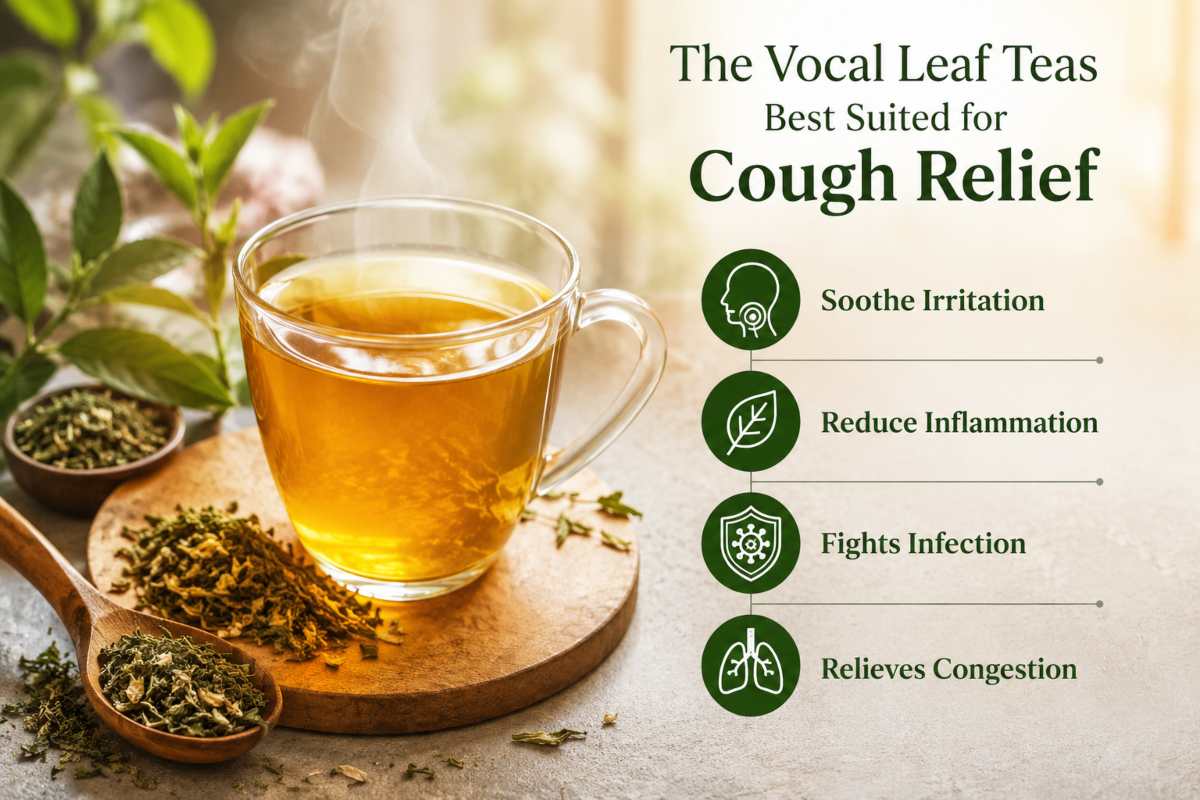
The Vocal Leaf Teas Best Suited for Cough Relief
Each Vocal Leaf tea supports cough relief differently, so the right choice depends on whether your cough is scratchy and dry, deep and lingering, worst at night or tied to a throat that is simply had enough. Matching the blend to the specific type of irritation gets better results than reaching for the same cup regardless of symptom.
Lemon Berry Dream
Lemon Berry Dream is built for the scratchy, tickly cough that flares up from dryness rather than deep congestion. Its citrus forward blend of lemon peel, lemon oil and freeze dried lemon granules delivers the same throat clearing brightness lemon is known for, while marigold blossoms and sweet black honey leaves add a soothing, rounded finish that keeps the tea from feeling harsh on already irritated tissue. It’s the pick for anyone who needs quick tea for sore throat relief before talking or singing again soon.
Welcome Back Black Tea
Welcome Back Black Tea is suited to the recovery stretch of a cough, the days after the worst symptoms have passed, when the body is still working to fully clear irritation. Black tea’s antioxidant compounds support the immune response during that recovery window, making this blend a steady daily choice for anyone easing back into full vocal use after a cough has run its course.
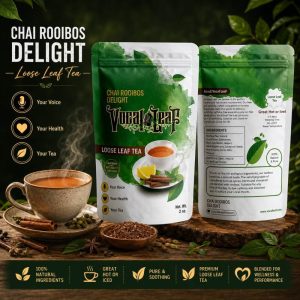
Chai Rooibos Delight
Chai Rooibos Delight is the strongest fit for a cough that worsens at night, since it’s naturally caffeine free and won’t interfere with the deep sleep the body needs to recover. Its warming chai spice profile brings the same soothing heat that helps loosen pooling mucus before bed, without the stimulant effect that makes some evening teas a poor choice close to sleep.
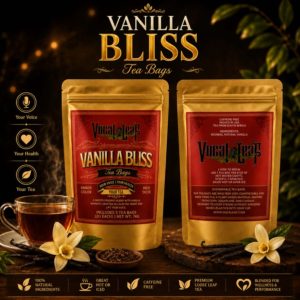
Vanilla Bliss
Vanilla Bliss is designed for throats that are too sensitive for anything sharp or acidic, offering a gentle, low acid alternative when even citrus feels like too much. Its smooth, rounded flavor makes it easy to sip consistently throughout the day, which matters most for a cough that responds better to steady hydration than to any single strong ingredient.
Herbal Tea for Cough What to Look for in a Blend
The best herbal tea for cough combines warmth, hydration and real botanical ingredients, not fillers or artificial flavoring, to actively support irritated throat tissue rather than just masking discomfort temporarily. Not every herbal blend is built with cough relief in mind and the difference often comes down to what’s actually steeping in the cup versus what’s just added for flavor.
Ingredients That Actually Support a Cough
The most effective blends rely on real, whole ingredients, citrus peels, warming spices and natural sweeteners like rock sugar, rather than extracts or artificial flavoring designed to imitate them. Real lemon peel and lemon oil, for example, deliver far more throat clearing brightness than a lemon flavored additive ever could, since the actual oils and acids are still present in the leaf.
The same principle applies to warming spices, a blend that uses whole cinnamon pieces steeps differently and works differently on the throat, than one relying on flavoring alone. When comparing herbal teas for cough, checking the actual ingredient list, not just the name on the box, is the simplest way to tell a genuinely supportive blend from one that just tastes similar.
Homemade Tea for Cough, A Simple Recipe You Can Make Tonight
A simple homemade tea for cough can be made in under ten minutes using ingredients most people already have, hot water, real lemon and honey, combined in a way that maximizes their soothing effect rather than diluting it. The key isn’t complexity, it’s using enough of the right ingredients and adding them at the right stage of brewing so their properties aren’t lost to excess heat.
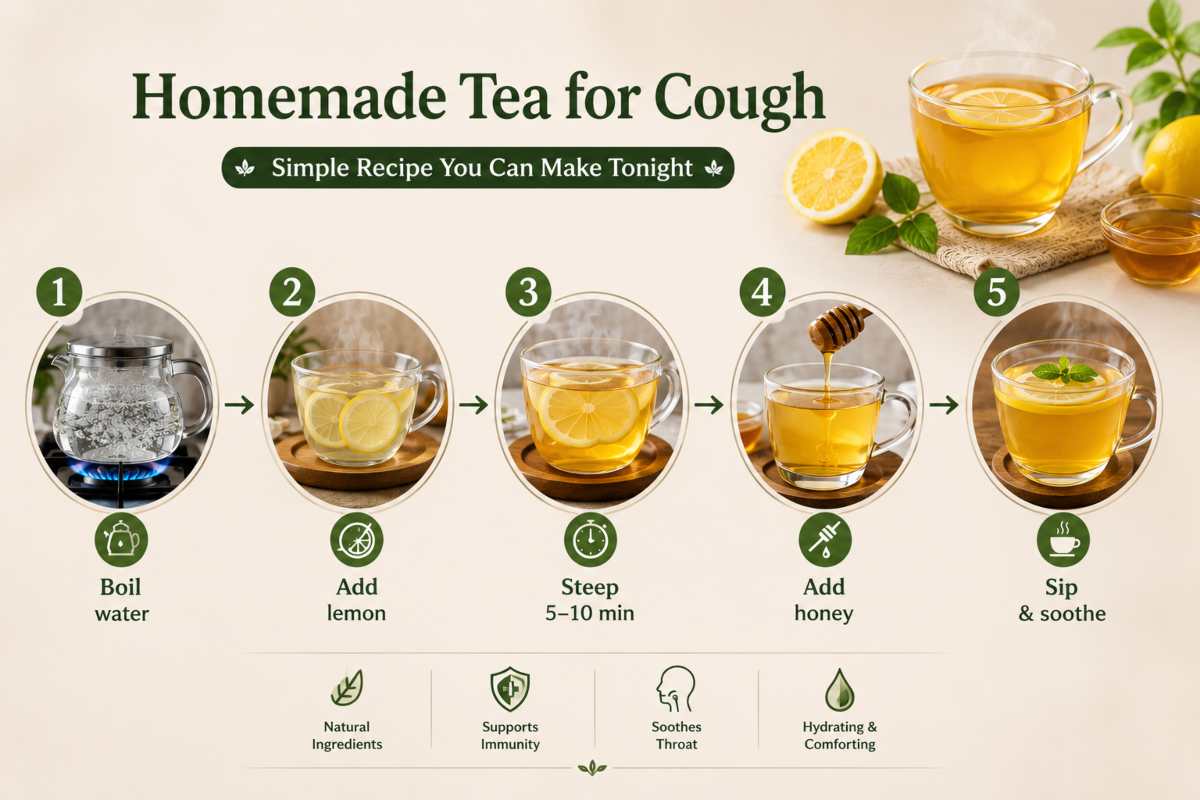
Honey Lemon Tea Recipe for Cough
Start by bringing water to a near boil, then pour it over fresh lemon slices or lemon peel and let it steep for five to ten minutes so the citrus oils and acids fully infuse into the water. Once the tea has cooled slightly, hot enough to still feel warming, but not scalding, stir in one to two teaspoons of honey. Adding honey after the water has cooled a bit, rather than boiling it directly, helps preserve more of its natural throat soothing properties.
For a milder version that’s easier to sip throughout the day, rock sugar can be used in place of honey, dissolving slowly for a gentler, more rounded sweetness. Drunk warm, this simple combination delivers the same hydration plus coating effect used across nearly every clinically referenced home remedy for cough.
Why Vocal Leaf Is Built Differently for Cough Relief
Vocal Leaf is built differently because it isn’t formulated as a generic cough remedy, it’s designed specifically around the daily demands placed on the voice, for people whose livelihood depends on it working reliably. A cough that would just be an inconvenience for most people can mean a cancelled rehearsal, a strained performance or a client call postponed entirely for a singer, teacher or speaker.
The Difference Between a Cough Remedy and a Voice Protection Routine
A typical cough remedy is reactive, something you reach for once symptoms already show up, then stop using once they pass. A voice protection routine works differently, it’s a habit built into the day regardless of whether a cough is active, so irritation gets addressed early, consistently and before it has the chance to become the thing that sidelines a performance.
That distinction is the entire premise behind Vocal Leaf, four blends, each suited to a different stage or type of throat irritation, meant to be part of a daily rhythm rather than an emergency fix reached for only when a cough has already taken hold.
Conclusion
The best tea for cough comes down to matching the remedy to the actual problem. A dry, scratchy throat needs something different than deep chest congestion and a cough that flares at night calls for a different approach than one tied to a cold or flu. What works consistently across nearly every type of cough is warmth, real hydration and ingredients that support the throat rather than just masking discomfort temporarily.
For anyone who relies on their voice daily, that consistency matters more than any single miracle remedy. Vocal Leaf was built around exactly that, four blends designed to meet a cough at whatever stage it is in, so a scratchy throat or a restless night doesn’t have to mean losing your voice when you need it most.
Frequently Asked Questions (FAQs)
What is the best tea for a cough that won’t go away?
A warm, hydrating blend consumed consistently, not just once, tends to work best for a lingering cough, since repeated warmth and moisture address the ongoing irritation rather than a single flare up. If it persists longer than two to three weeks, it’s worth checking in with a doctor alongside home care.
Can tea really help stop coughing?
Yes, research shows warm liquids soothe throat irritation and calm the nerve reflex responsible for triggering a cough. It won’t cure an underlying illness, but it reliably reduces frequency and severity in the moment.
Which Vocal Leaf tea is best for a nighttime cough?
Chai Rooibos Delight is the strongest fit, since it’s naturally caffeine free and its warming spice profile helps loosen mucus before bed without disrupting sleep.
Is honey tea better than cough syrup?
Some research has found honey performs comparably to over the counter cough syrup for reducing nighttime coughing, with fewer side effects. It’s not a substitute for medical treatment when a cough is severe or persistent.
How often should I drink tea for a cough?
Two to four cups spread throughout the day is a reasonable range for most people, with an additional cup in the evening if nighttime coughing is an issue. Consistency matters more than any single large dose.
Top Selling Products





Best Tea for Singers | What Actually Helps Your Voice
If you sing, whether you perform professionally, teach voice lessons, or spend your weekends in rehearsal, you’ve probably wondered whether tea actually does anything useful…

Best Tea for Vocal Cords | Herbs, Hydration and Recovery
If your voice feels tired, strained, or dry, the right tea for your vocal cords can make a real difference, not by healing damaged tissue,…

Best Tea for Laryngitis | Soothe Your Voice Naturally
The best tea for laryngitis is a warm, caffeine free loose leaf blend that hydrates the throat and eases the strain on inflamed vocal cords.…

What Is Chai Tea? The Ultimate Guide to Ingredients, Benefits, Types & How It’s Made
If you’ve ever wondered what chai tea is, you’re not alone. It’s one of the most searched beverage questions online, yet the answer is often…

Best Tea for Your Voice | Does It Make You Sound Deeper
What it can do is change how your voice feels and sounds in the moment, which is where most of the confusion starts. If you…

The Best Tea for Performers & Speakers, And Why Your Voice Deserves Better
You spend hours rehearsing the words. You perfect the tone, the breath, the timing. But then you reach for whatever is nearby, a cup of…

Best Tea for Stress Relief | Calming Loose Leaf Blends
Stress is something everybody carries. It shows up in tight shoulders, restless nights, and a mind that won’t quiet down after a long day. And…

Best Tea for Dry Throat | The Teas That Help and the Ones That Hurt
The best teas for a dry throat are caffeine-free herbal blends, teas with no tannins to strip moisture from the throat lining and no caffeine…

Best Teas for Acid Reflux, Heartburn and GERD
Acid reflux doesn’t just cause heartburn. If you have searched for tea good for acidity, you are asking the same question, acidity and acid reflux…

Best Morning Tea for Energy and Focus Without Coffee Crash
The best tea to drink in the morning is black tea if you want steady, coffee level energy without the crash, rooibos chai if you…

Best Teas for a Cold That Actually Work
Best teas for a cold combines warmth, hydration and gentle steam to ease congestion, calm a scratchy throat and help your body rest while it…

Best Teas for Inflammation | Guide to Nature’s Most Powerful Anti-Inflammatory Herbs
The best tea for inflammation depends on where and how inflammation is affecting you. For systemic and gut inflammation, rooibos and black tea offer daily…