Ginger Tea for Singers | Benefits, Brewing and Best Blends
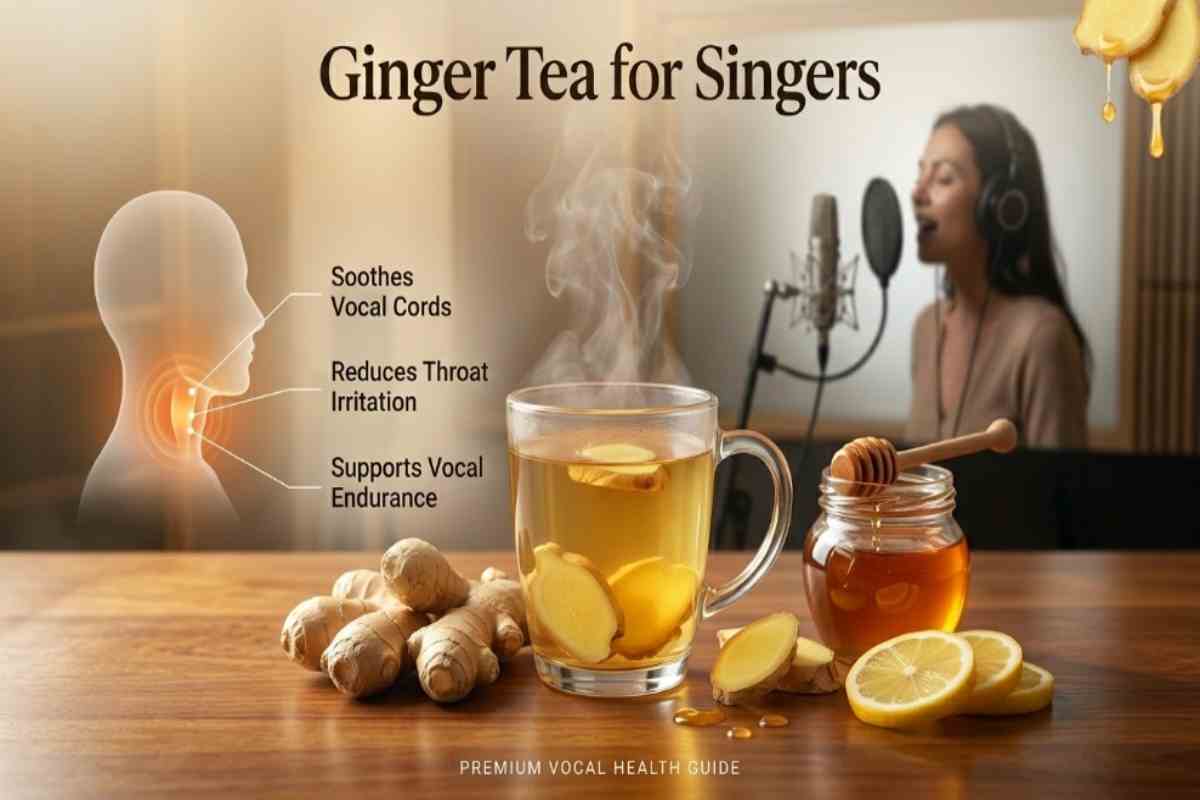
Ginger tea for singers is a warming, throat soothing ritual that has become one of the most popular pre performance habits among vocalists and pairing it with the right brewing method can support vocal comfort before, during and after extended use. For performers who spend hours warming up, rehearsing or holding a note through a two hour set, what you drink matters almost as much as how you train. Ginger tea has earned its place backstage for a reason, it is warming without being harsh, gentle on the throat and easy to prepare in the twenty minutes before curtain call.
This guide breaks down exactly why ginger tea works for singers, how it compares to lemon ginger and spiced variations and how to brew it for maximum benefit, plus how it fits alongside a broader loose leaf tea routine built specifically for vocal professionals. If you are a singer, speaker, teacher or podcaster looking for a tea that actually understands what your voice goes through, you are in the right place.
What Is Ginger Tea and Why Singers Use It
Ginger tea is a warming herbal infusion made by infusing fresh or dried ginger root in hot water, prized by singers for its soothing warmth and its reputation as a go to pre performance ritual. Long before green rooms had electric kettles, performers were reaching for ginger as a way to settle the throat and warm the body before stepping into a demanding vocal session. Its appeal is not just tradition, the warming sensation itself signals increased blood flow to the throat and mouth, which many singers describe as a felt sense of opening up before they sing.
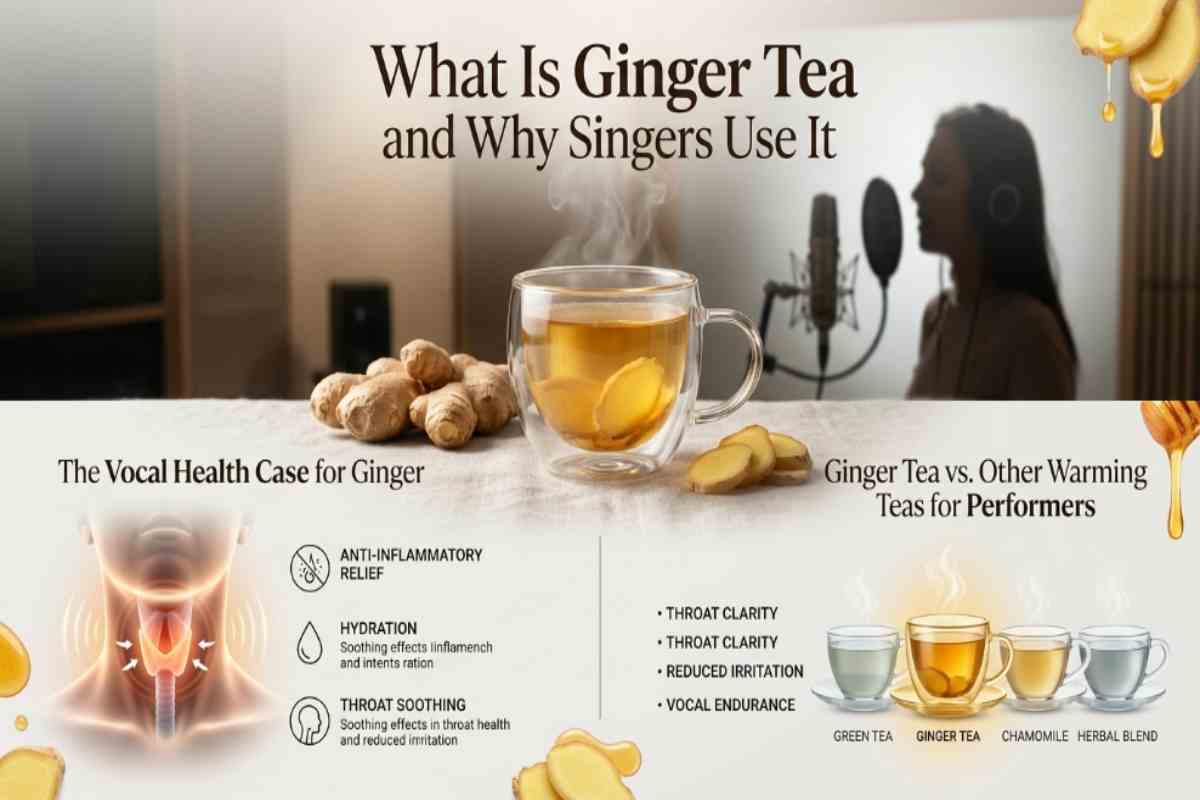
The Vocal Health Case for Ginger
Singers gravitate toward ginger tea because it delivers warmth without the harshness of very hot water alone, making it gentle on tissue that is about to be put to work. Vocal cords perform best when they are properly hydrated and not constricted by cold or dryness and a warm ginger infusion supports both comfort and hydration in a single cup. It is this dual role, physically warming while behaviorally signaling showtime is close, that made ginger tea a near universal habit across genres, from opera singers to podcast hosts recording back to back episodes.
Ginger Tea vs Other Warming Teas for Performers
Ginger tea stands apart from other warming options because its intensity is adjustable, steep it lightly for a subtle warmth or longer for a stronger, more assertive cup, while options like spiced chai blends layer in additional warming compounds such as cinnamon for a rounder, more complex flavor profile. Performers who find plain ginger too sharp on an empty stomach often prefer a spiced or rooibos based warming blend instead, which delivers similar comforting warmth with a smoother finish. For a full breakdown of how ginger stacks up against other performer favorite teas, see our best tea for singers guide.
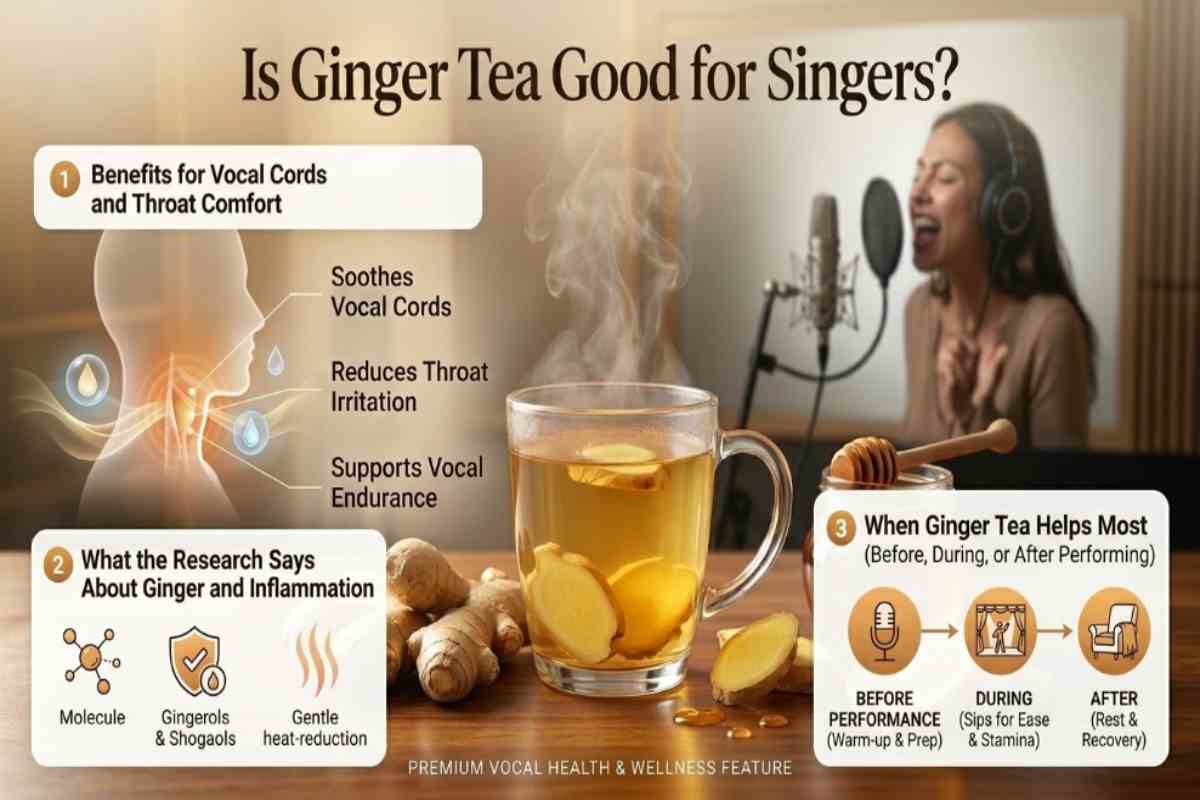
Is Ginger Tea Good for Singers?
Yes, ginger tea is good for singers because its natural compounds support the warmth, comfort and hydration that vocal cords rely on during extended use and its long standing use among performers makes it one of the most trusted pre show rituals in the industry. While ginger tea won’t change your technique or extend your range, it addresses the physical conditions your voice performs best under, warmth, moisture and reduced irritation.
Benefits for Vocal Cords and Throat Comfort
Vocal cords are soft tissue and like any tissue under repeated strain, they respond well to warmth and hydration rather than cold or dryness. Ginger tea delivers both at once, the warm liquid itself soothes the throat on contact, while steady hydration throughout the day helps keep vocal cords supple and less prone to strain. Singers often report that a warm cup before a session leaves the throat feeling looser and more comfortable heading into a performance, which is part of why ginger tea has held its place as a backstage staple for generations of performers.
What the Research Says About Ginger and Inflammation
Ginger contains bioactive compounds, including gingerol and shogaol, that researchers have found help modulate the body inflammatory pathways by reducing pro inflammatory compounds in the body. A complete review of randomized controlled trials indicated that ginger supplementation measurably reduced key inflammatory markers in the body, lending scientific support to why so many singers reach for it around demanding vocal use. It’s worth noting most of this research examines ginger supplementation broadly rather than tea specifically, so the effect from a single cup is milder than a concentrated extract, but the underlying mechanism is the same.
When Ginger Tea Helps Most Before, During or After Performing
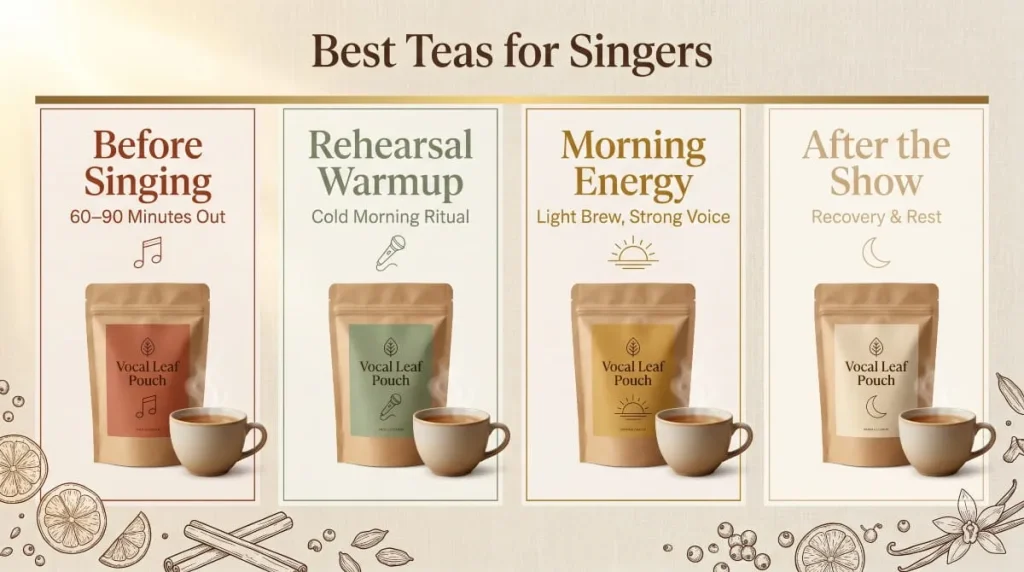
Ginger tea offers the most noticeable benefit in the thirty to sixty minutes before a performance, when its warming effect can help the throat feel ready rather than tight or cold. During longer sessions, rehearsals, recording days or back to back sets, sipping it between segments helps maintain hydration without the temperature shock of ice water. After performing, a cup can support recovery by keeping the throat warm and hydrated as vocal cords settle back to rest. For a broader look at how tea fits into a performer’s full routine, our best tea for performers and speakers guide covers timing and pairing strategies in more depth.
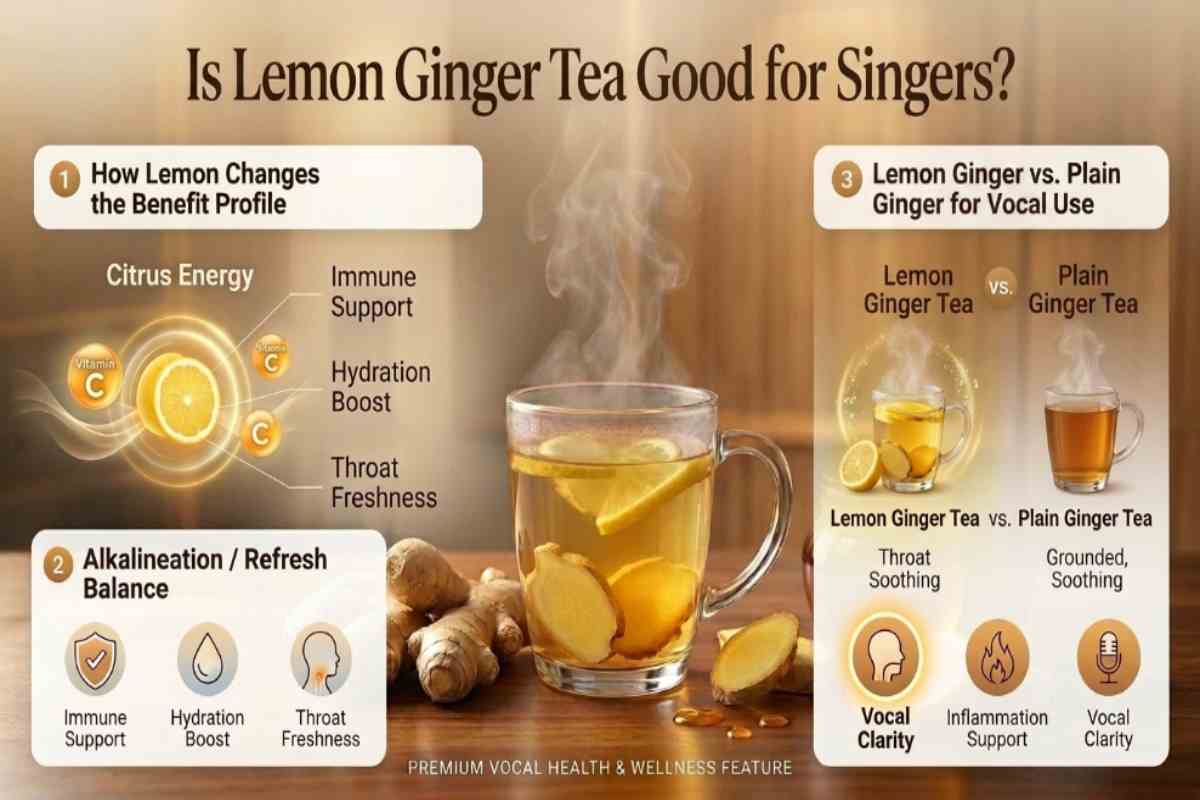
Is Lemon Ginger Tea Good for Singers?
Yes, lemon ginger tea is good for singers, combining ginger warming comfort with lemon’s bright, palate clearing citrus for a cup that feels both soothing and refreshing before a performance. It is one of the most popular variations among performers precisely because it balances two different sensations, warmth from the ginger, brightness from the citrus.
How Lemon Changes the Benefit Profile
Adding lemon to ginger tea shifts the experience beyond warmth alone by introducing citrus oils that many singers find help cut through morning congestion and freshen the mouth before warming up. Where plain ginger tea leans purely into soothing warmth, lemon adds a lighter, more energizing note that can feel especially welcome earlier in the day or before a high energy performance.
The citrus element also tends to make the tea feel less heavy, which is part of why so many performers reach for it during long rehearsal days rather than saving it strictly for pre show rituals. If you are drawn specifically to the citrus side of that pairing, our lemon peel tea guide breaks down its standalone benefits in more depth.
Lemon Ginger vs Plain Ginger for Vocal Use
The choice between lemon ginger and plain ginger largely comes down to what a singer voice and stomach respond to best in the moment. Plain ginger delivers a more concentrated, warming intensity that some performers prefer right before stepping on stage. In contrast, lemon ginger offers a gentler, brighter alternative that is easier to drink in larger quantities throughout a rehearsal or recording session.
Performers with sensitive stomachs often find the citrus in lemon ginger tea easier to handle on an empty stomach than straight ginger. For singers who enjoy citrus forward teas but want to explore beyond lemon orange peel tea offers a similar brightening effect with a slightly sweeter profile.
Ginger Tea for Throat, Soothing Properties Explained
Ginger tea soothes the throat by combining physical warmth with natural compounds that help ease irritation, making it one of the most important remedies when a singer throat feels tight, scratchy or overworked. The warmth alone does much of the work, heat encourages blood flow to throat tissue. It creates an immediate sense of relief that singers notice within the first few sips.
How Ginger Interacts with Throat Irritation
When throat tissue is irritated from overuse, dryness or prolonged talking and singing, it is often inflamed at a cellular level and ginger’s bioactive compounds are known to interact with the body’s inflammatory response in ways that may help calm that irritation. Beyond its internal effects, the simple act of drinking something warm coats and moistens the throat, temporarily easing the raw, dry sensation that often follows a long rehearsal or performance. This combination of warmth and gentle chemical support is why ginger tea remains a go to for throat comfort rather than a purely folk remedy, the mechanism behind the relief is real, even if it’s not a substitute for rest and proper vocal care.
Pairing Ginger with Other Warming Ingredients Cinnamon and Spice Blends
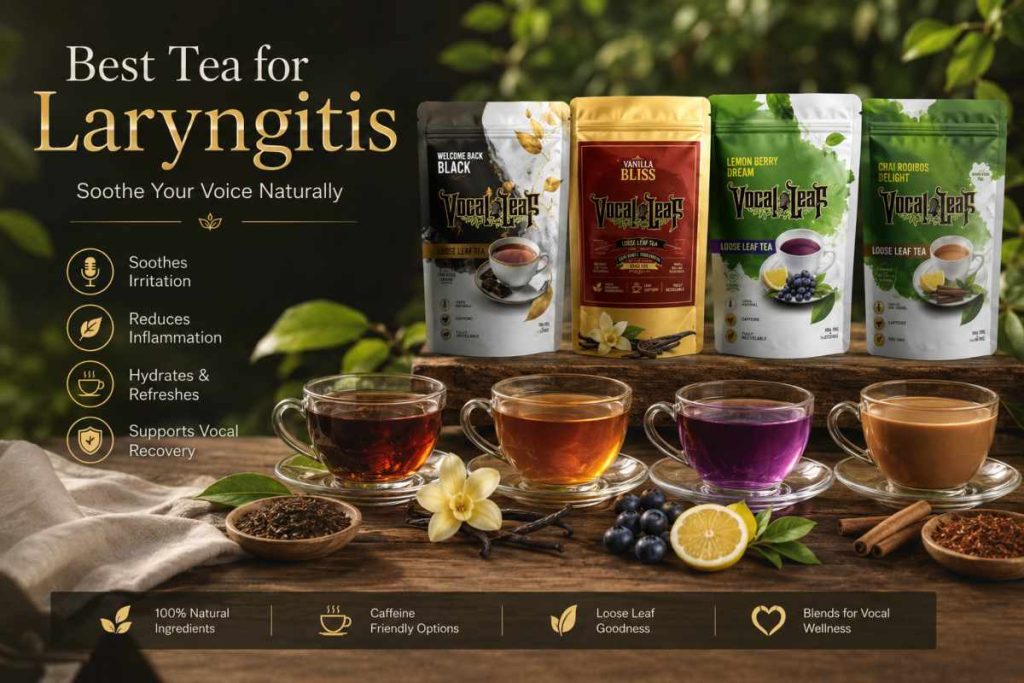
Ginger is rarely used alone in performer favorite blends, it is frequently paired with cinnamon and other warming spices to round out its sharp edge and add depth to the throat soothing effect. Cinnamon in particular brings a natural sweetness and warmth that complements ginger’s intensity, which is part of why spiced blends have become a staple for singers who want comfort without an overly sharp or peppery finish. For performers who prefer a fruit forward alternative to spice heavy blends, our Loose Leaf Lemon Berry Tea offers a different route to throat comfort, pairing citrus and berry notes for a soothing cup that still supports vocal comfort without leaning on spice.
How to Make Ginger Tea for Singers
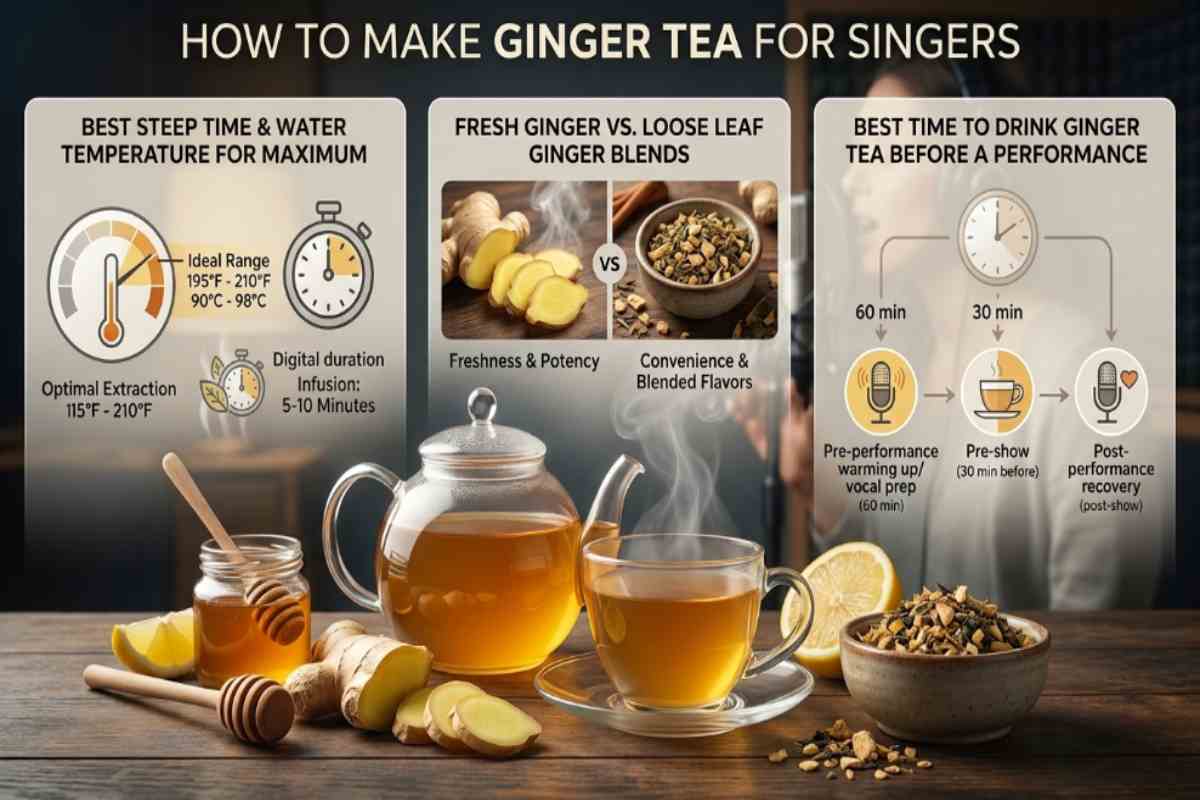
Making ginger tea for singers is simple, use ginger (fresh or dried) in hot water for eight to ten minutes to draw out its warming compounds without over extracting bitterness, then drink it. At the same time, it is still warm for the fullest throat soothing effect. The method matters more than most people expect, steep too briefly and the tea stays weak and thin, steep too long and it can turn sharp and harsh on the throat, working against the very comfort you’re trying to create.
Best Steep Time and Water Temperature for Maximum Benefit
The ideal water temperature for brewing ginger tea is just off the boil, around 200 to 212°F and steep for 8 to 10 minutes to release its warming compounds fully. Water that’s too cool won’t extract enough of ginger beneficial oils, while water that is too hot for too long can pull out excess bitterness that makes the tea harsher on an already sensitive throat. Singers preparing tea shortly before a performance should aim for the shorter end of that window, closer to 8 minutes, for a smoother, more drinkable cup that won’t compromise vocal comfort.
Fresh Ginger vs Loose Leaf Ginger Blends
Fresh ginger root delivers a sharper, more intense flavor and requires peeling and slicing before steeping, while loose leaf ginger blends offer a more balanced, consistent cup since the ginger is typically pre portioned and blended with complementary ingredients.
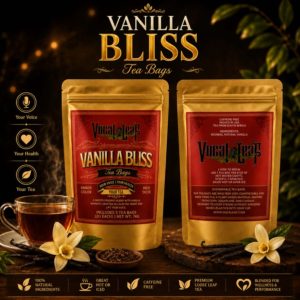
For singers who want convenience without sacrificing quality, loose leaf blends remove the guesswork of how much fresh ginger to use and how long to simmer it, making it easier to prepare consistently before a show. Performers who prefer a smoother, dessert like alternative on non performance days often turn to our Vanilla Bliss Tea, a caffeine free option that offers comforting warmth without ginger sharper intensity.
Best Time to Drink Ginger Tea Before a Performance
The sweet spot for drinking ginger tea before performing is thirty to sixty minutes prior to going on stage, giving the throat enough time to feel the warming effect without the risk of needing a bathroom break mid set. Drinking it too close to performance time can leave singers feeling too full or warm right as they need to be at their most comfortable, while drinking it too far in advance means the soothing effect may have faded by the time they are on stage. Many performers build it into their pre show routine alongside vocal warmups, treating the tea itself as part of the ritual that signals the body it is time to perform.
Ginger Cinnamon and Spiced Ginger Variations for Throat Support
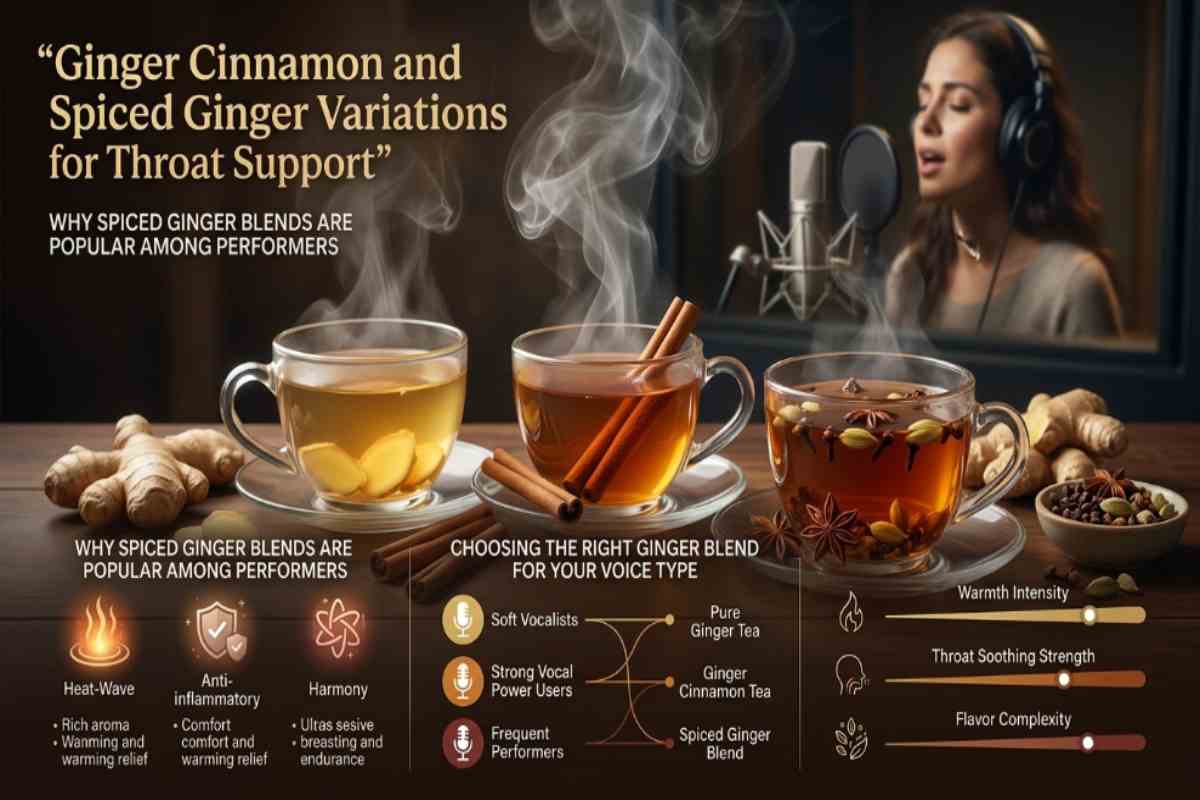
Ginger cinnamon and other spiced ginger blends offer a rounder, more layered take on throat support than plain ginger alone, combining ginger warming intensity with cinnamon natural sweetness for a cup that feels comforting rather than sharp. These variations have become especially popular among performers who want the throat soothing benefits of ginger without its more assertive bite.
Why Spiced Ginger Blends Are Popular Among Performers
Spiced ginger blends work because they soften ginger intensity while adding complementary warming notes, creating a more balanced cup that is easier to drink in the lead up to a performance. Cinnamon in particular pairs naturally with ginger, rounding out the flavor and making the tea feel more like a comforting ritual than a medicinal necessity.
This is part of why spiced variations tend to outlast plain ginger tea in a performer regular rotation, the flavor profile is more forgiving for daily use, not just occasional throat relief. Singers who want warmth paired with a bolder, more energizing base often turn to our Organic Loose Leaf Black Tea, which offers natural warmth alongside clean caffeine for performance days that call for extra focus.
Choosing the Right Ginger Blend for Your Voice Type
The right ginger blend often comes down to how a singer voice and body respond to intensity and caffeine, not just personal taste. Vocalists with sensitive stomachs or those performing early in the day may prefer a milder spiced blend over straight ginger, while singers who need a stronger warming effect before a demanding set might lean into a more concentrated cinnamon ginger combination.
Time of day matters too, a caffeine free spiced ginger blend suits an evening performance, while pairing warming spice with a caffeinated black tea base can serve singers who need both vocal comfort and mental alertness for back to back sets.
Vocal Leaf Recommendation for Ginger Style Warming Tea
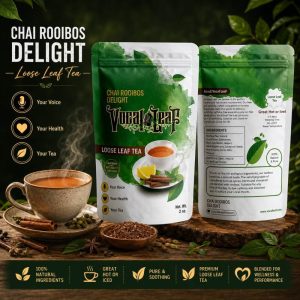
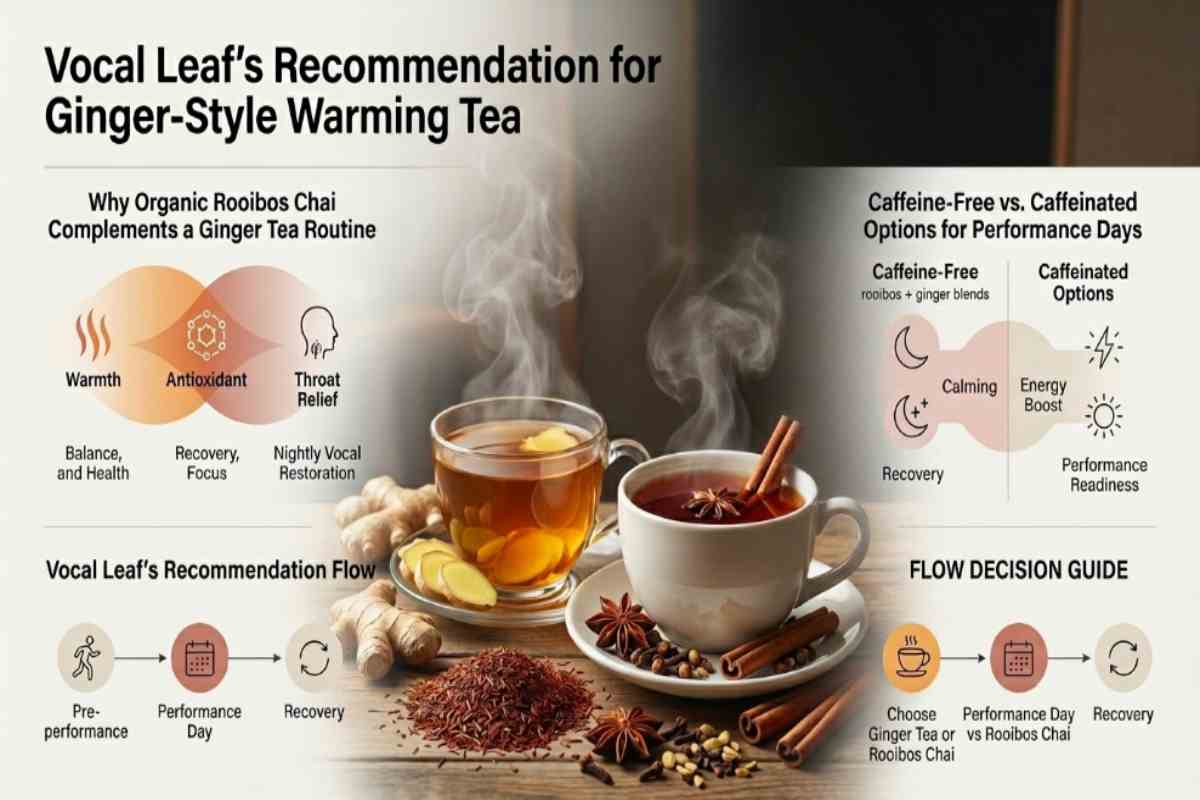
For singers who love the warming ritual of ginger tea but want a caffeine free option built specifically for vocal health, Organic Rooibos Chai delivers that same comforting spice profile in a blend designed for performers. It captures the warming, grounding quality singers reach for in a ginger tea routine while offering the consistency of a pre portioned loose leaf blend.
Why Organic Rooibos Chai Complements a Ginger Tea Routine
Organic Rooibos Chai brings the same warming spice character that draws singers to ginger tea, layered into a naturally caffeine free rooibos base that won’t leave the throat feeling dry the way some spiced blends can. Its warming spice blend makes it a natural companion to or replacement for, a ginger tea routine, especially for performers who drink tea multiple times a day and want a consistently smooth, non irritating cup. Because rooibos is naturally caffeine free rather than chemically decaffeinated, it fits into a routine at any hour without disrupting sleep before an evening show or a next day rehearsal.
Caffeine Free vs Caffeinated Options for Performance Days
The right tea for performance day often depends on timing, caffeine free options like Organic Rooibos Chai suit singers who want warmth and comfort without added stimulation, while caffeinated options serve performers who need both vocal comfort and mental alertness for a demanding schedule.
A caffeine free warming blend is generally the safer choice in the hours immediately before a performance, since it won’t add jitters or affect focus, while a caffeinated tea earlier in the day can help sustain energy through long rehearsals. Singers juggling back to back sets often keep both on hand, a caffeine free option for pre show calm and a caffeinated one for daytime endurance.
Conclusion
Ginger tea has earned its place in a singer routine for good reason, its warming properties, throat soothing effect and flexibility across variations like lemon ginger and spiced cinnamon blends make it one of the most reliable pre performance rituals available, backed by real research into its anti inflammatory compounds. Whether you are brewing it fresh before a show, pairing it with citrus for a brighter cup or reaching for a rooibos based alternative on performance days that call for a caffeine free option, the goal stays the same, supporting your voice with warmth, hydration and comfort rather than working against it. At Vocal Leaf, every blend is built with that same principle in mind, tea that respects what your voice actually needs, whether you are stepping on stage tonight or warming up for tomorrow session.
Frequently Asked Questions (FAQs)
Is ginger tea good for singers?
Yes, ginger tea warming properties support throat comfort and hydration, both of which affect how the voice feels before and during use. It is a trusted pre performance ritual for exactly that reason.
Is lemon ginger tea good for singers?
Yes, it offers the same warming comfort as plain ginger with a brighter citrus finish that is easier to drink in larger quantities. Many performers also find it helpful for cutting through morning congestion.
How do you make ginger tea for singers?
Steep fresh or dried ginger in water around 200–212°F for eight to ten minutes, then drink it warm. A shorter steep, closer to eight minutes, gives a smoother cup that’s gentler on the throat before performing.
Is ginger cinnamon tea good for vocal health?
Yes, cinnamon rounds out ginger warming, throat soothing effect into a more balanced cup. That makes it easier to drink daily, not just when the throat needs extra care.
Can spiced ginger tea help a sore throat before singing?
Yes, it can ease irritation with warmth and gentle comfort, though it works best alongside rest and proper hydration rather than as a standalone fix.