

A sore throat and cough can quickly turn everyday moments, such as talking, eating, and even sleeping, into a struggle. While over-the-counter medications are often effective, many people prefer a gentler, more natural approach. That’s where tea comes in. Warm, comforting, and easy to prepare, tea has long been used to help soothe throat irritation and calm coughing. But with so many options available, it’s natural to wonder:
what is the best tea for a sore throat and cough, and does it truly help?
The short answer is yes, when chosen wisely, tea can provide real relief. The warmth helps ease throat discomfort, hydration supports healing, and certain teas contain natural compounds that calm irritation and reduce inflammation. From classic herbal blends to ginger and peppermint varieties, the proper tea can make a noticeable difference in how you feel.
In this guide, we’ll explain how tea can help with a sore throat and cough, highlight the best teas for targeted relief, and share simple homemade tea recipes you can make at home. Whether you’re dealing with a scratchy throat, a lingering cough, or both, this resource will help you choose the most soothing tea for gentle, practical comfort.
Does Tea Help With a Sore Throat and Cough?
Yes, tea can help soothe a sore throat and calm a cough, especially when symptoms are linked to a cold, mild flu, dryness, or general throat irritation. While it isn’t a cure, tea is a simple, natural way to reduce discomfort and support your body as it recovers.
One of the most significant benefits of tea is warmth. Hot tea helps relax throat muscles, easing tightness and irritation that can trigger coughing. The warmth also provides an immediate soothing sensation, making swallowing and speaking more comfortable.
Hydration plays an equally important role. Drinking tea helps keep the throat moist, which can reduce dryness and scratchiness, two common causes of persistent coughing. Proper hydration also supports your immune system, which allows it fight off illness.
Tea can also help relieve congestion. The steam from hot tea may loosen mucus in the airways, making it easier to breathe and cough more productively. This is especially helpful if your cough is accompanied by nasal or chest congestion.
Finally, many teas contain natural soothing compounds. Herbal teas like ginger, chamomile, and peppermint are known for their anti-inflammatory and calming properties, which can help reduce throat irritation and the intensity of coughing.
While tea won’t treat the underlying cause of an infection, it can significantly ease sore throat and cough symptoms when combined with rest, fluids, and proper care, making it a comforting and practical part of your recovery routine.
What Kind of Tea Soothes a Cough?
If you’re wondering what kind of tea soothes a cough, the answer depends on your symptoms. A dry, scratchy cough needs a soothing, anti-inflammatory tea, while a wet cough or congestion benefits from herbs that help loosen mucus. In general, the best tea for a cough is warm, calming, and rich in natural compounds that reduce inflammation, coat the throat, and support easier breathing.
Herbal teas are especially effective because many contain antibacterial, anti-inflammatory, and mucus-clearing properties. Below is a clean, symptom-focused guide to the best teas for cough relief, including options for sore throat, congestion, and persistent coughing.
Best 5 Tea for Cough (Ranked by Effectiveness)
Ginger Tea – Best for Dry Cough and Inflammation
Ginger tea is widely considered one of the best teas for a dry cough. Its natural anti-inflammatory compounds help reduce throat swelling and irritation while relaxing airway muscles. The warming effect can also support circulation and immune function, making it ideal for persistent coughs or cold-related symptoms.
Best for: Dry cough, throat inflammation, lingering irritation
Honey Lemon Tea – Best for Sore Throat and Cough
If you’re searching for the best tea for a sore throat and cough, honey lemon tea is a classic remedy. Honey coats and soothes irritated throat tissues, while lemon helps break down mucus and provides vitamin C for immune support.
Best for: Scratchy throat, coughing fits, early cold symptoms
Peppermint Tea – Best for Cough and Congestion
Peppermint tea is one of the top answers to what tea is good for cough and congestion. The menthol in peppermint acts as a natural decongestant, helping open airways and loosen mucus. Its cooling effect may also calm throat discomfort.
Best for: Congestion-related cough, mucus buildup, chest tightness
Licorice Root Tea – Best for Mucus in the Throat
If you’re wondering what tea is good for mucus in the throat, licorice root tea is a strong option. It works as a natural expectorant, helping thin and loosen mucus while soothing inflamed tissues.
Best for: Wet cough, throat mucus, irritation from postnasal drip
Chamomile Tea – Best for Nighttime Cough
Chamomile tea gently calms throat irritation and promotes relaxation. It’s especially helpful if coughing worsens at night, as better sleep supports faster recovery.
Best for: Mild throat pain, nighttime coughing, sensitive throats
Best Teas for Sore Throat and Cough
Not all teas offer the same type of relief. Choosing the right one depends on whether you’re dealing with dryness, mucus, or irritation.
- For a dry, scratchy throat: Ginger tea or lemon tea
- For mucus and congestion: Peppermint or licorice root tea
- For mild irritation and sleep support: Chamomile tea
- For daytime immune support: Green tea (in moderation)
- For warmth and comfort: Black tea (avoid at night if caffeine-sensitive)
Herbal teas are often the most soothing because they are naturally caffeine-free and less likely to dry out sensitive throat tissues.
How Tea Helps Calm a Cough
The best tea for a cough works in three simple ways:
- Soothes irritated throat tissues
- Reduces inflammation in the airways
- Loosens mucus and eases congestion
Drinking 2–3 cups of warm tea daily can provide noticeable relief, especially when combined with proper hydration and rest.
Choosing the right tea based on your symptoms, dry, wet, congested, or irritated, can make a meaningful difference in how quickly and comfortably you recover.
What Tea Is Good for a Cough?
The best teas for coughs are ginger tea, peppermint tea, or honey-lemon tea. These teas help reduce throat inflammation, loosen mucus, and naturally soothe irritation. Choosing the right tea depends on your symptoms, such as dry cough, wet cough, or congestion, but warm herbal teas are often the most effective.
If you’re wondering what tea is good for a cough, the most effective options are teas that soothe throat irritation, reduce inflammation, and help clear mucus. Warm herbal teas can provide fast comfort and may help calm coughing fits, especially when your throat feels dry, scratchy, or congested.
The best teas for cough relief often include ginger, peppermint, chamomile, turmeric, and honey lemon, each offering different benefits depending on the type of cough you have.
Best Tea for Cough Relief
| Tea | Best For | Why It Works |
|---|---|---|
| Ginger Tea | Dry cough, inflammation | Anti-inflammatory, warming, helps calm airway irritation |
| Honey Lemon Tea | Sore throat and cough | Honey coats the throat; lemon supports mucus breakdown |
| Peppermint Tea | Cough and congestion | Menthol helps loosen mucus and open airways |
| Chamomile Tea | Nighttime cough, throat irritation | Soothes tissues and supports better sleep |
| Licorice Root Tea | Mucus in throat, wet cough | Natural expectorant that loosens mucus and coats the throat |
| Turmeric Tea | Persistent cough | Curcumin reduces inflammation linked to long-lasting coughing |
Best Tea for Different Types of Cough
Not all coughs are the same, and that’s why the best tea for cough depends on what’s actually causing it. Some teas work best for dry, irritated throats, while others are better for breaking up mucus or easing congestion. Matching the right tea to your symptoms can make relief feel faster and more noticeable.
Best Tea for Dry Cough
A dry cough is usually caused by throat irritation or inflammation, so the goal is to soothe and calm the airways.
The best teas for a dry cough include:
- Ginger tea – Helps reduce inflammation and relax airway irritation
- Turmeric tea – Supports inflammation relief and may ease persistent coughing
- Honey tea – Coats the throat and helps reduce that constant tickle
Best Tea for Wet Cough
A wet cough often means your body is trying to clear mucus. The best tea choices here are natural expectorants that help loosen and thin mucus, making it easier to cough out.
The best options include:
- Peppermint tea – Helps break down mucus and open the airways
- Licorice root tea – Soothes the throat while loosening mucus buildup
Best Tea for Cough and Congestion
If your cough is accompanied by a blocked nose, chest tightness, or thick mucus, you’ll want teas that support breathing and help clear congestion.
The best tea for cough and congestion includes:
- Peppermint tea – One of the most effective for mucus and airway relief
- Ginger tea – Warming, anti-inflammatory, and great for cold symptoms
- Turmeric tea – Helps reduce inflammation that can worsen congestion
Choosing the right tea based on your symptoms is one of the easiest ways to find what works for you. Whether you’re searching for the best tea for coughing or wondering what tea is best for a cough, the most effective choice is always the one that matches your cough type.
Best Tea by Symptom for Sore Throat and Cough
When you’re dealing with both throat pain and coughing, the most effective relief comes from choosing a tea tailored to your exact symptoms. The best tea for a sore throat and cough isn’t one-size-fits-all; it depends on whether you’re experiencing dryness, mucus buildup, inflammation, or congestion.
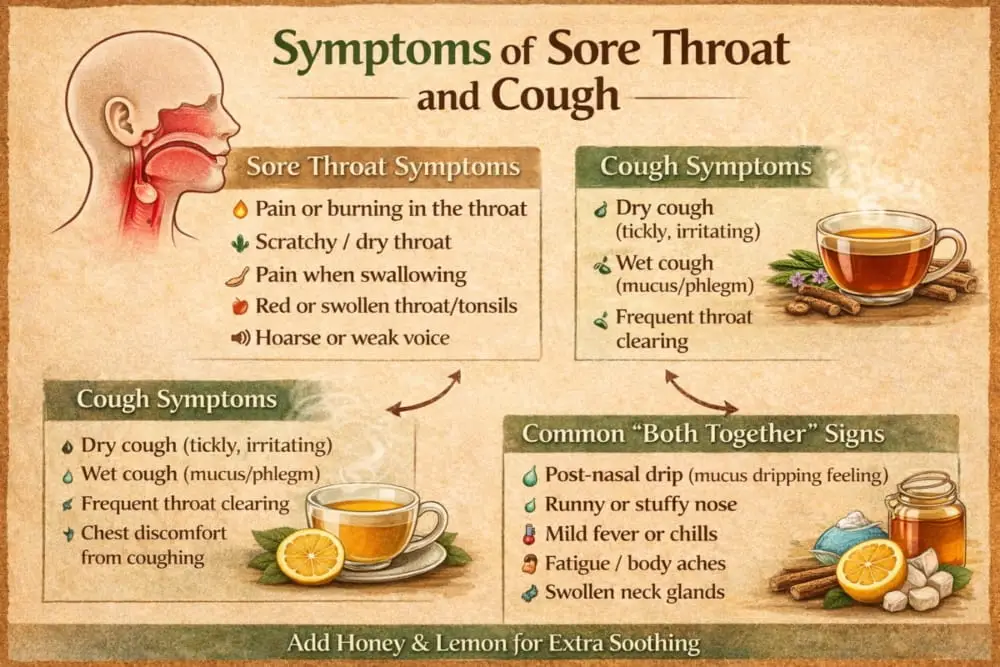
Here’s how to match the right tea to your symptoms for faster, more targeted comfort.
| Symptom | Best Tea | Why It Helps | Best Time to Drink |
|---|---|---|---|
| Sore throat pain | Chamomile tea | Soothes irritated tissues and reduces discomfort | Evening or before bed |
| Persistent cough | Ginger tea | Anti-inflammatory properties help calm coughing | Day or night |
| Congestion-related cough | Peppermint tea | Menthol helps open airways and loosen mucus | Daytime |
| Dry, scratchy throat | Lemon tea (with honey) | Stimulates saliva and coats the throat | Any time |
| Nighttime coughing | Herbal tea (chamomile or licorice root) | Gentle, caffeine-free, supports sleep | Night |
| Mild cold symptoms | Green tea | Antioxidants support immune response | Morning or afternoon |
| Sensitive or irritated throat | Marshmallow root or slippery elm tea | Forms a soothing coating on the throat | Evening |
| General throat discomfort | Warm herbal tea | Hydration and warmth reduce irritation | Any time |
Tea for Different Causes of Cough (Dry vs. Productive)
Not all coughs are the same, which is why a one-size-fits-all approach often falls short. Many articles discuss tea for a sore throat and cough as if every cough has a single cause. In reality, choosing the proper tea depends on whether you’re dealing with a dry cough or a productive (mucus) cough, and the difference matters for effective relief.
Best Tea for Dry Cough and Sore Throat
A dry cough is often caused by throat irritation, dryness, or inflammation rather than mucus. In this case, the goal is to soothe, coat, and calm the throat.
Teas that work best include:
- Chamomile tea, which gently relaxes throat tissues and may reduce irritation
- Licorice root tea, known for its natural throat-coating properties
- Marshmallow root tea, which helps form a soothing layer over dry, irritated tissues
These teas help reduce the urge to cough by calming the throat rather than stimulating mucus movement.
What Tea Is Good for Mucus in the Throat?
If you’re dealing with that uncomfortable “stuck” feeling, you’re not alone. Throat mucus is one of the most common reasons people search for what tea is good for mucus in the throat. The good news is that the right tea can help loosen mucus, soothe irritation, and make coughing more productive and less painful.
The best options are teas that act as natural expectorants, helping thin and break up mucus so it’s easier to clear from the throat.
Here are some of the most effective choices:
Peppermint Tea
Peppermint tea contains menthol, which can help open the airways and loosen mucus. It’s especially helpful if your throat mucus is connected to congestion or postnasal drip.
Licorice Root Tea
Licorice root is one of the best herbal options for throat discomfort. It helps coat irritated tissues while also loosening mucus, making it a strong choice when you’re coughing frequently.
Ginger Tea
Ginger tea is a powerful anti-inflammatory option that can reduce throat swelling while helping break up mucus. Its warming effect also supports circulation and comfort when you’re sick.
Eucalyptus-Infused Tea
Eucalyptus is well-known for clearing congestion. When used in tea (or steeped safely in an herbal blend), it may help reduce throat congestion and make breathing feel easier.
These teas support airway clearance while still soothing throat discomfort.
Why These Teas Help
These teas work by:
- Loosening thick mucus
- Calming throat irritation
- Reducing congestion-related coughing fits
If your cough is triggered by mucus in the throat, drinking warm tea 2–3 times a day can provide gentle, natural relief without irritating an already irritated throat.
Why Ginger, Peppermint, and Licorice Work Differently
Each tea works in a unique way, which is why matching the tea to your cough type matters:
- Ginger tea reduces inflammation and helps loosen mucus, making it ideal for productive coughs
- Peppermint tea opens airways and relieves congestion through menthol, helping mucus move more easily
- Licorice root tea coats and soothes the throat, making it better suited for dry coughs and irritation
By choosing the proper tea for your specific symptoms, you can get more targeted relief and avoid worsening discomfort.
Understanding the difference between a dry and a productive cough helps you use tea more effectively, turning a simple home remedy into a more personalized, symptom-specific solution.
When to Drink Tea for Best Results (Timing Matters)
When it comes to using tea for a sore throat and cough, timing can make a noticeable difference. Many guides focus on which tea to drink but overlook when to drink it. Matching the proper tea to the right time of day helps maximize relief and prevents symptoms from worsening.
Morning Tea for Sore Throat and Cough
After waking up, the throat is often dry and irritated, and mucus may have thickened overnight. Drinking tea in the morning helps rehydrate the throat, loosen congestion, and ease the first coughs of the day.
Best morning options:
- Ginger tea to reduce inflammation and help clear mucus
- Green tea for mild immune support and gentle stimulation
- Lemon tea to boost saliva production and ease dryness
These teas help you start the day with less irritation and more comfort.
Evening Tea for Sore Throat and Cough
As the day winds down, symptoms can become more noticeable, especially throat irritation from talking, dry air, or fatigue. Evening tea should focus on soothing rather than stimulation.
Best evening options:
- Chamomile tea to relax the throat and promote rest
- Herbal teas like licorice root or marshmallow root for gentle coating relief
Avoid highly caffeinated teas in the evening, as they may worsen dryness or disrupt sleep.
Before Bed: Tea for Nighttime Cough
Nighttime coughing is one of the most frustrating symptoms of a sore throat. Drinking the proper tea before bed can help calm irritation and reduce coughing spells that interrupt sleep.
Best teas before bed:
- Chamomile tea for relaxation and throat comfort
- Licorice root tea to coat the throat
- Warm herbal blends without caffeine
Drink tea about 30–60 minutes before sleep to allow soothing effects without frequent nighttime bathroom trips.
After Waking With a Sore Throat
If you wake up with throat pain or coughing, tea can provide immediate relief. Warm tea helps rehydrate tissues and ease irritation caused by mouth breathing or dry air overnight.
Best choices after waking:
- Warm ginger or herbal tea
- Tea with honey to coat the throat
Sipping slowly in the morning can reduce discomfort and prevent coughing from escalating.
Choosing the proper tea is essential, but drinking it at the right time makes it even more effective. By aligning tea choices with your daily routine, you can manage sore throat and cough symptoms more consistently and comfortably.
Hot Tea vs. Herbal Tea – Which Is Better for a Sore Throat and Cough?
Both hot tea and herbal tea can help ease a sore throat and cough, but the better choice depends on your specific symptoms and when you plan to drink it. Understanding the difference can help you get faster, more comfortable relief.

Hot tea, including green or black tea, offers an immediate soothing effect. The warmth helps relax throat muscles, reduce irritation, and may loosen mucus, making coughing more productive. This can be especially helpful during the day when congestion is an issue, and you need quick relief.
Herbal tea, on the other hand, is naturally caffeine-free and often gentler on irritated throat tissues. Many herbal teas contain calming, soothing compounds that coat the throat rather than stimulate it. Because they don’t contain caffeine, herbal teas are a better choice in the evening. They are less likely to worsen coughing or disrupt sleep.
In short, both options have benefits. If you’re looking for fast, daytime comfort, hot tea can help soothe and clear congestion. But if coughing is keeping you awake or your throat feels especially sensitive, herbal tea is usually the better option for sore throat and cough relief, particularly at night.
| Feature | Hot Tea (Black / Green Tea) | Herbal Tea |
|---|---|---|
| Best for | Daytime relief and congestion | Nighttime use and sensitive throats |
| Soothing effect | Immediate warmth relaxes throat muscles | Gentle, coating relief for irritation |
| Helps with cough | Loosens mucus and eases chest congestion | Calms throat irritation and dry cough |
| Caffeine content | Contains caffeine | Caffeine-free |
| Impact on sleep | May interfere with sleep if consumed late | Supports rest and better sleep |
| Throat sensitivity | May irritate very sensitive throats if overused | Generally gentler and more soothing |
| Common examples | Green tea, black tea | Ginger, chamomile, peppermint, licorice root |
| Ideal time to drink | Morning or afternoon | Evening or before bed |
Homemade Tea Recipe for Sore Throat and Cough
Making tea at home lets you control the ingredients and tailor your drink for maximum comfort and relief. A homemade tea for sore throat and cough combines warmth, hydration, and natural soothing ingredients to help calm irritation and ease coughing.
Simple Homemade Sore Throat Tea
Ingredients:
- 1 cup hot water
- 1–2 teaspoons fresh-grated ginger or your favorite herbal tea
- 1 teaspoon honey
- Lemon slice (optional)
Instructions:
- Add the ginger or herbal tea to hot water and steep for 5–10 minutes.
- Stir in the honey, then add a lemon slice, if desired.
- Sip slowly while the tea is warm, allowing it to coat and soothe your throat.
This simple recipe works because the warmth helps relax throat muscles, honey provides a natural coating effect, and ginger or herbal teas help reduce irritation.
Optional add-ins for extra relief:
- Turmeric: Offers anti-inflammatory benefits that may help reduce throat swelling
- Cinnamon: Adds a gentle warming effect and comforting flavor
Enjoy this homemade tea one to three times a day as needed. It’s an easy, natural way to support sore throat and cough relief while staying hydrated and comfortable.
How to Use Tea for Maximum Relief
To get the most benefit from tea for a sore throat and cough, it’s not just about what you drink, but how you drink it. Using tea properly can enhance its soothing effects and help relieve discomfort more effectively.
Start by drinking warm, not scalding. Warm tea helps relax throat muscles and calm irritation, while overly hot liquids can further inflame sensitive tissues. Take slow, steady sips so the tea has time to coat the throat, providing longer-lasting comfort.
For consistent relief, aim for 2 to 4 cups of tea per day, depending on your symptoms and tolerance. Staying well-hydrated helps keep throat tissues moist and can reduce dryness that triggers coughing. Adding honey can further enhance soothing benefits by creating a protective coating on the throat. Just be sure to avoid honey for children under one year old.
There are also a few things to avoid. If your throat feels raw or inflamed, skip very acidic teas, as they may sting or irritate your throat. Additionally, limit excess caffeine, which can dry out the throat and may worsen coughing, especially later in the day.
By choosing the proper tea and using it thoughtfully, you can maximize comfort and make tea an effective part of your sore throat and cough relief routine.
When to See a Doctor (When Tea Is Not Enough)
Tea can be very helpful for easing mild sore throat and cough symptoms, especially when your throat feels irritated, dry, or inflamed. However, it’s just as important to know when home remedies aren’t enough, and medical care may be needed.
You should consider seeking medical advice if you experience severe throat pain that makes it difficult to eat, drink, or speak. A fever that lasts more than a few days can also be a sign of an infection that may require treatment.
Other warning signs should never be ignored. Difficulty breathing or swallowing is a serious red flag and requires prompt medical attention.
You should also get checked if you have a persistent cough lasting more than 3 weeks, especially if it’s accompanied by chest pain, fatigue, or worsening symptoms that don’t improve.
Tea can provide soothing, supportive relief, but it isn’t a substitute for professional care when symptoms escalate. Recognizing these signs early helps you get the right treatment at the right time.
Final Thoughts
The best tea for a sore throat and cough ultimately depends on your specific symptoms. Still, options like ginger, peppermint, chamomile, and herbal teas consistently provide the most soothing relief. Their natural properties, combined with warmth, help calm irritation, ease coughing, and support overall comfort.
When paired with proper hydration and rest, tea becomes a simple yet effective part of a natural recovery routine. It’s an easy, comforting way to support your body while symptoms run their course.
If your sore throat or cough persists, worsens, or is accompanied by concerning symptoms, it’s essential to consult a healthcare professional for proper guidance and care.








)
&description=&image=https://vocalleaf.com/wp-content/uploads/2026/02/Best-Tea-for-Sore-Throat-and-Cough-1024x683.webp)