
Clove Tea for Sore Throat | Does It Work and How to Make It
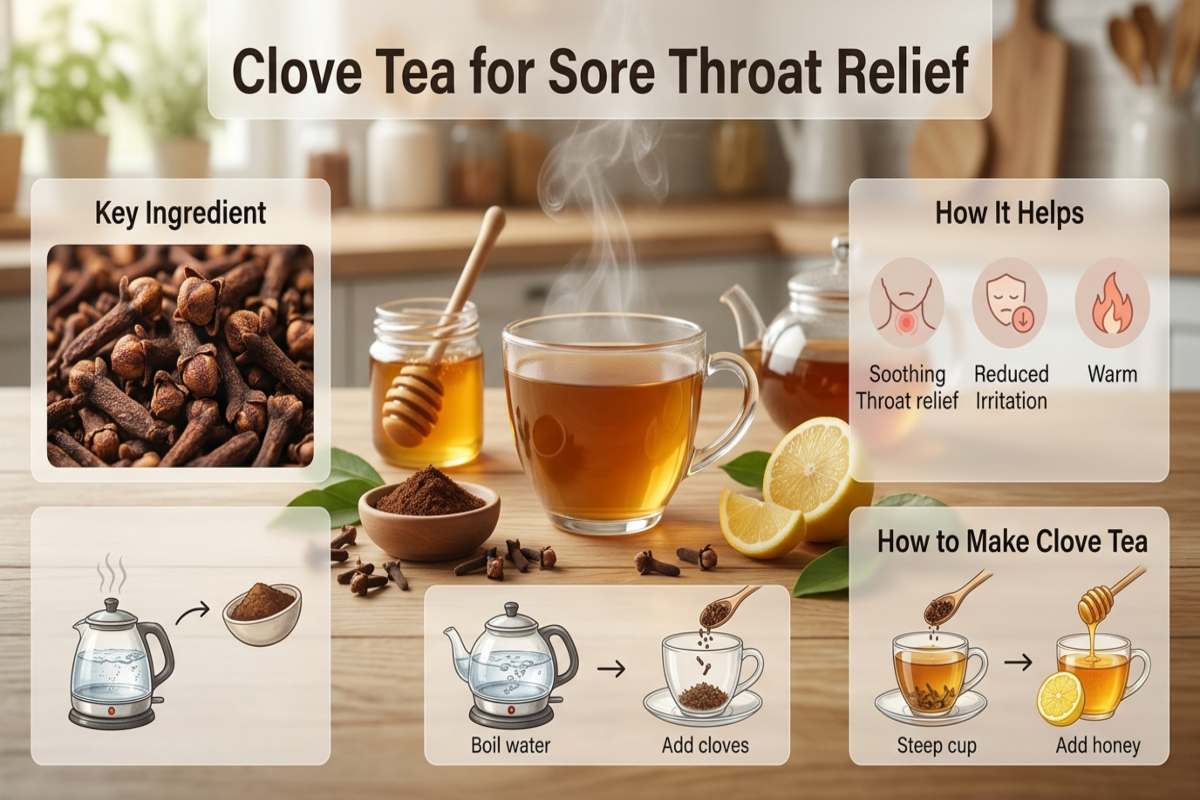
Clove tea for sore throat, thanks to eugenol, a natural compound in cloves known for its soothing and antimicrobial properties. For centuries, whole cloves have been steeped as a home remedy for throat discomfort and that reputation is not just folklore, modern research on eugenol backs up much of what traditional use has long suggested.
If your throat feels raw, scratchy or irritated, a warm cup of clove tea offers more than comfort. The heat alone helps soothe inflamed tissue, while the clove natural compounds may target some of the irritation at its source. This makes it a popular pick not just for the general cold season, but specifically among people who rely on their voice, singers, teachers, podcasters and public speakers, who need fast, gentle relief without harsh side effects.
In this guide, you will learn exactly how clove tea works for a sore throat, how to make it properly at home and how to pair it with other soothing ingredients like honey and cinnamon for even better results. We will also cover when clove tea is enough on its own and when it is time to see a doctor. If you are building a broader routine around vocal health and throat care, exploring a wider range of loose leaf tea can help you find the right blend for your specific symptoms and daily habits.
Does Clove Tea Help a Sore Throat?
Clove tea may offer real relief for a sore throat, largely due to eugenol, the active compound that gives cloves their numbing, warming quality. It won’t cure an infection, but it can take the edge off irritation while your body heals.
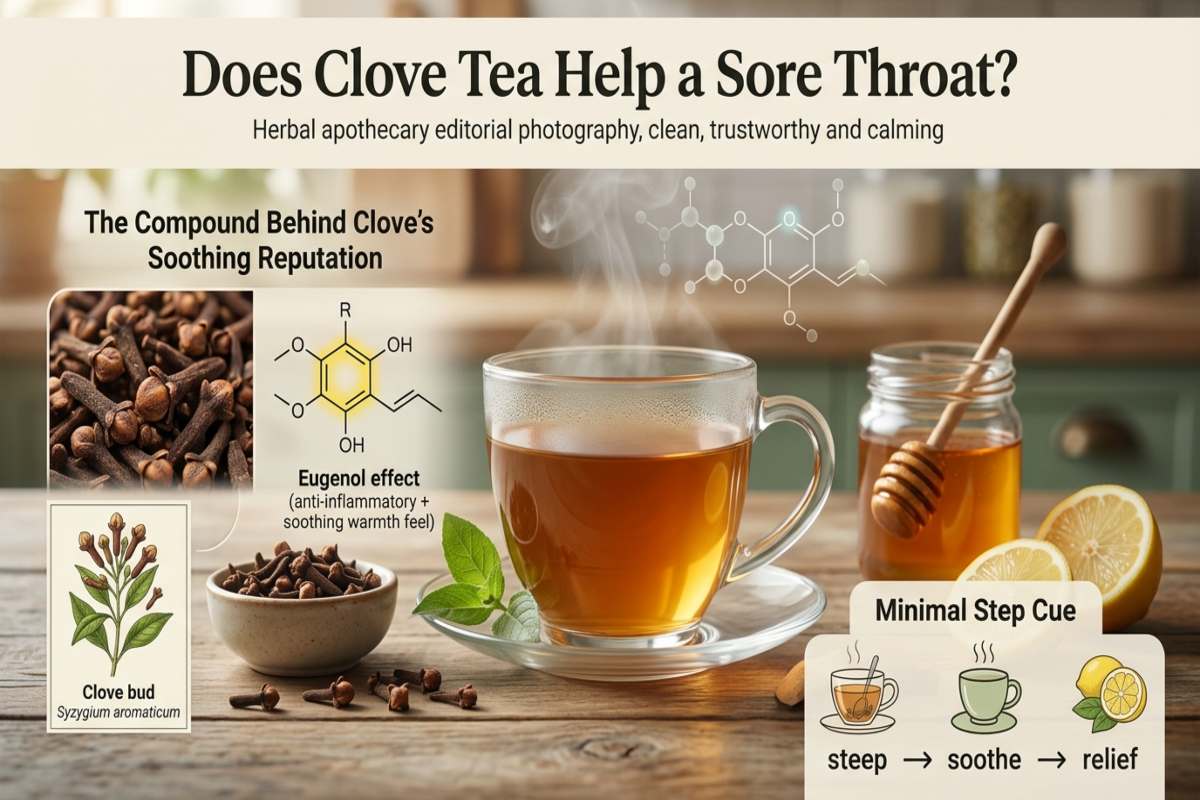
The Compound Behind Clove Soothing Reputation
Eugenol is the natural oil responsible for clove distinctive smell and taste and it is the main reason clove has been used in traditional remedies for centuries, including as a topical numbing agent in dentistry for tooth and gum pain. That same mild anesthetic quality is part of why steeped clove has long been associated with throat comfort it can create a subtle numbing sensation that takes the sting out of swallowing, alongside some antimicrobial activity that may help the mouth and throat environment generally.
What the Research Actually Says
The scientific evidence here is more preliminary than definitive. Lab studies have found eugenol has antimicrobial and anti inflammatory properties in vitro and it remains an approved topical analgesic ingredient in some over the counter dental products. However, there is not strong clinical research specifically testing clove tea as a sore throat remedy in humans, most of what supports this use is traditional/anecdotal, plus the extrapolated dental research. Worth being upfront about that gap rather than implying it is clinically proven for this exact purpose.
If you are comparing clove against other options, it helps to see the fuller landscape of tea for sore throat remedies, since some have more direct research behind them than others.
Clove Tea Benefits for Throat and Voice
Clove tea is popular among people who rely heavily on their voice because it offers gentle throat comfort without the grogginess of medicated lozenges or sprays. It won’t sharpen your vocal range or fix strain from overuse, but it can make an irritated throat feel more manageable during a demanding day.

Throat Comfort and Irritation
The warmth of the tea itself does a lot of the work, heat helps relax the muscles around the throat and increases blood flow to irritated tissue, which is why warm liquids in general are a go to for scratchy throats. Clove adds to that with its mildly numbing, eugenol driven effect, which can take some of the edge off swallowing discomfort. It is worth noting this is symptom relief, not treatment clove tea calms the sensation of irritation, it doesn’t resolve whatever is causing it, whether that is a virus, dry air or vocal overuse.
Why Singers and Speakers Reach for Clove
Singers, teachers, podcasters and public speakers tend to favor warm herbal teas over cold drinks or dairy, since cold and dairy can each aggravate the throat and thicken mucus for some people. Clove tea fits that preference it is warm, caffeine free and doesn’t leave residue on the vocal folds the way some sugary or creamy drinks can. That said, individual response varies, some voice professionals find spice forward teas like clove too intense before a performance and prefer something milder, so it is worth testing at home rather than trying it for the first time before a big event.
If you want something gentler for daily throat maintenance alongside clove, a fruit forward option like Loose Leaf Lemon Berry Tea is a common pairing, the vitamin C content from the berries and citrus offers a different kind of throat support than clove’s numbing effect.
How to Make Clove Tea for a Sore Throat
Making clove tea at home takes just a few minutes and requires nothing more than cloves, water and a way to strain them. Getting the ratio and steep time right makes the difference between a mild, pleasant tea and one that is overpoweringly bitter or spicy.

Whole Clove vs Ground Clove
Whole cloves are the better choice for tea. They release their oils more slowly and evenly, giving you more control over strength and they are easy to strain out or catch in an infuser. Ground clove disperses immediately into the water, which tends to make the tea gritty and harder to strain cleanly and it is easy to oversteep by accident since you can not see how much flavor has already released. If whole cloves are what you have, they also keep their potency longer in storage, ground clove loses aromatic oils faster once it is been broken down.
Step by Step Brewing Method
- Bring a cup of water about 8 oz to a near boil
- Add 3–4 whole cloves or use a store bought clove tea bag
- Cover and let steep for 5–8 minutes
- Strain out the cloves or remove the tea bag
- Add honey or a squeeze of lemon to taste, if desired
Start on the lower end of that clove count, 2–3 cloves, if you are trying it for the first time, since clove flavor and numbing effect are both stronger than most people expect.
Steep Time and Water Temperature
Water just off the boil, around 200–212°F, extracts eugenol most efficiently without needing an excessively long steep. Steeping longer than 8–10 minutes does not add meaningful benefit and mostly just increases bitterness. If you are using clove alongside a base tea rather than clove alone, like a spiced black or rooibos blend, follow the base tea steep guidance first and treat the clove as an accent rather than steeping both to the clove ideal time, which can oversteep the base leaves.
For a version that already balances clove adjacent warming spices with a smooth, low bitterness base, an Organic Rooibos Chai Tea is worth trying, rooibos is naturally sweet and caffeine free, which keeps the spice blend from turning harsh the way stronger black teas sometimes can.
Clove Tea Variations for Cold and Cough Season
Clove tea becomes even more useful during cold and cough season when paired with other soothing ingredients, since honey and cinnamon each add their own throat calming properties without competing with clove flavor.

Clove and Honey Tea
Honey is one of the best studied natural remedies for cough and throat irritation, a widely cited clinical review found honey performed as well as or better than some over the counter cough suppressants for reducing nighttime cough frequency in children. Stirring a teaspoon of honey into clove tea after it is finished steeping not while it is still near boiling, which can degrade some of honey beneficial enzymes combines that cough calming effect with clove numbing warmth. It is a simple upgrade and, for many people, the single most noticeable addition to a basic clove tea.
Clove and Cinnamon Tea
Cinnamon brings a warming, slightly sweet flavor that balances clove sharper bite and it has its own mild antimicrobial properties that complement rather than duplicate clove effects. To make it, add a small cinnamon stick or a pinch of ground cinnamon to the water alongside the cloves at the start of steeping, so the flavors infuse together. This version tends to feel more like a comforting seasonal drink than a straightforward remedy, which makes it an easier one to drink multiple times a day without it feeling medicinal.
When to Add These to Your Routine
Clove tea with honey or cinnamon is best used at the first sign of throat irritation or a cold coming on and again in the evening, since the warmth can also support better sleep when congestion or coughing tends to worsen at night. It’s not something that needs to replace your regular tea routine, many people keep it as an as needed option rather than a daily habit. If you’d rather build a base of daily immune and throat support and layer clove in only when symptoms show up, an Organic Loose Leaf Black Tea makes a solid everyday foundation, with clove and honey added on the days you actually need the extra support.
Clove Tea for Throat Infections What to Know
Clove tea can ease the discomfort of a throat infection, but it can not treat the infection itself, it is a comfort measure, not a substitute for medical care when one is actually needed.

What Clove Tea Can and Can not Do
Clove numbing and mildly antimicrobial properties can make swallowing more comfortable and take the edge off scratchiness, which is genuinely useful whether your sore throat is from a viral cold, dry air or vocal strain. What it can not do is clear a bacterial infection like strep throat, which requires antibiotics or shorten the course of a viral illness in any meaningful way.
Relying on clove tea alone for a throat infection risks masking symptoms with a bit of comfort while the underlying cause goes untreated, that is the main thing to keep in mind before treating it as a standalone remedy.
When to See a Doctor
A few signs suggest it is time to move past home remedies a sore throat lasting longer than a week, a fever above 101°F, white patches or pus on the tonsils, severe pain that makes swallowing or breathing difficult or a rash accompanying the sore throat. These can point to strep throat, tonsillitis or another condition that needs proper diagnosis and treatment rather than tea. Clove tea is a reasonable first line comfort measure while you wait to see if symptoms resolve on their own, but it should not delay a doctor visit if these warning signs show up.
For everyday throat and immune support once symptoms have cleared, a caffeine free option like Vanilla Bliss is a gentle way to keep a warm, soothing tea habit going without the intensity of clove.
Conclusion
Clove tea is a simple, low effort way to take the edge off a sore throat, not a cure, but a genuinely comforting option backed by eugenol numbing and mildly antimicrobial properties. Whether you drink it on its own, with honey or blended with cinnamon, the key is treating it as one part of a broader throat care routine rather than a fix all pair it with rest, hydration and a doctor visit if symptoms stick around or worsen. If you are looking to build that routine out further with other caffeine free, throat friendly blends, Vocal Leaf offers a range of options worth exploring beyond clove alone.
Frequently Asked Questions (FAQs)
Does clove tea help a sore throat?
Yes, clove tea can help ease sore throat discomfort thanks to eugenol, a compound with mild numbing and antimicrobial properties. It soothes symptoms but does not treat the underlying cause, like a virus or bacterial infection.
Is clove tea good for a sore throat?
Clove tea is a good comfort option for a sore throat, combining the throat relaxing effect of warm liquid with clove natural numbing qualities. It works best alongside rest and hydration, not as a standalone treatment.
How do you make clove tea for a sore throat?
Steep 3–4 whole cloves in 8 oz of near boiling water for 5–8 minutes, then strain and add honey or lemon if desired. Start with fewer cloves if it is your first time, since the flavor and effect are stronger than expected.
Can clove tea help with a cough too?
Yes, especially when paired with honey, which has research backed benefits for reducing cough frequency. Clove warmth and mild anti inflammatory properties can add extra comfort on top of that.
Top Selling Products





Best Tea for Singers | What Actually Helps Your Voice
If you sing, whether you perform professionally, teach voice lessons, or spend your weekends in rehearsal, you’ve probably wondered whether tea actually does anything useful…

Best Tea for Vocal Cords | Herbs, Hydration and Recovery
If your voice feels tired, strained, or dry, the right tea for your vocal cords can make a real difference, not by healing damaged tissue,…

Best Tea for Laryngitis | Soothe Your Voice Naturally
The best tea for laryngitis is a warm, caffeine free loose leaf blend that hydrates the throat and eases the strain on inflamed vocal cords.…

What Is Chai Tea? The Ultimate Guide to Ingredients, Benefits, Types & How It’s Made
If you’ve ever wondered what chai tea is, you’re not alone. It’s one of the most searched beverage questions online, yet the answer is often…

Best Tea for Your Voice | Does It Make You Sound Deeper
What it can do is change how your voice feels and sounds in the moment, which is where most of the confusion starts. If you…

The Best Tea for Performers & Speakers, And Why Your Voice Deserves Better
You spend hours rehearsing the words. You perfect the tone, the breath, the timing. But then you reach for whatever is nearby, a cup of…
Best Tea for Stress Relief | Calming Loose Leaf Blends
Stress is something everybody carries. It shows up in tight shoulders, restless nights, and a mind that won’t quiet down after a long day. And…

Best Tea for Dry Throat | The Teas That Help and the Ones That Hurt
The best teas for a dry throat are caffeine-free herbal blends, teas with no tannins to strip moisture from the throat lining and no caffeine…

Best Teas for Acid Reflux, Heartburn and GERD
Acid reflux doesn’t just cause heartburn. If you have searched for tea good for acidity, you are asking the same question, acidity and acid reflux…

Best Morning Tea for Energy and Focus Without Coffee Crash
The best tea to drink in the morning is black tea if you want steady, coffee level energy without the crash, rooibos chai if you…

Best Tea for Cough | The Complete Guide to Soothing Relief
The best tea for cough relief is a warm, hydrating blend that soothes irritated throat tissue while easing the reflex that triggers coughing in the…

Best Teas for a Cold That Actually Work
Best teas for a cold combines warmth, hydration and gentle steam to ease congestion, calm a scratchy throat and help your body rest while it…