
Best Tea for a Scratchy Throat | What Actually Soothes It Fast

That rough, raw, irritated feeling in your throat, you know it the moment it starts. Talking feels like sandpaper. Swallowing is uncomfortable. And all you want is something warm that actually helps.
The good news? A well-chosen cup of tea is one of the most effective, time-tested remedies for a scratchy throat. Not because it’s trendy wellness advice, but because warm liquid genuinely soothes irritated throat tissue, reduces dryness, and creates the kind of immediate comfort that over-the-counter lozenges often fail to deliver.
But not every tea does this equally well. The best tea for a scratchy throat isn’t just hot water with a bag dropped in; it’s a blend chosen specifically for ingredients that calm inflammation, coat raw tissue, and bring real relief from the first sip.
In this guide, you’ll find exactly which teas work, why they work, and how to brew them for maximum soothing effect, so you can stop guessing and start feeling better.
Why Your Throat Feels Scratchy (And Why Tea Helps)
Before reaching for a remedy, it helps to understand what’s actually happening in your throat, because once you do, the case for tea becomes obvious.
What Causes That Rough, Irritated Feeling
A scratchy throat is almost always a sign that the delicate mucous membranes lining your throat are irritated, inflamed, or dried out. This can happen for several reasons, such as seasonal allergies, dry indoor air, the early stages of a cold, overusing your voice, or simply breathing through your mouth during sleep.
Whatever the trigger, the result is the same: the throat’s natural moisture barrier breaks down, nerve endings become exposed, and that familiar rough, sandpaper sensation sets in. It’s uncomfortable, distracting, and if left unaddressed, it tends to get worse before it gets better.
How Warm Tea Coats and Calms Throat Tissue
This is where tea earns its reputation. When you sip a warm cup of tea, the liquid doesn’t just pass through; it coats the throat lining as it goes down. That coating action creates a temporary but meaningful barrier over irritated tissue, reducing friction and giving inflamed membranes a chance to settle.
Beyond the physical coating, certain tea ingredients actively help calm irritation at a deeper level. Compounds found in high-quality loose leaf tea blends have natural anti-inflammatory properties that help reduce swelling in the throat, which is why the right cup of tea can feel noticeably better than plain warm water alone.
The Role of Steam, Heat, and Hydration
There’s more happening than just what you swallow. As you hold a warm mug and breathe in, the steam gently humidifies the throat and nasal passages, helping to restore the moisture that dryness and irritation have stripped away. This is especially valuable if your scratchy throat is being driven by dry air or congestion.
Heat also promotes circulation, which supports the throat’s natural healing process. And hydration, simply drinking more liquid, keeps the mucous membranes functioning as they should, making every sip of tea a multi-layered act of relief rather than just comfort.
What Makes a Tea Good for a Scratchy Throat?
Not every tea belongs in your mug when your throat is acting up. Some blends genuinely help. Others are pleasant but passive, warm liquid and little else. Knowing the difference is what separates a tea that soothes from one that simply sits there.
Ingredients That Actively Soothe vs. Those That Don’t
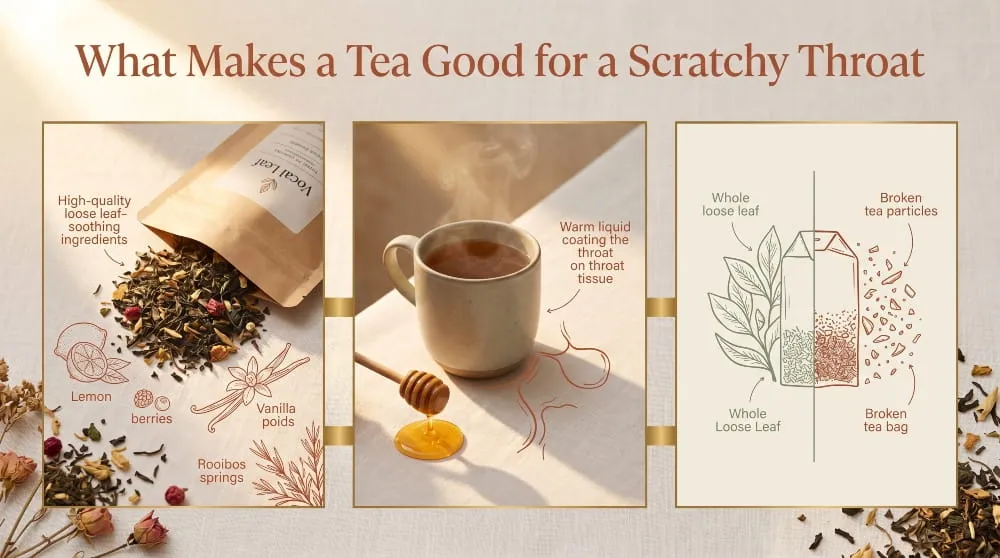
The best teas for a scratchy throat share a common thread: they contain ingredients with a functional purpose, not just flavor. Naturally sweet, fruit-forward blends help mask the discomfort of swallowing while delivering antioxidants that support tissue recovery. Warming spice blends stimulate circulation and reduce the dull ache that often accompanies throat irritation. Smooth, creamy profiles coat the throat gently without any astringency that could aggravate already sensitive tissue.
On the other side, heavily caffeinated teas consumed in excess can have a mild diuretic effect, working against the hydration your throat needs. Overly tannic or astringent blends may create a dry, puckering sensation that irritates rather than soothes. The goal is warmth, smoothness, and functional ingredients, not just heat in a cup.
Why Loose Leaf Tea Outperforms Bags for Throat Relief
This distinction matters more than most people realize. Loose leaf tea is made from whole or large-cut leaves, which means the essential oils, antioxidants, and naturally soothing compounds remain largely intact. When steeped properly, these compounds release fully into the water, giving you a richer, more therapeutically active cup.
Tea bags, by contrast, typically contain fannings and dust, the smallest broken particles left after processing. These fragments have a larger surface area, which causes them to over-oxidize quickly and lose much of their potency before they ever reach your mug. You get color and caffeine, but far less of the good stuff that actually helps a scratchy throat.
The Honey Factor: When and How to Add It
Honey is one of the few additions to tea that genuinely enhances its throat-soothing effect rather than just adding sweetness. It has well-documented coating properties, thick enough to cling to the throat lining and create a protective layer over irritated tissue. It also has natural antimicrobial properties that make it a smart choice when your scratchy throat has an underlying cause.
The key is timing. Add honey after your tea has steeped and cooled slightly; water that’s too hot can degrade its beneficial compounds. A generous teaspoon stirred into a warm (not boiling) cup is all you need. Combined with the right loose leaf blend, it turns a good cup of tea into a genuinely powerful remedy.
Best Teas for a Scratchy Throat That Actually Work
This is where the right choice makes all the difference. Each of the teas below was chosen for a specific reason, not just because they taste good, but because their ingredient profiles actively work in favor of a scratchy, irritated throat. These are the blends worth reaching for when relief matters.

Lemon Berry Dream, Bright, Cooling, and Built for Irritated Throats
When your throat feels raw and inflamed, a bright, fruit-forward blend can do more than comfort; it can actively help. Lemon Berry Dream leads with a clean citrus note that cuts through throat discomfort while delivering antioxidants that support tissue recovery from the inside out.
The berry profile adds a natural sweetness that makes swallowing easier when your throat is at its most sensitive. Together, lemon and berry create a cup that feels both refreshing and restorative, cooling enough to ease the heat of irritation, warm enough to coat and calm the throat lining with every sip.
If your scratchy throat comes with a dry, tight sensation, this is the blend to start with.
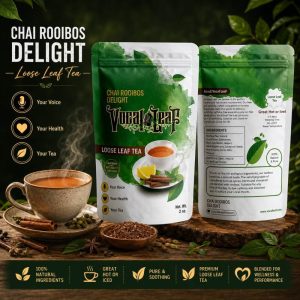
Organic Rooibos Chai, Warming Spice That Calms Deep Scratchiness
Some scratchy throats sit deep, a dull, persistent irritation that lingers no matter how much water you drink. That’s where a warming spice blend earns its place. Organic Rooibos Chai Tea combines the naturally smooth, caffeine-free rooibos base with a spice profile that stimulates circulation and brings genuine warmth to irritated throat tissue.
Rooibos itself is notably gentle, low in tannins, naturally sweet, and completely non-astringent, which means it soothes rather than strips. The warming chai spices amplify that effect by increasing blood flow to the area, helping the throat’s natural recovery process along. It’s the kind of cup that feels like it’s working, because it is.
This is an especially good choice in the evening, when you want deep comfort without any caffeine keeping you up.
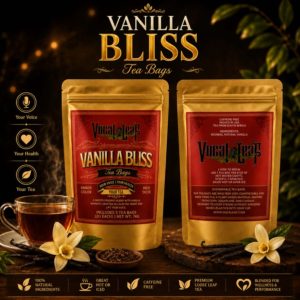
Vanilla Bliss, Smooth and Gentle for Sensitive, Raw Throats
When a scratchy throat has progressed to genuinely raw and sensitive, the last thing you want is anything sharp, tangy, or stimulating. Vanilla Bliss is the answer to that. This soft, creamy, smooth blend asks nothing of an already overworked throat.
The vanilla profile creates a naturally coating quality in the cup, wrapping the throat in warmth without any of the astringency that can worsen irritation. There’s no edge, no sharpness, nothing that triggers a cough or tightening. Just clean, gentle relief that lets sensitive tissue rest while staying hydrated.
For those who find that certain teas seem to make their throat scratchier rather than better, Vanilla Bliss is almost always the exception.
Organic Loose Leaf Black Tea, Classic Comfort With Throat-Coating Depth
There’s a reason black tea has been the go-to remedy for throat discomfort across generations and cultures. Organic Loose Leaf Black Tea delivers a rich, full-bodied cup with a natural depth that coats the throat, a quality lighter teas simply can’t match.
The body of a well-brewed black tea comes into genuine contact with the throat lining; you can feel it working as you swallow. Paired with a spoonful of honey, it becomes one of the most effective combinations for a scratchy throat and cough, addressing both the irritation and the tickle that often accompany them.
Brew it slightly cooler than boiling, steep for three to four minutes, and drink it warm rather than hot. That’s when its throat-soothing properties are at their fullest.
Best Tea for a Scratchy Throat and Cough
A scratchy throat on its own is uncomfortable. But when that scratchiness triggers a persistent tickle cough, the discomfort compounds quickly, and what you drink matters even more.
When the Scratch Turns Into a Tickle Cough
The connection between a scratchy throat and a cough is direct. When throat tissue becomes dry and irritated, exposed nerve endings send signals to the brain, which interprets them as a need to cough. The cough itself then creates more friction, more dryness, and more irritation, a cycle that feeds itself and becomes harder to break the longer it goes unaddressed.
This is why warm tea is particularly valuable at this stage. It doesn’t just soothe the throat in the moment; it helps interrupt the irritation cycle by restoring moisture, coating raw tissue, and reducing the nerve sensitivity that triggers the tickle in the first place.
Which Tea Profiles Help Both Symptoms Together
When you’re dealing with both a scratchy throat and a cough, you want a tea that works on two levels simultaneously, soothing the surface irritation while also delivering enough warmth and body to calm the deeper tickle reflex.
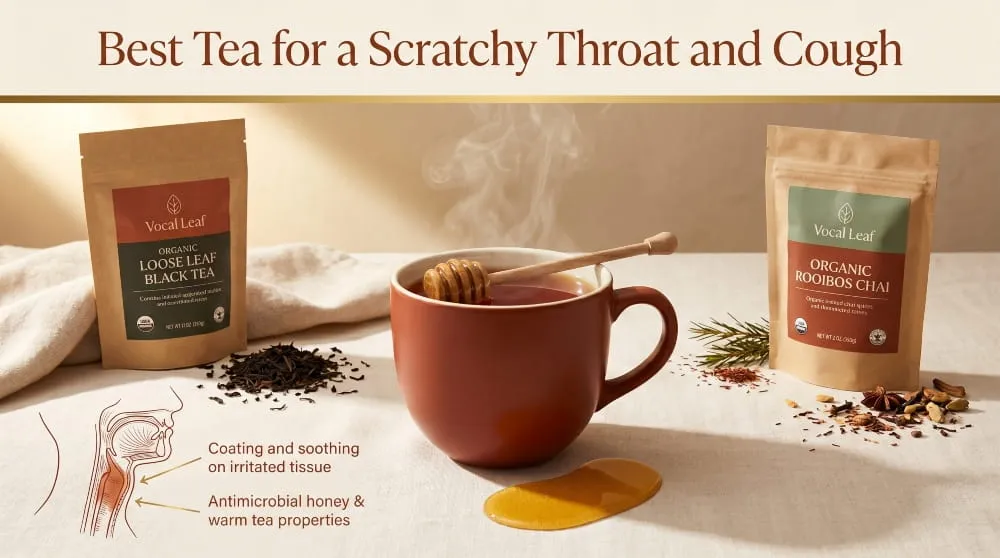
Full-bodied blends like Organic Loose Leaf Black Tea are especially effective here. The weight and depth of a well-brewed black tea create meaningful contact with the throat lining, coating it thoroughly with each sip rather than just passing through. That coating action is what quiets the tickle and gives the irritated tissue room to recover.
For those who prefer a caffeine-free option, Organic Rooibos Chai offers similar depth with the added benefit of warming spices that ease the tight, constricted feeling that often accompanies a cough. Either way, the key is choosing a blend with enough body to do real work, not a thin, watery cup that evaporates the moment it hits your throat.
How to Brew for Maximum Throat Relief
Brewing method matters more than most people expect, especially when dealing with both a scratchy throat and a cough. A few simple adjustments can significantly increase how much relief a cup of tea delivers.
Use water that is hot but not aggressively boiling, around 90 to 95°C, which is ideal for most blends. Boiling water can intensify the astringency of certain teas, potentially compromising throat comfort. Steep for slightly longer than you normally would; an extra minute allows more of the soothing compounds to release into the cup fully.
Add honey after steeping, once the tea has cooled just enough to drink comfortably. Sip slowly rather than in large gulps, allowing each sip to coat the throat fully before the next. And drink consistently, one cup provides temporary relief, but two or three spaced throughout the day keep the throat hydrated and the irritation cycle from restarting.
Can Lemon Tea Help a Scratchy Throat?
It’s one of the most common instincts when a scratchy throat strikes: reach for something with lemon. And as it turns out, that instinct is well-founded. Lemon tea can genuinely help a scratchy throat, but understanding why it works helps you get the most out of it.

What Lemon Actually Does for Throat Tissue
Lemon brings a meaningful combination of properties to an irritated throat. Its natural acidity helps cut through mucus buildup that can sit on the throat lining and contribute to that rough, congested sensation. At the same time, lemon is a reliable source of vitamin C. This antioxidant supports the immune response and helps the body manage the inflammation driving the irritation in the first place.
There’s also a mechanical benefit. The slight tartness of lemon stimulates saliva production, which keeps the throat naturally lubricated between sips. For a throat that’s dry and scratchy, that continuous moisture, even between cups, makes a noticeable difference over the course of a day.
What lemon doesn’t do on its own is coat or cushion the throat. That’s why lemon works best as part of a well-rounded blend rather than as a standalone ingredient. The citrus handles the clearing and brightening; the tea base handles the soothing and coating.
The Best Way to Use a Lemon-Forward Blend
The most effective way to use lemon tea for a scratchy throat is to let the blend do the work rather than relying solely on added lemon juice. A purpose-built lemon blend like Lemon Berry Dream balances the brightness of citrus with the natural sweetness of berries, softening any sharpness that could otherwise aggravate sensitive throat tissue.
Brew it warm, not aggressively hot, and add a teaspoon of honey to bring in that coating quality that lemon on its own lacks. Sipped slowly, this combination, citrus clarity, berry softness, honey depth, addresses a scratchy throat from multiple angles at once, making it one of the most satisfying and effective cups you can reach for when relief is the priority.
Hot Tea vs. Warm Tea: Does Temperature Matter?
Most people assume hotter is better when it comes to tea and a scratchy throat. It feels more intense, more medicinal, more like it’s doing something. But temperature is one of the most overlooked variables in throat relief, and getting it wrong can actually set you back.

The Science of Heat and Throat Mucosa
The mucosa is the soft, moisture-producing membrane that lines your throat. When it’s healthy, it stays consistently lubricated and acts as a protective barrier. When it’s irritated, it becomes inflamed, sensitive, and far more reactive to external stimuli, including temperature.
Warm liquid, not hot, not lukewarm, but genuinely warm, is what the throat mucosa responds best to. At this temperature, the tissue relaxes. Blood flow to the area increases gently, supporting the natural healing process. The warmth also helps loosen any mucus sitting on the lining, allowing the tea to make direct, soothing contact with the irritated tissue beneath. Steam rising from a warm cup adds a secondary benefit, humidifying the airway as you breathe and drink simultaneously.
This is why a well-brewed cup of tea consistently outperforms cold drinks, room-temperature water, and even some medications for immediate, felt relief. The warmth is doing real physiological work, not just providing comfort.
How Hot Is Too Hot (And Why It Can Make Things Worse)
Here’s where most people go wrong. Drinking tea that’s too hot, straight from a boiling kettle with minimal steeping time, can inflame the very tissue you’re trying to soothe. The throat mucosa is delicate under normal circumstances. When it’s already irritated and scratchy, it becomes especially vulnerable to thermal damage.
Scalding liquid strips moisture from the throat lining, triggers an inflammatory response, and can temporarily worsen the raw, tender feeling rather than relieving it. Over time, consistently drinking excessively hot beverages has been linked to increased tissue sensitivity in the throat and esophagus.
The practical sweet spot is tea brewed properly and allowed to cool for two to three minutes before drinking, comfortably warm when it touches your lips, never sharp or stinging. If you can’t hold the mug comfortably with both hands, it’s still too hot. At the right temperature, each sip should feel like relief from the very first contact, smooth, coating, and genuinely calming to a throat that needs it most.
How to Brew the Perfect Cup for a Scratchy Throat
The right tea in the wrong cup is a missed opportunity. Brewing method directly affects how much of a tea’s soothing potential actually makes it into your mug, and when your throat needs real relief, the details matter.
Water Temperature, Steep Time, and Ratio
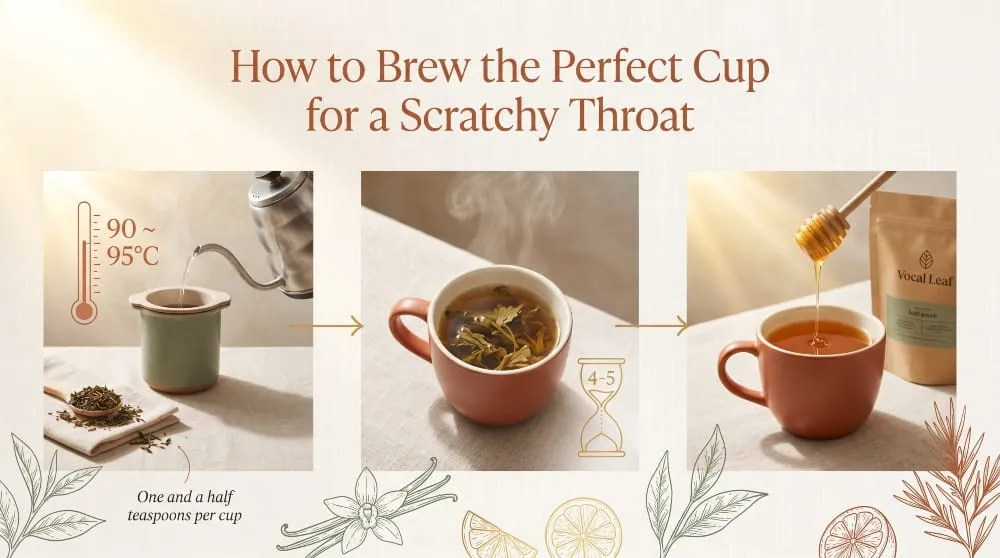
The single most common brewing mistake is using water that’s still at a rolling boil. For throat relief, pull your kettle just before it reaches full boil; around 90-95°C is the ideal range for most blends. This temperature extracts the soothing compounds fully without triggering the harsh astringency that boiling water can bring out, particularly in black tea.
For steep time, give your loose leaf tea a full four to five minutes rather than the quick two-minute steep you might default to. Longer steeping means more of the beneficial compounds have time to release into the water, producing a richer, more therapeutically active cup. For rooibos-based blends, you can steep even longer without any bitterness; six to seven minutes deepens the body and warmth considerably.
As for ratio, a slightly generous measure of loose leaf, about one and a half teaspoons per eight-ounce cup, ensures you’re getting a full-strength brew rather than a pale, thin cup that coats the throat in name only.
Adding Honey, Timing, and Amount
Honey deserves its own moment in the brewing process, and that moment is not during steeping. Adding honey to water that’s still too hot degrades its beneficial compounds before they ever reach your throat. Wait until your tea has steeped, been poured, and cooled for a minute or two, then stir in a generous teaspoon while the cup is still warm enough to dissolve it completely.
One teaspoon is a good starting point. If your throat is particularly raw or the scratchy feeling is intense, a second teaspoon is entirely reasonable. The goal is a cup that feels noticeably thick and smooth as it goes down; that coating quality is exactly what honey contributes, and it’s most effective when the tea underneath is the right temperature to carry it.
Hot Brew vs. Overnight Steep for Throat Soothing
The standard hot brew, loose leaf steeped in hot water for four to five minutes, is the go-to for immediate relief and the method most people reach for instinctively. It delivers warmth, steam, and fast-acting comfort the moment symptoms flare. For daytime relief or the first cup of the morning, this is the right approach.
Cold brew, or an overnight steep, works differently. Loose leaf steeped in cool water for eight to twelve hours in the refrigerator produces a naturally smooth, low-astringency cup with a gentler flavor profile. While it lacks the warmth that makes hot tea so immediately soothing, a cold-steeped brew can be gently rewarmed on the stove, yielding a noticeably softer, rounder cup that is exceptionally easy on a sensitive, scratchy throat.
If your throat is at its most reactive and even warm tea feels slightly sharp, try an overnight steep of Vanilla Bliss or Lemon Berry Dream, then gently reheat before drinking. The difference in smoothness is immediate, and for a throat that needs gentleness above all else, it can be exactly the right cup.
Conclusion
A scratchy throat is your body asking for something warm, soothing, and intentional, and the right cup of tea delivers exactly that. Not all teas are equal, and not all brewing methods bring out their best. But when you choose a blend built for real relief, brew it at the right temperature, and add honey at the right moment, tea stops being a comfort habit and becomes a genuine remedy.
Whether you reach for the bright citrus lift of Lemon Berry Dream, the deep warmth of Organic Rooibos Chai, the gentle smoothness of Vanilla Bliss, or the classic coating depth of Organic Loose Leaf Black Tea, relief is one well-brewed cup away.
Your throat will thank you.
Frequently Asked Questions (FAQ’s)
Does tea actually help a scratchy throat?
Yes, warm tea soothes a scratchy throat by coating irritated tissue, restoring moisture to dry membranes, and delivering anti-inflammatory compounds that reduce swelling. The warmth also promotes circulation and eases nerve sensitivity, which can trigger discomfort. For best results, choose a high-quality loose leaf blend and drink it consistently throughout the day.
What tea is best for a scratchy throat and runny nose?
A warming, full-bodied blend works best for both a scratchy throat and a runny nose. Organic Rooibos Chai offers deep warmth and spice that eases throat irritation while the steam helps open congested nasal passages. Lemon Berry Dream is another strong choice, as its bright citrus profile helps cut through mucus while soothing the throat simultaneously.
Why does tea make my throat scratchy sometimes?
Certain teas, particularly heavily caffeinated or overly astringent varieties, can dry out throat tissue rather than soothe it, especially when brewed too hot or steeped too long. Drinking tea at too high a temperature is the most common culprit, as scalding liquid inflames sensitive throat tissue. Switching to a smoother, low-astringency blend like Vanilla Bliss and brewing at the correct temperature resolves this for most people.
How many cups should I drink per day when my throat is irritated?
Two to three cups spaced evenly throughout the day is the most effective approach for consistent throat relief. This keeps the throat continuously hydrated and coated rather than providing short bursts of comfort followed by long dry periods. Avoid drinking excessively large quantities in a short window; steady, consistent sipping does more good than volume alone.
Is loose leaf tea better than tea bags for throat relief?
Yes, loose leaf tea is significantly more effective for throat relief than tea bags. Loose leaf contains whole or large-cut leaves that retain their essential oils, antioxidants, and soothing compounds, which release fully during steeping. Tea bags typically contain broken leaf particles that have lost much of their potency, resulting in a thinner, less therapeutically active cup.
Can I add honey to any of these teas?
Yes, honey pairs well with all four Vocal Leaf blends and actively enhances their throat-soothing effect. It adds a natural coating quality that tea alone cannot provide, creating a protective layer over irritated throat tissue with every sip. Always add honey after steeping, once the tea has cooled slightly, to preserve its beneficial properties.
Top Selling Products





Best Tea for Singers | What Actually Helps Your Voice
If you sing, whether you perform professionally, teach voice lessons, or spend your weekends in rehearsal, you’ve probably wondered whether tea actually does anything useful…

Best Tea for Vocal Cords | Herbs, Hydration and Recovery
If your voice feels tired, strained, or dry, the right tea for your vocal cords can make a real difference, not by healing damaged tissue,…

Best Tea for Laryngitis | Soothe Your Voice Naturally
The best tea for laryngitis is a warm, caffeine free loose leaf blend that hydrates the throat and eases the strain on inflamed vocal cords.…

What Is Chai Tea? The Ultimate Guide to Ingredients, Benefits, Types & How It’s Made
If you’ve ever wondered what chai tea is, you’re not alone. It’s one of the most searched beverage questions online, yet the answer is often…

Best Tea for Your Voice | Does It Make You Sound Deeper
What it can do is change how your voice feels and sounds in the moment, which is where most of the confusion starts. If you…

The Best Tea for Performers & Speakers, And Why Your Voice Deserves Better
You spend hours rehearsing the words. You perfect the tone, the breath, the timing. But then you reach for whatever is nearby, a cup of…
Best Tea for Stress Relief | Calming Loose Leaf Blends
Stress is something everybody carries. It shows up in tight shoulders, restless nights, and a mind that won’t quiet down after a long day. And…

Best Tea for Dry Throat | The Teas That Help and the Ones That Hurt
The best teas for a dry throat are caffeine-free herbal blends, teas with no tannins to strip moisture from the throat lining and no caffeine…
Best Teas for Acid Reflux, Heartburn and GERD
Acid reflux doesn’t just cause heartburn. If you have searched for tea good for acidity, you are asking the same question, acidity and acid reflux…

Best Morning Tea for Energy and Focus Without Coffee Crash
The best tea to drink in the morning is black tea if you want steady, coffee level energy without the crash, rooibos chai if you…

Best Tea for Cough | The Complete Guide to Soothing Relief
The best tea for cough relief is a warm, hydrating blend that soothes irritated throat tissue while easing the reflex that triggers coughing in the…

Best Teas for a Cold That Actually Work
Best teas for a cold combines warmth, hydration and gentle steam to ease congestion, calm a scratchy throat and help your body rest while it…