
Anise Tea for Sore Throat | Benefits and Brewing Method
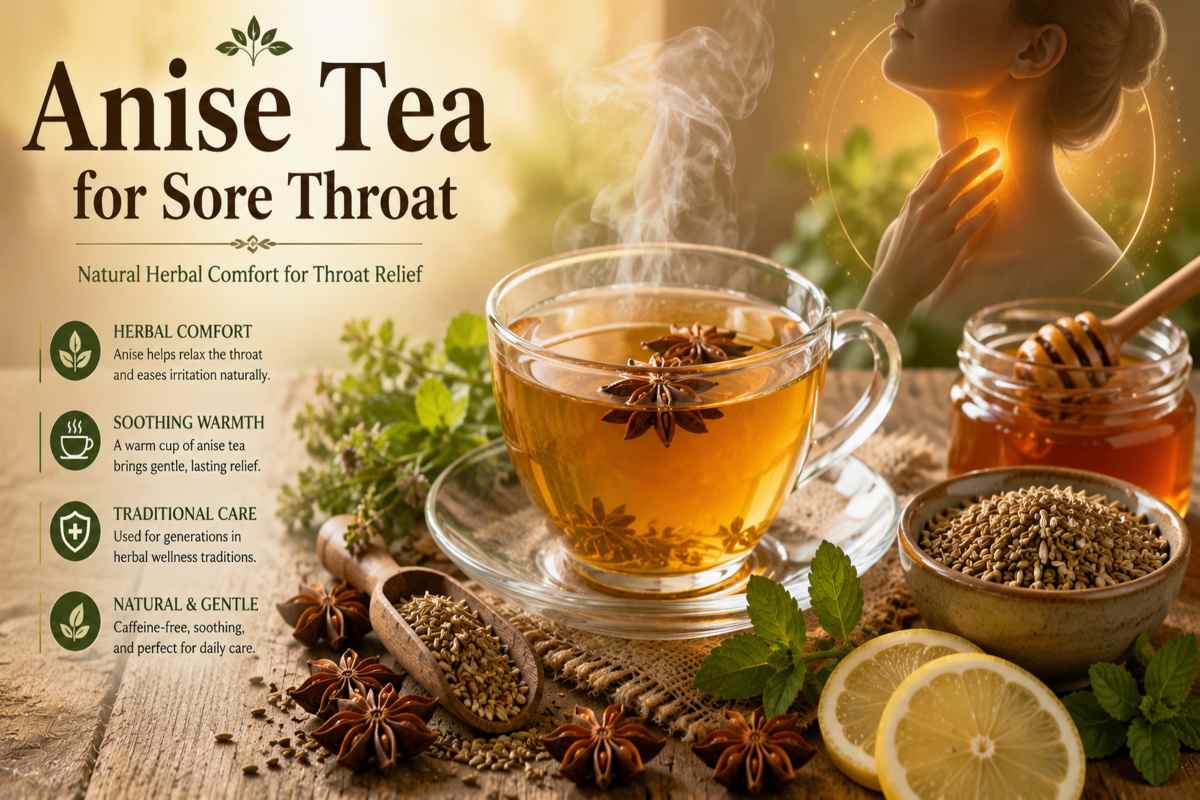
Anise Tea for Sore Throat can ease a sore throat by soothing irritated tissue and helping loosen the mucus that makes swallowing and speaking uncomfortable. Made from the seeds of the anise plant, this fragrant, licorice scented tea has been used for generations as a gentle remedy for throat discomfort, coughs and vocal fatigue, making it a favorite among singers, speakers and anyone who relies on their voice daily.
What sets anise tea apart from a typical soothe sore throat remedy is its dual role, it works on contact, coating and calming the throat as you drink, while its aromatic compounds support easier breathing and vocal clarity over time. For voice professionals especially, that combination matters, a 2021 review in the Journal of Voice found that hydration and warm herbal fluid intake were among the most consistently recommended non clinical interventions for maintaining vocal fold health, reinforcing why a warm cup of anise tea fits naturally into a singer or speaker daily routine.
If you are building a broader tea ritual around vocal health, anise tea pairs well within a rotation of quality loose leaf tea, giving you options depending on whether your throat needs soothing, your voice needs warming up or you simply want something comforting between rehearsals or calls. In this guide, you will learn exactly what anise tea does for a sore throat, how it compares to star anise, the best way to brew it for maximum relief and what to know about drinking it safely every day.
What Is Anise Tea?
Anise tea is a naturally sweet, licorice flavored infusion made by steeping anise seeds, the small, ridged seeds of the Pimpinella anisum plant, in hot water. Unlike many herbal teas that need added sweeteners to be palatable, anise tea carries its own gentle sweetness, which is part of why it has become a go to for people managing throat discomfort without wanting something overly medicinal tasting. If you prefer a touch more sweetness without masking the anise flavor, a small amount of rock sugar for tea blends in smoothly and complements the seed natural notes.
Anise vs Star Anise, What is the Difference?
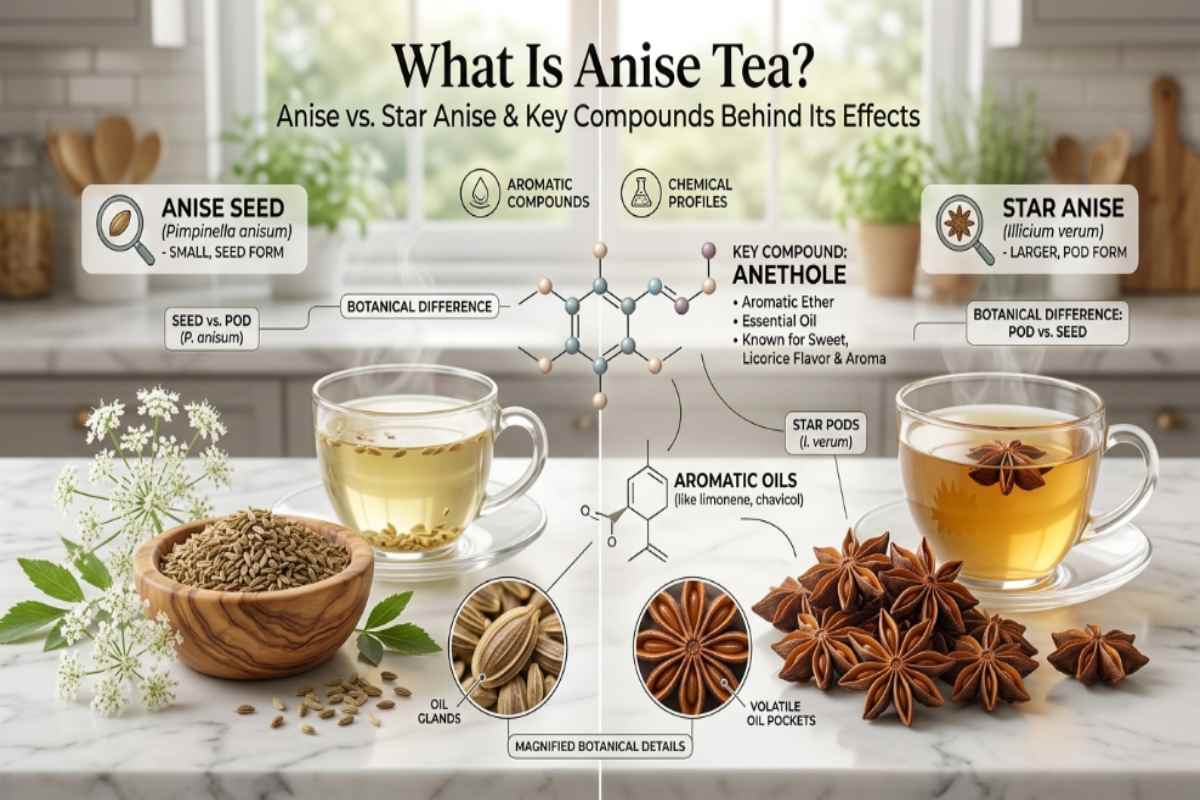
Anise and star anise are frequently confused, but they come from entirely different plant families and aren’t interchangeable in the same recipe. True anise (Pimpinella anisum) is a flowering herb in the carrot family, while star anise Illicium verum is the star shaped seed pod of a tree native to China and Vietnam.
Both share a similar licorice like aroma because they contain overlapping aromatic compounds, which is why they are often substituted for one another in cooking, but true anise tea tends to have a lighter, more delicate flavor, while star anise brews into a bolder, more assertive cup. For throat and vocal health purposes, true anise is the more commonly used and better studied of the two.
Key Compounds Behind Anise Tea Effects
The primary compound responsible for anise tea soothing reputation is anethole, an aromatic oil that makes up the majority of anise seed essential oil content and gives the tea its distinct sweet, licorice like scent. Anethole is widely documented in food science literature for its aromatic and mild antimicrobial properties, which is part of why anise has been used traditionally to calm coughs and ease throat irritation.
Beyond anethole, anise seeds also contain small amounts of flavonoids and other plant compounds that contribute to the tea warming, soothing sensation when consumed hot, a quality that also makes anise tea a reasonable addition to a broader wellness rotation that includes options like tea for metabolism for people looking to build out a more functional daily tea habit.
Anise Tea Benefits for Sore Throat
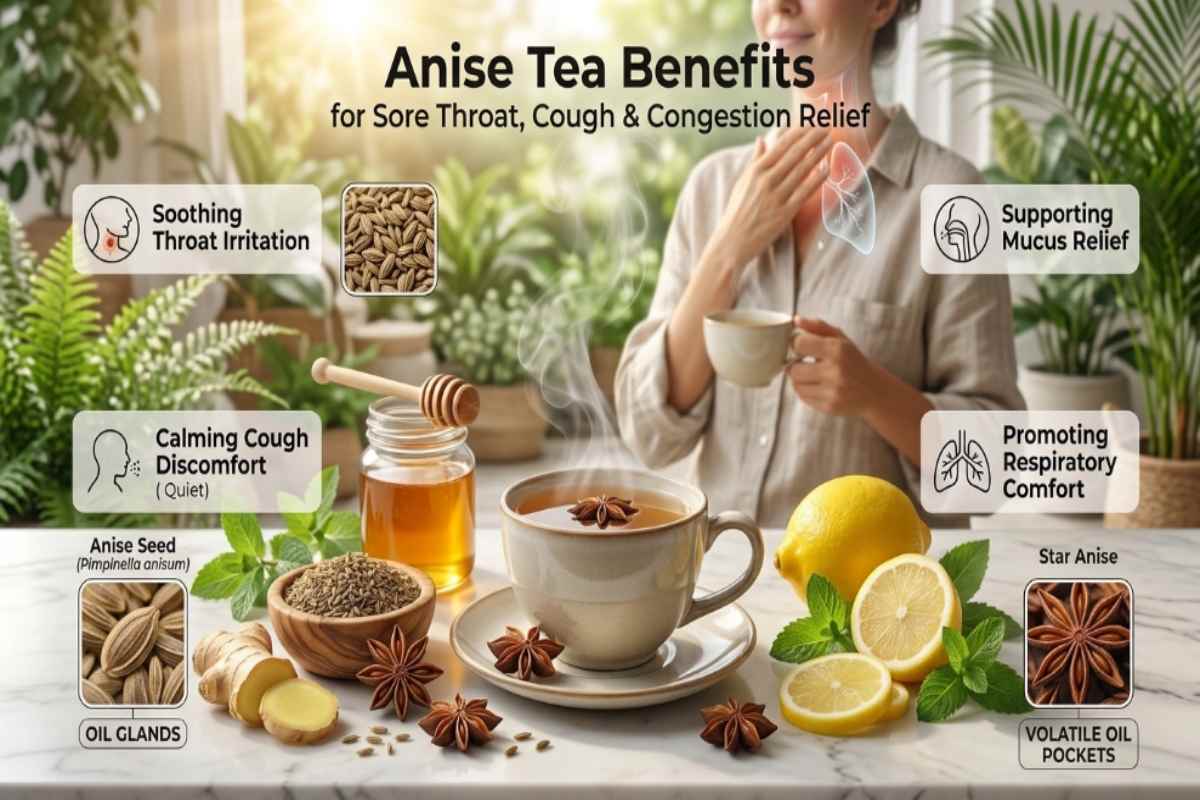
Anise tea benefits a sore throat primarily through its warm, soothing texture and the mild calming effect of anethole on irritated throat tissue. Drinking it warm, not hot enough to burn, but hot enough to feel comforting, helps relax the throat muscles and temporarily eases the raw, scratchy sensation that makes talking or swallowing painful.
Anise Tea and Throat Irritation
Throat irritation often comes from dryness, overuse or mild inflammation and anise tea addresses all three simply by delivering warm moisture along with its naturally soothing compounds. The steam from a fresh cup also helps loosen tightness in the throat as you drink, which is part of why warm herbal teas are so commonly recommended as a first response to a scratchy or irritated throat rather than reaching straight for something more clinical.
Anise Tea for Cough and Congestion
Anise tea warming, aromatic quality makes it a natural companion for a nagging cough or mild congestion, since inhaling the steam while drinking can help open nasal passages and ease chest tightness. This is one of the more traditional uses of anise across cultures, it’s been passed down for generations specifically as a comfort drink during cold and flu season. If congestion is your primary concern, our dedicated guide to tea for congestion covers additional options worth exploring.
Anise Tea for Phlegm and Mucus Relief
For phlegm and excess mucus, anise tea warmth helps thin secretions and makes them easier to clear, offering gentle relief without the harshness of some over the counter options. Sipping it slowly throughout the day, rather than all at once, tends to be the more effective approach for ongoing mucus discomfort. A closer breakdown of teas suited for this specific issue is available in our guide to tea for phlegm in throat.
Anise Tea for Vocal Professionals
Anise tea supports vocal professionals by combining throat soothing warmth with a light, non drying steam that won’t strain the vocal cords the way caffeinated or overly acidic drinks can. For singers, speakers and anyone whose voice is their livelihood, that distinction matters more than most people realize, the vocal folds are delicate tissue and what you drink before, during and after vocal use can directly affect performance quality and recovery time.

Why Singers Reach for Anise Tea
Singers often turn to anise tea because its warm, gentle steam helps keep the throat hydrated without the harshness that some stronger herbal or caffeinated drinks can bring. Vocal coaches frequently recommend warm, non astringent fluids in the hour before a performance and anise tea fits that role well, it hydrates without numbing or drying the throat, which is a common complaint with menthol based alternatives. Pairing it with a naturally soothing option like Loose Leaf Lemon Berry Tea gives singers a rotation that covers both pre performance warmth and post performance comfort.
Anise Tea for Speakers and Public Professionals
For speakers, teachers and anyone who talks extensively throughout the day, anise tea offers a practical mid day reset, a warm cup between sessions can ease the dryness and mild strain that comes from hours of continuous speaking. Unlike cold beverages, which can tighten the throat, anise tea warmth keeps things relaxed, making it a simple addition to a workday routine for professionals who rely on clear, consistent vocal delivery.
Supporting Vocal Health Between Performances
Between performances or heavy speaking days, consistent hydration and gentle throat care make a measurable difference in recovery, voice professionals who maintain steady fluid intake and avoid vocal strain tend to report fewer instances of hoarseness, based on findings commonly cited in vocal health and speech language pathology literature. Anise tea, sipped warm throughout the day rather than in one sitting, offers an easy way to build that habit without much extra effort.
Anise Tea for Specific Throat Conditions
Anise Tea for Sore Throat offers targeted relief depending on the specific throat issue you are dealing with, since dryness, scratchiness and laryngitis each respond slightly differently to warmth, hydration and gentle soothing. Understanding which symptom you are addressing helps you get more out of each cup.

Anise Tea for Dry Throat
A dry throat responds well to anise tea because the warm liquid actively rehydrates tissue that is lost moisture, whether from dry air, prolonged talking or mouth breathing overnight. Sipping it slowly allows the warmth to coat the throat gradually rather than passing through too quickly, which tends to provide longer lasting relief than drinking it in large gulps.
Anise Tea for Scratchy Throat
For a scratchy throat, anise tea smooth, slightly sweet texture helps ease the irritation that makes swallowing feel rough or uncomfortable. The combination of warmth and gentle sweetness can reduce the urge to keep clearing your throat, which often makes scratchiness worse over time.
Anise Tea for Laryngitis
While Anise tea for sore throat is not a substitute for medical care, its warm, non irritating qualities make it a reasonable comfort measure for the throat discomfort that often accompanies laryngitis, particularly when paired with vocal rest. Speech language pathology guidance consistently emphasizes hydration and voice rest as the two most important factors in laryngitis recovery and a warm cup of anise tea supports the hydration half of that equation without adding strain. For a broader set of options tailored to this condition, see our guide to tea for laryngitis. Alternating anise tea with something like Organic Rooibos Chai Tea can also add variety to a recovery routine without reintroducing caffeine, which is often best minimized during vocal rest.
How to Brew Anise Tea for Throat Relief
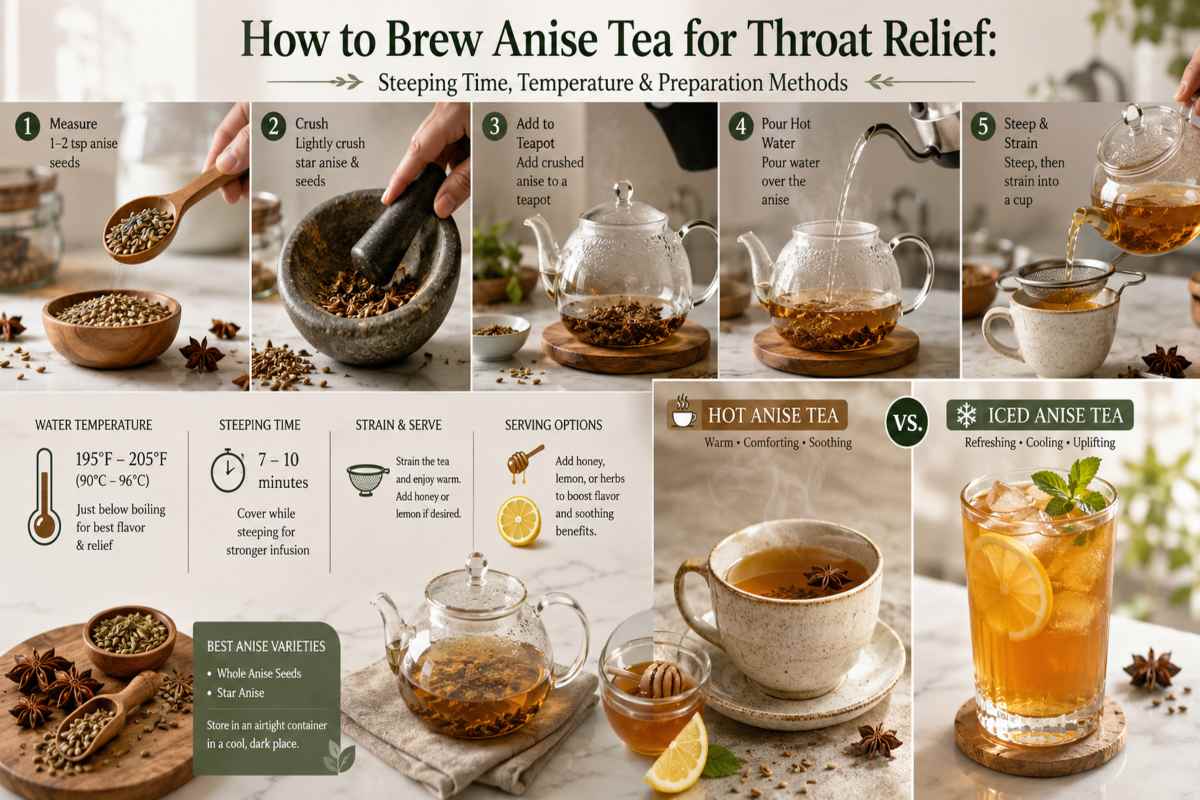
The best way to brew anise tea for throat relief is to steep crushed or whole anise seeds in just boiled water for 10 to 12 minutes, allowing enough time for the anethole rich oils to fully release into the water. Brewing it too briefly results in a weak, watery cup that misses most of the throat soothing benefit, while the right steep time draws out both the flavor and the compounds responsible for its calming effect.
Ideal Steeping Time and Water Temperature
Anise seeds need water just off the boil, around 203 to 212°F and a steep time of 10 to 12 minutes to properly extract their essential oils. Shorter steep times, common with more delicate teas, don’t give anise seeds enough time to release their full flavor and soothing properties, so patience here directly affects how effective the cup is for throat relief.
Step by Step Anise Tea Recipe for Throat Support
To brew a proper cup, start with one to two teaspoons of anise seeds per cup of water, lightly crushing the seeds beforehand to help release their oils more efficiently. Bring water to a near boil, pour it over the seeds and cover the cup or pot while it steeps for 10 to 12 minutes, covering it helps trap the aromatic steam, which is part of what makes the tea feel so soothing to inhale as you drink. Strain before drinking and sip slowly while it is still warm for the best throat calming effect. If you want a naturally caffeine free rotation for evening use, alternating with Organic Loose Leaf Black Tea earlier in the day and anise tea at night can help balance a daily tea routine.
Hot vs Iced Preparation
Anise tea is traditionally served hot and for throat relief specifically, warm preparation is more effective than iced, since the warmth itself contributes directly to easing irritation and loosening congestion. That said, iced anise tea can still be enjoyed for its flavor on warmer days, brew it hot using the same method, then let it cool and pour over ice, though it won’t offer the same soothing effect on an irritated throat that a warm cup provides.
Safety and Side Effects
Anise Tea for Sore Throat is generally safe for most healthy adults when consumed in moderate amounts, though like any herbal tea, it is worth understanding how it interacts with your body before making it a daily habit.

Is Anise Tea Safe to Drink Daily?
For most people, one to two cups of anise tea per day is considered a reasonable amount and unlikely to cause issues. Because anise contains concentrated aromatic compounds, moderation matters more than with milder teas, drinking it consistently in small amounts tends to be better tolerated than consuming large quantities at once. As with introducing any new herbal tea into a daily routine, it is worth paying attention to how your body responds over the first few days.
Possible Side Effects to Know
Anise Tea for Sore Throat can ease a sore throat is well tolerated by most people, but in some cases it can cause mild digestive upset or an allergic reaction, particularly in people with sensitivities to related plants like carrots, celery or mugwort. Anise also has a very distinct flavor profile and some people simply find its strong licorice like taste overwhelming in large amounts.
Pregnant individuals and those on certain medications should check with a healthcare provider before making anise tea a regular habit, since some herbal compounds can interact with medications or have effects that aren’t well suited to pregnancy.
Pairing Anise Tea with Your Daily Routine
Anise Tea for Sore Throat can ease a sore throat works best as part of a rotation rather than a single fix, since alternating it with other soothing teas throughout the day helps address different needs, hydration in the morning, throat support during heavy talking or singing and comfort in the evening. Building a small rotation also keeps your palate from tiring of any one flavor, which makes it easier to stick with a consistent tea habit long term.
A simple approach is to start the day with something warm and gently sweet, use anise tea mid day when your throat needs the most support and wind down in the evening with a comforting, caffeine free option like Vanilla Bliss, which pairs well after a long day of speaking or singing without adding any stimulation before rest. Over time, this kind of rotation turns tea from an occasional remedy into a dependable part of vocal self care.
Conclusion
Anise tea for sore throat offers a simple, warming way to ease a sore throat, calm irritation and support the kind of daily vocal wear that comes with singing, speaking or teaching for hours on end. From its natural anethole content to its gentle steam and soothing warmth, it is a small ritual that fits easily into a busy day while genuinely helping where it counts, throat comfort, hydration and recovery between heavy vocal use. Whether you are brewing a cup before rehearsal or winding down after a long day of talking, anise tea is a worthwhile addition to any vocal health routine and pairing it with a trusted source like Vocal Leaf makes it easy to build that habit with quality you can rely on.
Frequently Asked Questions (FAQs)
What does anise tea help with?
Anise tea helps soothe sore throats, ease coughs, loosen congestion and support general throat comfort thanks to its warm, aromatic compounds. It is also a popular choice for vocal professionals looking for a gentle, non drying beverage.
Is anise tea good for a sore throat?
Yes, anise tea warmth and natural compounds help calm irritation and ease discomfort when sipped slowly. It is especially effective when brewed properly and consumed while still warm.
How is anise different from star anise?
True anise comes from a flowering herb, while star anise comes from a tree seed pod and they belong to entirely different plant families. Both share a similar licorice like aroma, but true anise has a lighter, more delicate flavor.
Can I drink anise tea every day?
Yes, one to two cups a day is generally considered safe for most healthy adults. Those with plant allergies or who are pregnant should check with a healthcare provider first.
Top Selling Products






Best Tea for Singers | What Actually Helps Your Voice
If you sing, whether you perform professionally, teach voice lessons, or spend your weekends in rehearsal, you’ve probably wondered whether tea actually does anything useful…

Best Tea for Vocal Cords | Herbs, Hydration and Recovery
If your voice feels tired, strained, or dry, the right tea for your vocal cords can make a real difference, not by healing damaged tissue,…
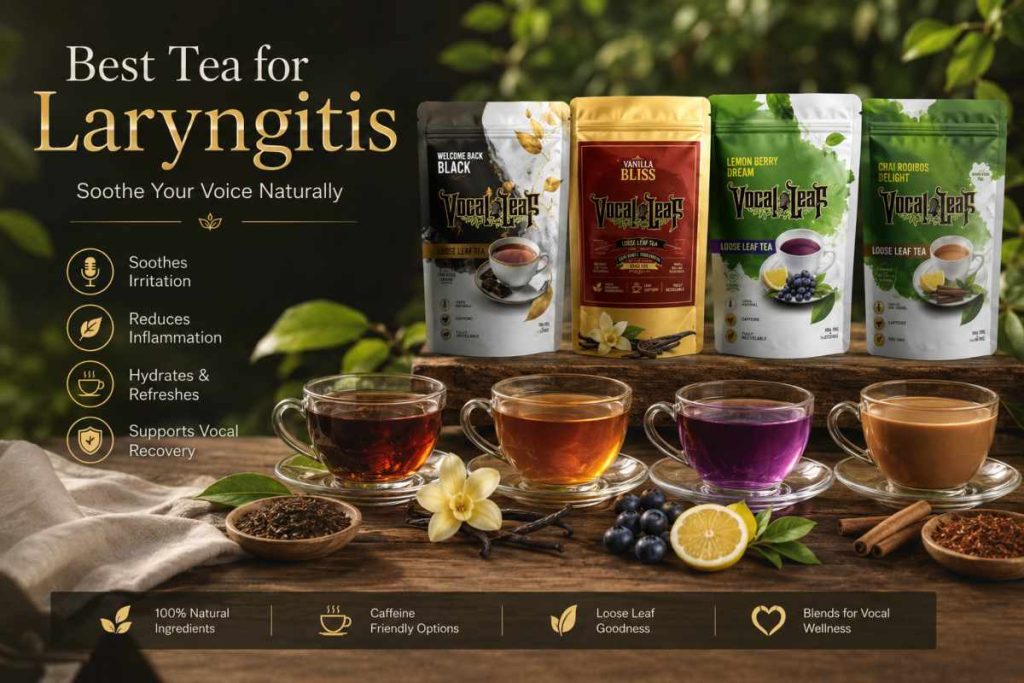
Best Tea for Laryngitis | Soothe Your Voice Naturally
The best tea for laryngitis is a warm, caffeine free loose leaf blend that hydrates the throat and eases the strain on inflamed vocal cords.…

What Is Chai Tea? The Ultimate Guide to Ingredients, Benefits, Types & How It’s Made
If you’ve ever wondered what chai tea is, you’re not alone. It’s one of the most searched beverage questions online, yet the answer is often…

Best Tea for Your Voice | Does It Make You Sound Deeper
What it can do is change how your voice feels and sounds in the moment, which is where most of the confusion starts. If you…

The Best Tea for Performers & Speakers, And Why Your Voice Deserves Better
You spend hours rehearsing the words. You perfect the tone, the breath, the timing. But then you reach for whatever is nearby, a cup of…
Best Tea for Stress Relief | Calming Loose Leaf Blends
Stress is something everybody carries. It shows up in tight shoulders, restless nights, and a mind that won’t quiet down after a long day. And…

Best Tea for Dry Throat | The Teas That Help and the Ones That Hurt
The best teas for a dry throat are caffeine-free herbal blends, teas with no tannins to strip moisture from the throat lining and no caffeine…
Best Teas for Acid Reflux, Heartburn and GERD
Acid reflux doesn’t just cause heartburn. If you have searched for tea good for acidity, you are asking the same question, acidity and acid reflux…

Best Morning Tea for Energy and Focus Without Coffee Crash
The best tea to drink in the morning is black tea if you want steady, coffee level energy without the crash, rooibos chai if you…

Best Tea for Cough | The Complete Guide to Soothing Relief
The best tea for cough relief is a warm, hydrating blend that soothes irritated throat tissue while easing the reflex that triggers coughing in the…

Best Teas for a Cold That Actually Work
Best teas for a cold combines warmth, hydration and gentle steam to ease congestion, calm a scratchy throat and help your body rest while it…