
The Best Tea for an Itchy Throat | What Actually Works and Why

That persistent tickle in your throat, the one that makes you clear your throat every few minutes, disrupts your focus, and refuses to go away no matter how much water you drink, is one of those small discomforts that quietly takes over your day. If you’re a singer, speaker, teacher, or anyone who relies on their voice, it’s not just annoying. It’s a problem.
Reaching for a warm cup of tea is one of the oldest and most instinctive responses to throat irritation, and there’s good reason it has endured. The warmth relaxes the muscles lining your throat, the steam adds immediate moisture to dry, irritated tissue, and the right botanical blend can calm inflammation before it deepens into something worse.
But not every tea works the same way. The best tea for an itchy throat isn’t just warm liquid; it’s a carefully chosen combination of ingredients that actively support throat comfort, keep your vocal tissue hydrated, and help you recover faster. The wrong choice can actually work against you.
This guide breaks down exactly what to look for, which teas deliver real relief, and how to get the most out of every cup.
Why Does Your Throat Feel Itchy, And Can Tea Really Help?
Before reaching for a remedy, it helps to understand what is actually happening. Throat itchiness is almost always a signal that the mucous membranes lining your throat are irritated, inflamed, or dried out. The cause can range from dry indoor air and seasonal allergens to vocal overuse, post-nasal drip, or the early stages of a mild infection. In each case, the throat’s delicate tissue is either losing moisture faster than it can replenish it or responding to an irritant with low-grade inflammation.
So where does tea come in? Quite directly, as it turns out.
The Science Behind Warm Tea and Throat Relief
When you drink a warm cup of tea, several things happen at once. The heat and steam add immediate moisture to your airways, hydrating the mucous membranes that line your throat. The warmth itself encourages the surrounding muscles to relax, reducing the tightening sensation that makes an itchy throat feel so persistent. And when the tea contains the right botanical compounds, natural anti-inflammatory and demulcent ingredients, those compounds coat the throat on the way down, creating a temporary but meaningful layer of protection against further irritation.
This is why loose leaf tea, brewed properly from whole botanicals, tends to deliver noticeably better relief than a standard bagged tea. Botanical integrity is higher, meaning more of the beneficial compounds make it into your cup.
Itchy Throat vs. Sore Throat: Is There a Difference?
They often get treated the same way, but they’re not identical. A sore throat typically involves visible inflammation, tenderness when swallowing, and sometimes fever, signs that your immune system is actively responding to an infection. An itchy throat, by contrast, is more often a surface-level irritation: a dryness, a tickle, a rawness that doesn’t quite cross into pain but won’t leave you alone.
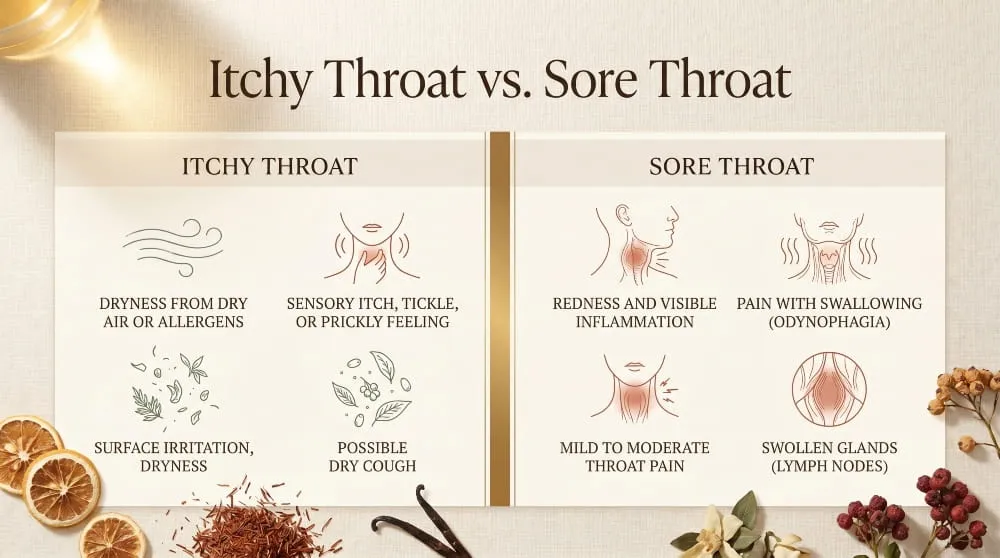
The distinction matters because itchy-throat relief is largely about hydration, soothing, and reducing surface irritation, all of which a well-chosen tea can address directly and effectively. You don’t always need medication. You often just need the right cup.
Does Hot Tea Help an Itchy Throat Faster Than Cold Drinks?
Yes, and the difference is more than just comfort. Cold drinks can cause the throat muscles to tighten, temporarily worsening the sensation of irritation. They also do nothing to address the dryness that typically drives the itch in the first place.
Hot tea works on multiple levels simultaneously: hydration, warmth, steam, and botanical support all arrive in the same cup. The key is temperature balance; the tea should be genuinely warm, not scalding. Liquid that’s too hot can irritate already-sensitive throat tissue rather than soothe it. Aim for the temperature you’d describe as comfortably warm, and sip slowly enough to let the steam do its work.
What to Look for in a Tea for an Itchy Throat
Not all teas are created equal, and when your throat is irritated, the quality of what you’re drinking actually matters. A tea that looks the part on the shelf can still fall short if it’s made from low-grade ingredients, stripped of its beneficial compounds during processing, or padded with artificial flavoring that irritates more than it soothes. Knowing what to look for helps you choose a tea that genuinely works, not just one that feels warm going down.
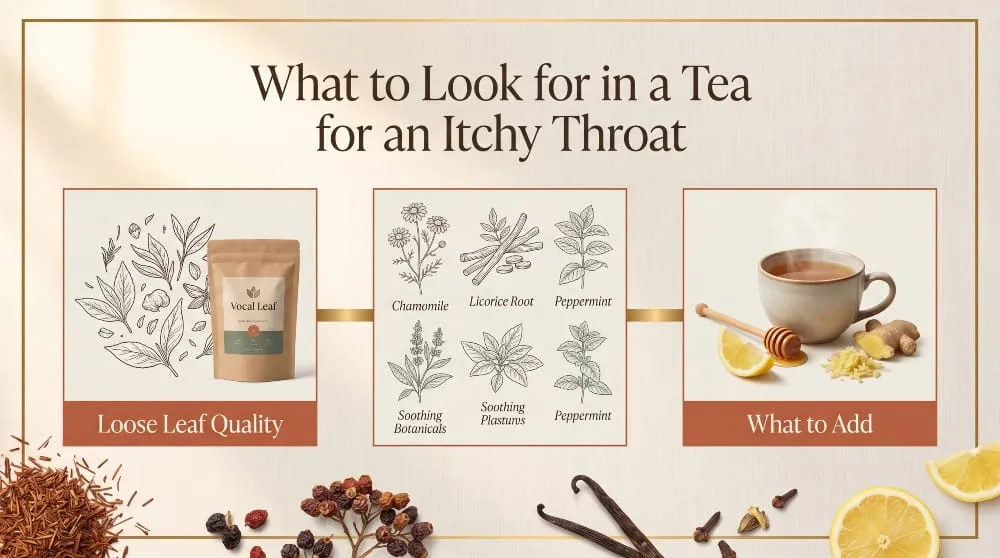
Loose Leaf vs. Bagged Tea: Does It Matter for Throat Relief?
It does, more than most people realize. Standard tea bags are typically filled with what the industry calls “dust and fannings”, the smallest, most broken-down particles left over from tea processing. By the time they reach your cup, much of the essential oil content and botanical potency has already degraded.
Loose-leaf tea, brewed from whole or minimally processed botanicals, retains significantly more of the compounds that make tea useful for throat relief. The essential oils stay intact. The plant material hasn’t been ground into a powder. The steep produces a fuller, richer infusion, one that actually coats and soothes rather than just tinting hot water.
If you’re drinking tea specifically to help an itchy throat, loose leaf is the meaningful upgrade.
Key Botanicals That Soothe Throat Irritation
The botanical composition of a tea determines the therapeutic value it delivers. For throat irritation specifically, you want ingredients that work through several mechanisms, reducing surface inflammation, providing a coating or demulcent effect, and supporting the body’s natural moisture balance.
Rooibos is one of the most effective bases for throat relief. Naturally caffeine-free and rich in antioxidants, it soothes without the dehydrating effect that caffeinated teas can sometimes produce with heavy consumption. Vanilla adds a genuinely demulcent quality; the natural compounds in real vanilla create a subtle coating effect on the throat lining. Lemon myrtle and berry botanicals deliver mild astringency alongside vitamin C support, helping address the underlying irritation rather than just masking it.
What you want to avoid is just as important: artificial flavoring agents, synthetic fragrance compounds, and chemically processed ingredients can all add irritants to a cup that should be doing the opposite.
The Best Teas for an Itchy Throat (And What Makes Each One Work)
With a clear sense of what to look for, the choice becomes much easier. The teas below aren’t generic recommendations; each one has a specific botanical profile that makes it particularly well-suited for throat relief. All four are organic, loose-leaf, and formulated with vocal and throat wellness as a genuine priority, not an afterthought.

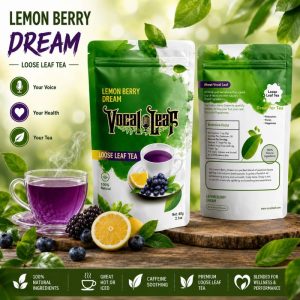
Lemon Berry Dream, Bright, Hydrating, and Gentle on Irritated Throats
If your itchy throat is driven by dryness or mild seasonal irritation, Lemon Berry Dream is one of the most effective cups you can reach for. The blend leads with lemon myrtle and berry botanicals, ingredients that bring a bright, gentle acidity alongside natural vitamin C support, helping to address surface irritation at its source rather than simply masking it.
It’s naturally caffeine-free, which matters more than it might seem. Caffeine in large amounts can contribute to the dehydration that drives throat dryness in the first place. Lemon Berry Dream lets you drink freely, multiple cups throughout the day, without that concern. The flavor is clean, refreshing, and easy to sip slowly, which is exactly the pace that lets the botanicals do their work.
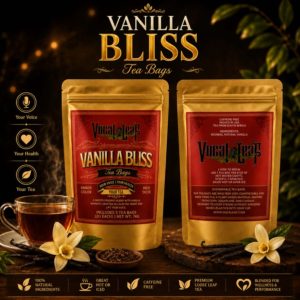
Vanilla Bliss, Warm and Calming for Nighttime Throat Irritation
There’s a specific kind of itchy throat that gets worse in the evening, when the air is drier, the body is winding down, and that persistent tickle becomes impossible to ignore. Vanilla Bliss was made for exactly that moment.
Real vanilla carries natural demulcent properties, meaning it creates a subtle but genuine coating effect on the throat lining as it passes through. Combined with a warm, smooth base that steeps into something closer to a ritual than a remedy, this blend works particularly well in the hour before sleep, when soothing the throat and calming the nervous system are exactly what’s needed. Caffeine-free, deeply comforting, and genuinely effective for the kind of irritation that builds quietly through the day and peaks at night.
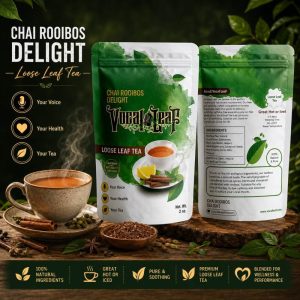
Organic Rooibos Chai, Caffeine-Free with a Warming Botanical Blend
Rooibos is one of the most throat-friendly bases in the botanical world, and Organic Rooibos Chai puts it at the center of a warming, spice-forward blend that delivers layered relief. Rooibos itself is rich in antioxidants and completely free of caffeine, not through chemical processing, but naturally, making it a reliable choice for anyone drinking multiple cups a day to manage persistent throat irritation.
The chai spice profile adds a second layer of benefit. The warming botanical compounds improve circulation and bring natural anti-inflammatory support to the throat from the inside out. This is a tea that feels medicinal without tasting like medicine, full-bodied, satisfying, and deeply warming in the way that a genuinely irritated throat needs most.
Organic Loose Leaf Black Tea, L-Theanine and Antioxidant Support for Vocal Wellness
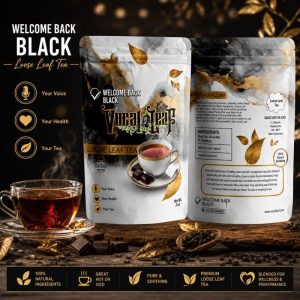
For those who want their morning cup to pull double duty, delivering both a gentle caffeine lift and meaningful throat support, Vocal Leaf Organic Loose Leaf Black Tea makes a strong case. Black tea is naturally rich in antioxidants that help the body manage inflammation, and this particular blend also delivers L-theanine, the amino acid that promotes calm, focused energy without the jitteriness or vocal tension that straight caffeine can cause.
For singers, speakers, and performers, especially, L-theanine is worth understanding. It modulates the stimulating effect of caffeine, keeping the body alert without triggering throat dryness and vocal cord tension that too much untempered caffeine can cause. It’s a cleaner, more voice-conscious way to start the day, particularly on mornings when your throat needs support rather than a challenge.
Herbal Tea for Itchy Throat: Why Caffeine-Free Options Are Worth Considering
When people search for the best tea for an itchy throat, herbal tea comes up consistently, and for good reason. The category is broad, but at its core, herbal tea means botanically rich, naturally caffeine-free blends that allow the body to focus on recovery rather than processing a stimulant. For throat relief specifically, that distinction carries real weight.
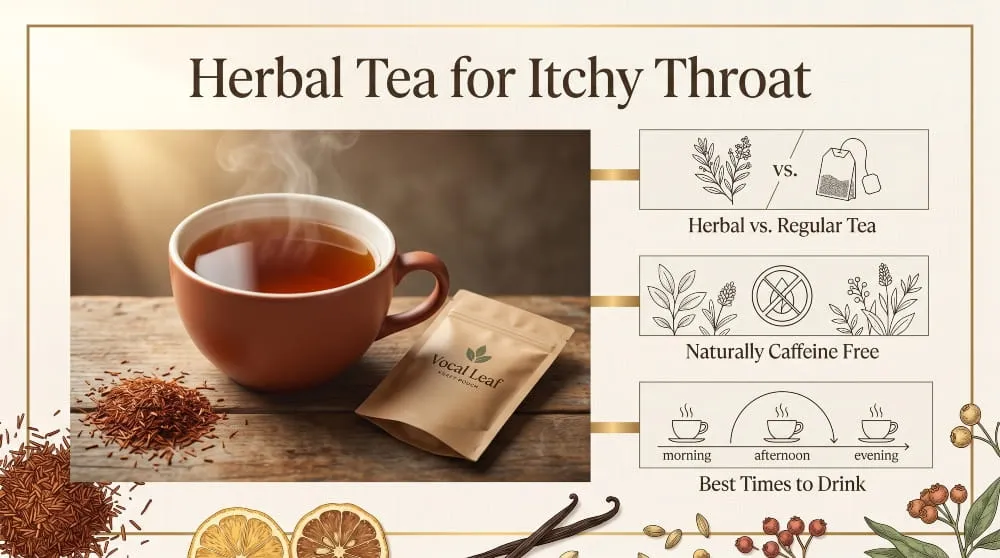
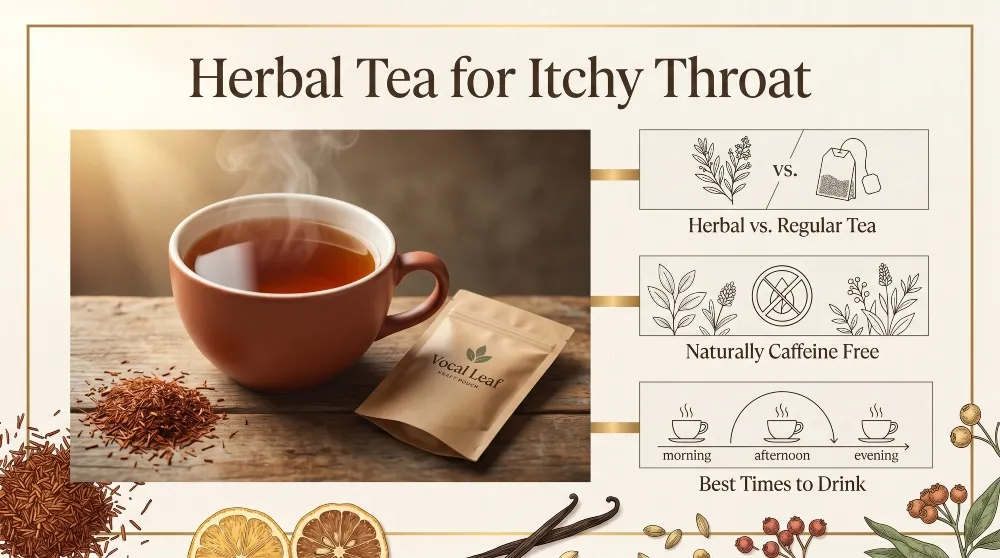
The Difference Between Herbal Tea and Regular Tea for Throat Relief
Traditional teas, black, oolong, and certain others, come from the Camellia sinensis plant and naturally contain caffeine and tannins. Both have their place, and as covered earlier, a well-chosen black tea can still support throat wellness when consumed mindfully. But herbal teas are made entirely from botanicals: dried fruits, flowers, roots, bark, and plant compounds that have no caffeine content by nature, not by processing.
For someone dealing with throat irritation, this matters because the goal is maximum hydration and minimum additional stress on the body. Herbal blends allow you to drink more freely, morning, afternoon, and evening, without worrying about caffeine accumulation affecting your sleep, your hydration levels, or the tension in your vocal muscles. They’re also typically gentler on sensitive throat tissue, with fewer astringent compounds and more demulcent, coating botanicals.
Why Naturally Caffeine Free Matters When Your Throat Is Irritated
There’s an important distinction that most tea brands don’t talk about openly: the difference between tea that is naturally caffeine-free and tea that has been chemically decaffeinated.
Decaffeination processes, even the best ones, alter the tea’s botanical profile. Some of the very compounds that make a blend soothing and beneficial can be reduced or eliminated during processing. What you’re left with is a tea that has had something removed, rather than one that never contained caffeine in the first place.
Vocal Leaf’s caffeine-free blends, Lemon Berry Dream, Vanilla Bliss, and Organic Rooibos Chai, are naturally caffeine-free. No chemical intervention, no compromised botanical integrity. The full soothing profile of each blend reaches your cup exactly as intended, which is precisely why they perform so well for throat relief rather than just tasting pleasant.
When your throat is irritated, and you’re drinking tea specifically for its therapeutic value, that integrity is worth paying attention to.
Best Times of Day to Drink Tea for Throat Soothing
Timing your tea drinking thoughtfully can meaningfully extend and deepen the relief you get from each cup.
First thing in the morning is one of the highest-value moments. Your throat has been without hydration for 6 to 8 hours overnight, and the mucous membranes are at their driest. A warm cup before anything else, before coffee, before food, rehydrates throat tissue and sets a better baseline for the rest of the day.
Mid-afternoon is when many people notice their throat irritation returning or intensifying, particularly in climate-controlled office environments where air tends to be dry. A second cup during this window keeps hydration consistent and prevents the dryness from building into something more uncomfortable by evening.
The hour before sleep is the third critical window, particularly for anyone whose itchy throat worsens at night. A caffeine-free blend like Vanilla Bliss or Lemon Berry Tea, ideally with a small amount of raw honey stirred in, soothes the throat lining before the long overnight stretch without hydration. Done consistently, this simple routine can make a noticeable difference in how your throat feels by morning.
How to Brew the Perfect Cup of Tea for an Itchy Throat
Choosing the right tea is half the equation. How you brew it determines how much of that botanical value actually makes it into your cup, and how effectively it soothes rather than irritates. A few small adjustments to your brewing technique can meaningfully improve the relief you get from every single cup.
The Right Water Temperature for Soothing (Not Scalding) Throat Relief
This is the detail most people overlook, and it’s one of the most important. Boiling water, poured directly onto botanical ingredients or consumed immediately, can actually damage both the tea and your throat. At a full rolling boil, water is hot enough to destroy delicate volatile compounds in botanical blends, reducing the very qualities that make them soothing. And drinking liquid that’s too hot introduces a new source of irritation to already sensitive tissue.
The ideal temperature for brewing a throat-soothing cup sits between 85°C and 95°C (185°F–203°F), water that has just come off the boil and been allowed to rest for sixty to ninety seconds. At this temperature, the botanicals steep fully, and the cup is warm enough to deliver the steam and muscle-relaxing heat you need, without scalding the throat lining on the way down.
For loose-leaf blends, steep for four to five minutes. Long enough to draw out the full botanical profile, not so long that bitterness develops and makes the cup harder to sip comfortably.
Honey, Lemon, and Other Additions That Amplify Throat Soothing
A well-brewed cup of the right tea already does significant work on its own. The right additions push it further.
Raw honey is the single most effective ingredient you can add to tea for throat relief. It coats the throat on contact, has natural antimicrobial properties, and its viscosity creates a temporary yet effective protective layer over irritated tissue. Add it after the tea has steeped and cooled slightly, never into boiling water, which destroys the enzymes that make raw honey therapeutically valuable. A level teaspoon is enough; more sweetness doesn’t mean more benefit.
Fresh lemon juice adds gentle acidity that helps thin mucus and clear the throat naturally, while also brightening the flavor of most botanical blends, making them more pleasant to drink throughout the day. A small squeeze, about half a teaspoon, is all it takes.
Freshly grated ginger, steeped directly in the cup alongside your tea, adds warming anti-inflammatory compounds that improve circulation to the throat and deepen the overall soothing effect. Even a small amount, a half-inch piece, freshly grated, makes a noticeable difference, particularly for irritation that feels deep or persistent.
Used together, these three additions transform a good cup of tea into one of the most effective natural remedies available for an itchy throat.
How Often Should You Drink Tea When Your Throat Is Itchy?
For active throat irritation, three to four cups spread across the day is a practical and effective target. The goal is consistent hydration and a steady presence of soothing botanical compounds in the throat, not a single large dose followed by hours of nothing.
Spacing matters more than volume. One cup in the morning, one in the early afternoon, and one in the evening before sleep covers the three windows where throat tissue is most vulnerable to dryness and irritation. If your symptoms are more pronounced, a fourth cup mid-morning fits naturally into that rhythm without overdoing it.
The one thing to avoid is drinking tea reactively, only reaching for a cup when the itch is at its worst. By that point, the throat tissue has already dried out significantly, and recovery takes longer. Consistent, proactive hydration throughout the day keeps mucous membranes in better shape and reduces how often irritation peaks in the first place.
Is Your Itchy Throat From Allergies?
Yes, seasonal and environmental allergies are among the most common causes of an itchy throat, and warm tea helps by rinsing irritants like pollen and dust from the throat lining before they trigger further inflammation. Postnasal drip from allergies is a leading cause of throat scratchiness, according to the American College of Allergy, Asthma & Immunology, which means the itch often starts higher up in the sinuses and drips downward rather than starting in the throat itself.
A caffeine-free option is worth reaching for during allergy season, specifically, since caffeine can mildly dehydrate tissue that’s already irritated. Organic Rooibos Chai Tea is naturally caffeine-free and pairs the same warmth and steam benefits with a spiced profile that doesn’t compete with allergy medication the way stronger stimulants can. Drinking it consistently throughout peak allergy weeks, rather than only when symptoms flare, keeps the throat lining hydrated rather than reacting to irritation after the fact.
Best Tea for an Itchy Throat and Cough Together
When an itchy throat comes with a cough, the goal shifts from soothing alone to calming the reflex that keeps triggering the cough in the first place, and warm liquid does both at once. Steam and warmth relax the throat muscles that spasm during a cough, while the same act of swallowing warm tea coats the throat lining that’s driving the itch. Vocal Leaf’s Organic Loose Leaf Black Tea is a strong pick here because its L-theanine content supports a calmer nervous system response, which matters for cough since coughing is partly a reflex loop that tightens under stress.
For a caffeine-free version of the same effect, Vanilla Bliss delivers the same warm-coating benefit in a compostable tea bag, making it the easiest grab-and-go option when a cough hits midday. Steeping slightly longer than usual, closer to the 12-minute mark, pulls more of the soothing compounds into the cup, which matters more when two symptoms are competing for relief at once.
Conclusion
An itchy throat rarely needs aggressive intervention; it needs the right kind of consistent, intentional care. Warm tea, brewed from quality botanicals and sipped regularly throughout the day, addresses the root cause rather than just dulling the sensation.
The teas that work best are the ones built with throat health in mind: naturally caffeine-free, botanically rich, and free of the artificial additives that can quietly worsen irritation. Whether you reach for the bright, hydrating lift of Lemon Berry Dream, the evening comfort of Vanilla Bliss, the warming depth of Organic Rooibos Chai, or the clean energy of Organic Loose Leaf Black Tea, your throat will notice the difference.
Frequently Asked Questions (FAQ’s)
What tea is best for a tickle in the throat?
A tickle in the throat usually responds fastest to a tea that’s both warm and slightly thick in mouthfeel, since the coating effect is what actually stops the tickle reflex rather than the temperature alone. Lemon Berry Dream works well here; its citrus and berry profile encourages more frequent sipping than a plain tea would, and frequency matters more than a single big cup when the goal is keeping the throat lining consistently coated. Sipping slowly over 15–20 minutes rather than drinking a full cup quickly gives the throat more contact time with each swallow.
Does hot tea help an itchy throat?
Yes, and the mechanism is well understood. Warm tea soothes an itchy throat through a combination of direct hydration, steam, and heat that relaxes the muscles surrounding the throat. The warmth encourages the mucous membranes to retain moisture more effectively, while the steam provides immediate relief to dry, irritated tissue on contact. The keyword is warm, not scalding, water that’s too hot introduces a new source of irritation rather than relieving one. A comfortably warm cup, sipped slowly, is consistently one of the most effective natural remedies available for throat itchiness.
What kind of tea is best for throat irritation?
The best teas for throat irritation are organic, loose-leaf blends built around botanicals with natural soothing, anti-inflammatory, or demulcent properties. Caffeine-free options are particularly well-suited because they allow consistent all-day hydration without the dehydrating effect that heavy caffeine consumption can produce. Vocal Leaf’s Lemon Berry Dream, Vanilla Bliss, and Organic Rooibos Chai are all strong choices for this reason; each brings a distinct botanical profile, and all three are naturally caffeine-free. For those who prefer a caffeinated morning option, Organic Loose Leaf Black Tea delivers L-theanine alongside its antioxidant content, making it a more throat-conscious choice than standard black tea.
Is loose-leaf tea better than bagged tea for soothing the throat?
Meaningfully so. Bagged teas are typically made from the smallest, most broken-down remnants of tea processing, material that has lost much of its essential oil content and botanical potency before it ever reaches your cup. Loose-leaf tea, brewed from whole or minimally processed botanicals, retains the compounds that actually deliver throat relief: the volatile oils, the demulcent plant materials, and the antioxidants. The infusion is fuller, richer, and more therapeutically effective. When you’re drinking tea specifically to soothe an irritated throat, the quality of what’s in your cup directly affects how well it works.
Can I drink tea for an itchy throat every day?
Not only can you make tea a daily habit for anyone prone to throat irritation, but it is also one of the most effective preventive steps you can take. Consistent hydration keeps the mucous membranes in better baseline condition, which means irritation is less likely to develop in the first place and recovers faster when it does. Naturally caffeine-free blends are particularly well-suited to daily, multi-cup routines because there’s no upper limit driven by caffeine sensitivity. Three to four cups per day, spaced across morning, afternoon, and evening, is a sustainable and genuinely beneficial rhythm for ongoing throat health.
What should I add to tea to help my itchy throat heal faster?
Three additions make a consistent, meaningful difference. Raw honey is the most valuable; it coats the throat lining directly, has natural antimicrobial properties, and should be stirred in after the tea has cooled slightly to preserve its beneficial enzymes. Fresh lemon juice adds gentle acidity that helps clear mucus and provides mild vitamin C support. Freshly grated ginger, steeped directly in the cup, brings natural warming and anti-inflammatory compounds that deepen the soothing effect considerably. All three work well together, and each amplifies what a good loose-leaf tea does on its own.
Top Selling Products




Best Tea for Singers | What Actually Helps Your Voice
If you sing, whether you perform professionally, teach voice lessons, or spend your weekends in rehearsal, you’ve probably wondered whether tea actually does anything useful…

Best Tea for Vocal Cords | Herbs, Hydration and Recovery
If your voice feels tired, strained, or dry, the right tea for your vocal cords can make a real difference, not by healing damaged tissue,…
Best Tea for Laryngitis | Soothe Your Voice Naturally
The best tea for laryngitis is a warm, caffeine free loose leaf blend that hydrates the throat and eases the strain on inflamed vocal cords.…

What Is Chai Tea? The Ultimate Guide to Ingredients, Benefits, Types & How It’s Made
If you’ve ever wondered what chai tea is, you’re not alone. It’s one of the most searched beverage questions online, yet the answer is often…

Best Tea for Your Voice | Does It Make You Sound Deeper
What it can do is change how your voice feels and sounds in the moment, which is where most of the confusion starts. If you…

The Best Tea for Performers & Speakers, And Why Your Voice Deserves Better
You spend hours rehearsing the words. You perfect the tone, the breath, the timing. But then you reach for whatever is nearby, a cup of…
Best Tea for Stress Relief | Calming Loose Leaf Blends
Stress is something everybody carries. It shows up in tight shoulders, restless nights, and a mind that won’t quiet down after a long day. And…

Best Tea for Dry Throat | The Teas That Help and the Ones That Hurt
The best teas for a dry throat are caffeine-free herbal blends, teas with no tannins to strip moisture from the throat lining and no caffeine…

Best Teas for Acid Reflux, Heartburn and GERD
Acid reflux doesn’t just cause heartburn. If you have searched for tea good for acidity, you are asking the same question, acidity and acid reflux…

Best Morning Tea for Energy and Focus Without Coffee Crash
The best tea to drink in the morning is black tea if you want steady, coffee level energy without the crash, rooibos chai if you…
Best Tea for Cough | The Complete Guide to Soothing Relief
The best tea for cough relief is a warm, hydrating blend that soothes irritated throat tissue while easing the reflex that triggers coughing in the…

Best Teas for a Cold That Actually Work
Best teas for a cold combines warmth, hydration and gentle steam to ease congestion, calm a scratchy throat and help your body rest while it…