
Best Tea for Congestion: What Actually Works for Chest, Sinus & Nasal Relief

The best tea for congestion is one that combines genuine anti-inflammatory compounds with the mechanical clearing power of hot steam, and not every tea delivers both. When you’re stuffed up, whether in your chest, sinuses, or nasal passages, the right cup can loosen tightness, thin mucus, and help your airways open within minutes of the first sip.
Hot tea works for congestion through two pathways simultaneously. The steam you inhale while drinking adds direct humidity to inflamed nasal and bronchial tissue, helping loosen the buildup that makes breathing physically uncomfortable. At the same time, the bioactive compounds in the tea itself, gingerols, EGCG, quercetin, and theaflavins, depending on the blend, work systemically to reduce the underlying inflammation driving the congestion in the first place. A 2015 study published in the Journal of Ethnopharmacology found that inhaling steam from hot liquid significantly improved nasal airflow in subjects with upper respiratory congestion, with warm fluid consumption amplifying the effect beyond steam alone.
That dual action is what separates a purposeful cup from a warm placebo. And it’s why the blend you choose matters as much as the temperature at which you drink it.
At Vocal Leaf, our loose-leaf teas are crafted with exactly this in mind: real ingredients, real compounds, and a formulation built for people who depend on their voice and airways performing at their best. Whether you’re dealing with chest tightness, sinus pressure, postnasal drip, or that heavy head-and-throat combination that comes with a cold, what follows is a complete guide to what works, why it works, and what to reach for first.
Does Tea Actually Help With Congestion?
Yes, tea genuinely helps with congestion, and the mechanism is well understood. It works through two distinct but complementary pathways: the physical effect of inhaled steam on your airways, and the biochemical effect of anti-inflammatory compounds absorbed through the tea itself. Neither pathway is a placebo. Both are supported by research.

How Hot Steam From Tea Clears Nasal Passages
When you hold a hot cup of tea close and breathe naturally, you’re doing something clinically meaningful. The warm, humid air you inhale raises the temperature and moisture level inside your nasal passages, which causes the mucus lining those passages to thin and become more fluid. That shift in viscosity is the key; thinner mucus drains more easily, which is what actually creates the sensation of “opening up” within the first few minutes of drinking.
A study published in Rhinology found that inhaling steam at temperatures above 42°C significantly increased nasal mucus velocity, meaning the body’s natural clearing mechanism accelerated. Hot tea typically sits between 60–80°C in the cup, well above that threshold, which means every sip delivers a meaningful dose of therapeutic humidity directly to the tissue that needs it most.
This effect is temporary by design. It doesn’t cure the underlying cause of congestion, but it creates a window of genuine relief, and repeated cups throughout the day stack that relief in a way a single dose of any remedy rarely does.
Why Certain Compounds in Tea Reduce Airway Inflammation
Steam explains the immediate effect. Bioactive compounds explain the sustained one.
Congestion isn’t just physical blockage; it’s the result of inflamed tissue in your airways swelling inward and triggering excess mucus production. The compounds in well-formulated loose-leaf teas work directly against that inflammatory response at the cellular level.
EGCG, the primary catechin in black tea, has been shown in multiple studies to inhibit the release of histamine and pro-inflammatory cytokines, the chemical signals that tell your tissue to swell and your mucus glands to overproduce. Gingerols, the active compounds in ginger, block the same COX-2 inflammatory enzymes targeted by over-the-counter ibuprofen, though through a gentler, non-pharmaceutical pathway. Quercetin, found in rooibos, acts as a natural mast cell stabilizer, reducing the histamine response that drives allergy-related congestion in particular.
None of these compounds works instantly the way a decongestant spray does. What they do is reduce the inflammatory load that sustains congestion over hours and days, which is why people who drink tea consistently through an illness tend to recover their breathing faster than those who don’t.
The Difference Between Hot Tea and Cold Remedies for Congestion
Cold tea, iced, refrigerated, or room temperature, loses the steam benefit entirely and delivers compounds at a temperature that may actually slow mucosal clearance. The body’s airway lining functions optimally at warm, humidified conditions. Cold liquid contracts tissue rather than opening it, which is why cold drinks often feel temporarily soothing on a sore throat but do little for the congestion sitting above it.
Hot tea addresses both the symptom and the environment simultaneously. The warmth keeps airways relaxed and tissue pliable. The steam adds the humidity your nasal passages need to self-clear. And the compounds in the tea reduce the inflammatory response that would otherwise rebuild that congestion within the hour.
Cold remedies, lozenges, sprays, tablets, tend to work on a single mechanism: vasoconstriction or antihistamine suppression. They can be effective in the short term, but don’t address the tissue environment the way heat and hydration do. Hot tea isn’t a replacement for medical treatment when congestion is severe. Still, as a consistent, complementary tool used throughout the day, it outperforms cold alternatives on nearly every dimension that matters for natural relief.
Best Tea for Chest Congestion
The best tea for chest congestion is one that combines mucolytic compounds, ingredients that actively thin and loosen mucus in the bronchial passages, with the warming, humidifying effect of heat that helps your lungs clear what’s built up. Chest congestion sits deeper than nasal or sinus congestion, which means the tea you choose needs to work harder, and its compounds need to be genuinely present, not decorative.

What Makes a Tea Effective for Chest Tightness and Buildup
Chest congestion develops when the bronchial tubes lining your lungs become inflamed and begin producing excess mucus as a defensive response. That mucus thickens over time, narrows the airway, and creates the heavy, tight feeling that makes deep breathing uncomfortable. An effective tea for chest congestion doesn’t just soothe; it has to interrupt that process at multiple points.
The first requirement is heat. Warm liquid thins mucus mechanically by raising the temperature of the tissue it contacts as it moves down the throat and into the upper chest. The steam inhaled during drinking reaches the upper bronchial tree directly, adding humidity that begins loosening buildup before the liquid itself is even fully absorbed. The second requirement is compound quality. A tea with meaningful concentrations of anti-inflammatory and expectorant-supporting actives will reduce the swelling that’s narrowing the airway while helping the body move loosened mucus upward and out.
Teas that deliver only warmth without active compounds provide temporary comfort but limited functional relief. For chest congestion specifically, that distinction matters more than it does for nasal symptoms; the passages are deeper, the buildup is denser, and the tissue needs more biochemical support to recover.
Key Compounds to Look for: Gingerols, EGCG, and Flavonoids
Three compound families stand out when evaluating a tea specifically for chest congestion relief.
Gingerols are the primary bioactive compounds in ginger, and they are among the most researched natural expectorant-supporting actives available. They inhibit COX-2 enzymes, the same inflammatory pathway responsible for bronchial swelling, and have been shown in the clinical literature to reduce airway hypersensitivity, which causes the tight, reactive feeling in the chest during illness. A 2013 review in the American Journal of Respiratory Cell and Molecular Biology found that gingerol compounds directly relaxed isolated human airway smooth muscle tissue, suggesting a bronchodilatory effect that extends beyond general anti-inflammatory effects.
EGCG (epigallocatechin gallate), the dominant catechin in black tea, suppresses the release of pro-inflammatory cytokines that drive mucus overproduction at the cellular level. It also has antiviral properties that may reduce the duration of the underlying infection that sustains the congestion. In loose leaf black tea, where the leaves are whole and minimally processed, EGCG concentration is significantly higher than in bagged or blended commercial teas.
Flavonoids, particularly quercetin found in rooibos, act as natural mast cell stabilizers. They reduce histamine release and quiet the immune overresponse that keeps the bronchial lining inflamed long after the initial irritant has passed. For chest congestion that lingers or worsens with allergens, quercetin-rich teas provide a sustained stabilizing effect that gingerols and EGCG alone don’t fully cover.
Together, these three compound families address chest congestion from different angles, loosening mucus, reducing bronchial inflammation, and stabilizing the immune response, driving the cycle. Vocal Leaf loose leaf tea are formulated around real ingredient integrity, which means the compounds above are present at levels that actually function, not just appear on a label.
Hot vs. Cold, Does Temperature Matter for Chest Congestion?
For chest congestion specifically, temperature is not a minor variable; it is one of the most important factors in whether a tea delivers functional relief or simply tastes good.
Hot tea helps with chest congestion by simultaneously warming the tissues and inducing steam inhalation. As warm liquid passes through the throat and esophagus, it raises local tissue temperature in the structures adjacent to the bronchial tubes. That warmth relaxes smooth muscle tissue in the airway wall, creating mild bronchodilation, a slight widening of the airway that reduces the tight, pressured sensation almost immediately. The steam inhaled with each sip reaches the upper bronchial passages directly, adding humidity that loosens the mucus layer lining the airway wall.
Cold tea eliminates both of those effects. It delivers the same compounds in theory, but at a temperature that causes mild vasoconstriction rather than relaxation in the airway tissue. For chest congestion, where the core problem is inflamed, tightened bronchial passages filled with thickened mucus, cold delivery actively works against the outcome you need.
The practical recommendation is straightforward: drink your tea hot, steep it properly to maximize compound extraction, and drink it in a quiet environment where you can breathe the steam naturally as you sip. For chest congestion, two to three cups spread across the day will consistently outperform a single large dose, because the steam and warming effects are time-limited and need to be renewed to sustain the relief they create.
Best Tea for Sinus Congestion
The best tea for sinus congestion works by combining warm liquid hydration, which thins the mucus pressing against your sinus walls, with anti-inflammatory compounds that reduce the swollen tissue blocking drainage in the first place. Sinus congestion is fundamentally a drainage problem: the passages that should be clearing are blocked because the surrounding tissue is inflamed, and the mucus inside has thickened. The right tea addresses both conditions at once.

How Tea Supports Sinus Drainage
Your sinuses are a network of hollow cavities behind your forehead, cheeks, and nose, all designed to drain continuously through small openings into the nasal passage. When you’re congested, two things go wrong simultaneously: the tissue lining those openings swells inward, narrowing the exit, and the mucus inside the cavities thickens and becomes too dense to flow freely. The result is pressure, headache, and the sensation of fullness that characterizes sinus congestion.
Hot tea supports drainage by working on both problems. Warm liquid increases systemic hydration, which directly affects mucus viscosity. The more hydrated you are, the thinner and more mobile your sinus mucus becomes. Research published in the Chest journal found that hot liquids increased nasal mucus velocity nearly twice as much as cold liquids at equivalent volumes, confirming that temperature plays an independent role beyond hydration alone.
At the compound level, anti-inflammatory actives in tea, particularly EGCG from black tea and quercetin from rooibos, reduce the tissue swelling that narrows sinus drainage pathways. As the swelling decreases, the partially blocked exits begin to open, and the now-thinned mucus can move through them. This is why consistent tea drinking throughout a congested day produces noticeably better results than a single cup. Each cup replenishes both hydration and the anti-inflammatory load, keeping the drainage pathway progressively more open over time.
Steam Inhalation While Brewing: Doubling the Benefit
Most people drink tea for sinus congestion. Fewer people realize that the brewing process itself, the two to four minutes the cup sits steaming before you drink it, is a therapeutic opportunity most people waste by walking away from it.
Steam inhalation is one of the most direct interventions available for relieving sinus congestion. When you position your face over a freshly brewed cup and breathe slowly through your nose, the warm, humid air travels directly into the nasal passage and up toward the sinus openings. That localized humidity softens the mucus sitting at the drainage points and temporarily reduces the inflammatory swelling around them, the same two-part mechanism the hot liquid provides internally, but delivered directly to the tissue that needs it most.
The practical approach is simple. When you brew your cup, don’t leave it. Sit with it, let the steam rise, and take five to ten slow nasal breaths before you begin drinking. Then continue breathing the steam naturally as you sip. This turns a single cup of tea into a two-phase intervention: steam relief first, compound delivery second. For sinus congestion specifically, that sequencing meaningfully amplifies the result compared to drinking quickly or at a distance.
What to Look for in a Caffeine-Free Sinus Tea
Caffeine is worth reconsidering when sinus congestion is your primary symptom. While caffeine has mild vasoconstrictive properties that can temporarily reduce nasal tissue swelling, it is also a diuretic, which increases fluid loss at the same time your body most needs hydration to thin sinus mucus. For ongoing sinus congestion, that trade-off tends to work against you over the course of a day.
A caffeine-free tea for sinus congestion should still deliver meaningful anti-inflammatory compounds rather than simply being a warm, flavored liquid. Rooibos is the standout option here: naturally caffeine-free without chemical decaffeination, and rich in quercetin and aspalathin, two flavonoids with well-documented anti-inflammatory and antihistamine-supporting activity that directly address the tissue swelling driving sinus blockage. Unlike many herbal options, rooibos carries a full flavonoid profile even in loose leaf form, meaning the compounds are present at functional concentrations rather than trace levels.
For sinus congestion that worsens in the evening, or when symptoms are allergy-driven rather than infection-driven, a caffeine-free option is the stronger clinical choice. It fully supports hydration, delivers anti-inflammatory actives without the diuretic offset, and can be drunk in the hours before sleep without disrupting the rest that is, ultimately, the fastest route to full recovery.
Best Tea for Nasal Congestion
The best tea for nasal congestion is one that simultaneously hydrates the nasal lining, delivers anti-inflammatory compounds to reduce tissue swelling, and provides warm steam that reaches the nasal passages directly with every sip. Nasal congestion is the most immediate and disruptive form of airway blockage; it affects breathing, sleep, voice quality, and focus, and tea addresses it through mechanisms that no cold beverage can replicate.

How Tea Supports Nasal Drainage
The nasal passage is lined with a thin layer of mucus that traps irritants and moves them toward the throat through a process called mucociliary clearance. Tiny hair-like structures called cilia beat rhythmically to push mucus along. When you’re congested, two things disrupt that process: the mucus thickens and becomes too heavy for the cilia to move efficiently, and the tissue surrounding the nasal passages swells inward, narrowing the channel through which the mucus needs to flow.
Hot tea supports nasal drainage by addressing both disruptions directly. The warmth and humidity of the steam thin the mucus layer and restore its natural viscosity, allowing the cilia to move it again. The warm liquid itself, once swallowed, raises systemic body temperature slightly and increases hydration, both of which further reduce mucus density. A study in Rhinology confirmed that hot drinks produced a significant and immediate improvement in nasal airflow compared to room-temperature drinks, with the effect attributed to a combination of steam inhalation and the sensory response triggered by warm liquid consumption.
The result is a nasal passage that drains more freely, breathes more openly, and recovers faster than one left to manage congestion without thermal and hydration support.
Does Tea Help With Post Nasal Drip?
Postnasal drip is nasal congestion that expresses itself differently: instead of mucus blocking the passage outward, excess mucus produced by inflamed nasal tissue drips backward down the throat, causing irritation, coughing, and a persistent need to clear the throat. The underlying cause is identical: inflamed nasal tissue overproducing mucus in response to infection, allergens, or environmental irritants.
Tea helps with post nasal drip through the same pathways it helps with nasal congestion, with one additional mechanism that matters specifically for this condition. The anti-inflammatory compounds in tea, EGCG, gingerols, and quercetin, reduce the tissue inflammation that signals the nasal glands to overproduce mucus in the first place. As that inflammatory load decreases, mucus production normalizes, and the volume of dripping mucus into the throat decreases accordingly.
The warmth of the tea also soothes the throat tissue that postnasal drip has been irritating, providing symptomatic relief while the compounds address the underlying cause. For performers, speakers, and singers, this dual action is particularly valuable. Postnasal drip is one of the most common causes of unexpected vocal fatigue and mid-performance throat clearing, and consistent tea drinking throughout the day is one of the few interventions that addresses both the nasal origin and the throat consequence simultaneously.
Anti-Inflammatory Compounds That Support Nasal Relief
Nasal congestion is, at its core, an inflammatory condition. The swelling, the excess mucus, the pressure, all of it originates from an immune response that has triggered widespread inflammation in the nasal lining. Compounds that interrupt that inflammatory cascade are therefore the most functionally relevant actives to look for in a tea for nasal congestion.
EGCG, found in meaningful concentrations in whole-leaf black tea, inhibits the release of histamine and suppresses pro-inflammatory cytokine activity, the two primary chemical signals responsible for nasal tissue swelling. Studies have shown that EGCG reduces mast cell degranulation, the cellular event that triggers the histamine flood that drives allergy-related nasal congestion.
Quercetin, the dominant flavonoid in rooibos, works as a natural mast cell stabilizer with a well-documented antihistamine mechanism. A 2016 meta-analysis in Molecules found that quercetin was one of the most potent natural inhibitors of histamine release from human mast cells, making it particularly effective for nasal congestion driven by seasonal allergens or environmental sensitivity rather than active infection.
Gingerols round out the profile by directly targeting COX-2 inflammatory enzymes in nasal tissue, reducing vascular dilation that engorges the nasal lining and narrows the airway. Together, these three compound families address nasal inflammation from distinct biological angles, which is why a well-formulated loose-leaf tea delivers results that single-ingredient remedies rarely match.
Best Time of Day to Drink Tea for Nasal Congestion
Timing your tea to the physiology of nasal congestion, rather than simply drinking it when symptoms feel worst, significantly improves the relief each cup delivers.
Morning is the highest-priority window. Nasal congestion is almost universally worse upon waking because lying horizontal for several hours slows mucociliary clearance, allowing mucus to pool and thicken overnight. A hot cup of tea within the first fifteen minutes of waking delivers steam and warming directly to passages that are at their most congested, kickstarting drainage at the moment it’s most needed. This single morning cup often produces more noticeable relief than any other cup drunk during the day.
Midday cups maintain the anti-inflammatory compound load in the bloodstream and sustain hydration levels that keep mucus viscosity manageable. The goal here is consistency rather than intensity, keeping the tissue environment stable so congestion doesn’t rebuild as quickly between doses.
Evening is when caffeine choice becomes critical. Drinking a caffeinated tea within three to four hours of sleep disrupts the rest that is essential for immune recovery, while a caffeine-free option, such as rooibos, delivers the same anti-inflammatory flavonoids without any sleep interference. One cup of caffeine-free loose-leaf tea an hour before bed supports overnight hydration, reduces the inflammatory load that causes overnight mucus pooling, and prepares the nasal passages for a slightly clearer morning than the one before.
Best Tea for Congestion With a Cough
The best tea for congestion with a cough needs to address two distinct but connected problems simultaneously, loosening the airway buildup that congestion creates while calming the irritated tissue that triggers the cough reflex. These two symptoms feed each other: congestion produces excess mucus that drips into the throat and bronchial passages, and that mucus triggers coughing, which in turn further inflames the tissue that was already driving the congestion. Breaking that cycle requires a tea with enough compound depth to address both ends simultaneously.

Targeting Both Symptoms at Once
Congestion and cough share a common root, airway inflammation, but they express it in different locations. Congestion is primarily a problem of mucus volume and tissue swelling in the nasal, sinus, or bronchial passages. A cough is the throat and lower airways’ response to mucus reaching tissue it shouldn’t be sitting on. Treating them separately, as most over-the-counter remedies do, addresses the symptom without interrupting the cycle producing it.
Hot tea targets both simultaneously through a combination of mechanisms. The steam and warmth loosen the mucus in the congested passages above, reducing the volume that reaches the throat and triggers coughing. The anti-inflammatory compounds in the tea reduce tissue sensitivity, making the throat less reactive to whatever mucus does reach it. And the warm liquid itself coats the throat lining as it passes through, providing a physical barrier of warmth and hydration that temporarily reduces cough reflex sensitivity.
A study published in Rhinology found that hot drinks provided immediate and sustained relief from cough, runny nose, and throat irritation, outperforming room-temperature drinks across all measured symptoms, with the researchers attributing the effect to both the thermal stimulus and the sensory responses triggered by the taste and warmth of the liquid. That dual mechanism is exactly why tea, consumed hot and consistently, outperforms most single-action cold remedies when congestion and cough appear together.
Compounds That Soothe the Throat While Clearing the Airways
When congestion and cough are present together, the tea’s compound profile matters more than it does for either symptom in isolation. The tea needs actives that address bronchial inflammation for the congestion, mucosal irritation for the cough, and the overlapping tissue sensitivity that makes both symptoms worse when they occur simultaneously.
Gingerols are the most important compounds for this combined symptom picture. They suppress COX-2 inflammatory enzymes in both the bronchial lining and the throat, reducing airway swelling from two directions simultaneously. Gingerols also produce a mild warming sensation that activates TRPV1 receptors in the throat, the same receptors involved in cough suppression, helping quiet the cough reflex independently of the anti-inflammatory effect.
EGCG from whole-leaf black tea adds a second layer by suppressing the cytokine activity that keeps bronchial tissue inflamed and reactive. When the bronchial lining is less inflamed, it produces less mucus, which directly reduces the volume reaching the throat and thereby reduces coughing. This is a downstream benefit; it doesn’t suppress the cough reflex directly, but it removes the stimulus that produces the cough in the first place, which is a more durable solution.
Theaflavins, also present in black tea, contribute a third mechanism specific to throat tissue. They have demonstrated direct antiviral activity against respiratory pathogens in peer-reviewed research, and their astringent properties create a mild toning effect on irritated throat mucosa, reducing the hypersensitivity that makes even a small amount of postnasal drip feel like a full cough trigger. For singers, speakers, and vocal performers dealing with congestion-driven cough, theaflavins are among the most relevant compounds available in a naturally brewed tea.
How Often Should You Drink Tea When Congested With a Cough?
When both congestion and cough are active, frequency matters more than volume. Drinking a large amount of tea infrequently provides a strong but short-lived intervention; the steam benefit fades within minutes, the warming effect on throat tissue dissipates within an hour, and the anti-inflammatory compounds in the bloodstream begin to clear before the next cup arrives—the cycle of congestion and cough rebuilds in the gaps.
The more effective approach is smaller, more frequent cups spread consistently across the day. Three to four cups at roughly three-hour intervals maintain a near-continuous presence of anti-inflammatory compounds while renewing the steam and thermal benefits that provide immediate relief. Each cup functions as both a treatment dose and a reset, loosening what has rebuilt, calming what has re-inflamed, and coating what has dried out since the last cup.
Morning and evening deserve particular attention. The morning cup addresses overnight mucus pooling that arrives with peak congestion, and the coughing fits that typically follow waking. The evening cup, caffeine-free for this one specifically, reduces the inflammatory load before sleep, which limits the overnight mucus buildup that makes the next morning’s symptoms worse. That single evening adjustment, done consistently, tends to produce a measurable reduction in morning cough severity within 2 to 3 days of the illness cycle.
Best Tea for Congestion and Sore Throat
The best tea for congestion and sore throat addresses both symptoms as what they actually are, two expressions of the same inflammatory event, not two separate problems requiring separate solutions. When congestion and a sore throat appear together, it is almost always because the same immune response driving nasal and bronchial inflammation has extended into the throat tissue, or because postnasal drip from congested passages has coated and irritated the throat lining long enough to inflame it independently.

The Congestion-Sore Throat Cycle Explained
The connection between congestion and a sore throat is both mechanical and inflammatory. When the nasal passages are blocked and drainage is disrupted, excess mucus can take an alternate route down the back of the throat. That steady stream of thick, irritant-laden mucus lands on throat tissue that wasn’t designed to manage it in those volumes, and the result is exactly the rawness, scratchiness, and swelling that defines a congestion-related sore throat.
At the same time, mouth breathing, the inevitable consequence of a blocked nose, dries the throat lining continuously. Dry throat tissue loses its protective mucus barrier, becomes more vulnerable to the pathogens and irritants already circulating in a congested airway, and inflames faster and more severely than hydrated tissue would. The two symptoms then reinforce each other: the congestion worsens the sore throat, the sore throat signals more immune activity, and that immune activity sustains the inflammation driving the congestion.
Breaking this cycle requires an intervention that addresses the nasal passages and the throat simultaneously rather than sequencing treatments for each. Hot tea is one of the few remedies that genuinely does both, the steam and anti-inflammatory compounds work on the congested passages, while the warm liquid coats, hydrates, and soothes the throat tissue with every sip.
Soothing Compounds That Address Both Symptoms
The compound profile that works best for congestion and sore throat together needs to cover three functional requirements: reducing the airway inflammation driving mucus overproduction, soothing the irritated throat tissue receiving that mucus, and supporting the hydration of both tissue environments simultaneously.
Gingerols address the inflammatory requirement most directly. By suppressing COX-2 enzyme activity throughout the upper respiratory tract, they reduce swelling in both the nasal passage and the throat lining from a single mechanism, which is why ginger-forward teas consistently outperform single-note herbal options when both symptoms are present together.
EGCG from whole-leaf black tea enhances antiviral activity that targets the underlying infection, thereby alleviating both symptoms. At the same time, its anti-inflammatory properties reduce specifically cytokine-driven swelling in the throat mucosa. Research published in the Journal of Nutritional Biochemistry found that EGCG significantly inhibited inflammatory markers associated with pharyngeal tissue irritation, the clinical term for the throat inflammation that congestion-related sore throat produces.
Theaflavins, also concentrated in loose-leaf black tea, contribute a mild astringent quality that tones irritated throat tissue and reduces the hypersensitivity that makes every swallow uncomfortable during a congestion-driven sore throat episode. Unlike numbing agents in commercial throat sprays, theaflavins work with the tissue rather than temporarily blocking its nerve response; the relief is gentler but more sustained, and it doesn’t mask symptoms that need monitoring.
Together, these three compounds, delivered hot in a well-formulated loose-leaf tea, address the congestion above and the sore throat below in a single, consistent intervention that rebuilds with every cup.
Go Deeper on Throat Relief
If sore throat is your dominant symptom alongside the congestion, the full breakdown of compounds, timing, and tea selection for throat-specific relief is covered in detail in our guide to the best tea for sore throat, including what to look for when throat pain is severe, how to layer tea with other vocal health habits, and which Vocal Leaf blends perform best for voice professionals dealing with throat inflammation.
Best Tea for Congestion and Mucus
The best tea for congestion and mucus works by thinning the mucus that is blocking your airways while simultaneously reducing the inflammation that is signaling your body to keep producing it. These two problems, excess mucus volume and the congestion it creates, are inseparable: as long as the underlying inflammation persists, mucus production continues, and as long as mucus volume stays high, the congestion it causes remains. An effective tea breaks both sides of that equation at once.

What Causes Mucus Buildup and How Tea Helps
Mucus is not the problem; it is your body’s response to one. The mucous membranes lining your airways produce mucus continuously as a protective barrier, trapping pathogens, allergens, and irritants before they reach sensitive tissue deeper in the respiratory tract. Under normal conditions, that mucus is thin, clear, and cleared efficiently by the cilia lining your airways. When infections, allergens, or irritants trigger an immune response, the inflammatory signals released tell the mucous glands to increase output and thicken the mucous dramatically. The result is the heavy, sticky buildup that characterizes congestion-related mucus, too dense to drain freely, too voluminous for the cilia to manage, and too thick to move without thermal and compound support.
Hot tea helps at the point of production and at the point of clearance simultaneously. The warmth and steam mechanically thin the existing mucus, restoring enough fluidity for natural drainage to resume. The anti-inflammatory compounds in the tea reduce the immune signaling, telling the mucous glands to keep overproducing. A study in the American Journal of Rhinology found that sustained consumption of warm liquid reduced measured nasal mucus viscosity by a statistically significant amount compared with baseline, confirming that heat alone, independent of any specific compound, produces a meaningful mucolytic effect when applied consistently over several hours.
Mucolytic Compounds Found in Tea
Beyond the thermal effect, certain compounds in well-formulated loose leaf teas have direct or indirect mucolytic properties, meaning they actively support the thinning, loosening, and clearance of mucus rather than simply providing warmth and hydration.
Gingerols are the most functionally significant mucolytic-supporting compounds available in tea. They reduce COX-2-driven inflammation in the mucous membrane lining, thereby directly decreasing the inflammatory signal that tells goblet cells, the specialized cells responsible for mucus secretion, to continue overproducing. As gingerol-driven inflammation reduction takes hold over consecutive cups, mucus output begins to normalize rather than simply being cleared and replaced at the same excessive rate.
EGCG from whole-leaf black tea contributes a second mucolytic mechanism by suppressing MUC5AC, a mucin gene whose overexpression is directly responsible for the thick, viscous quality that makes congestion-related mucus so difficult to clear. Research published in Respiratory Research identified EGCG as a significant downregulator of MUC5AC expression in airway epithelial cells, suggesting that consistently consuming black tea during an illness can actively alter the character of the mucus produced, not just its volume.
Quercetin, concentrated in rooibos, rounds out the mucolytic profile by stabilizing mast cells and reducing histamine-driven mucus hypersecretion, the specific mechanism responsible for the watery, high-volume mucus associated with allergic congestion rather than infection-driven buildup. For congestion and mucus that worsens around seasonal allergens or environmental triggers, quercetin is the most targeted compound available in a naturally brewed tea.
Go Deeper on Mucus Relief
Mucus and congestion overlap significantly, but when thick phlegm, persistent throat coating, or mucus-driven voice disruption are your primary concerns, the full compound-by-compound breakdown is covered in our dedicated guide to the best tea for phlegm in throat, including how to identify whether your mucus is infection-driven or allergen-driven, which Vocal Leaf blends target each type most effectively, and how vocal performers can manage mucus buildup before and after performance.
Hot Tea for Congestion: Does Heat Make a Difference?
Heat makes a significant difference for congestion relief, not as a comfort variable, but as an active therapeutic mechanism that cold tea simply cannot replicate. The temperature of what you drink when congested determines whether you are delivering a full two-part intervention or just the compounds alone; for congestion specifically, losing the thermal component cuts the tea’s effectiveness in half.

The Steam Effect: Humidity and Airway Clearance
The steam rising from a hot cup of tea is not incidental; it is doing measurable work on your airways before you take a single sip. When you bring a hot cup close and breathe naturally, warm, humidified air travels directly into the nasal passages and toward the sinus openings, raising the local temperature and moisture level of the tissue it contacts. That combination of heat and humidity does two things to congested tissue: it softens and thins the mucus lining the airway wall, and it temporarily reduces the inflammatory swelling that narrows the passage itself.
The cilia lining your nasal and bronchial passages, the microscopic hair-like structures responsible for sweeping mucus toward the throat for clearance, function optimally in warm, humid conditions. When airways are dry and cold, ciliary beat frequency slows and mucus clearance stalls. When humidity and temperature rise, ciliary activity accelerates. A study published in Acta Oto-Laryngologica found that nasal mucociliary clearance time improved significantly following steam inhalation, with the effect sustained for up to twenty minutes after exposure ended.
That twenty-minute window is the practical reason to sip your tea slowly rather than quickly. Every few minutes of continued steam exposure extends and renews the clearance benefit, turning a single cup into a sustained airway intervention rather than a one-time thermal event.
Why Cold Tea Won’t Give You the Same Relief
Cold tea delivers the same compounds; in theory, the EGCG, gingerols, and quercetin are present regardless of serving temperature. But compound delivery is only one half of what makes tea effective for congestion, and cold tea forfeits the other half entirely.
At cold temperatures, the steam mechanism disappears completely. There is no humidity benefit, no ciliary stimulation, no thermal softening of mucus. Beyond the absence of steam, cold liquid actively works against congestion relief in physiologically meaningful ways. Cold temperatures cause mild vasoconstriction in the mucous membranes lining the nasal and bronchial passages, tightening the blood vessels in the tissue that, while briefly reducing some surface swelling, also slows circulation and reduces the delivery of immune cells to the area that needs them. Cold liquids also thicken mucus rather than thin it, worsening the drainage problem rather than relieving it.
There is also a sensory dimension that matters more than it might appear. Research in the European Respiratory Journal identified a significant nasal airflow response to the sensory experience of warm, aromatic liquid; the perception of heat and scent through the nasal passage triggers a reflexive widening of the nasal airway, contributing to the immediate relief felt with the first sip of hot tea. Cold tea, regardless of how well it is formulated, cannot activate that reflex.
Optimal Temperature for Congestion Relief
The most effective temperature range for hot tea consumed for congestion relief lies between 55°C and 70°C, hot enough to produce active steam and deliver meaningful thermal benefit to the airway tissue, but cool enough to drink comfortably without scalding the throat lining that congestion may already have left sensitive and inflamed.
Below 55°C, steam production drops off rapidly, and the thermal benefit to the nasal and bronchial passages diminishes significantly. The tea is still warm and hydrating, but the mechanical airway-clearing component that distinguishes hot tea from a room-temperature drink is largely absent. Above 70°C, the risk of thermal irritation to already-inflamed throat tissue increases, which is counterproductive when one of the goals of the tea is to reduce rather than add to mucosal irritation.
The practical approach is to brew at full temperature, let the cup sit for 2 to 3 minutes while inhaling the steam, then begin drinking when the temperature has settled into the comfortable-but-clearly-hot range. Sipping slowly maintains the cup in the therapeutic temperature window for longer, maximizes steam exposure time, and ensures the thermal effect on throat and bronchial tissue is sustained rather than delivered in a single swallow.
Natural and Caffeine-Free Tea for Congestion
The best natural, caffeine-free tea for congestion delivers genuine anti-inflammatory and mucolytic compounds without the hydration-offsetting effects that caffeine introduces when your body most needs fluid to thin mucus and support recovery. Choosing caffeine-free is not a compromise when you’re congested, for many people, particularly those dealing with symptoms that worsen at night or persist beyond the first two days, it is the stronger clinical choice.

Why Caffeine-Free Options Are Better When You’re Sick
Caffeine is a diuretic. That single fact carries more weight when you’re congested than most people realize. The entire therapeutic value of drinking tea for congestion depends on sustained hydration, warm liquid thins mucus, supports mucociliary clearance, and maintains the tissue environment your airways need to drain and recover. Every cup of caffeinated tea partially offsets that hydration benefit by increasing urinary fluid loss, which means you are working against the very mechanism you are trying to support.
The diuretic effect of caffeine is dose-dependent and cumulative. A single caffeinated cup early in the day is unlikely to cause meaningful dehydration on its own. But three or four cups across a sick day, the frequency recommended for consistent congestion relief, begins to produce a net hydration deficit that manifests as thicker mucus, slower ciliary clearance, and a longer recovery timeline. Research published in the Journal of Human Nutrition and Dietetics found that caffeine intake equivalent to two to three standard cups of tea produced measurable increases in urine output, sufficient to offset the fluid intake from the drinks themselves partially.
Beyond hydration, caffeine stimulates the central nervous system at a time when rest and immune function are the body’s two highest priorities. Sleep is when the majority of cytokine-mediated immune repair occurs; it is not a passive state during illness but an active one. Caffeine consumed in the afternoon or evening delays sleep onset, reduces slow-wave sleep depth, and directly impairs immune processes that reduce the inflammation driving your congestion. Switching to caffeine-free tea from midday onward when sick is one of the simplest and most underutilized ways to speed recovery.
Rooibos and Its Anti-Inflammatory Role in Congestion Relief
Rooibos is the most functionally complete caffeine-free tea option for congestion because it is not merely the absence of caffeine; it has a compound profile that actively and specifically targets the inflammatory mechanisms driving airway blockage.
The two primary actives in rooibos are aspalathin and quercetin, both flavonoids with well-documented anti-inflammatory and antihistamine properties. Quercetin in particular is among the most researched natural mast cell stabilizers available, with a mechanism that directly reduces histamine release from immune cells, the chemical event responsible for the tissue swelling, mucus hypersecretion, and nasal passage narrowing that defines allergic and irritant-driven congestion. A 2020 review in Frontiers in Immunology found that quercetin was significantly superior to placebo in reducing upper respiratory inflammatory markers, with effects comparable to those of a low-dose antihistamine intervention in subjects with mild to moderate nasal congestion.
Aspalathin adds a complementary anti-inflammatory pathway by suppressing NF-κB signaling, a master regulatory switch in the immune system that, when overactivated, sustains the chronic inflammation that keeps congestion present for days after the initial trigger has passed. By quieting NF-κB activity, aspalathin helps the body downregulate the immune response that has become unnecessary but hasn’t received the signal to stand down.
Rooibos is also naturally sweet with a full, smooth body that requires no added sugar or honey to be palatable, which matters when you are drinking three to four cups per day and managing throat tissue that may already be sensitized by congestion-related irritation. Vocal Leaf’s Organic Rooibos Chai delivers this compound profile in a loose-leaf format, where the full flavonoid content is preserved, alongside warming spice actives that add a complementary anti-inflammatory layer without caffeine.
Drinking Tea at Night When Congested: What to Choose
Nighttime is when congestion tends to be most disruptive and when tea selection has the most direct impact on both symptom severity and recovery speed. Lying horizontal slows mucociliary clearance, allows mucus to pool in the nasal passages and throat, and creates the morning-peak congestion cycle that most people with upper respiratory illness recognize immediately. A well-chosen cup of tea in the hour before sleep can meaningfully interrupt that cycle.
The priority for a nighttime congestion tea is straightforward: caffeine-free, anti-inflammatory, and smooth enough to drink without irritating a throat that has already been working hard all day. Rooibos satisfies all three requirements without compromise. Its quercetin and aspalathin content continue to reduce airway inflammation during the early hours of sleep; its caffeine-free profile supports rather than disrupts sleep onset; and its naturally low tannin content means it won’t cause the mild throat astringency that some teas produce when drunk in the evening on an already sensitive lining.
Adding a small amount of raw honey to the evening cup serves a specific function beyond flavor. Honey has demonstrated osmotic and antimicrobial properties that create a thin protective coating on the throat lining as it passes through, reducing overnight irritation from postnasal drip on already inflamed tissue. A 2021 systematic review in BMJ Evidence-Based Medicine found that honey was more effective than several common over-the-counter preparations for reducing nighttime cough and throat irritation associated with upper respiratory congestion, making it a genuinely functional addition rather than a comfort preference.
The evening cup is not a luxury when you are congested. It is the dose that determines what you wake up to.
How to Make a Tea Remedy for Congestion at Home
Making an effective tea remedy for congestion at home is less about following a precise recipe and more about understanding which ingredients do functional work and why, so that every cup you brew is built around relief rather than habit. The difference between a tea that genuinely helps congestion and one that simply feels warm comes down to ingredient selection, water temperature, steep time, and what you add before drinking.

Simple Base Recipe for Congestion Relief Tea
The most effective home remedy tea for congestion starts with a high-quality loose-leaf base that delivers meaningful concentrations of anti-inflammatory compounds, not a dust-filled tea bag where the surface area has been pre-exhausted and the volatile actives have largely dissipated before the water ever touches them. Loose-leaf tea retains intact cell structure in the leaf, which means compound extraction during steeping is significantly more complete. A study in the Journal of Food Science found that loose-leaf tea produced EGCG concentrations up to 50% higher than equivalent bagged tea preparations steeped under identical conditions.
The base recipe is straightforward:
Bring filtered water to approximately 90–95°C, just below a full rolling boil for black tea, slightly lower at 85°C for rooibos to preserve its more delicate flavonoid profile. Add 1 heaped teaspoon of loose-leaf tea per cup to a strainer or infuser. Pour water directly over the leaves and steep for four to five minutes. Do not rush the steep; the mucolytic and anti-inflammatory compounds that make this remedy functional need full extraction time to reach therapeutic concentration in the cup. Remove the leaves, allow the cup to cool for 2 minutes to reach the 55–70°C therapeutic temperature range, then drink slowly while inhaling the steam.
That is the functional foundation. Everything added beyond the base amplifies specific mechanisms within it.
What to Add to Your Tea for Extra Congestion Relief
Each addition to a congestion remedy tea should serve a specific physiological purpose. The three most evidence-supported additions are honey, lemon, and ginger, and each one works through a distinct mechanism that complements rather than duplicates what the tea base is already doing.
Honey is the most functionally significant addition for congestion relief. Its high osmolarity draws fluid to the throat lining and creates a protective coating on irritated mucosa, reducing the friction and sensitivity that congestion-related throat irritation produces. Raw honey also carries hydrogen peroxide-generating enzymes with demonstrated antimicrobial activity against the respiratory pathogens most commonly responsible for congestion-producing infections. One teaspoon, stirred into a hot cup, is sufficient; add it after the leaves are removed to preserve their enzymatic activity, which degrades above 40°C.
Lemon adds two functional contributions: vitamin C, which supports immune function and has demonstrated anti-inflammatory activity in the respiratory epithelium, and citric acid, which temporarily thins mucus by altering its pH and reducing its viscosity. The acidity also enhances the bioavailability of flavonoids in the tea base; quercetin and EGCG absorption have been shown to increase in mildly acidic environments, meaning lemon juice in your cup is doing more than adding flavor. Half a fresh lemon squeezed into the cup is the functional dose.
Fresh ginger, a thumb-sized piece grated or thinly sliced and added directly to the steeping vessel, dramatically increases the gingerol content of the finished cup compared to relying solely on ginger notes in a blended tea. For chest and bronchial congestion specifically, adding fresh ginger to a Vocal Leaf black tea or rooibos chai base produces a compound stack that addresses airway inflammation from multiple simultaneous angles: EGCG and theaflavins from the tea, gingerols and shogaols from the fresh root, quercetin from rooibos if using that base, and the honey and lemon contributions layered on top.
How Many Cups Per Day Is Ideal When Congested?
The honest answer is that one cup is not enough, and most people stop at one or two when the therapeutic benefit actually lies in three to four.
The anti-inflammatory compounds in tea, EGCG, gingerols, and quercetin, have a metabolic half-life of roughly two to four hours in the bloodstream. After that window, circulating levels drop below the threshold required to maintain meaningful anti-inflammatory activity in the airway tissue. The steam and thermal benefits are even shorter-lived, fading within 20 to 30 minutes after finishing each cup. Drinking tea for congestion once in the morning and once at night leaves an eight-to-ten-hour gap in the middle of the day where the tissue environment rebuilds toward inflammation, and mucus re-thickens. Drainage slows, undoing much of what the morning cup achieved.
Three to four cups spread roughly every three hours is the intake pattern that maintains near-continuous compound presence and sustained hydration throughout the full waking day. The morning cup addresses overnight buildup at its worst. The midday cups maintain the anti-inflammatory and hydration baseline, preventing congestion from rebuilding aggressively between doses. The evening cup, caffeine-free, reduces the inflammatory load before sleep and sets the overnight tissue environment up for slightly better drainage than the night before.
For most people dealing with active congestion from illness, this pattern produces noticeable improvement within forty-eight hours compared to ad hoc tea drinking. It is not a large volume of liquid; three to four standard cups total roughly 600–800ml, well within a comfortable daily intake, and the consistency of the interval matters more than the precision of any individual cup.
The Best Vocal Leaf Teas for Congestion Relief
Every tea in the Vocal Leaf lineup was formulated around one principle: that what goes into the cup should do something specific and measurable for the airways, voice, and respiratory tissue of the people drinking it. For congestion relief, that means real loose leaf integrity, functional compound concentrations, and blends built around the mechanisms that actually matter, not flavoring added to commodity tea dust. These four teas address congestion from different angles and at different times of day, which is why the most effective approach is knowing which one to reach for and when.
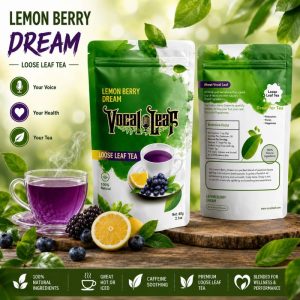
Lemon Berry Dream, Citrus Bioflavonoids and Steam Relief
Lemon Berry Dream is the most immediate-acting option in the Vocal Leaf range for congestion relief, and the one best suited to the acute phase, the first one to three days when symptoms are at their most intense and both steam relief and compound delivery need to work fast.
The citrus profile of this blend delivers a concentrated dose of bioflavonoids, in particular hesperidin and rutin, that have demonstrated specific activity against the vascular inflammation responsible for nasal and sinus tissue swelling. Hesperidin has been studied extensively for its ability to reduce capillary permeability in the nasal mucosa, which is the mechanism that causes the characteristic fullness and pressure of sinus congestion. Less fluid leaking into the tissue means less swelling, less blockage, and more open airways within the first cup.
The aromatic citrus steam compounds released during brewing add a sensory dimension that amplifies the physical steam benefit. The volatile terpenes in lemon and berry botanicals activate cold-sensitive receptors in the nasal passage, the same receptors that create the perception of easier breathing, producing a sensation of increased airflow that begins before the first sip. For congestion that feels suffocating, that immediate sensory relief matters as much as the biochemical work happening underneath it.
Brew at 90°C for four minutes, inhale the steam for the first two minutes before drinking, and add half a fresh lemon and a teaspoon of raw honey for a full compound stack that addresses nasal swelling, mucus viscosity, and throat irritation simultaneously.
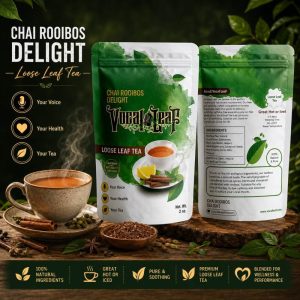
Organic Rooibos Chai, Caffeine-Free Anti-Inflammatory Support
Organic Rooibos Chai is the workhorse of the Vocal Leaf congestion range, the blend to drink most frequently across the day and the one that sustains the anti-inflammatory baseline that prevents congestion from rebuilding between cups.
Rooibos delivers quercetin and aspalathin at concentrations that specifically target histamine-driven and allergen-triggered congestion, making this blend equally effective whether your congestion originates from infection, environmental irritants, or seasonal allergies. The chai spice component adds a gingerol and cinnamaldehyde layer on top of the rooibos base, both compounds with COX-2 inhibitory activity that extend the blend’s anti-inflammatory reach into the bronchial passages where chest congestion develops.
Critically, it is naturally caffeine-free, without chemical decaffeination, which means it can be drunk at any time of day without the hydration-offsetting diuretic effect that caffeinated teas introduce, and in the evening without disrupting the sleep quality that immune recovery depends on. For congestion that has persisted for more than 2 days, or for anyone managing allergy-driven nasal blockage as an ongoing condition rather than an acute illness, Organic Rooibos Chai is the blend to build the day around.
Three to four cups across the waking day, with the final cup thirty to sixty minutes before sleep, maintain near-continuous quercetin and aspalathin in the bloodstream, a pattern that keeps airway inflammation consistently suppressed rather than intermittently addressed.
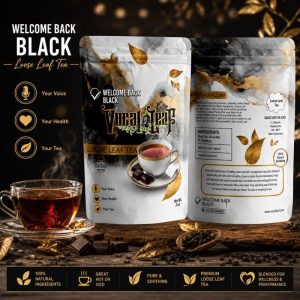
Organic Loose Leaf Black Tea, EGCG and Theaflavin Respiratory Benefits
Organic Loose Leaf Black Tea is the compound-dense core option for congestion relief, the blend that delivers the highest concentration of EGCG and theaflavins of anything in the Vocal Leaf range, making it the strongest choice when the priority is driving down the underlying inflammation sustaining active respiratory congestion.
EGCG in whole-leaf black tea has been shown to downregulate MUC5AC mucin gene expression, directly reducing the thickness and volume of mucus being produced at the source rather than simply helping clear what has already accumulated. Theaflavins confer antiviral activity against the respiratory pathogens most commonly responsible for congestion-related illness, and their mild astringent effect on the throat mucosa reduces the hypersensitivity that makes congested airways feel raw and reactive. Together, these two compound families address congestion at a biochemical depth that most teas, bagged, blended, or otherwise processed, simply do not reach.
Because this blend contains caffeine, it belongs in the morning and early afternoon rotation. The L-theanine naturally present in black tea modulates the caffeine effect, producing sustained mental clarity without the adrenal spike that compounds immune fatigue, a consideration that matters more than most people recognize when illness is already placing demands on the body’s regulatory systems. Steep for five full minutes at 95°C to maximize EGCG extraction, and drink the first cup within fifteen minutes of waking to address overnight mucus buildup at its daily peak.
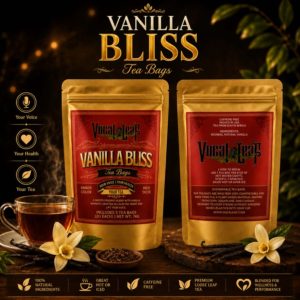
Vanilla Bliss, Gentle Evening Option for Nighttime Congestion
Vanilla Bliss is built for the end of the day, the cup that prepares the airways for sleep, reduces the overnight inflammatory load that causes morning-peak congestion, and soothes the throat tissue that a full day of congestion-related breathing, coughing, and drainage has left sensitized and fatigued.
The vanilla base carries vanillin, a phenolic aldehyde with documented anti-inflammatory properties that work specifically on mucosal tissue, reducing irritation and surface sensitivity without the astringency that higher-tannin teas can produce in the evening. For throat tissue already compromised by a day of postnasal drip, mouth breathing, or vocal use under congested conditions, that gentleness is a functional requirement, not a luxury. The blend is caffeine-free, which means it supports rather than competes with the sleep onset and slow-wave sleep depth that immune recovery requires overnight.
The practical role of Vanilla Bliss in a congestion protocol is the evening reset. Drunk thirty to sixty minutes before sleep, at the 55–65°C lower end of the therapeutic range to maximize comfort on sensitive throat tissue, it delivers enough anti-inflammatory and mucosal-soothing activity to reduce the overnight mucus pooling and tissue re-inflammation that makes morning congestion so reliably severe. It will not clear congestion the way a morning cup of black tea or a midday rooibos chai will. What it does is limit how much ground is lost overnight, so the next morning starts from a better baseline than the one before.
That incremental improvement, compounded across consecutive nights of consistent use, is what separates a genuine recovery from one that plateaus and lingers.
Frequently Asked Questions (FAQ’s)
What tea is best for chest congestion?
The best tea for chest congestion is one that delivers both gingerols and EGCG, compounds that simultaneously reduce bronchial inflammation and thin mucus at the source. Vocal Leaf’s Organic Loose Leaf Black Tea is the strongest option for chest-specific relief, with whole-leaf EGCG and theaflavin concentrations that bagged teas rarely match. For caffeine-free chest relief, Organic Rooibos Chai adds warming spice actives that extend anti-inflammatory coverage deep into the bronchial passages.
Does hot tea help with sinus congestion?
Yes, hot tea helps relieve sinus congestion through two mechanisms that cold drinks cannot replicate: the steam humidifies and softens the mucus that blocks sinus drainage pathways, and the tea’s anti-inflammatory compounds reduce the tissue swelling that narrows those pathways in the first place. Research confirms that hot liquids increase nasal mucus velocity nearly twice as effectively as cold liquids at equivalent volumes. The combination of steam inhalation during brewing and consistent warm sipping across the day produces the most sustained sinus relief.
How quickly does tea relieve congestion?
Steam relief begins within the first few minutes of inhaling from a freshly brewed cup; nasal passages typically feel more open within five to ten minutes of consistent steam exposure. Compound-driven anti-inflammatory relief works on a longer timeline, with a meaningful reduction in tissue swelling building over 2 to 3 hours of consistent tea intake. Full symptomatic improvement requires repeated cups across the day rather than a single large dose.
Is herbal or caffeinated tea better for congestion?
It depends on the time of day and the type of congestion. Caffeinated loose-leaf black tea delivers the highest concentrations of EGCG and theaflavins, making it the stronger choice for morning and daytime use when active inflammation reduction is the priority. Herbal and caffeine-free options, particularly rooibos, are superior from midday onward because they support full hydration without the diuretic effect that caffeine introduces, and they can be drunk in the evening without disrupting the sleep that immune recovery requires.
Can I drink tea for congestion every day?
Yes, and for people who regularly deal with allergy-driven or environmentally triggered congestion, daily tea drinking is one of the most sustainable preventive habits available. The quercetin in rooibos and the EGCG in black tea both demonstrate cumulative anti-inflammatory benefits with consistent intake, meaning daily drinkers tend to experience milder congestion episodes and faster recovery than intermittent ones. There is no functional ceiling on daily loose-leaf tea consumption at two to four cups per day for a healthy adult.
What’s the best tea for congestion and cough together?
The best tea for congestion and cough together is one that addresses bronchial inflammation and throat hypersensitivity simultaneously, since congestion feeds the cough by delivering excess mucus to already-irritated throat tissue. Vocal Leaf’s Organic Loose Leaf Black Tea delivers gingerols, EGCG, and theaflavins that target both airway buildup and cough reflex sensitivity. Add fresh ginger and raw honey to the cup for a compounded effect that targets the bronchial source and the throat symptom in a single brew.
Should I inhale the steam from my tea for nasal congestion?
Yes, steam inhalation during brewing is one of the most direct and underused interventions for relieving nasal congestion. Position your face over the cup for the first 2 minutes after brewing, and breathe slowly through your nose, allowing the warm, humid air to reach the nasal passages and sinus openings directly. Research shows nasal mucociliary clearance improves significantly following steam exposure, with the benefit sustained for up to 20 minutes, meaning the steam phase of your cup is doing meaningful work before you take the first sip.
Is caffeine-free tea better when sick and congested?
For most people dealing with active congestion from illness, caffeine-free tea is the stronger overall choice from midday onward. Caffeine is a diuretic that partially offsets the hydration benefit tea provides, and hydration is the single most important environmental factor for keeping mucus thin enough to drain. Caffeine also impairs slow-wave sleep, during which the majority of cytokine-mediated immune repair occurs. Switching to caffeine-free options, Vocal Leaf’s Organic Rooibos Chai or Vanilla Bliss, after the morning cup is a simple adjustment that meaningfully supports faster recovery.
What should I add to my tea to help congestion faster?
The three most evidence-supported additions are raw honey, fresh lemon juice, and freshly grated ginger, each working through a distinct mechanism. Raw honey coats and protects the throat lining while delivering antimicrobial activity; fresh lemon adds vitamin C and citric acid, which thins mucus and improves flavonoid absorption from the tea base; fresh ginger dramatically increases the gingerol content of the cup, adding direct COX-2 anti-inflammatory activity that the tea alone may not fully provide. All three together create a compound stack that addresses congestion from more angles simultaneously than any single ingredient can.
How many cups of tea should I drink when congested?
Three to four cups spaced roughly every three hours throughout the waking day is the intake pattern that produces the most consistent congestion relief. The anti-inflammatory compounds in tea have a metabolic half-life of 2 to 4 hours, meaning a single morning cup leaves a significant gap during which tissue inflammation rebuilds and mucus re-thickens before the next dose arrives. Morning, midday, mid-afternoon, and evening, with the evening cup caffeine-free, maintains a near-continuous compound presence and sustained hydration across the full day, which is the difference between managing congestion and genuinely recovering from it.
Top Selling Products





Best Tea for Singers | What Actually Helps Your Voice
If you sing, whether you perform professionally, teach voice lessons, or spend your weekends in rehearsal, you’ve probably wondered whether tea actually does anything useful…

Best Tea for Vocal Cords | Herbs, Hydration and Recovery
If your voice feels tired, strained, or dry, the right tea for your vocal cords can make a real difference, not by healing damaged tissue,…

Best Tea for Laryngitis | Soothe Your Voice Naturally
The best tea for laryngitis is a warm, caffeine free loose leaf blend that hydrates the throat and eases the strain on inflamed vocal cords.…

What Is Chai Tea? The Ultimate Guide to Ingredients, Benefits, Types & How It’s Made
If you’ve ever wondered what chai tea is, you’re not alone. It’s one of the most searched beverage questions online, yet the answer is often…

Best Tea for Your Voice | Does It Make You Sound Deeper
What it can do is change how your voice feels and sounds in the moment, which is where most of the confusion starts. If you…

The Best Tea for Performers & Speakers, And Why Your Voice Deserves Better
You spend hours rehearsing the words. You perfect the tone, the breath, the timing. But then you reach for whatever is nearby, a cup of…

Best Tea for Stress Relief | Calming Loose Leaf Blends
Stress is something everybody carries. It shows up in tight shoulders, restless nights, and a mind that won’t quiet down after a long day. And…

Best Tea for Dry Throat | The Teas That Help and the Ones That Hurt
The best teas for a dry throat are caffeine-free herbal blends, teas with no tannins to strip moisture from the throat lining and no caffeine…

Best Teas for Acid Reflux, Heartburn and GERD
Acid reflux doesn’t just cause heartburn. If you have searched for tea good for acidity, you are asking the same question, acidity and acid reflux…

Best Morning Tea for Energy and Focus Without Coffee Crash
The best tea to drink in the morning is black tea if you want steady, coffee level energy without the crash, rooibos chai if you…

Best Tea for Cough | The Complete Guide to Soothing Relief
The best tea for cough relief is a warm, hydrating blend that soothes irritated throat tissue while easing the reflex that triggers coughing in the…

Best Teas for a Cold That Actually Work
Best teas for a cold combines warmth, hydration and gentle steam to ease congestion, calm a scratchy throat and help your body rest while it…