
Marigold Tea Benefits | What It Is, What It Does, and How to Make It

Marigold tea is an herbal infusion brewed from the dried or fresh blossoms of the marigold plant, and its benefits range from soothing inflammation to supporting the throat, skin, and digestive system. It has been used in traditional medicine for centuries, and modern research is beginning to confirm what herbalists have long understood about this golden flower.
What makes marigold tea particularly valuable is not one single compound but a rich combination of flavonoids, triterpenoids, and carotenoids naturally present in the blossoms. These bioactive compounds work together to reduce oxidative stress, calm irritated tissue, and support the body’s natural healing processes. Whether you are an everyday tea drinker curious about a new ingredient or a voice professional looking for a brew that works as hard as you do, marigold tea earns its place in your cup.
Whole marigold blossoms, the same ones used in Vocal Leaf Lemon Berry loose leaf tea, bring this ingredient to life in a form that is both flavorful and functional. In this guide, you will find everything you need to know: what marigold tea actually is, what the science says about its benefits, how to make it at home, and what to watch out for before you brew your first cup.
What Is Marigold Tea?
Marigold tea is an herbal infusion made by steeping the petals or whole blossoms of marigold flowers in hot water, producing a lightly floral, mildly earthy drink with a warm golden color. It contains no true tea leaves and is naturally caffeine-free, making it a gentle option for any time of day.
The marigold plant belongs to the Tagetes and Calendula genera of the Asteraceae family, and has been used in Ayurvedic, European, and Latin American herbal traditions for hundreds of years. Its blossoms are rich in flavonoids, carotenoids, and triterpenoid saponins, the same compounds responsible for many of its documented therapeutic properties. Today, marigolds are gaining renewed attention not just as garden flowers but also as functional ingredients in wellness beverages, skincare formulations, and loose leaf tea blends.
Marigold vs. Calendula Tea: Are They the Same Thing?
Marigold and calendula are closely related but not identical, and the distinction matters when you are choosing a tea for its health benefits. Calendula (Calendula officinalis), sometimes called pot marigold, is the variety most commonly studied for medicinal use and is the one most herbalists refer to when discussing therapeutic applications. Common garden marigolds (Tagetes species), including African, French, and Mexican varieties, are also used in teas and traditional remedies, though they differ slightly in their phytochemical profiles.
The confusion is understandable because both plants produce vibrant orange and yellow blossoms and share some overlapping compounds. In practical terms, calendula tea tends to have a slightly more resinous, complex flavor, while Tagetes-based teas tend to be earthier and more pungent. Both are considered safe for general use, and both bring genuine antioxidant value to the cup. For most wellness purposes, the terms are used interchangeably in the marketplace, but if you are purchasing for a specific therapeutic intent, checking the Latin name on the label is worth the extra second.
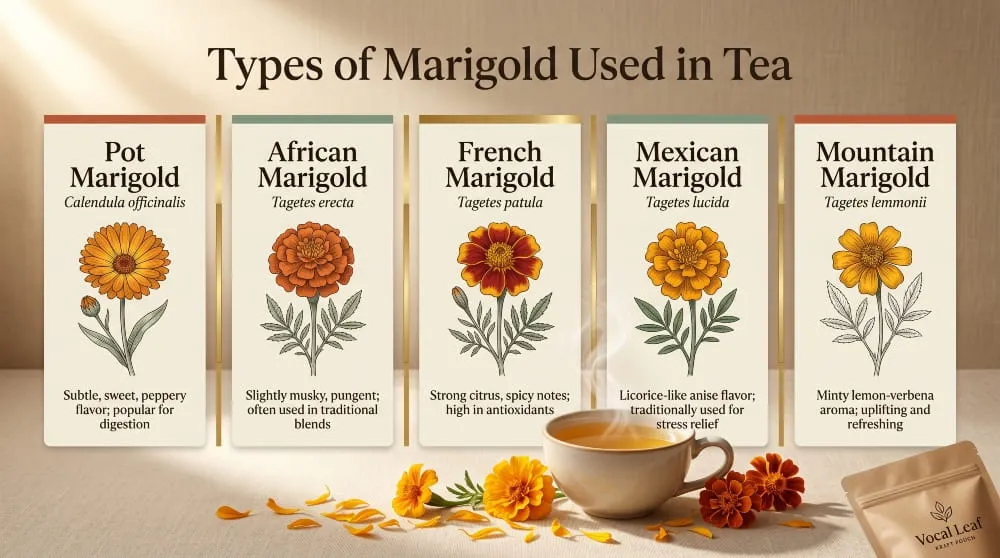
Types of Marigolds Used in Tea
Not all marigolds brew the same, and the variety matters for both flavor and the specific compounds you get in the cup.
Pot marigold (Calendula officinalis) is the gold standard for herbal tea and medicinal use. It is the most extensively researched variety, with well-documented flavonoid content supporting anti-inflammatory and wound-healing activity. Most commercial “marigold tea” or “calendula tea” products use this variety.
African marigold (Tagetes erecta) produces large, densely petaled blossoms with a strong, slightly spicy aroma. It is widely used in Mexican traditional medicine, known there as cempasúchil, and brewed as a tea for digestive discomfort and respiratory support.
French marigold (Tagetes patula) is smaller and more delicate, with a subtler flavor profile. It shares many of the same carotenoid compounds as its African cousin but is less commonly found in commercial tea blends.
Mexican marigold (Tagetes lucida), also called Mexican tarragon or sweet mace, has a distinctly anise-like flavor and is used as both a culinary herb and a ceremonial tea in parts of Mexico and Central America.
Mountain marigold (Tagetes lemmonii) and English marigold (another common name for Calendula officinalis) round out the family. When whole marigold blossoms appear as a named ingredient in a premium loose leaf blend, they bring both visual beauty and a gentle, functional contribution to every steep.
What Does Marigold Tea Taste Like?
Marigold tea has a mild, lightly floral flavor with subtle earthy and slightly bitter undertones, closer to a gentle herbal infusion than anything sharp or medicinal. The aroma tends to be warmer and more inviting than the taste alone suggests, with faint honeyed and grassy notes that deepen as the blossoms steep.
On its own, marigold tea is pleasant but understated. Its flavor opens up considerably when paired with complementary ingredients, citrus peel brightens it, warm spices like cinnamon give it depth, and naturally sweet elements smooth out the mild bitterness. This is precisely why whole marigold blossoms work so well in a well-crafted loose leaf blend: they contribute a floral backbone without dominating, letting the other ingredients, bright lemon, creamy vanilla, and a hint of warm spice, carry the cup forward while the marigold does its quiet, beneficial work underneath.
Marigold Tea Benefits, What the Research Actually Says
The benefits of marigold tea are grounded in a well-documented phytochemical profile that includes flavonoids, triterpenoids, carotenoids, and polysaccharides, compounds that have been studied for their anti-inflammatory, antioxidant, antimicrobial, and tissue-supportive properties. While marigold is not a pharmaceutical treatment, the research behind its active constituents is substantive enough to explain why this flower has remained a fixture in herbal medicine across multiple continents for centuries.

Anti-Inflammatory Compounds in Marigold Blossoms
The anti-inflammatory activity of marigold blossoms is primarily driven by triterpenoid saponins, particularly oleanolic acid glycosides, along with flavonoids such as isorhamnetin and quercetin. These compounds have been shown in multiple in vitro and animal studies to inhibit pro-inflammatory enzymes, including COX-2 and lipoxygenase, which are the same pathways targeted by many over-the-counter anti-inflammatory medications.
What this means practically is that brewing marigold blossoms in hot water extracts a meaningful portion of these compounds into the liquid you drink. The heat of steeping, ideally between 195°F and 212°F, helps release both water-soluble flavonoids and some of the resinous triterpenoids from the petal tissue. The result is not a concentrated extract, but a gentle, consistent delivery of anti-inflammatory phytonutrients with every cup. For anyone whose daily routine involves vocal strain, physical performance, or repetitive stress on soft tissue, that consistency matters more than any single large dose.
Antioxidant Properties and Flavonoid Content
Marigold blossoms are among the more antioxidant-dense botanicals used in herbal tea, with their carotenoid content, including lutein, zeaxanthin, and beta-carotene, contributing to both their vivid color and their free-radical scavenging activity. A study published in Industrial Crops and Products found that calendula flower extracts demonstrated strong antioxidant capacity comparable to several well-regarded medicinal herbs, attributing this activity largely to total flavonoid and polyphenol concentration.
Flavonoids in the marigold blossom, particularly narcissin, rutin, and isorhamnetin, work by neutralizing reactive oxygen species before they can damage cells, proteins, or DNA. In the context of a daily tea habit, this means consistent low-level antioxidant support that accumulates over time. It is the same principle behind the broader research on polyphenol-rich diets: frequency and consistency drive the benefit, not a single heroic cup.
Marigold Tea for Throat and Vocal Health
For voice professionals, singers, speakers, teachers, podcasters, and performers, marigold tea offers something most mainstream wellness beverages overlook: direct mucosal support. The throat and vocal cords are lined with delicate mucous membrane tissue, which is among the first to suffer from inflammation, dryness, overuse, and environmental irritants. Marigold’s triterpenoid and flavonoid compounds have demonstrated the ability to reduce inflammation specifically in mucosal tissue, making this blossom particularly relevant for anyone whose livelihood depends on how their throat feels at performance time.
Beyond its anti-inflammatory properties, marigold’s documented antimicrobial activity, active against a range of gram-positive bacteria and some fungi, adds a layer of protective value for tissues constantly exposed to airborne pathogens. Quercetin, one of marigold’s primary flavonoids, has also been studied for its ability to stabilize mast cells and reduce histamine-driven irritation, a common trigger of the scratchy, reactive throat that performers experience in changing climates or high-allergen environments.
Whole marigold blossoms, the same ones found in Vocal Leaf’s Lemon Berry Dream, deliver these compounds in their complete botanical form, alongside complementary ingredients that support hydration, reduce throat irritation, and make the ritual of vocal care something worth looking forward to.
Digestive and Gut Comfort Benefits
Marigold tea has a long tradition of use as a digestive remedy, and the scientific evidence supporting this application is reasonably well established. The same anti-inflammatory triterpenoids that soothe mucosal tissue in the throat also act on the mucous membranes lining the stomach and intestinal tract. Research on calendula extracts has shown activity against Helicobacter pylori, the bacterium associated with gastric ulcers, as well as a general capacity to reduce gastric inflammation and support healthy gut lining integrity.
In practice, this means marigold tea is a useful choice after meals for those who experience mild bloating, acid sensitivity, or general digestive discomfort. The bitterness naturally present in the blossoms also stimulates bile production, which supports fat digestion and the broader digestive cascade. It is not a dramatic effect, but it is a real and consistent one, the kind of gentle functional benefit that compounds meaningfully over weeks of regular use.
Skin and Wound-Healing Properties
The skin-healing properties of marigold are among the most extensively documented of any herbal botanical, with calendula-based preparations appearing in clinical guidelines for managing radiation dermatitis, surgical wound care, and inflammatory skin conditions. A randomized controlled trial published in the Journal of Wound Care found that calendula ointment outperformed petroleum jelly in promoting surgical wound healing and reducing the incidence of acute dermatitis in post-operative patients.
While topical application delivers more direct benefit to the skin than drinking a tea, the systemic antioxidant and anti-inflammatory compounds absorbed through regular consumption still contribute to skin health from the inside. Lutein and zeaxanthin, both present in marigold blossoms, have been studied for their role in protecting skin cells from UV-induced oxidative damage. For anyone focused on long-term skin resilience, marigold tea is a low-effort addition to a broader wellness routine, backed by legitimate evidence.
Immune Support Benefits
Marigold tea supports immune function through several overlapping mechanisms rather than one dramatic action. Its polysaccharide content has demonstrated immunomodulatory activity in research settings, meaning it helps calibrate immune response rather than simply stimulating it, which is a more useful distinction for everyday wellness than simple “immune boosting.” Its flavonoids, particularly quercetin and isorhamnetin, have shown antiviral activity in laboratory studies, and its antimicrobial compounds provide direct protection against common pathogens.
The carotenoids in marigold blossoms, particularly beta-carotene, a precursor to vitamin A, play a well-established role in maintaining the integrity of mucosal barriers, including those in the throat, lungs, and gut. Since mucosal tissue is the body’s first line of defense against airborne and ingested pathogens, keeping it healthy and well-supported is as fundamental to immune resilience as any supplement. A daily cup of marigold tea, steeped long enough to fully extract these compounds, is a practical and evidence-informed way to support that baseline.
How to Make Marigold Tea at Home
Making marigold tea at home is straightforward; you need either fresh or dried blossoms, hot water, and about 10 minutes. The method you choose depends on what you have available, but both fresh and dried marigold produce a flavorful, functional cup when prepared correctly.

Fresh Marigold Tea, Using Whole Blossoms
Fresh marigold tea is best made with blossoms harvested the same day, using varieties known to be safe for consumption, primarily Calendula officinalis or Tagetes species grown without pesticides or chemical fertilizers. Once you have your blossoms, remove the petals or use the whole flower head, rinse them gently under cool water, and add 2 to 3 tablespoons of loosely packed fresh petals per cup of water.
Bring filtered water to just below a full boil, around 200°F to 210°F, and pour it directly over the petals in a cup or teapot. Cover immediately to trap the volatile aromatic compounds that would otherwise escape with the steam, and steep for eight to ten minutes. Fresh blossoms produce a lighter, more delicate infusion than dried ones, with a noticeably grassy, floral character and a soft golden color. Strain well before drinking, as petal fragments can be bitter if left to over-steep.
Dried Marigold Tea: How to Dry and Store Marigold Petals for Tea
Dried marigold tea is more concentrated than fresh, and because dried blossoms are available year-round, this is the more practical format for most people. Use 1 to 2 teaspoons of dried petals or 1 tablespoon of whole dried blossoms per 8 ounces of water. The drying process concentrates the flavonoids and carotenoids, so dried marigold tea tends to deliver a deeper color, a more pronounced flavor, and a stronger functional profile per cup.
To dry marigold petals at home, spread freshly harvested blossoms in a single layer on a clean mesh drying rack or parchment-lined baking sheet. Keep them in a warm, well-ventilated space away from direct sunlight; UV exposure degrades carotenoids, which are both the color and the antioxidant payload of the petal. Drying typically takes five to ten days at room temperature, or two to three hours in an oven set to its lowest setting with the door slightly ajar. The petals are ready when they crumble cleanly between your fingers, with no moisture.
Store dried marigold petals in an airtight glass jar away from heat and light. Properly stored, they retain their potency for up to twelve months. Label the jar with the harvest date. Older petals do not become unsafe, but their flavonoid content degrades gradually over time.
How to Harvest Marigolds for Tea
Harvesting marigolds for tea requires attention to timing and growing conditions, because both directly affect the quality and safety of what ends up in your cup. Only harvest from plants you have grown yourself or sourced from a certified organic grower. Ornamental marigolds sold at garden centers are frequently treated with systemic pesticides that cannot be washed off.
Pick blossoms in the morning after the dew has dried but before the midday heat sets in. Choose flowers that are fully open and at peak bloom; this is when flavonoid and carotenoid concentrations are highest. Avoid blossoms that are wilting, browning at the edges, or showing signs of pest damage. Pinch or cut the stem just below the flower head, leaving the calyx intact if you plan to dry the whole blossom, or pull the petals free immediately if you plan to use them fresh the same day.
Regular harvesting actually encourages the plant to produce more blooms throughout the season, so a well-tended marigold plant in a home garden can supply a meaningful quantity of tea-quality blossoms from midsummer through the first frost.
Steeping Time, Water Temperature, and Serving Tips
The ideal water temperature for marigold tea is between 200°F and 212°F, hot enough to fully extract the water-soluble flavonoids and open the carotenoid-rich petal tissue, but not so hot as to reach a rolling boil that can destroy delicate aromatic compounds. Steep for a minimum of eight minutes and up to twelve for a stronger, more therapeutic cup. Covering your cup or pot during steeping is not optional; it is the single most important variable that most home brewers overlook, and it meaningfully affects both flavor and the retention of functional compounds.
For serving, marigold tea works well on its own with a small amount of honey to soften the mild bitterness, or over ice with a squeeze of lemon for a bright, refreshing cold steep. It pairs naturally with citrus peel, warming spices, and vanilla, a combination that transforms the understated base note of marigold into something genuinely complex and enjoyable. If you prefer that combination ready-made, Vocal Leaf’s Lemon Berry Dream blends whole marigold blossoms with lemon peel, lemon oil, orange peel, cinnamon, and natural vanilla notes, steeped for ten to twelve minutes at 203°F to 212°F for a cup that delivers the full benefit with none of the prep work.
How to Get Marigold Tea’s Benefits Without the Prep Work
Getting the benefits of marigold tea does not require a garden, a drying rack, or a precise harvesting schedule. The simplest path to a consistent, functional cup is a well-crafted loose-leaf blend that handles sourcing, drying, and formulation for you, without sacrificing the quality of the ingredient itself.
Why Whole Marigold Blossoms Matter in a Loose Leaf Blend
Not all marigold in tea is created equal. The difference between whole marigold blossoms and low-grade petal fragments or powdered extract is significant, both in the cup and in the functional value you actually receive.
Whole blossoms retain their full carotenoid and flavonoid matrix intact. When you steep a whole blossom, the petal tissue gradually releases its water-soluble compounds across the full steeping window, as it was designed to. Fragmented petals or extracted powders accelerate that release, often producing a sharper, more bitter flavor and a less balanced phytochemical profile. For throat and mucosal tissue specifically, where the goal is gentle, consistent support rather than a concentrated hit, whole blossoms are the more appropriate form.
Whole blossoms also signal something about sourcing standards. A producer willing to use the full flower rather than the cheapest processed fraction is making a visible commitment to ingredient quality, one you can see the moment you open the bag. In a category where most herbal teas compete on price and convenience, the presence of whole blossoms in a blend is a meaningful differentiator.
Lemon Berry Dream, Vocal Leaf’s Blend Featuring Whole Marigold Blossoms
Lemon Berry Dream is Vocal Leaf’s most beloved blend, built around a bright citrus and creamy vanilla profile that makes the functional ingredients inside it easy to drink every single day. At its heart are whole marigold blossoms, not powdered, not extracted, not fragmented, steeped alongside lemon peel, lemon oil, orange peel, cinnamon pieces, and sweet blackberry leaves for a cup that is as complex and enjoyable as it is purposeful.
The blend is crafted specifically for voice professionals, singers, speakers, teachers, podcasters, and performers who need throat and vocal cord support they can count on without having to think twice about preparation. Steep one to two level teaspoons in 203°F to 212°F water for ten to twelve minutes, covered, and the whole blossom does exactly what it was designed to do: release its anti-inflammatory triterpenoids, antioxidant carotenoids, and mucosal-supportive flavonoids into a cup that also happens to taste like something you would choose purely for pleasure.
Lemon Berry Dream is certified 100% Soothing, available in a 2 oz. loose-leaf format, and brews beautifully both hot and iced. For anyone who has read this far and wants the benefit of marigold tea without growing, harvesting, drying, and blending it themselves, this is where that research ends, and the ritual begins.
Frequently Asked Questions (FAQs)
Is marigold tea good for you?
Yes. Marigold tea contains flavonoids, triterpenoids, and carotenoids that support anti-inflammatory activity, antioxidant defense, and mucosal tissue health. Consumed regularly, it is a low-risk, evidence-supported addition to a daily wellness routine.
What is marigold tea good for?
Marigold tea is most commonly used to soothe the throat and mucosal irritation, support digestive comfort, reduce inflammation, and provide consistent antioxidant support. It is particularly well-suited for voice professionals who need gentle, daily throat and vocal cord care.
Can you make tea from marigold flowers?
Yes, both fresh and dried marigold blossoms can be steeped in hot water to make tea. Use varieties grown without pesticides, steep for eight to twelve minutes at 200°F to 212°F, and cover the cup during steeping to retain the full aromatic and functional compounds.
What does marigold tea taste like?
Marigold tea has a mild, lightly floral flavor with subtle earthy and slightly bitter undertones. It is gentle and pleasant on its own, and opens up considerably when blended with citrus, vanilla, or warm spices.
Is marigold the same as calendula?
They are closely related but not identical. Calendula (Calendula officinalis), often called pot marigold or English marigold, is the variety most studied for medicinal use. Common garden marigolds (Tagetes species) are also used in tea but differ slightly in their phytochemical profiles.
Does marigold tea have caffeine?
No. Marigold tea is naturally caffeine-free because it contains no true tea leaves; it is a pure herbal infusion made entirely from flower blossoms. It can be enjoyed at any time of day, including before sleep.
Can you drink marigold tea when pregnant?
Caution is advised. While marigold tea is generally considered safe for most adults, its traditional use as a uterine stimulant means pregnant women are typically advised to avoid it, particularly in the first trimester. Consult a qualified healthcare provider before consuming marigold tea during pregnancy.
Top Selling Products






Best Tea for Singers | What Actually Helps Your Voice
If you sing, whether you perform professionally, teach voice lessons, or spend your weekends in rehearsal, you’ve probably wondered whether tea actually does anything useful…

Best Tea for Vocal Cords | Herbs, Hydration and Recovery
If your voice feels tired, strained, or dry, the right tea for your vocal cords can make a real difference, not by healing damaged tissue,…

Best Tea for Laryngitis | Soothe Your Voice Naturally
The best tea for laryngitis is a warm, caffeine free loose leaf blend that hydrates the throat and eases the strain on inflamed vocal cords.…

What Is Chai Tea? The Ultimate Guide to Ingredients, Benefits, Types & How It’s Made
If you’ve ever wondered what chai tea is, you’re not alone. It’s one of the most searched beverage questions online, yet the answer is often…

Best Tea for Your Voice | Does It Make You Sound Deeper
What it can do is change how your voice feels and sounds in the moment, which is where most of the confusion starts. If you…

The Best Tea for Performers & Speakers, And Why Your Voice Deserves Better
You spend hours rehearsing the words. You perfect the tone, the breath, the timing. But then you reach for whatever is nearby, a cup of…
Best Tea for Stress Relief | Calming Loose Leaf Blends
Stress is something everybody carries. It shows up in tight shoulders, restless nights, and a mind that won’t quiet down after a long day. And…

Best Tea for Dry Throat | The Teas That Help and the Ones That Hurt
The best teas for a dry throat are caffeine-free herbal blends, teas with no tannins to strip moisture from the throat lining and no caffeine…

Best Teas for Acid Reflux, Heartburn and GERD
Acid reflux doesn’t just cause heartburn. If you have searched for tea good for acidity, you are asking the same question, acidity and acid reflux…

Best Morning Tea for Energy and Focus Without Coffee Crash
The best tea to drink in the morning is black tea if you want steady, coffee level energy without the crash, rooibos chai if you…

Best Tea for Cough | The Complete Guide to Soothing Relief
The best tea for cough relief is a warm, hydrating blend that soothes irritated throat tissue while easing the reflex that triggers coughing in the…

Best Teas for a Cold That Actually Work
Best teas for a cold combines warmth, hydration and gentle steam to ease congestion, calm a scratchy throat and help your body rest while it…