
Orange Peel Tea Benefits | How It Helps Your Voice, Throat and Health

Orange peel tea is one of the oldest wellness beverages in the world, and one of the most underestimated. Made by steeping the outer skin of the orange in hot water, this naturally caffeine-free infusion delivers a concentrated dose of the compounds found in citrus peel: flavonoids, vitamin C, and aromatic oils that have been used for centuries to support respiratory health, soothe the throat, and strengthen the body’s natural defenses.
For most people, the orange peel goes straight into the trash. But the peel is where the most potent plant compounds are stored, more so than the fruit itself. When steeped correctly, those compounds release into the water, creating a tea that works quietly and effectively on some of the body’s most essential systems.
The benefits of orange peel tea extend further than most people realize. Research points to meaningful support for immune resilience, respiratory comfort, digestive ease, and skin health. For voice professionals, singers, teachers, speakers, podcasters, and performers, the respiratory and throat-soothing properties make it particularly relevant. A voice that performs under pressure needs consistent, intelligent hydration and support, and orange peel tea delivers both.
This guide covers everything: what orange peel tea actually is, the full spectrum of science-backed benefits, how to make it with fresh, dried, or powdered peel, and what to look for when choosing a loose-leaf tea crafted specifically for vocal wellness. Whether you’ve never tried it or you’re comparing it with other herbal teas and looking to understand exactly what it’s doing for your body, you’ll find the complete picture here. If your voice is your livelihood, what you steep matters, and orange peel tea is worth understanding.
What Is Orange Peel Tea?
Orange peel tea is a naturally caffeine-free infusion made by steeping the outer skin of the orange, fresh, dried, or powdered, in hot water. Unlike fruit teas that use the juice or pulp, orange peel tea draws its character entirely from the peel itself, where the highest concentration of flavonoids, volatile oils, and vitamin C compounds are stored.
The result is a warm, lightly bitter, citrus-forward beverage with a depth of flavor the fruit alone cannot produce. It carries the bright top notes of orange without the sweetness, and depending on steep time and preparation method, it can range from delicately fragrant to robustly aromatic.
What makes orange peel tea distinct from other citrus-based beverages is its compound profile. The peel contains hesperidin, nobiletin, and tangeretin, flavonoids with well-documented effects on inflammation, respiratory function, and immune response. These are not found in meaningful quantities in orange juice. They live in the peel, which is precisely why steeping it yields a nutritionally distinct experience from simply drinking citrus.
Orange peel tea has a long history of use across traditional wellness systems in East Asia, the Mediterranean, and Latin America, each culture recognizing independently that the peel has greater therapeutic value than the fruit. Modern research is now catching up to what those traditions understood intuitively.
How Orange Peel Becomes a Tea
The transformation from peel to tea is straightforward but worth understanding, because the method affects both the flavor and the potency of the final cup. When orange peel is placed in hot water, heat cracks down the cell walls of the peel and releases its water-soluble compounds, primarily flavonoids, vitamin C, and the volatile aromatic oils responsible for its distinctive scent.
Fresh peel releases these compounds quickly, typically within five to ten minutes of steeping. Dried peel, which undergoes concentration by moisture removal, yields a more intense, shelf-stable version of the same compounds. Powdered peel, ground from dried skin, dissolves partially into the water and delivers the highest surface area contact, and therefore the most concentrated infusion.
The steeping temperature matters. Water that is too cool will not actually remove the flavonoids. Water that is too aggressively boiling can degrade the volatile aromatic oils, reducing the tea’s fragrance and some of its more delicate compounds. A temperature range of 200°F to 212°F.just at or slightly below a full rolling boil, is the optimal extraction range for orange peel tea in any of its three forms.
Fresh Peel vs Dried Peel What is the Difference
Both fresh and dried orange peel produce a legitimate, beneficial cup of tea. The differences are practical and sensory rather than categorical. Fresh peel delivers a brighter, more aromatic infusion with a livelier citrus character. It is best used immediately after peeling and requires no preparation beyond removing as much of the white pith as possible, which carries most of the tea’s bitterness. Fresh peel is ideal when convenience and fragrance are the priority.
Dried peel produces a deeper, more concentrated infusion with a slightly earthier citrus note. Because moisture has been removed during the drying process, the flavonoid content is more densely packed per gram, meaning a smaller quantity of dried peel produces a comparably potent cup. Dried peel is the practical choice for anyone who wants consistent results, longer shelf life, and the ability to prepare tea without fresh citrus on hand.
From a vocal wellness standpoint, both forms deliver the same core compounds. The choice between them is a matter of preference and habit of preparation rather than therapeutic outcome. Many people also enjoy orange peel tea as a tea for congestion, making the decision between forms more about convenience and taste than any difference in benefits.
What Bitter Orange Peel Tea Means and Why It Happens
A noticeably bitter cup of orange peel tea is almost always the result of one of three things: too much white pith left on the peel, too long a steep time, or water that was held at a full boil throughout extraction.
The white pith, the spongy layer between the outer colored skin and the fruit, contains high concentrations of naringin. This flavonoid is intensely bitter at the concentrations found in citrus pith. It is not harmful, but it dominates the flavor profile when present in quantity. Removing as much pith as possible before steeping, using a sharp vegetable peeler or careful knife work, is the single most effective way to produce a tea that is pleasantly complex rather than sharp.
Steep time is the second variable. Orange peel compounds extract relatively quickly. Steeping beyond ten to twelve minutes, particularly with dried peel, begins to pull the more astringent secondary compounds that contribute bitterness without adding nutritional benefit.
Bitter orange peel tea, a term also used in some traditional contexts to refer specifically to tea made from Citrus aurantium, a variety with naturally higher levels of bitter compounds, is a distinct product from standard orange peel tea and should not be confused with an over-steeped cup. It has its own traditional applications and a characteristically sharp, intentionally medicinal flavor.
Orange Peel Tea Benefits What the Research Actually Shows
Orange peel tea earns its reputation not just through tradition, but through a compound profile that modern research has begun to examine seriously. The peel of the orange is nutritionally denser than the fruit it protects, concentrated with flavonoids, vitamin C, and aromatic volatile oils that work on several of the body’s most essential systems simultaneously.
The primary active compounds in orange peel tea are hesperidin, nobiletin, and tangeretin. These flavonoids are not found in meaningful quantities in orange juice or orange flesh. They accumulate in the peel, and steeping releases them into the water in bioavailable form. Each has a distinct mechanism of action, and together they account for most of the health outcomes associated with orange peel tea.
What follows is a section-by-section breakdown of what orange peel tea actually does, for the immune system, the respiratory tract, the digestive system, the skin, metabolic function, and most specifically, for the voice.
Vitamin C and Immune Support: The Connection to Throat Resilience
Orange peel contains significantly more vitamin C per gram than orange juice. When steeped in hot water, a portion of that vitamin C transfers into the liquid, providing a meaningful contribution to daily immune support without caffeine, added sugar, or synthetic supplementation.
Vitamin C is directly involved in the maintenance of epithelial barriers, the cellular lining that covers the throat, nasal passages, and respiratory tract. For voice professionals, this lining is not abstract anatomy. It is the tissue that surrounds the vocal folds, lines the larynx, and determines how resilient the vocal instrument is under sustained use, seasonal stress, or environmental exposure.
A throat that is well-supported at the cellular level recovers faster, resists irritation more effectively, and maintains the hydration balance that healthy phonation depends on. Orange peel tea, consumed consistently, contributes to that baseline, not as a treatment, but as a daily maintenance strategy for anyone whose voice is a professional instrument. Its naturally soothing qualities also make it a popular Tea For Relaxation, offering a calming ritual that supports overall vocal and physical well-being.
Flavonoids and Respiratory Health: How Orange Peel Compounds Work
Hesperidin, the most abundant flavonoid in orange peel, has been studied for its effects on vascular tone, mucosal health, and inflammatory response in the respiratory tract. Research suggests it supports healthy circulation in the small vessels surrounding the larynx and vocal folds, the same circulation that delivers hydration and oxygen to vocal tissue during extended performance or speaking.
Nobiletin and tangeretin, present in lower amounts, have demonstrated anti-inflammatory properties in cell and animal studies, with effects primarily in respiratory and mucosal tissues. While human clinical data is still developing, the mechanistic pathway is well established: these compounds modulate inflammatory signals that, when dysregulated, produce swelling, excess mucus, and tissue sensitivity that disrupt vocal function.
For singers, teachers, and speakers, this matters at a practical level. The throat is exposed to sustained mechanical stress, dry air, and acoustic demands that the general population does not experience. Compounds that support the integrity and recovery of respiratory tissue are not a luxury for this group, they are a functional necessity. Orange peel tea provides them in a naturally caffeine-free, hydrating form that is gentle enough for daily use.
Digestive and Stomach Benefits of Orange Peel Tea
Orange peel has a long traditional association with digestive comfort, and the underlying chemistry supports it. The volatile oils in orange peel, particularly limonene, have demonstrated carminative properties, meaning they help reduce gas, ease bloating, and support smooth digestive tract function.
Hesperidin also plays a role in digestive health by affecting gut mucosal integrity. A well-functioning gut lining reduces the likelihood of acid reflux and laryngopharyngeal reflux, a condition particularly problematic for voice professionals, where stomach acid reaches the larynx and irritates the vocal folds directly.
For anyone managing reflux alongside vocal demands, the stomach benefits of orange peel tea extend beyond the stomach. A digestive system that functions smoothly and maintains appropriate mucosal barriers is one less source of vocal irritation. Many people also enjoy it as a refreshing Loose Leaf Iced Tea, providing the same citrus-forward character in a chilled form while supporting overall digestive comfort.
Skin Benefits of Orange Peel Tea
The vitamin C content of orange peel tea supports collagen synthesis, a biological process that maintains skin elasticity, supports wound repair, and maintains the structural integrity of connective tissue. When consumed regularly, the antioxidant content of orange peel tea supports the body’s defense against oxidative stress, a primary driver of accelerated skin aging.
The flavonoids in orange peel, particularly hesperidin, have also been associated with improved microvascular circulation, the fine capillary networks that deliver nutrients and oxygen to skin cells. Better circulation at the capillary level supports skin clarity, tone, and recovery from daily environmental exposure.
These are systemic benefits that accumulate over time rather than producing immediate visible results. Orange peel tea is not a topical treatment; it is a consistent internal intake that supports skin health as part of a broader wellness practice.
Orange Peel Tea for Weight Management What to Expect
The connection between orange peel tea and weight management is real but frequently overstated in popular wellness content. The honest picture is more specific and more useful than the broad claims typically made.
Nobiletin, one of the key flavonoids in orange peel, has been studied in animal models for its effects on fat metabolism and adipogenesis, the process by which the body creates and stores fat cells. The results are promising, but direct human clinical evidence remains limited, and the concentrations studied in research settings are difficult to replicate through tea alone.
What orange peel tea reliably delivers in a weight management context is hydration without calories, a naturally bitter flavor profile that research associates with reduced appetite signaling, and a caffeine-free alternative to caloric beverages. These are meaningful contributions, not dramatic transformations, but consistent daily inputs that support a well-managed approach to weight and metabolism.
Orange Peel Tea for Coughs and Colds: What It Can and Cannot Do
Orange peel tea is a legitimate support strategy during respiratory illness, but it is worth being precise about the mechanism. It does not kill viruses. It does not shorten the clinical course of a cold with the directness of pharmaceutical intervention. What it does is provide the conditions in which the body’s own response can function more effectively.
The vitamin C in orange peel tea for cold supports immune cell production and function. The volatile aromatic oils, released as steam during steeping, provide mild decongestant comfort when the tea is inhaled as well as consumed. The warm liquid itself supports mucosal hydration, a critical factor in both symptom relief and recovery, since a well-hydrated respiratory tract clears pathogens and irritants more efficiently than a dry one.
For anyone managing a cough or cold while maintaining vocal commitments, a performance, a teaching week, a recording session, orange peel tea is a responsible, caffeine-free option that supports recovery without introducing stimulants or compounds that desiccate the vocal tract.
Is Orange Peel Tea Good for Your Voice?
This is where orange peel tea becomes distinctly relevant for the Vocal Leaf community, and where most wellness content on this topic stops short.
The vocal folds are covered by a delicate mucosal layer that requires consistent, high-quality hydration to vibrate freely, resist mechanical wear, and recover between performances. Any compound that supports the integrity of that mucosal layer, reduces laryngeal inflammation, or improves circulation to the vocal fold tissue contributes directly to vocal performance and longevity.
Orange peel tea addresses all three pathways. Its flavonoids support mucosal integrity and reduce inflammatory signaling in the larynx. Its vitamin C supports the epithelial tissue surrounding the vocal folds. Its naturally caffeine-free, warm liquid delivery provides systemic hydration without the desiccating effect of caffeine-containing beverages, a critical distinction for performers who need hydration that actually reaches the vocal tissue.
It is also worth noting what orange peel tea does not do: it does not coat the vocal folds directly. Nothing swallowed does, the epiglottis ensures that liquids and foods bypass the larynx entirely. The benefit is systemic. Hydration reaches the vocal folds through the bloodstream and through the body’s mucosal secretion process, which is why consistency of intake matters far more than timing relative to performance.
For voice professionals looking to build a daily tea practice around vocal wellness, orange peel’s compound profile makes it a worthy ingredient, and for those who want that profile delivered in a blend specifically formulated for the vocal instrument, loose leaf tea for voice health is the more complete solution. Those interested in broader wellness benefits may also explore Tea for Anxiety, as calming herbal blends are often incorporated into routines that support both mental relaxation and consistent vocal performance.
How to Make Orange Peel Tea: Three Methods
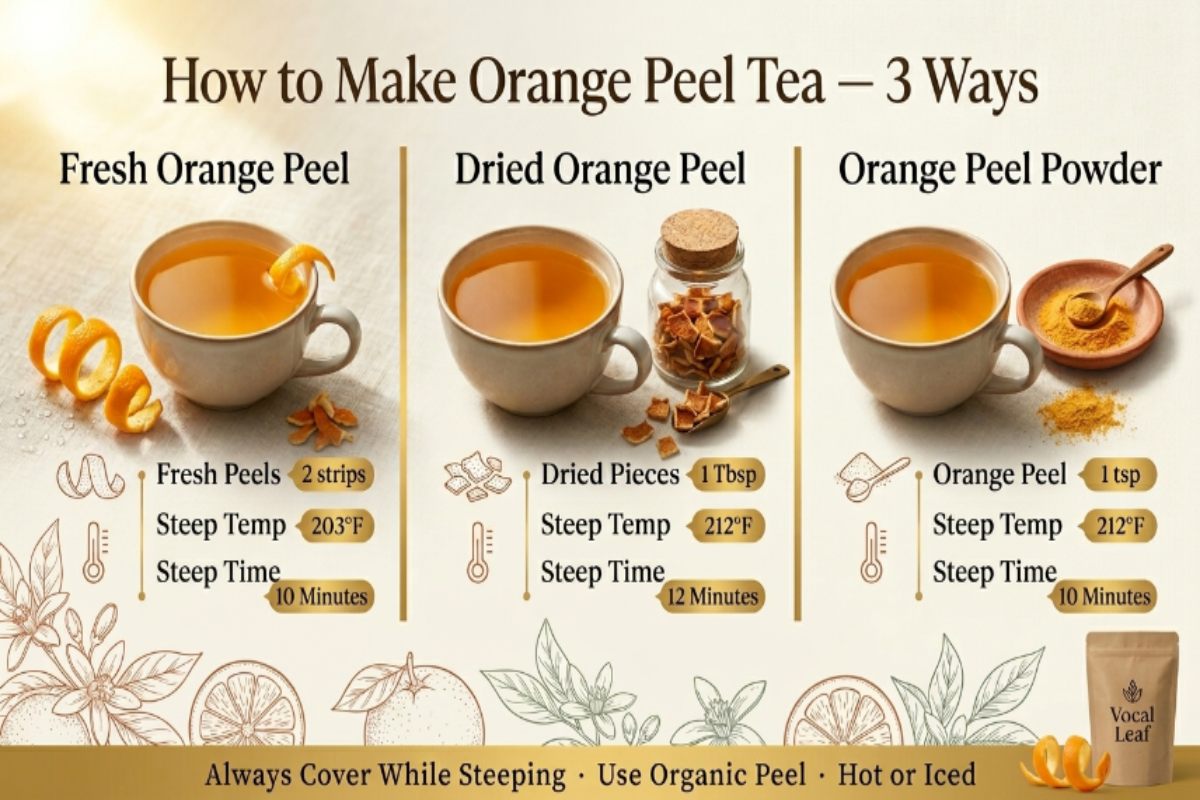
Making orange peel tea well comes down to three variables: the form of peel you start with, the water temperature you use, and the steep time you allow. Get those three right, and you’ll get a clean, aromatic, flavonoid-rich cup regardless of which method you choose.
The three methods below cover every preparation scenario, fresh peel for when you have an orange on hand, dried peel for consistent daily use, and powder for the most concentrated infusion with the least preparation time. Each produces a slightly different flavor profile and a different level of compound intensity. Still, all three deliver the core benefits for which orange peel tea is known.
How to Make Orange Peel Tea with Fresh Peel
Fresh orange peel tea is the most immediate and aromatic of the three methods. The volatile oils in fresh peel have not yet undergone the concentration process that drying produces, which means the fragrance is brighter. The flavor is lighter, closer to the experience of holding a freshly peeled orange than to a deeply steeped herbal infusion.
Start with one organic orange. Wash the exterior thoroughly; the peel is what goes into your cup, so surface residue matters more here than it does when you are eating the fruit.Employ a sharp vegetable peeler or a paring knife to peel away. strips of the outer colored skin, working carefully to leave as much of the white pith behind as possible. The pith is where bitterness concentrates; the less of it that enters the water, the more balanced the cup.
Use three to four strips of fresh peel per eight ounces of water. Heat water to between 200°F and 212°F, just at or slightly below a rolling boil. Pour over the peel strips and steep for five to seven minutes. Remove the peel and drink immediately. Fresh peel tea does not hold well; the volatile oils that give it its character begin to dissipate once the peel is removed from the hot liquid.
How to Make Orange Peel Tea with Dried Peel
Dried orange peel tea is the method most suited to daily practice. The drying process concentrates the flavonoids and reduces moisture, meaning a smaller quantity of dried peel produces a comparably potent cup, and in some respects more so, than a fresh peel infusion. Dried peel also stores well, making it the practical choice for anyone building orange peel tea into a consistent vocal wellness routine.
Use 1 to 2 teaspoons of dried orange peel per 8 ounces of water. A tea infuser, muslin bag, or small strainer works well for containing the peel during steeping. Heat water to 200°F to 212°F, then steep for 8 to 10 minutes. The longer end of that range produces a more robust, slightly more bitter cup; the shorter end keeps it smooth and aromatic. Remove the peel and drink while hot.
If you are using commercially dried orange peel, check that no additional oils, sulfites, or preservatives have been added. The cleanest dried peel is simply dried, nothing else. For vocal wellness, ingredient purity matters as much as the preparation method.
How to Make Orange Peel Tea with Orange Peel Powder
Orange peel powder produces the most concentrated infusion of the three methods. Because the peel has been ground finely, the surface area in contact with hot water is dramatically greater than with strips or pieces, and the extraction happens faster and more completely. Some of the powder will remain suspended in the liquid rather than fully dissolving, which is normal and does not affect the drinking experience significantly.
Use 1/2 teaspoon of orange peel powder per 8 ounces of water. Heat water to 200°F and whisk or stir the powder directly into the water, or steep it in a fine mesh infuser for three to five minutes. The resulting tea is deeper in color and more intensely flavored. It has a higher flavonoid concentration per cup than either the fresh or dried strip methods.
Powder is also the most versatile form, it can be stirred into other warm beverages, blended into a pre-performance drink, or used in combination with a loose leaf blend for added citrus depth. For voice professionals looking to maximize compound intake in a single cup, powder is the most efficient preparation.
Orange Peel and Honey Tea A Soothing Variation
Honey is one addition to orange peel tea that earns its place on both flavor and functional grounds. Raw honey contains enzymes, antioxidants, and humectant compounds that have a well-documented soothing effect on irritated throat tissue, the same tissue that voice professionals rely on most.
The combination works simply: prepare orange peel tea using any of the three methods above, let it cool slightly to below 140°F, and stir in 1 teaspoon of raw honey. Adding honey to water above that temperature degrades its enzymatic content, reducing its functional benefit to sweetness alone. The slight cooling step takes thirty seconds and preserves the compounds that make honey more than just a flavoring agent.
For anyone managing throat irritation, post-performance recovery, or the early stages of a cold, the orange peel and honey combination delivers vitamin C and flavonoids from the peel, along with the soothing and antimicrobial properties of raw honey, in a single, straightforward cup.
How to Make Orange Peel Tea for Metabolic Support
The preparation method itself does not change when the goal is metabolic support; the same dried peel or powder methods above apply. What changes is the approach to consistency and timing.
The nobiletin research most relevant to fat metabolism and metabolic function points to regular, sustained intake rather than a single high dose. A cup of orange peel tea prepared from dried peel or powder, consumed once or twice daily as part of a caffeine-free morning or evening routine, is the most evidence-aligned approach. It is not a therapeutic intervention; it is a consistent daily input that contributes to a broader metabolic wellness practice.
For voice professionals, the morning timing has an additional rationale: a warm, caffeine-free cup before the vocal demands of the day begins systemic hydration, supports the mucosal lining of the respiratory tract, and avoids the cortisol-spiking and vocal-drying effects of caffeine-dependent morning beverages. This routine can also complement the use of Tea for Cough, as soothing herbal infusions are often chosen to promote throat comfort and support overall vocal wellness throughout the day.
How to Dry Orange Peels for Tea at Home
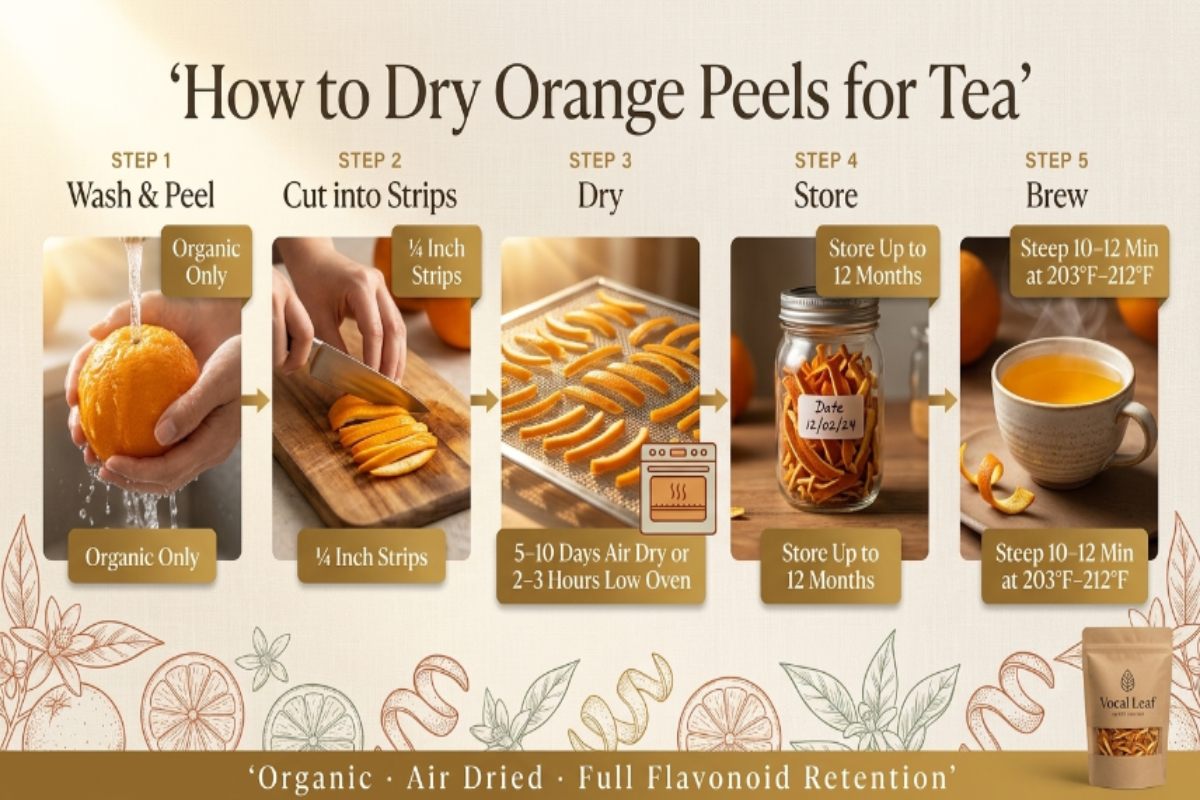
Drying your own orange peels for tea is one of the most practical investments a voice-conscious tea drinker can make. A single batch takes less than a day of passive drying, costs nothing beyond the oranges you would already buy, and produces a shelf-stable supply of clean, concentrated peel ready to steep whenever you need it.
The process is straightforward, but a few variables, such as how thoroughly you remove the pith, the drying method you choose, and how you store the finished product, determine whether the result is a high-quality ingredient or a mediocre one. The guidance below covers all three.
Step-by-Step Drying Orange Peel for Tea
Start with organic oranges whenever possible. Because you are using the peel rather than the fruit, what has been applied to the exterior of the orange- pesticide residues, wax coatings, surface treatments- goes directly into your cup. Organic citrus eliminates that variable.
Wash each orange thoroughly under running water, scrubbing the surface to remove any residual wax or debris. Pat dry before peeling.
Using a sharp vegetable peeler or paring knife, remove the outer colored layer of skin in long strips. Work slowly and deliberately, keeping the blade as shallow as possible. The objective is to catch the flavonoid-rich outer zest while leaving the white pith behind. A thin, cleanly peeled strip, mostly orange in color with only the faintest trace of white, is the target. Thick cuts with substantial pith attached will produce bitter tea regardless of how carefully the rest of the process is managed.
Once peeled, lay the strips in a single layer on a clean baking sheet, parchment paper, or a drying rack. Do not overlap them, contact between pieces during drying traps moisture and creates conditions for mold.
Three drying methods, in order of preference:
Oven drying is the fastest and most controllable method. Set your oven to its lowest temperature setting, if possible.within the range of 170°F and 200°F. Place the peel strips on a parchment-lined baking pan. Allow the sheet to dry for 2 to 3 hours., checking every 30 minutes. The peels are done when they feel completely rigid and snap cleanly rather than bending. Any remaining flexibility indicates moisture is still present.
Air drying requires no equipment beyond a clean surface and adequate airflow. Lay the strips on a rack or hang them loosely, and leave them in a warm, in a space with good airflow, away from direct sunlight, for a period of 24 to 48 hours. Direct sunlight accelerates drying but degrades the volatile aromatic oils that give orange peel tea its fragrance and some of its functional compounds. Indirect warmth is the better environment.
Dehydrator drying produces the most consistent results if you have access to a food dehydrator.Adjust the temperature within the range of 95°F to 115°F, and dry for 4 to 8 hours, relying on the thickness of your strips. The lower temperature range preserves the aromatic volatile oils more completely than oven drying, producing a finished product with a more complex fragrance profile.
Regardless of method, allow the dried peels to cool completely to room temperature before handling further or transferring to storage. Sealing warm peels in a container traps residual heat and any remaining moisture, both of which create conditions that reduce shelf life.
How Long Does Dried Orange Peel Last for Tea
Properly dried and stored, orange peel retains its quality for 6 to 12 months. Within that window, the flavonoid content, aromatic oils, and flavor profile remain largely intact. Beyond twelve months, oxidation and the gradual loss of volatile oils begin to flatten the tea’s character, it will still be safe to drink, but the sensory and functional quality will have declined meaningfully.
The single most reliable indicator that your dried orange peel is past its best is fragrance. Fresh, well-dried orange peel smells intensely of citrus, bright, clean, and immediately recognizable. Peel that has begun to degrade smells faint, musty, or simply like nothing much at all. If the fragrance is gone, the volatile oils are gone with it, and the resulting tea will reflect that loss.
A secondary indicator is color. Well-preserved dried orange peel retains a warm amber-orange tone. Peel that has darkened significantly toward brown, or that shows any visible spots or surface irregularities, should be discarded regardless of how recently it was dried.
For voice professionals building a consistent daily tea practice, dating your storage containers at the time of preparation is a simple habit that eliminates any guesswork about freshness. This organizational step also makes it easier to rotate different wellness blends, including Tea for Inflammation, ensuring that every cup you prepare is both fresh and aligned with your specific vocal and health-support goals.
Storing Dried Orange Peel for Maximum Freshness
The enemies of dried orange peel quality are moisture, light, heat, and oxygen, in roughly that order of destructive priority. Moisture is the most immediate threat. Even a small amount of ambient humidity reintroduced into dried peel begins to reverse the drying process, softening the strips and creating conditions for mold growth. Store dried orange peel exclusively in airtight containers. Glass jars that have secure-fitting lids are considered the best option, they seal completely, do not absorb or transfer odors, and allow you to assess the peel’s condition visually without opening the container.
Light degrades the aromatic volatile oils that give orange peel tea its fragrance and functional character. Store your containers away from windows, countertop display areas, or any location with consistent light exposure. A cabinet, drawer, or pantry shelf provides adequate protection.
Heat accelerates oxidation. The perfect storage temperature is cool and uniform, a storage area or kitchen cupboard located at a distance from the stove, oven, or any heat-generating appliance is sufficient. Refrigeration is not necessary for properly dried peel. It introduces humidity risk if the container is opened while cold and then returned to a warmer environment.
Oxygen exposure is managed by container choice and usage habits. A glass jar that is opened briefly, used, and resealed immediately retains its contents well. Loosely folded bags, containers with degraded seals, or any storage solution that allows regular air exchange will shorten the functional life of your dried peel regardless of the other storage conditions.
For anyone preparing dried orange peel in quantity, dividing the batch into two containers, a smaller working jar opened regularly and a larger reserve jar kept sealed, extends the overall shelf life of the batch by reducing how frequently the bulk of the supply is exposed to air.
Orange Peel Tea vs Loose Leaf Tea Blends What Voice Professionals Prefer
Orange peel tea brewed from a single ingredient is a legitimate wellness practice. It delivers real compounds with real effects, and everything covered in this guide applies to a cup made from nothing but peel and hot water. But for voice professionals, people whose vocal instrument is also their professional tool, a single-ingredient infusion is rarely the complete answer.
The difference between steeping a strip of orange peel and brewing a loose leaf blend formulated specifically for vocal wellness is the difference between a useful input and a purposeful one. One delivers what citrus peel happens to contain. The other delivers what a voice under professional demand actually needs: a compound profile assembled with the vocal tract in mind, in ratios designed for daily use, with a sensory experience that makes consistency achievable. For performers who understand that vocal health is a long-term practice rather than a pre-show ritual, that distinction matters.
Why Voice Professionals Choose Specially Blended Loose Leaf Teas

Voice professionals have a specific set of requirements that general wellness teas, and single-ingredient infusions, were not designed to meet. The first is compound breadth. A single-ingredient orange peel tea delivers the flavonoid and vitamin C profile of citrus peel. A purpose-built loose leaf blend draws from multiple complementary ingredients, each contributing compounds that address a different aspect of vocal health, mucosal hydration, laryngeal comfort, immune resilience, inflammatory response, in a single cup. The cumulative effect of a well-designed blend exceeds what any one ingredient can accomplish alone.
The second is caffeine management. Caffeine is a diuretic. For a voice professional who depends on systemic hydration reaching the vocal folds, a caffeinated morning tea works against the very outcome they are trying to achieve. Naturally caffeine-free blends, not decaffeinated through chemical processing, but inherently caffeine free tea by ingredient selection, deliver hydration without the desiccating trade-off. This is not a minor distinction for someone performing or teaching for hours at a stretch.
The third is consistency. A loose leaf blend that tastes genuinely good is one that gets made every day. Vocal wellness is not achieved through occasional intervention, it is built through daily practice. A blend with a flavor profile a performer actually looks forward to is more therapeutically effective in practice than a more potent infusion that gets skipped because the taste is medicinal or flat.
The fourth is formulation integrity. An ingredient list specifically assembled for vocal wellness reflects priorities that general grocery-store teas do not share. Every component earns its place based on what it contributes to the vocal instrument, not on cost, filler volume, or mass-market flavor preference.
What to Look for in a Vocal Wellness Tea with Citrus Notes
If you have read this far, you understand what orange peel contributes to a vocal wellness tea: flavonoids that support respiratory mucosal integrity, vitamin C that reinforces the epithelial tissue surrounding the vocal folds, and aromatic volatile oils that make the steeping experience itself part of the benefit. When evaluating a loose leaf blend that incorporates citrus notes for vocal wellness, the criteria worth applying are these:
Ingredient transparency
Every component should be named and have a purpose. A blend that lists “natural flavoring” as a catch-all without specifying its source offers no basis for evaluating what you are actually consuming. Clean ingredient lists, specific, recognizable, and complete, are the baseline standard for any tea you are drinking daily.
Caffeine status
Confirm that caffeine-free claims reflect the actual ingredients rather than a decaffeination process. Chemically decaffeinated teas retain trace solvent residues and undergo processing that alters the original leaf’s compound profile. Naturally caffeine-free blends, those built from ingredients that never contained caffeine, are the appropriate choice for vocal wellness use.
Citrus integration
Orange peel in a blend should be present as a functional ingredient, not a flavoring agent. A meaningful quantity of actual citrus peel in the ingredient list delivers the flavonoid and vitamin C compounds this guide has covered. Citrus “flavor” or “natural orange flavor” delivers neither.
Formulation purpose
The most important differentiator is whether the blend was assembled with vocal health as its organizing principle. General wellness teas, even high-quality ones, are built around broad appeal. A tea formulated exclusively for voice professionals reflects a different set of priorities, ones that align with how a performer’s body actually works and what it actually needs.
Vocal Leaf loose leaf tea for vocal wellness was built on exactly that foundation, every product in the range formulated around the specific demands of singers, speakers, teachers, and performers, naturally caffeine-free, and designed for the daily practice that genuine vocal health requires. If orange peel tea has shown you what citrus compounds can do for your voice, a purpose-built loose leaf blend is the logical next step.
Conclusion
Orange peel tea is a genuinely useful wellness beverage, not because of marketing, but because of chemistry. The flavonoids concentrated in citrus peel, the vitamin C that reinforces the throat’s epithelial lining, the carminative oils that support digestion, the caffeine-free hydration that reaches vocal tissue without the trade-offs of stimulant-based beverages, these are real compounds with real mechanisms, and a daily cup delivers them consistently and cleanly.
Frequently Asked Questions (FAQs)
What is orange peel tea good for?
Orange peel tea is good for immune support, respiratory health, throat comfort, digestive ease, and skin wellness. Its concentrated flavonoids, particularly hesperidin, nobiletin, and tangeretin, support mucosal integrity, reduce inflammatory signaling in the respiratory tract, and contribute to the systemic hydration that vocal tissue depends on. For voice professionals, its caffeine-free compound profile makes it one of the most functionally aligned daily teas available.
Is orange peel tea good for you every day?
Yes, orange peel tea is well-suited to daily consumption for most people. Its naturally caffeine-free profile means it hydrates without the desiccating trade-off of caffeinated beverages, and its flavonoid and vitamin C content deliver meaningful benefits through consistency rather than a single high dose. One to two cups daily, prepared from clean dried peel or a purpose-built loose leaf blend, is a sustainable and effective approach to vocal and immune wellness.
What does orange peel tea do for your body?
Orange peel tea delivers flavonoids and vitamin C that support immune cell function, reinforce the epithelial lining of the throat and respiratory tract, reduce inflammatory signaling in mucosal tissue, and contribute to healthy circulation in the fine vessels surrounding the larynx and vocal folds. It also supports digestive comfort through the carminative properties of the peel’s volatile oils, which help reduce bloating and support smooth gut motility. The cumulative effect of daily intake is a body that is better hydrated, better defended, and better supported at the tissue level than one relying on caffeinated or sugar-laden alternatives.
What are the benefits of drinking orange peel tea?
The primary benefits of drinking orange peel tea are immune support through vitamin C and flavonoid intake, respiratory and throat comfort through anti-inflammatory compounds, digestive ease through carminative volatile oils, skin health through antioxidant and collagen-supporting activity, and metabolic support through nobiletin’s documented effects on fat metabolism. For voice professionals specifically, the benefit that distinguishes orange peel tea from general wellness beverages is its direct relevance to vocal fold health, supporting the mucosal layer, laryngeal circulation, and systemic hydration that healthy phonation requires.
How do you make orange peel tea at home?
Orange peel tea can be made three ways: with fresh peel, dried peel, or orange peel powder. For fresh peel, steep three to four strips of outer skin, pith removed, in eight ounces of water at 200°F to 212°F for five to seven minutes. For dried peel, use one to two teaspoons per eight ounces and steep for eight to ten minutes at the same temperature. For powder, whisk half a teaspoon directly into hot water and allow three to five minutes of contact time before drinking.
Is dried orange peel tea the same as fresh?
Dried and fresh orange peel tea deliver the same core compounds, flavonoids, vitamin C, and volatile aromatic oils, but differ in concentration and flavor profile. Dried peel is more concentrated per gram because moisture removal densifies the flavonoid content, meaning a smaller quantity produces a comparably potent cup. Fresh peel produces a brighter, more aromatic infusion with a lighter flavor. For daily vocal wellness use, dried peel is the more practical and consistent choice; fresh peel is best when fragrance and immediacy are the priority.
Can orange peel tea help with a cough or cold?
Orange peel tea supports the body’s response to coughs and colds through two primary mechanisms: its vitamin C content reinforces immune cell production and function, and its warm liquid delivery maintains the mucosal hydration that helps the respiratory tract clear pathogens and irritants more efficiently. The aromatic steam from a freshly poured cup also provides mild decongestant comfort. It is not a clinical treatment, but as a caffeine-free daily beverage during illness it supports recovery without introducing compounds that dry or stress the vocal tract.
What does orange peel tea taste like?
Orange peel tea tastes like a clean, lightly bitter citrus infusion, brighter and more aromatic than black tea, with the recognizable character of fresh orange peel rather than orange juice sweetness. Fresh peel produces a more fragrant, delicate cup; dried peel delivers a deeper, slightly earthier citrus flavor with more body. The degree of bitterness is directly controlled by how much white pith remains on the peel and how long the steep runs, both variables are easy to adjust once you have made a cup or two.
Is orange peel tea good for your stomach?
Yes, orange peel tea has well-documented carminative properties, meaning it helps reduce gas, ease bloating, and support smooth digestive motility through the volatile oils, particularly limonene, concentrated in the peel. Hesperidin also supports gut mucosal integrity, which is relevant for anyone managing acid reflux or laryngopharyngeal reflux alongside vocal demands. A digestive system that functions smoothly and maintains appropriate mucosal barriers is one fewer source of vocal irritation for performers and speakers.
Is orange peel tea good for weight loss?
Orange peel tea supports a weight management practice but should not be positioned as a weight loss treatment. Nobiletin, one of its key flavonoids, has shown promising effects on fat metabolism in research settings, though direct human clinical evidence remains limited. What orange peel tea reliably delivers in this context is a calorie-free, caffeine-free daily beverage that replaces higher-calorie alternatives, contributes to consistent hydration, and provides a mild appetite-moderating effect through its naturally bitter flavor profile, all meaningful contributions to a well-managed approach to weight.
Can orange peel tea help your voice?
Orange peel tea supports vocal health through three converging mechanisms: its flavonoids reduce inflammatory signaling in the laryngeal and mucosal tissue surrounding the vocal folds, its vitamin C reinforces the epithelial lining of the vocal tract, and its naturally caffeine-free warm liquid delivery provides systemic hydration without the desiccating effect of caffeinated beverages. The benefit is systemic rather than immediate, nothing swallowed touches the vocal folds directly, but consistent daily intake builds the hydrated, well-supported vocal tissue that withstands professional demand. For a more complete vocal wellness solution, a loose leaf tea blended specifically for voice health delivers a broader compound profile in a single purposeful cup.
How do you dry orange peels for tea?
Wash organic oranges thoroughly, then use a vegetable peeler to remove thin strips of outer skin with as little white pith as possible. Lay the strips in a single layer on a parchment-lined baking sheet and dry in an oven set to its lowest temperature, between 170°F and 200°F, for two to three hours, until the strips snap cleanly rather than bend. Allow them to cool completely before transferring to an airtight glass jar stored away from light and heat. Properly dried and stored orange peel holds its quality for six to twelve months.
Top Selling Products






Best Tea for Singers | What Actually Helps Your Voice
If you sing, whether you perform professionally, teach voice lessons, or spend your weekends in rehearsal, you’ve probably wondered whether tea actually does anything useful…

Best Tea for Vocal Cords | Herbs, Hydration and Recovery
If your voice feels tired, strained, or dry, the right tea for your vocal cords can make a real difference, not by healing damaged tissue,…

Best Tea for Laryngitis | Soothe Your Voice Naturally
The best tea for laryngitis is a warm, caffeine free loose leaf blend that hydrates the throat and eases the strain on inflamed vocal cords.…

What Is Chai Tea? The Ultimate Guide to Ingredients, Benefits, Types & How It’s Made
If you’ve ever wondered what chai tea is, you’re not alone. It’s one of the most searched beverage questions online, yet the answer is often…

Best Tea for Your Voice | Does It Make You Sound Deeper
What it can do is change how your voice feels and sounds in the moment, which is where most of the confusion starts. If you…

The Best Tea for Performers & Speakers, And Why Your Voice Deserves Better
You spend hours rehearsing the words. You perfect the tone, the breath, the timing. But then you reach for whatever is nearby, a cup of…
Best Tea for Stress Relief | Calming Loose Leaf Blends
Stress is something everybody carries. It shows up in tight shoulders, restless nights, and a mind that won’t quiet down after a long day. And…

Best Tea for Dry Throat | The Teas That Help and the Ones That Hurt
The best teas for a dry throat are caffeine-free herbal blends, teas with no tannins to strip moisture from the throat lining and no caffeine…
Best Teas for Acid Reflux, Heartburn and GERD
Acid reflux doesn’t just cause heartburn. If you have searched for tea good for acidity, you are asking the same question, acidity and acid reflux…

Best Morning Tea for Energy and Focus Without Coffee Crash
The best tea to drink in the morning is black tea if you want steady, coffee level energy without the crash, rooibos chai if you…
Best Tea for Cough | The Complete Guide to Soothing Relief
The best tea for cough relief is a warm, hydrating blend that soothes irritated throat tissue while easing the reflex that triggers coughing in the…

Best Teas for a Cold That Actually Work
Best teas for a cold combines warmth, hydration and gentle steam to ease congestion, calm a scratchy throat and help your body rest while it…