
Chinese Black Tea | Origins, Types, Benefits and Brewing
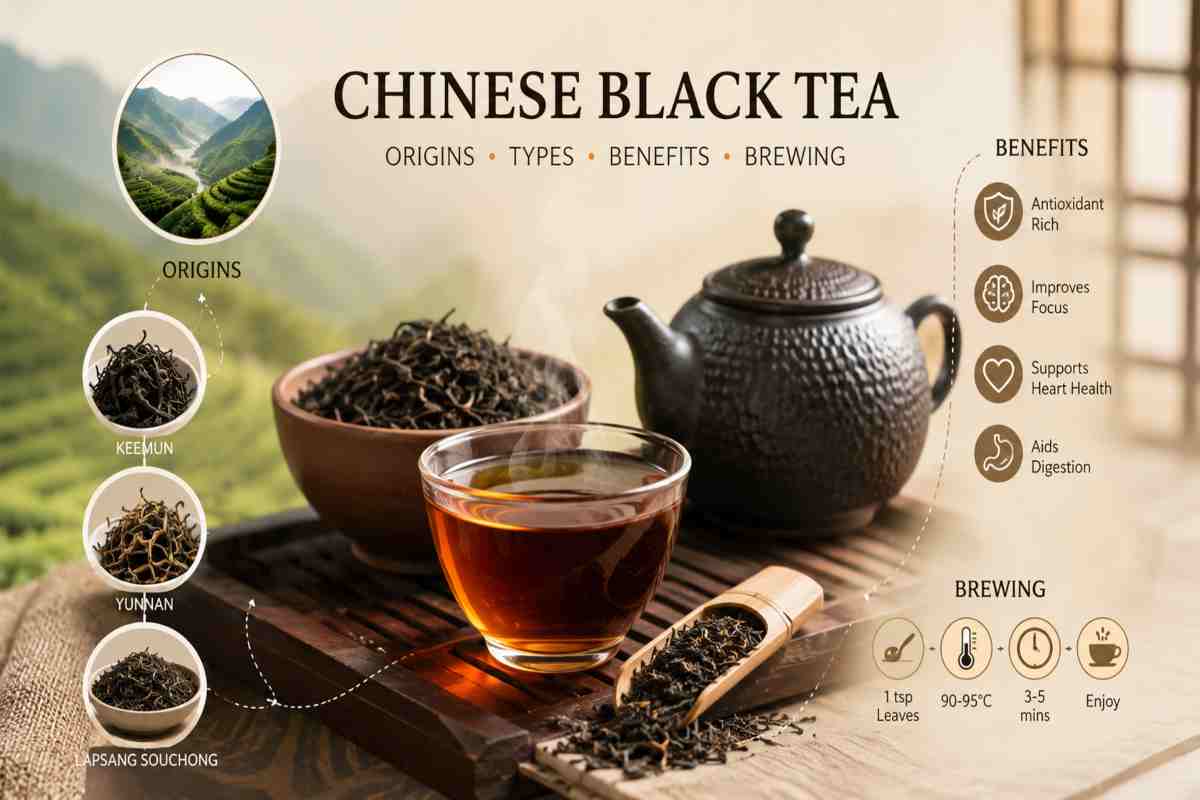
Chinese black tea is the fully oxidized leaf that gave the world black tea itself, before it traveled to Assam, Ceylon or Kenya, it was grown, withered and fired in the mountains of Yunnan and Fujian. What sets it apart from other black teas is not just geography, it is the slower, more traditional oxidation process that produces a smoother, often naturally sweet cup with none of the harsh tannic bite found in mass produced bagged teas.
This guide covers where Chinese black tea comes from, the major varieties worth knowing, how it stacks up against other teas and the exact brewing method that pulls the most flavor from the leaf. If you are building a loose leaf habit, browsing Loose Leaf Tea collection is a good place to see how a well sourced black tea should actually taste, full bodied without bitterness, brewed properly from whole leaves rather than tea dust.
What Is Chinese Black Tea?
Chinese black tea is fully oxidized tea leaf from the Camellia sinensis plant, distinguished from green, white and oolong teas by how long the leaf is allowed to react with oxygen before it’s dried. All tea, green, white, oolong, black, comes from the same plant, the difference is entirely in processing, not the species. Oxidation is what turns the leaf from green to a deep coppery brown and develops the malty, sometimes fruity or smoky depth that defines black tea flavor.
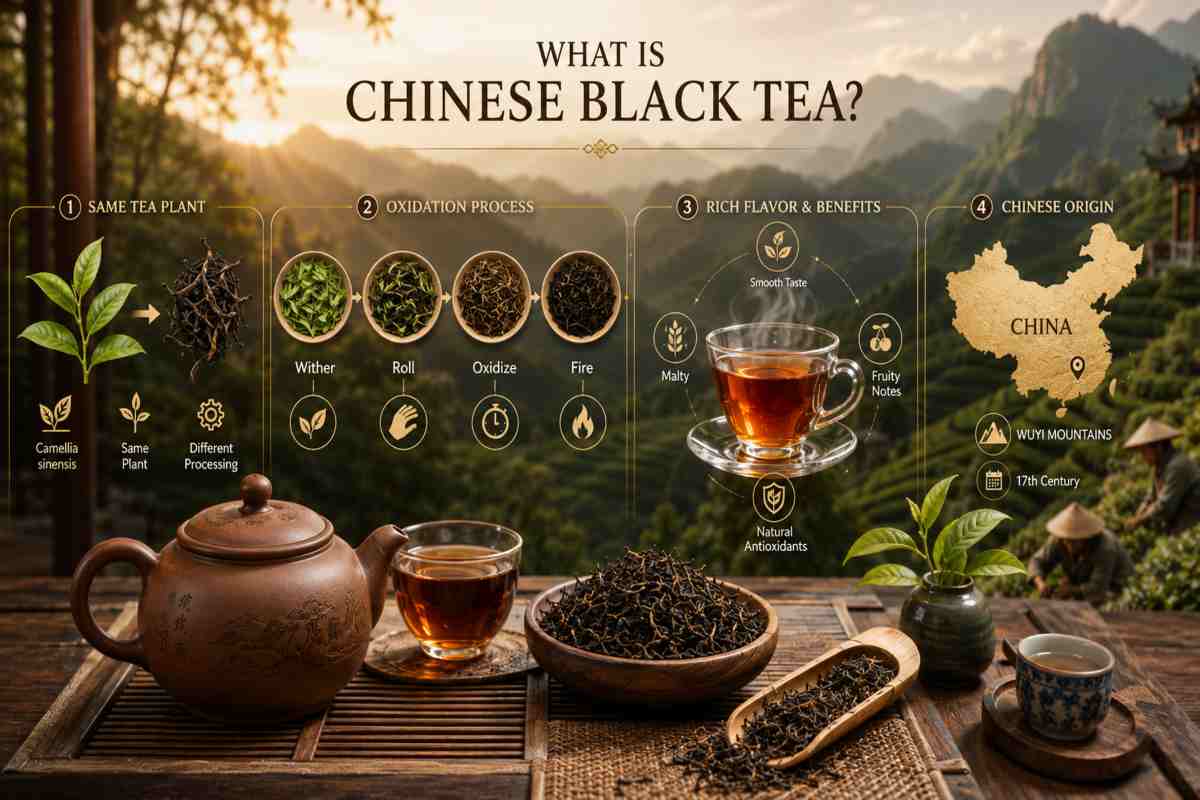
The process itself follows four stages, withering, rolling, oxidizing and firing. Freshly picked leaves are first spread out to wither, losing much of their moisture and becoming pliable. They’re then rolled or crushed to rupture the leaf cell walls, which releases enzymes and exposes the leaf to oxygen, this is the oxidation stage and it is what most people loosely call “fermentation,” though true fermentation (via bacteria) plays little to no role in most black tea production.
Oxidation typically runs anywhere from 1 to 4 hours depending on the variety, until the leaf reaches the desired color and aroma. Finally, the leaf is fired or dried to halt oxidation and lock in flavor, dropping moisture content to below 3% for shelf stability.
China is where this method originated, black tea as a category is believed to have first been produced there in the Wuyi Mountains sometime in the 17th century, making it one of the oldest deliberately engineered tea styles in the world, predating the black teas of India and Sri Lanka by roughly two centuries. That heritage is part of why Chinese black teas are often prized for their smoothness, traditional small batch oxidation tends to produce a rounder, less astringent cup than the faster, machine driven CTC (crush tear curl) processing used for most bagged black tea today.
The Major Types of Chinese Black Tea
Chinese black tea is not a single product but a category with distinct regional styles, each shaped by local terroir and processing tradition. The five most recognized types, Yunnan, Keemun, Lapsang Souchong, Jin Jun Mei and the Wuyi/Golden Monkey varieties, account for the vast majority of what is exported and consumed globally and each offers a noticeably different cup despite sharing the same base oxidation process.

Yunnan (Dian Hong) Black Tea
Dian Hong, grown in China southwestern Yunnan province, is known for its golden tipped leaves and a naturally sweet, malty flavor often compared to honey or dried fruit. It is produced from a broad leaf tea variety unique to the region, which gives it a fuller body than most other Chinese black teas. Yunnan is also the province most tea historians point to as the birthplace of tea cultivation itself, dating back over a thousand years.
Keemun Black Tea
Keemun comes from Anhui province and is considered China’s classic “English breakfast” style black tea, in fact, it is a core component of many traditional English Breakfast blends. It has a distinctive wine like, slightly fruity aroma with a smooth, non astringent finish and it is produced using a more delicate, labor intensive process than most bulk black teas, which is part of why it’s historically been priced at a premium.
Lapsang Souchong
Lapsang Souchong is a smoked black tea from the Wuyi Mountains, traditionally dried over pinewood fires, which gives it a bold, campfire like aroma unlike any other tea style. It is one of the oldest black teas on record and was reportedly the first black tea ever exported to Europe. The smoke character is intense enough that it’s often used sparingly, blended into cocktails or paired with rich foods rather than sipped as an everyday cup.
Jin Jun Mei
Jin Jun Mei is a newer, high end black tea also from the Wuyi region, made exclusively from tender young buds rather than mature leaves. This selective picking is labor intensive, it can take tens of thousands of hand picked buds to produce a single pound of finished tea, which places it among the more expensive Chinese black teas available. The result is a delicate, honey sweet cup with almost no bitterness.
Wuyi and Golden Monkey Varieties
Beyond Lapsang Souchong and Jin Jun Mei, the Wuyi Mountains produce several other notable black teas, including Golden Monkey, named for its twisted, golden tipped leaves that resemble a monkey paw. Golden Monkey has a smooth, slightly sweet profile with cocoa like undertones and less smokiness than its Lapsang Souchong neighbor. These regional varieties reflect how much nuance exists within Chinese black tea as a category, no two mountain regions produce quite the same cup.
If you’d rather skip the sourcing guesswork, Vocal Leaf Black Tea is organic, loose leaf and brewed the traditional way, a straightforward entry point if you want to experience what full leaf oxidation actually tastes like before exploring rarer regional styles.
Chinese Black Tea vs Other World Black Teas
Chinese black tea differs from Assam, Darjeeling, Ceylon, Kenyan and Turkish black teas mainly in processing method and resulting body, most non Chinese black teas use the faster CTC (crush tear curl) method, while traditional Chinese production favors whole leaf, hand finished oxidation. Assam, grown in northeast India, is bold, malty and high in caffeine, often used as the backbone of English Breakfast blends. Darjeeling, sometimes called the champagne of teas, is lighter and more floral, closer in character to Chinese Keemun than to Assam.
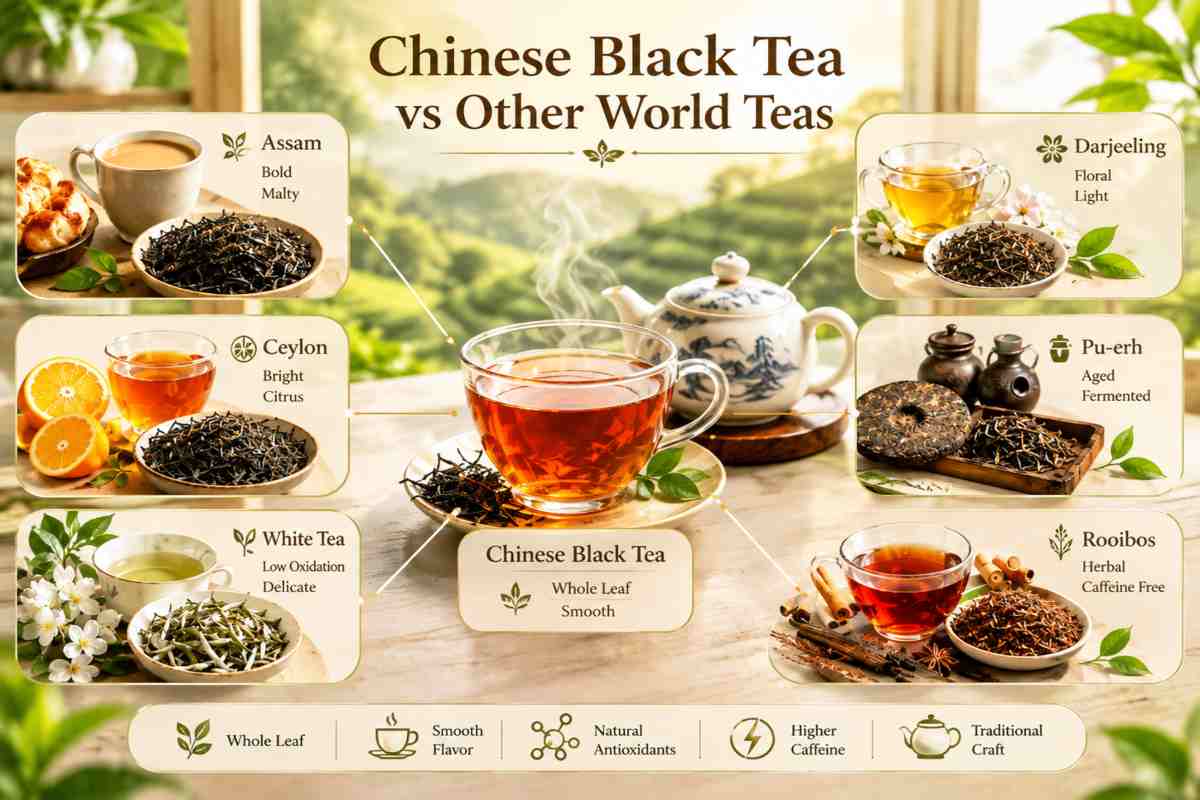
Ceylon black tea from Sri Lanka tends to be brisk and citrusy, Kenyan black tea is deep colored and strong, favored in mass market tea bags and Turkish black tea is typically brewed extremely strong and served with sugar rather than milk. Chinese black teas, by contrast, are generally smoother and less astringent, since traditional processing avoids the aggressive leaf crushing that CTC methods use to maximize strength and speed. This is largely why Chinese black teas are prized for drinking plain, while many other world black teas are built to hold up against milk and sugar.
Chinese Black Tea vs White Tea
The core difference between black and white tea is oxidation level, black tea is fully oxidized, while white tea is barely processed at all, made from young buds and leaves that are simply withered and dried. This gives white tea a pale color, delicate flavor and lower caffeine content, whereas Chinese black tea is deep amber to red, bolder and higher in caffeine. Both can come from the same tea gardens in China, but the finished character is almost entirely a product of how much oxidation the leaf is allowed to undergo.
Chinese Black Tea vs Pu erh
Pu erh is a fermented tea, not simply an oxidized one, the key distinction is that pu erh undergoes a secondary microbial fermentation process, often aging for months or years, while black tea flavor is fixed once firing halts oxidation. This gives pu erh an earthy, sometimes mushroom like depth that intensifies with age, unlike black tea, which is meant to be consumed relatively fresh. Because of this, pu erh is technically its own tea category in China, separate from black tea despite the visual similarity in color.
Chinese Black Tea vs Rooibos Herbal Distinction
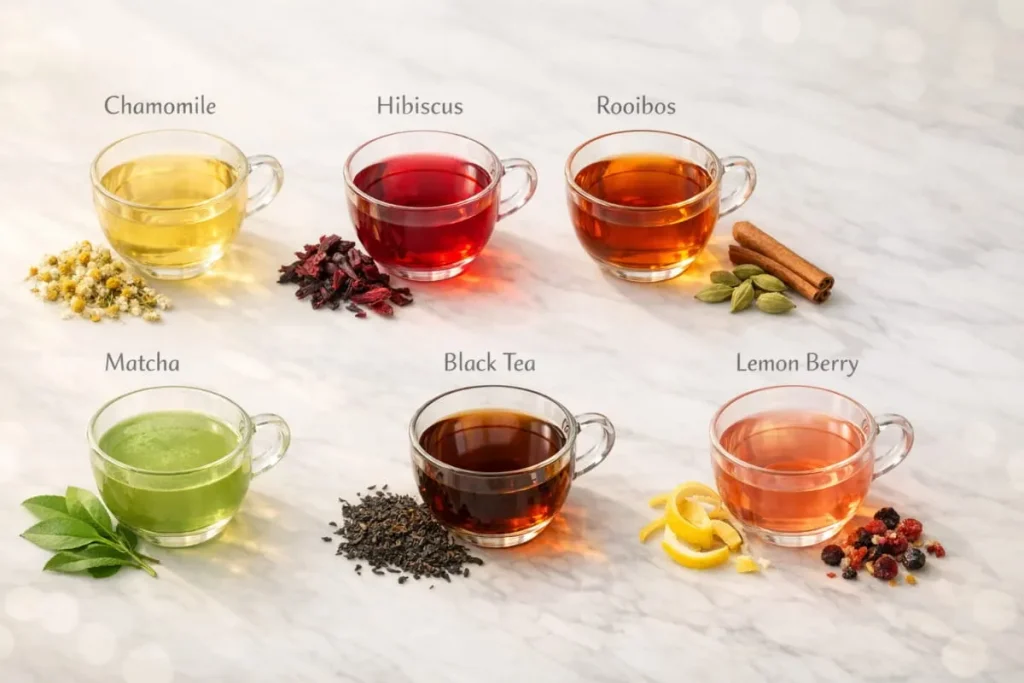
Rooibos isn’t tea at all in the botanical sense, it’s an herbal infusion made from the rooibos plant native to South Africa, containing no caffeine and no relation to Camellia sinensis. Chinese black tea, by contrast, is a true tea with naturally occurring caffeine and the tannins characteristic of oxidized leaf. If you want the warm, spiced comfort of chai but prefer to skip caffeine entirely, organic rooibos chai tea delivers that same cozy, spice forward profile without the stimulant effect black tea naturally carries.
Popular Flavor Pairings and Blends
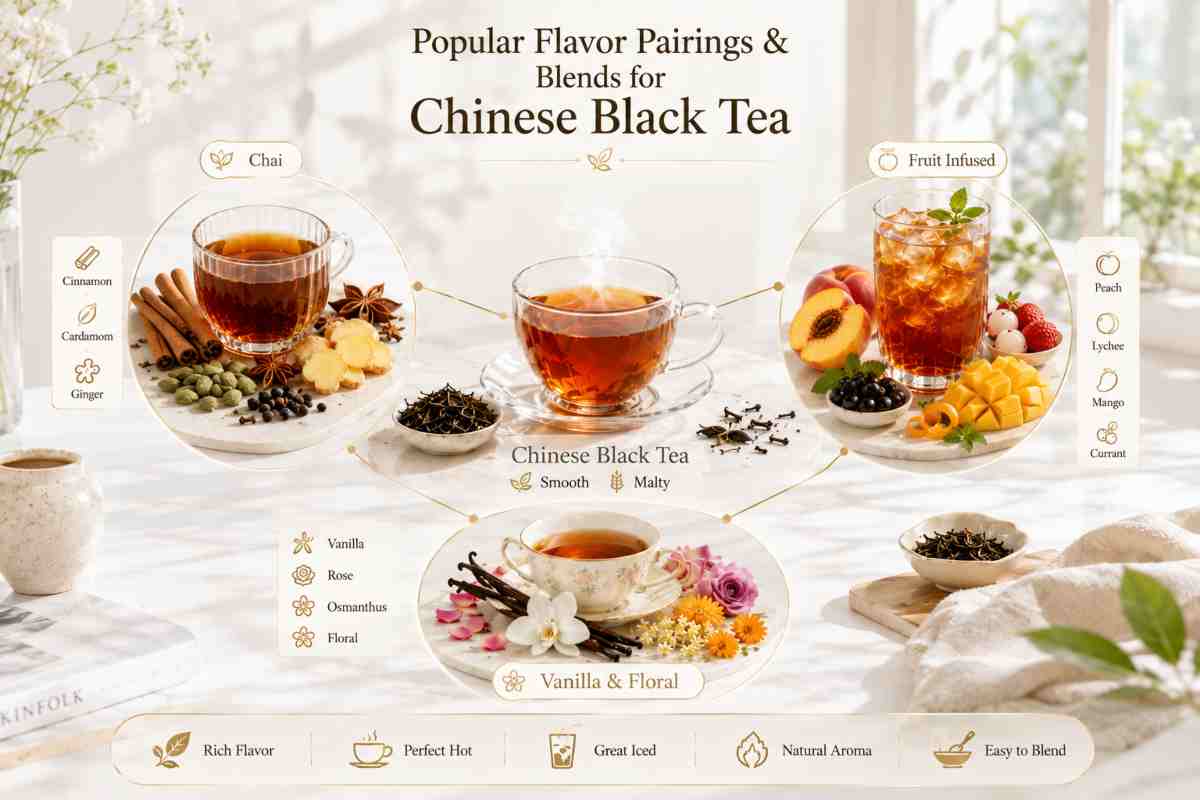
Chinese black tea naturally malty, full bodied base makes it one of the most versatile teas for blending, which is why it shows up as the foundation for chai, fruit infused iced teas and dessert style vanilla blends alike. The tannins in black tea hold up well against strong spices, sweet fruit and creamy flavors without getting lost the way a more delicate green or white tea would.
Spiced and Chai Style Blends
Chai is built on black tea for a reason, its bold, slightly bitter backbone balances the sweetness and heat of spices like cardamom, cinnamon, clove and ginger rather than being overwhelmed by them. Traditional masala chai originated in India, but the black tea base itself is often sourced from the same broad leaf varietals grown in Yunnan and Assam. This is also why chai has become one of the most widely consumed spiced tea styles globally, with black tea as its non negotiable foundation.
Fruit Infused Black Teas Peach, Lychee, Mango and Currant
Fruit infused black teas layer natural or flavored fruit notes, peach, lychee, mango, black currant, over the tea’s malty base, creating a brighter, more approachable cup that works especially well served iced. Lychee black tea, popular throughout Southern China and Taiwan, pairs the tea’s tannic structure with the fruit’s floral sweetness, while black currant is a long standing favorite in European tea blending for its tart, jammy contrast. These blends tend to use less sugar than sweetened iced teas because the fruit itself carries much of the flavor.
Vanilla and Floral Blends
Vanilla and floral additions, rose, osmanthus, marigold, soften black tea’s natural astringency and add a rounder, dessert like character without masking the tea underneath. Vanilla in particular works well because its creamy sweetness complements rather than competes with black tea’s malt notes, a pairing common in both Chinese and Western blending traditions. Vanilla Bliss Tea is built around exactly this balance, real vanilla layered over a full bodied black tea base, smooth enough to drink plain and sweet enough that it rarely needs added sugar.
Health Benefits of Black Tea
Black tea offers several well documented benefits beyond flavor, from supporting digestion to providing a steadier form of energy than coffee. Much of this comes down to its natural compounds, polyphenols, tannins and a modest but meaningful amount of caffeine paired with L theanine, which behave differently in the body than the sugar heavy sodas or high caffeine energy drinks people often reach for instead.

Digestion and Gut Health
Black tea’s tannins have a mild binding effect on the digestive tract, which is part of why it’s traditionally used to settle an upset stomach or ease mild diarrhea. It also contains polyphenols that support the growth of beneficial gut bacteria, contributing to a healthier digestive environment over time. For a closer look at how different tea compounds affect digestion specifically, Best Tea for Digestion breaks down which blends are most effective and when to drink them.
Energy and L Theanine
Black tea contains roughly 40 to 70mg of caffeine per cup, less than coffee’s typical 95mg, but paired with L theanine, an amino acid that promotes calm focus rather than jitteriness. This combination is why black tea tends to produce a steadier, longer lasting energy lift compared to the sharp spike and crash pattern common with coffee or energy drinks. It’s a big part of why black tea remains a preferred choice for people who want alertness without the edge.
Acidity, Reflux and Sensitive Stomachs
Black tea is naturally acidic, with a pH typically between 4.9 and 5.5, which means it can trigger symptoms in people prone to acid reflux or heartburn, especially on an empty stomach. That said, it’s still considerably less acidic than coffee and reflux sensitivity varies significantly from person to person, some people tolerate black tea fine, while others need to dilute it, add milk or avoid drinking it before lying down. If reflux is a regular concern, Best Teas for Acid Reflux covers gentler options and practical ways to make black tea easier on a sensitive stomach.
How to Brew Chinese Black Tea Properly
Chinese black tea is best brewed with near boiling water and a short, controlled steep, roughly 3 to 5 minutes, since the leaf oxidation level makes it far more forgiving of heat than green or white tea, but still prone to bitterness if left too long. Getting the temperature, ratio and method right is what separates a smooth, flavorful cup from a flat or overly astringent one.

Ideal Water Temperature
Chinese black tea should be brewed at 195–212°F (90–100°C), close to a full boil, since fully oxidized leaves need higher heat to properly release their flavor compounds. This is significantly hotter than the water used for green or white tea, which scorches at those temperatures, black tea’s sturdier leaf structure is built to handle it. Water that is too cool will produce a thin, underdeveloped cup no matter how long it steeps.
Steep Time and Leaf to Water Ratio
The standard ratio is about one teaspoon of loose leaf per 8 ounces of water, steeped for 3 to 5 minutes depending on desired strength. Steeping much beyond 5 minutes over extracts the tannins, producing a noticeably more bitter, astringent cup, this is the single most common brewing mistake. For a bolder cup without bitterness, it’s better to add slightly more leaf than to extend the steep time.
Hot Brew vs Cold Brew Method
Hot brewing extracts flavor quickly using near boiling water, while cold brewing steeps the leaves in cold water over 6 to 12 hours in the refrigerator, producing a naturally smoother, less astringent result since fewer tannins are released at lower temperatures. Cold brew also tends to taste slightly sweeter without any added sugar, making it a popular method for iced black tea specifically. Both methods work well with spiced blends,Lemon Berry Dream Tea holds up nicely either way, offering a warming hot cup or a smooth, naturally sweet cold brewed glass depending on the season.
Conclusion
Chinese black tea remains the standard against which nearly every other black tea is measured, smoother, more nuanced and rooted in a processing tradition that predates the mass market CTC teas most people grow up drinking. Whether you’re drawn to the honeyed notes of Yunnan, the smoky intensity of Lapsang Souchong or a spiced chai built on a black tea base, understanding origin and brewing method makes every cup noticeably better. If you are ready to put any of this into practice, Vocal Leaf offers organic, loose leaf blends crafted with the same care this guide has walked through, a solid next step for anyone looking to brew a genuinely great cup at home.
Frequently Asked Questions (FAQs)
How many calories are in black tea?
Plain brewed black tea has virtually zero calories, typically 2 calories or less per 8 ounce cup when consumed without milk or sugar. Calorie count rises significantly once sweeteners, milk or cream are added.
Is decaf black tea available?
Yes, decaffeinated versions exist and go through a process that removes most of the caffeine while preserving the tea flavor profile. Decaf options typically retain around 2–5mg of caffeine per cup, compared to 40–70mg in regular black tea.
How long does black tea stay fresh?
Loose leaf black tea stays fresh for 12 to 24 months when stored in an airtight container away from light, heat and moisture. Flavor gradually fades past that point, though the tea won’t spoil in a way that makes it unsafe to drink.
Can I drink black tea while fasting?
Plain black tea is generally considered fasting friendly since it contains no calories or sugar to break a fast. Adding milk, sugar or cream introduces calories that would typically end an intermittent fasting window.
Will black tea affect my sleep?
Black tea natural caffeine can interfere with sleep if consumed too close to bedtime, though its L theanine content tends to soften the stimulant effect compared to coffee. Most people find drinking it earlier in the day avoids any noticeable sleep disruption.
Top Selling Products






Best Tea for Singers | What Actually Helps Your Voice
If you sing, whether you perform professionally, teach voice lessons, or spend your weekends in rehearsal, you’ve probably wondered whether tea actually does anything useful…

Best Tea for Vocal Cords | Herbs, Hydration and Recovery
If your voice feels tired, strained, or dry, the right tea for your vocal cords can make a real difference, not by healing damaged tissue,…
Best Tea for Laryngitis | Soothe Your Voice Naturally
The best tea for laryngitis is a warm, caffeine free loose leaf blend that hydrates the throat and eases the strain on inflamed vocal cords.…

What Is Chai Tea? The Ultimate Guide to Ingredients, Benefits, Types & How It’s Made
If you’ve ever wondered what chai tea is, you’re not alone. It’s one of the most searched beverage questions online, yet the answer is often…

Best Tea for Your Voice | Does It Make You Sound Deeper
What it can do is change how your voice feels and sounds in the moment, which is where most of the confusion starts. If you…

The Best Tea for Performers & Speakers, And Why Your Voice Deserves Better
You spend hours rehearsing the words. You perfect the tone, the breath, the timing. But then you reach for whatever is nearby, a cup of…
Best Tea for Stress Relief | Calming Loose Leaf Blends
Stress is something everybody carries. It shows up in tight shoulders, restless nights, and a mind that won’t quiet down after a long day. And…

Best Tea for Dry Throat | The Teas That Help and the Ones That Hurt
The best teas for a dry throat are caffeine-free herbal blends, teas with no tannins to strip moisture from the throat lining and no caffeine…

Best Teas for Acid Reflux, Heartburn and GERD
Acid reflux doesn’t just cause heartburn. If you have searched for tea good for acidity, you are asking the same question, acidity and acid reflux…

Best Morning Tea for Energy and Focus Without Coffee Crash
The best tea to drink in the morning is black tea if you want steady, coffee level energy without the crash, rooibos chai if you…

Best Tea for Cough | The Complete Guide to Soothing Relief
The best tea for cough relief is a warm, hydrating blend that soothes irritated throat tissue while easing the reflex that triggers coughing in the…

Best Teas for a Cold That Actually Work
Best teas for a cold combines warmth, hydration and gentle steam to ease congestion, calm a scratchy throat and help your body rest while it…