
Best Tea for Mucus | Natural Teas to Break Up and Clear Congestion

There is something deeply uncomfortable about mucus that just won’t move. It sits heavy in your chest, coats your throat, and turns something as simple as speaking or breathing into a frustrating effort. Whether it’s a seasonal cold, vocal strain, allergies, or just waking up congested, the buildup can make your whole body feel sluggish and off.
Before reaching for a cold pill or a harsh decongestant, many people are turning back to something much simpler: a hot cup of tea.
And there’s a good reason for that.
Hot tea works on mucus in more than one way. The warmth and steam alone help loosen thick secretions and open up your airways. But when the right herbs and compounds are steeped into that cup, you’re not just hydrating, you’re actively helping your body thin mucus, clear congestion, and soothe the irritated tissue that’s causing the buildup in the first place.
This guide breaks down exactly how tea helps with mucus, which teas are most effective, where in the body they work best, throat, chest, or lungs, and how to use them properly. Whether you’re dealing with a stubborn cough, thick throat mucus, or post-nasal drip that just won’t quit, you’ll find clear, practical answers here.
And if you’re a singer, speaker, podcaster, or anyone who depends on a clear, open voice, this matters even more. Excess mucus doesn’t just feel uncomfortable; it can also cause serious problems. It directly affects how you sound and how long you can perform.
Let’s get into it.
Does Tea Actually Help With Mucus? (What the Science Says)
The short answer is yes, but the how matters more than most people realize.
Tea doesn’t just mask the symptoms of congestion the way a decongestant spray might. When used correctly, it works with your body’s natural processes to loosen thick mucus, reduce the inflammation driving its overproduction, and help your airways clear more efficiently. That’s not anecdotal. There’s a reasonable body of evidence supporting the use of warm liquids, steam, and specific herbal compounds for respiratory relief across cultures for centuries.
How Hot Tea Loosens and Thins Mucus
Mucus becomes a problem when it thickens. Under normal conditions, it’s thin enough for your body to move and clear naturally. But when you’re sick, inflamed, dehydrated, or dealing with irritation, it thickens and stagnates, sitting in the throat, chest, or lungs and refusing to budge.
Hot tea addresses this directly and measurably. The heat raises the mucus’s temperature, reducing its viscosity and making it thinner and easier to move. Warm liquids also stimulate the cilia, the tiny hair-like structures lining your airways that are responsible for sweeping mucus upward and out. At the same time, drinking increases overall fluid intake, which keeps your mucous membranes hydrated and prevents that thick, sticky buildup from forming in the first place.
A study published in Rhinology found that hot drinks provided immediate and sustained relief from symptoms, including runny nose, cough, and congestion, significantly more so than the same drink served at room temperature. The warmth isn’t just comfort. It’s doing functional work.

Why Steam, Warmth, and Herbal Compounds Work Together
Here’s where tea has a real advantage over plain hot water.
When you steep a well-crafted herbal blend, you’re not just creating a warm liquid; you’re releasing volatile compounds into both the water and the steam rising from your cup. Breathing in that steam while you drink delivers those compounds directly to the nasal passages and upper airways, helping to open congestion before the tea even reaches your throat.
At the same time, the herbs themselves, once absorbed through the digestive system, can act as natural expectorants, anti-inflammatories, or antimicrobials, depending on the blend. Some compounds help break down the proteins in thick mucus, making it easier to expel. Others reduce the underlying inflammation that’s triggering overproduction in the first place. The result is a layered effect: steam works from the outside in, herbal compounds work from the inside out, and the warmth of the liquid holds it all together.
This is why a quality loose leaf herbal tea tends to outperform a tea bag steeped in lukewarm water: more surface area, more volatile compounds, more steam, and a significantly richer therapeutic effect.
Does Tea Cause or Increase Mucus? (Addressing the Concern)
This question comes up often, and it’s worth addressing directly.
Certain beverages, dairy being the most well-known, can thicken existing mucus or stimulate its production in sensitive individuals. Tea, by contrast, does not cause mucus. In fact, the hydration alone works against mucus buildup rather than contributing to it.
The one caveat worth noting is that highly caffeinated teas, consumed in excess, can have a mildly dehydrating effect, and dehydration is one of the conditions that makes mucus thicker and harder to clear. This isn’t a reason to avoid tea. It’s a reason to choose wisely. Caffeine-free herbal blends, or teas with lower caffeine content, are ideal when your primary goal is mucus relief and throat comfort.
For most people, a warm cup of the right tea is one of the simplest, side-effect-free tools for managing congestion naturally.
The Best Teas for Mucus, Ranked by Effectiveness
Not all teas work the same way on mucus. Some think it, some break it up, some reduce the inflammation causing it, and the best ones do all three at once. What follows is a breakdown of the most effective tea types for mucus relief, ranked by how well their compounds address congestion, and where Vocal Leaf’s blends fit into that picture.

1. Ginger-Based Teas, The Most Powerful Mucus Breaker
Ginger is consistently at the top of any serious conversation about tea and mucus, and for good reason. Its active compound, gingerol, is a potent anti-inflammatory that directly targets the swelling in mucous membranes that drives overproduction. Beyond that, ginger has natural expectorant properties, meaning it actively helps break up and expel thick mucus rather than simply masking the sensation of congestion.
It works particularly well for mucus in the throat and chest, making it a strong choice for singers, speakers, and anyone who needs their voice clear and unobstructed.
Vocal Leaf Lemon Berry Dream brings together ginger and lemon, itself rich in vitamin C and citric acid, which helps thin mucus and support the immune response. The combination creates a genuinely effective mucus-clearing tea that also tastes exceptional. For throat mucus specifically, this is one of the most well-rounded options in the Vocal Leaf lineup.
2. Rooibos-Based Teas, Anti-Inflammatory, Caffeine-Free Relief
Rooibos is one of the most underrated teas for mucus relief. It contains a high concentration of antioxidants, particularly quercetin and luteolin, both of which have demonstrated anti-inflammatory and antihistamine-like properties. For mucus driven by allergies, irritants, or chronic inflammation, rooibos addresses the root cause rather than just the symptom.
Because it’s completely caffeine-free, it doesn’t carry the risk of dehydration that can thicken mucus further. You can drink it freely throughout the day without counteracting the hydration benefits that make hot tea so effective for congestion.
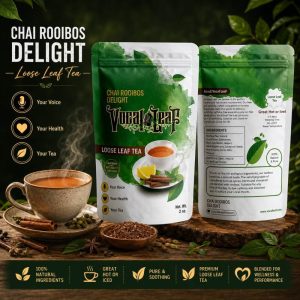
Vocal Leaf Organic Rooibos Chai Tea layers warming spice compounds over that rooibos base, adding depth to the anti-inflammatory profile. The result is a tea that works on mucus from multiple angles, reducing inflammation, supporting hydration, and delivering a warming effect that helps loosen and move congestion in both the throat and chest.
3. Black Tea, The Caffeinated Option That Still Delivers
Black tea contains theophylline, a natural bronchodilator that relaxes and opens the airways, making it easier to breathe and helping move mucus out of the lungs and chest. It also contains tannins, which have mild antimicrobial properties and can help reduce throat inflammation.
The trade-off is caffeine. In moderate amounts, it’s not a problem, and for morning congestion when you want both mucus relief and mental clarity, black tea is genuinely useful. The key is not overdoing it and ensuring you’re also drinking enough water alongside it.
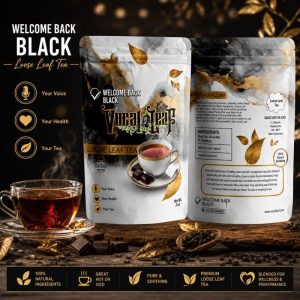
Vocal Leaf Organic Loose Leaf Black Tea is a clean, full-bodied black tea that delivers theophylline’s airway-opening benefits without the additives or fillers found in commercial tea bags. For those dealing with chest mucus or lung congestion, especially in the morning, it’s a practical and effective choice.
4. Vanilla-Infused Herbal Blends, Soothing the Irritation Behind Mucus
Vanilla doesn’t often appear on lists of mucus-fighting ingredients, but its role in tea-based mucus relief is worth understanding. Chronic mucus buildup is often associated with ongoing irritation and inflammation of the throat and airways. Vanilla contains vanillin, a compound with documented anti-inflammatory properties, and the soothing quality of a warm vanilla-based tea helps calm the irritated tissue that keeps the mucus response active.
This makes it particularly valuable for people who aren’t dealing with an acute illness but rather persistent, low-grade throat mucus. This kind affects speakers, vocalists, and teachers day after day.
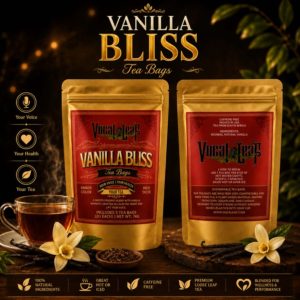
Vocal Leaf Vanilla Bliss is a caffeine-free herbal blend that works best as an evening or recovery tea, helping settle inflammation, soothe the throat lining, and allow the body to reset overnight. It’s a quieter but genuinely effective tool in a mucus management routine.
For acute mucus and congestion, reach for Lemon Berry Dream or Rooibos Chai. For chest and lung mucus, especially in the morning, Organic Loose Leaf Black Tea is your starting point. For persistent throat irritation and long-term mucus management, Vanilla Bliss rounds out the routine.
Used together across the day, these four teas cover the full spectrum of mucus relief, from breaking it up and clearing it out to calming the inflammation that keeps it coming back.
Best Tea for Mucus in the Throat
Of all the places mucus builds up, the throat is where people feel it most acutely. It affects how you speak, how you sing, how you swallow, and how comfortable you feel just going about your day. For vocalists, teachers, podcasters, and public speakers, throat mucus isn’t just an inconvenience; it’s a direct obstacle to performance. Understanding why it forms is the first step to clearing it effectively.

Why Throat Mucus Builds Up
Your throat produces mucus constantly. Under normal conditions, you don’t notice it; it stays thin, moves freely, and does its job of keeping the throat lubricated and protected. The problem starts when something triggers an increase in production or a change in consistency.
The most common culprits are respiratory infections, post-nasal drip, acid reflux, dry air, allergens, and vocal overuse. When the throat is irritated or inflamed, for any of these reasons, the mucous membranes respond by producing more mucus as a protective measure. If you’re also even mildly dehydrated, that mucus thickens, becomes sticky, and starts to accumulate rather than drain naturally.
For singers and speakers, this creates a particularly frustrating cycle. Vocal strain causes throat inflammation, which triggers mucus production, which interferes with vocal function, which in turn leads to more strain as you try to push through it. Breaking that cycle requires addressing both inflammation and mucus simultaneously.
Hot Tea vs. Warm Tea: Does Temperature Matter?
Yes, and more than most people expect.
Research on hot versus room-temperature liquids consistently shows that heat plays a meaningful functional role in mucus relief, not just a comfort role. Hot liquids thin mucus more effectively than warm or cool ones, stimulate the cilia in the airways to move mucus upward and out, and generate steam that opens nasal passages and softens congestion in the upper throat before the liquid even reaches the throat.
That said, there’s an important distinction between hot. Tea that is too hot can actually irritate the throat lining further, worsening the inflammation that’s causing mucus buildup in the first place. The ideal temperature is hot enough to produce visible steam, comfortably drinkable but not burning. Most people find this sits around 140–160°F, or what you’d describe as a proper hot cup rather than one that needs to cool down before you can sip it.
For throat mucus in particular, sipping slowly and consistently tends to work better than drinking quickly. Slow sipping keeps the throat in prolonged contact with the warm liquid and its herbal compounds, giving them more time to do their work on the tissue and the mucus sitting there.
Best Tea for Mucus in the Lungs and Chest
Throat mucus is uncomfortable. Lung and chest mucus is a different level entirely. It sits deeper, it’s harder to move, and when it accumulates, it can make breathing feel labored, trigger a persistent wet cough, and leave your chest feeling heavy and congested for days. The good news is that the right tea, used consistently and correctly, can make a real difference in breaking up and clearing that deeper congestion.

What Causes Mucus Buildup in the Lungs
Your lungs and bronchial passages are lined with mucus-producing cells that work around the clock to trap irritants, pathogens, and debris before they can cause more serious damage in the respiratory system. It’s a protective mechanism that, under normal conditions, works silently without you ever noticing.
The problem develops when those cells are overstimulated. Respiratory infections, such as bronchitis or the flu, can cause a significant increase in mucus production as the body tries to flush out the infection. Chronic irritants, such as smoke, pollution, dust, and dry air, keep the mucous membranes in a state of ongoing inflammation, leading to persistent buildup rather than a temporary response. Allergies trigger a similar cycle, with the immune system continuously signaling for more mucus as a defense against perceived threats.
In all of these cases, the mucus thickens over time if it isn’t being cleared efficiently. It pools in the lower airways, creates a breeding ground for secondary infections, and produces that familiar deep chest congestion that a simple cough can’t shift.
Teas That Help Expel Chest and Lung Mucus
Clearing mucus from the lungs requires a tea that can do more than just soothe; it needs compounds that actively work as expectorants, bronchodilators, or anti-inflammatories, at levels deep enough to reach the chest and lower airways.
Vocal Leaf Organic Loose Leaf Black Tea is the strongest starting point here. Its naturally occurring theophylline content acts as a mild bronchodilator, relaxing the smooth muscle around the airways and creating more space for airflow and mucus movement. This is the same class of compound used in some pharmaceutical respiratory treatments; in tea form, the effect is gentler but genuinely functional. For morning chest congestion, when mucus has settled and thickened overnight, a strong cup of black tea can provide an immediate opening effect that makes subsequent clearing much easier.
Vocal Leaf Organic Rooibos Chai Tea complements this with deep anti-inflammatory support. The quercetin and luteolin in rooibos help reduce the bronchial inflammation that’s causing the overproduction. At the same time, the warming spice profile of the chai blend adds a vasodilating effect that promotes circulation and helps loosen mucus in the chest. Where black tea opens the airways, rooibos chai helps calm the underlying irritation that drives congestion.
For a well-rounded chest mucus routine, alternate between these two throughout the day: black tea in the morning for airway opening, and rooibos chai through the afternoon for sustained anti-inflammatory support. This covers both the symptom and the cause.
Tea for Smokers’ Mucus: What Works Best
Smokers experience a specific, persistent form of chest and lung mucus that differs from illness-related congestion. Long-term smoke exposure damages the cilia lining the airways, those hair-like structures responsible for sweeping mucus upward and out of the lungs. When cilia are compromised, mucus accumulates in the lower airways, with no efficient mechanism to clear it, leading to the characteristic chronic productive cough and a heavy chest feeling that many smokers experience, particularly in the morning.
Tea won’t reverse cilia damage. But it can meaningfully support the body’s remaining clearing mechanisms. Staying well hydrated keeps the mucus thinner and more mobile. Anti-inflammatory compounds reduce chronic bronchial inflammation, which accelerates mucus production. And the bronchodilating effect of black tea’s theophylline helps open constricted airways enough for more effective clearance.
Vocal Leaf Organic Loose Leaf Black Tea is the most practical daily option for smokers’ mucus, particularly as a morning ritual before the body’s natural clearing processes peak. Vocal Leaf Organic Rooibos Chai Tea is a good secondary option for sustained anti-inflammatory support throughout the rest of the day, without adding to caffeine intake.
Tea to Get Mucus Out of the Lungs, Usage Guide
Getting tea to work effectively on lung and chest mucus is as much about how you use it as which tea you choose. A few practical principles make a significant difference.
Drink your first cup hot, first thing in the morning. This is when mucus in the lungs is at its thickest after hours of overnight accumulation. The heat and steam begin thinning it immediately, and the herbal compounds start working before you’ve even finished the cup. Sitting upright while drinking, rather than lying in bed, helps gravity assist the clearing process.
Inhale the steam deliberately before each sip. Hold the cup close, breathe in slowly through the nose, and let the warm vapor reach as deep into the nasal passages as possible. This isn’t just comfort; the steam is actively working on the mucus in the upper airways, loosening what’s congested in the chest below.
Consistency matters more than quantity. Two or three cups spread across the day outperform one large cup consumed quickly. The goal is to keep the airways warm and hydrated, and continuously expose them to the anti-inflammatory and expectorant compounds in the tea. Mucus that has been building for days won’t clear in a single session, but with a consistent routine over two to three days, most people notice a significant shift in how freely they can breathe and how productive their cough becomes.
Herbal Tea for Mucus Relief, Complete Guide
Herbal tea has been used for respiratory relief long before modern medicine had a name for what it was doing. What traditional wisdom understood intuitively, science has since confirmed: certain plant compounds interact directly with the body’s mucus-producing systems, either breaking down thick secretions, reducing the inflammation that triggers overproduction, or helping the airways expel what’s already accumulated. The key is knowing which compounds do what, and how to use them effectively.

What Makes a Tea Mucolytic (Mucus-Breaking)?
The term mucolytic refers to anything that breaks down the structure of mucus, reducing its thickness and making it easier for the body to move and expel. In pharmaceutical terms, mucolytics are a specific drug class. In herbal terms, the mechanism is similar but gentler, working through naturally occurring compounds rather than synthetic chemistry.
A tea earns its mucolytic reputation through one or more of the following actions. Expectorant compounds stimulate the respiratory tract to produce thinner, more fluid mucus and increase the force of the cough reflex that expels it. Anti-inflammatory compounds reduce swelling in mucous membranes, which drives overproduction in the first place. Antioxidants like quercetin and luteolin inhibit the release of histamine, one of the primary chemical signals that tells the body to produce more mucus in response to allergens or irritants. And certain volatile oils, when inhaled as steam during brewing, act directly on the nasal passages and upper airways to loosen congestion before the tea is even swallowed.
The most effective herbal teas for mucus relief tend to combine several of these actions rather than relying on a single mechanism. That layered approach is what separates a genuinely therapeutic cup from one that simply tastes good and provides temporary warmth.
Best Herbal Teas to Break Up and Remove Mucus
When it comes to breaking up and removing mucus, the plant compounds that consistently perform best are those with expectorant, anti-inflammatory, and antioxidant properties working in combination.
Ginger is the standout. Gingerol and shogaol, ginger’s primary active compounds, are among the most well-researched natural expectorants available. They thin mucus, stimulate its movement through the airways, and simultaneously reduce the bronchial inflammation that keeps the body producing more. For throat and chest mucus, ginger-based blends are the most direct and reliable herbal option.
Rooibos brings a different but equally valuable profile. Its high concentration of quercetin gives it genuine antihistamine-like properties, making it particularly effective for mucus triggered by allergies or chronic irritation rather than acute infection. It’s also completely caffeine-free, which matters for mucus management. Sustained hydration without the dehydrating risk of high caffeine intake keeps mucus thin and mobile throughout the day.
Vanilla, often overlooked in this context, contains vanillin, a compound with documented anti-inflammatory activity that helps calm the irritated throat and airway tissue that perpetuates the mucus response. It won’t break up mucus as aggressively as ginger, but for persistent, low-grade throat mucus tied to ongoing inflammation, its soothing properties are genuinely useful.
Black tea contains theophylline, a natural bronchodilator that opens the airways and significantly improves mucus clearance from the lungs and chest. It also delivers tannins with mild antimicrobial properties, adding another layer of support when mucus is tied to infection rather than just inflammation.
Vocal Leaf’s four blends, Lemon Berry Dream, Organic Rooibos Chai Tea, Vanilla Bliss, and Organic Loose Leaf Black Tea, collectively cover this entire compound profile. Used together throughout the day, they address mucus from every relevant angle: breaking it down, reducing the inflammation that causes it, opening the airways for clearance, and soothing the tissue that keeps the cycle going.
Mucus Cleansing Tea Recipes You Can Make at Home
A good mucus cleansing tea doesn’t need to be complicated. The goal is to maximize the concentration of active compounds while maintaining a high steam output and a temperature within the optimal therapeutic range.
The Morning Mucus Clearing Brew Start with Vocal Leaf Organic Loose Leaf Black Tea steeped for four to five minutes in water just off the boil. Add a thin slice of fresh lemon before drinking. The theophylline in the black tea opens the airways, the lemon adds mucus-thinning citric acid, and drinking it hot on an empty stomach means the compounds reach the system quickly without competing with food digestion. This is your most functional morning option for chest and lung mucus.
The Throat and Sinus Clearing Blend Steep Vocal Leaf Lemon Berry Dream for five minutes in freshly boiled water, slightly longer than you might for a casual cup. Before you start drinking, hold the cup at face level and breathe in the steam for thirty seconds, slow, deliberate inhalations through the nose. The steam immediately relieves nasal and upper-throat congestion, while the tea cools to an ideal drinking temperature. This one works particularly well for mucus in the throat and sinuses, as well as for vocalists dealing with pre-performance congestion.
The Evening Anti-Inflammatory Wind-Down Steep Vocal Leaf Vanilla Bliss or Vocal Leaf Organic Rooibos Chai Tea in the hour before bed. Both are caffeine-free, so you get the full anti-inflammatory and soothing benefits without disrupting sleep. Evening is when the body does its most intensive repair work, and going to sleep with reduced airway inflammation, rather than active congestion, sets up a noticeably cleaner morning. For chronic or recurring mucus issues, this evening ritual tends to be where the most meaningful long-term improvement comes from.
Hot Tea for Mucus: Does It Really Work?
It’s one of those remedies that gets passed down through generations without much explanation. Someone hands you a hot cup of tea when you’re congested and tells you it will help. And it does. But the reason it works is more specific and more interesting than most people realize, and understanding the mechanism makes it easier to use hot tea as a genuinely effective tool rather than just a comforting habit.

The answer to whether hot tea really works for mucus is an unambiguous yes, with the important qualifier that temperature, technique, and what’s in the cup all determine how much benefit you actually get.
How Hot Tea Clears Mucus From the Throat and Sinuses
Heat does several things to mucus simultaneously. First, it reduces viscosity, the physical thickness of the mucus itself. Thick, stagnant mucus is the problem. Warm liquid raises the local temperature in the throat and airways enough to thin those secretions, making them far easier for the body to move and expel naturally.
Second, hot tea generates steam, and that steam is doing significant work before you even take a sip. Inhaling warm vapor through the nose humidifies the nasal passages, loosens the mucus sitting in the sinuses, and stimulates the cilia, those microscopic hair-like structures lining your airways, to become more active. Cilia are the body’s primary mucus transport system, sweeping secretions continuously upward and out. Cold, dry air suppresses their activity. Warm, humid air does the opposite.
Third, drinking any hot liquid increases overall mucosal blood flow in the throat and upper airways. This improved circulation helps the tissue function more efficiently, supports the immune response in the area, and accelerates the natural drainage process that clears mucus from both the sinuses and the back of the throat.
Together, these three mechanisms, viscosity reduction, steam inhalation, and increased mucosal circulation, explain why a hot cup of tea consistently outperforms a room-temperature one for mucus relief. It’s not a placebo. It’s physics and physiology working together.
Best Hot Teas to Break Up Mucus Fast
When you need mucus relief quickly, the priority is a tea that combines strong heat retention with high concentrations of active mucolytic or expectorant compounds. A tea that cools quickly loses both its steam benefit and its thermal thinning effect before it can do its best work.
Loose leaf teas steeped in freshly boiled water hold heat longer than tea bags in lukewarm water, and they release significantly more of their active compounds in the process. This is a practical point worth emphasizing: the preparation method directly affects how quickly and effectively the tea works.
For speed and strength, Vocal Leaf Lemon Berry Dream is the top choice. The ginger and lemon compounds work quickly on throat and sinus mucus, and the blend’s natural brightness makes it easy to drink hot without feeling harsh. Steep it at full boil, keep the cup covered for the first two minutes to trap steam and heat, then drink it slowly while deliberately inhaling the vapor before each sip.
Vocal Leaf Organic Loose Leaf Black Tea is the fastest-acting option for chest and lung mucus specifically. Theophylline begins its bronchodilating effect relatively quickly after consumption, and a strong, hot cup on an empty stomach, particularly first thing in the morning, delivers that airway-opening benefit when congestion is typically at its worst.
For those avoiding caffeine, Vocal Leaf Organic Rooibos Chai Tea holds heat exceptionally well thanks to its dense blend, and its anti-inflammatory compounds get to work on the underlying cause of mucus production. At the same time, the warmth addresses the immediate thinning effect.
Hot Tea With Honey for Mucus: Is It More Effective?
Yes, and the combination is well-supported beyond just tradition.
Honey has distinct properties that complement what hot tea already does for mucus. It contains enzymes that produce small amounts of hydrogen peroxide, giving it genuine antimicrobial activity against several common respiratory pathogens. More specifically, honey is hygroscopic; it draws moisture to itself, helping keep the throat and airway tissue hydrated and reducing the dryness that thickens mucus and prolongs congestion.
Honey also acts as a natural demulcent, coating the throat lining with a protective layer that soothes irritated tissue, reduces the urge to repeatedly clear the throat, and creates a more favorable environment for healing. For anyone dealing with mucus tied to a sore or inflamed throat, this coating effect provides noticeable relief that the tea alone doesn’t quite replicate.
The practical recommendation is to add raw honey, ideally a high-quality variety with strong enzyme activity, after the tea has steeped and cooled slightly to drinking temperature. Adding honey to boiling water degrades some of its active enzymes, reducing its therapeutic value. A teaspoon stirred into a hot but drinkable cup of Vocal Leaf Lemon Berry Dream or Vocal Leaf Vanilla Bliss creates one of the most effective natural mucus remedies available, warming, anti-inflammatory, mucolytic, and genuinely pleasant to drink.
Tea for Cough and Mucus, When Congestion Gets Stubborn
A cough and mucus almost always arrive together, and for good reason. When mucus thickens and accumulates in the airways, the body responds with a cough reflex that helps clear it. The cough isn’t the problem. It’s the body doing exactly what it should. The problem is that when the mucus is too thick to move efficiently, it turns what should be a productive clearing mechanism into a frustrating, exhausting cycle that lasts for days.
This is where tea earns its place not just as a comfort drink but as a functional respiratory tool. The right tea doesn’t suppress the cough; it works with it, thinning the mucus enough for the cough actually to do its job.

Best Teas for Wet/Productive Coughs
A wet or productive cough, the kind that brings up mucus, signals that your body is actively trying to clear the airways. The goal with tea in this situation isn’t to stop the cough. It’s to make each cough more effective by ensuring the mucus is thin enough to move.
Vocal Leaf Organic Loose Leaf Black Tea is particularly well-suited here. Theophylline relaxes bronchial smooth muscle, widening the airways and making it physically easier to shift mucus that’s settled deep in the chest. A strong cup in the morning, when overnight accumulation is at its peak, tends to produce noticeably more productive results from the coughs that follow. The tannins in black tea also provide mild antimicrobial activity, which matters when a productive cough is associated with an active infection.
Vocal Leaf Organic Rooibos Chai Tea works as a strong companion throughout the rest of the day. Its quercetin and luteolin content reduce bronchial inflammation, which keeps mucus production elevated, addressing the cause, while black tea handles clearance. For a stubborn wet cough that’s been going on for more than a couple of days, alternating between these two gives the body consistent support from both directions.
Teas That Make You Cough Up Mucus (Expectorant Effect)
This sounds counterintuitive at first. Why would you want a tea that makes you cough more? But an expectorant doesn’t cause coughing out of nowhere. It works by thinning and loosening mucus that’s stuck in the airways, stimulating the body’s natural reflex to expel it. The result is a more productive cough that actually clears congestion rather than just irritating the throat without bringing anything up.
The expectorant effect in tea comes primarily from compounds that stimulate the respiratory mucosa, the lining of the airways, to produce thinner, more mobile secretions. Ginger’s gingerol is one of the best-studied natural expectorants, directly stimulating the airway lining and increasing mucociliary clearance, the process by which cilia sweep mucus upward and out of the lungs.
Vocal Leaf Lemon Berry Dream delivers this through its ginger and lemon profile. Lemon’s citric acid helps break down the protein bonds that make mucus thick and sticky, while ginger stimulates the expectorant response in the respiratory tract. Drinking it hot, slowly, and while deliberately inhaling the steam maximizes this effect. Many people find that after a cup, the coughs that follow are noticeably more productive, bringing up mucus that had been sitting stubbornly in the throat or upper chest.
This isn’t a violent or uncomfortable process when a well-formulated herbal tea drives it. It’s a gentle loosening, the kind that leaves the airways feeling genuinely clearer rather than more irritated.
Tea for Mucus and Sore Throat Together
Mucus and a sore throat are frequent companions, and they tend to reinforce each other in an uncomfortable loop. Post-nasal drip coats the back of the throat in thick mucus that irritates the tissue, causing soreness and inflammation, which in turn triggers more mucus production as the body tries to protect the inflamed area. Breaking that cycle requires a tea that addresses both the mucus and the irritation simultaneously.
Vocal Leaf Vanilla Bliss is the most targeted option here. Vanillin’s anti-inflammatory properties directly calm inflamed throat tissue, reducing the irritation that keeps the mucus response active. The blend’s caffeine-free, deeply soothing quality makes it easy to drink frequently throughout the day without risking further drying or irritation of the throat, which matters when that tissue is already compromised.
For more acute cases where the sore throat is significant, and the mucus is thick and difficult to clear, pairing Vanilla Bliss with Vocal Leaf Lemon Berry Dream creates a genuinely effective two-part approach. Lemon Berry Dream handles the mucolytic work, thinning and loosening the mucus, while Vanilla Bliss soothes the raw, inflamed tissue underneath. Add a teaspoon of raw honey to either cup, and you also get the demulcent coating effect that provides immediate throat comfort while the herbal compounds do their deeper work.
The key with this combination is patience and consistency. One cup won’t resolve a sore throat and mucus situation that’s been building for days. But three or four cups spread across the day, maintained over two to three days, tends to produce a meaningful and lasting shift, less mucus, less soreness, and a throat that finally feels like it’s heading in the right direction.
How to Make the Best Mucus-Clearing Tea at Home
Making an effective mucus-clearing tea at home is less about following a rigid formula and more about understanding what you’re trying to achieve and preparing your tea in a way that maximizes the therapeutic effect of whatever’s in your cup. Temperature, steep time, and technique all matter. A well-prepared cup of the right tea will outperform a carelessly made one every single time.

The recipes below are built around Vocal Leaf’s loose-leaf blends, which means you’re starting with clean, high-quality ingredients that are already optimized for respiratory and vocal wellness. What you add to the process at home is precision and intention.
The Morning Airway Opener, Vocal Leaf Black Tea with Lemon
This is your first cup of the day, designed specifically for the thick, settled mucus that accumulates overnight in your chest and throat.
Bring fresh, filtered water to a full boil, not a simmer, a full rolling boil. Measure 1 heaped teaspoon of Vocal Leaf Organic Loose Leaf Black Tea per cup, then steep it covered for 5 full minutes. Covering the cup during steeping is important; it traps the volatile compounds and steam that would otherwise escape into the air. After steeping, add a squeeze of fresh lemon juice directly into the cup.
Before you take your first sip, hold the cup at face level with both hands and breathe in the steam slowly and deliberately, four or five long inhalations through the nose. This primes the nasal passages and upper airways before the tea even reaches your throat. Then drink slowly, sipping rather than gulping, keeping the liquid in contact with the throat for as long as comfortably possible.
The theophylline in the black tea begins its bronchodilating work relatively quickly, and the lemon adds citric acid to help thin the mucus already sitting in the throat. Drink this on an empty stomach for the fastest effect.
The Throat and Sinus Clearing Cup, Vocal Leaf Lemon Berry Dream with Honey
This recipe is built for mucus in the throat and sinuses, and for anyone who needs their voice clear before speaking, singing, recording, or performing.
Boil fresh water and let it rest for 30 seconds off the heat, just enough to drop slightly below a full rolling boil, which helps protect the more delicate compounds in the blend. Steep one heaped teaspoon of Vocal Leaf Lemon Berry Dream for five to six minutes, covered. The longer steep time increases the concentration of ginger’s expectorant compounds and the citric content of lemon.
Once steeped, wait until the cup is hot but comfortably drinkable, around 150°F if you’re measuring, or what feels like a proper hot cup rather than one that burns. Then stir in one teaspoon of raw honey. Adding honey at this stage, rather than into boiling water, preserves its active enzymes and demulcent properties.
Sip slowly. Inhale steam between sips. For pre-performance use, drink this 30 to 45 minutes before you need your voice at its clearest, enough time for the compounds to work through the system and for the throat clearing to happen naturally before you step on stage or hit record.
The Evening Anti-Mucus Recovery Blend, Vocal Leaf Rooibos Chai, or Vanilla Bliss
This recipe is designed for the end of the day, when the goal shifts from active mucus clearance to reducing the inflammation that will drive tomorrow’s congestion if left unaddressed.
Choose either Vocal Leaf Organic Rooibos Chai Tea or Vocal Leaf Vanilla Bliss, depending on what your body needs. Rooibos Chai for deeper anti-inflammatory support, particularly useful if your congestion has been persistent or allergy-driven. Vanilla Bliss if your primary issue is an irritated, sore throat with mucus that’s been aggravated throughout the day.
Steep either blend in freshly boiled water for six to seven minutes, longer than you would for a casual cup. The extended steep time draws out more of the quercetin from the rooibos or the vanillin from the vanilla, both of which are the compounds doing the anti-inflammatory work. Drink it slowly in the hour before bed, without screens or distractions if possible. The calm, unhurried act of drinking it is part of the benefit; stress hormones like cortisol actively worsen airway inflammation, and proper winding down. In contrast, you drink gives the herbal compounds the best possible environment to do their work.
Going to sleep with reduced airway inflammation rather than active, unaddressed congestion consistently produces a cleaner, less congested morning. For anyone dealing with recurring or chronic mucus issues, this evening ritual is often where the most lasting improvement comes from.
Tea for Mucus, Specific Conditions Guide
Mucus is not a single, uniform problem. Where it originates, what’s causing it, and how long it has been building all determine which approach will work best. A one-size-fits-all answer rarely serves anyone well here. This section breaks down the most common specific conditions that drive mucus buildup and maps the most effective tea strategies to each one.
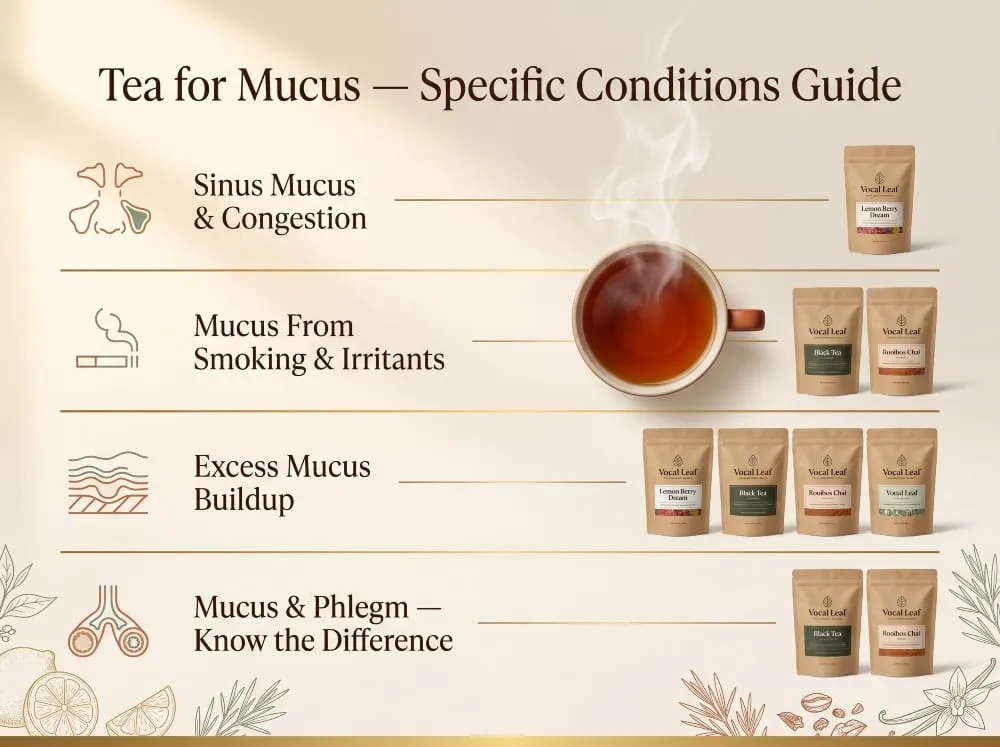
Tea for Sinus Mucus
Sinus mucus is a distinct experience from throat or chest congestion. It sits higher, behind the nose and across the cheekbones, and when it thickens, it creates that familiar feeling of pressure, heaviness, and blockage that makes breathing through the nose feel like an effort. Post-nasal drip, where excess sinus mucus drains down the back of the throat, is one of the most common causes of persistent throat irritation and that constant need to clear the throat.
The most effective teas for sinus mucus are those that combine steam delivery with compounds that reduce nasal inflammation and thin the secretions sitting in the sinus cavities. Steam is especially critical here because the sinuses are not directly reached by swallowed liquid; they respond to what’s inhaled.
Vocal Leaf Lemon Berry Dream is the strongest choice for sinus congestion. The technique matters as much as the tea itself. Steep it hot, hold the cup close to your face immediately after pouring, and take five to six slow, deliberate inhalations through the nose before drinking. This delivers the volatile compounds directly to the nasal passages, where the congestion is sitting. The lemon and ginger compounds in the blend reduce nasal inflammation and begin thinning the mucus, while the steam physically loosens what’s blocked. Repeat this steam inhalation ritual with each cup, two to three times throughout the day, for best results with sinus congestion.
Tea for Mucus From Smoking or Irritants
Mucus from smoking or chronic irritant exposure is one of the most persistent and difficult types to manage because the underlying cause, ongoing damage, and inflammation don’t resolve between cups of tea. The cilia responsible for clearing mucus from the airways are progressively impaired by smoke exposure, compromising the body’s natural clearance mechanism while mucus production is chronically elevated.
Tea in this context works best as a consistent daily support system rather than an acute remedy. The goal is twofold: keep the mucus thin enough that the remaining functional cilia can still move it, and reduce the chronic bronchial inflammation that keeps production elevated.
Vocal Leaf Organic Loose Leaf Black Tea in the morning addresses the first goal through theophylline’s bronchodilating effect, opening constricted airways and improving whatever clearance the body can manage. Vocal Leaf Organic Rooibos Chai Tea, throughout the afternoon, addresses the second: its quercetin content works as a sustained anti-inflammatory, gradually reducing the chronic irritation that is the root driver of smoke-related mucus buildup.
For people exposed to environmental irritants rather than smoke, dust, pollution, or chemical fumes, the same approach applies. The irritant changes, but the mechanism remains identical: chronic, low-grade inflammation driving persistent mucus production. Consistent daily tea consumption, prioritizing anti-inflammatory blends, makes a measurable difference over time, even when the irritant exposure itself cannot be fully eliminated.
Tea for Excess Mucus Buildup
Excess mucus buildup, the kind that accumulates over days or weeks rather than appearing acutely with an illness, is almost always a sign of sustained, unaddressed inflammation somewhere in the respiratory system. It can be allergy-driven, diet-related, stress-related, or simply the result of chronic dehydration and dry air, which keep the mucous membranes in a state of constant low-level irritation.
The approach here needs to combine active clearance with sustained anti-inflammatory support that addresses why the mucus keeps returning, and drinking a single cup of tea once a day won’t make a meaningful dent in the excess buildup that has been accumulating for weeks. What works is a structured daily routine that covers multiple points in the day.
A practical approach is to start the morning with Vocal Leaf Organic Loose Leaf Black Tea for airway opening and initial clearance, move through midday with Vocal Leaf Lemon Berry Dream for its expectorant and mucolytic properties, and close the day with Vocal Leaf Organic Rooibos Chai Tea or Vocal Leaf Vanilla Bliss for anti-inflammatory recovery. This three-point daily routine covers clearance, active mucus breakdown, and inflammation reduction in a sequence that mirrors the body’s own rhythms: most productive in the morning and most receptive to repair in the evening.
Maintained consistently for one to two weeks, this approach produces a noticeable reduction in excess mucus buildup for most people, not because the tea is suppressing anything, but because it gradually removes the conditions that allowed the buildup to occur in the first place.
Tea for Mucus and Phlegm, Understanding the Difference
These two terms are often used interchangeably, but they describe different things, and understanding the distinction helps you choose the right tea more precisely.
Mucus is the broader term. It refers to the secretions produced throughout the entire respiratory system, nose, sinuses, throat, airways, and lungs, as a normal protective function. Everyone produces mucus constantly. It only becomes a problem when it thickens, accumulates, or is produced in excess.
Phlegm is a specific subset of mucus, the thicker, denser secretions produced in the lower respiratory tract, particularly in the lungs and bronchial passages, typically in response to infection or significant inflammation. When someone coughs up phlegm, they are expelling material from deeper in the respiratory system than ordinary throat mucus. Phlegm tends to be thicker, sometimes discolored, and is a signal that the body is dealing with something more significant than simple surface-level irritation.
For phlegm specifically, teas that target the lower respiratory tract are most relevant. Vocal Leaf Organic Loose Leaf Black Tea and Vocal Leaf Organic Rooibos Chai Tea are the priority choices: theophylline for airway opening and bronchial clearance, and rooibos antioxidants for reducing deep lung inflammation that drives phlegm production. Vocal Leaf Lemon Berry Dream adds expectorant support to help the body bring that deeper material upward and out more effectively.
If phlegm is persistent, significantly discolored, or accompanied by other symptoms, it is always worth consulting a healthcare professional. Tea is a powerful supportive tool, but it works best alongside, not instead of, appropriate medical care when something more serious is at play.
Vocal Leaf Teas for Mucus Relief
There is a meaningful difference between reaching for any hot drink when you’re congested and reaching for a tea thoughtfully formulated with vocal and respiratory wellness at its core. Vocal Leaf exists specifically for people who depend on clear airways and an open, unobstructed voice, singers, speakers, podcasters, teachers, and performers who cannot afford to let mucus win.

Why Loose Leaf Tea Works Better for Mucus Than Tea Bags
This distinction matters more for mucus relief than for almost any other use case, and it comes down to surface area, compound concentration, and steam output.
A standard tea bag contains broken, processed tea fragments, often the dust and fannings left over after whole leaves have been sorted and graded. These smaller particles have already lost a significant portion of their volatile oils and active compounds through processing. Because they’re sealed in a bag, they can’t fully expand or steep properly even when submerged. The result is a weaker, thinner brew that delivers a fraction of the therapeutic value of a properly steeped whole-leaf tea.
Loose-leaf tea is structurally different. Whole and partially intact leaves retain their essential oils, antioxidants, and active compounds until they come into contact with hot water. When steeped openly, in an infuser, a strainer, or a teapot, they unfurl fully, exposing maximum surface area to the water and releasing the complete range of compounds the plant has to offer. The brew is denser, richer, and more aromatic, which means the steam is also richer in the volatile compounds that do active work on nasal and throat congestion before you even take your first sip.
For mucus relief specifically, this isn’t a marginal difference. The theophylline in black tea, the gingerol in ginger-forward blends, the quercetin in rooibos, these are the compounds doing the functional work. A properly steeped loose leaf tea delivers meaningfully higher concentrations of all of them. When your airways are congested, and you need the tea actually to work, the preparation method is not a detail to overlook.
Which Vocal Leaf Tea Is Best for Your Mucus Type
Every type of mucus responds best to a different set of compounds, and Vocal Leaf’s four blends collectively cover the full spectrum of what people dealing with congestion actually need.
For throat mucus, post-nasal drip, and sinus congestion, the blend that works most effectively and directly is Lemon Berry Dream Tea. The ginger delivers expectorant and anti-inflammatory action at the throat and upper airway level. At the same time, lemon’s citric acid helps break down thick secretions and thin the mucus that’s coating the throat and draining from the sinuses. For vocalists and speakers dealing with pre-performance congestion, this is the first cup to reach for.
For chest mucus, lung congestion, and productive coughs,Organic Loose Leaf Black Tea is the most targeted option. Its naturally occurring theophylline opens constricted airways, makes breathing easier, and creates the conditions for more effective mucus clearance from the lower respiratory tract. A strong, hot cup first thing in the morning, before food, while the overnight buildup is still at its thickest, is where this tea performs best.
For allergy-driven mucus, chronic congestion, and inflammation-related buildup, Vocal Leaf Organic Rooibos Chai Tea addresses the root cause rather than just the symptom. Its high quercetin and luteolin content work as natural antihistamines and anti-inflammatories, gradually reducing the chronic irritation that keeps mucus production elevated day after day. Completely caffeine-free, it can be consumed throughout the afternoon and evening without risk of dehydration, making it an ideal sustained-support tea for people dealing with ongoing rather than acute congestion.
For sore throat paired with mucus and persistent low-grade irritation, Vocal Leaf Vanilla Bliss is the recovery and repair blend. It doesn’t attack mucus as aggressively as the others, but it does something none of the others do: it calms and coats the inflamed tissue that keeps the mucus response active. For anyone in a cycle of throat irritation and mucus that feeds itself, Vanilla Bliss breaks that cycle from the tissue level up. It’s the evening tea, the rest-day tea, and the long-term maintenance tea for anyone serious about keeping their voice and airways consistently clear.
Used together across the day, Lemon Berry Dream in the morning for active clearance, Black Tea for chest and lung support, Rooibos Chai through the afternoon for sustained anti-inflammatory protection, and Vanilla Bliss in the evening for recovery, these four blends form a complete, natural mucus management routine built specifically around the needs of people who use their voice professionally and can’t afford to let congestion get in the way.
Conclusion
Mucus is one of those problems that compounds quickly; what starts as mild throat congestion can escalate into chest tightness, a persistent cough, and a voice that simply won’t cooperate. The good news is that the solution doesn’t have to be complicated. Hot tea, prepared properly and deliberately, addresses mucus at every level, thinning it, breaking it up, reducing the inflammation that drives its overproduction, and soothing the tissue caught in the middle.
Vocal Leaf’s four blends cover the full spectrum of what congestion actually demands. Lemon Berry Dream for active throat and sinus clearance. Organic Loose Leaf Black Tea for chest and lung support. Organic Rooibos Chai for sustained anti-inflammatory protection. Vanilla Bliss for recovery and repair. Used together as part of a daily routine, they don’t just treat mucus when it appears; they create conditions where it’s far less likely to become a problem in the first place.
If your voice is your instrument, your livelihood, or simply something you rely on every day, keeping your airways clear isn’t optional. It’s maintenance. And a well-chosen cup of tea, steeped properly and drunk with intention, is one of the most accessible and effective tools you have for doing exactly that.
Frequently Asked Questions (FAQ’s)
What tea is best for mucus in the throat?
Vocal Leaf Lemon Berry Dream is the most effective option for throat mucus. Its ginger and lemon profile delivers expectorant and anti-inflammatory action directly at the throat level, helping thin and clear mucus while soothing the irritated tissue driving its overproduction.
Does hot tea break up mucus?
Yes, hot tea breaks up mucus by reducing its viscosity through heat, stimulating cilia activity through steam inhalation, and delivering herbal compounds that act as natural expectorants and anti-inflammatories. The tea’s temperature is a functional part of how it works, not just a comfort factor.
What tea helps with mucus in the lungs?
Vocal Leaf Organic Loose Leaf Black Tea is the most targeted option for lung mucus. Its naturally occurring theophylline acts as a mild bronchodilator, opening the airways and making it significantly easier for the body to clear mucus from the lower respiratory tract.
Is ginger tea good for mucus?
Yes, ginger is one of the most well-researched natural expectorants available. Its active compound, gingerol, thins mucus, stimulates mucociliary clearance, and reduces bronchial inflammation simultaneously, making ginger-based teas highly effective for both throat and chest congestion.
Does mullein tea clear mucus?
Mullein is traditionally used as a lung herb with expectorant properties. Still, Vocal Leaf’s blends address mucus clearance through clinically better-understood compounds, theophylline in black tea, quercetin in rooibos, and gingerol in lemon berry blends, delivering reliable, consistent results across throat, chest, and lung congestion.
What tea removes mucus from the body?
No tea removes mucus entirely, nor should it, since mucus is a necessary protective function. The right tea thins and loosens excess mucus, supports the body’s natural clearance mechanisms, and reduces the inflammation-causing overproduction. Vocal Leaf Lemon Berry Dream and Organic Rooibos Chai Tea are the strongest options for overall mucus management.
Can tea cause mucus in the throat?
Tea does not cause mucus in the throat. Unlike dairy-based drinks, tea has no mucus-stimulating properties. Highly caffeinated teas consumed in excess can contribute to mild dehydration, which thickens existing mucus. Still, caffeine-free options like Vocal Leaf Vanilla Bliss and Organic Rooibos Chai Tea carry none of that risk.
What tea is good for a cough and mucus together?
Vocal Leaf Lemon Berry Dream is the most effective combination option; its ginger delivers expectorant action that makes coughs more productive by loosening stuck mucus. At the same time, lemon’s citric acid helps break down the thick secretions that are driving the cough in the first place.
Does black tea help or hurt with mucus?
Black tea helps with mucus, particularly in the chest and lungs. Theophylline relaxes the airways and supports mucus clearance from the lower respiratory tract. Consumed in moderation, one to two cups daily, Vocal Leaf Organic Loose Leaf Black Tea is a genuine respiratory support tool rather than a contributor to congestion.
Which herbal tea is the most effective mucus remover?
For overall mucus removal, Vocal Leaf Lemon Berry Dream leads the pack due to its combined expectorant, mucolytic, and anti-inflammatory actions across the throat, sinuses, and upper chest. For deeper lung and chest mucus, Organic Loose Leaf Black Tea and Organic Rooibos Chai Tea together form the most complete herbal approach available.
Top Selling Products






Best Tea for Singers | What Actually Helps Your Voice
If you sing, whether you perform professionally, teach voice lessons, or spend your weekends in rehearsal, you’ve probably wondered whether tea actually does anything useful…

Best Tea for Vocal Cords | Herbs, Hydration and Recovery
If your voice feels tired, strained, or dry, the right tea for your vocal cords can make a real difference, not by healing damaged tissue,…

Best Tea for Laryngitis | Soothe Your Voice Naturally
The best tea for laryngitis is a warm, caffeine free loose leaf blend that hydrates the throat and eases the strain on inflamed vocal cords.…

What Is Chai Tea? The Ultimate Guide to Ingredients, Benefits, Types & How It’s Made
If you’ve ever wondered what chai tea is, you’re not alone. It’s one of the most searched beverage questions online, yet the answer is often…

Best Tea for Your Voice | Does It Make You Sound Deeper
What it can do is change how your voice feels and sounds in the moment, which is where most of the confusion starts. If you…

The Best Tea for Performers & Speakers, And Why Your Voice Deserves Better
You spend hours rehearsing the words. You perfect the tone, the breath, the timing. But then you reach for whatever is nearby, a cup of…

Best Tea for Stress Relief | Calming Loose Leaf Blends
Stress is something everybody carries. It shows up in tight shoulders, restless nights, and a mind that won’t quiet down after a long day. And…

Best Tea for Dry Throat | The Teas That Help and the Ones That Hurt
The best teas for a dry throat are caffeine-free herbal blends, teas with no tannins to strip moisture from the throat lining and no caffeine…

Best Teas for Acid Reflux, Heartburn and GERD
Acid reflux doesn’t just cause heartburn. If you have searched for tea good for acidity, you are asking the same question, acidity and acid reflux…

Best Morning Tea for Energy and Focus Without Coffee Crash
The best tea to drink in the morning is black tea if you want steady, coffee level energy without the crash, rooibos chai if you…

Best Tea for Cough | The Complete Guide to Soothing Relief
The best tea for cough relief is a warm, hydrating blend that soothes irritated throat tissue while easing the reflex that triggers coughing in the…

Best Teas for a Cold That Actually Work
Best teas for a cold combines warmth, hydration and gentle steam to ease congestion, calm a scratchy throat and help your body rest while it…