
Best Tea for Teachers | Voice Care for Classroom Talking

The best tea for teachers voice care is a caffeine free, hydrating blend sipped consistently throughout the school day rather than just when your voice already feels tired. Teaching puts more strain on the vocal cords than almost any other profession, research shows teachers are three to five times more likely to develop voice problems than the general population, with roughly one in five affected in a given year. Hours of projecting over classroom noise, combined with dry, climate controlled air, wears down the voice in ways a single cup of tea after school can’t undo.
A better approach treats tea as part of a daily routine, not a rescue remedy. Starting the morning with something gentle, switching to a caffeine free option between classes and winding down with a soothing cup after the last bell all work together to keep the voice hydrated and less prone to strain. Our Loose Leaf Tea collection was built with exactly this kind of all day use in mind, giving teachers a consistent, gentle option instead of reaching for coffee between periods.
Why Teachers Are Prone to Vocal Strain
Teachers rely on their voice for six or more hours a day, often at higher volume and without the pauses that protect most other professions from vocal fatigue. That repeated strain, day after day, is why voice problems show up in teachers far more often than in the general population.
A warm cup of lemon berry tea between classes can help offset some of that daily wear by keeping the throat hydrated rather than letting it dry out further. Understanding what is actually happening to your voice makes it easier to build habits that protect it long term.

How All Day Talking Affects Your Vocal Cords
Every time you speak, your vocal cords vibrate hundreds of times per second and hours of continuous use without rest causes micro swelling that builds over the course of a school day. This is why many teachers notice their voice feels rougher or more strained by the afternoon, even without getting sick. Sipping something warm and caffeine free between lessons, like our Lemon Berry Dream, gives the vocal cords a small window of soothing relief between periods of heavy use.
Classroom Environment Factors (Dry Air, Projecting Over Noise)
Classrooms compound the problem: heating and cooling systems dry out the air and poor acoustics force teachers to project over background noise just to be heard. That combination, dry air plus louder than normal speech, is a well documented driver of vocal strain in teaching environments. Keeping a warm tea nearby throughout the day helps counter the drying effects of classroom air conditioning in a way plain water alone often does not. Small, consistent sips matter more here than one large cup at the start or end of the day.
What to Look for in a Tea for Teacher Voice Care
The right tea for voice care for teachers is caffeine free, warm rather than hot and consumed steadily through the day rather than in one sitting. Not every tea supports the voice the same way and the wrong choice can quietly work against you during long teaching days. Knowing what actually helps, versus what just feels comforting, makes it easier to build a routine that holds up over a full semester.

Why Caffeine Free Matters for Teachers
Caffeine is a diuretic, which means it pulls fluid out of the body and leaves the vocal cords drier than they’d otherwise be. For teachers already fighting dry classroom air and hours of talking, that extra dehydration is the last thing an already strained voice needs.
Naturally caffeine free options like our Organic Rooibos Chai Tea give teachers the warmth and comfort of a hot drink between classes without compounding the dryness caffeine causes. Swapping even one daily coffee for a caffeine free tea can noticeably reduce that cumulative strain by the end of the week.
Hydration vs Throat Coating What Actually Helps
Hydration and throat coating solve two different problems and a good voice care tea should do both rather than lean on one alone. Hydration keeps the vocal cords lubricated so they vibrate smoothly and do not have to work harder to produce sound, throat coating adds a layer of comfort on top, useful when a voice already feels raw or overused.
A warm, caffeine free cup delivers steady hydration throughout the day, while its natural warmth adds the soothing, coating sensation teachers often reach for lozenges to get. Together, that combination supports the voice proactively, rather than just easing discomfort after strain has already set in.
Best Vocal Leaf Teas for Classroom Voice Support
The best tea for teacher voice care changes depending on the time of day, since morning energy needs, midday maintenance and end of day recovery each call for something different. Building a routine around three distinct teas, rather than drinking the same cup all day, gives your voice steady support from the first bell to the last. Here is how to match each part of the school day to the right blend.

Morning Routine Pick
Mornings call for something that delivers gentle energy without the dehydrating effects of coffee. Our Loose Leaf Black Tea pairs natural caffeine with L theanine, an amino acid that smooths out energy delivery so you get a steadier lift instead of a sharp spike and crash. For teachers starting the day with first period announcements or an early lecture, that steadier energy translates into a voice that holds up better through the morning rush.
Midday/Between Classes Pick
Between classes, when the voice has already been working for hours, a caffeine free option that won’t add to the day’s dehydration matters more than an energy boost. A warm cup of Lemon Berry Dream fits naturally into passing periods or a planning block, offering hydration and a light, soothing flavor without disrupting focus for the afternoon ahead. Because it is caffeine free, teachers can drink it as often as needed throughout the day without the diminishing returns that come with repeated caffeine intake.
End of Day Recovery Pick
After the last class, the priority shifts from maintaining the voice to helping it recover. Our Vanilla Bliss is a calming, caffeine free blend suited to that wind down period, giving the vocal cords a chance to rest while easing the tension that builds up after a full day of talking. Making this the closing ritual of the school day helps signal to both body and voice that the demands of teaching are done for now.
Tea vs Throat Lozenges for Teachers
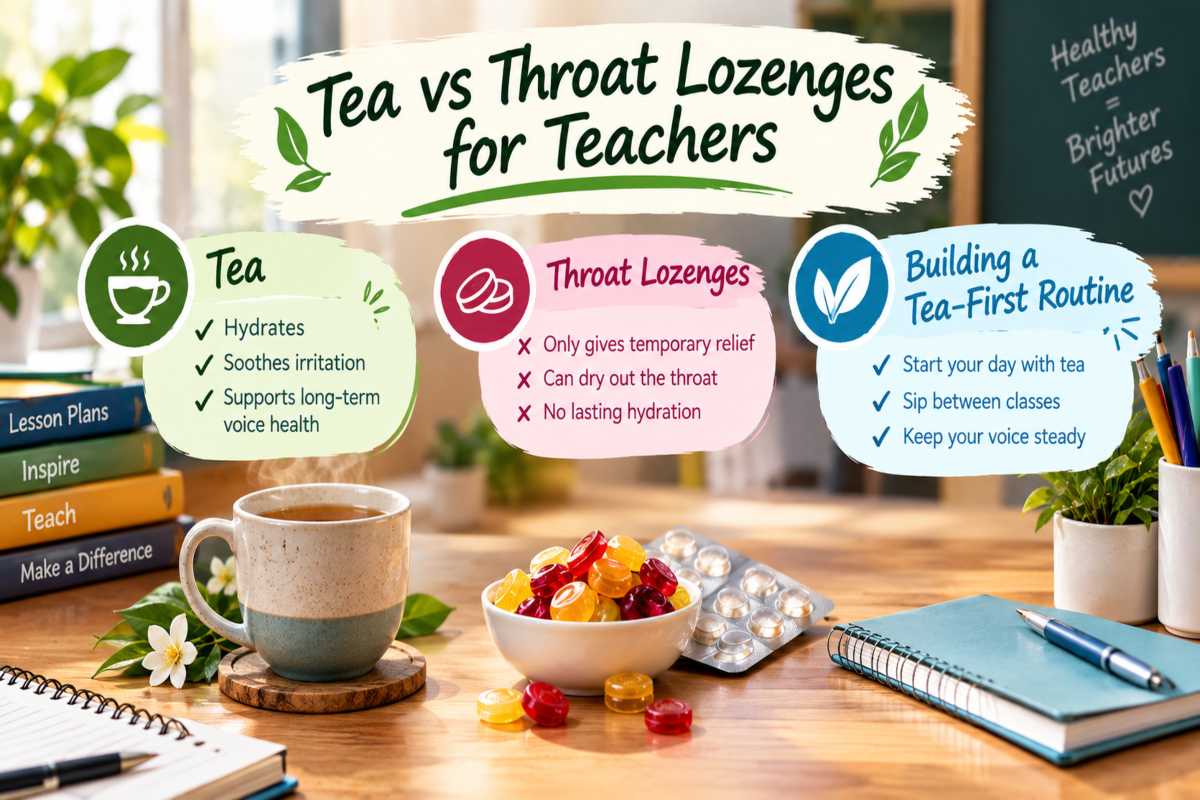
For teachers managing daily vocal strain, tea offers more sustained support than throat lozenges, which soothe briefly but do not address the dehydration causing the strain in the first place. Lozenges are the quicker, more familiar fix reached for between classes, but they work on the symptom rather than the underlying cause. Building a routine around tea instead treats voice care as ongoing maintenance rather than a series of quick fixes throughout the day.
When Lozenges Fall Short
Lozenges numb or coat the throat for a few minutes, but that relief fades quickly and does nothing to rehydrate the vocal cords themselves. Many also contain menthol, which can actually dry out the mouth and throat with repeated use, working against the very relief teachers are reaching for. Relying on lozenges throughout a teaching day can mean cycling through several without ever solving the dehydration driving the discomfort.
Building a Tea First Routine
A tea first routine replaces reactive fixes with steady, all day hydration that keeps the vocal cords from drying out in the first place. This is not unique to classrooms, the same principle applies to anyone whose voice is their instrument for hours at a time, from teachers to hosts recording a full day of episodes, which is why the same tea first approach shows up in our guide to tea for podcasters. For teachers, that means keeping a warm cup nearby between periods rather than waiting until the throat already feels irritated enough to reach for a lozenge.
Back to School Voice Care Checklist
The best time to start voice care for teaching is not the first week of school, when the voice is already adjusting to daily strain, it is the weeks before, when small habits can build up a buffer. Teachers who prepare their voice ahead of the school year and keep up simple habits once classes begin, tend to fare better through the demanding stretch from September through the winter months. A short checklist covering both phases makes the transition easier to plan for.

Preparing Your Voice Before the School Year Starts
In the final weeks of summer, easing back into daily talking rather than jumping straight into full teaching hours gives the vocal cords time to adjust. This is a good window to start a caffeine free tea habit before the school year adds its own demands, so the routine is already in place once classes begin. Teachers who build this buffer in advance often notice less of the early semester hoarseness that tends to show up in the first few weeks back.
Sustaining Voice Care Through the Semester
Once the school year is underway, consistency matters more than any single habit. Keeping a warm, caffeine free tea on hand between classes, staying mindful of classroom air dryness and pacing volume when possible all help sustain the voice through a full semester rather than just the first few weeks. Small, repeated choices like these tend to matter more over time than any single remedy reached for after strain has already set in.
When It is More Than Fatigue
Daily tea habits help manage ordinary vocal fatigue, but if strain progresses into hoarseness or actual voice loss, that is a different issue than day to day dryness. For guidance on recovering from that stage, see our dedicated guide to tea for laryngitis. If hoarseness lasts more than a week or two despite rest, it is worth checking in with a doctor rather than relying on tea alone.
Conclusion
Voice care for teachers comes down to consistency: caffeine free, hydrating tea sipped throughout the day does more for the voice than any single remedy reached for after strain has already set in. From a steady morning cup to an end of day wind down, small habits repeated daily are what actually protect a voice that is asked to work six or more hours a day, five days a week. Explore the full Vocal Leaf collection to find the right teas for building that routine into your own school day.
Frequently Asked Questions (FAQs)
Can teachers drink tea during class?
Yes, as long as it is kept at a warm, not scalding, temperature and sipped between talking rather than mid sentence. A travel mug with a lid makes it easy to keep tea nearby without it going cold before the next break.
How often should teachers drink tea for voice care?
Small, steady sips throughout the day work better than one or two large cups. Aim for a warm drink at least every couple of hours, morning, between classes and after school, to keep the vocal cords consistently hydrated.
Is caffeine free tea as effective for throat support?
Yes and in some ways more so, since caffeine has a dehydrating effect that works against the voice. Caffeine free blends provide the same warmth and hydration benefits without adding to the dryness teachers are already managing.
Top Selling Products









Best Tea for Singers | What Actually Helps Your Voice
If you sing, whether you perform professionally, teach voice lessons, or spend your weekends in rehearsal, you’ve probably wondered whether tea actually does anything useful…

Best Tea for Vocal Cords | Herbs, Hydration and Recovery
If your voice feels tired, strained, or dry, the right tea for your vocal cords can make a real difference, not by healing damaged tissue,…

Best Tea for Laryngitis | Soothe Your Voice Naturally
The best tea for laryngitis is a warm, caffeine free loose leaf blend that hydrates the throat and eases the strain on inflamed vocal cords.…

What Is Chai Tea? The Ultimate Guide to Ingredients, Benefits, Types & How It’s Made
If you’ve ever wondered what chai tea is, you’re not alone. It’s one of the most searched beverage questions online, yet the answer is often…

Best Tea for Your Voice | Does It Make You Sound Deeper
What it can do is change how your voice feels and sounds in the moment, which is where most of the confusion starts. If you…

The Best Tea for Performers & Speakers, And Why Your Voice Deserves Better
You spend hours rehearsing the words. You perfect the tone, the breath, the timing. But then you reach for whatever is nearby, a cup of…

Best Tea for Stress Relief | Calming Loose Leaf Blends
Stress is something everybody carries. It shows up in tight shoulders, restless nights, and a mind that won’t quiet down after a long day. And…

Best Tea for Dry Throat | The Teas That Help and the Ones That Hurt
The best teas for a dry throat are caffeine-free herbal blends, teas with no tannins to strip moisture from the throat lining and no caffeine…

Best Teas for Acid Reflux, Heartburn and GERD
Acid reflux doesn’t just cause heartburn. If you have searched for tea good for acidity, you are asking the same question, acidity and acid reflux…

Best Morning Tea for Energy and Focus Without Coffee Crash
The best tea to drink in the morning is black tea if you want steady, coffee level energy without the crash, rooibos chai if you…

Best Tea for Cough | The Complete Guide to Soothing Relief
The best tea for cough relief is a warm, hydrating blend that soothes irritated throat tissue while easing the reflex that triggers coughing in the…

Best Teas for a Cold That Actually Work
Best teas for a cold combines warmth, hydration and gentle steam to ease congestion, calm a scratchy throat and help your body rest while it…