
Best Teas for a Sore Throat | Real Relief for Every Symptom

Best teas for a sore throat is the one that matches what your throat is actually doing. A raw, burning throat needs something anti inflammatory, a dry scratchy one needs coating and a throat strained from talking or singing needs gentle, non astringent hydration. There is no single winner for every case, which is exactly why so many people reach for the wrong cup and wonder why it is not helping.
Warmth alone does real work here. Hot liquid increases blood flow to inflamed throat tissue, keeps mucous membranes hydrated and helps loosen the mucus that adds pressure to an already sore throat. Layer the right loose leaf tea on top of that warmth and you are not just soothing the feeling of a sore throat, you are supporting the tissue underneath it while it heals.
This guide breaks down exactly which tea to reach for based on your symptoms, why tea works the way it does and how to brew it for the most relief per cup. Whether you are dealing with a scratchy throat from a cold, congestion or the vocal strain that comes with talking or singing too much, you will find your answer below, starting with our full loose leaf tea collection, where each blend is formulated for a different kind of throat relief.
Let’s find the right cup for what you are feeling.
Which Tea Is Right for Your Sore Throat?
The right tea for your sore throat depends on what kind of pain you are actually dealing with, a raw, burning throat, a dry scratchy one and a hoarse voice from overuse all call for different support, so start by matching your symptom below rather than reaching for whatever closest.

Teas People Usually Use for a Sore Throat
Ginger Tea
Ginger is one of the most commonly reached-for teas for a sore throat, valued for its natural anti-inflammatory compounds that help ease swelling and discomfort. It has a warming, spicy character that many find comforting when the throat feels raw or irritated.
Licorice Root Tea
Licorice root has a naturally thick coating quality that settles over irritated throat tissue, which is why it’s a frequent pick for dry or scratchy sore throats. It has a sweet flavor that pairs well with other herbal teas.
Honey Lemon Tea
A simple mix of honey and lemon in hot water is one of the oldest home remedies for a sore throat. Honey coats and soothes, while lemon adds a source of vitamin C and helps cut through mucus.
Sage Tea
Sage has a long history as a throat remedy, often used for its antimicrobial properties. It has a slightly peppery, savory flavor that sets it apart from sweeter herbal options.
Marshmallow Root Tea
Marshmallow root works similarly to licorice root, forming a soothing coating over irritated throat tissue. It has a mild, neutral flavor, which makes it easy to drink in volume throughout the day.
Slippery Elm Tea
Slippery elm is another coating-focused option, traditionally used for throats that feel rough or sandpapery when swallowing. It’s gentle and generally gets brewed a little stronger than typical herbal teas.
Lemon Tea
Plain lemon steeped in hot water is a simple, accessible option for throat discomfort. Its acidity can help thin mucus, and its vitamin C content is often cited as light immune support during illness.
Thyme Tea
Thyme is a culinary herb that doubles as a traditional remedy for throat and respiratory discomfort, particularly when a cough is involved. It has a clean, herbaceous flavor and brews quickly.
Chamomile Tea
Chamomile is widely used for sore throat relief, valued for its calming and mildly anti-inflammatory properties. It has a gentle, floral flavor and is often reached for in the evening when throat discomfort is interfering with sleep.
Peppermint Tea
Peppermint’s cooling menthol content creates a soothing sensation that can temporarily ease throat irritation. It’s also a natural decongestant, making it a common choice when a sore throat comes with a stuffy nose.
Turmeric Tea
Turmeric’s active compound, curcumin, is one of the most studied natural anti-inflammatory ingredients. It has an earthy, warming flavor and is often paired with black pepper and honey for a stronger effect.
Echinacea Tea
Echinacea is used mainly for immune support rather than direct throat relief, often taken at the first sign of illness. It has a mild, slightly earthy flavor and is a common pick during cold and flu season.
Benefits of Tea for a Sore Throat
The core benefits of tea for a sore throat come down to four things happening at once, hydration, warmth, throat coating and the antioxidant compounds naturally present in tea leaves and botanicals, a combination that soothes pain in the moment while supporting the tissue underneath as it heals.
Hydration is the foundation everything else builds on. A sore throat is inflamed tissue and inflamed tissue heals faster when it stays moist. Sipping tea steadily through the day keeps mucous membranes coated and functioning as the protective barrier they are meant to be, which is harder to maintain with plain water alone since most people simply drink less of it when they are unwell.
Warmth adds a second, immediate layer of relief. Hot tea increases blood flow to irritated throat tissue, helps relax the surrounding muscles and loosens mucus that is adding pressure to an already sore throat. That sense of relief after the first sip is not just comfort, it is warmth doing measurable physiological work.
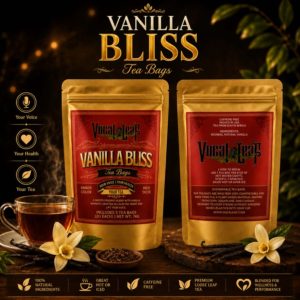
Coating is where the right blend matters most. Vanilla Bliss, for example, has a naturally smooth character that settles over raw or dry tissue on contact, creating a protective layer that lingers well after the cup is finished. Lemon Berry Dream works differently, using citrus compounds to stimulate saliva production and restore the throat’s own natural moisture rather than coating over it externally.
Beyond coating and hydration, tea leaves and botanicals carry natural antioxidant compounds that support the body’s own anti inflammatory response. Rooibos, the base of Chai Rooibos Delight, is naturally rich in antioxidants including aspalathin, which has been studied for its role in calming inflammation at the cellular level, one reason a warming rooibos blend does more than simply feel good going down.
Add raw honey to any of these and the benefit compounds further. Honey is well documented for its antimicrobial properties: research published in BMJ Evidence Based Medicine found honey more effective than usual care for easing upper respiratory symptoms, including sore throat and cough. Stirred into a cup of Vanilla Bliss or Lemon Berry Dream once it’s cooled slightly, it adds its own coating layer on top of what the tea is already doing.
Why Tea Helps a Sore Throat
Tea helps a sore throat because it works on the problem from three directions at once, the heat increases circulation and loosens mucus, the liquid keeps throat tissue hydrated and a well formulated blend coats and protects the area while it heals, which is why tea does more for a sore throat than simply feeling comforting.
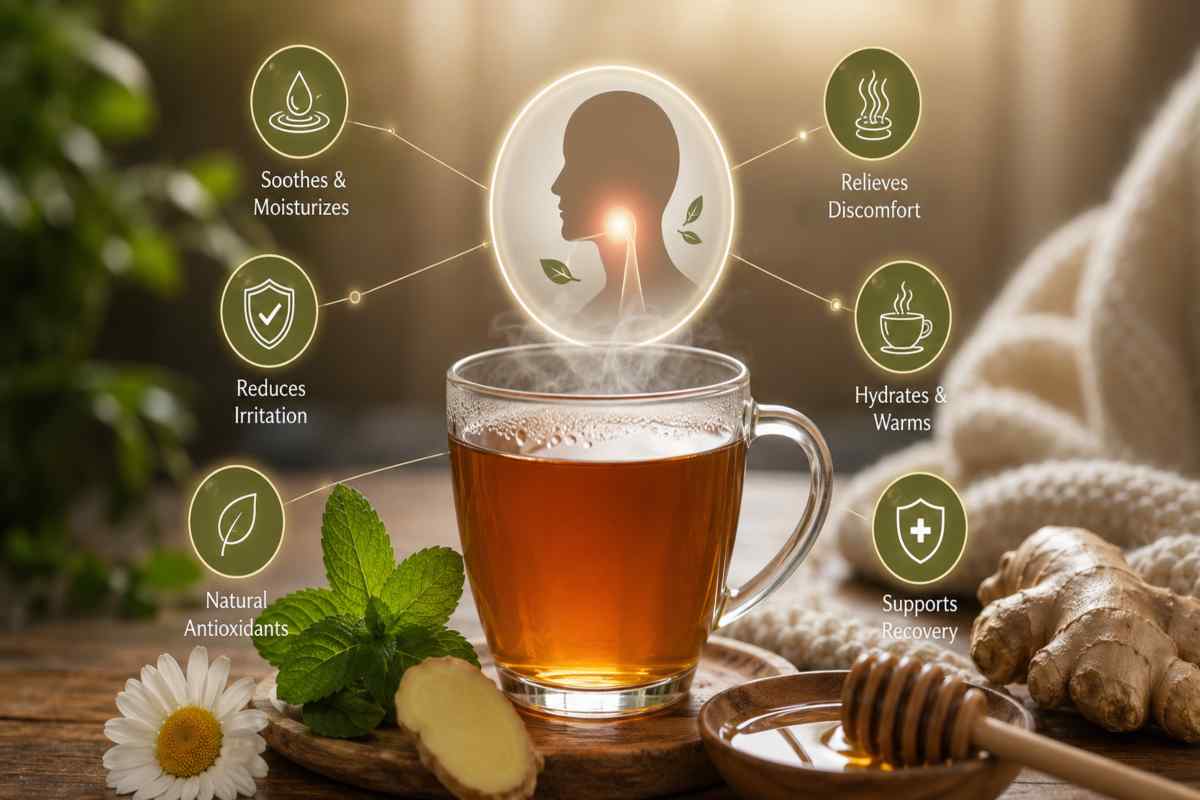
A sore throat is almost always inflamed tissue, whether the cause is a virus, dry air or hours of talking or singing. Heat addresses that inflammation directly. When you drink hot tea, warmth relaxes the muscles around your throat, increases blood flow to the area and helps loosen the mucus that is adding pressure to already irritated tissue. That relief after the first sip is not just psychological, it is the warmth doing real, physiological work.
Hydration does its own separate job. Dry throat tissue is more easily irritated and mucous membranes need consistent moisture to function as a protective barrier. Sipping tea steadily throughout the day, rather than drinking one large cup and stopping, is what keeps that barrier intact and gives inflamed tissue the conditions it needs to heal.
Coating is the third piece and it is where the blend itself matters most. Vanilla Bliss, for instance, has a naturally smooth character that settles over irritated tissue and lingers after the cup is finished, extending relief well past the last sip. That combination of heat, hydration and coating is also why tea makes it easier to actually stay hydrated when you are unwell, since it delivers therapeutic warmth in a form people are consistently more willing to keep drinking than plain water.
Is Hot Tea Better Than Cold for a Sore Throat?
Hot tea is the better choice for a sore throat in almost every situation, since warmth actively promotes circulation and loosens mucus in a way cold liquid simply can not. Cold drinks can even cause throat muscles to briefly constrict, which sometimes intensifies discomfort rather than easing it.
There is one meaningful exception. When a throat is severely swollen and swallowing hot liquid feels genuinely painful, a cold or room temperature tea can offer short term relief through a mild numbing effect, similar to how a cold compress dulls surface pain. It is a reasonable stopgap in that specific case, but not a substitute for the therapeutic value of warmth once swallowing feels more manageable.
For most people and most days, the target is warm rather than scalding. Tea that is too hot can add thermal irritation to tissue that is already inflamed, so letting a fresh cup of Vanilla Bliss or Chai Rooibos Delight cool for a minute or two before drinking gets you the full benefit of the heat without the sting.
Best Hot Tea for a Sore Throat
The hot tea for a sore throat is one brewed strong enough to deliver real anti inflammatory and coating benefits, not just a warm cup that happens to taste like tea, temperature and steep time both matter as much as which blend you reach for.
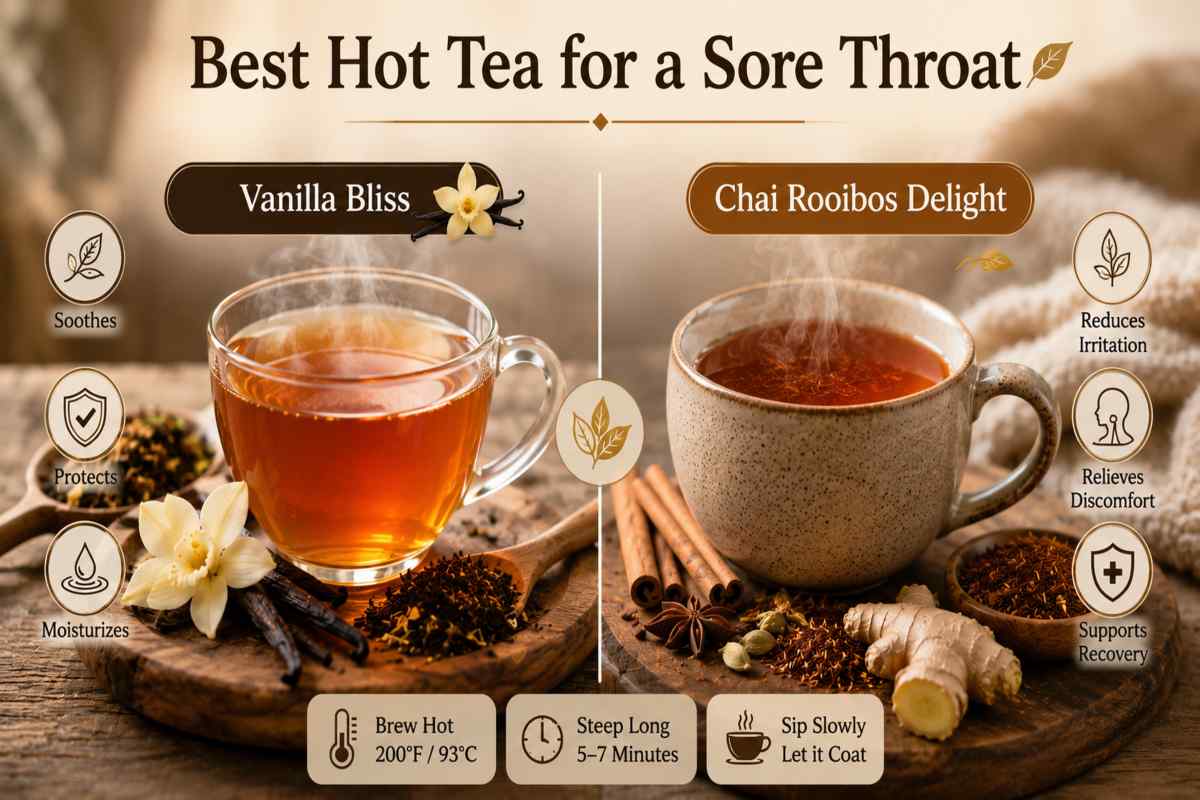
Heat is doing active work here, not just adding comfort. A properly hot cup, around 203–212°F for most loose leaf blends, increases blood flow to inflamed throat tissue, releases steam that helps open congested airways and extracts more of a blend therapeutic compounds than a lukewarm brew ever will. Vanilla Bliss, steeped at the higher end of that range for a full ten to twelve minutes, produces a noticeably thicker, more coating cup than a quick three minute steep and for a sore throat, that extra steep time is where the real benefit lives.
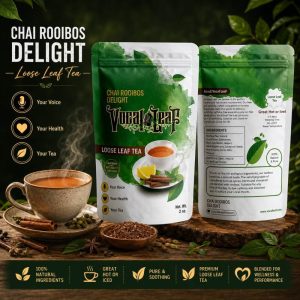
Chai Rooibos Delight is the other standout hot tea for sore throat relief, particularly when congestion is part of the picture. Its warming spice blend is naturally caffeine free, so it can be sipped repeatedly through the day without the dehydrating effect caffeine can have during illness and the rising steam from a fresh cup provides a second layer of relief simply from breathing it in before the first sip.
One detail most people get wrong, tea that is too hot can actually work against you. Liquid above roughly 149°F risks irritating already inflamed tissue further, so the sweet spot is a cup hot enough to steam and soothe, but cool enough to sip without hesitation. Letting a fresh cup of Vanilla Bliss or Chai Rooibos Delight rest for a minute after steeping gets you into that window, hot enough to work, not hot enough to hurt.
The Best Teas for a Sore Throat From Vocal Leaf
The best teas for a sore throat are not interchangeable, each one solves a slightly different problem and ranking them by what they actually do for your throat matters more than ranking them by popularity.

1. Vanilla Bliss, best for coating and vocal strain
Vanilla Bliss ranks first because coating is the single most versatile benefit a sore throat tea can offer, useful whether your throat is dry, raw or strained from talking or singing. Its smooth character settles over irritated tissue on contact and lingers well after the cup is finished, without the astringency that can dry out delicate vocal cords. It is also naturally caffeine free, which makes it the safest choice for repeat sipping throughout the day or right before bed, when nighttime dryness tends to make throat pain worse.
2. Lemon Berry Dream, best for raw, inflamed or congested throats
Lemon Berry Dream earns second place through its citrus compounds, which do double duty, they stimulate saliva production to restore natural throat moisture and they act as a mild decongestant when a sore throat comes packaged with sinus pressure. Its cooling, bright profile also makes it the better pick when the throat feels hot and inflamed rather than just dry, offering a counterpoint to the warmth of the other blends on this list.
3. Chai Rooibos Delight, best for congestion and mucus
Chai Rooibos Delight warming spice blend is built around rooibos, a botanical naturally rich in antioxidants including aspalathin, which has been studied for its role in easing inflammation at the cellular level. That warming character makes it especially effective when congestion or mucus is part of the symptom picture, since the spice compounds help loosen what citrus and coating alone can not reach. It is also fully caffeine free, so it can be worked into an all day rotation without any dehydration trade off.
→ Shop Oranic Rooibos Chai Delight Tea
4. Welcome Back Black Tea, best for bacterial leaning, swollen sore throats
Welcome Back Black Tea rounds out the list for a specific case, a sore throat that feels more swollen and localized than viral or congested. Its natural tannins have a mild astringent effect that helps tighten and tone inflamed tissue and its moderate caffeine content makes it the pick for anyone who wants a therapeutic cup that also delivers a bit of natural energy during a day spent fighting off illness.
Add a spoonful of raw honey to any of the four, once the cup has cooled slightly and you extend the coating and antimicrobial benefit further, honey own antimicrobial properties are well documented and stirring it into an already therapeutic cup rather than a plain one is where it does its best work.
Tea for a Sore Throat Plus Other Symptoms
A sore throat rarely shows up alone and the tea that helps most changes depending on what’s riding alongside it, cough, congestion, a full blown cold or the flu each call for a slightly different approach even when the throat pain itself feels the same.
Cough
When a sore throat comes with a persistent cough, the priority shifts toward soothing the throat while calming the urge to cough itself, since repeated coughing keeps re irritating tissue that’s already inflamed. Vanilla Bliss is the strongest pick here, coating the throat enough to reduce the friction that triggers coughing fits, while Chai Rooibos Delight warming spice blend helps ease the chest tightness that often comes with it. For a deeper look at pairing tea with a persistent cough, our guide to tea for cough covers it symptom by symptom.
Congestion
Sore throat with congestion needs a tea that works on both the throat and the sinuses at once and steam is doing as much work here as the tea itself. Lemon Berry Dream citrus compounds act as a natural decongestant while soothing the throat below and the rising steam from a hot cup helps loosen sinus pressure within minutes. Chai Rooibos Delight spices offer a similar dual benefit from a warmer, spicier angle. Our full breakdown of tea for congestion walks through which blend to reach for depending on how severe it is.
Cold or Flu
A sore throat tied to a cold or the flu is usually part of a bigger picture, so the tea that helps most is one you can drink consistently throughout the day without it becoming a chore. Chai Rooibos Delight caffeine free warmth makes it easy to sip cup after cup, while Welcome Back Black Tea offers a bit of natural energy on the days fatigue hits hardest. For cold symptoms specifically, our guide to tea for a cold goes deeper into what to drink at each stage and our tea for flu guide covers the more intense symptom overlap that comes with the flu.
Hoarseness or Lost Voice
When a sore throat leaves your voice hoarse or gone entirely, the tissue involved is more delicate than a standard sore throat and astringent, drying options should be avoided. Vanilla Bliss is built for exactly this, coating the throat without the tannin heavy astringency that can dry out already strained vocal cords and Lemon Berry Dream pairs well alongside it to help ease the swelling that is affecting your voice in the first place.
Green Tea vs Black Tea for a Sore Throat
Both green tea and black tea can genuinely help a sore throat, but they work through different mechanisms, green tea leans on antioxidant, antiviral support, while black tea higher tannin content gives it a stronger astringent effect on swollen tissue, so the better choice depends on what your throat needs most.
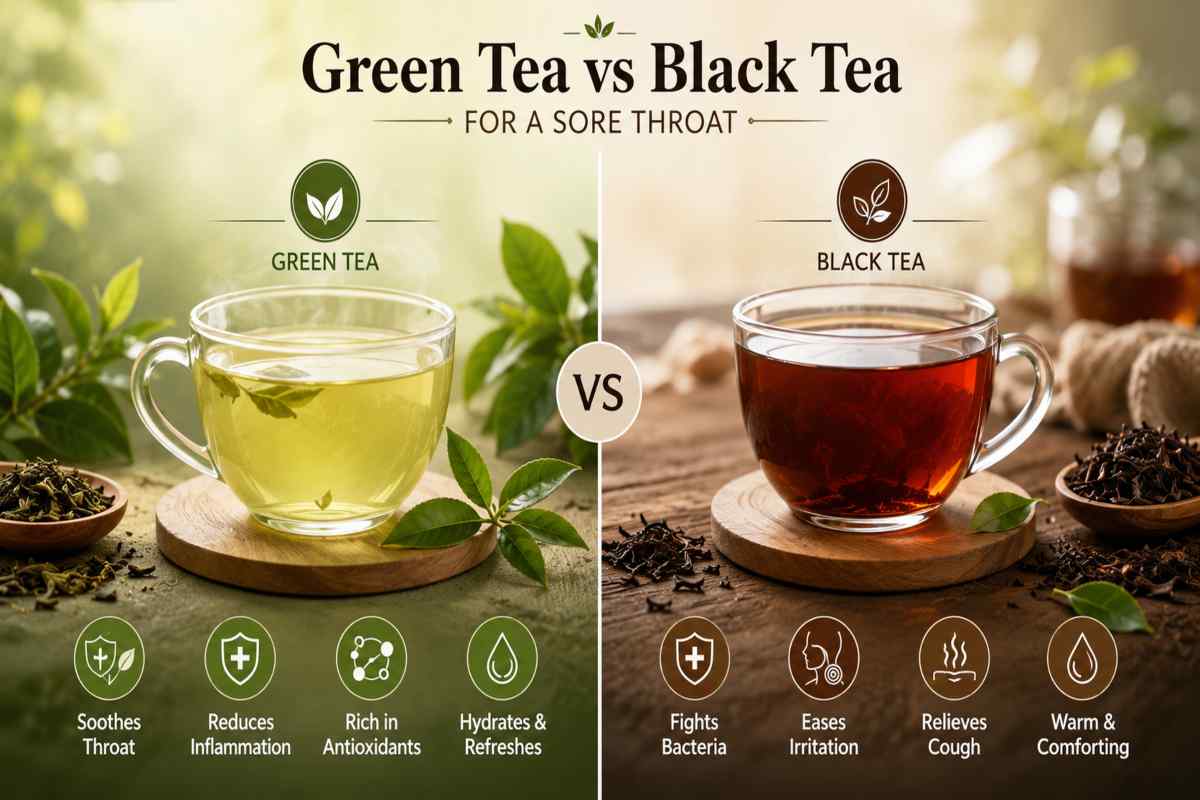
Green tea undergoes less processing compared to black tea, which means it retains a higher concentration of catechins, particularly EGCG, one of the most studied antioxidant compounds in tea. That profile makes green tea a reasonable option when a sore throat is tied to a viral illness, since EGCG has shown meaningful anti inflammatory and antiviral activity in research. It also carries a moderate amount of caffeine alongside L theanine, which some people find helpful for staying alert through a day when illness has left them fatigued.
Black tea undergoes full oxidation during processing and that shift trades some of green tea’s catechins for theaflavins, a different class of polyphenol with its own anti inflammatory and antimicrobial activity. Research has found that theaflavins can inhibit the growth of certain bacteria linked to throat infections, which makes black tea a particularly strong option when a sore throat feels more swollen and localized than viral. Its higher tannin content adds a mild astringent effect on top of that, helping tone and tighten inflamed tissue in a way green tea’s lighter profile does not match.
For a high quality black tea built specifically with throat comfort in mind, Welcome Back Black Tea delivers that full theaflavin and tannin profile in a clean, loose leaf blend, without the additives that come with most mass market tea bags. If your sore throat feels bacterial or swollen, it’s the stronger pick between the two, if it feels viral and general antioxidant support matters more, a standard green tea is a reasonable everyday choice, though it is not part of the Vocal Leaf lineup.
Best Tea for a Sore Throat for Singers, Speakers and Performers
For singers, speakers and performers, the best tea for a sore throat is not just about comfort, it is about protecting the vocal cords themselves, since standard sore throat relief and true vocal recovery are not always the same thing.

A typical sore throat is primarily an inflammation problem. A performer sore throat is an inflammation problem with consequences, strained cords, reduced range and a voice that can give out at exactly the wrong moment. Vocal cords vibrate hundreds of times per second during speech and singing and when they are swollen or dry, every vibration compounds the irritation rather than easing it. That is why generic remedies built around numbing or masking pain fall short here. What actually helps is a tea that hydrates deeply, coats the cords and calms inflammation without drying or stimulating the tissue further.
Vanilla Bliss is the strongest fit for this specific need. Its smooth character coats the vocal folds without the astringency that tannin heavy teas bring, which matters because astringency dries exactly the tissue a performer depends on. It is gentle enough to sip before, during and after a performance without any of the drying effects that work against vocal recovery. Lemon Berry Dream pairs well alongside it, helping ease vocal cord swelling between speaking or singing sessions while its citrus content keeps the throat naturally moist.
Caffeine and dairy both deserve a second thought on a performance day. A cup or two of a caffeinated tea like Welcome Back Black Tea is unlikely to cause problems, but stacking several cups on top of a demanding vocal schedule adds a dehydrating effect that works against the moisture your cords need. Dairy carries a similar risk, since it tends to thicken mucus and coat the cords in a way that can dull clarity and range.
The full picture on building a tea routine around performance days, rehearsal schedules and recovery windows is covered in more depth in our dedicated look at best tea for performers and speakers, which goes further into timing than this guide has room for.
How to Make Tea for a Sore Throat
Making tea for a sore throat properly comes down to two things most people rush past, steeping long enough to extract the full benefit and letting the cup cool slightly before adding honey, since boiling water destroys many of the honey active compounds.

Lemon Berry Dream
For general throat discomfort and day to day relief.
What you need
- 1½ teaspoons Lemon Berry Dream loose leaf tea
- 8 oz filtered water, 203–212°F
- Optional: 1 tablespoon raw honey, stirred in once the tea has cooled slightly
How to make it
- Bring water to 203–212°F, just at or barely below a rolling boil.
- Steep the loose leaf for 10–12 minutes. For throat comfort, steep toward the longer end, it draws out more of the tea natural citrus character.
- Remove the infuser without squeezing it, to keep the cup smooth rather than bitter.
- Let the tea cool, then stir in honey if using.
- Sip slowly over 15–20 minutes. Slow sipping keeps the throat in contact with the warmth longer, which is most of what makes this work.
Repeat every 3–4 hours while your throat needs it. Three to four cups across the day is a comfortable, sustainable rhythm.
Vanilla Bliss
or a tired or strained voice, especially useful for singers and speakers.
What you need
- 1½ teaspoons Vanilla Bliss loose leaf tea
- 8 oz filtered water, 203–212°F
How to make it
- Heat water to 203–212°F.
- Steep Vanilla Bliss for 10–12 minutes. For vocal comfort, steeping a little longer makes for a thicker, more coating cup.
- Let it cool slightly before sipping, for vocal care specifically, aim for warm rather than piping hot. A big temperature swing across the cords adds strain they do not need while they are already tired.
- Sip slowly and rest your voice between cups where you can. The tea is doing the work, talking over it partly undoes it.
Chai Rooibos Delight
For throat pain paired with a blocked nose or sinus pressure.
What you need
- 1½ teaspoons Chai Rooibos Delight loose leaf tea
- 8 oz filtered water, 203–212°F
How to make it
- Bring water to 203–212°F.
- Steep Chai Rooibos Delight for 10–12 minutes. The chai spice base is what makes this recipe work double duty for congestion.
- While it steeps, hold your face over the cup and breathe slowly through your nose for 30–60 seconds, the warm, spiced steam brings its own relief before you even take a sip.
- Sip slowly, alternating with a few more breaths of the rising steam between sips.
Welcome Back Black Tea
For throat pain that feels swollen and localized rather than dry or congested.
What you need
- 1½ teaspoons Welcome Back Black Tea
- 8 oz filtered water, at a full rolling boil
- Optional: 1 tablespoon raw honey, stirred in once the tea has cooled slightly
How to make it
- Bring water to a full boil, since black tea needs the higher temperature to properly extract its theaflavins.
- Steep for 4–5 minutes, shorter than the herbal blends above, since black tea turns bitter well before the ten minute mark.
- Remove the infuser promptly once the steep time is up, so the tannins doing the astringent, throat toning work do not tip over into bitterness.
- Let the cup cool slightly, then stir in honey if using.
- Sip slowly. The tannins are most effective when they stay in gentle, repeated contact with the throat rather than swallowed in one go.
Repeat every 3–4 hours as needed, keeping to two to three cups a day given its natural caffeine content.
Conclusion
A sore throat does not call for guesswork, it calls for the right cup matched to what your throat is actually feeling, whether that is raw inflammation, dry scratchiness, congestion or the specific strain that comes from talking or singing through discomfort. Warmth, hydration and coating do most of the real work and a well brewed cup of Vanilla Bliss, Lemon Berry Dream, Chai Rooibos Delight or Welcome Back Black Tea, steeped long enough and finished with raw honey once it is cooled, delivers all three at once. That is the whole philosophy behind Vocal Leaf, tea built not as a generic wellness gesture, but as real support for the throats and voices people depend on every day. Brew it properly, sip it slowly and give your throat the time it needs to heal.
Frequently Asked Questions (FAQs)
What tea is best for a sore throat?
The best tea depends on your symptoms, Vanilla Bliss for coating and vocal strain, Lemon Berry Dream for raw or congested throats, Chai Rooibos Delight for congestion and mucus and Welcome Back Black Tea for swollen, bacterial leaning throats.
Is hot tea or cold tea better for a sore throat?
Hot tea is better in almost every case, since warmth increases circulation, loosens mucus and keeps throat tissue hydrated in a way cold drinks can’t. Cold tea only helps briefly when swallowing hot liquid feels too painful.
Is green tea beneficial for a sore throat?
Yes, particularly for viral sore throats, thanks to its high concentration of EGCG, an antioxidant with documented anti inflammatory and antiviral activity. Its lighter astringency makes it a gentler option than black tea.
Is black tea good for a sore throat?
Yes and it is especially effective for swollen, bacterial leaning sore throats. Its theaflavins and tannins have shown antimicrobial activity and help tone inflamed tissue, which is why Welcome Back Black Tea is built around that same profile.
How often should you drink tea for a sore throat?
Three to five cups a day is the practical sweet spot for most people, spaced three to four hours apart to keep the throat consistently coated and hydrated rather than relying on one large cup.
What should I put in tea for a sore throat?
Raw honey is the most important addition, stirred in once the tea has cooled slightly to preserve its antimicrobial properties. Fresh lemon juice adds vitamin C and helps thin mucus alongside it.
Is tea good for a sore throat with congestion?
Yes, tea helps on two fronts at once, easing throat pain while the steam and warming compounds in blends like Chai Rooibos Delight help loosen sinus and chest congestion at the same time.
Top Selling Products





Best Tea for Singers | What Actually Helps Your Voice
If you sing, whether you perform professionally, teach voice lessons, or spend your weekends in rehearsal, you’ve probably wondered whether tea actually does anything useful…

Best Tea for Vocal Cords | Herbs, Hydration and Recovery
If your voice feels tired, strained, or dry, the right tea for your vocal cords can make a real difference, not by healing damaged tissue,…
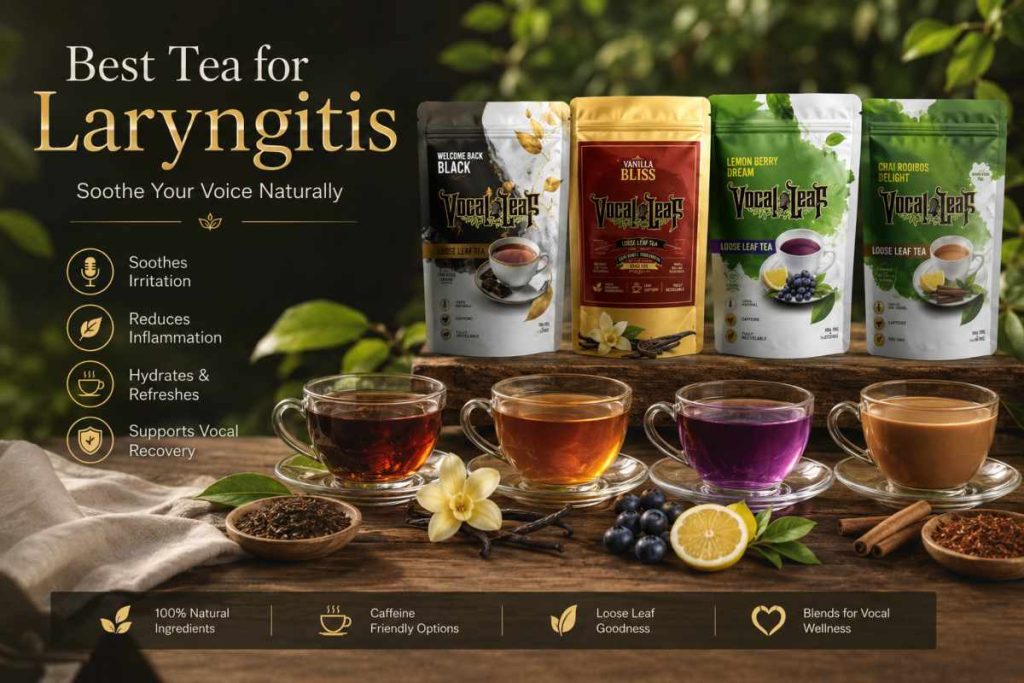
Best Tea for Laryngitis | Soothe Your Voice Naturally
The best tea for laryngitis is a warm, caffeine free loose leaf blend that hydrates the throat and eases the strain on inflamed vocal cords.…

What Is Chai Tea? The Ultimate Guide to Ingredients, Benefits, Types & How It’s Made
If you’ve ever wondered what chai tea is, you’re not alone. It’s one of the most searched beverage questions online, yet the answer is often…

Best Tea for Your Voice | Does It Make You Sound Deeper
What it can do is change how your voice feels and sounds in the moment, which is where most of the confusion starts. If you…

The Best Tea for Performers & Speakers, And Why Your Voice Deserves Better
You spend hours rehearsing the words. You perfect the tone, the breath, the timing. But then you reach for whatever is nearby, a cup of…
Best Tea for Stress Relief | Calming Loose Leaf Blends
Stress is something everybody carries. It shows up in tight shoulders, restless nights, and a mind that won’t quiet down after a long day. And…

Best Tea for Dry Throat | The Teas That Help and the Ones That Hurt
The best teas for a dry throat are caffeine-free herbal blends, teas with no tannins to strip moisture from the throat lining and no caffeine…

Best Teas for Acid Reflux, Heartburn and GERD
Acid reflux doesn’t just cause heartburn. If you have searched for tea good for acidity, you are asking the same question, acidity and acid reflux…

Best Morning Tea for Energy and Focus Without Coffee Crash
The best tea to drink in the morning is black tea if you want steady, coffee level energy without the crash, rooibos chai if you…

Best Tea for Cough | The Complete Guide to Soothing Relief
The best tea for cough relief is a warm, hydrating blend that soothes irritated throat tissue while easing the reflex that triggers coughing in the…

Best Teas for a Cold That Actually Work
Best teas for a cold combines warmth, hydration and gentle steam to ease congestion, calm a scratchy throat and help your body rest while it…