
Best Tea for Iced Tea | The Ultimate Loose Leaf Breakdown

The best tea for iced tea is a full leaf, minimally processed loose leaf tea. The larger leaf structure releases flavor more slowly and evenly than tea bags, which means you get a smoother, less bitter glass even after hours of cold brewing or a quick chill over ice. Fannings and dust (what fill most tea bags) oxidize faster and turn cloudy or astringent when iced, which is why serious iced tea drinkers default to loose leaf.
Whether you’re brewing a caffeine free citrus blend for an afternoon pick me up or a classic black tea for a bold summer glass, the tea you start with matters more than any amount of sugar or garnish added after the fact. Below, we will cover what actually makes an iced tea hydrating (not dehydrating), how to brew loose leaf for the clearest, best tasting results and which loose leaf tea works best for each iced tea style, from naturally caffeine free to rich and rooibos based.
What Makes a Great Iced Tea?
A great iced tea comes down to two things, leaf quality and brewing technique. The tea itself needs enough structural integrity to hold flavor through a long steep or a cold brew cycle and the brewing method needs to extract that flavor without pulling out the bitter tannins that turn a glass of iced tea flat or harsh. Get both right and you end up with something clear, aromatic and refreshing rather than thin or over steeped.

Loose Leaf vs Tea Bags for Iced Tea
Loose leaf tea consistently outperforms bagged tea for iced tea because of what is actually inside the bag. Most commercial tea bags are filled with fannings and dust, the broken, low grade leftovers from processing whole leaves, which have far more surface area exposed to air and heat.
That extra surface area extracts fast, which sounds convenient, but it also releases tannins and bitter compounds much more quickly, especially over the longer steep times or extended cold brew windows that iced tea often requires. Whole loose leaves release flavor more gradually and evenly, which is why a loose leaf iced tea tends to taste smoother and stays balanced even if it sits in the fridge overnight.
What Is Iced Tea, Really?
Iced tea is simply tea brewed at a higher concentration than usual, then cooled and served over ice so the dilution from melting ice brings it back to a normal strength. It is not a separate category of tea, it is a brewing adjustment. That is why the tea used matters so much, since iced tea is typically brewed stronger or steeped longer to account for dilution, any harshness or bitterness in the leaf gets amplified rather than masked. A tea that tastes fine hot can taste noticeably rougher once iced, which is part of why not every tea is well suited to the format.
Is Iced Tea Actually Hydrating?
Yes, iced tea is hydrating for most people, the water content in a glass of iced tea outweighs any mild diuretic effect from caffeine, especially when the tea is brewed from a naturally caffeine free base. The idea that tea dehydrates you is one of the most persistent myths in tea hydrating discussions and it doesn’t hold up well against the actual research on moderate tea consumption.

Does Iced Tea Dehydrate You? Separating Fact from Myth
The dehydration myth around tea comes from caffeine mild diuretic effect, but research has consistently shown that this effect is too small to offset the fluid you are actually drinking. A widely cited study on hydration and caffeinated beverages found that moderate tea and coffee consumption contributes to daily fluid intake in essentially the same way water does, with no meaningful net fluid loss. In other words, a glass of iced tea still counts toward your hydration for the day, it is not working against you the way older wellness folklore suggests.
Iced Tea and Electrolytes
Tea itself contains small amounts of naturally occurring minerals, including potassium and manganese, which play a supporting role in fluid balance. It is not a replacement for an electrolyte drink after intense exercise, but for everyday hydration, sitting at a desk, walking outside in the heat or just replacing plain water with something more flavorful, iced tea’s mineral content is a genuine, if modest, bonus rather than a downside.
Caffeine Free vs Caffeinated Why It Matters for Hydration
The clearest way to remove any hydration debate entirely is to reach for a naturally caffeine free tea, since there is no diuretic compound to weigh against the fluid at all. A blend like Lemon Berry Dream Tea is naturally caffeine free rather than chemically decaffeinated, which means you’re getting the full citrus, berry flavor over ice without introducing any of the caffeine related questions that come up with black tea. For anyone who wants iced tea specifically as a hydration first choice, starting caffeine free is the simplest way to sidestep the issue altogether.
Health Benefits of a Good Loose Leaf Iced Tea
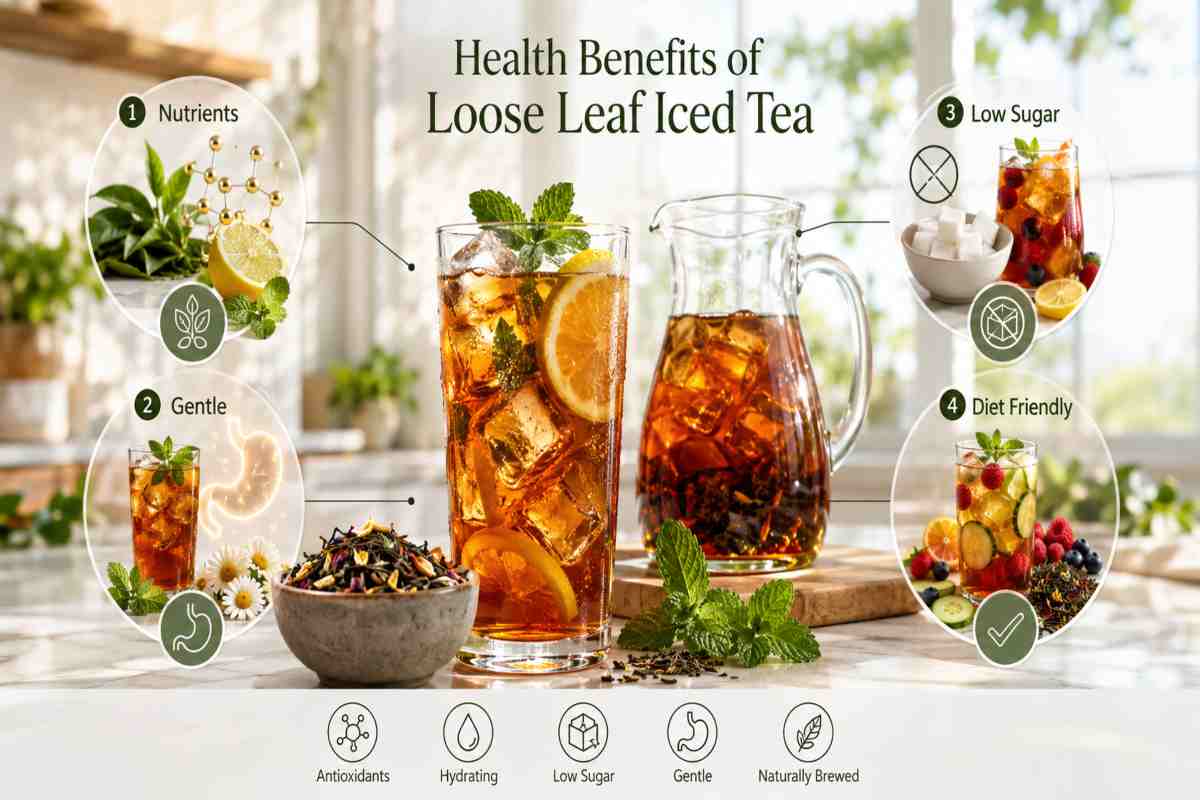
A well brewed loose leaf iced tea offers real nutritional value beyond just being a flavorful way to stay hydrated, it’s naturally low in calories, contains beneficial plant compounds and can be enjoyed without the acid reflux or sugar concerns that come with many other cold beverages. The health case for iced tea gets even stronger when you start with loose leaf instead of low grade bagged tea, since whole leaves retain more of their natural compound content through the brewing process.
Nutritional Profile of Iced Tea
Unsweetened iced tea is close to calorie free, typically under 5 calories per 8 ounce serving, while still delivering natural polyphenols, the plant compounds responsible for tea characteristic depth and mild astringency. It contains no fat, no sugar unless added and only trace amounts of naturally occurring minerals. Compared to sodas, juices or sweetened bottled teas, a properly brewed loose leaf iced tea gives you flavor and volume without the calorie load, which is part of why it remains one of the most consumed beverages in the world after water.
Is Iced Tea Acidic or Gentle on the Stomach?
Tea sits in a mildly acidic range, generally comparable to or gentler than coffee, but most people tolerate it well even on an empty stomach. Cold brewing, steeping loose leaf tea in cold water over several hours instead of hot water, tends to produce an even gentler cup, since the lower temperature draws out fewer of the compounds associated with stomach sensitivity. For anyone prone to acid reflux or a sensitive stomach, a cold brewed loose leaf black tea is typically an easier choice than a hot steeped, quickly cooled version of the same tea.
Low Sugar and Diet Friendly Iced Tea
The easiest way to keep iced tea genuinely diet friendly is to build flavor from the leaf itself rather than from added syrup. A high quality loose leaf black tea has enough natural depth and slight sweetness that it does not need much, if any, added sugar to taste satisfying over ice. This makes it a straightforward option for anyone managing sugar intake but still wanting something more flavorful than plain water, brew it strong, chill it and let the tea itself carry the flavor instead of reaching for simple syrup or sweeteners.
The Best Loose Leaf Teas for Iced Tea
Top loose leaf teas for making iced tea depends on what you are after, a light caffeine free sipper, a bold classic black tea, a warm spiced rooibos or something smooth and naturally sweet. Each of Vocal Leaf four core teas brews differently over ice, so matching the tea to the occasion makes a real difference in the glass.

Best Caffeine Free Base, Lemon Berry Dream
Lemon Berry Dream is the best starting point for a bright, caffeine free iced tea. Its blend of marigold blossoms, lemon peel, lemon oil, orange peel and sweet blackberry leaves creates a citrus forward cup that holds up well over ice without turning bitter, even with a longer steep. Because it’s naturally caffeine free rather than chemically decaffeinated, it’s an easy everyday choice for anyone who wants a full glass of iced tea any time of day.
Best Classic Black Iced Tea Welcome Back Black Tea
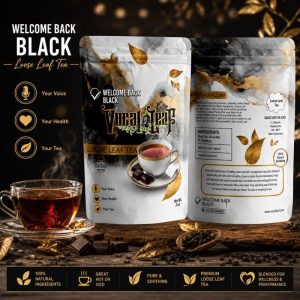
For a traditional, bold iced tea, Welcome Back Black Tea is the closest thing to the classic Southern style glass, deep, slightly malty and rounded out with cacao nibs that add a subtle richness without any added sweetness. It’s caffeinated, brews well hot or cold and has enough natural depth that it rarely needs sugar to taste complete.
Best Rooibos Iced Tea, Chai Rooibos Delight
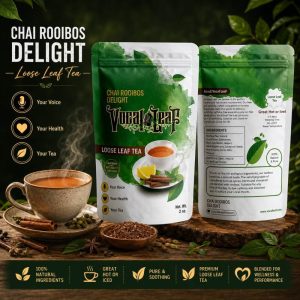
Chai Rooibos Delight brings warm spice into an iced format, which makes it a standout choice for anyone who wants their iced tea to taste like more than just “tea and ice.” Naturally caffeine free and built on a rooibos base, it has a naturally sweet, slightly earthy character that mellows beautifully once chilled, making the chai spice notes come through without feeling heavy.
Best Smooth, Naturally Sweet Iced Tea, Vanilla Bliss
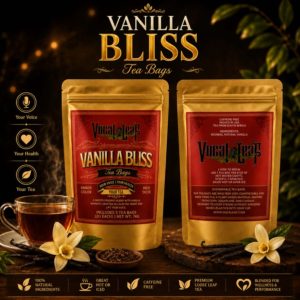
Vanilla Bliss is the softest, most naturally sweet option of the four, making it ideal for anyone who wants an iced tea that almost dessert like without any added sugar. Its rooibos base is naturally caffeine free and the tea bags are made from compostable, microplastic free PLA material, a detail worth knowing if sustainable packaging factors into your choice as much as flavor does.
How to Prepare Iced Tea Using Loose Leaf Tea Step by Step
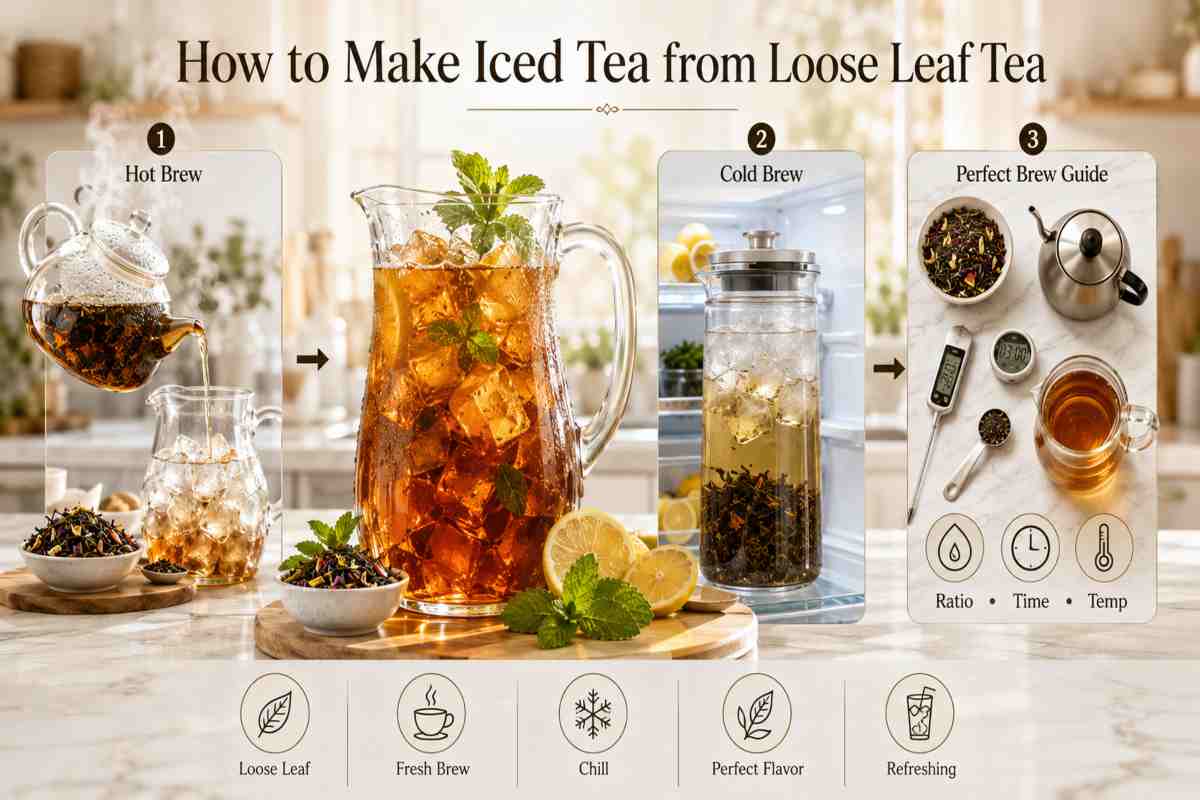
Making iced tea from loose leaf tea comes down to two reliable methods, hot brew or cold brew and getting the ratio and steep time right so the tea doesn’t turn weak or bitter once it’s over ice. Both methods work well, the right one mostly depends on how much time you have and how strong you like your tea.
Hot Brew Method
The hot brew method is the faster of the two and works well when you want iced tea within the hour. Steep loose leaf tea in hot water at roughly double the normal strength, more leaf per cup of water than you’d use for a hot cup, since the ice and any dilution will bring it back down to a balanced flavor. Once steeped, remove the leaves promptly to stop extraction, then let the tea cool to room temperature before pouring over ice, pouring hot tea directly onto ice melts it too fast and waters down the flavor before it’s even chilled.
Cold Brew Method
Cold brewing loose leaf tea in the refrigerator produces a smoother, less bitter result, since the lower temperature extracts fewer of the harsh tannins that hot water pulls out quickly. Add loose leaf tea to cold water in a pitcher, cover and place it in the refrigerator to steep for anywhere from 6 to 12 hours, depending on your desired strength. This method takes longer but requires no cooling step afterward and it’s especially forgiving if you’re not measuring exactly, an extra hour or two in the fridge rarely oversteeps the tea the way an extra few minutes in hot water would.
Ratio, Steep Time and Water Temperature
A reliable starting ratio for iced tea is about one heaping teaspoon of loose leaf tea per 8 ounces of water, doubled from a typical hot brew ratio to account for dilution over ice. For hot brewing, water just off the boil (around 200–212°F) with a 4–6 minute steep work for most black and rooibos blends, delicate or citrus forward blends do better closer to 200°F to avoid bitterness.
For cold brewing, room temperature or refrigerator cold water paired with a longer steep achieves the same strength without any heat at all. Getting this balance right is often the biggest difference between homemade iced tea and what you’d get from many bottled iced tea brands, which tend to rely on added sugar to compensate for weaker, mass produced tea bases.
Why Is My Iced Tea Cloudy?
Cloudy iced tea is caused by a natural chemical reaction between tannins and caffeine that happens as tea cools too quickly, not by anything wrong with the tea itself. It’s a cosmetic issue rather than a quality or safety one, cloudy tea tastes exactly the same as clear tea, but the hazy appearance can look unappealing in a glass.

The Science Behind Cloudy Tea
When hot brewed tea cools rapidly, the tannins and caffeine molecules bind together and form tiny particles that scatter light, creating that hazy, cloudy look, a process tea scientists call “cream down.” It happens most often with strongly brewed black teas cooled quickly in the refrigerator or over ice, since both the tannin content and the fast temperature drop are exactly the conditions that trigger the reaction. Lighter, less tannic teas are far less prone to it, which is part of why cloudiness shows up more with bold black tea than with delicate or rooibos based blends.
How to Keep Your Iced Tea Clear
The simplest fix is to slow down the cooling process, let hot brewed tea come to room temperature gradually before refrigerating or adding ice, rather than pouring it straight over ice while still hot. Cold brewing sidesteps the issue entirely, since the tea never goes through a hot to cold temperature swing in the first place.
A splash of hot water stirred into cloudy tea will also usually clear it back up in seconds, since it dissolves the bound tannin caffeine particles. None of this affects flavor or the natural benefits people associate with a black tea for clear head pick me up, a cloudy glass of black tea is just as good a companion for focus and alertness as a perfectly clear one.
Sweetening It the Right Way
The best way to sweeten iced tea is to start with a well brewed loose leaf tea that already has natural depth, then add sweetener sparingly if it is needed at all. Sugar should round out a good tea, not compensate for a weak or bitter one, which is often the real reason bottled and fast food iced teas taste like syrup with a hint of tea rather than the other way around.

Simple Syrup vs Natural Sweetness
Simple syrup, equal parts water and sugar, heated until dissolved, is the standard way to sweeten iced tea because sugar does not dissolve well in cold liquid on its own, granulated sugar stirred directly into iced tea tends to sink and stay gritty at the bottom of the glass. For a more traditional, less processed alternative, rock sugar for tea is a slower dissolving option that many tea drinkers prefer for its milder, less sharp sweetness. Either way, the goal is to add just enough to round out the tea natural flavor, not to mask it.
Low Sugar and Zero Sugar Options
The lowest effort way to cut sugar from iced tea is simply to brew it well and skip sweetener altogether, a properly steeped loose leaf tea, whether black, rooibos or citrus based, has enough natural character to stand on its own over ice. For anyone who still wants a touch of sweetness without added sugar, a small amount of honey or a few muddled fresh berries can round out the flavor without the calorie load of syrup. This approach keeps the tea itself as the star, which is generally the difference between an iced tea that tastes refreshing and one that tastes like flavored sugar water.
Iced Tea vs Hot Tea, Does Brewing Method Change the Benefits?
Brewing method has only a minor effect on tea’s core benefits, the polyphenols and natural compounds that make tea worthwhile largely survive both hot and cold brewing, though the two methods extract them at different rates and ratios. Iced tea is not a “lesser” version of hot tea, it is simply a different extraction process that happens to produce a different flavor profile.
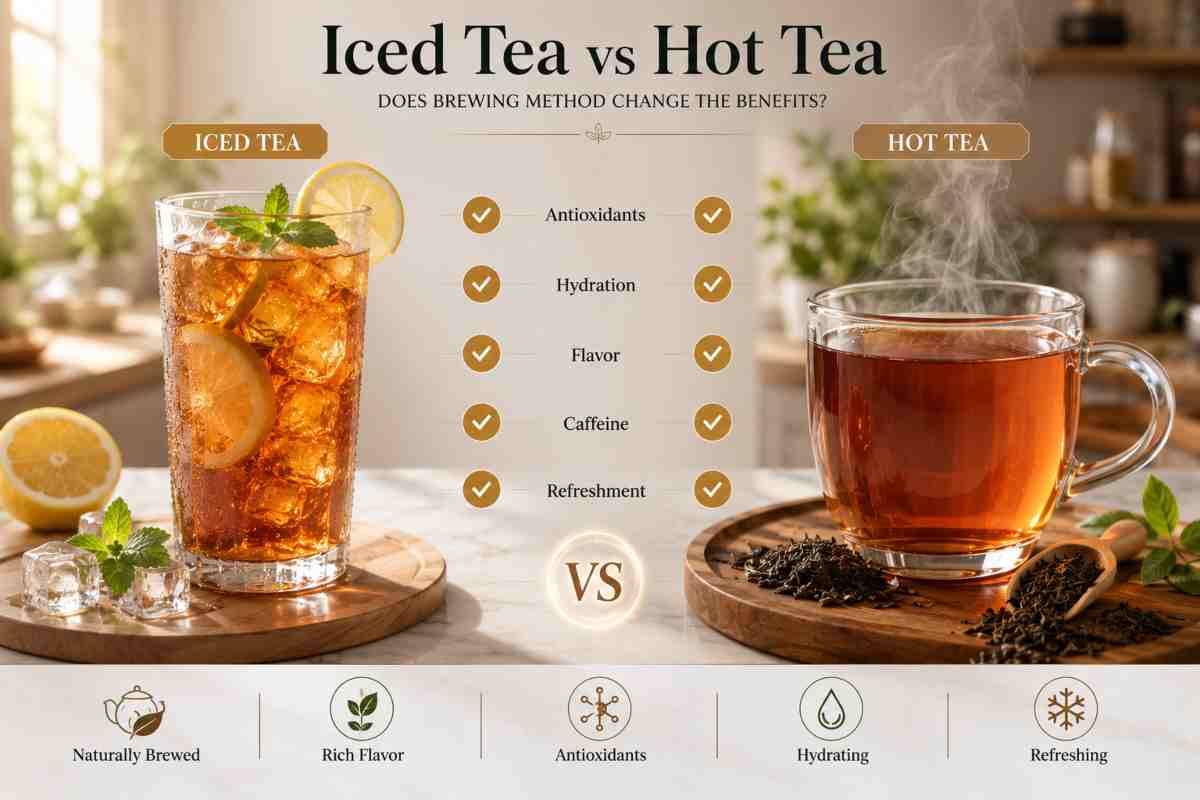
Hot water extracts compounds faster and more completely, which is why a quick hot brewed cup can match the strength of a cold brewed pitcher that steeped for six or more hours. Cold brewing is slower but gentler, pulling out fewer of the harsher tannins along with the beneficial compounds, which is part of why cold brewed tea tends to taste smoother and less bitter than the same tea steeped hot and rapidly cooled.
Neither method meaningfully strips away the tea’s core value, the difference comes down to taste and mouthfeel rather than nutrition. In practice, this means the choice between iced and hot tea can come down entirely to preference and season rather than any real trade off and the same loose leaf tea can move between both formats without losing what makes it worth drinking in the first place.
Conclusion
The best tea for iced tea ultimately comes down to starting with high quality loose leaf and matching the brew method to the result you want, whether that is a smooth cold brewed black tea, a bright caffeine free citrus blend or a naturally sweet rooibos poured over ice and at Vocal Leaf, every loose leaf blend is built specifically to hold up to that kind of brewing, so whichever tea you reach for, you are starting from a base designed to taste as good cold as it does hot.
Frequently Asked Questions (FAQs)
Does iced tea go bad?
Yes, brewed iced tea typically stays fresh in the refrigerator for 3 to 5 days before bacterial growth or flavor breakdown sets in. Signs it’s gone bad include a sour smell, filmy texture or visible mold, especially if it’s been left at room temperature for more than a couple of hours.
Is iced tea better than soda?
Unsweetened iced tea is generally a better choice than soda, since it has close to zero calories and no added sugar compared to soda’s roughly 35–40 grams per can. Tea also contributes natural polyphenols, while soda offers no comparable nutritional benefit.
How much tea do I need for 2 quarts?
For 2 quarts (8 cups) of iced tea, use about 8 heaping teaspoons of loose leaf tea, following the same doubled strength ratio used for smaller batches. Adjust up or down slightly depending on how strong you prefer it.
When was iced tea invented?
Iced tea popularity in the U.S. is widely traced to the 1904 World Fair in St. Louis, where a hot summer led vendors to serve tea over ice. Cold tea drinks existed earlier, but that event is credited with popularizing iced tea nationally.
Top Selling Products



Best Tea for Singers | What Actually Helps Your Voice
If you sing, whether you perform professionally, teach voice lessons, or spend your weekends in rehearsal, you’ve probably wondered whether tea actually does anything useful…

Best Tea for Vocal Cords | Herbs, Hydration and Recovery
If your voice feels tired, strained, or dry, the right tea for your vocal cords can make a real difference, not by healing damaged tissue,…
Best Tea for Laryngitis | Soothe Your Voice Naturally
The best tea for laryngitis is a warm, caffeine free loose leaf blend that hydrates the throat and eases the strain on inflamed vocal cords.…

What Is Chai Tea? The Ultimate Guide to Ingredients, Benefits, Types & How It’s Made
If you’ve ever wondered what chai tea is, you’re not alone. It’s one of the most searched beverage questions online, yet the answer is often…

Best Tea for Your Voice | Does It Make You Sound Deeper
What it can do is change how your voice feels and sounds in the moment, which is where most of the confusion starts. If you…

The Best Tea for Performers & Speakers, And Why Your Voice Deserves Better
You spend hours rehearsing the words. You perfect the tone, the breath, the timing. But then you reach for whatever is nearby, a cup of…
Best Tea for Stress Relief | Calming Loose Leaf Blends
Stress is something everybody carries. It shows up in tight shoulders, restless nights, and a mind that won’t quiet down after a long day. And…

Best Tea for Dry Throat | The Teas That Help and the Ones That Hurt
The best teas for a dry throat are caffeine-free herbal blends, teas with no tannins to strip moisture from the throat lining and no caffeine…
Best Teas for Acid Reflux, Heartburn and GERD
Acid reflux doesn’t just cause heartburn. If you have searched for tea good for acidity, you are asking the same question, acidity and acid reflux…

Best Morning Tea for Energy and Focus Without Coffee Crash
The best tea to drink in the morning is black tea if you want steady, coffee level energy without the crash, rooibos chai if you…

Best Tea for Cough | The Complete Guide to Soothing Relief
The best tea for cough relief is a warm, hydrating blend that soothes irritated throat tissue while easing the reflex that triggers coughing in the…

Best Teas for a Cold That Actually Work
Best teas for a cold combines warmth, hydration and gentle steam to ease congestion, calm a scratchy throat and help your body rest while it…