
Tea for Dry Mouth From Talking | Causes and Best Remedies
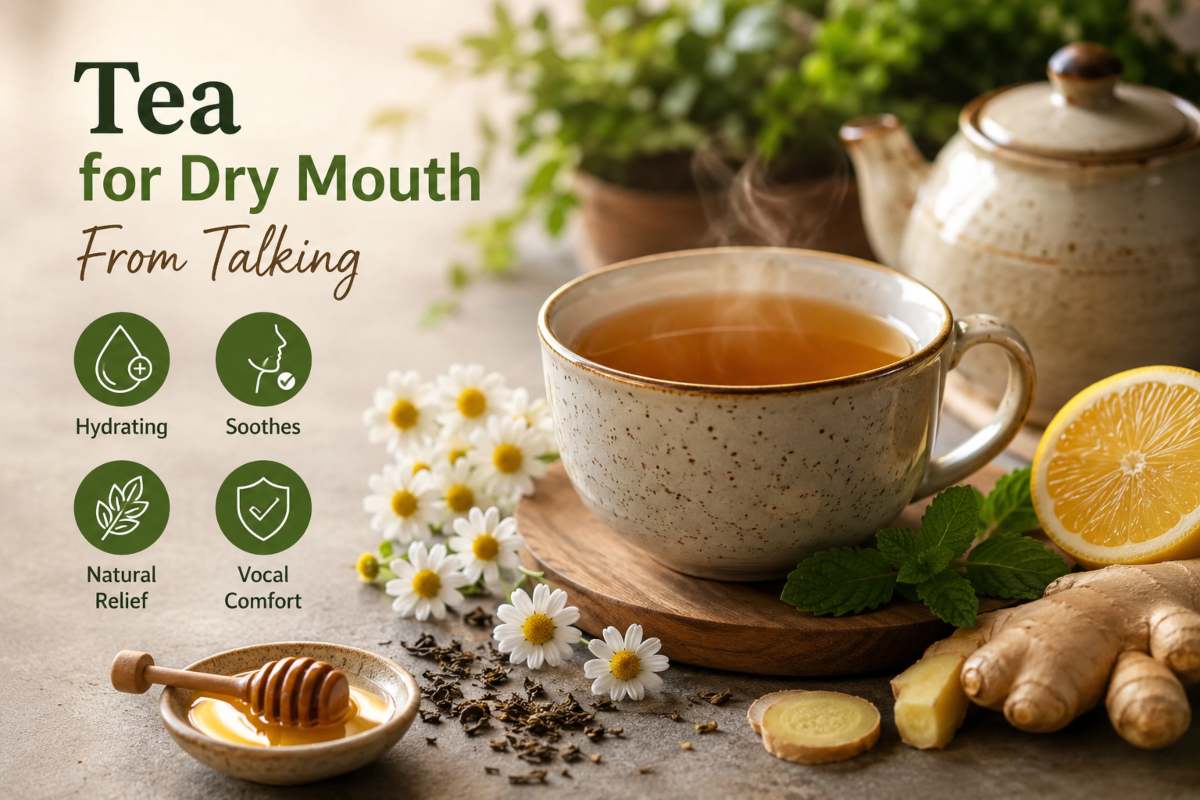
Dry mouth from talking happens when extended speech dries out saliva production faster than your mouth can replace it and the fastest fix is sipping a warm, hydrating tea for dry mouth from talking that keeps your mouth moist without straining your voice further. Anyone who talks for a living, teachers, presenters, singers, knows the feeling, your tongue starts sticking to the roof of your mouth mid sentence, your voice thins out and water alone barely touches it.
That is because talking accelerates evaporation from the mucous membranes in your mouth and throat and according to the National Institute of Dental and Craniofacial Research, chronic dry mouth affects roughly 10% of the general population but climbs significantly higher among people in vocally demanding professions. The good news is that the right loose leaf tea does more than plain water, it coats and soothes the mouth while replenishing moisture, making it one of the simplest habits you can build into a long day of talking, teaching or performing.
What Causes Dry Mouth From Talking Too Much
Dry mouth from talking too much comes down to simple physiology, speaking increases airflow across your tongue and the inside of your mouth, which speeds up moisture evaporation faster than your salivary glands can keep pace.
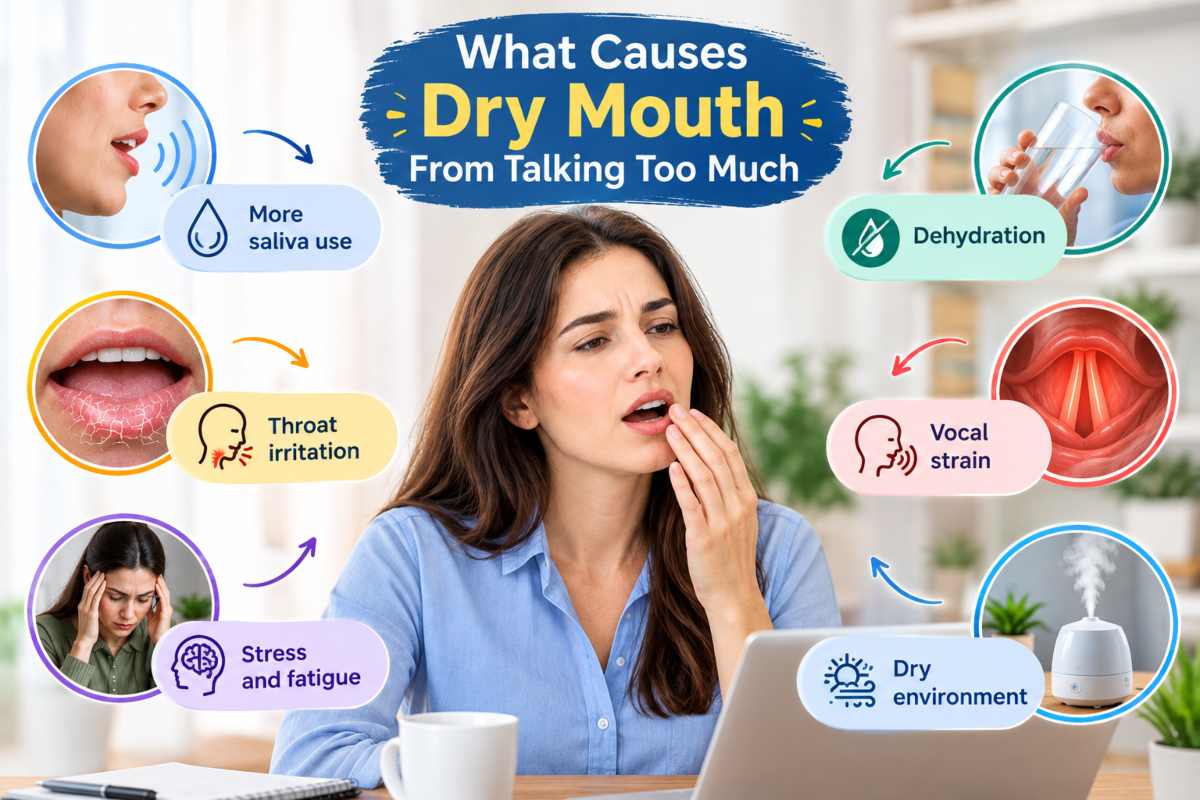
The longer and faster you talk, the more your mouth breathes like an open window, pulling saliva away from the tissue that needs it most. This is why a ten minute conversation rarely causes issues, but an hour long lecture or presentation almost always does. Add mouth breathing, low humidity or caffeine into the mix and dry mouth from talking too much becomes almost guaranteed by the end of the day.
Why Does My Mouth Get Dry When I Talk?
Why does my mouth get dry when I talk so much more than when you’re just sitting quietly? It is because your mouth stays open and airflow increases with every word, drying the thin layer of saliva that normally keeps your tongue, gums and throat lubricated. Add in nervous energy or shallow breathing, common during public speaking and saliva production drops even further right when you need it most, which is exactly why does my mouth get dry when I talk during high pressure moments like interviews or presentations.
Cotton Mouth vs Xerostomia From Talking, What is the Difference?
Cotton mouth from talking is the casual, temporary version most people experience, a sticky, thick feeling dryness that clears up shortly after you stop speaking and rehydrate. Xerostomia from talking, by contrast, is the clinical term for a more persistent or chronic dryness that does not fully resolve with a few sips of water, sometimes pointing to underlying causes like medication side effects or dehydration. If the cotton mouth from talking happens occasionally after a long meeting, it is normal, if xerostomia from talking lingers for hours or recurs daily, it is worth paying closer attention to hydration habits and, if needed, a conversation with a doctor.
Who Gets Dry Mouth From Talking the Most
Dry mouth from talking hits some professions far harder than others, simply because certain jobs demand hours of continuous speech with little recovery time between sentences. Teachers, public speakers and singers face this daily, but the pattern extends to anyone whose voice is their primary tool, including podcasters recording back to back episodes. If that sounds familiar, our guide to tea for podcasters breaks down hydration strategies built specifically for long recording sessions.

Teachers and Educators
Teachers and educators often talk for six or more hours a day with only short breaks between classes, making them one of the highest risk groups for chronic dry mouth. The constant projection needed to hold a classroom attention accelerates moisture loss well beyond what casual conversation causes and many teachers report their voice feeling strained by mid afternoon. Without a consistent hydration habit built into the school day, this daily strain can compound into recurring dryness and vocal fatigue over a full semester.
Public Speakers and Presenters
Public speakers and presenters face a sharper, more intense version of the same problem, dry mouth from talking hits fast during a single high stakes presentation, often within the first few minutes. Nervous energy shortens breathing and shifts it toward the mouth, which dries out saliva even quicker than relaxed conversation would. This is why so many presenters keep water or tea within reach on stage, since even a short pause to sip can prevent the voice from cracking mid sentence.
Singers and Voice Actors
Singers and voice actors depend on a moist, flexible throat for tone control, so dry mouth from talking or performing directly affects their sound quality, not just comfort. Extended rehearsals, recording sessions or live sets can leave the vocal cords under sustained strain and professional vocal coaches widely recommend warm fluids over cold ones to keep the throat relaxed rather than tightened. For singers and voice actors, managing dryness is not just about feeling better, it is a core part of protecting long term vocal health.
Dry Mouth and Hoarse Voice How They are Connected
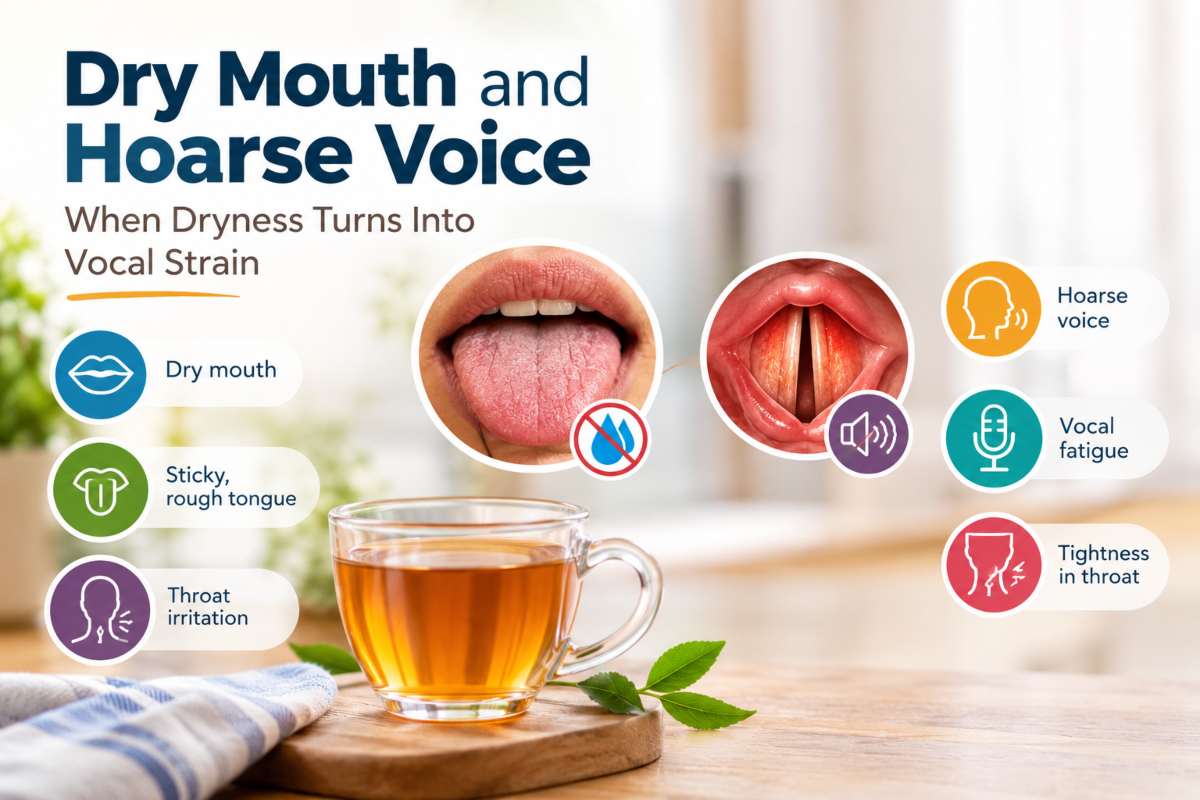
Dry mouth and hoarse voice often show up together because saliva and mucus are not just for comfort, they are what keep your vocal cords lubricated enough to vibrate smoothly. When your mouth dries out from extended talking, that dryness typically extends down into the throat, leaving the vocal cords with less cushioning against friction. The result is a voice that sounds thinner, raspier or noticeably more tired by the end of a long day of speaking. For a closer look at how throat specific dryness plays into this, our guide to tea for dry throat covers the remedies that target that layer directly.
When Dryness Turns Into Vocal Strain
Dryness turns into real vocal strain when the cords keep rubbing against each other without enough lubrication, forcing your voice to work harder just to produce the same volume and tone. Voice specialists note that vocal cords vibrate hundreds of times per second during normal speech, so even a small drop in moisture can meaningfully increase the friction they endure over a long conversation or performance. Left unaddressed, this friction can lead to a scratchy, strained feeling that lingers well after you’ve stopped talking, which is why catching dryness early, before it becomes strain, matters far more than trying to recover from it afterward.
Best Tea for Dry Mouth From Talking Too Much
The best tea for dry mouth from talking too much is a warm, caffeine conscious loose leaf blend that hydrates gently while soothing the tissue that dries out fastest, the tongue, gums and throat lining. Unlike a quick gulp of cold water, warm tea encourages saliva flow and lingers in the mouth long enough to actually rehydrate rather than just rinse through. For anyone talking for hours at a time, that difference is what separates a temporary fix from real relief.
What Makes a Tea Effective for Dry Mouth
A tea effective for dry mouth needs to do two things at once, add moisture and avoid ingredients that pull moisture back out. Warmth matters here, heat relaxes the muscles around the throat and encourages steady saliva production, which is why herbal and low caffeine blends tend to outperform cold, sugary or heavily caffeinated drinks. Ingredients that soothe rather than irritate the mouth lining make the biggest difference, especially for people repeating this habit multiple times a day.
Vocal Leaf Recommendation
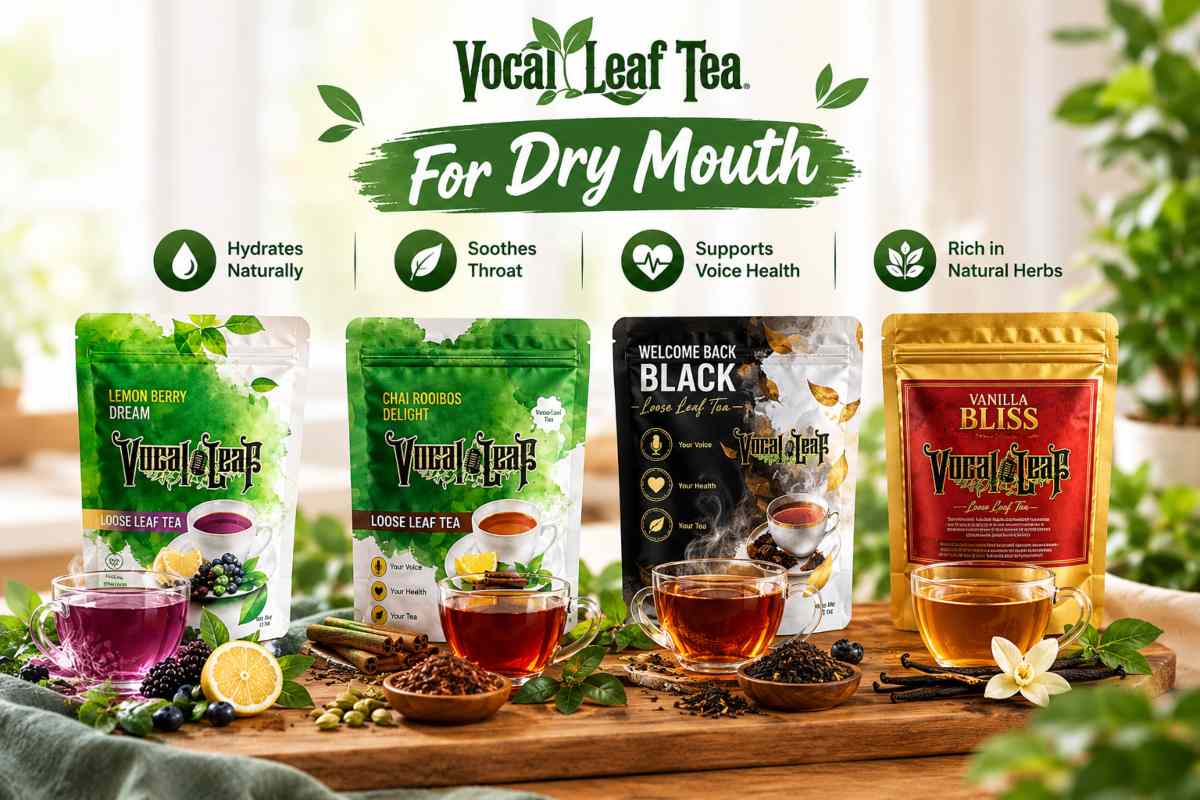
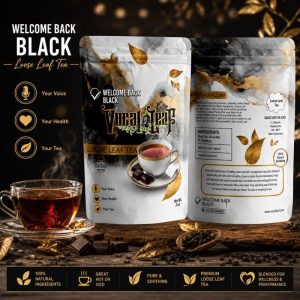
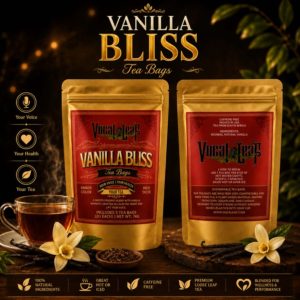
Vocal Leaf Loose Leaf Black Tea is a solid daily pick for sustained hydration during long talking sessions, offering warmth and moisture without overwhelming caffeine. For something spiced and warming Organic Rooibos Chai Tea brings the same soothing warmth in a naturally caffeine free base, making it well suited for evening rehearsals or back to back speaking days. If you prefer something smoother, Vanilla Bliss offers a gentle, mellow profile that is easy to sip continuously without fatigue, while Lemon Berry Dream adds a brighter, fruit forward option for anyone who wants hydration that does not feel repetitive across a long day of talking.
How to Stop Dry Mouth While Talking Prevention Guide
The most effective way to stop dry mouth while talking is to hydrate before you start speaking, not after the dryness sets in, prevention works far better than trying to reverse it mid conversation. Once your mouth has already dried out, it takes longer to recover than it would have taken to simply stay ahead of it. Building a small hydration routine around any long talking session makes the biggest difference in how your voice holds up hours later.
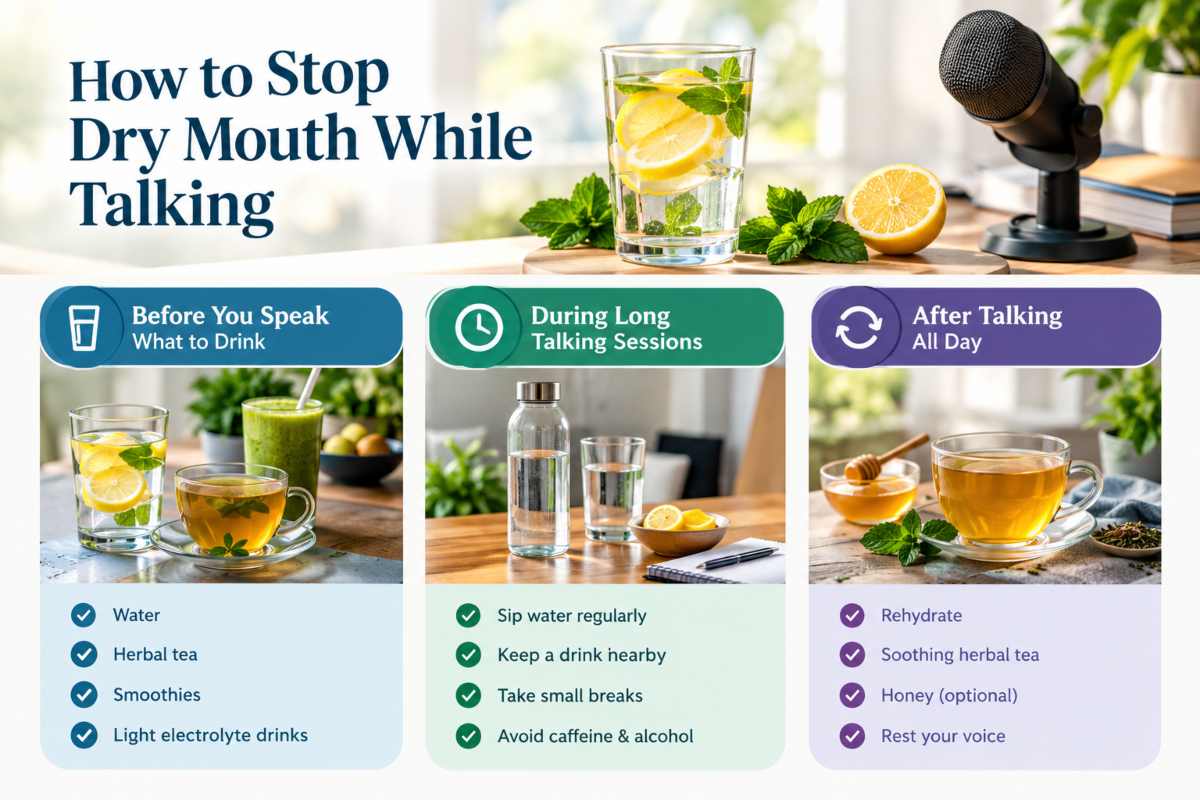
Before You Speak, What to Drink
Before you speak, a warm cup of tea works better than cold water because it primes saliva production rather than just temporarily wetting the mouth. Drinking something warm 15–20 minutes ahead of a class, meeting or presentation gives your mouth time to actually absorb the moisture instead of losing it immediately once you start talking. Avoiding caffeine heavy or sugary drinks in this window also helps, since both can leave the mouth feeling drier once their initial effect wears off.
During Long Talking Sessions
During long talking sessions, small sips spaced every 15–20 minutes do far more than one large drink at the start, steady intake keeps pace with the moisture you’re losing as you speak. Keeping a warm tea nearby, rather than relying solely on cold water, helps maintain a consistent level of comfort without the shock of temperature that cold drinks can cause to an already strained throat. For anyone talking for an hour or more at a stretch, this small habit is often the difference between finishing strong and losing your voice halfway through.
After Talking All Day
After talking all day, your mouth needs more than a quick sip, it needs sustained rehydration to recover from hours of accumulated dryness. A warm tea in the evening helps soothe tissue that’s been under strain since morning, giving your mouth and throat a chance to reset before the next day starts the cycle over again. Skipping this recovery step is often why dryness feels worse the next morning, since the mouth never gets a real chance to rebuild moisture overnight.
Home Remedies for Dry Mouth From Talking
The best home remedies for dry mouth from talking do not require anything special, warm fluids, steady sipping habits and avoiding drying agents like alcohol or excess caffeine cover most of what your mouth needs to recover. These remedies work because they address the root cause directly: replacing lost moisture faster than talking removes it. For most people, a few consistent habits are enough to keep dryness from building up day after day.

Hydration Habits That Actually Help
Hydration habits that actually help go beyond just drinking more water, spacing fluids evenly throughout the day, favoring warm drinks over cold ones and sipping before dryness sets in rather than after all make a measurable difference. Humidifying dry indoor air, especially in classrooms or home offices used for calls, also reduces how quickly moisture evaporates from the mouth during long talking stretches. Small, repeated habits like these tend to outperform occasional large glasses of water, since dryness from talking builds gradually rather than all at once.
When to See a Doctor
When to see a doctor becomes relevant if dry mouth persists for weeks despite consistent hydration or if it is accompanied by other symptoms like a persistently sore or painful throat. Dryness paired with sharp throat pain, fever or difficulty swallowing can sometimes point to something more specific, conditions like strep throat, for example, which our guide to tea for strep throat covers in more detail. In general, occasional dryness from a long day of talking is normal, but dryness that does not resolve with rest and hydration is worth mentioning to a healthcare provider.
Conclusion
Dry mouth from talking is a common, manageable side effect of using your voice heavily and the fix is usually as simple as building a consistent habit around warm, hydrating tea rather than reaching for water only after the dryness has already set in. Whether you are teaching a full day of classes, giving a presentation, recording a podcast or warming up for a performance, the same principle holds: prevention beats recovery every time. Small, steady sips throughout the day protect not just your comfort, but your voice long term health. At Vocal Leaf, every blend is built with exactly this in mind, real hydration support for the people who talk, teach, sing and speak for a living.
Frequently Asked Questions (FAQs)
Why does dry mouth happen after public speaking?
Public speaking increases airflow across the mouth and often shortens breathing due to nerves, both of which speed up moisture loss faster than saliva can replace it. The pressure of speaking to an audience can make this effect stronger than casual conversation.
Is cotton mouth from talking a sign of something serious?
Occasional cotton mouth after a long conversation or presentation is normal and not a concern. It only becomes worth investigating if it persists for hours, happens daily or doesn’t improve with hydration.
What is the best drink for dry mouth while speaking?
Warm tea is generally more effective than cold water, since heat encourages steady saliva production and lingers longer in the mouth. Low caffeine or caffeine free blends work best for repeated sipping throughout the day.
Does dry mouth cause a hoarse voice?
Yes, when the mouth and throat lose moisture, the vocal cords lose lubrication too, increasing friction as they vibrate. This added strain often shows up as a raspier or more tired sounding voice.
Top Selling Products







Best Tea for Singers | What Actually Helps Your Voice
If you sing, whether you perform professionally, teach voice lessons, or spend your weekends in rehearsal, you’ve probably wondered whether tea actually does anything useful…

Best Tea for Vocal Cords | Herbs, Hydration and Recovery
If your voice feels tired, strained, or dry, the right tea for your vocal cords can make a real difference, not by healing damaged tissue,…

Best Tea for Laryngitis | Soothe Your Voice Naturally
The best tea for laryngitis is a warm, caffeine free loose leaf blend that hydrates the throat and eases the strain on inflamed vocal cords.…

What Is Chai Tea? The Ultimate Guide to Ingredients, Benefits, Types & How It’s Made
If you’ve ever wondered what chai tea is, you’re not alone. It’s one of the most searched beverage questions online, yet the answer is often…

Best Tea for Your Voice | Does It Make You Sound Deeper
What it can do is change how your voice feels and sounds in the moment, which is where most of the confusion starts. If you…

The Best Tea for Performers & Speakers, And Why Your Voice Deserves Better
You spend hours rehearsing the words. You perfect the tone, the breath, the timing. But then you reach for whatever is nearby, a cup of…

Best Tea for Stress Relief | Calming Loose Leaf Blends
Stress is something everybody carries. It shows up in tight shoulders, restless nights, and a mind that won’t quiet down after a long day. And…

Best Tea for Dry Throat | The Teas That Help and the Ones That Hurt
The best teas for a dry throat are caffeine-free herbal blends, teas with no tannins to strip moisture from the throat lining and no caffeine…
Best Teas for Acid Reflux, Heartburn and GERD
Acid reflux doesn’t just cause heartburn. If you have searched for tea good for acidity, you are asking the same question, acidity and acid reflux…

Best Morning Tea for Energy and Focus Without Coffee Crash
The best tea to drink in the morning is black tea if you want steady, coffee level energy without the crash, rooibos chai if you…

Best Tea for Cough | The Complete Guide to Soothing Relief
The best tea for cough relief is a warm, hydrating blend that soothes irritated throat tissue while easing the reflex that triggers coughing in the…

Best Teas for a Cold That Actually Work
Best teas for a cold combines warmth, hydration and gentle steam to ease congestion, calm a scratchy throat and help your body rest while it…