
Cacao Tea | Benefits, Caffeine Content and How to Make It
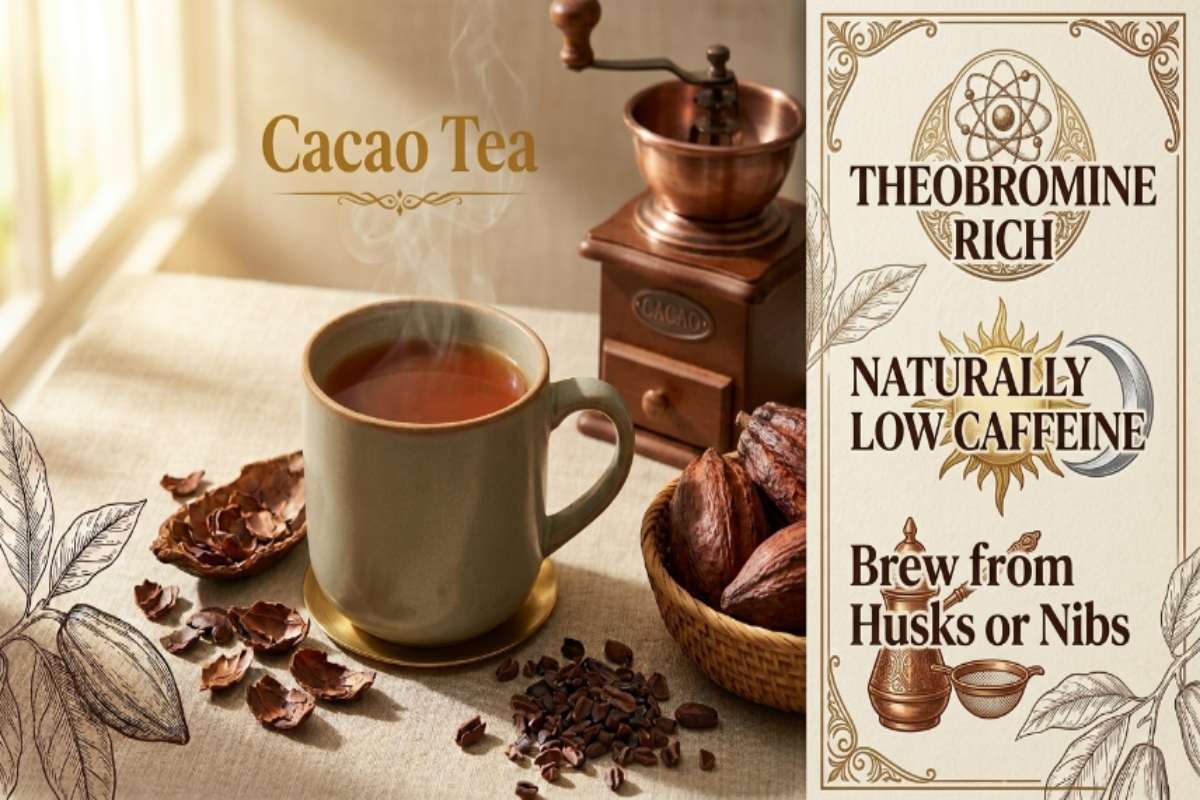
Cacao tea is a naturally caffeine free herbal infusion made from the dried husks or nibs of the cacao bean. The same plant gives us chocolate, with a rich, earthy flavor that tastes nothing like a cup of cocoa and everything like a warm, grounding ritual. For singers, speakers, and performers who need to hydrate without irritating their vocal folds, it has quietly become one of the most practical daily teas available.
What makes cacao tea worth understanding is the combination of what it contains and what it lacks. It delivers theobromine, a mild, long acting stimulant found naturally in cacao that promotes calm alertness without the spike and crash of caffeine, along with antioxidants, magnesium, and a flavor profile that satisfies a craving for something rich and warming without reaching for coffee. A review from 2020 that appeared in Frontiers in Nutrition identified theobromine as a compound with bronchodilatory and anti inflammatory properties, two qualities that matter directly to anyone who depends on their voice professionally.
Cacao tea is also one of the few genuinely satisfying options for voice professionals looking for a tea for relaxation that doesn’t compromise vocal performance, no dairy, no acidity, no dehydrating caffeine load, no throat coating mucus trigger. It brews clean, it hydrates, and it pairs naturally with the kind of pre performance wind down that singers and speakers build into their routines.
This guide covers everything, the difference between cacao husk tea and cacao nib tea, the full benefits profile, how caffeine and theobromine actually compare, precise brewing instructions, and why cacao tea has earned a permanent place in the vocal wellness conversation.
What Is Cacao Tea?
Cacao tea is an herbal infusion brewed from the byproducts of the cacao plant, either the dried outer husks that surround the cacao bean or the broken cacao nibs themselves, steeped in hot water to produce a warm, lightly chocolatey drink with no added dairy, no sugar, and naturally very low caffeine. It is not a true tea in the botanical sense, since it contains no Camellia sinensis leaves, which means it sits firmly in the herbal infusion category alongside other loose leaf teas prized for their wellness properties rather than their caffeine content.
The cacao plant, Theobroma cacao, whose name translates from Greek as food of the gods, has been consumed as a ceremonial and medicinal drink across Mesoamerican cultures for over 3,000 years. What modern drinkers are rediscovering is a beverage that predates chocolate bars by millennia, one that delivers the mood lifting, body warming quality of cacao in its most stripped back, throat friendly form.
Cacao Husk Tea vs Cacao Nib Tea What is the Difference?
The distinction matters more than most people expect. Cacao husk tea is brewed from the papery outer shell of the cacao bean. This part is typically discarded during chocolate production. Because the husk is a thin, dried material, it steeps quickly, producing a lighter, more delicate cup with subtle chocolate notes and a slightly earthy, woody undertone. It is the most traditional form of cacao tea and the version most commonly associated with the drink is ceremonial roots.
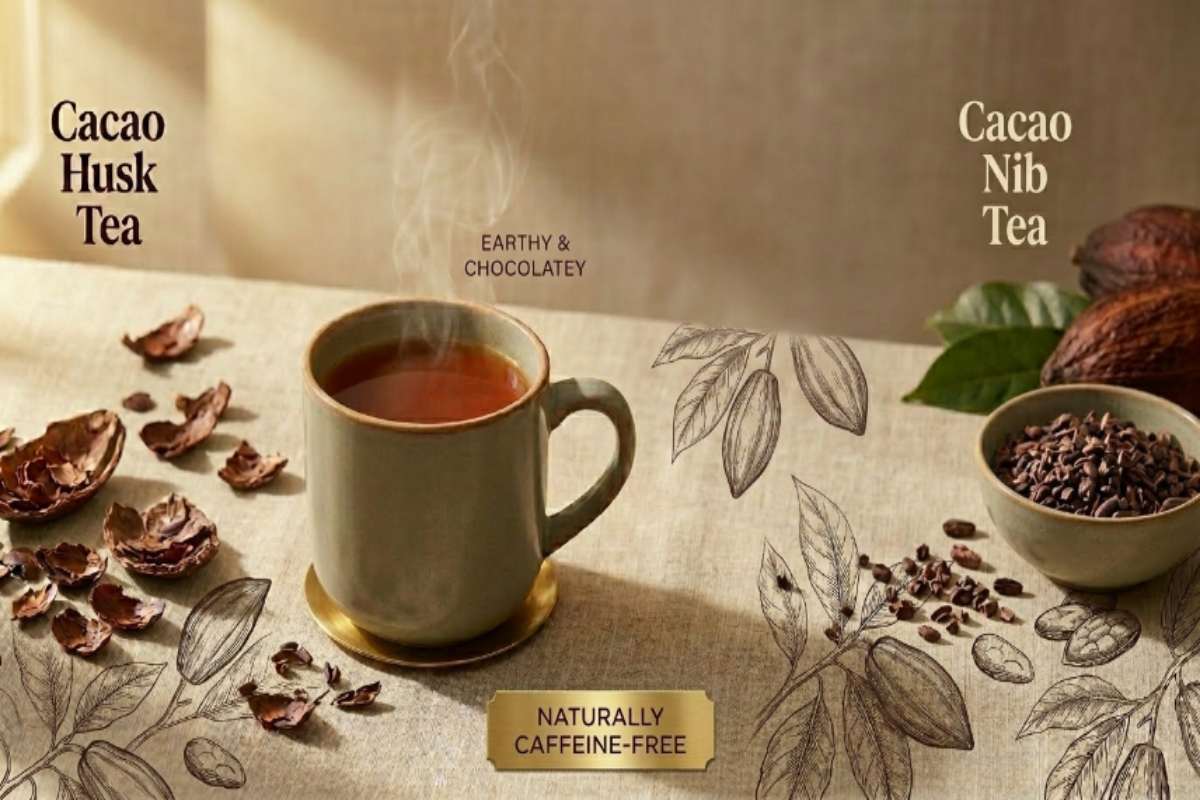 Cacao nib tea is made by steeping the crushed inner meat of the cacao bean, the same nibs used in artisan chocolate making. Nibs are denser and more concentrated in both flavor and active compounds, producing a bolder, more intensely chocolatey infusion with a fuller body. Nib tea also tends to retain slightly more theobromine and magnesium per cup, since you are brewing directly from the bean most nutrient dense part.
For voice professionals, both versions are sound choices. Husk tea is the gentler option, ideal for sensitive throats or pre performance use when you want something warming without any heaviness. Nib tea suits deeper recovery sessions or evening rituals where richer flavor and a more substantial feel are welcome.
Is Cacao Tea the Same as Hot Chocolate?
No, and the difference is significant enough to matter for anyone making decisions about what they put near their vocal folds. Hot chocolate is made from cacao or cocoa powder combined with milk or a milk alternative, often with added sugar and fat, producing a thick, coating beverage that can trigger mucus production and leave a residue on the throat lining. For singers and speakers, that coating effect is exactly what they are trying to avoid before a performance or recording session.
Cacao tea, by contrast, is a water based infusion. Nothing dissolves into the liquid, the cacao material is steeped and removed, leaving a clean, thin brew that hydrates rather than coats. The flavor profile overlaps with dark chocolate in the way that black tea overlaps with a tea latte, recognizably related, but a fundamentally different experience in the cup and in the body.
What Does Cacao Tea Taste Like?
Cacao tea tastes like the quiet, unsweet version of dark chocolate, warm, slightly bitter at the edges, with a gentle earthiness and none of the sugar forward intensity of a hot chocolate or mocha. Husk tea leans toward toasted grain and mild cocoa, while nib tea pushes further into deep chocolate territory with a more pronounced finish.
The flavor is subtle enough that it works as a standalone drink without any additions. Still, it also layers well with warming spices. A pinch of cinnamon deepens the chocolate note; a small amount of vanilla rounds out the bitterness; a touch of coconut adds body without dairy. For voice professionals who find plain herbal teas monotonous, cacao tea offers genuine flavor complexity within a format that remains completely safe for vocal performance.
Cacao Tea Benefits
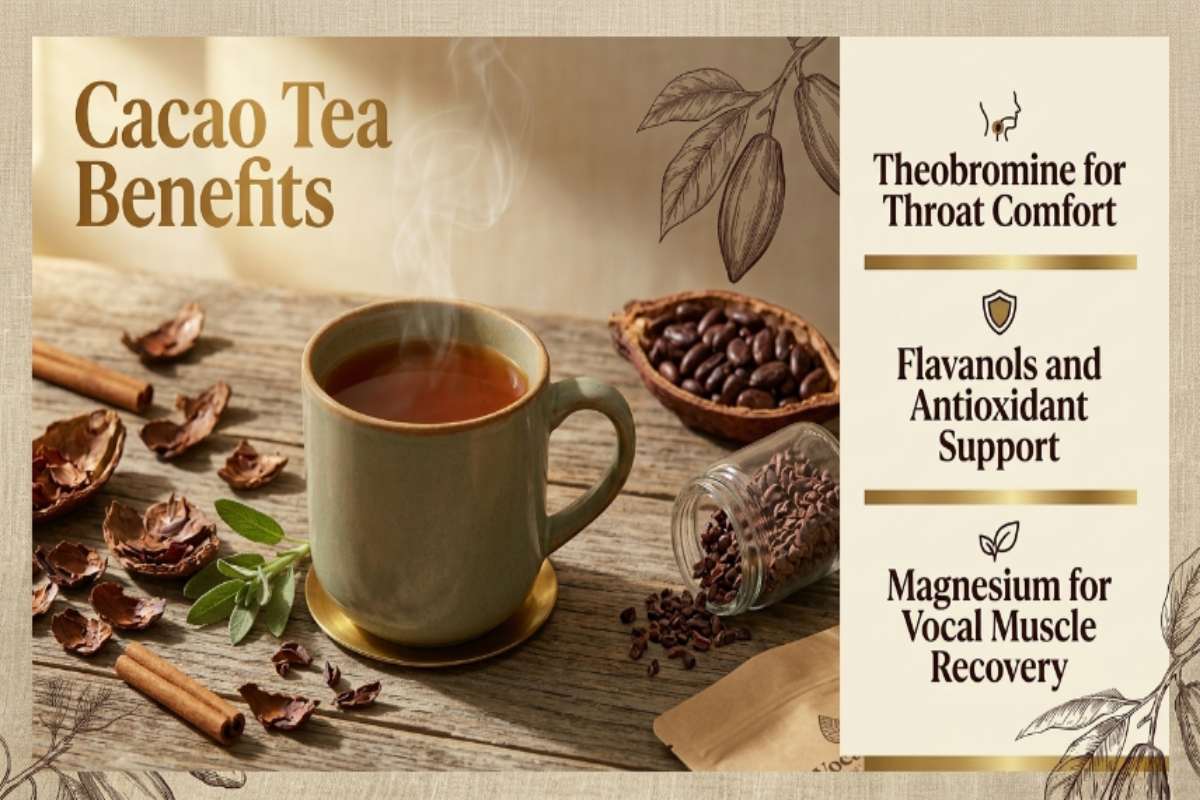
The benefits of cacao tea come from a compound profile that is genuinely unusual in the herbal infusion world, theobromine, magnesium, flavanols, and polyphenols working together in a water based format that delivers them cleanly, without dairy interference or sugar load. For anyone drinking tea specifically for wellness rather than habit, cacao tea earns its place on the shelf.
Theobromine and Throat Comfort for Voice Professionals
Theobromine is the primary active compound in cacao tea, and for voice professionals it is the most relevant reason to drink it. Unlike caffeine, which acts as a vasoconstrictor and diuretic, both problematic for vocal fold hydration, theobromine is a mild bronchodilator, meaning it gently opens the airways rather than tightening them. Research published in the FASEB Journal found that theobromine suppressed cough reflex sensitivity more effectively than codeine in a controlled trial, with significant implications for singers, speakers, and podcasters managing throat irritation before or after heavy vocal use.
For the laryngeal tissue specifically, this matters because cough suppression reduces the mechanical trauma that repetitive throat clearing inflicts on vocal folds. Every unnecessary cough or hard throat clear creates friction against delicate mucosal tissue. A warm cup of cacao tea before a performance or recording session addresses the urge to clear at its neurological source, rather than simply coating the throat temporarily, as dairy based drinks do.
The theobromine effect is also notably long acting compared to caffeine. Where caffeine peaks sharply and drops, theobromine delivers a gradual, sustained calm alertness, the kind of baseline steadiness that a performer needs during a two hour show or a full day of back to back speaking engagements.
Antioxidant Properties and What They Mean for Your Body
Cacao is one of the most antioxidant dense foods on the planet by dry weight, and while brewing dilutes the concentration, a steeped cup of cacao tea still delivers a meaningful dose of flavanols and polyphenols. These compounds work primarily by neutralizing free radicals, unstable molecules that accumulate from environmental stress, poor sleep, and physical exertion, all of which voice professionals experience in higher than average quantities during performance seasons.
For the throat and upper respiratory system specifically, flavanols have demonstrated anti inflammatory activity in multiple studies, reducing oxidative stress in mucosal tissue, the same tissue that lines the larynx, pharynx, and vocal tract. This is not a dramatic acute effect the way a numbing spray is, but a cumulative benefit that supports tissue resilience over time.
Pairing cacao tea with a natural sweetener like rock sugar for tea preserves this antioxidant profile without introducing the inflammatory spike that refined sugar can trigger in sensitive tissue. Rock sugar dissolves cleanly into the brew and complements the bitter chocolate notes without overwhelming them.
Cacao Tea for Hydration and Daily Wellness
One of the most underappreciated benefits of cacao tea is simply that it is an excellent vehicle for hydration. Because it is water based, caffeine free, and low in compounds that interfere with fluid absorption, a cup of cacao tea contributes to total daily hydration in a way that coffee, black tea, and even some herbal teas with strong diuretic properties do not. For voice professionals, systemic hydration is the single most evidence supported intervention for vocal fold health, well hydrated vocal folds vibrate more efficiently, recover faster from strain, and resist damage more effectively than dehydrated tissue.
Cacao tea also contains magnesium, a mineral that acts directly in muscle function and nervous system regulation. Vocal performance is a physically demanding muscular activity, and magnesium deficiency, common among high stress performers, correlates with increased muscle tension, cramping, and anxiety. Drinking cacao tea daily as part of a hydration routine provides a small but consistent magnesium contribution that supports both vocal muscle function and the broader nervous system calm that performers depend on.
Is Cacao Tea Good for You? What the Research Shows
The research picture on cacao tea specifically is still developing, but the evidence base for cacao bioactive compounds is substantial and growing. A 2022 review in Nutrients concluded that regular cacao flavanol consumption was associated with improved cardiovascular function, reduced inflammation markers, and enhanced cognitive performance, with effects observed at consumption levels achievable through daily tea drinking rather than supplement doses.
For the voice professional population, the convergence of theobromine bronchodilatory and cough suppressing properties, flavanols’ anti inflammatory activity, magnesium muscle and nerve support, and the base hydration benefit of a warm caffeine free drink creates a genuinely useful daily wellness tool. It is not a cure for vocal strain or a substitute for proper vocal technique and rest, but as part of a consistent vocal care routine, cacao tea addresses several of the biological mechanisms that determine how well a voice holds up under pressure.
The honest answer to whether cacao tea is good for you is yes, particularly if you are replacing a caffeinated or dairy based hot drink with it. The substitution alone removes two of the most common dietary contributors to vocal fold dehydration and mucus production, and replaces them with a compound profile that actively supports the tissues you perform with.
Does Cacao Tea Have Caffeine?
Cacao tea contains very little caffeine, typically between 5 and 15 milligrams per cup depending on brewing method and whether you are using husks or nibs, which is low enough that most people, including caffeine sensitive voice professionals, tolerate it without any stimulant effect. The more relevant compound in cacao tea is theobromine, a chemically related but functionally very different molecule that delivers calm, sustained energy without the cardiovascular and vocal consequences that caffeine carries.
 The distinction matters because cacao and caffeine are often conflated in the same way that chocolate and coffee are assumed to share identical stimulant profiles. They do not. Caffeine acts fast, peaks hard, and exits the system with a crash. Theobromine acts slowly, sustains gently, and dissipates without the cortisol spike that caffeine triggers, a profile that is almost the opposite of what coffee delivers, and far more compatible with vocal performance demands.
Caffeine in Cacao Husk Tea vs Cacao Nib Tea
The caffeine content in cacao tea varies significantly depending on which part of the bean you brew. Cacao husk tea, made from the thin outer shell, contains the lowest caffeine levels of any cacao based drink, typically ranging from 5 to 10 milligrams per 8 ounce cup. This is roughly one tenth the caffeine in a standard cup of coffee and lower than most traditional black teas, which average 40 to 70 milligrams per cup.
Cacao nib tea sits slightly higher, generally between 10 and 20 milligrams per cup, because the nibs are the dense inner meat of the bean where both theobromine and caffeine concentrate. Even at the higher end, this remains a trace amount by clinical standards, well below the threshold at which caffeine produces measurable diuretic effects or increases the risk of vocal fold dehydration.
What both versions share is a theobromine to caffeine ratio that is heavily weighted toward theobromine. In whole cacao, theobromine outweighs caffeine by roughly ten to one. In a brewed cup of cacao tea, that ratio is preserved, which means the dominant physiological experience is theobromine mild bronchodilation and calm alertness, not caffeine sharp stimulation.
How Cacao Tea Compares to Other Caffeine Free Options
Framing cacao tea as caffeine free requires a small qualification, it is very low caffeine rather than strictly zero, which matters for the most sensitive individuals. In practical terms, however, it functions as a caffeine free option for the vast majority of drinkers, including those managing anxiety, insomnia, or vocal health protocols that restrict stimulants.
Where cacao tea distinguishes itself from other low caffeine and caffeine free herbal options is in the flavor and functional compound profile. Most caffeine free tea flavors in the herbal category are pleasant but functionally passive, they hydrate and warm, which is valuable, but they do not deliver the mood lifting, bronchodilatory, antioxidant rich properties that cacao tea provides. Cacao tea does something most herbal infusions cannot: it actively supports the airways and nervous system while tasting rich and satisfying enough to replace a morning coffee ritual without making the drinker feel they are making a sacrifice.
For performers who are actively reducing caffeine during performance weeks, cacao tea occupies a unique middle position, low enough in caffeine to avoid vocal consequences, substantial enough in theobromine and flavor to feel like a genuine replacement rather than a compromise.
Is Cacao Tea Safe for Singers and Voice Professionals?
Cacao tea is not only safe for singers and voice professionals, it is one of the most thoughtfully aligned daily drinks available for this population when you examine what the vocal instrument actually needs. The core requirements for vocal health from a dietary standpoint are consistent hydration, minimal mucus stimulation, reduced laryngopharyngeal irritation, and nervous system support before and after heavy vocal use. Cacao tea addresses all four.
The trace caffeine content, at 5 to 15 milligrams per cup, falls below the level at which any measurable dehydration effect occurs. Studies consistently place the diuretic threshold for caffeine above 250 to 300 milligrams, meaning a singer would need to drink fifteen to thirty cups of cacao husk tea in a single sitting to approach the level of caffeine that begins to affect fluid balance. In practice, a daily cup or two carries zero dehydration risk.
The theobromine content actively works in the performer favor, suppressing the cough reflex sensitivity that causes the reflexive throat clearing many singers and speakers struggle to control in the hours before a performance. The absence of dairy eliminates mucus stimulation entirely. The warm temperature of the brew increases local circulation in the laryngeal tissue, supporting vocal fold pliability. There is very little about cacao tea profile that a voice professional would need to manage around, which is a rarer quality in a hot drink than most people assume.
Cacao Tea Nutrition Facts
Cacao tea is nutritionally lean, a brewed cup contains almost no calories, negligible sugar, and zero fat, while still delivering a meaningful payload of bioactive compounds that a glass of water simply cannot match. It is the rare hot drink that contributes to wellness without contributing to caloric load, which makes it a practical daily staple for performers managing both their vocal health and their overall physical condition.
Calories in Cacao Tea
A plain brewed cup of cacao tea contains approximately 5 to 15 calories per 8 ounce serving, depending on how much husk or nib material is used and how long it steeps. This caloric content comes almost entirely from trace amounts of carbohydrate and protein that leach from the cacao material during brewing, not from fat, sugar, or any added ingredient. For all practical purposes, cacao tea is a near zero calorie drink in its unsweetened form.
This changes meaningfully only when additions enter the cup. A teaspoon of honey adds roughly 20 calories; coconut milk adds significantly more depending on quantity. For voice professionals drinking cacao tea as part of a pre performance hydration routine on a hot tea schedule, the plain brewed version is the most throat neutral option, nothing coating, nothing acidic, nothing that requires the laryngeal tissue to respond and adapt before a show.
Cacao Husk Tea Nutrition Breakdown
Cacao husk tea is the lightest nutritional expression of cacao in liquid form. Because the husk is the outermost layer of the bean, largely fibrous and thin, it contributes fewer active compounds per gram than the nib, but still delivers a nutritionally relevant brew. A standard 8 ounce cup of steeped cacao husk tea provides roughly:
5 to 10 milligrams of caffeine, 60 to 100 milligrams of theobromine, small amounts of magnesium and potassium, and a modest flavanol concentration that supports antioxidant activity without overwhelming the palate.
The fiber content of the husk does not meaningfully transfer into the brewed liquid, steeping is an extraction process, not a blending one, so the digestive benefits associated with eating cacao husks do not apply to husk tea in the same way. What does transfer cleanly is theobromine, the polyphenol fraction, and the mineral trace elements that make cacao tea more nutritionally active than most plain herbal infusions.
For performers managing upper respiratory congestion, a persistent challenge during touring seasons or heavy teaching schedules, the anti inflammatory flavanol content in cacao husk tea complements other throat supportive choices. Pairing it with targeted options like best tea for congestion addresses the full spectrum of airway irritation that husk tea alone does not resolve.
Cacao Nib Tea Nutrition What You are Actually Drinking
Cacao nib tea delivers a more concentrated nutritional profile than husk tea because you are brewing from the interior of the bean, the same dense, fat rich material that becomes chocolate. In a steeped cup, the fat content of the nib does not fully dissolve into the water, so the caloric transfer remains low, but the theobromine, flavanol, and mineral extraction is meaningfully higher than what husks produce.
A standard cup of cacao nib tea provides approximately 10 to 20 milligrams of caffeine, 150 to 250 milligrams of theobromine, elevated magnesium content compared to husk tea, and a richer flavanol concentration with demonstrated antioxidant activity. Research from the American Journal of Clinical Nutrition found that cacao flavanols improved vascular function at doses consistent with regular dietary consumption, not supplement level dosing, suggesting that daily cacao nib tea contributes meaningfully to circulatory health over time.
For voice professionals, the higher theobromine content in nib tea is the most performance relevant distinction. More theobromine means more pronounced bronchodilation, stronger cough reflex suppression, and a deeper calm alertness effect, all desirable on heavy performance days. The richer flavor profile of nib tea also pairs exceptionally well with citrus additions; a strip of orange peel tea steeped alongside cacao nibs creates a naturally complex, throat supportive brew that addresses both inflammation and flavor monotony without any artificial ingredient.
The practical takeaway is that husk tea and nib tea are not interchangeable, they sit at different points on the same nutritional spectrum. Husk tea is the daily maintenance option: light, gentle, consistent. Nib tea is the performance day or recovery day choice: more concentrated, more active, more demanding on the palate in the best possible way.
How to Make Cacao Tea
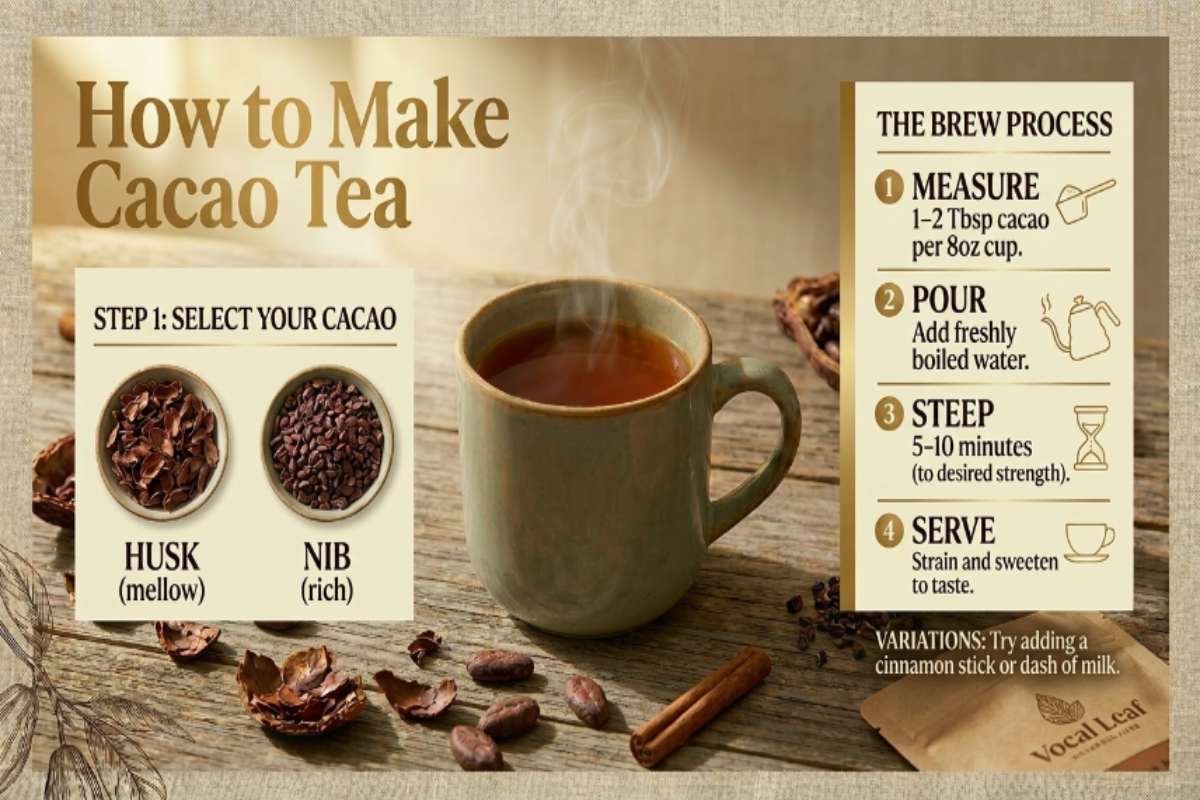
Making best cacao tea requires nothing more than dried cacao husks or nibs, hot water, and a few minutes of steeping, the process is straightforward enough for a weekday morning but produces a cup complex enough to anchor an intentional pre performance ritual. The method you choose and the material you start with will determine the flavor intensity, theobromine concentration, and overall experience in the cup.
How to Brew Cacao Husk Tea Step by Step
Cacao husk tea brews best at a temperature slightly below a full boil, around 200°F to 205°F, which extracts the theobromine and flavanols without pulling excess bitterness from the fibrous shell material. The process is forgiving and requires no specialized equipment beyond a strainer or infuser.
Start with one to two tablespoons of dried cacao husks per 8 ounce cup. Bring filtered water to just below boiling and pour it directly over the husks. Steep for eight to twelve minutes, longer steeping deepens both the flavor and the theobromine extraction, so adjust based on how pronounced you want the effect. Strain the husks completely before drinking; leaving them in past the steep time introduces astringency that the fresher brew does not have.
The resulting cup should be a warm amber to deep brown color with a clean, lightly chocolatey aroma and a flavor that is earthy and mildly bitter at the edges. If the bitterness is too forward, a small amount of rock sugar dissolves cleanly into the brew and lifts the chocolate note without masking it. If the flavor is too subtle, increase the husk quantity rather than the steep time on your next brew, more material produces more body without the bitterness risk that over steeping creates.
How to Make Cacao Nib Tea
Cacao nib tea requires a slightly more deliberate approach than husk tea because nibs are denser and release their compounds more slowly. Use one to two tablespoons of whole or lightly crushed cacao nibs per 8 ounce cup. Crushing the nibs before steeping, a few pulses in a grinder or a brief press with the flat of a knife, significantly increases the surface area exposed to water and produces a noticeably richer, more flavorful cup.
Bring water to 205°F to 212°F and steep the crushed nibs for ten to fifteen minutes. The higher temperature and longer steep are both necessary to draw theobromine and flavanols from the denser nib material. Strain thoroughly, nib particles are fine enough to pass through a standard strainer, so a fine mesh strainer or a dedicated infuser with tight perforations produces a cleaner result.
The flavor profile of properly brewed cacao nib tea is distinctly bolder than husk tea: deep chocolate, slightly tannic, with a finish that lingers in the way a well brewed black tea does. It is a cup that rewards slow drinking, and it holds up well to additions that would overwhelm the lighter husk version.
Cacao Tea Recipe Variations Cinnamon, Vanilla, Coconut and Bulletproof
The base cacao tea recipe is a strong enough foundation that additions enhance rather than define it, which makes it one of the most versatile loose leaf brewing experiences available.

Cacao Cinnamon Tea
Add one small cinnamon stick or a quarter teaspoon of ground cinnamon to the steeping vessel alongside the husks or nibs. Cinnamon steeps well at the same temperature as cacao and reinforces the warm, spiced chocolate character without any sweetener required. This variation is particularly effective on cold mornings or as a pre show warming drink before outdoor performances.
Vanilla Cacao Tea
Add a half inch piece of split vanilla bean or a small amount of pure vanilla extract after steeping. Vanilla rounds the bitterness at the finish and adds a creamy quality to the flavor even in the complete absence of dairy, a meaningful advantage for voice professionals who want richness without the mucus stimulating consequences of milk based additions.
Coconut Cacao Tea
Brew the cacao tea at full strength, then add a small amount of coconut milk or coconut cream. This produces the closest thing to a dairy free hot chocolate while remaining safe for vocal use, coconut does not trigger the same mucus response that cow milk does, and the fat content adds body and satiety that plain cacao tea lacks. For a lighter version, coconut water used as part of the brewing liquid adds subtle tropical sweetness without the fat load.
Bulletproof Cacao Tea
Inspired by the bulletproof coffee format, this variation adds a small amount of grass fed butter or coconut oil to fully brewed, strained cacao nib tea, then blends briefly until emulsified. The result is a frothy, calorically substantial cup with sustained energy from both the fat and theobromine, a format that works well for performers with long performance days and limited eating windows before a show.
Hot vs Cold Brew Cacao Tea Which Method Wins?
Both methods produce excellent cacao tea, but they produce meaningfully different cups, and the right choice depends on what you need from the brew rather than which method is objectively superior.
Hot brewing extracts theobromine and flavanols more efficiently, produces a richer flavor in less time, and delivers the warming, circulatory benefits that make cacao tea particularly useful for vocal preparation. For pre performance use, morning rituals, or cold weather recovery sessions, hot brewing is the practical default.
Cold brewing cacao tea, combining husks or nibs with cold filtered water and steeping in the refrigerator for 12 to 24 hours, produces a smoother, less bitter cup with a naturally sweeter flavor profile. The slow, low temperature extraction pulls the pleasant aromatic compounds forward while leaving behind some of the harsher, bitter notes that can appear in hot brews made with older or lower quality cacao. Cold brewed cacao tea pairs exceptionally well with loose leaf iced tea formats, served over ice with a strip of orange peel or a splash of sparkling water, it becomes a genuinely sophisticated non alcoholic summer drink.
For performers in warm climates or touring through summer months, a cold brewed cacao nib tea blended with citrus loose leaf tea creates a layered, antioxidant rich iced drink that hydrates aggressively while delivering theobromine airway benefits in a format that works as well before an outdoor show as a hot cup does before an indoor one. It also pairs naturally with other herbal iced tea blends for performers who want to rotate through flavor profiles without abandoning the vocal health framework.
The honest answer to which method wins is that hot brewing wins for function and cold brewing wins for flavor subtlety, so the practical approach is to keep both in rotation depending on season, schedule, and what your voice needs that day.
How to Use a Tea Infuser for Cacao
A tea infuser works well for cacao tea with one important qualification: standard ball infusers with medium sized perforations allow fine cacao husk particles to escape into the cup, producing a slightly gritty finish. The solution is either a fine mesh infuser, the kind designed for rooibos or finely cut loose leaf material, or a dedicated basket infuser with a tight weave that sits inside the mug and holds the cacao material cleanly during steeping.
For cacao nibs specifically, a basket infuser is the better choice over a ball infuser simply because nibs need room to expand and release their compounds freely. A tightly packed ball infuser restricts water contact with the nib surface and produces a weaker, less flavorful cup regardless of steep time. Given the material space, use near boiling water, and allow the full steep time without agitating the infuser repeatedly, patience in the brewing process produces a noticeably better result than trying to accelerate extraction by pressing or squeezing.
For cold brew preparation, a large mason jar with a fine mesh strainer at the pour stage is the simplest and most effective approach, no specialized equipment required, and the slow overnight extraction does the work without any intervention.
Cacao Tea for Singers, Speakers and Performers
Cacao tea has earned a specific and growing following among voice professionals not because of marketing, but because its compound profile maps unusually well onto what the vocal instrument actually needs before, during, and after heavy use. For singers, speakers, podcasters and performers managing their voice as a professional tool, the question is never just “is this drink healthy”, it is “does this drink support or compromise the tissue I perform with?” Cacao tea consistently answers that question in the right direction.

Why Voice Professionals Are Turning to Cacao Tea
The shift toward cacao tea among voice professionals is driven by a specific frustration: most warm drinks that taste satisfying enough to become a daily habit carry at least one vocal liability. Coffee dehydrates and raises cortisol. Dairy based drinks stimulate mucus. Many caffeinated teas deliver enough stimulant load to affect sleep quality during heavy performance weeks, and sleep is when vocal fold tissue repairs itself. Even some herbal options contain compounds that dry the laryngeal mucosa or interact poorly with the reflux that many performers manage chronically.
Cacao tea sidesteps all of these problems simultaneously. It is warm, rich, and genuinely satisfying in a way that feels like a treat rather than a therapeutic compromise. It contains theobromine rather than a meaningful caffeine load, so it supports calm alertness without the stimulant consequences. It is dairy free by nature, eliminating mucus stimulation entirely. And the flavanol and magnesium content provides active support for the tissue, muscles, and nervous system that vocal performance depends on, not just the absence of harm, but a measurable contribution to vocal readiness.
A survey published in the Journal of Voice found that a significant majority of professional singers reported using dietary interventions, specific foods and drinks, as part of their vocal maintenance routine, with warm herbal beverages ranking among the most commonly cited strategies. Cacao tea represents the most functionally sophisticated entry in that category for performers who have moved beyond generic “drink more water” advice and want a daily ritual that works on multiple levels at once.
The Best Time to Drink Cacao Tea Before a Performance
Timing matters with cacao tea in the same way timing matters with any pre performance nutrition decision, not because the window is narrow or complicated, but because drinking it at the right point in the preparation sequence amplifies the benefit and drinking it at the wrong point introduces unnecessary variables.
The optimal window for cacao tea before a performance is sixty to ninety minutes prior to vocal use. This gives the theobromine enough time to reach peak absorption, theobromine absorbs more slowly than caffeine, with a peak plasma concentration typically occurring around one to two hours after ingestion, so the bronchodilatory and cough suppression effects are active and stable when you need them most rather than still building during the first act.
Drinking cacao tea immediately before going on stage is less ideal not because it causes harm, but because the warm liquid hydration benefit is partially offset by the slight increase in salivation and swallowing reflex activity that any drink produces in the minutes right before performance. The sixty to ninety minute window allows full mucosal absorption of the hydration benefit, gives the theobromine time to work, and leaves the throat in a clean, settled state rather than actively processing a recent drink.
For performers also managing digestive comfort before a show, a genuine concern for singers who perform with full diaphragmatic engagement, cacao tea mild digestive support pairs well with a broader pre protocol. The magnesium content supports smooth muscle relaxation throughout the digestive tract, and combining it with intentional tea for digestion as part of the pre performance routine addresses both the respiratory and the abdominal comfort that stage performance demands.
Pairing Cacao Tea with a Vocal Warm Up Routine
The relationship between cacao tea and a vocal warm up routine is not incidental, it is structural. A warm up routine has two phases that most voice professionals recognize: the physical preparation phase, where the body wakes up and blood flow increases to the laryngeal tissue, and the neurological settling phase, where performance anxiety decreases and the nervous system moves from high alert to focused readiness. Cacao tea supports both.
During the physical preparation phase, the warmth of the brew increases local circulation in the throat and larynx, improving vocal fold pliability before the first exercises begin. Pliable vocal folds vibrate more efficiently across their full range, which means warm up exercises cover more ground in less time and with less mechanical stress on the tissue. Professional vocal coaches consistently recommend warm water and warm herbal teas as preparation tools precisely because of this circulatory mechanism. Cacao tea delivers it with the added benefit of theobromine bronchodilatory effect, opening the airways simultaneously.
During the neurological settling phase, theobromine calm alertness profile is directly useful. The compound reduces physiological anxiety markers without sedating, it does not blunt the sharp focus and emotional availability that a live performance requires, but it takes the edge off the cortisol spike that pre show nerves generate in most performers. For singers and speakers who struggle with performance anxiety manifesting as throat tightness, shallow breathing, or reflexive throat clearing before they go on, the theobromine effect is one of the few non pharmaceutical, non technique based interventions with a credible physiological mechanism behind it.
Structurally, the most effective integration looks like this: brew cacao tea sixty to ninety minutes before curtain, drink it slowly during the early physical warm up, finish the cup before moving into full voice exercises, and follow with plain warm water through the remainder of the preparation sequence. This keeps the throat continuously hydrated, delivers the theobromine benefit at peak absorption timing, and transitions cleanly into the performance without any residual drink related variables to manage.
For performers in heavy rotation, touring musicians, working voice actors, and full time singing teachers, the post recovery window is equally important. The same theobromine and flavanol profile that supports pre performance readiness also supports tissue recovery after extended vocal use, making cacao tea a logical bookend to a performance day when paired with a dedicated muscle recovery and relaxation tea for the full body.
Choosing the Right Cacao Tea
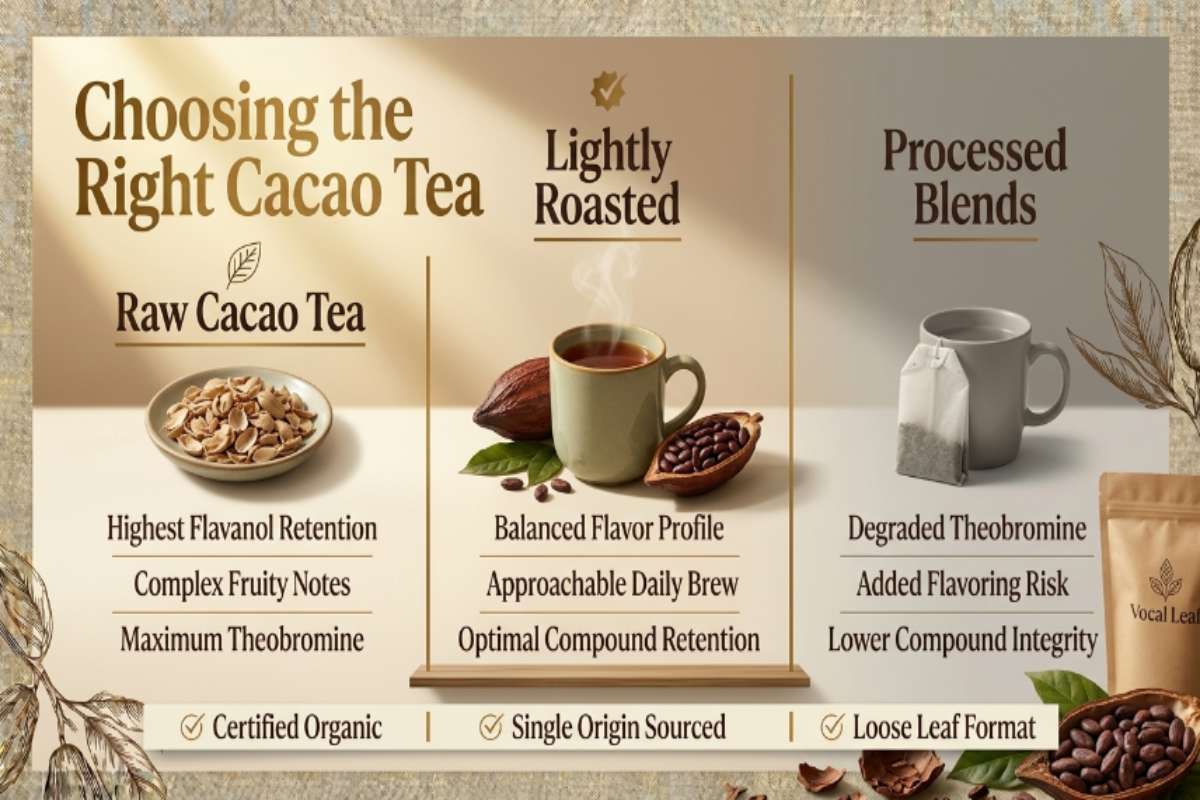
The cacao tea you choose determines not just the flavor in the cup but the functional compound profile your body actually receives, and the difference between a well sourced organic husk tea and a heavily processed commercial blend is significant enough to affect both the taste experience and the wellness outcome. For voice professionals building a daily routine around cacao tea, the sourcing and processing decisions are worth understanding before committing to a product.
What to Look for in Organic Cacao Tea
Organic certification is the single most important quality signal when selecting cacao tea, and the reason is specific to how cacao husks behave during conventional farming. The husk is the outermost layer of the bean, the part most directly exposed to pesticide application during cultivation and to processing chemicals during post harvest treatment. Because you are steeping the husk directly in the water you drink, any residues present in the husk material transfer directly into the cup. Organic certification eliminates this exposure entirely and ensures that what you are drinking is cacao and water, nothing else.
Beyond certification, look for husks or nibs labeled single origin or small batch processed. These sourcing descriptors correlate with higher flavanol retention because the cacao material has spent less time in transit and storage, and has been processed at lower temperatures that preserve heat sensitive antioxidant compounds. Mass produced cacao tea products, particularly those in pre bagged commercial formats, frequently use material that has been heat treated to extend shelf life, a process that measurably degrades the theobromine and flavanol content that makes cacao tea therapeutically useful in the first place.
Color and aroma are reliable quality proxies when you are evaluating loose material directly. Fresh, well processed cacao husks should have a warm, toasted chocolate aroma with no mustiness or staleness, mustiness indicates moisture damage during storage, which degrades both flavor and compound integrity. The material should range from pale tan to deep brown depending on the cacao variety, with no grey or off color patches that suggest oxidation or age.
For voice professionals using cacao tea as part of a tea for throat support protocol, organic sourcing is not optional, it is the baseline. Introducing pesticide residues or processing chemicals into a daily drink specifically designed to protect and support laryngeal tissue is a direct contradiction of the goal.
Raw Cacao Tea vs Processed Blends
Raw cacao tea and processed blends represent opposite ends of the spectrum in terms of compound integrity, flavor complexity, and practical usability, and the right choice depends on what you are optimizing for.
Raw cacao tea is made from minimally processed husks or nibs that have been dried at low temperatures after harvest without roasting, alkalization, or heat treatment. This preservation approach retains the highest possible concentration of flavanols, theobromine, and naturally occurring enzymes that processing destroys. The flavor of raw cacao tea reflects this, it is more acidic, more complex, and noticeably more bitter than roasted cacao tea, with fruit forward and floral notes that disappear entirely once the material is roasted. For drinkers willing to work with that flavor profile, raw cacao tea delivers the most potent functional cup available from the same source material.
Processed blends occupy a wide middle ground. Lightly roasted cacao husks or nibs, the most common format in quality loose leaf cacao tea products, sacrifice a portion of the raw flavanol content in exchange for a significantly more approachable flavor: the roasting process develops the deep, warm chocolate notes that most drinkers associate with cacao tea, reduces astringency, and produces a more consistent, predictable cup. A moderate roast represents a practical compromise between compound retention and palatability that most daily drinkers find more sustainable than the intensity of raw cacao.
Heavily processed commercial blends, particularly pre bagged products with added flavoring, sugar, or bulking agents, should be approached with skepticism by voice professionals. Added flavorings, even natural ones, introduce compounds with unknown laryngeal effects. Added sugar elevates the inflammatory potential of the drink. And the base cacao material in these blends is typically the lowest grade, most heavily processed fraction of the harvest, with minimal theobromine or flavanol content remaining after processing.
For performers building a cacao tea habit specifically around vocal wellness, tea for sleep and recovery support during heavy performance periods, a lightly roasted organic loose material, husk or nib depending on intensity preference,is the format that delivers the best combination of functional benefit, flavor satisfaction, and daily sustainability.
Cacao Chai Tea and Other Warming Variations
Cacao chai tea is one of the most compelling variations in the cacao tea category because it combines the theobromine and flavanol profile of cacao with the warming, circulation supporting properties of traditional chai spices, cinnamon, ginger, cardamom, and black pepper, in a single brew that works on multiple levels simultaneously for voice professionals.
The cacao chai combination works because the flavor profiles are genuinely complementary. The deep, slightly bitter chocolate character of cacao tea provides a base note that chai spices build on rather than compete with, producing a cup that is warming, complex, and satisfying in a way that neither component achieves alone. Ginger anti inflammatory properties add direct throat comfort benefit to the theobromine already present. Cardamom aromatic quality opens the sinuses gently. Cinnamon warming effect deepens the circulatory benefit that cacao tea already provides through theobromine.
For voice professionals, cacao chai is particularly well suited to the pre performance window in cold environments, outdoor venues, unheated backstage spaces, winter touring schedules, where the body needs both warming and vocal preparation simultaneously. Brew it from whole spices and loose cacao husks together in the same vessel, steep for ten to twelve minutes, strain thoroughly, and sweeten lightly if needed. The result is a cup that covers the warming, anti inflammatory, bronchodilatory, and calm alertness requirements of pre performance preparation in a single ritual.
Beyond chai, the cacao tea base accepts other warming additions that voice professionals will recognize from their existing throat care routines. A small slice of fresh ginger steeped with cacao nibs yields a sharper, more medicinal cup, ideal for recovery days after vocal strain. A strip of dried orange peel adds citrus brightness, lifting the chocolate note and boosting the antioxidant profile with vitamin C. A pinch of black pepper, counterintuitive but effective, enhances the absorption of several cacao bioactive compounds, as it does curcumin, making the theobromine and flavanol content of the brew more physiologically available per cup.
The underlying principle across all these variations is that cacao tea functions as a platform rather than a fixed recipe. Its flavor is strong enough to anchor a cup and mild enough to accept additions without being overwhelmed. This quality makes it one of the most adaptable daily drinks available to voice professionals who need both consistency in their vocal care routine and enough variety to make that routine sustainable over a full performance season.
Conclusion
Cacao tea is one of the few daily drinks that earns its place in a voice professional routine on functional merit rather than habit or convenience, it hydrates without dehydrating, warms without coating, delivers theobromine bronchodilatory and cough suppressing benefits without caffeine vocal liabilities, and provides a flavanol and magnesium profile that supports the tissue, muscles, and nervous system that performance depends on, all in a near zero calorie cup that tastes rich enough to replace less vocal friendly habits for good. Whether you brew it from husks for a gentle daily ritual, from nibs for a deeper pre performance preparation, or as a warming cacao chai variation during a winter touring schedule, voice professionals who are serious about protecting their instrument will find the full range of teas crafted specifically for vocal health at Vocal Leaf, because the fundamentals remain the same regardless of format: clean hydration, active throat support, and a compound profile that works with your voice rather than against it, across every performance, every season, every show.
Frequently Asked Questions (FAQs)
What is cacao tea good for?
Cacao tea is good for hydration, throat comfort, calm alertness, and antioxidant support, making it particularly valuable for voice professionals managing vocal health daily. Its theobromine content suppresses cough reflex sensitivity, supports bronchodilation, and delivers sustained energy without caffeine dehydrating consequences.
Does cacao tea have caffeine?
Cacao tea contains very low levels of caffeine, typically between 5 and 15 milligrams per cup, which is far below the threshold at which caffeine produces diuretic or stimulant effects in most people. The dominant active compound is theobromine, not caffeine, which means the physiological experience is calm alertness rather than stimulation. For practical purposes, cacao tea functions as a caffeine free drink for the vast majority of drinkers.
Is cacao tea the same as cocoa?
No, cacao tea is a water based herbal infusion brewed from dried cacao husks or nibs. At the same time, cocoa is a powder made from processed cacao beans that is dissolved into liquid, usually with milk and sugar. Cacao tea steeps clean and thin like a traditional herbal brew; cocoa produces a thick, coating drink that can stimulate mucus production. The flavor is related, but the format, compound profile, and throat effect are meaningfully different.
How do you make cacao tea from nibs or husks?
To make cacao husk tea, steep one to two tablespoons of dried husks in 200°F to 205°F water for eight to twelve minutes, then strain and drink plain or with a small amount of rock sugar. For cacao nib tea, lightly crush the nibs to increase surface area, steep in water at 205°F to 212°F for 10 to 15 minutes, and strain through a fine mesh strainer. Both methods require no special equipment beyond an infuser or strainer and produce a clean, lightly chocolatey cup.
Is cacao husk tea good for you?
Yes, cacao husk tea delivers theobromine, flavanols, magnesium, and potassium in a near zero calorie, dairy free format that supports hydration, airway comfort, and antioxidant activity simultaneously. For voice professionals specifically, the theobromine content addresses cough reflex sensitivity and bronchodilation in ways that most herbal teas cannot. It is one of the few daily drinks that contributes actively to vocal health rather than simply avoiding harm.
How many calories are in cacao tea?
A plain brewed cup of cacao tea contains approximately 5 to 15 calories per 8 ounce serving, coming entirely from trace carbohydrates and protein that leach from the husk or nib material during steeping. No fat, no sugar, and no meaningful caloric contribution unless additions like coconut milk, honey, or butter are included.
Can singers drink cacao tea?
Yes, cacao tea is one of the most voice compatible daily drinks available to singers, specifically because it is dairy free, very low in caffeine, rich in theobromine, and delivers its benefits through clean water based hydration rather than coating or inflammatory mechanisms. The theobromine content suppresses the reflexive throat clearing that many singers struggle to control before performances, and the warm brew supports vocal fold pliability through improved local circulation.
Is cacao tea caffeinated?
Cacao tea is not meaningfully caffeinated, it contains trace caffeine levels between 5 and 15 milligrams per cup, compared to 95 to 200 milligrams in a standard cup of coffee. The primary stimulant compound in cacao tea is theobromine, which acts more slowly, more gently, and without the cortisol raising, sleep disrupting consequences that caffeine produces at normal doses.
Top Selling Products






Best Tea for Singers | What Actually Helps Your Voice
If you sing, whether you perform professionally, teach voice lessons, or spend your weekends in rehearsal, you’ve probably wondered whether tea actually does anything useful…

Best Tea for Vocal Cords | Herbs, Hydration and Recovery
If your voice feels tired, strained, or dry, the right tea for your vocal cords can make a real difference, not by healing damaged tissue,…

Best Tea for Laryngitis | Soothe Your Voice Naturally
The best tea for laryngitis is a warm, caffeine free loose leaf blend that hydrates the throat and eases the strain on inflamed vocal cords.…

What Is Chai Tea? The Ultimate Guide to Ingredients, Benefits, Types & How It’s Made
If you’ve ever wondered what chai tea is, you’re not alone. It’s one of the most searched beverage questions online, yet the answer is often…

Best Tea for Your Voice | Does It Make You Sound Deeper
What it can do is change how your voice feels and sounds in the moment, which is where most of the confusion starts. If you…

The Best Tea for Performers & Speakers, And Why Your Voice Deserves Better
You spend hours rehearsing the words. You perfect the tone, the breath, the timing. But then you reach for whatever is nearby, a cup of…
Best Tea for Stress Relief | Calming Loose Leaf Blends
Stress is something everybody carries. It shows up in tight shoulders, restless nights, and a mind that won’t quiet down after a long day. And…

Best Tea for Dry Throat | The Teas That Help and the Ones That Hurt
The best teas for a dry throat are caffeine-free herbal blends, teas with no tannins to strip moisture from the throat lining and no caffeine…

Best Teas for Acid Reflux, Heartburn and GERD
Acid reflux doesn’t just cause heartburn. If you have searched for tea good for acidity, you are asking the same question, acidity and acid reflux…

Best Morning Tea for Energy and Focus Without Coffee Crash
The best tea to drink in the morning is black tea if you want steady, coffee level energy without the crash, rooibos chai if you…

Best Tea for Cough | The Complete Guide to Soothing Relief
The best tea for cough relief is a warm, hydrating blend that soothes irritated throat tissue while easing the reflex that triggers coughing in the…

Best Teas for a Cold That Actually Work
Best teas for a cold combines warmth, hydration and gentle steam to ease congestion, calm a scratchy throat and help your body rest while it…